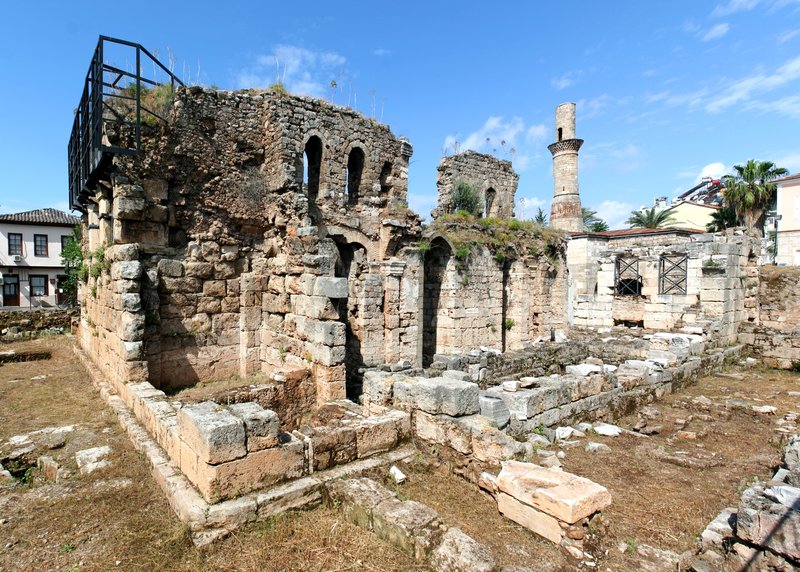
A Roman temple converted into a Byzantine church and then a Seljuk mosque, the "Broken Minaret" was gutted by fire in 1800 and has since reopened for worship after a restoration that left its layered ruins on view.
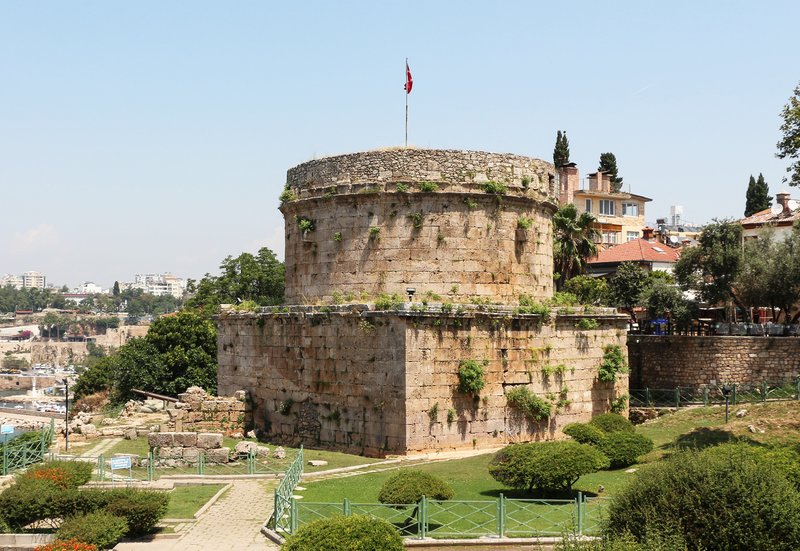
A 14-metre tower of tawny stone built by the Romans in the 2nd century CE, it stands where Kaleiçi meets Karaalioğlu Park and has served in turn as lighthouse, fortification, and lookout over the Gulf of Antalya.
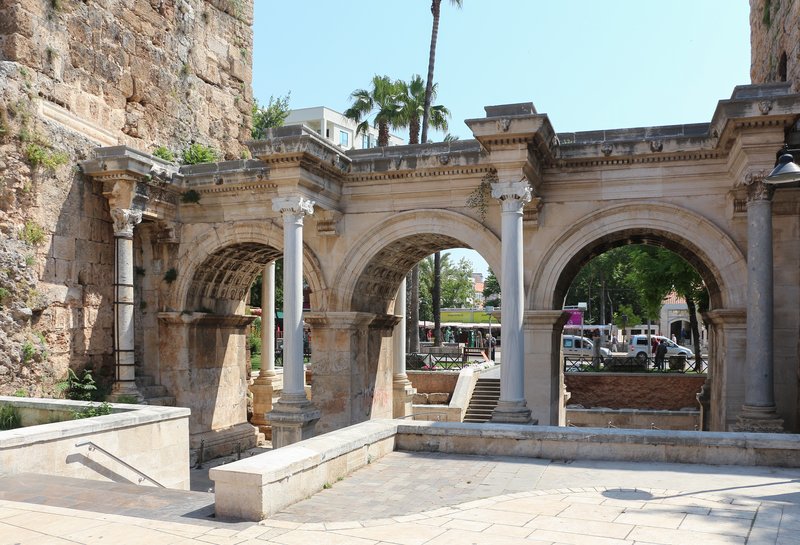
A triumphal Roman arch raised in 130 CE to mark Emperor Hadrian's visit to the city, its three marble-columned archways form the only surviving entrance in Antalya's ancient walls.
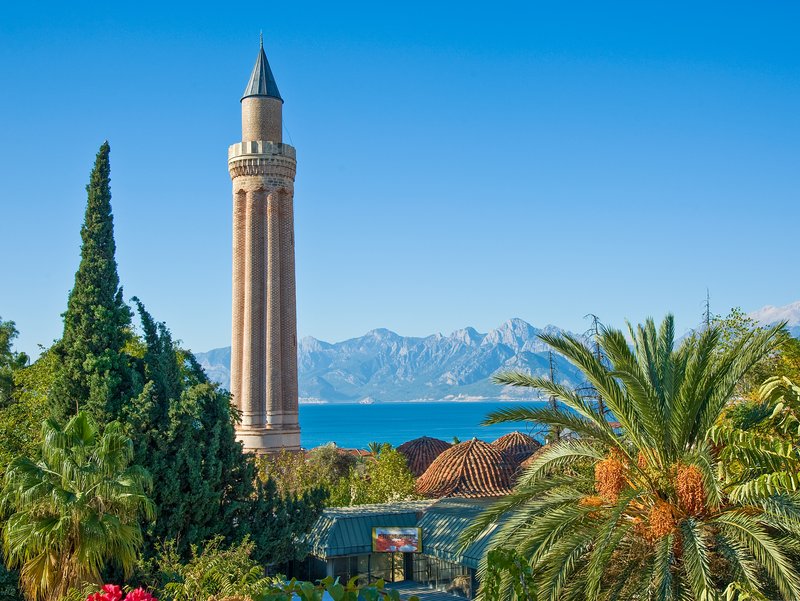
An eight-grooved brick minaret raised by the Seljuk sultan Alaeddin Keykubad I in the 1230s, its fluted red-brick shaft traced with turquoise tile is the emblem most closely identified with Antalya.
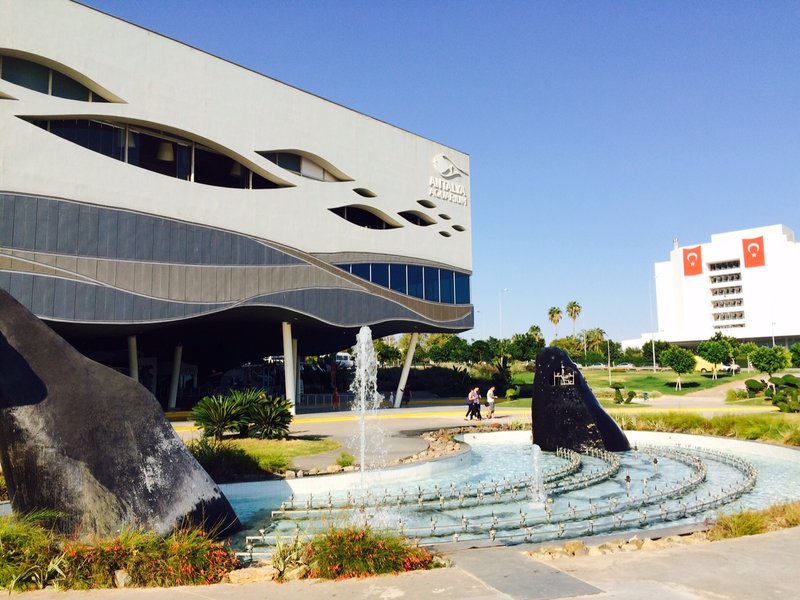
Home to a 131-metre glass viewing tunnel — the longest of its kind in the world — the complex pairs 40 shipwreck-strewn tanks with a sub-zero snow room modeled after the Antarctic.
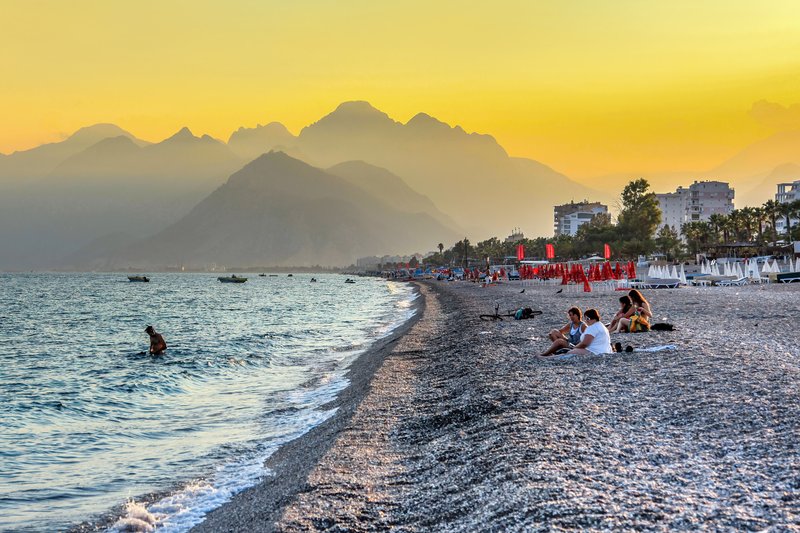
A 13-kilometre pebble shoreline backed by the Beydağları mountains, Konyaaltı carries Blue Flag certification for its water quality and is patrolled by lifeguards along its full length.
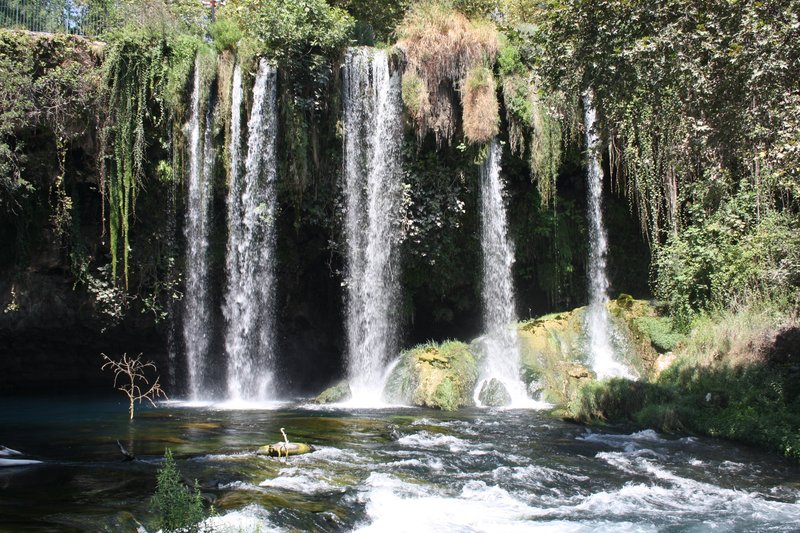
The Düden River resurfaces here from a karstic source after 18 kilometres underground, dropping through a canyon park of walkways, viewing platforms, and a cave passage behind the falling water.
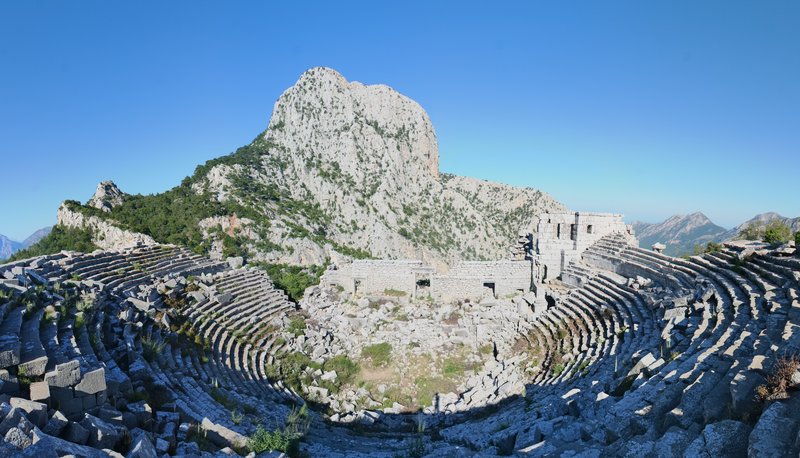
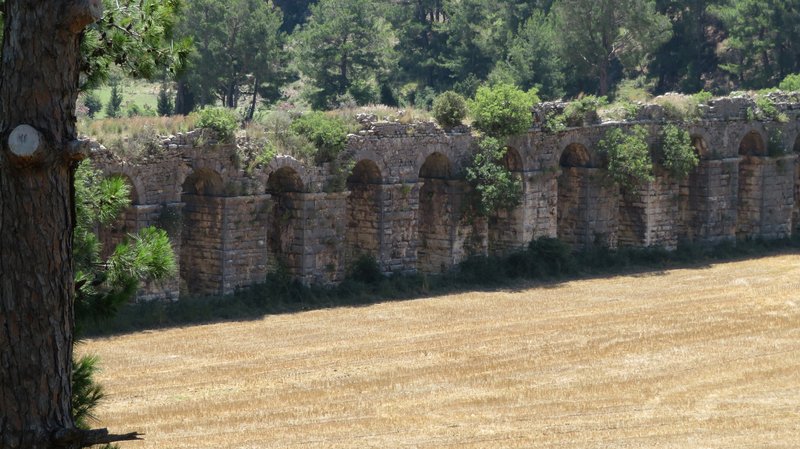
A Pisidian stronghold 1,000 metres up in the Taurus range, its cliff-edge theatre, cisterns, and rock tombs sit exactly where Alexander the Great decided in 333 BCE that the climb wasn't worth a siege — the site was abandoned only centuries later, after an earthquake severed its aqueduct.
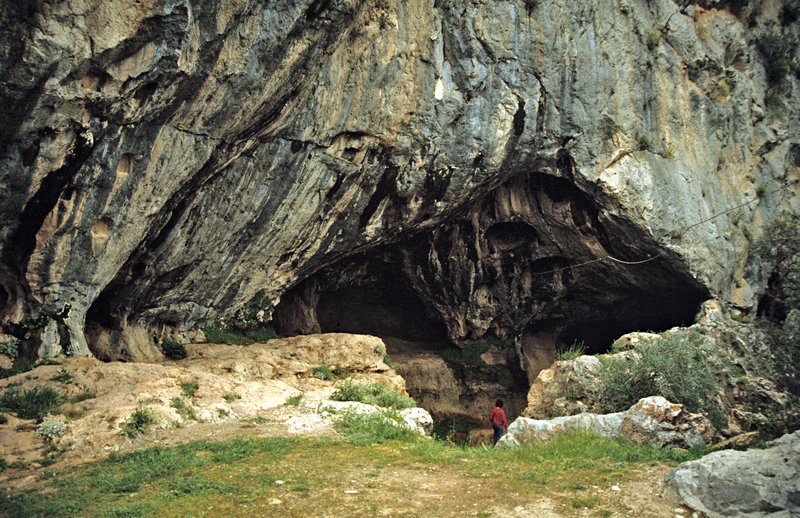
Turkey's longest continuously inhabited site, this limestone cave held people from the early Paleolithic through the Iron Age — a Neanderthal cranium fragment found here is dated to as far back as 200,000 years, with the flint tools and bone carvings it yielded displayed in the small museum at its foot.
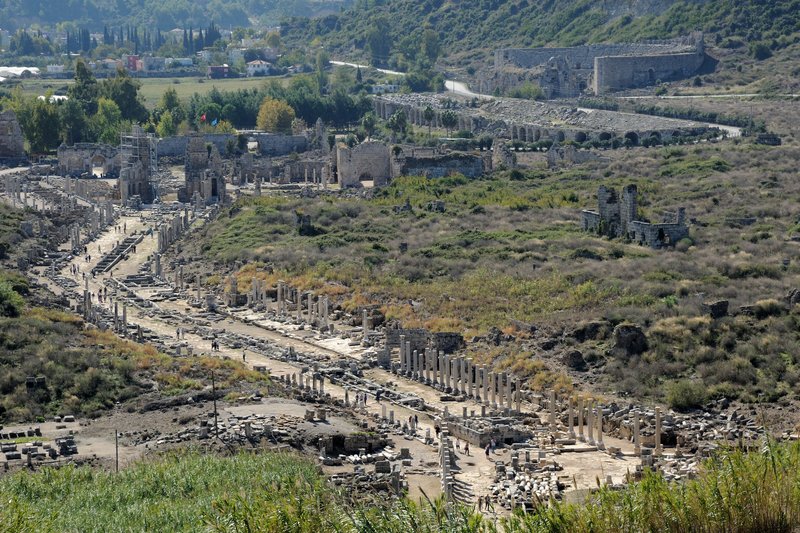
Once the capital of Roman Pamphylia, Perge's colonnaded main street still carries the channel that ran cool water down its centre, flanked by a 12,000-seat stadium and bath complexes whose sculpture and mosaics are now in the Antalya Archaeological Museum.
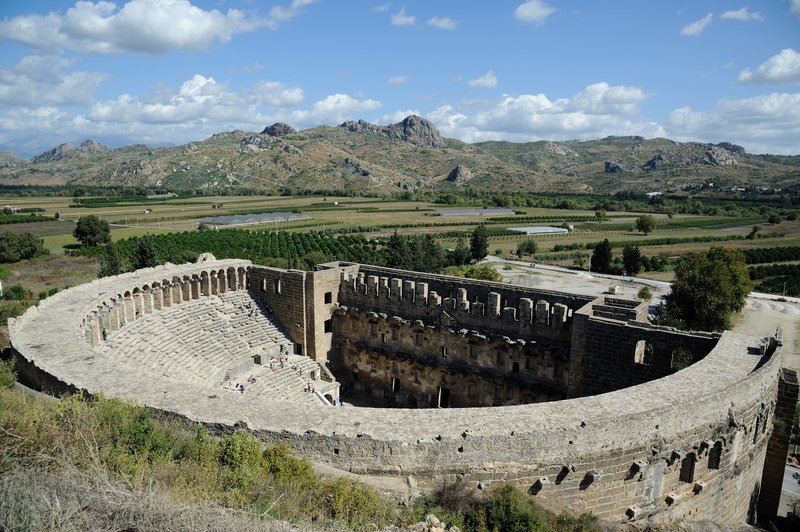
Built in 155 CE by the Greek architect Zenon, this is the best-preserved Roman theatre anywhere in the world — its stage building and 7,000-seat cavea intact enough that the Aspendos Opera and Ballet Festival still fills it every September.
Five marble columns rise at the very tip of Side's peninsula, all that stands of a 2nd-century Roman temple that watches the sun set into the Mediterranean over the harbour it once faced — the single most-photographed ruin on this stretch of coast.
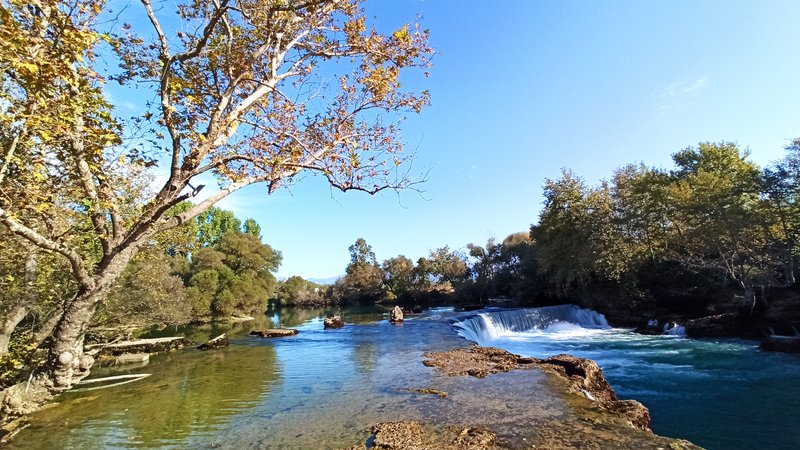
Wide rather than tall, the Manavgat River drops only a few metres here but spreads across the full width of the riverbed in a churn of white water once famous enough to appear on the reverse of Turkey's 5-lira note.
A small-group day linking the Lower Düden coastal falls, a walk through Kaleiçi's lanes, and lunch — a compact introduction to the city beyond the self-guided stops.
Old town, both Düden waterfalls, a harbour boat ride, and the Tünektepe cable car for a mountaintop view over the city and the Gulf of Antalya — a fuller day than the self-guided itinerary covers.
The same Perge and Aspendos ruins as Day 4, plus Side's harbour temple and the Manavgat waterfall from Day 5, all compressed into one guided day with lunch and transport included — for travelers who'd rather not spread the four Roman-era sites across two self-guided days.
Foreign number: accepted. — sign-up takes an international prefix and the SMS code arrives without a Turkish SIM.
Turkey's fastest-growing app, covering both restaurant delivery and its own 10-minute grocery warehouses. The most reliable option for a foreign phone during a short stay.
Foreign number: not accepted. — the sign-up form only validates Turkish +90 mobile numbers.
Turkey's largest and longest-running delivery marketplace, with by far the widest restaurant selection in Antalya — but registration is blocked without a local SIM.
Foreign number: not accepted. — registration is restricted to Turkish mobile numbers, though guest checkout bypasses the phone field.
The delivery arm of Turkey's biggest e-commerce platform — strong restaurant and market coverage, best reached through guest checkout on a foreign phone.
Foreign number: accepted. — the SMS or WhatsApp code arrives on international numbers, though a booking is occasionally still refused as unavailable in the traveler's home country.
Turkey's most-used taxi app, hailing licensed metered taxis directly with fare and driver shown before pickup. The default way to book a ride without street-hailing.
Day 1's four stops are really one story told in stone. Hıdırlık Tower went up under Rome, then did duty as a Byzantine lighthouse, a Seljuk watchtower, and an Ottoman lookout — the same 14 metres of masonry outliving four different rulers. Kesik Minare followed almost the identical arc a few hundred metres away: Roman temple, then Byzantine church, then Seljuk mosque, burned out, and only recently reopened as a mosque again. Nothing here was built once and left alone — it was re-covered and reused every time the city changed hands.
The 2-day loop and the water it revolves around share a hidden connection: the Düden River that surfaces at the upper falls on Day 2 spends 18 kilometres travelling underground first, vanishing into limestone sinkholes twice before it ever reaches daylight — and it still isn't finished, diving underground once more before finally throwing itself off a sea cliff at Lara, well outside this itinerary. What looks like two unrelated waterfalls in two different parts of the city is one river's very long, mostly invisible route to the Mediterranean.
Worth timing around: Antalya's biggest annual arts event fills a 2,000-year-old Roman theatre with opera and ballet every September, so a night at the show is often a realistic add-on to a September visit — not just a listing further down this page.