From Hotel: 29 min → ISKCON Sri Radha Krishna Temple
1.ISKCON Sri Radha Krishna Temple~1 hr 30 min
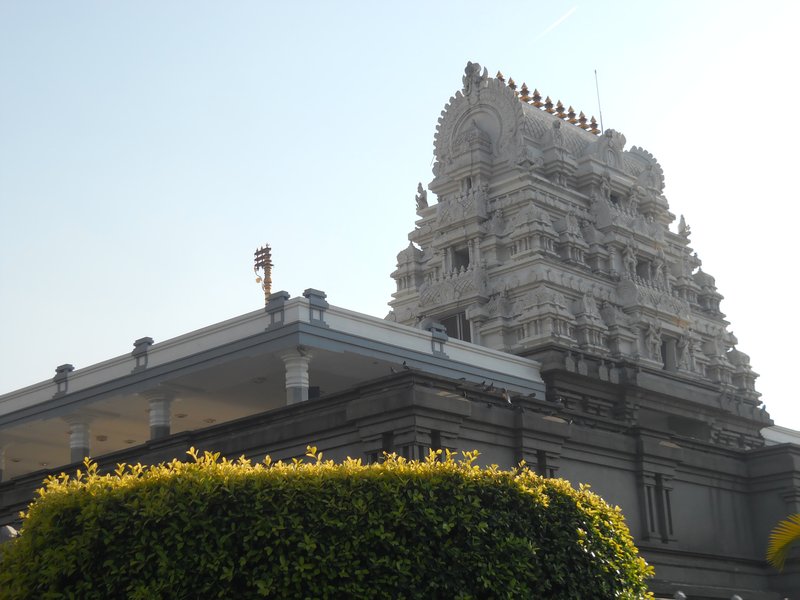
Bangalore's ISKCON temple crowns a granite rise in Rajajinagar, where a gold-plated flag mast and a glass canopy sit over a traditional South Indian gopuram. The route climbs through the complex to the Radha Krishna shrine, and every visitor is handed free prasadam on the way out.
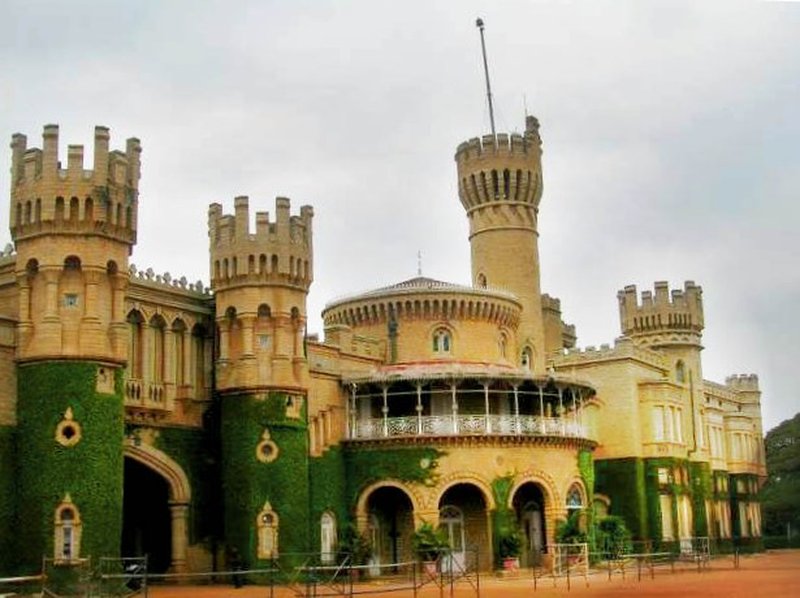
The Wodeyar maharajas built this Tudor Revival pile in 1878 after Windsor Castle, and the family still owns it. Fortified turrets and ivy wrap the outside; inside, the audio guide walks you through the ballroom, the Durbar hall and a corridor hung with Raja Ravi Varma paintings and hunting trophies.
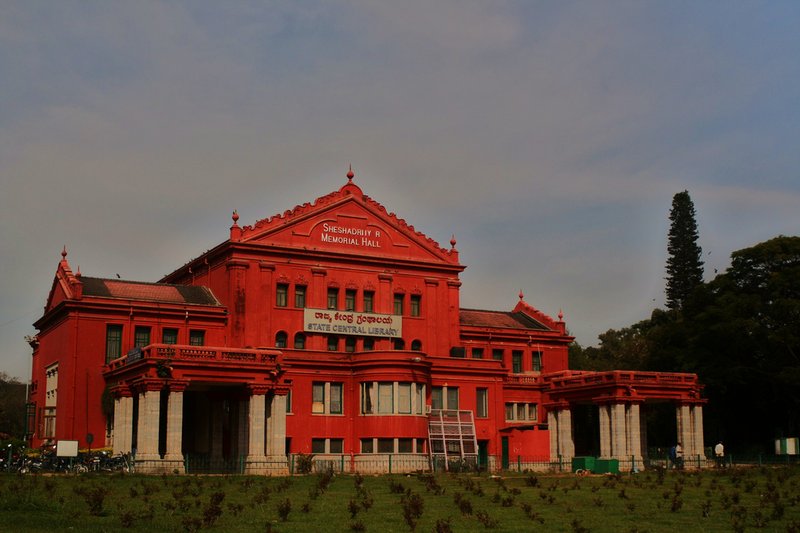
Three hundred acres of bamboo, rain trees and shaded walking paths in the middle of the city, laid out in 1870 and still where Bangalore comes to breathe. The red Seshadri Iyer Memorial Hall — the State Central Library — anchors the middle, with the High Court and the state legislature along its edge.
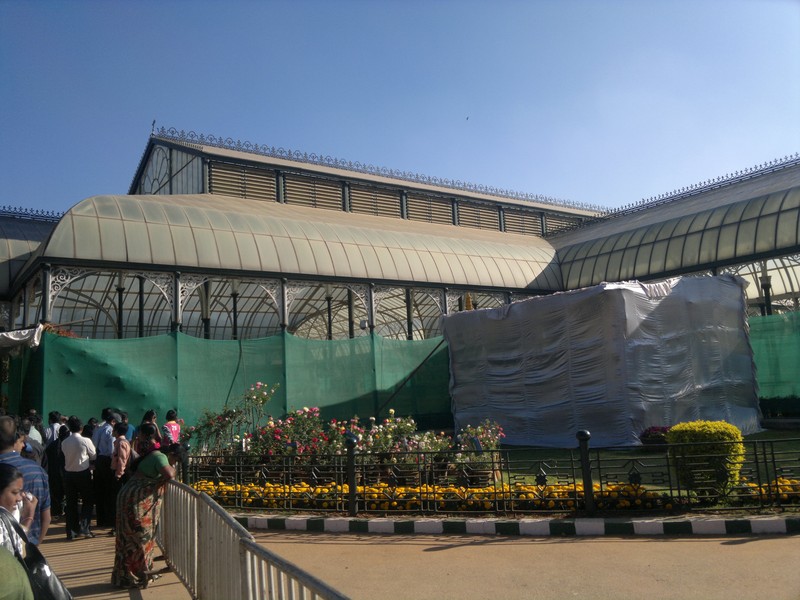
Hyder Ali laid this garden out in the 1760s and his son Tipu Sultan filled it with trees carried in from Persia, Kabul and Mauritius. The centrepiece is a Crystal Palace-style glass house from 1889 that fills with flowers for the shows each Republic Day and Independence Day. A rock outcrop older than the Himalayas sits at the south end.
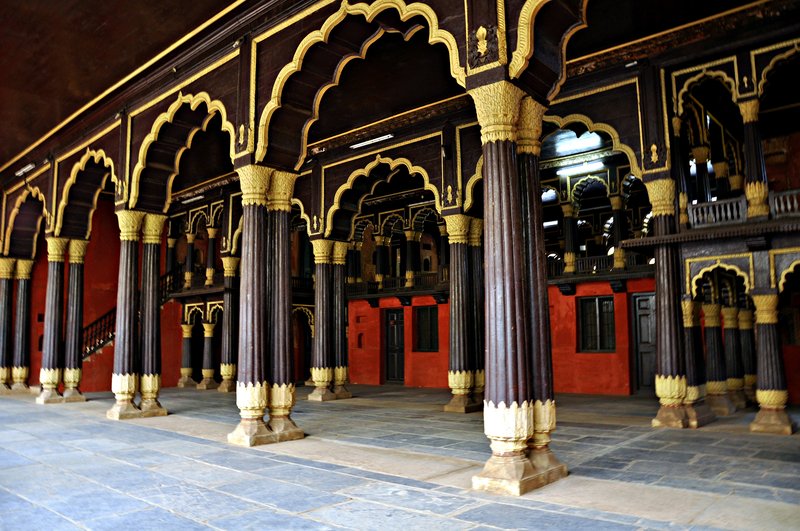
Hyder Ali began this teak palace inside Bangalore Fort in 1781, and his son Tipu Sultan finished it a decade later. The two-storey structure is carved wood from top to bottom — pillars, arches and balconies. The ground floor holds a small ASI museum on Tipu's reign, including a replica of Tipu's Tiger, with a nominal ticket bought at the gate.
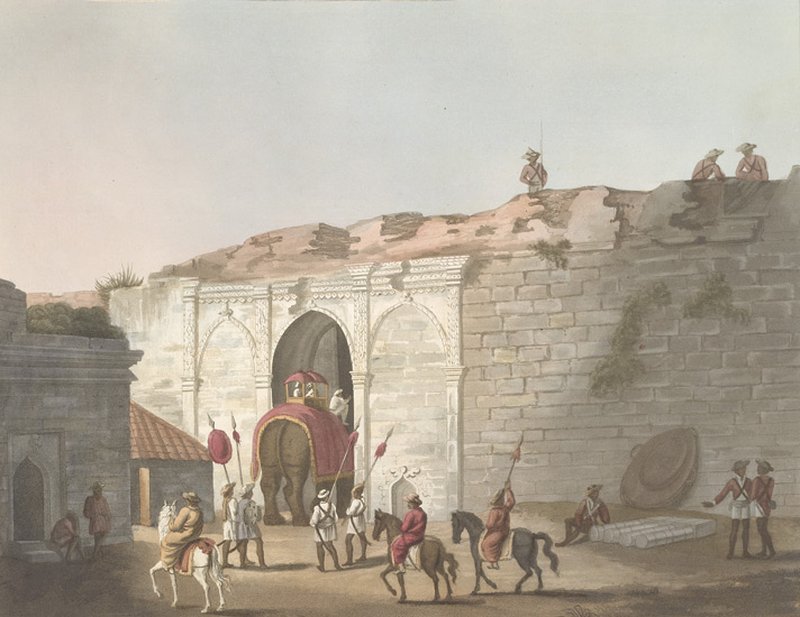
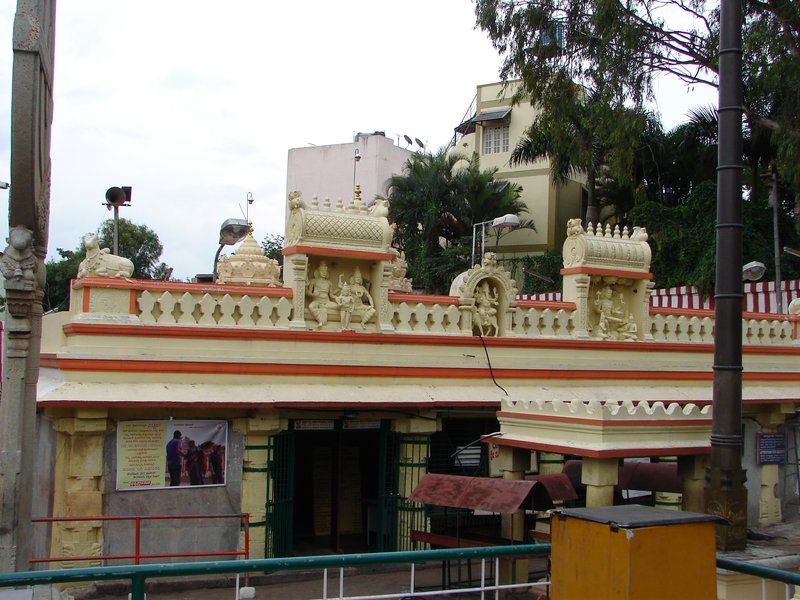
Kempe Gowda I raised a mud fort here in 1537 when he founded the city; Hyder Ali rebuilt it in stone in 1761, and his son Tipu Sultan strengthened it further. British troops under Lord Cornwallis breached the walls near this spot in the 1791 Siege of Bangalore, and most of the fort was demolished over the following century. The Delhi Gate, two bastions and a small Ganapathi temple are what remain.
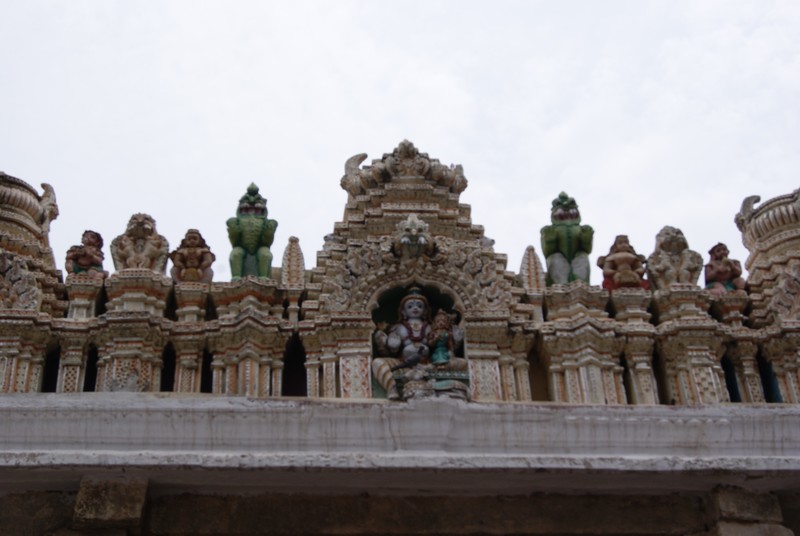
Also called the Bull Temple, Kempe Gowda I raised this Vijayanagara-style shrine in 1537 around a single Nandi cut from one block of granite — 4.5m tall and 6m long, among the largest monolithic Nandi statues in the world. The bull sits garlanded under a low stone canopy in Basavanagudi. Every year the Kadalekai Parishe groundnut fair honours the deity in the surrounding lanes.
Kempe Gowda I hollowed this shrine out of a natural cave in the 16th century, and the sanctum is still cut straight into the rock. In the forecourt, two monolithic granite pillars carry a pair of stone discs and a trident — and twice a year, around Makar Sankranti in January, the setting sun threads between the discs and Nandi's horns to light the linga inside for about an hour.
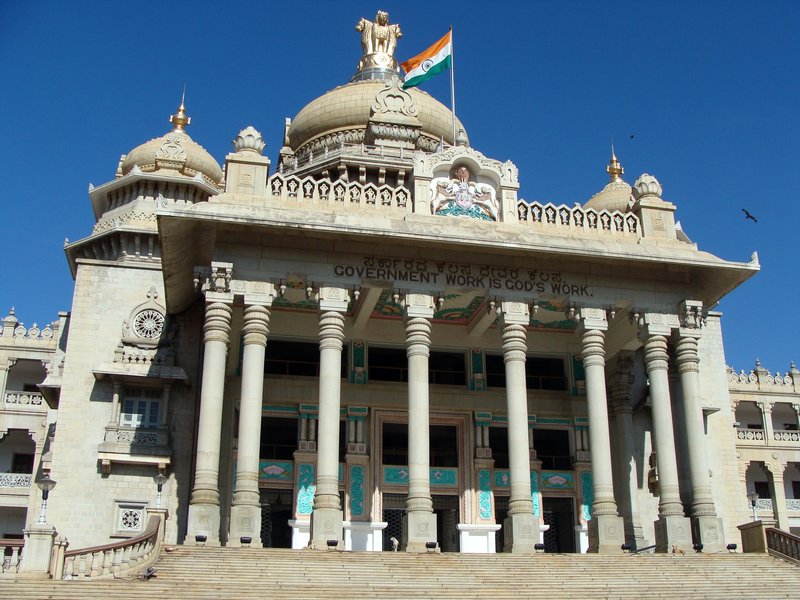
Karnataka's legislature sits behind this granite Neo-Dravidian facade, built in the 1950s at Chief Minister Kengal Hanumanthaiah's insistence on a "people's palace" rather than a colonial bungalow. The entablature reads GOVERNMENT WORK IS GOD'S WORK in English and Kannada. Weekend guided walks go inside on the 2nd/4th Saturday and Sundays; other days it's viewed from the gardens opposite.
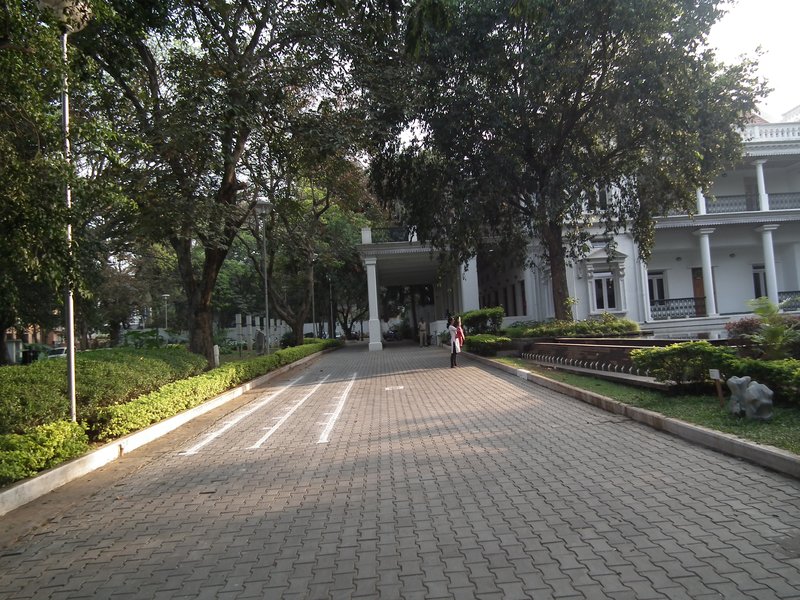
A hundred-year-old mansion on Palace Road — built for the merchant Haji Sir Ismail Sait and later renamed for owner Manickavelu Mudaliar — now holds roughly 500 works spanning the 18th century to the present. Raja Ravi Varma and Amrita Sher-Gil anchor the collection, alongside Jamini Roy and Bengal School painters, spread through a corridor, small rooms and two full halls.
21 min · 10 min → Government Museum & Venkatappa Art Gallery
3.Government Museum & Venkatappa Art Gallery~1 hr
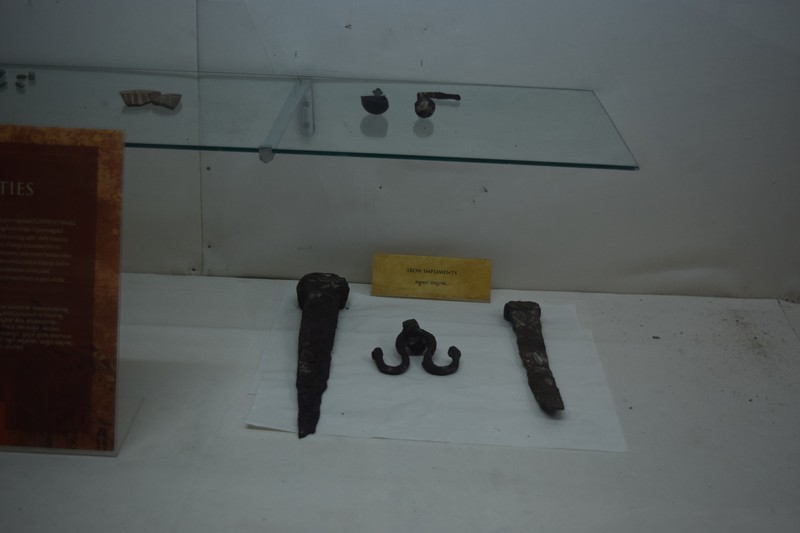
Founded in 1865, the second-oldest museum in India sits in Chief Engineer Richard Sankey's red Neoclassical hall on Kasturba Road. Its galleries hold sculpture, jewellery, coins and pottery from Chandravalli, Mohenjo-daro and Halebidu, including the Halmidi inscription, the earliest Kannada text. One ticket also covers the Venkatappa Art Gallery next door, 600-plus works by K. Venkatappa.
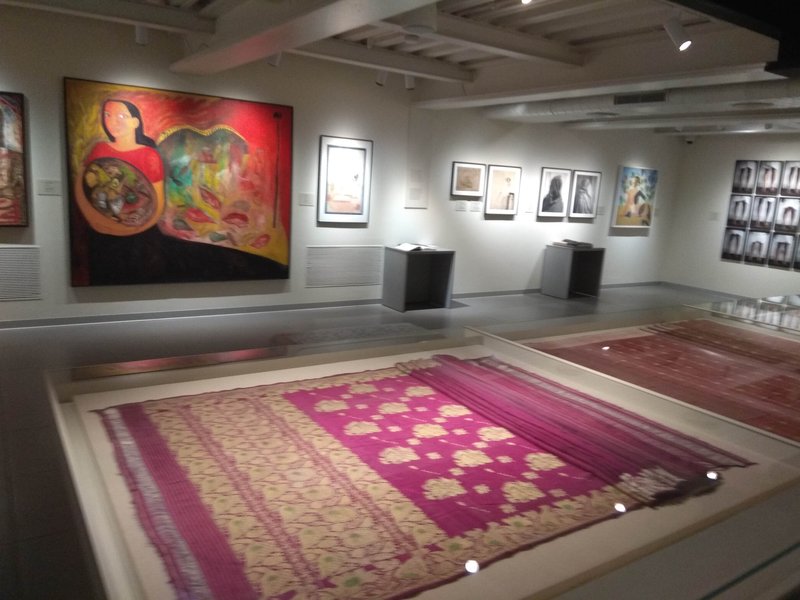
The Museum of Art and Photography opened on Kasturba Road, a five-storey, purpose-built museum holding more than 60,000 works from the 12th century to the present across six areas — painting, photography, textiles, popular culture, pre-modern art and living traditions. Architects Mathew & Ghosh built it around openness and daylight, with a library, auditorium and rooftop restaurant.
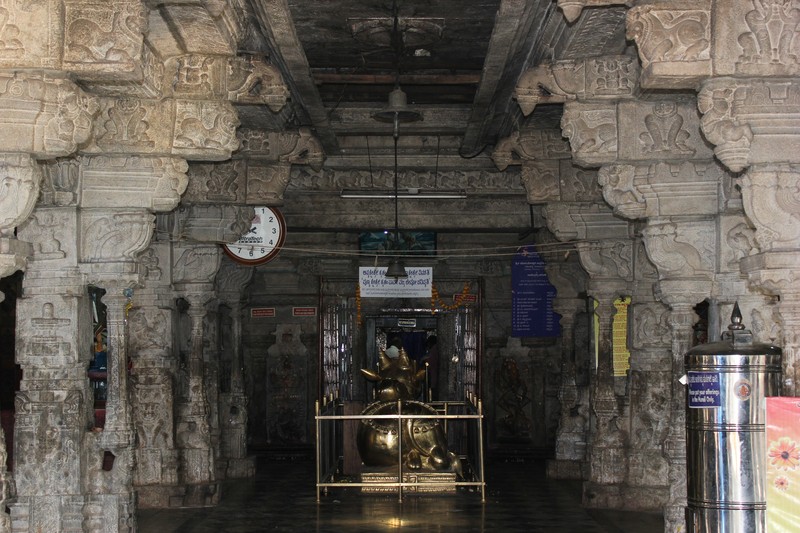
The sanctum, vestibule and pillared hall here date to the Chola period, roughly the 12th-13th century, among the oldest standing structures in the city — centuries older than Bangalore itself. Kempe Gowda I added the maha-mandapa and eastern gopuram in the 16th century, after Someshwara led him to buried treasure funding the work, the story goes. Chola stone sits under Vijayanagara ornament here.
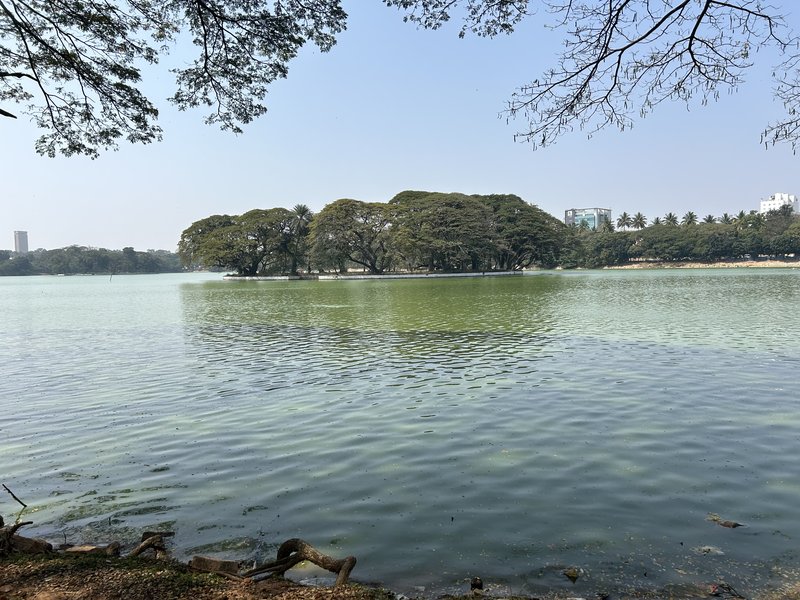
One of the biggest lakes inside Bangalore proper, Ulsoor Lake was built up as a tank on the city's eastern edge and now holds several wooded islands near its centre, ringed by rain trees. A promenade runs along the western shore, and pedal boats and small rowboats launch from the boathouse for a slow circuit past the islands — the only stretch of open water on the itinerary.
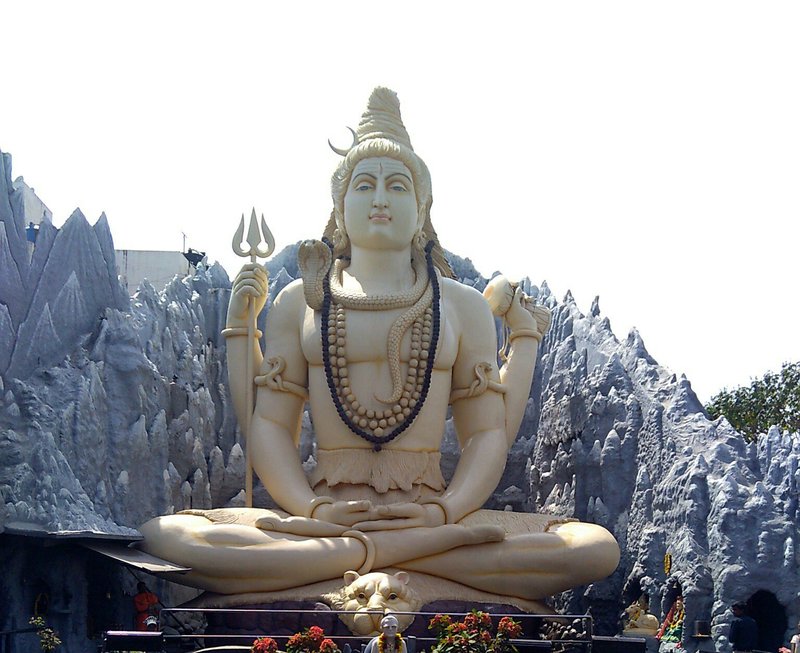
A 65-foot seated Shiva, carved by sculptor Kashinath in 1995, rises out of an artificial grey rock face built to suggest Mount Kailash, trident in hand and a cobra coiled at the shoulder. The temple beside the Kempegowda Institute complex on Old Airport Road draws worshippers all day and lights the statue for a laser show every Mahashivaratri.
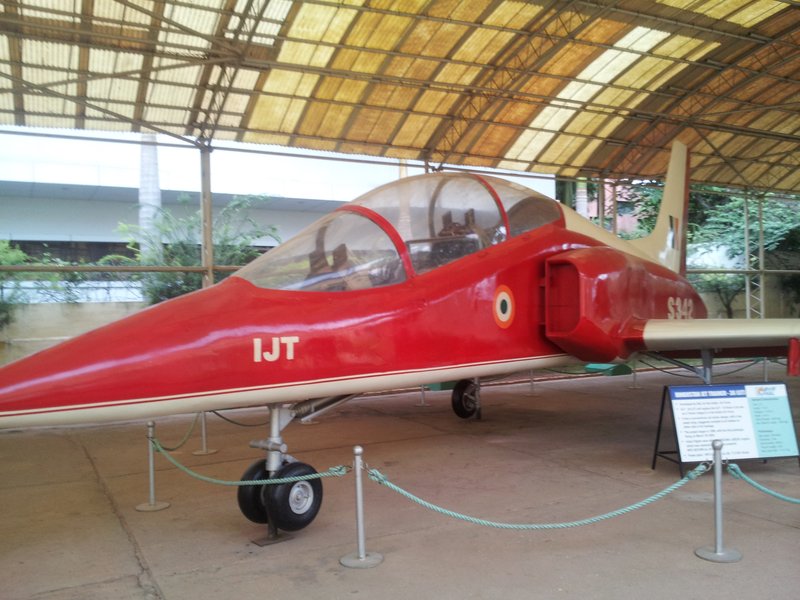
India's first aerospace museum opened in 2001 on Hindustan Aeronautics Limited's own Bangalore campus, tracing six decades of the country's aircraft industry. Full-size jets and helicopters — a MiG-21, a Sea King, the HJT-36 Sitara trainer, an Ajeet — sit under open-sided hangars alongside engine cutaways, a mock air-traffic-control tower and flight simulators visitors can pay to try.
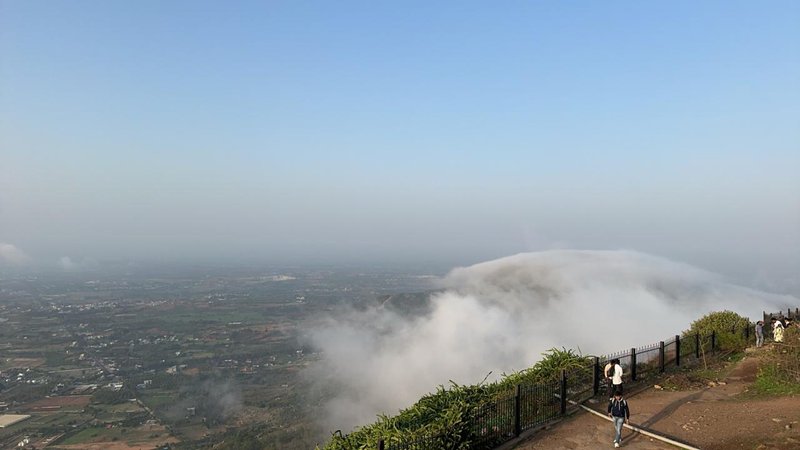
A fortified granite hill rising to 1,478m above the plain north of the city, Nandi Hills has been a retreat since the Ganga dynasty and later a Tipu Sultan stronghold — his summer house still stands near the top, beside Tipu's Drop, a sheer cliff on the western edge. The reason to come this early is the view: cloud rolls over the valley most mornings and burns off at sunrise.
ARRIVE Mysuru Junction: 20 min · 5 min → Mysore Palace
1.Mysore Palace~1 hr 30 min
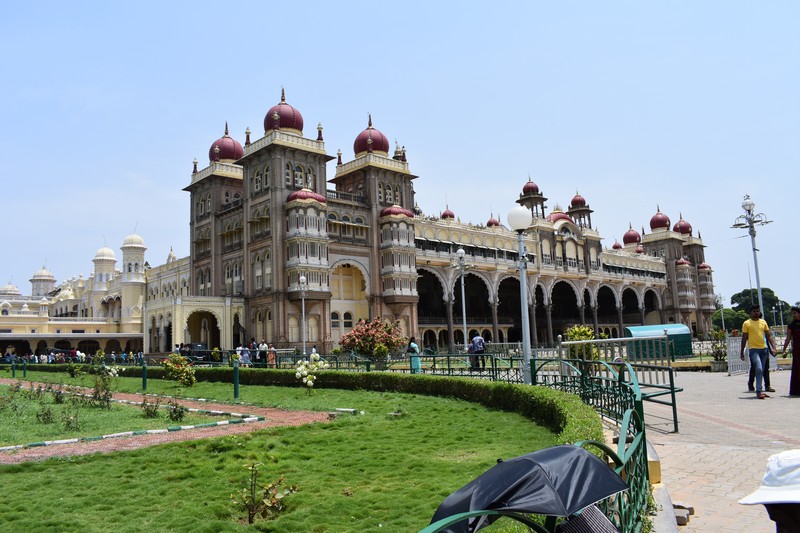
British architect Henry Irwin rebuilt the Wodeyar dynasty's royal seat after a fire, finishing this Indo-Saracenic palace of domes, turrets and grey granite in the early 20th century. Inside, the Kalyana Mantapa's stained-glass dome sits on cast-iron pillars from Glasgow, and two durbar halls carry carved granite columns. Around 97,000 bulbs outline it every Sunday and public holiday after dark.
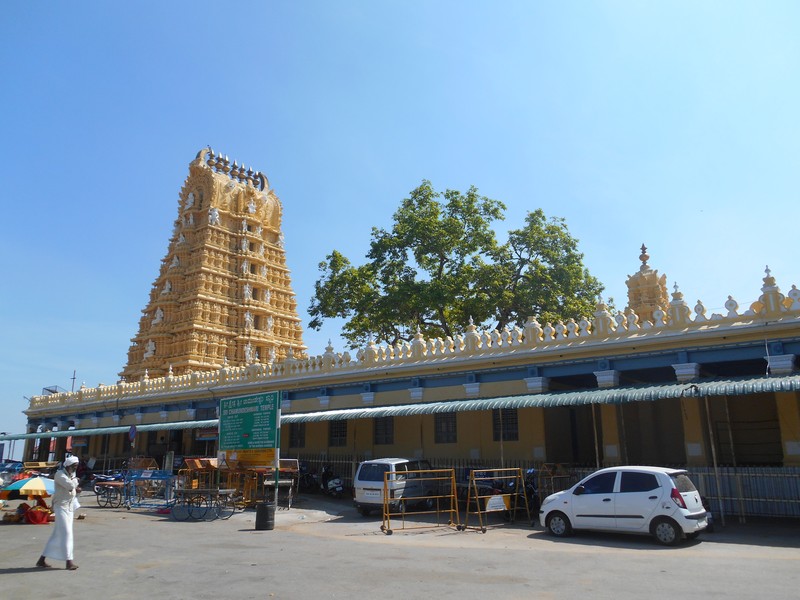
The Wodeyar maharajas' family deity, Chamundeshwari, is enshrined atop Chamundi Hill, 13km and roughly 1,000 vertical feet above Mysuru. A Hoysala-era shrine from the 12th century grew a soaring Vijayanagara-style gopuram in the 17th, and a monolithic granite Nandi stands roughly two-thirds up the old thousand-step staircase. The road drive up trades the steps for a city panorama instead.
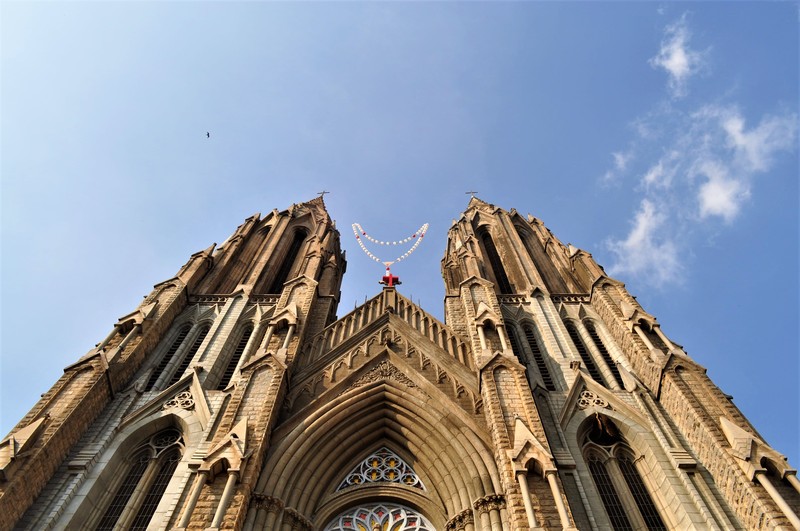
Maharaja Krishnaraja Wadiyar IV laid the foundation stone in 1933 after being presented with a relic of St Philomena, and the finished cathedral — modelled on Cologne Cathedral, with twin 175-foot Neo-Gothic spires — opened in 1936 as one of the tallest churches in Asia. A crypt beneath the altar holds the relic, and stained glass along the nave runs through the life of Christ.
A four-hour morning walk through Malleswaram, the quarter laid out north of the old fort: breakfast at a decades-old eatery, two ancient temples, a silk-saree house, the street bazaars, and the modern ISKCON temple at the finish.
Bangalore's own version: the crisp rice-and-lentil crepe comes stained red with a chilli-garlic smear before the potato goes in, and arrives with butter still melting on it. Served from breakfast until it runs out.
Coffee from the Karnataka hills, ground fine and dripped through a two-part steel filter, then poured between tumbler and dabarah until it foams. Ordered by strength of decoction, not cup size, and drunk standing up.
Rice, lentils, tamarind and a roasted spice blend cooked into one hot dish — the name means hot lentil rice. Karnataka's comfort food, served with a spoon of ghee and fried boondi on top for crunch.
Gram flour, sugar and a startling quantity of ghee, cooked until it sets into a sweet that crumbles as it is lifted. Invented in the Mysore palace kitchens down the road, and sold by weight all over the city.
Foreign number: accepted. — International Login covers 27 countries including the US, UK, Canada, Germany and Australia, and the sign-in code reaches a foreign handset.
The one that actually delivers fastest here: deeper restaurant coverage across the central districts, quicker rider assignment at peak hours, and tracking precise enough to meet the rider at a hotel gate. Foreign cards are refused more often than they should be, so keep cash on delivery in reserve.
Foreign number: not accepted. — Phone sign-in wants an Indian number for the OTP; the browser version takes an email login instead, which is the way in from a foreign handset.
Stronger as a directory than as a courier: menus, photographs and review counts run deeper than anything else in the city, which makes it the app to decide on dinner with even when the order goes somewhere else. Delivery coverage matches Swiggy in the centre and falls away toward the edges of town.
Foreign number: accepted. — An account opened abroad keeps working here, and a fresh sign-up sends its code by SMS, so the home SIM has to stay live for roaming texts.
The predictable way across a city whose street numbering follows no sequence a visitor can read: the fare is fixed before you accept and the route is on screen. Cars thin out and cancel at peak hours; Uber Auto puts the same app on a rickshaw, costs a fraction, and gets down lanes a sedan cannot.
Foreign number: not accepted. — Sign-up requires an Indian mobile number for the OTP, and a foreign handset never clears that verification step.
The home-grown rival, and on Bangalore's streets it often has cars where Uber has none, with an auto-rickshaw tier that is the cheapest metered way across town. The catch for a visitor is the door: without an Indian SIM there is no account, so it is worth knowing about mainly if you are travelling with someone local.
Foreign number: not accepted. — Registration is India-only and the code goes to an Indian number, so a foreign handset cannot open an account at all.
Bangalore's answer to gridlock: a bike taxi that filters between stopped traffic and turns a 40-minute crawl into 15 minutes, plus the city's most reliable auto-rickshaw hailing. Helmets are provided and the ride is not for everyone, but locals use it more than anything else at rush hour.
The Panchaganga Superfast is the quickest run to Hassan, then a taxi covers the last hour to Belur and Halebidu, UNESCO-listed Hoysala temple towns whose soapstone carving rewards the whole detour. Chennakesava Temple in Belur and the twin shrines at Halebidu carry some of the finest stone carving in South India.
Bangalore runs on two clocks, and the traffic decides which one you are on
Distance means nothing here and time means everything. The four stops in this guide sit inside a six-kilometre triangle, and the same leg that takes nine minutes at ten in the morning takes forty at six in the evening. Plan the day north to south the way it is written, keep the long hop out to Rajajinagar for early, and treat any crossing of the centre after 5pm as a half-hour whatever the estimate promises.
The city sits at nearly a thousand metres, which is the whole reason it exists as it does. Evenings are cool enough for a layer even in April, the light goes fast and flat after six, and the monsoon arrives twice — once from the southwest in June and again from the northeast in October. Neither is a washout; both mean an umbrella and an hour's patience in the afternoon.
Cash still opens more doors than a foreign card. The gate at Lalbagh, an auto-rickshaw flagged on the street, a filter coffee at a stand-up counter — all of them are simpler with small notes. Almost every counter takes UPI, which visitors cannot use without an Indian bank account, so the tourist's fallback is cash rather than plastic.
Temples ask for bare feet, and shoes go into a rack at the entrance for a small fee or nothing at all. At ISKCON the route is one-way through the complex and doubles back for no one, so leave nothing you need beyond the shoe counter. Shoulders and knees covered is the safe default, and it costs nothing to be the person who was dressed for it.
The Kannada name is Bengaluru — it has been official since 2014 and appears on every station board, timetable and street sign in the city. Bangalore is what most people still say out loud, including locals. Recognising both is worth more here than picking one.