Built over the 1955 excavations of medieval Bergen destroyed in the 1702 fire. The permanent collection displays over 300,000 artefacts from the foundations — runes, tools, shoes, and ship fragments — with 12th-century building remains visible underfoot through glass floors.
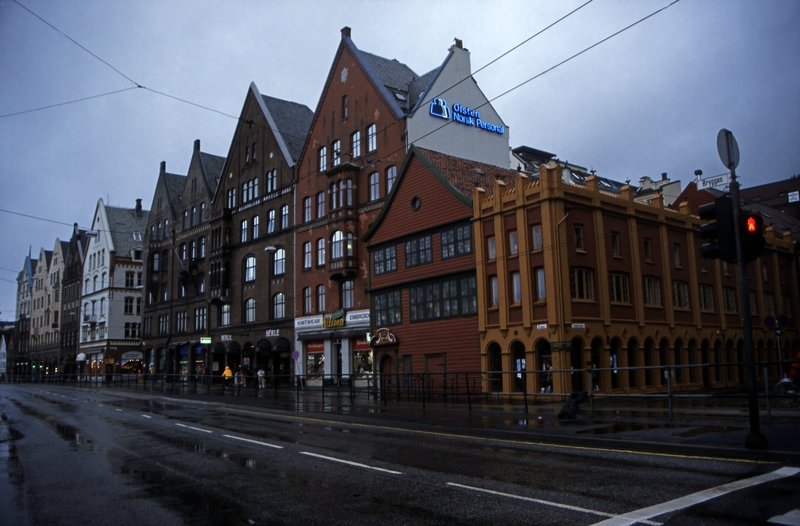
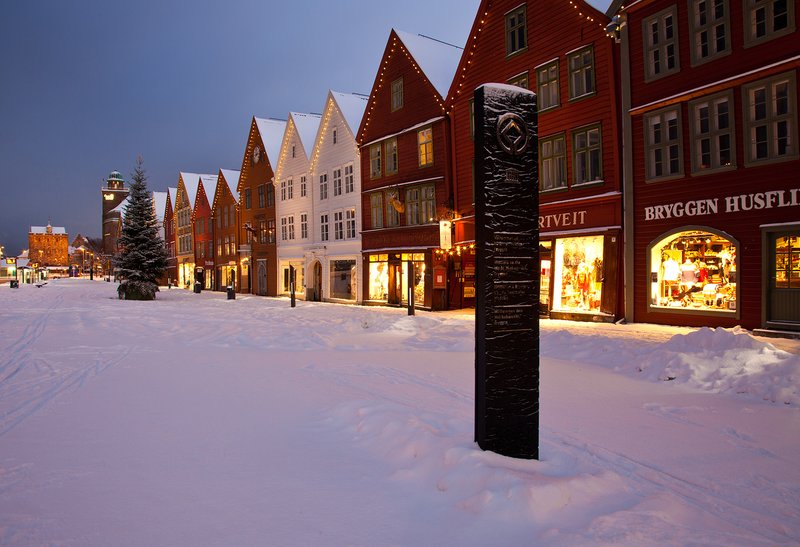
The old Hanseatic wharf and the reason Bergen exists — a tight row of gabled wooden merchant houses in ochre, red and cream along the harbour. A UNESCO World Heritage Site, it was the German trading hub for dried cod for four centuries, and the leaning facades are the city's signature image.
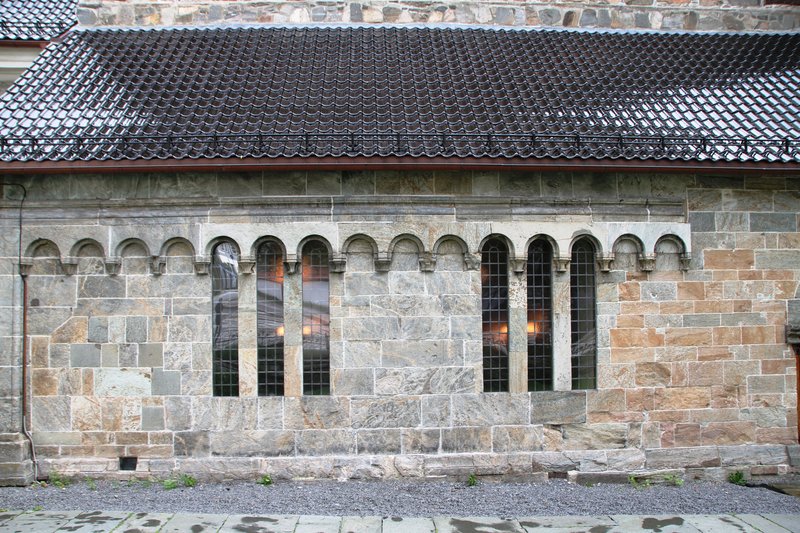
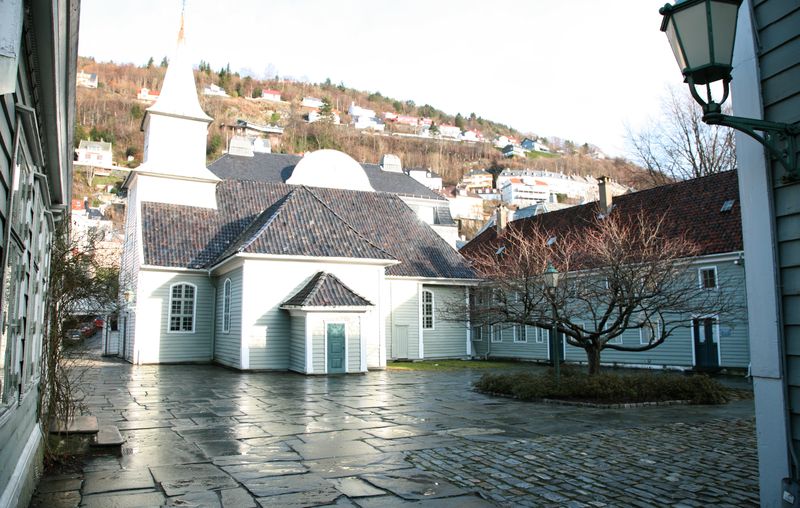
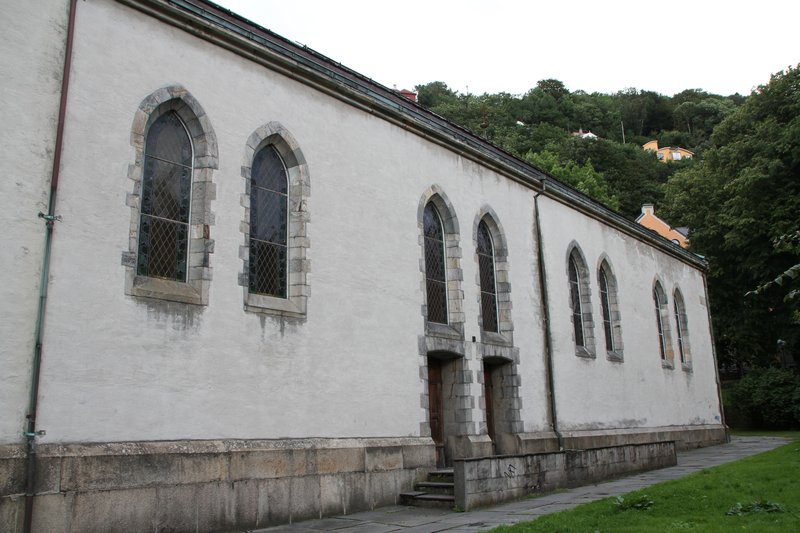
Bergen's oldest surviving building, a Romanesque stone basilica raised around 1130–1170. Its twin west towers survived the fires that razed the wooden city; inside are a gilded late-Gothic altarpiece and a baroque pulpit. Locals still call it Tyskekirken — the German Church.
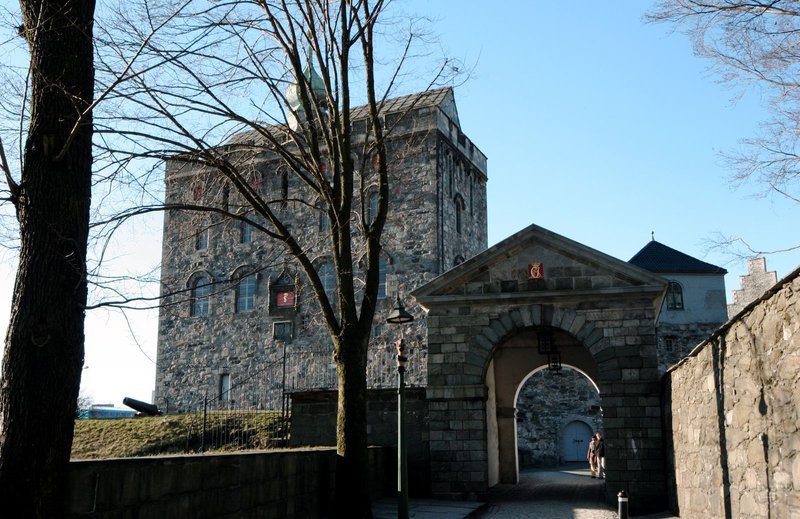
The keep of Bergenhus Fortress and Norway's foremost Renaissance monument. A 1270s royal residence was rebuilt in the 1560s by governor Erik Rosenkrantz into a fortified residence and cannon tower. Narrow stone stairways climb past royal chambers to the roof, with a sweeping view over Vågen harbour and Bryggen.
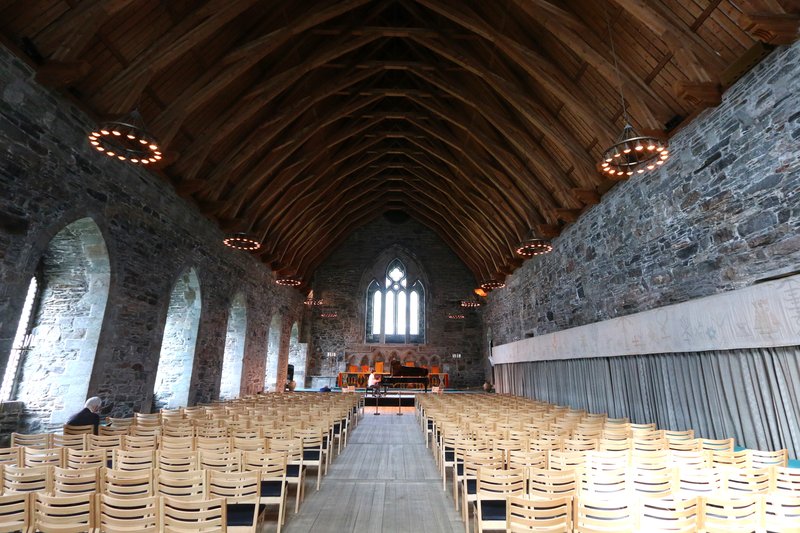
The largest medieval secular building in Norway, built in 1247–1261 for King Håkon Håkonsson as Bergen's royal banqueting hall. Badly damaged in the 1944 Holen magazine explosion and restored by 1961. Audio tours explain the coronation feasts held here and the restoration project.
The highest of Bergen's seven mountains at 643 metres, reached in six minutes on the red cable car from the city's east side. The summit plateau gives a 360-degree panorama of fjords, city and open sea — on a clear day you can see as far as the Hardanger plateau.
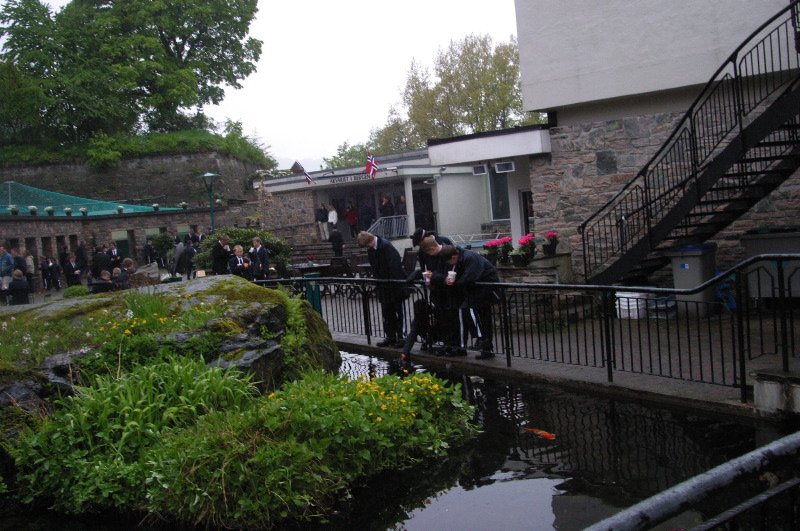
The largest aquarium in Norway, on the Nordnes peninsula since 1960, with penguins, seals and a two-million-litre tank of West Norwegian sea life. Twice-daily feeding shows make it a natural stop before the walk out to the Nordnes headland.
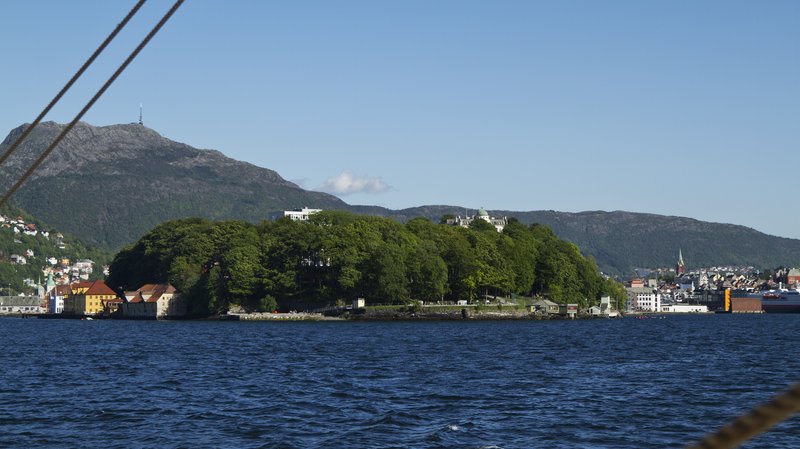
The long tongue of land west of Bryggen, ending in a park and a 1916 sea bathing pool with cold fjord water and sauna. The residential streets between are Bergen's best-preserved old wooden-house district and the setting for the city's quietest harbour view.
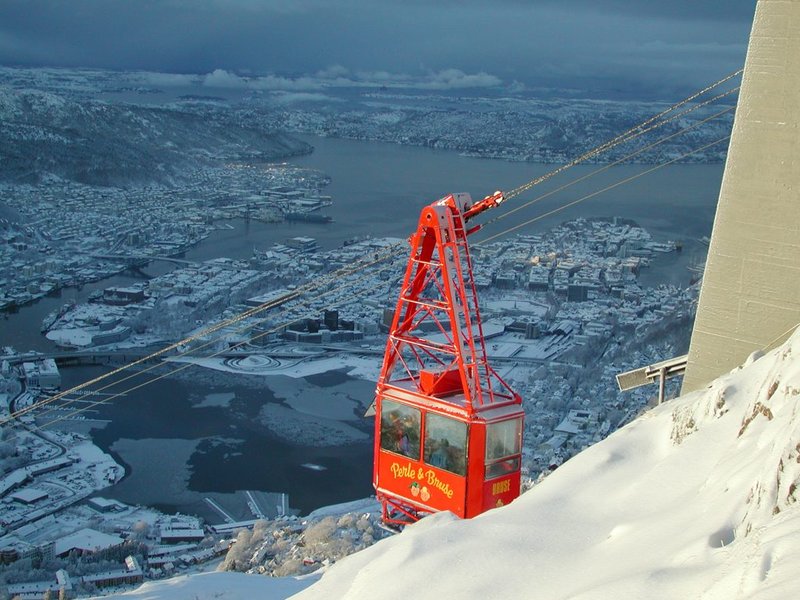
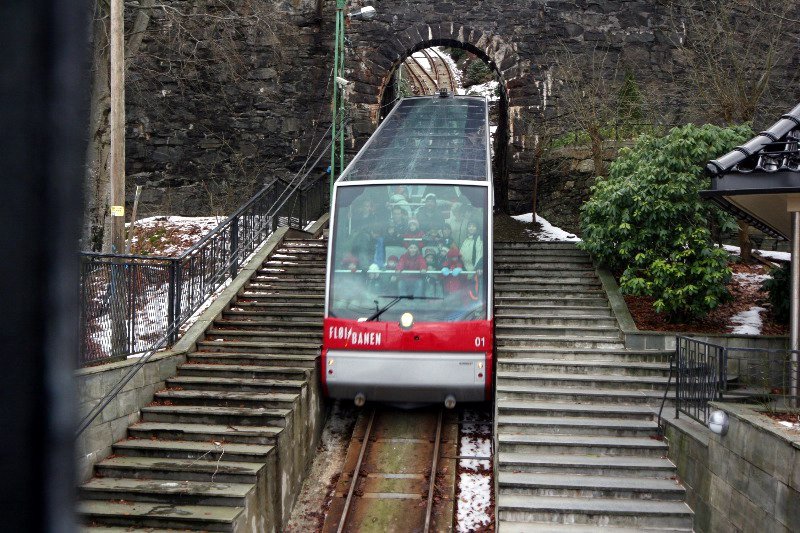
Bergen's much-loved funicular, running since 1918, climbs from the centre to the 320-metre summit of Mount Fløyen in about six minutes. The top is a panoramic balcony over the seven mountains, the harbour and the fjord, with forest trails, a troll forest and a café behind the viewpoint.
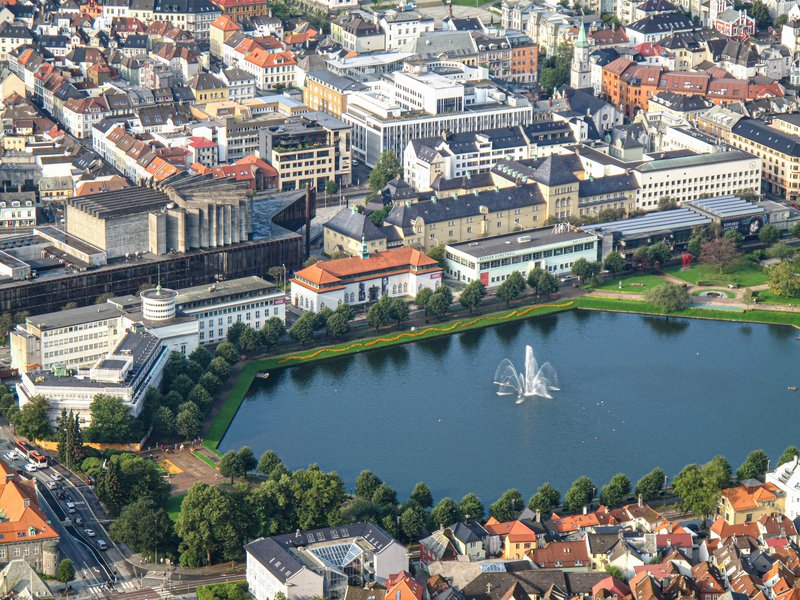
Bergen's finest art museum — the century-old Rasmus Meyers building housing the city's collection of Edvard Munch, J.C. Dahl and Norwegian masters from the Romantic to the Modernist era. Four interconnected galleries look over the Lille Lungegårdsvannet lake.
Europe's last functioning leprosy hospital, operational from the 15th century until 1946. The wards of St. Jørgen's Hospital preserve patient beds, surgical instruments, and case records. Armauer Hansen identified the leprosy bacillus here in 1873 — among the earliest isolations of a disease-causing bacterium.
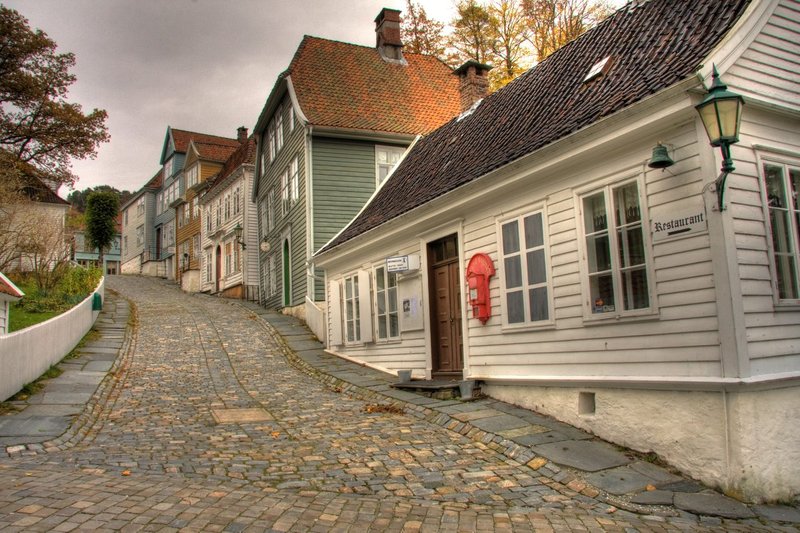
An open-air museum of 55 historic wooden buildings moved from across the city and reassembled as an 18th- and 19th-century Bergen street. Costumed guides animate the baker's, photographer's studio, post office and merchant's house.
Bergen's main cathedral, founded in the 12th century as a Franciscan friary and converted to a Lutheran cathedral in 1537 during the Reformation. The nave retains its medieval stone walls; the tower cannon balls lodged in 1665 during the Second Anglo-Dutch War remain embedded in the west wall.
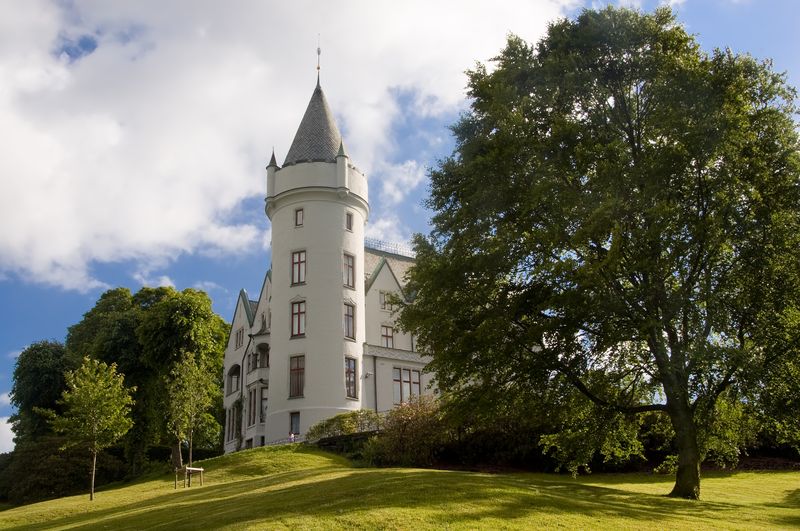
The Norwegian Royal Family's official residence in Bergen, a castellated Neo-Gothic manor built in 1900 above Nordåsvatnet. The parkland along the fjord is open year-round. The estate was donated to the state by Prime Minister Christian Michelsen in 1925; the manor opens for guided tours on selected days each summer.
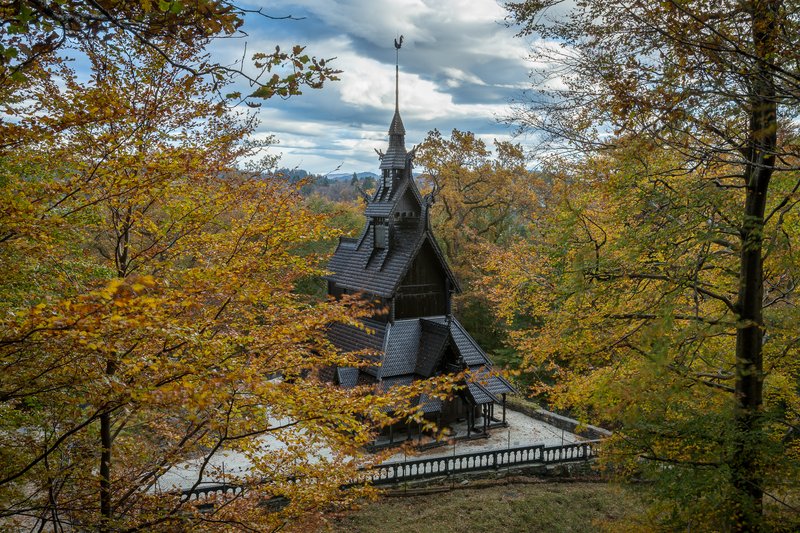
A 12th-century stave church originally built in Fortun, Sogn, and moved to Fantoft in 1883. Burned to the ground by arson in 1992, it was rebuilt using traditional medieval joinery — no nails, no concrete — and reopened in 1997. The dragons on the gables and the carved portal are faithful to the original design.
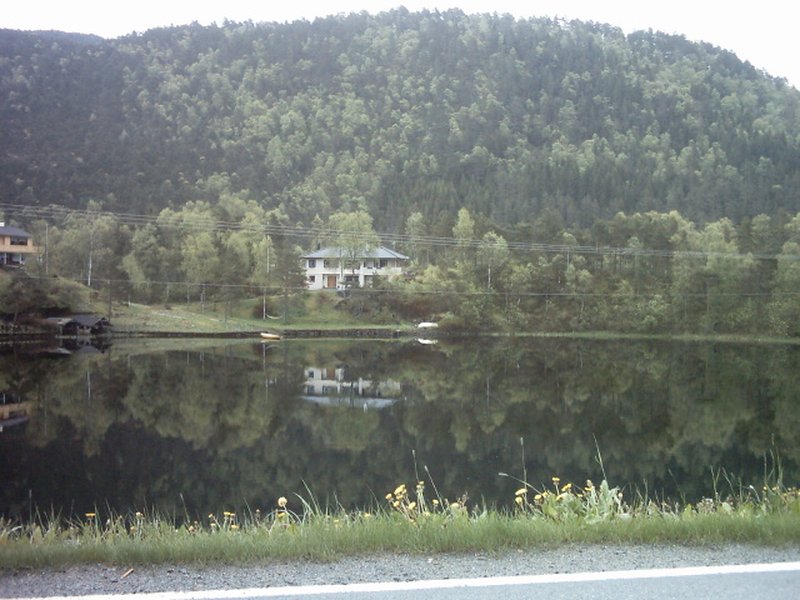
The villa where Edvard Grieg composed for 22 years, 1885–1907, perched on a wooded spur over the Nordåsvannet lake. The yellow clapboard house remains as he left it; the composer's hut where he actually worked is down by the water, and a small concert hall hosts summer recitals.
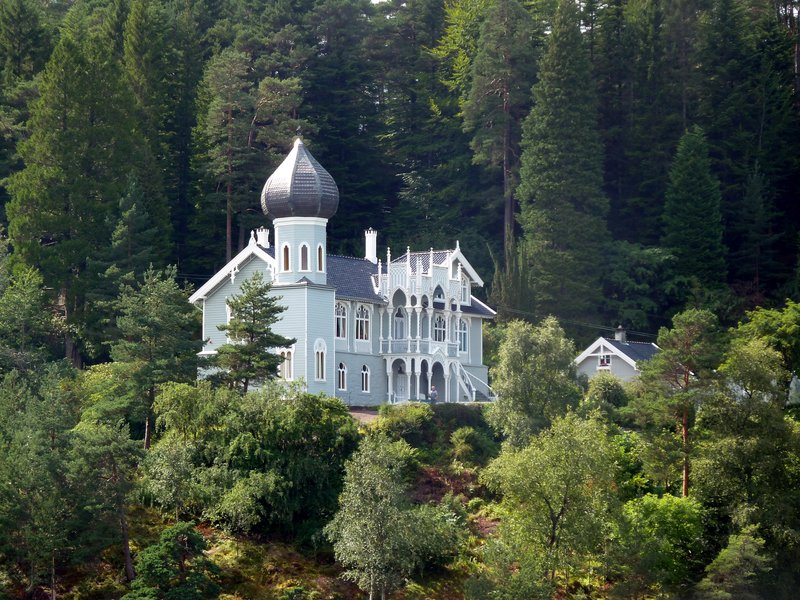
The island villa of violinist Ole Bull, built in 1873. The manor blends Moorish arches, Viking dragon carvings, and Swiss chalet details into a style Bull called Norwegian. A 12 km trail network crosses the wooded island, with views over Bjørnafjord. Bull died here in 1880; the estate opened to visitors in 1973.
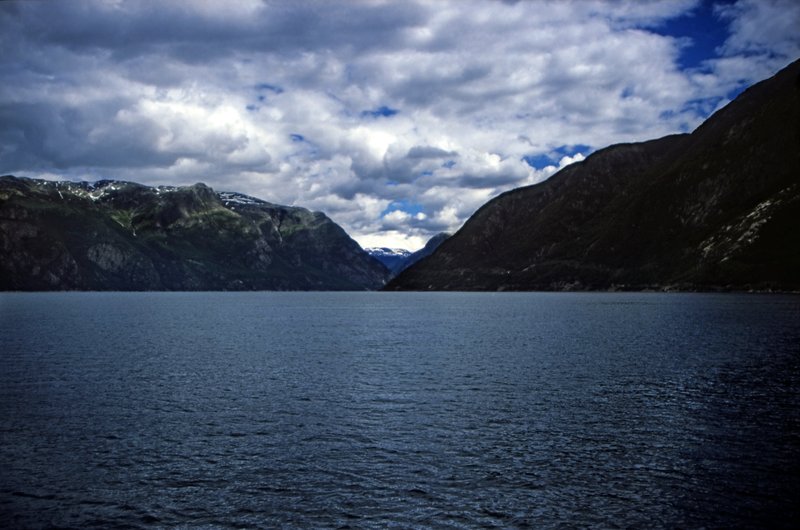
A village on the north shore of Hardangerfjord, 90 km east of Bergen, surrounded by apple and cherry orchards. The Folgefonna glacier rises to the south and the Hardangervidda plateau begins to the east — the main day-trip base from Bergen for Norway's second-longest fjord.
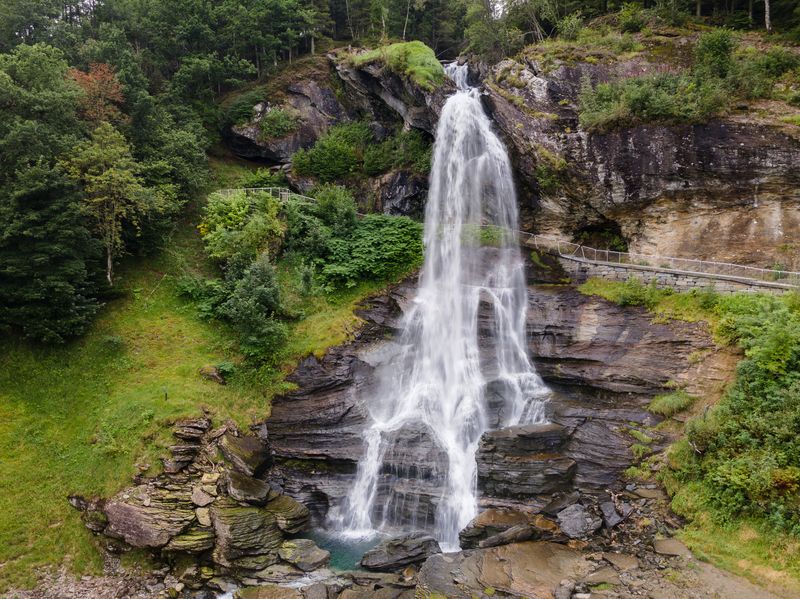
A 50-metre waterfall on the Steine river with a paved path that loops behind the cascade — one of the few waterfalls in Norway accessible from behind without climbing gear. The signposted path from the car park is a 15-minute loop. A natural overhang shields visitors from the full weight of the water.
A village at the inner junction of the Eidfjord and Simadalsfjord arms beneath vertical rock walls. The road from the village climbs 500 metres to the Hardangervidda plateau and the Vøringsfossen viewpoint. The Hardanger Nature Centre documents the glacier, fjord, and Norse settlement history of the region.
Authorised local guides cover Bergen's medieval fortress and the UNESCO wharf, then slip into the lanes behind Bryggen for a look at everyday life. A moderate 3 km walk.
A walk out along Bergen's hidden peninsula, Nordnes — wooden houses, secret alleys and stories of merchants, sailors and witch trials, ending at the Blue Stone.
A 3.5-hour small-group cruise through Byfjorden and into the Mostraumen strait with a live guide on board — dramatic mountain walls, waterfalls and a chance to spot porpoises and eagles.
A full-day guided trip combining the Flåm Railway, a UNESCO Nærøyfjord cruise and the Stegastein viewpoint 650 m above the water — Norway's most iconic one-day route from Bergen.
The most-reviewed fjord cruise departing Bergen — 3.5 hours through Byfjorden and the narrow Mostraumen strait with a local guide, café on board and panoramic views throughout.
A guided full-day loop from Bergen to the UNESCO Nærøyfjord by express boat, up the famous Flåm Railway and out to the Stegastein 650 m viewpoint — with a local guide throughout.
A small-group walking tour of Bergen's highlights — UNESCO Bryggen, St. Mary's Church, and the stories behind the Hanseatic merchants who shaped the city's golden age, led by local guide Martin.
A full-day bus tour along the Hardangerfjord — fruit orchards, Steinsdalsfossen and Latefossen waterfalls, and traditional Norwegian apple pie — with a local guide and fjord scenery throughout.
A 3.5-hour small-group cruise through Byfjorden into the narrow Mostraumen strait with a local guide — mountain scenery, waterfalls and wildlife watching from the boat deck.
Norway's classic one-day route: Bergen to the UNESCO Nærøyfjord by boat, up the Flåm Railway and across to the Stegastein viewpoint — guided throughout and back in Bergen by evening.
A close-up fjord cruise departing Bergen's inner harbour by rigid inflatable or luxury pontoon boat — 90 minutes through the narrow channels and dramatic mountain walls of Byfjorden, in thermal suits with a knowledgeable guide on board.
A full-day small-group guided loop along the Hardangerfjord — fruit farms, Steinsdalsfossen waterfall · you can walk behind it and the adventure hub of Voss before returning to Bergen.
Potato dumplings of potato, flour and salt, traditionally eaten on Thursdays with salted meat, vossa sausage and mashed swede. Bergen comfort food at its plainest and best.
The old Bergen classic — cod cured in salt and sugar, pressed, then fried in bacon and served with a dill, pea and crème-fraîche sauce. It even has its own day, 28 January.
Bergen's flagship concert hall and home of the Bergen Philharmonic, one of the world's oldest orchestras, and hub of the Bergen International Festival.
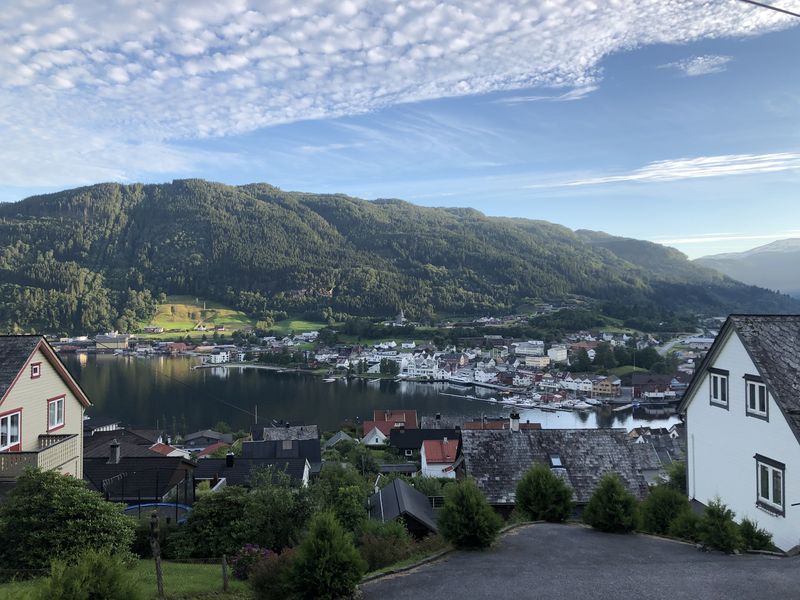
Small fjord village in the Dalselvi valley, once home to a celebrated wool mill — the intact factory complex is now a heritage site, and the surrounding hillsides and the Veafjorden offer easy walks with no tourist crowds.
Norway's adrenaline capital, on a lake ringed by mountains — the Voss Gondol cable car climbs straight up beside the station, with rafting, hiking and stave-church country all around. An easy hour up the Bergen Line.
High-mountain junction station on the Bergen-Oslo line at 866 m, where the snow-clad Hardangervidda plateau unfolds around the platforms — the drama of the descent alone justifies the trip, with steep snowfields visible even in early summer.
Ride the Bergen Line to Myrdal, then the famous Flåm Railway down a near-vertical valley of waterfalls to the Aurlandsfjord, an arm of the UNESCO-listed Nærøyfjord. One of the world's great train descents.
Norway's most popular ski resort sits on the open Hardangervidda plateau at 800 m — in summer the same landscape turns to hiking trails across Europe's largest mountain plateau, with the train journey crossing some of the most dramatic high-altitude scenery in Scandinavia.
Bergen sees rain on roughly two out of every three days, and instead of fighting it the city built an identity around it — locals will tell you there's no bad weather, only bad clothing. Pack a shell, and a grey sky over Bryggen's wooden facades turns out to be the most flattering light the city has; the colours deepen and the harbour goes to pewter.
There's a neat thread running through this one-day route: it climbs through Bergen's whole timeline in a few hundred metres. Bryggen is the medieval trading town, St Mary's the stone church the Germans worshipped in, the Rosenkrantz Tower the Renaissance seat of royal power — and then the Fløibanen, a 1918 feat of engineering, lifts you above all of it to see how the seven mountains pin the city to the sea. Four stops, eight centuries, one harbour.