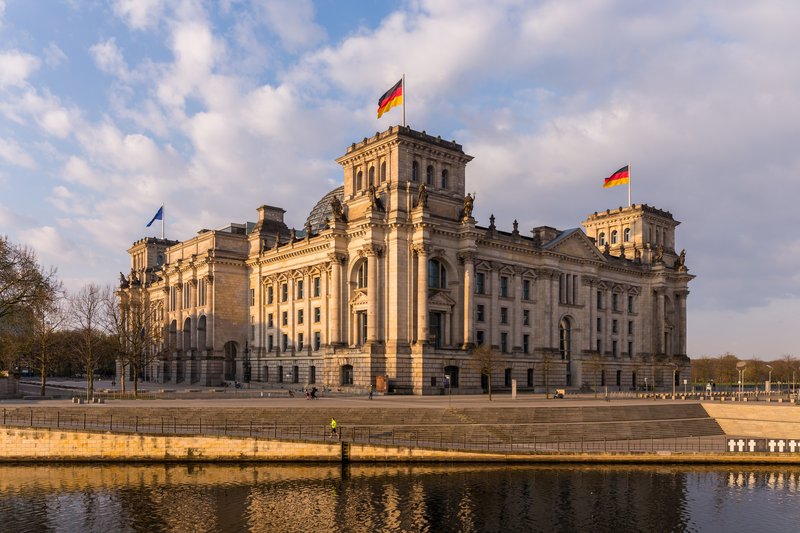
Germany's parliament, wrapped around Norman Foster's mirrored glass dome. A spiral ramp climbs inside the cupola for a 360° view over the government quarter, while daylight pours straight down into the debating chamber below.
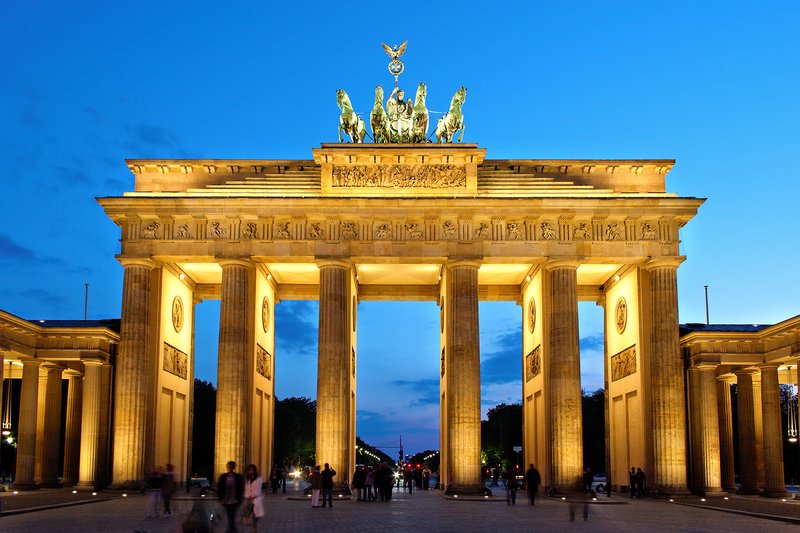
Berlin's defining monument — a neoclassical gateway crowned by the Quadriga chariot. Once stranded in the Wall's death strip, it is now the city's symbol of reunification and the head of the Unter den Linden boulevard.
4 min · 4 min → Memorial to the Murdered Jews of Europe
3.Memorial to the Murdered Jews of Europe~30 min
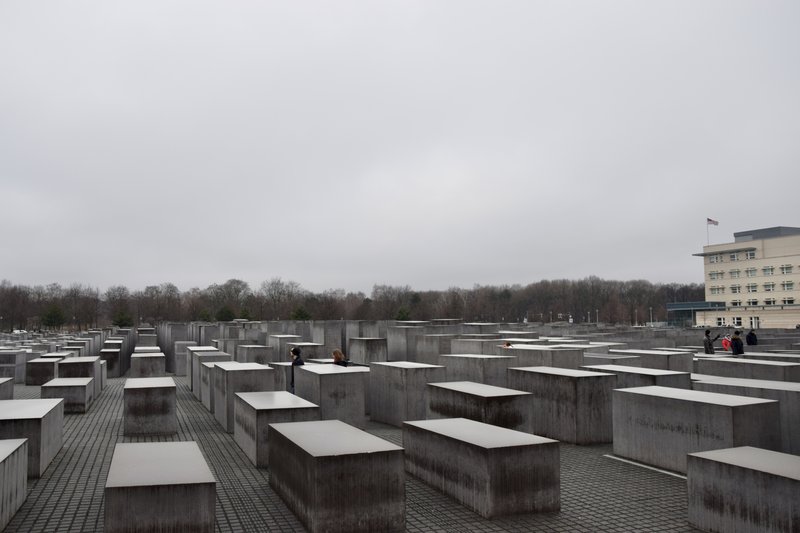
Peter Eisenman's field of 2,711 grey concrete stelae rolls across a whole city block on an undulating floor. Walk in and the slabs rise overhead until the noise of the street drops away — disorienting by design. An underground information centre holds victims' names.
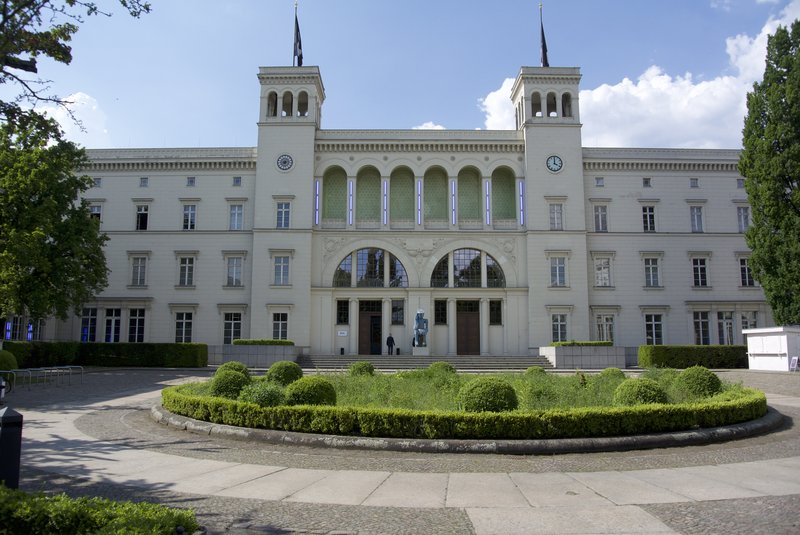
Berlin's museum for contemporary art in the city's only surviving neoclassical railway terminus, built in 1846. Dan Flavin's neon installation has lit the facade since 1996. The permanent collection centers on Joseph Beuys, Anselm Kiefer, Warhol, and Rauschenberg.
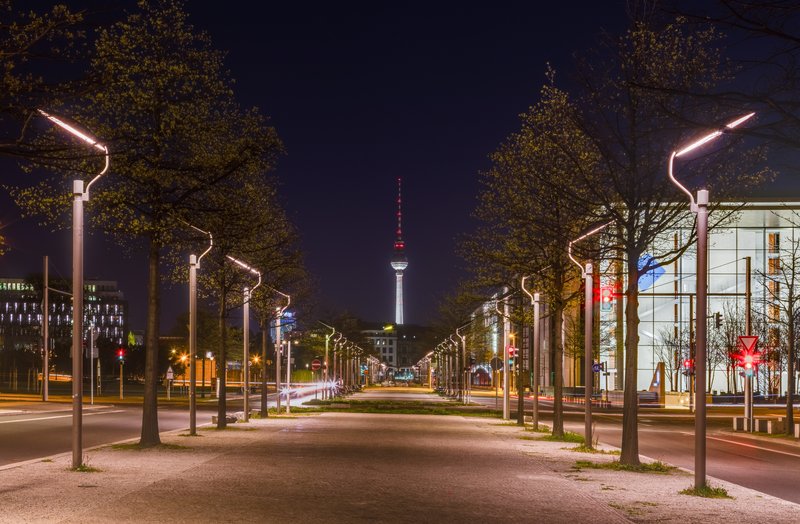
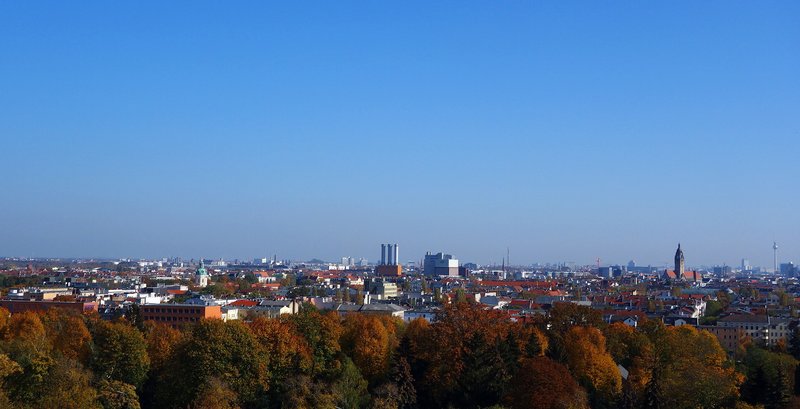
At 368 m, Germany's tallest structure — built by the GDR and still the needle on Berlin's skyline. A fast lift rises to the observation deck at 203 m, with a slowly revolving restaurant just above.
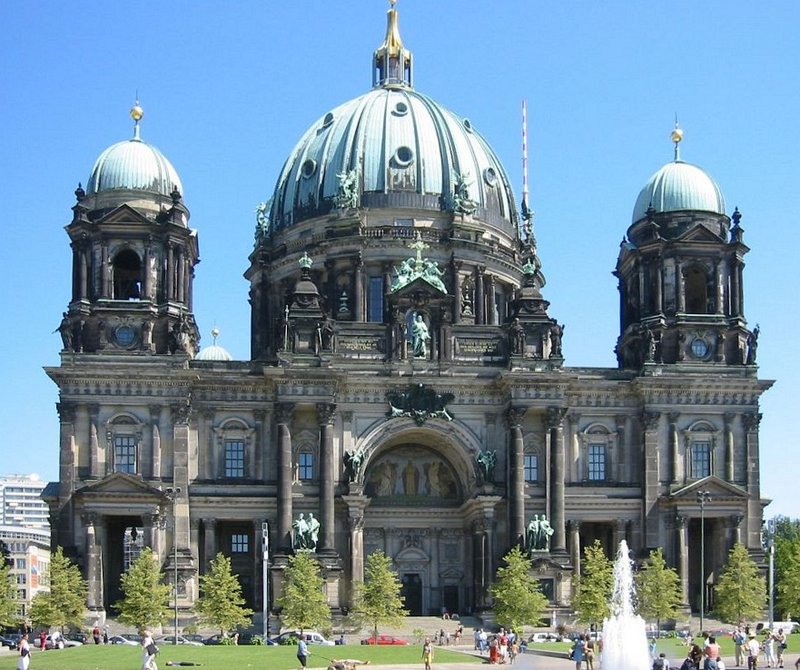
The grand Hohenzollern court church on the Lustgarten, its green copper dome a landmark over Museum Island. A 270-step climb circles the dome's exterior gallery for a sweeping view across the river and the city's rooftops.
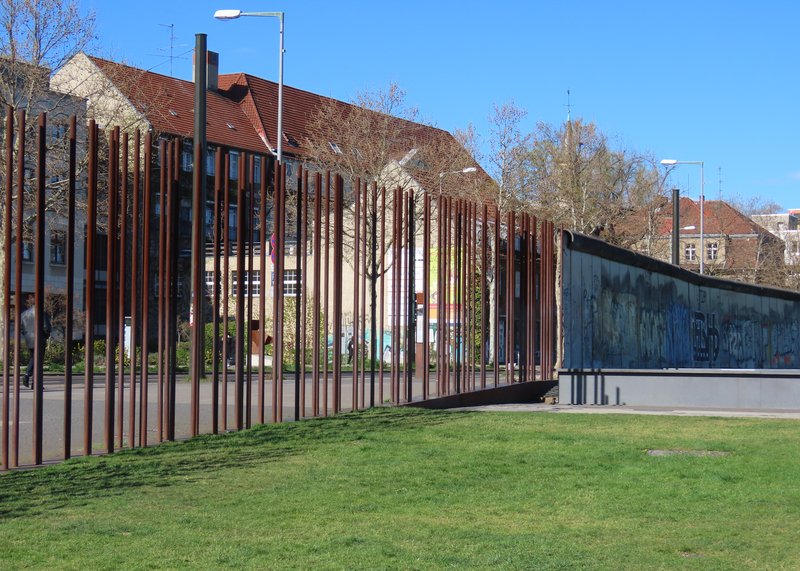
The most complete surviving stretch of the border, running 1.4 km along Bernauer Straße — preserved death strip, watchtower, and a section of wall standing in its full staggered depth. Open-air exhibits and a viewing platform explain how the city was cut in two.
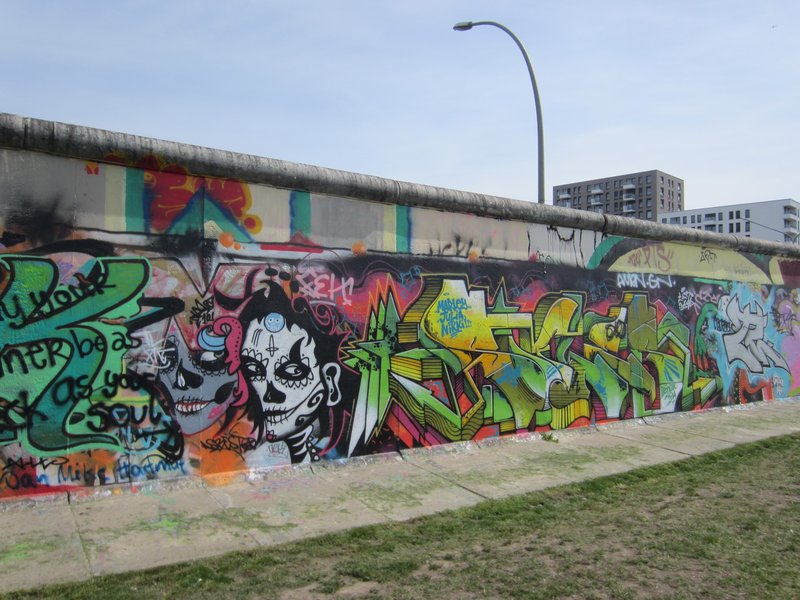
A 1.3 km run of the Wall along the Spree, painted by artists from around the world — the longest surviving section and the largest open-air gallery anywhere. Dmitri Vrubel's fraternal kiss of Brezhnev and Honecker is the signature image.
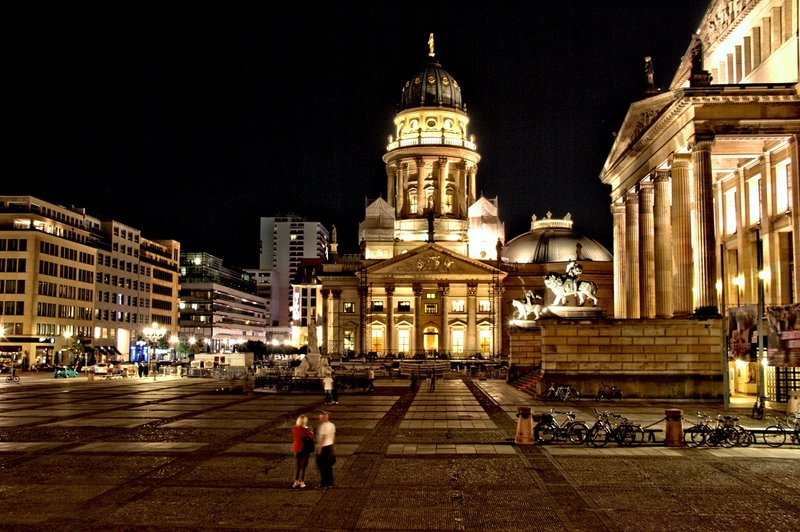
Widely called Berlin's most beautiful square, framed by the twin German and French Cathedrals with the colonnaded Konzerthaus between them. Recently reopened after a full restoration of its historic paving.
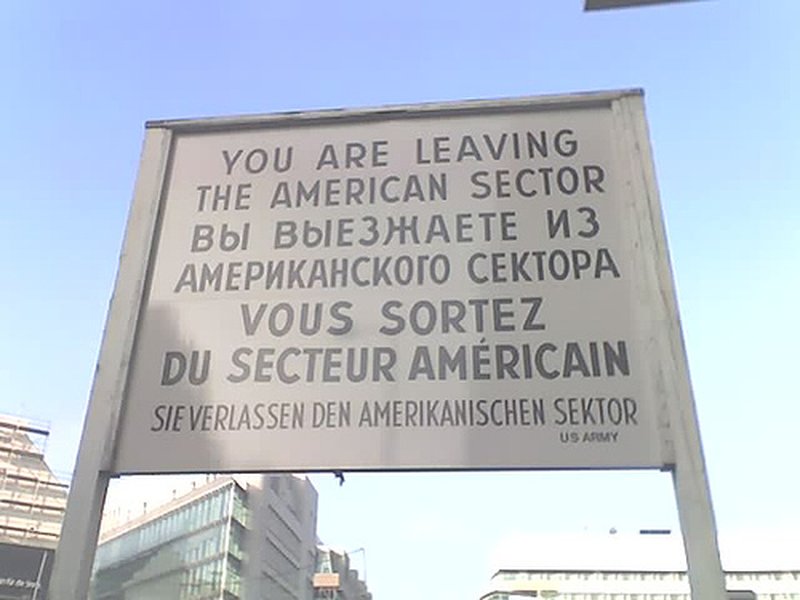
The best-known crossing point between East and West, where Soviet and American tanks once faced off. A replica guardhouse and the "You are leaving the American sector" sign mark the spot, ringed by open-air panels telling the border's story.
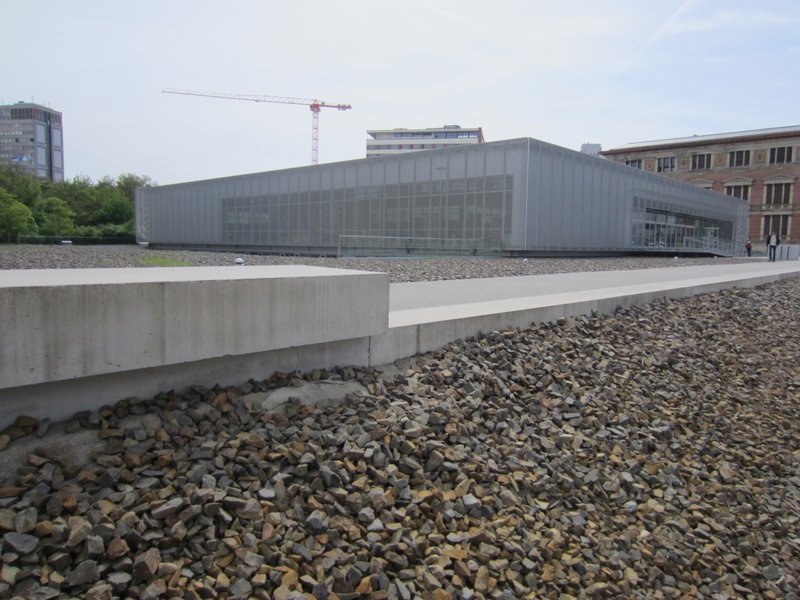
A documentation centre on the cleared site of the former Gestapo and SS headquarters. The exhibition traces the machinery of the Nazi police state, set beside one of the longest remaining stretches of outer Wall.
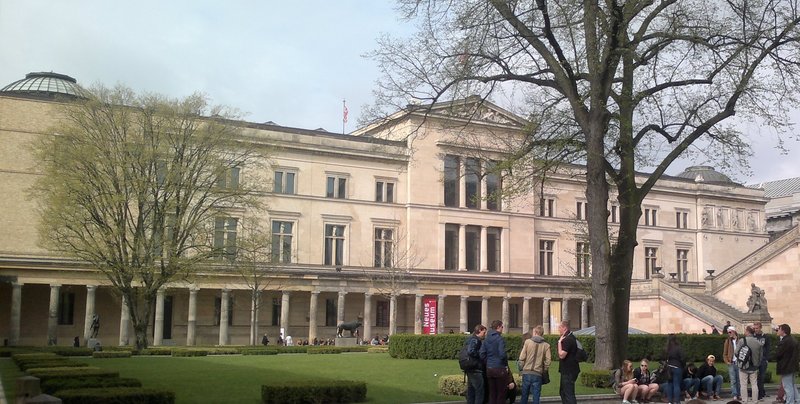
The home of the 3,300-year-old bust of Nefertiti, displayed alone in a domed hall. David Chipperfield's acclaimed rebuild wove the war-ruined shell back together, and the Egyptian and prehistory collections are world-class.
Berlin's largest surviving royal palace, a baroque and rococo residence built for Queen Sophie Charlotte. The state apartments, the Porcelain Cabinet, and the formal gardens running down to the Spree make a full morning.
From Hotel: 2 min · 3 min → Kaiser Wilhelm Memorial Church
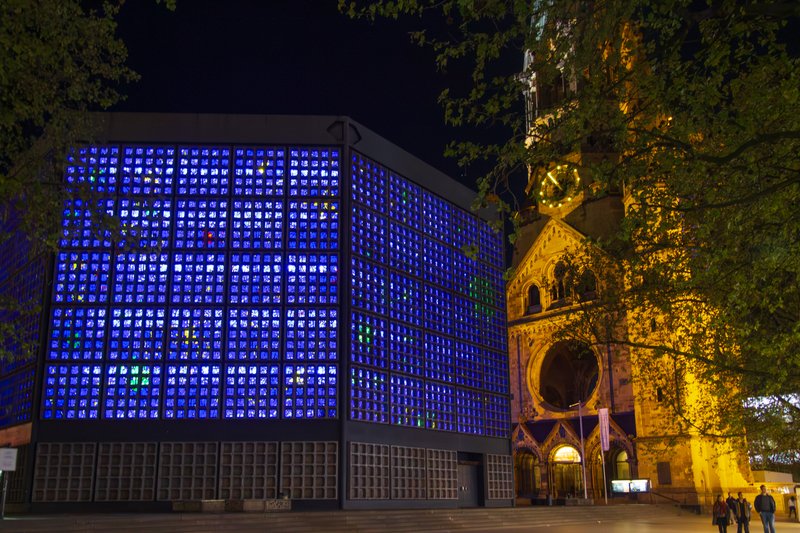
1.Kaiser Wilhelm Memorial Church~45 min
The jagged, bomb-damaged spire left standing on Breitscheidplatz as an anti-war memorial — locals call it the "hollow tooth." Beside it, a modern octagon glows with deep-blue stained glass, and the ruined hall holds a small exhibition.
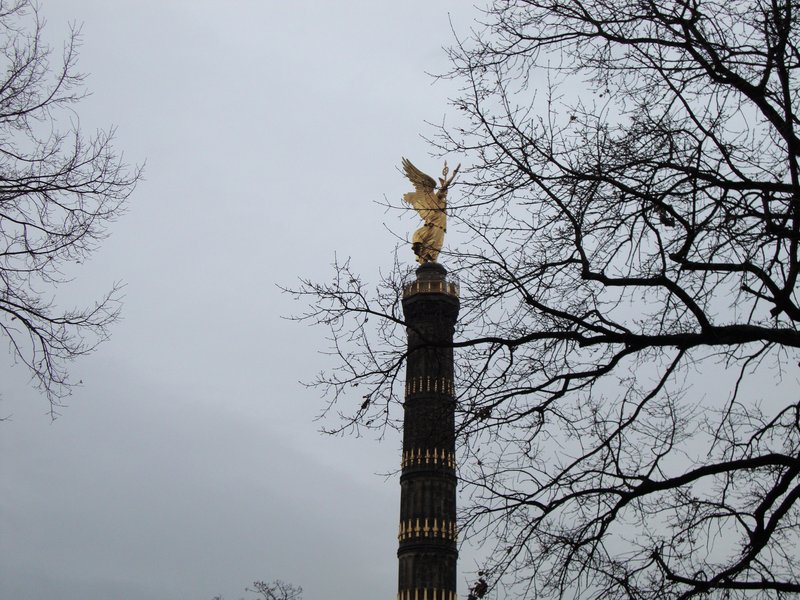
The golden Viktoria stands 67 m up at the heart of the Tiergarten, where five avenues meet at the Großer Stern. Climb the 285-step spiral inside for one of the best wide views over the park and the city's east–west axis.
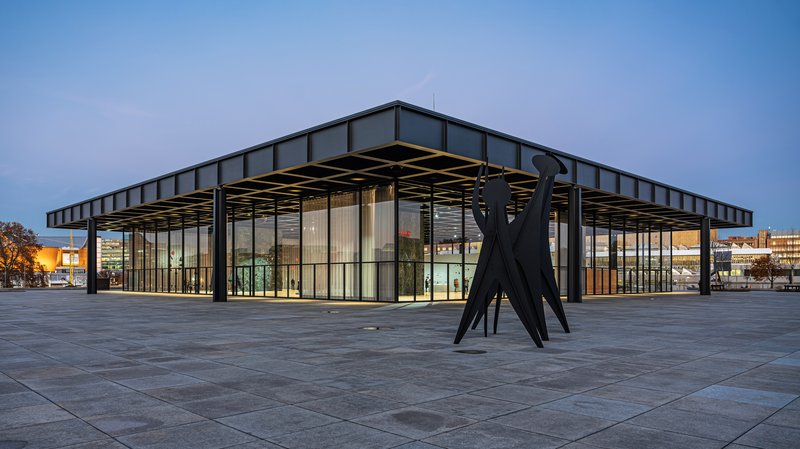
Ludwig Mies van der Rohe's last major building and one of modernism's defining works — a black steel roof floating above eight cruciform columns, enclosing a vast glass hall. The permanent collection of Expressionism, Cubism, and Bauhaus lives underground; the upper pavilion hosts rotating exhibitions.
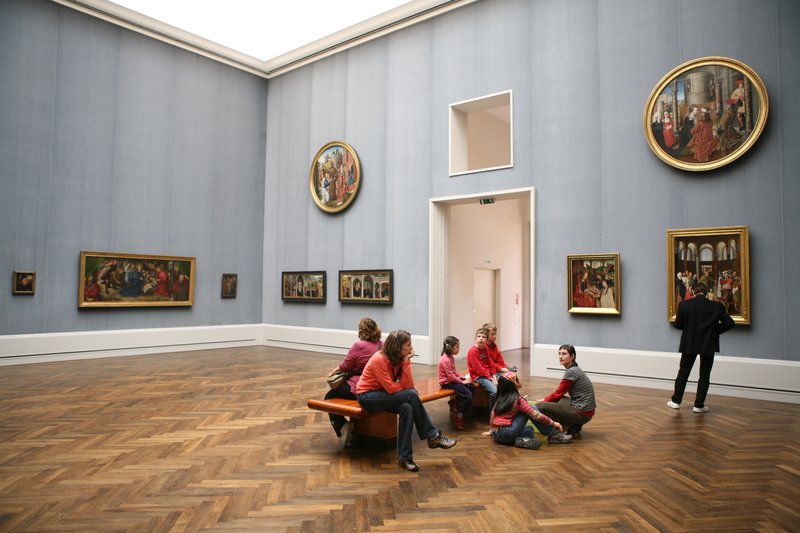
One of the world's leading collections of 13th–18th century European painting — 1,250 works across 53 rooms, including Rembrandt, Caravaggio, Raphael, Botticelli, Vermeer, and Dürer. The museum was built as a public scholarly collection, not a royal gallery.
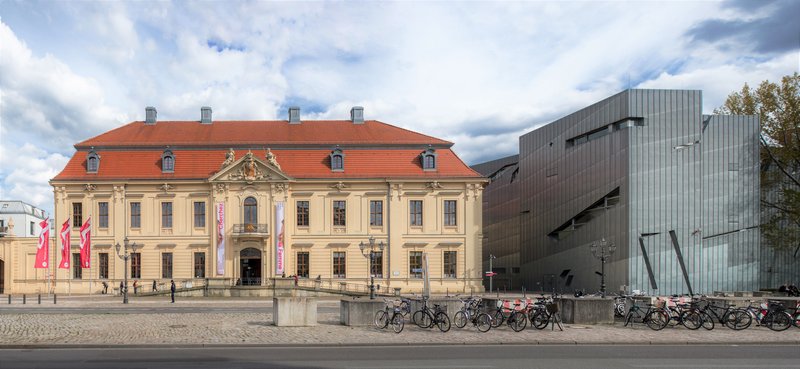
Daniel Libeskind's building is the experience — a zigzag zinc form criss-crossed by voids, three basement corridors converging toward the Holocaust Tower, and the tilted Garden of Exile. Architecture encodes dislocation into its geometry. The permanent exhibition covers 2,000 years of German Jewish life.
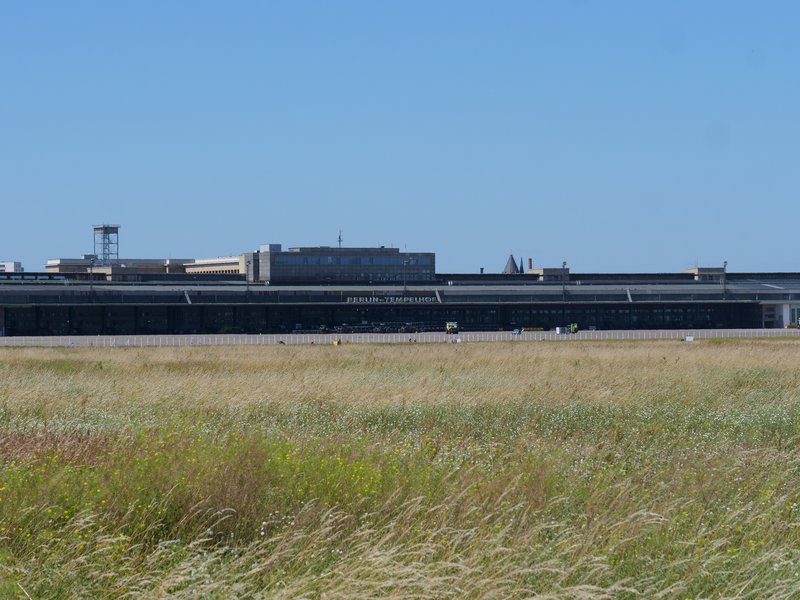
The former Tempelhof Airport — where Allied cargo planes landed every 90 seconds to supply blockaded Berlin during the 1948–49 Airlift. Ernst Sagebiel's monumental 1930s terminal is one of the world's largest buildings by footprint. The runways and taxiways are now a 355-hectare park.
9:11am Berlin Hauptbahnhof → 9:36am Potsdam Hauptbahnhof
9:41am Berlin Hauptbahnhof → 10:06am Potsdam Hauptbahnhof
10:11am Berlin Hauptbahnhof → 10:36am Potsdam Hauptbahnhof
ARRIVE Potsdam Hauptbahnhof: 28 min · 10 min → Sanssouci Palace
1.Sanssouci Palace~1 hr 30 min
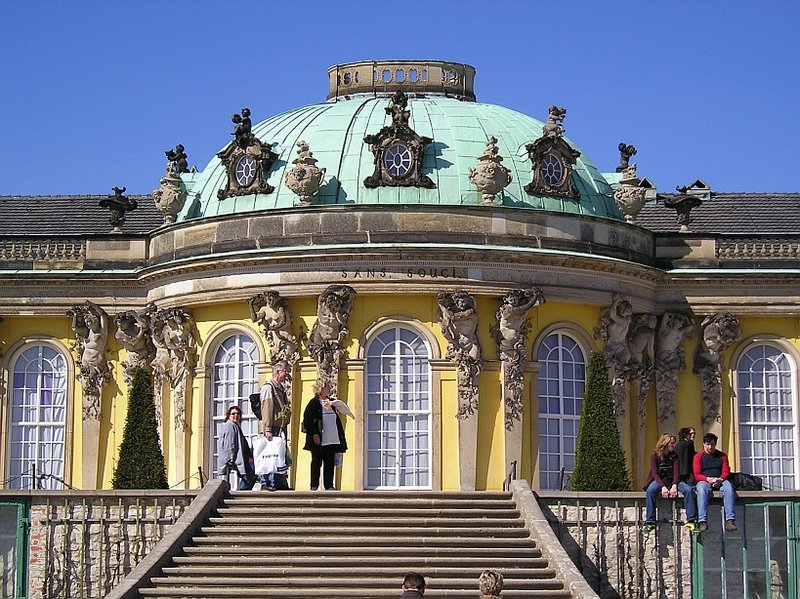
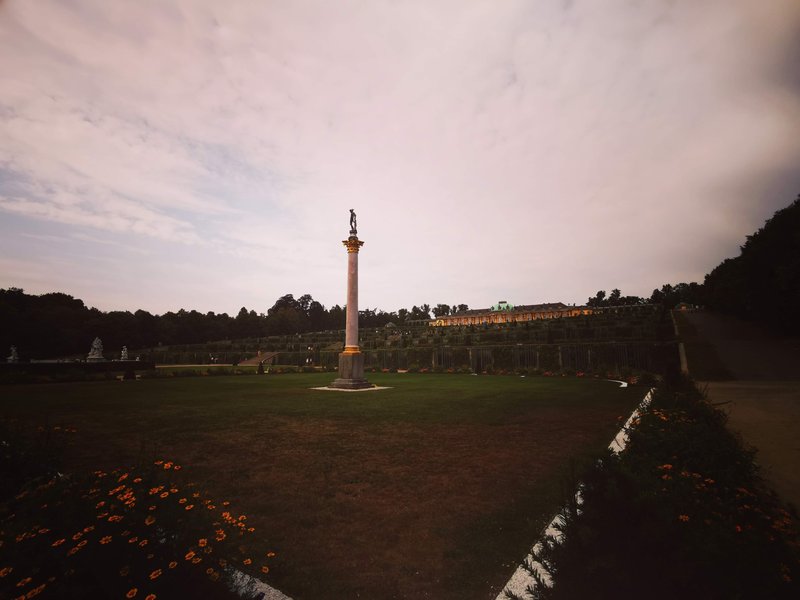
Frederick the Great's summer retreat, a single-storey rococo jewel set above six terraced vineyards. The intimate state rooms and the gilded Voltaire Room are the highlight of a UNESCO World Heritage park.
Three hundred hectares of avenues, fountains, and follies linking Frederick's palaces — the Great Fountain, the Chinese House, the Orangery, and the New Palace. Free to wander and a beautiful walk back toward the station.
A guided loop through historic Mitte — the Wall, Unter den Linden, Brandenburg Gate, Reichstag, the Holocaust Memorial, Checkpoint Charlie, and Gendarmenmarkt — with the Prussian, Nazi, and Cold War history tied together along the way.
A relaxed walk linking the headline sights of central Berlin with the stories behind them, starting right at the Brandenburg Gate and covering the government quarter, the boulevard, and the key Cold War landmarks.
Insider Tour Berlin's flagship walk from Friedrichstrasse Station through the Reichstag quarter, Holocaust Memorial, Checkpoint Charlie, and Hitler's Bunker site, with guides connecting Prussian history, the Nazi era, and the Cold War divide into one coherent three-hour arc.
Three hours tracing the Iron Curtain across central Berlin — from the Palace of Tears at Friedrichstrasse Station along the Wall's path to the East Side Gallery, with Cold War spy stories, escape attempts, and Stasi history woven throughout.
SANDEMANs two-hour walk into the former East Berlin sector — covering daily life under communism, the Wall's construction and fall, Checkpoint Charlie, and the border crossing mechanism that divided a city for nearly three decades.
Original Berlin Walks' half-day introduction — starting at Hackescher Markt and covering Museum Island, the Neue Synagoge, Holocaust Memorial, Checkpoint Charlie, Brandenburg Gate, and the Reichstag, with Prussian, Imperial, Nazi, and Cold War history woven together.
Award-winning guided bus tour from Berlin to Sachsenhausen Concentration Camp Memorial — with commentary en route, a walk through the historic grounds including Tower A and the "Arbeit Macht Frei" gate, and a return coach to the city.
Insider Tour Berlin certified walk starting at Friedrichstrasse Station and covering the Brandenburg Gate, Reichstag, Checkpoint Charlie, Berlin Wall sections, and Holocaust Memorial — with hidden corners of Nazi and Cold War history surfaced along the way.
One-hour Spree sightseeing cruise on a glass panorama ship with a live bilingual guide · German/English — passing the Reichstag, government quarter, Bellevue Palace, Berlin Cathedral, and Museum Island, with the roof opening on sunny days.
Insider Tour Berlin walk through Cold War Berlin — tracing the Wall's path from the Palace of Tears along Karl-Marx-Allee to the East Side Gallery and Alexanderplatz, with stories of escape attempts, CIA and KGB tunnels, and life in communist East Berlin.
Insider Tour Berlin's two-hour walk from the Brandenburg Gate Tourist Information office — covering the Reichstag, Soviet War Memorial, Hitler's Bunker, Topography of Terror, Holocaust Memorial, and Checkpoint Charlie with expert Cold War and Nazi-era storytelling.
Guided bus tour to Sachsenhausen Memorial — air-conditioned coach departs Friedrichstrasse, with en-route commentary on the camp's history, a walk through Tower A and the "Arbeit Macht Frei" gate, and a return bus to Zoologischer Garten.
Insider Tour Berlin walk from Friedrichstrasse Station through the Brandenburg Gate, Reichstag quarter, Checkpoint Charlie, and Holocaust Memorial — guides carry yellow umbrellas and run the route daily, connecting the Prussian, Nazi, and Cold War eras in three hours.
One-hour Spree sightseeing cruise by Reederei Hadynski on a glass panorama ship with a live bilingual guide · German/English — gliding past the Reichstag, government quarter, Berlin Cathedral, and Museum Island, with an open-air panoramic roof on fine days.
Insider Tour Berlin three-hour Cold War walk — from the Palace of Tears at Friedrichstrasse along the Wall's route through Karl-Marx-Allee to the East Side Gallery and Alexanderplatz, uncovering spy networks, escape tunnels, and life behind the Iron Curtain.
Berlin's signature street snack — sliced pork sausage under a dusting of curry powder and a tangy tomato-curry sauce, invented in the city after the war. Eaten standing up with a wooden fork and a side of fries.
The grilled-meat-in-flatbread sandwich was popularised in its modern form by Berlin's Turkish community. The vegetable-piled version is now a city institution worth queuing for.
The classic Berlin plate — a whole boiled, cured pork knuckle served with sauerkraut, pease pudding, and mustard. Hearty fare that the old-town taverns still do best.
Foreign number: accepted. — it runs on the same Uber account as the ride app, so no second code has to arrive.
Present in Berlin but not dominant — Lieferando carries far more of the city's Turkish, Vietnamese and late-night kitchens. Uber Eats is best for chains and for ordering entirely in English without switching the interface.
Foreign number: accepted. — any mobile number that can receive an SMS code works.
The German default and by a wide margin the deepest listings in Berlin, down to the Imbiss and Spätkauf end that no international app carries. The interface offers English but a good many menus stay in German only.
Foreign number: not required. — sign-up runs on Google, Apple, Facebook or email with no phone field at all, so no verification code is sent.
The newest of Berlin's three and the most curated — fewer restaurants but a better-chosen list, with quicker couriers and live tracking that matches reality. Coverage is strongest in Mitte, Prenzlauer Berg and Kreuzberg.
Foreign number: accepted. — the sign-up form takes any country dialling code, and Google, Apple or email sign-in skips the SMS code entirely.
In Berlin Uber dispatches licensed private-hire cars and taxis rather than a fleet of its own, so fares sit close to a street taxi rather than below one. Coverage is strong across Mitte, Kreuzberg and the ring, and the app runs in English throughout.
A handsome, music-steeped city — Bach's Thomaskirche, grand 19th-century shopping arcades, and the peaceful-revolution history of the GDR's final days.
Otto von Guericke's city on the Elbe, rebuilt after near-total WWII destruction around its restored Romanesque cathedral — the oldest Gothic cathedral in Germany — with a bold post-war urban fabric and the striking Green Citadel by Hundertwasser added in 2005.
Germany's great port city — the warehouse district of Speicherstadt, the Elbphilharmonie, and the canals and harbour that give it a northern, maritime feel.
The rebuilt baroque capital of Saxony on the Elbe — the domed Frauenkirche, the Zwinger palace, and the Old Masters gallery, all within an easy walk of the station.
Berlin is the rare city where the route itself tells the story. Stand at the Brandenburg Gate and almost everything on Day 1 – the Reichstag, the Holocaust Memorial, the line of the vanished Wall — sits within a few hundred metres, because this single patch of ground was the seam where empire, dictatorship, division, and reunification all pressed against each other.
The thread that surprised me most is how often the city chose to keep its wounds visible instead of tidying them away. The Kaiser Wilhelm Church was left deliberately broken; the Topography of Terror is an exhibition on an empty lot where a building was erased on purpose; the East Side Gallery turned the instrument of division into the longest open-air painting on earth. Three stops, three different decades, the same instinct — remember in public.
And then Day 7 is the deliberate exhale. Frederick the Great named his Potsdam retreat Sans Souci — "without care" — and after four days of weighty history, taking the train out to a rococo palace above the vineyards feels exactly like the break he intended it to be.