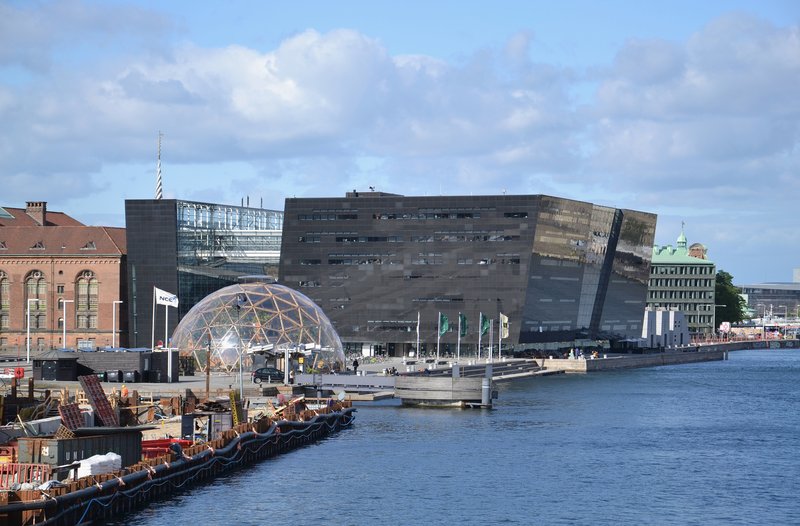
The Royal Danish Library's 1999 extension — a dramatic wedge of black granite and glass cantilevered over the Inner Harbour. Free to walk through; the interior atrium looks straight across to Christianshavn, and the rooftop café terrace is one of the finest spots in central Copenhagen.
Six centuries of Danish power on one harbour island — the lavish Royal Reception Rooms with the Queen's tapestries, the medieval ruins of Bishop Absalon's 1167 fortress in the basement, the Royal Kitchen, the stables, and a 106-metre tower with the best panoramic view in the city.
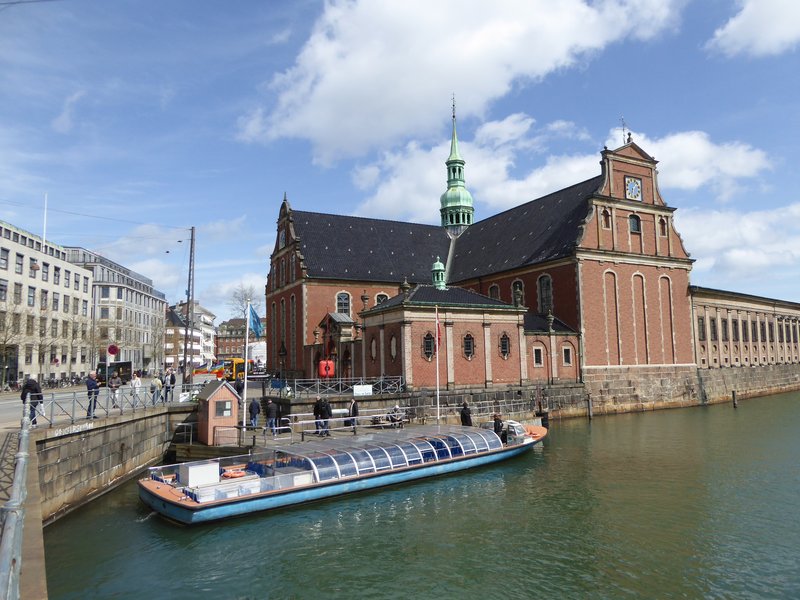
One hour on Copenhagen's canals past Christiansborg, the Black Diamond, the Opera House, and the Little Mermaid. Departs from Gammel Strand beside the Parliament building.
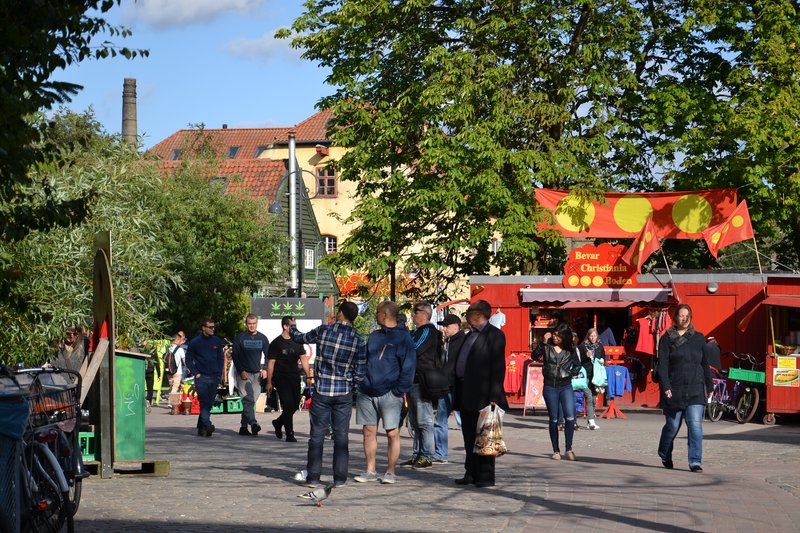
A self-declared autonomous community of about 900 people in Christianshavn, running since 1971 on former military land. Colourful murals, music stages, vegetarian restaurants, and craft workshops fill the old barracks. The Pusher Street cannabis market is gone. Cars are not permitted inside.
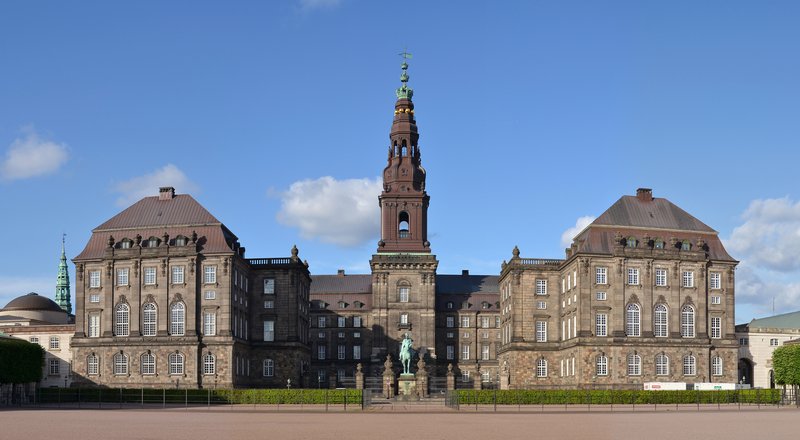
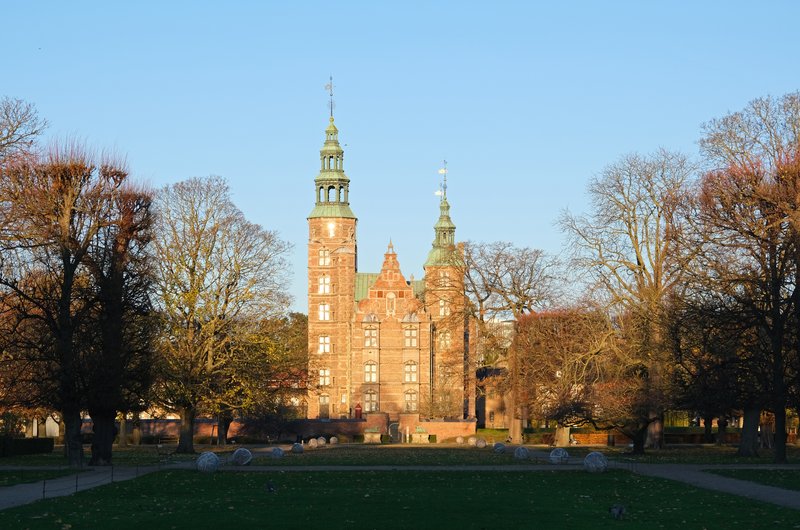
The red-brick Renaissance pleasure palace built by Christian IV between 1606 and 1624, now home to the Danish Crown Jewels and three centuries of royal artefacts in rooms frozen as the last resident left them. The surrounding Kongens Have is the oldest public park in Denmark, free to wander.
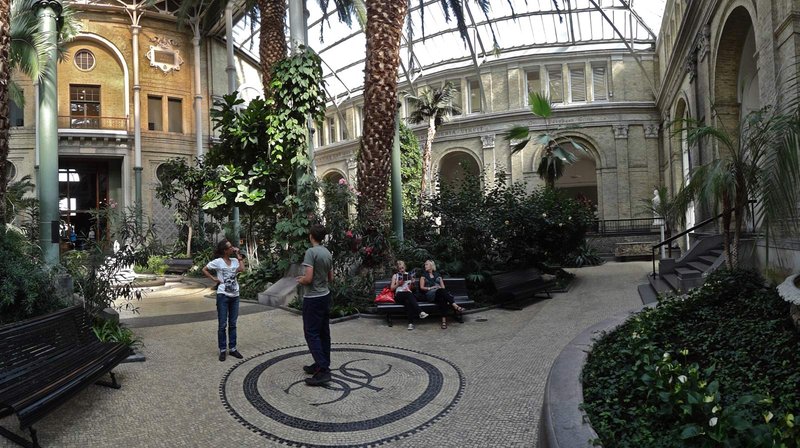
Sixteen hectares of living plant collections anchored by a soaring Victorian iron-and-glass Palm House from 1874, modelled on London's Crystal Palace. Over three thousand species, rock gardens, and a series of working glasshouses — the Palm House interior is one of the most beautiful rooms in the city.
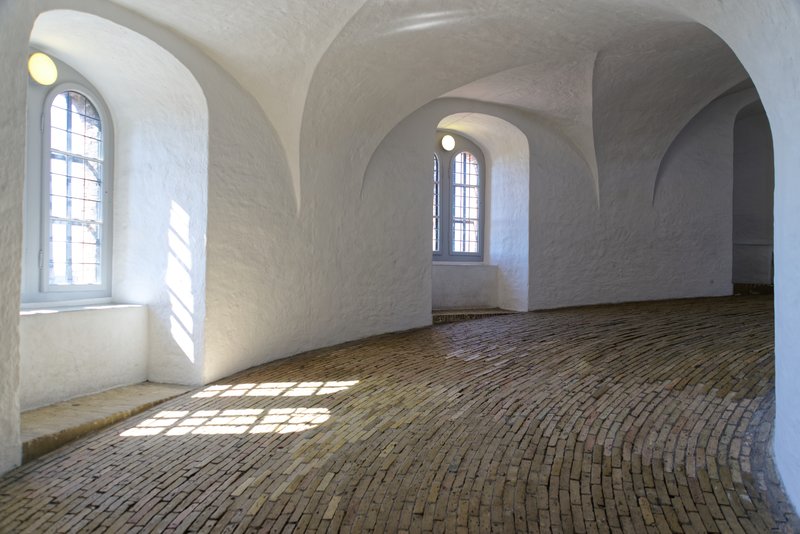
A 1642 observatory tower built not with stairs but a 268-metre cobblestone spiral ramp — wide enough for a horse and carriage, and supposedly ridden to the top by Christian IV. The ramp winds seven and a half turns around a hollow centre. City views from the top platform span the old rooftops in every direction.
Martin Nyrop's 1905 red-brick landmark in National Romantic style — the heart of civic Copenhagen since the day it opened. The 105-metre tower offers one of the city's best rooftop views; guided tower tours run twice daily on weekdays and once on Saturday. The ornate gilded interiors are free to walk through.
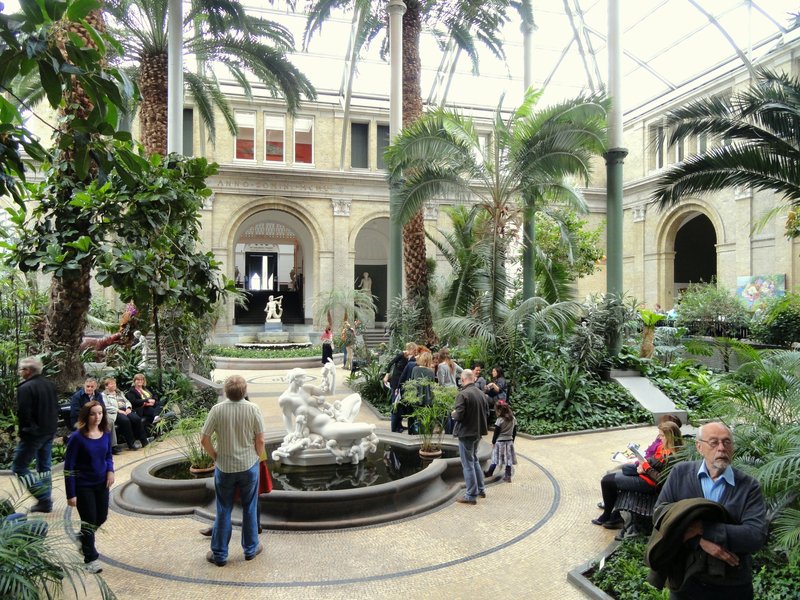
Scandinavia's finest collection of ancient Mediterranean art — Egyptian mummies, Greek bronzes, Etruscan artefacts — alongside French Impressionist paintings by Monet, Degas, Gauguin, and Cézanne and an exceptional Rodin collection. The 1906 winter garden atrium with palms around a fountain is worth the visit alone.
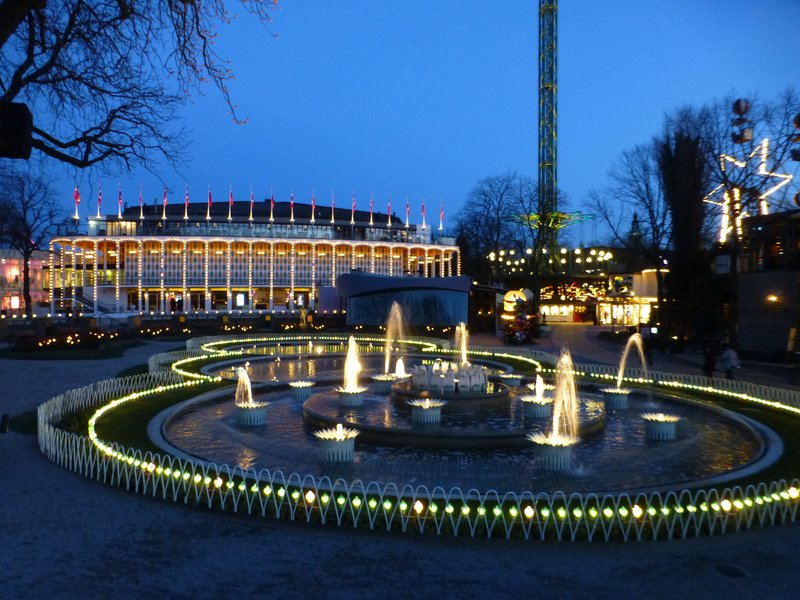
Opened in 1843 — predating the Eiffel Tower and the state of California. Walt Disney visited twice before building Disneyland. The park pairs roller coasters with orchestral gardens, a concert hall, open-air stages, 100,000 lanterns lit at dusk, and the world's oldest operating wooden roller coaster, Rutschebanen.
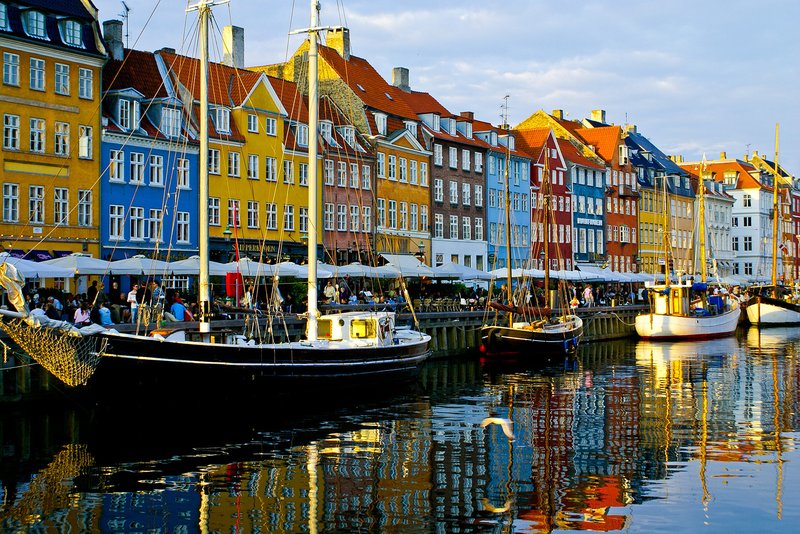
The canal that gave Copenhagen its face — opened in 1673 as a commercial harbour built partly with Swedish prisoners of war. The colourful 17th-century townhouses on the sunny south quay belonged to wealthy merchants; the shadier north quay was rougher, and here Hans Christian Andersen wrote his earliest tales.
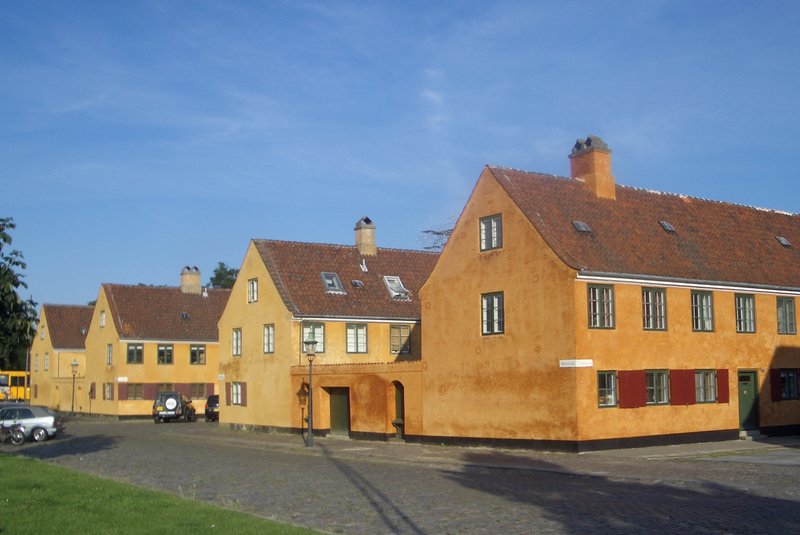
A grid of single-storey mustard-yellow row houses from 1631, built by Christian IV to quarter the growing Royal Danish Navy. All but one row were rebuilt in the 1750s; some are still home to naval personnel. The colour and uniformity are unlike anything else in the city.
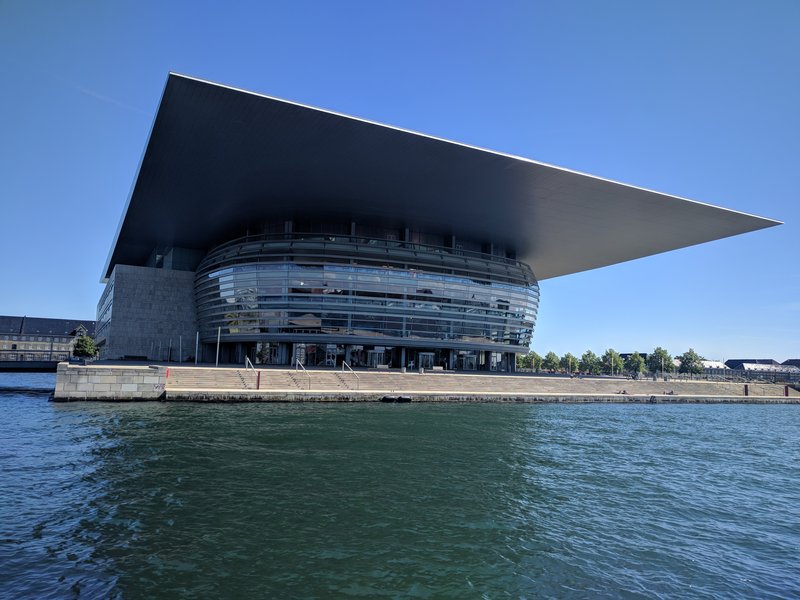
Henning Larsen's 2005 landmark sits on the island of Holmen, its 32-metre cantilevered roof hovering over the harbour on the precise axis of Amalienborg Palace. The interior is lined with 105,000 sheets of 24-carat gold leaf. Free to view from the waterfront; guided interior tours run on non-performance days.
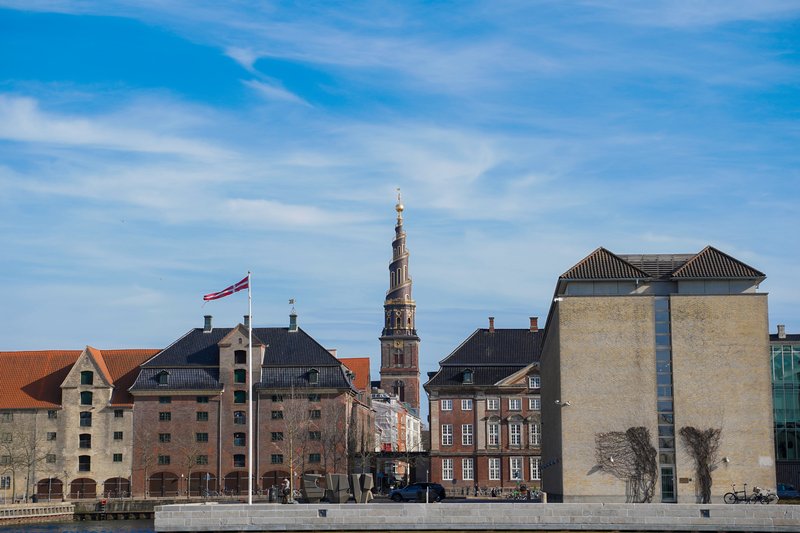
The baroque spire that defines Christianshavn's skyline — 400 steps to the top, the last 150 winding up the outside of the spire on an ever-narrowing external staircase at 86 metres. The twisted gilded spire, inaugurated 1752, is the one-of-a-kind view in the city. Advance booking required for the tower.
ARRIVE Humlebæk St.: 12 min · 5 min → Louisiana Museum
1.Louisiana Museum of Modern Art~3 hr
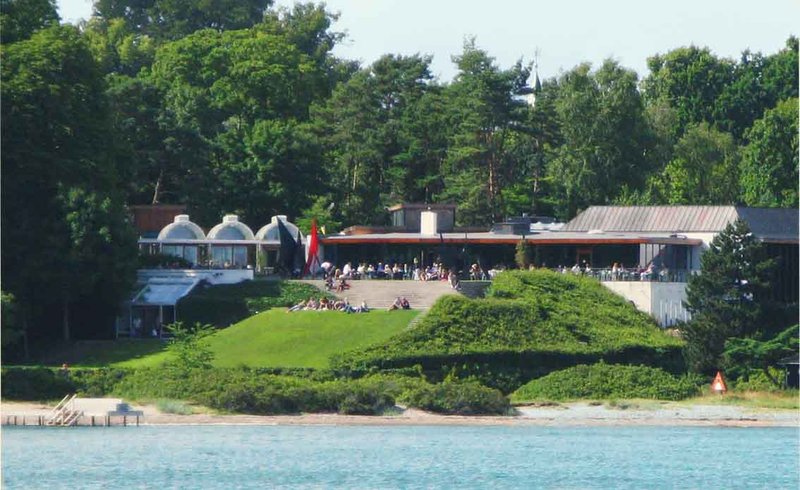
Built into the coastal bluffs of the Øresund 35 km north of the city, with floor-to-ceiling windows straight across to Sweden — one of Europe's great museum experiences as much for its setting as its collection. Giacometti sculptures in the garden, Warhol in the galleries, and a café terrace above the sea.
ARRIVE Helsingør St.: 10 min · 4 min → Kronborg Castle
1.Kronborg Castle~2 hr 30 min
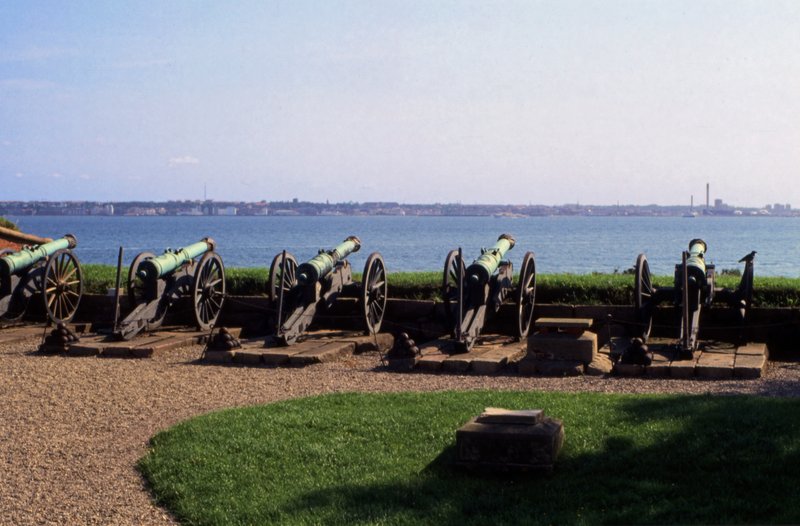
Shakespeare's Elsinore — the Renaissance fortress that inspired Hamlet stands where the Øresund narrows to just 4 km across to Sweden. UNESCO World Heritage Site since 2000. The casemates house the statue of Holger Danske, the warrior who will rise when Denmark truly needs him.
A two-and-a-half-hour sweep of Copenhagen's icons in a group capped at ten — Amalienborg, the Little Mermaid, Kastellet, Nyhavn, and Christiansborg — led by a local guide with time for questions.
Three hours on a small Hey Captain boat — more conversation than commentary. The route pushes out beyond the historic canals to Trekroner Island fortress and the emerging Nordhavn waterfront before looping back through the old city centre.
A quiet electric boat for up to twelve — no engine noise, no crowds — gliding through Copenhagen's canals and harbour with a bilingual guide. Heated seats and blankets in cooler months.
A full-day small-group tour covering Kronborg Castle, Frederiksborg Castle, Roskilde Cathedral, and the Viking Ship Museum in one sweep of northern Zealand.
One hour on the classic open-boat canal cruise from Gammel Strand — past Christiansborg Palace, the Black Diamond Library, the Opera House, and the Little Mermaid — with a live English-speaking guide on board.
Full-day minibus tour to Kronborg · Hamlet's castle, Frederiksborg Castle, and Roskilde with its Viking Ship Museum — small groups, and an English-speaking guide with a good sense of humour.
A nine-hour day that crosses the Øresund into Sweden: Kronborg Castle, a ferry to Helsingborg, Lund Cathedral, and Malmö's Turning Torso and Lilla Torg — guided by bus with free time in each city.
Eight to nine hours visiting Kronborg Castle · Hamlet's castle, crossing by ferry to Helsingborg, then continuing to Malmö for Lilla Torg and the Turning Torso — with commentary on the Shakespeare connection all the way.
Full-day tour with a group capped at sixteen covering Kronborg Castle, Frederiksborg Castle, Roskilde Cathedral, and the Viking Ship Museum, with Copenhagen hotels included.
Six-and-a-half hours by minibus and ferry across the Øresund to Sweden: Kronborg Castle, Helsingør old town, ferry to Helsingborg, Lund Cathedral, and Malmö's Turning Torso.
Denmark's defining lunch — toppings piled high on dense dark rye bread: pickled herring, roast beef with remoulade, liver pâté, cold-smoked salmon. The art is in the stacking. No two versions are the same.
The Danish pastry — laminated butter dough in spirals, coils, and cushions. Named for the Austrian bakers who came to Denmark during the 1850 bakers' strike and taught the technique. Varieties include kanelsnegl, tebirkes, and spandauer.
A chocolate-dipped marshmallow dome on a wafer base — a distinctly Danish confection beloved since the 19th century. The best versions use dark chocolate and flavoured fillings; Summerbird's are the city benchmark.
Scandinavia's signature spirit — distilled from grain or potato and infused with caraway, dill, or fennel. Served ice-cold alongside smørrebrød and raised with a "skål!" The flavour shifts dramatically by producer and botanical blend.
Round puffed pancake balls cooked in a cast-iron dimple pan, served with icing sugar and jam. A Christmas staple in Denmark — some cafés serve them year-round alongside hot coffee or mulled wine.
Foreign number: accepted — verification code arrives via SMS to international numbers.
Good coverage across central Copenhagen including Indre By, Vesterbro, and Nørrebro; solid mix of local restaurants and international chains; reliable for late-night delivery when kitchen hours elsewhere are limited.
Foreign number: not required. — sign-up runs on Google, Apple, Facebook or email with no phone field at all, so no verification code is sent.
The dominant delivery platform in Denmark; widest local restaurant selection in Copenhagen including independent Nordic spots, smørrebrød, and neighborhood restaurants not on the other apps; the default choice for most residents.
Foreign number: not required. — the account is made with Google, Facebook or an email address — there is no phone field, so no code has to arrive.
The original Danish delivery brand; strong coverage of smaller restaurants and local favorites exclusive to the platform; particularly good outside the immediate city center — worth checking if Wolt has limited options for your neighborhood.
Foreign number: accepted — verification code arrives via SMS to international numbers.
The most widely used ride-hailing app in Copenhagen; good coverage across the city from Østerbro to Vesterbro and out to Frederiksberg; generally more competitive fares than traditional taxis and faster supply than Uber in this market.
Foreign number: accepted — verification code arrives via SMS to international numbers.
Available across central Copenhagen; useful if you already have an Uber account; comparable coverage to Bolt in the main tourist and hotel areas — check both for wait time, as Bolt typically has better local driver supply.
The Viking capital — five original Viking longships preserved in the UNESCO-listed Viking Ship Museum, and Roskilde Cathedral where every Danish monarch since the 12th century is interred. A compact medieval city consistently overlooked in favour of Kronborg.
A Renaissance castle of extraordinary scale built across three lake islands in Hillerød, its reflection perfect in the still water below. Houses Denmark's National History Museum. Often ranked the most beautiful castle in Scandinavia — quieter than Kronborg.
Sweden's third city across the Øresund Bridge — Stortorget square, the Turning Torso tower, the canal district of Gamla Väster, and Lilla Torg. The Øresundståg runs every 20 minutes direct on the cross-border line.
A well-preserved medieval market town on Køge Bay — the half-timbered high street is among the finest in Denmark, and the Køge Museum holds Viking-era artefacts. S-tog line E runs every 20 minutes on the direct line.
Hans Christian Andersen's birthplace on Funen — the H.C. Andersen Museum, the medieval St Canute's Cathedral, and the preserved Møntergården old town quarter. IC train runs hourly on the direct line.
Nyhavn means "New Harbour" — but it opened in 1671, making it older than most of what tourists anywhere in the world call "old." King Christian V built it to connect the city to the sea, using Swedish prisoners of war captured in the Scanian War as the labour force. The sunny south quay you photograph was always expensive; the shadier north quay was for those who couldn't afford to face the water. The same social geography has held for 350 years.
The opera house on Holmen sits on the precise axis of Amalienborg Palace across the harbour — an alignment so exact that the building frames the palace dome when viewed from the central entrance. Henning Larsen said it was intentional. The Maersk Foundation, who funded the entire construction as a gift to Denmark, never asked for a say in its placement. The city had no input. A landmark building landed on a harbour island, perfectly aligned with the royal residence, and nobody who lived there voted on it. The building is extraordinary. The story of how it got there is very Danish.