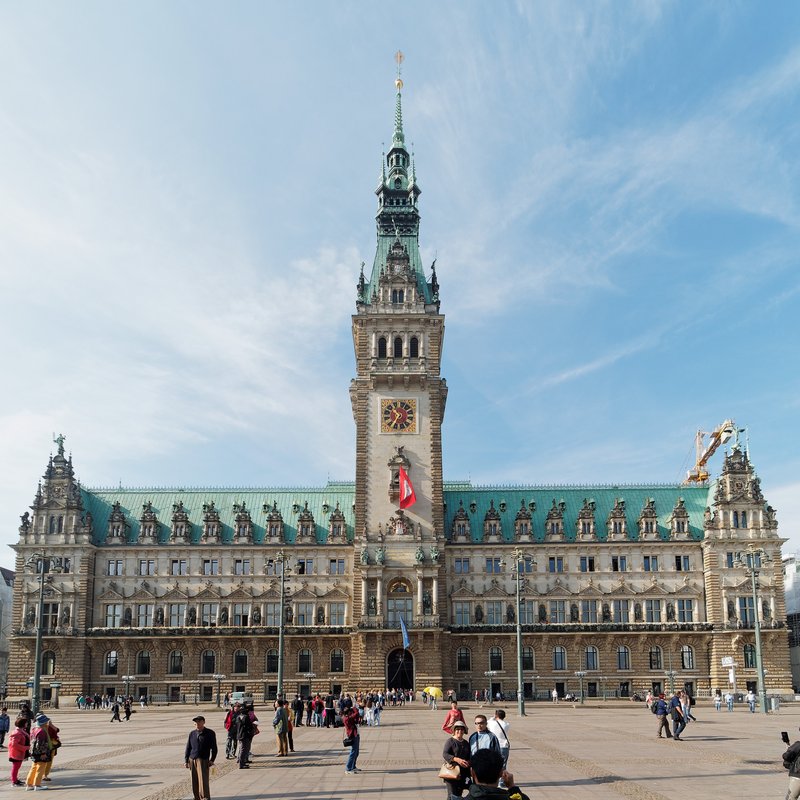
Neo-Renaissance city hall built 1886–1897 with 647 rooms and a 112 m tower; one of the few completely preserved historicist civic buildings in Germany. The open courtyard with its Hygieia fountain and the vaulted Rathausdiele foyer are freely accessible.
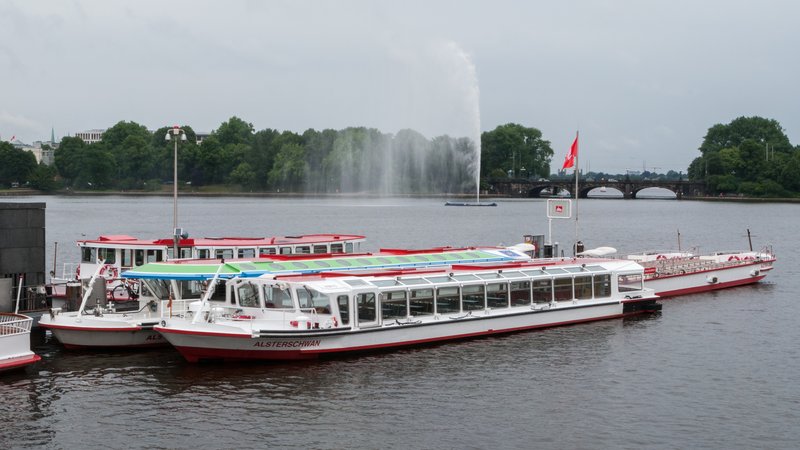
Hamburg's grand 600 m boulevard along the southern shore of the Binnenalster lake — Germany's first asphalt-paved street, laid in 1838. The promenade gives a panoramic view of the Alster fountain and the city skyline reflected in the water.
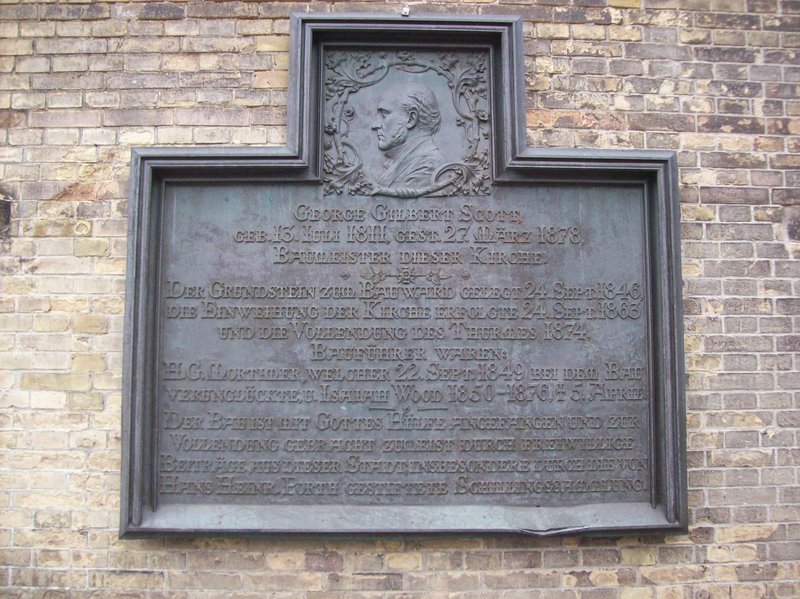
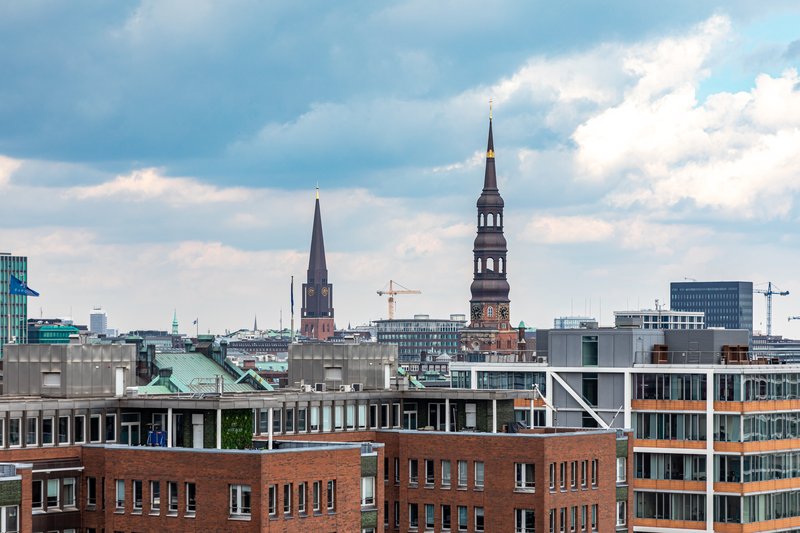
The bombed-out shell of the neo-Gothic St. Nikolai church, kept as a memorial to the victims of war. Its 147 m spire was briefly the tallest building in the world; a glass lift climbs to a 76 m viewing platform, with an exhibition on the 1943 air raids in the crypt.
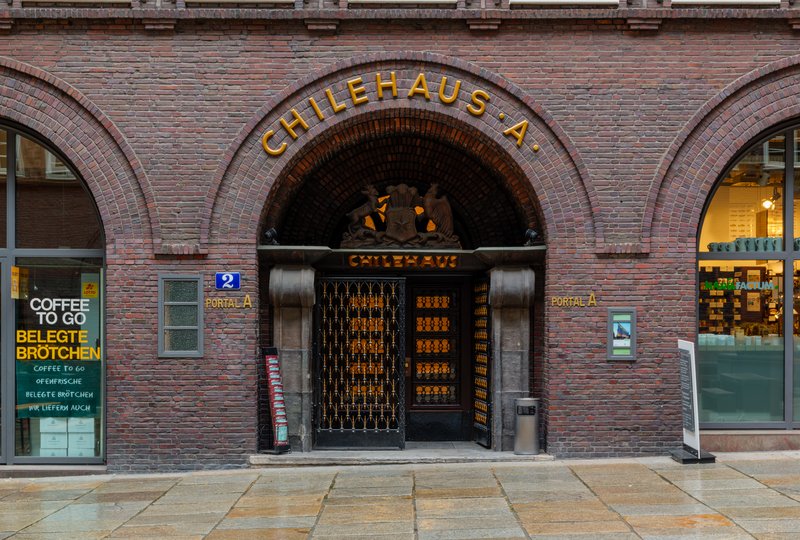
A ten-story Brick Expressionist office building designed by Fritz Höger in 1924, whose two facades meet at an impossibly sharp angle like the prow of a ship. Part of the UNESCO World Heritage-listed Kontorhaus District — the world's first purpose-built office quarter.
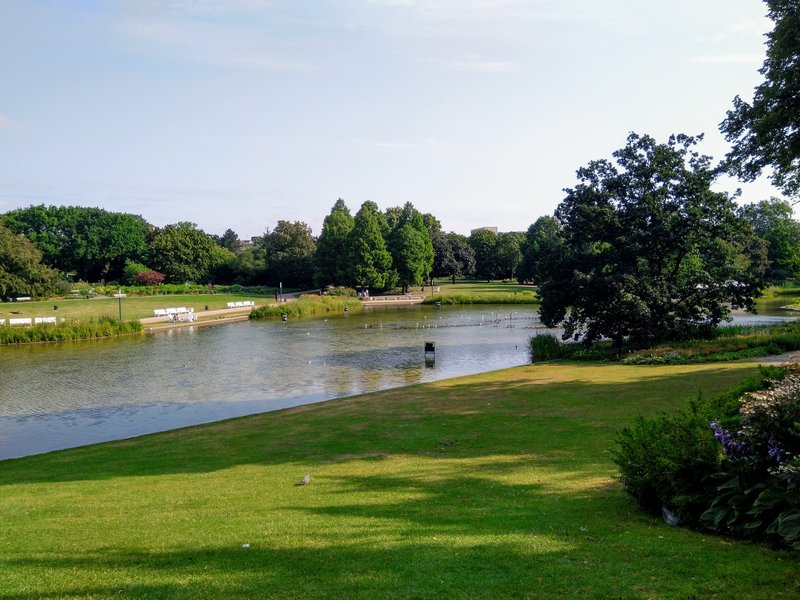
A 47-hectare inner-city park whose name is Low German for "plants and flowers." It holds Europe's largest Japanese garden with a teahouse, tropical greenhouses, and a lake with water-light concerts in summer evenings.
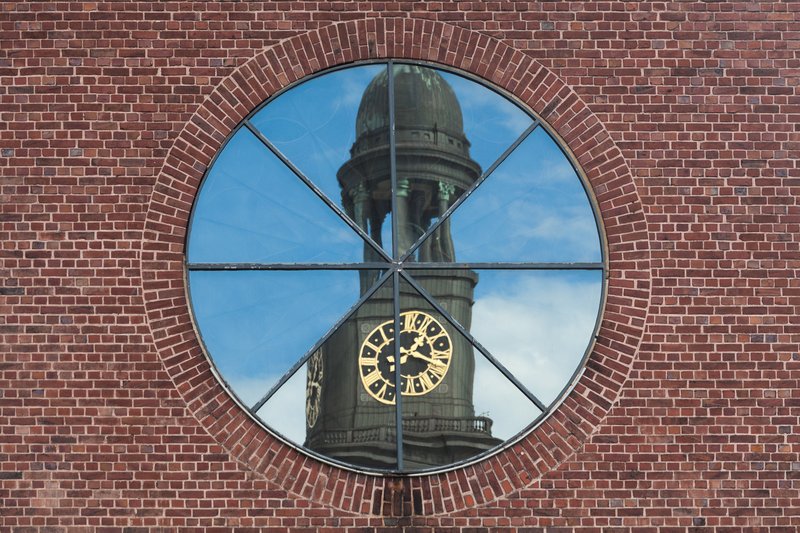
Hamburg's most iconic landmark — the largest Protestant baroque church in northern Germany. Its 132 m copper-roofed tower offers a 360° viewing platform at 106 m reached by lift or 452 steps, overlooking the harbour, Elbe, and city centre.
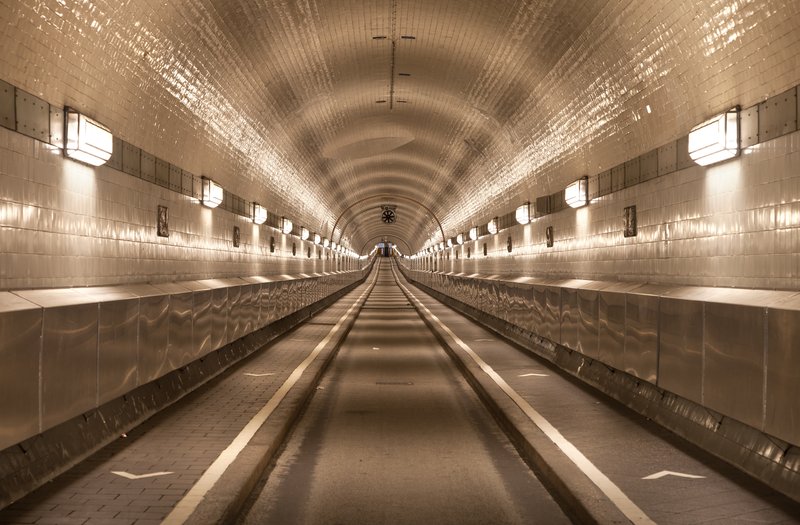
A 426 m pedestrian tunnel running 24 m beneath the Elbe, opened in 1911 — an engineering marvel of its era with original Art Nouveau tilework and terracotta reliefs of fish and marine life. The south exit offers a panoramic view back toward the Hamburg skyline.
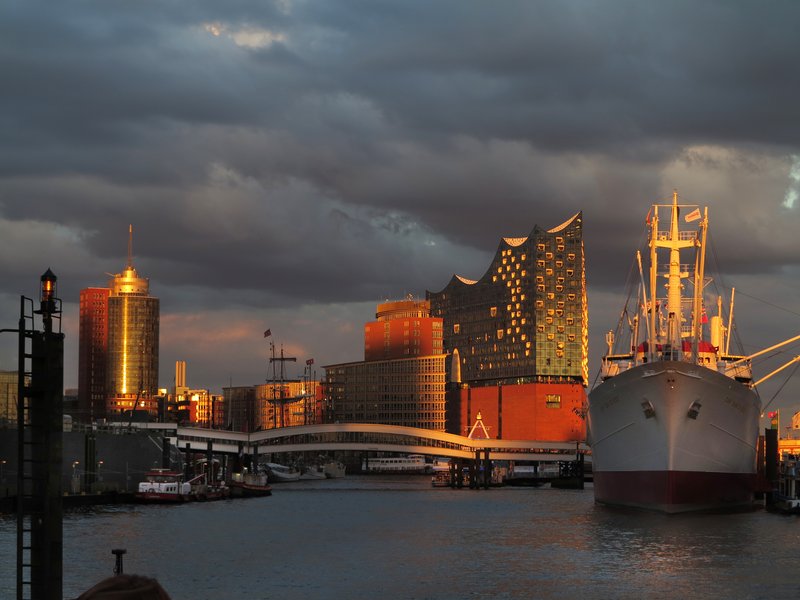
Herzog & de Meuron's concert hall, a glass-and-steel wave set on a 1960s brick warehouse on the Elbe. The free public Plaza wraps the building at 37 m for a 360° view of the harbour and city; timed Plaza tickets are issued at the visitor centre.
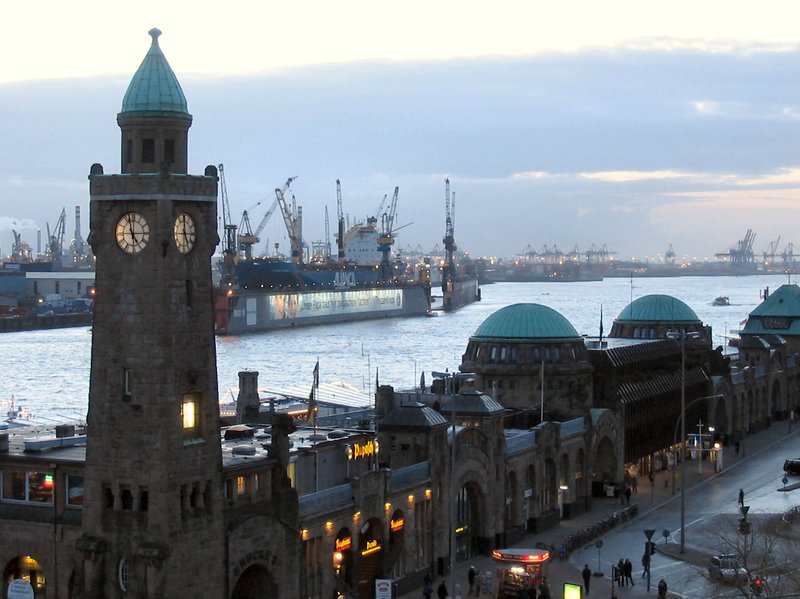
Hamburg's 700 m historic floating dock and waterfront terminal, built 1907–1909 and flanked by two green-domed towers. The elevated walkway above the S-Bahn station gives a sweeping panorama over the Elbe, harbour cranes, and passing container ships.
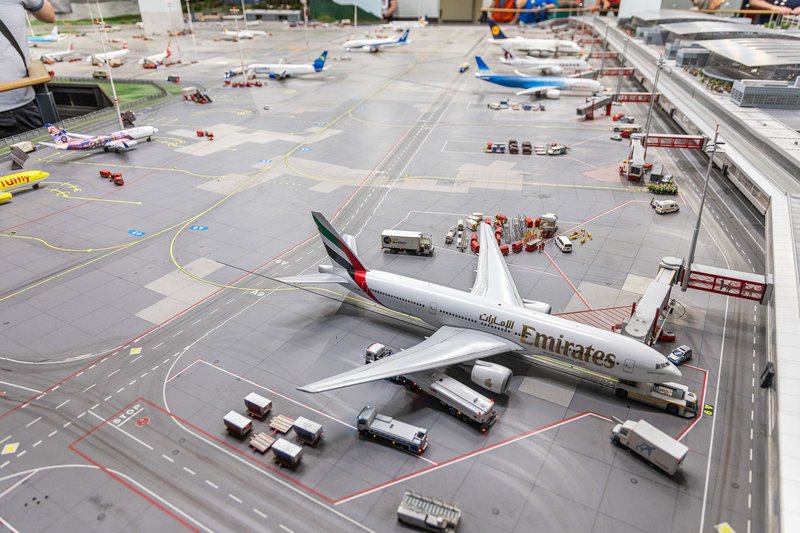
The world's largest model railway, spread across themed miniature worlds — Hamburg, the Alps, Scandinavia, the USA and a working model airport — with thousands of trains, vehicles, ships and aircraft in motion. Germany's most-visited attraction.
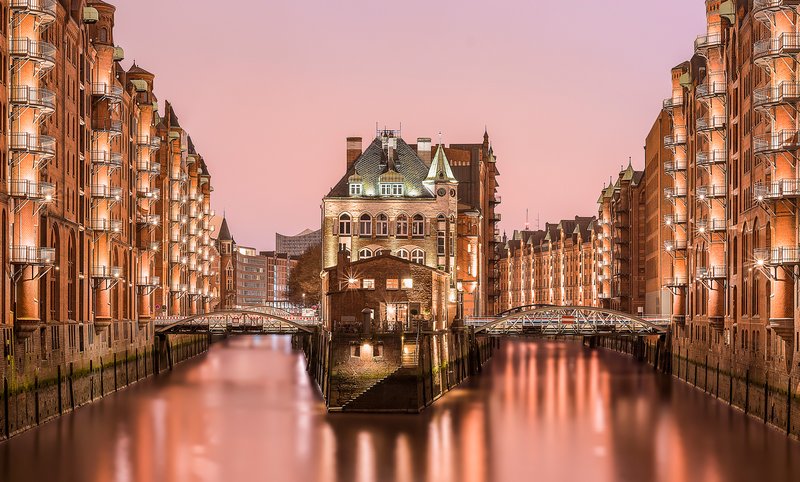
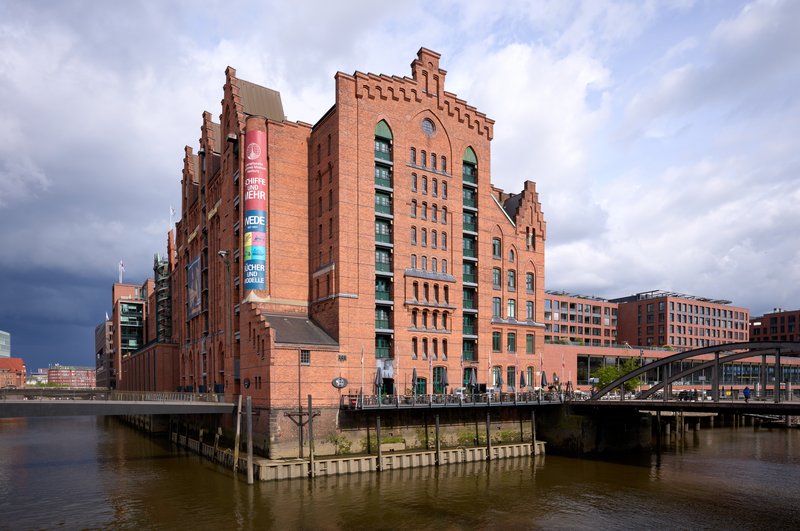
The world's largest contiguous warehouse district, built on oak piles from 1883 and UNESCO-listed since 2015. Red-brick neo-Gothic storehouses line the tidal canals; the Wasserschloss on the Poggenmühlen bridge is its most-photographed view.
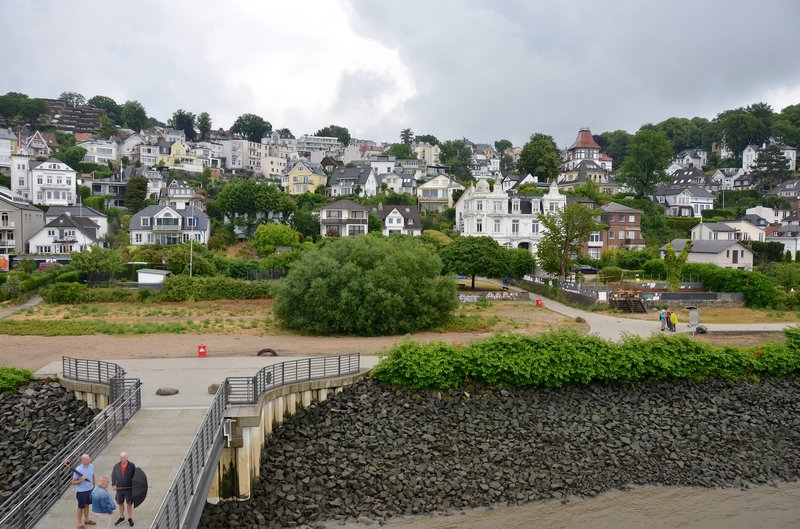
A 700-year-old former fishing village with 58 staircases comprising nearly 5,000 steps winding around the 72 m Süllberg hill. Mediterranean-feeling white houses, hidden gardens, and panoramic Elbe views at every turn — unlike anything else in a northern European city.
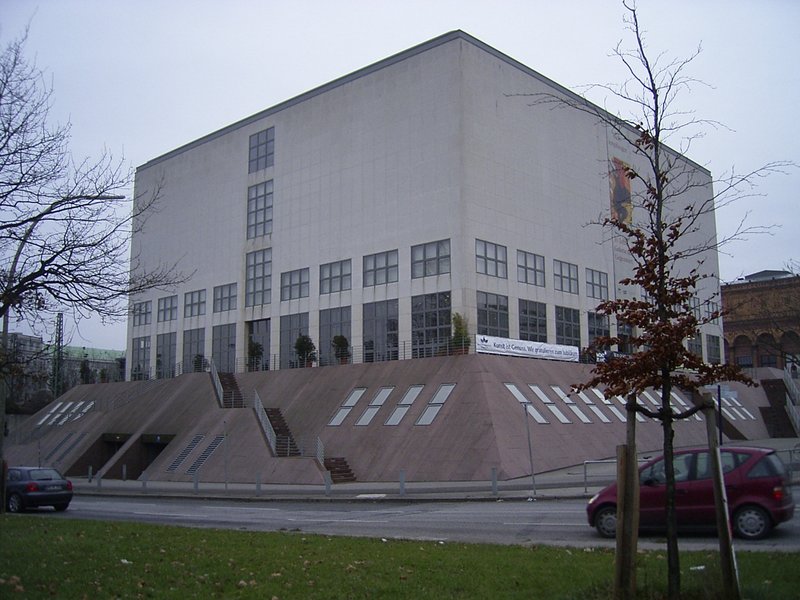
One of Germany's largest art museums, housed in three linked buildings from 1869, 1921 and 1997. The collection spans 700 years of European art, from medieval altarpieces to contemporary work — including Friedrich's Wanderer above the Sea of Fog, works by Rembrandt, Manet and Picasso.
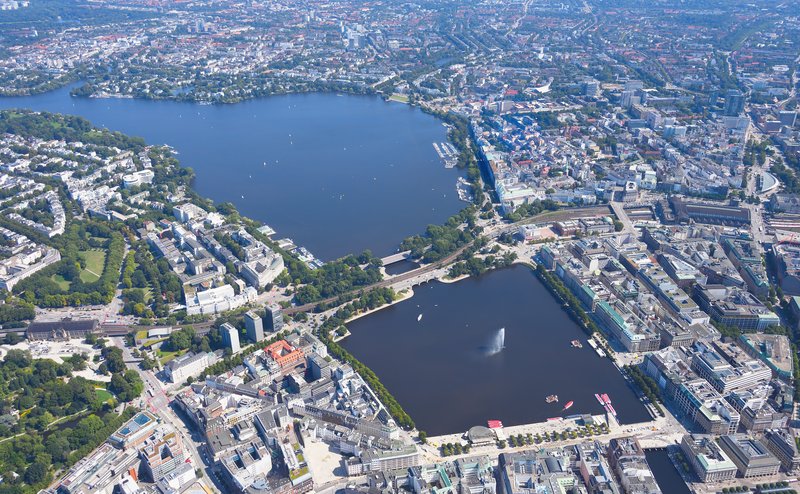
Hamburg's vast outer Alster lake, 1.6 km long and ringed by a 7.5 km promenade of 19th-century villas, parkland and sailing clubs. The western shore along Harvestehuder Weg offers the city's most celebrated skyline panorama — steeples of the Altstadt and Elbphilharmonie reflected across open water.
Hamburg's 930 m entertainment quarter in St. Pauli — Germany's most internationally famous street. The Beatles honed their craft here in 1960–62, playing marathon sets at the Indra and Kaiserkeller clubs before the Star-Club became their Hamburg home. Today it's a strip of theatres, clubs and music venues.
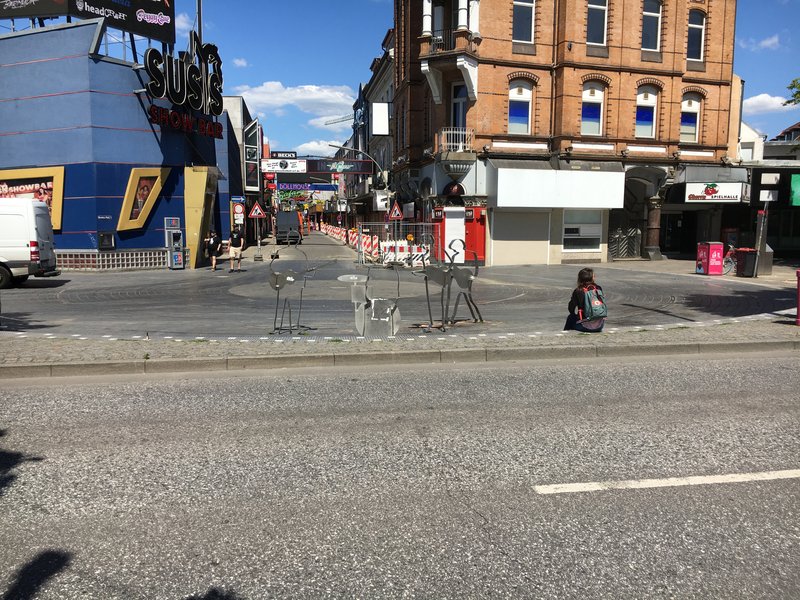
A circular plaza at Reeperbahn and Große Freiheit, its black pavement designed to resemble a vinyl record. Five steel silhouettes on tall poles represent John Lennon, Paul McCartney, George Harrison, Stuart Sutcliffe and Pete Best — marking where the Fab Four played from 1960 to 1962.
From Hotel: 14 min · 4 min → St. Katharinen Church
1.St. Katharinen Church~30 min
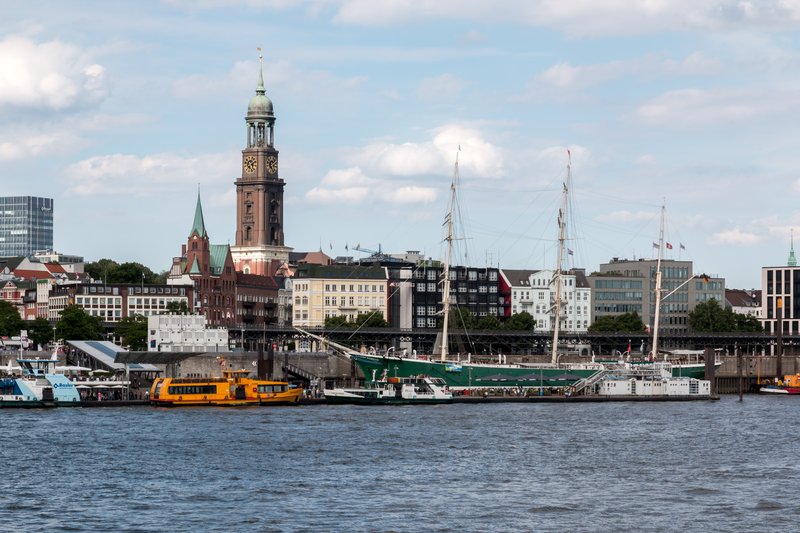
One of Hamburg's five principal Lutheran churches, traditionally the seamen's church of the old harbour. Its tower base dates to the 13th century — the second-oldest preserved structure in the city — though the Gothic nave was destroyed in WWII and the tower rebuilt on a steel frame in 1957.
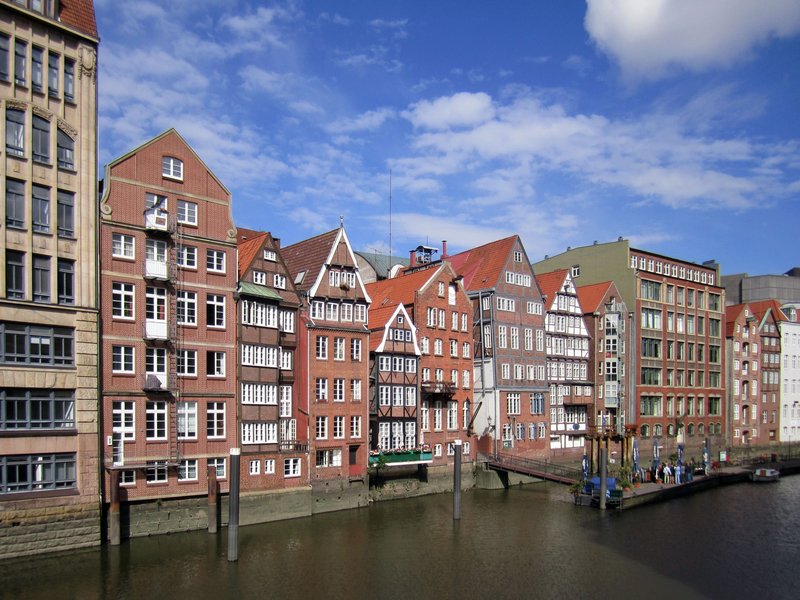
Hamburg's oldest surviving street, first documented in 1304, lined with restored 17th–19th century merchant houses on the Nikolaifleet canal. Each combined counting house, living quarters and canal-side storage under one roof — the last intact glimpse of the old harbour city, and, improbably, the street where the Great Fire of 1842 began.
Peter Tamm's private maritime collection — over 40,000 model ships, uniforms, charts and a million photographs — spread across nine decks of the 1878 Kaispeicher B warehouse, the oldest building in the Speicherstadt. One of the largest maritime collections anywhere, assembled over six decades by a single collector.
A three-masted iron barque built in 1896 in Bremerhaven, now permanently moored at Landungsbrücken as a museum ship. Visitors roam the deck, crew quarters, galley and engine room of this red-hulled sailing ship — one of Hamburg's most recognizable harbour landmarks.
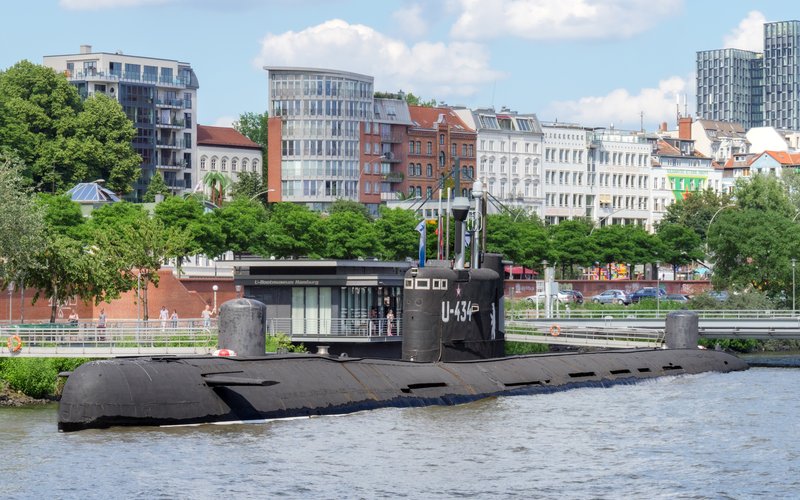
A 90-meter Cold War Soviet Tango-class submarine, built in 1976 for reconnaissance and patrol duty in the Northern Fleet and decommissioned in 2002. Visitors walk the full length of the pressure hull through the original control room, torpedo bays and crew quarters — one of the largest non-nuclear submarines ever built.
ARRIVE Lübeck Hauptbahnhof: 12 min · 3 min → Holstentor
1.Holstentor~45 min
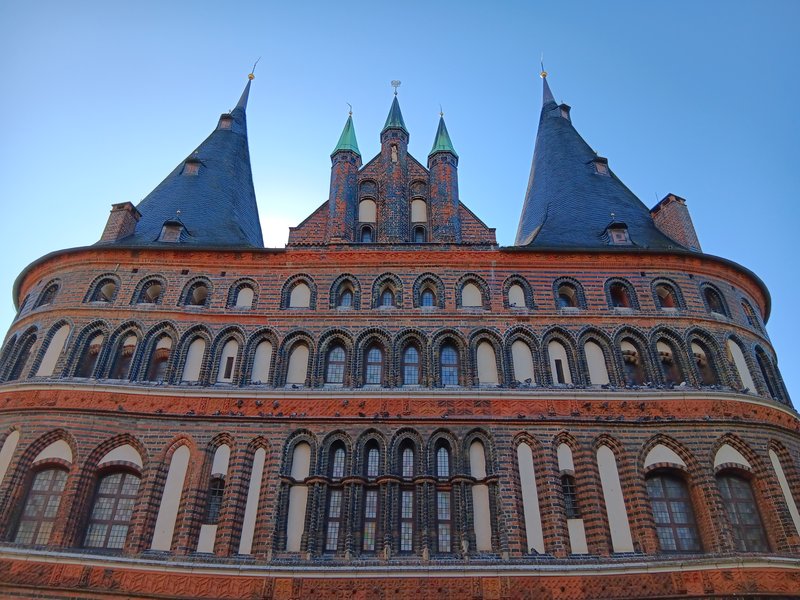
A twin-towered Brick Gothic city gate completed in 1478, marking the western entrance to Lübeck's old town and instantly recognizable from German 50-mark notes and coins. One of only two surviving medieval gates in the city, it now houses a museum on Lübeck's Hanseatic history.
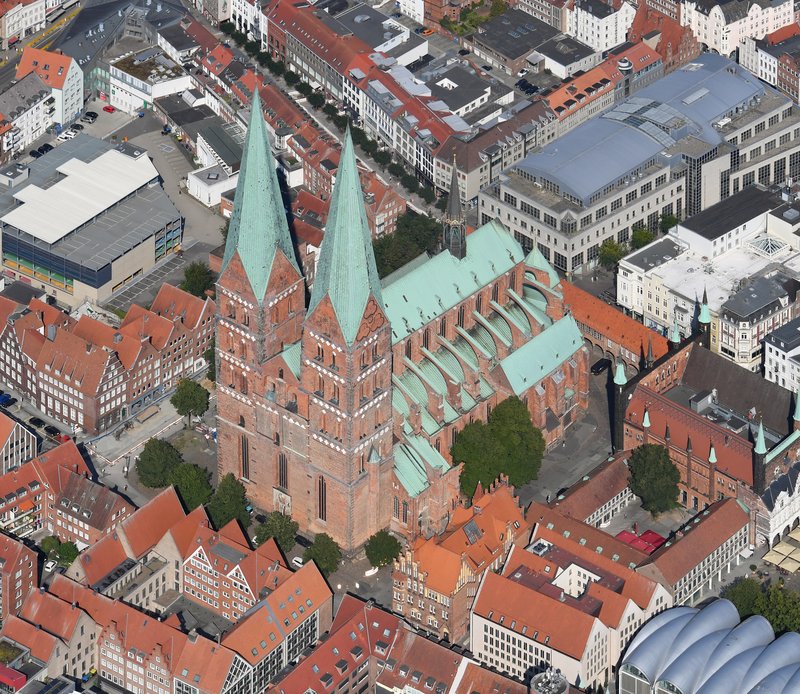
A Brick Gothic masterpiece built 1250–1350, whose 38.5 m nave vaulting is the tallest brick vault in the world — the model copied by churches across the Baltic Hanseatic towns. Twin 125 m towers dominate Lübeck's skyline, and shattered WWII bomb-fall bells still lie where they crashed to the floor.
The largest museum in the world dedicated to the Hanseatic League, opened in 2015 beside the medieval Burgkloster monastery. Staged historical scenes and original artefacts — including coins from the Lübeck Hoard — trace the trading network from Novgorod and Bruges to Bergen and London.
Pay-what-you-want stroll through the Altstadt with a local guide — the Rathaus, the Nikolaifleet canals, Trostbrücke and Deichstraße — ending near the Speicherstadt.
1,200 years of Hamburg history in 3 hours — Rathaus, Historic Deichstrasse, Trostbrücke, Nikolai Memorial, WWII firebombing story, Speicherstadt UNESCO Heritage Site, Kontor Houses, Elbphilharmonie, and the Boatmen's Church. Look for the blue umbrellas.
Small-group Altstadt walk: Rathaus, St. Peter's Church, St. Nicholas Memorial, Hanseatic League history, WW2 museum entry, and a 360° panoramic platform. Max 10 guests.
1.5-hour small-group sail on the Außenalster aboard a two-masted wooden cutter — help handle the sails and tiller or sit back and take in the city panorama from the water.
Pay-what-you-want walking tour of Hamburg's harbour, St. Pauli district and the clubs where the Beatles launched their career — Große Freiheit, Indra, Kaiserkeller — ending at Beatles-Platz.
A bread roll filled with North Sea shrimp, matjes or Bismarck herring, fried Backfisch or smoked salmon, with onions and remoulade — classic harbour street food.
Foreign number: accepted. — the verification code arrives by SMS to any international number.
Lieferando — Just Eat Takeaway's German brand — is the market leader in Hamburg with the widest restaurant selection across all neighbourhoods. Strong coverage for Schanzenviertel, Eimsbüttel, and the city centre.
Foreign number: not required. — sign-up runs on Google, Apple, Facebook or email with no phone field at all, so no verification code is sent.
Wolt offers fast delivery across Hamburg's central districts with a curated mix of local restaurants and grocery stores. Tends to be stronger in HafenCity and Eimsbüttel than in outer neighbourhoods.
Foreign number: accepted. — the verification code arrives by SMS to any international number.
Uber Eats covers Hamburg with solid restaurant selection in the centre and Altona. Good for late-night orders and for users already on the Uber platform who want a single app for rides and food.
Foreign number: accepted. — the verification code arrives by SMS to any international number.
Free Now is the dominant ride-hailing app in Hamburg, aggregating local licensed taxis and private hire vehicles. It covers the city centre, HafenCity, Altona, and main stations reliably.
A well-preserved medieval salt-trading town of crooked gabled houses, brick architecture and an old harbour quarter — the quickest of these trips to reach.
One of Germany's best-preserved half-timbered old towns, with over 400 Fachwerk houses, a moated ducal palace and cobbled lanes largely untouched since the 16th century.
A Hanseatic city with a UNESCO-listed Marktplatz, the Town Hall and Roland statue, the Town Musicians of Bremen sculpture, and the medieval Schnoor lane quarter.
Capital of Mecklenburg-Vorpommern, where the fairytale Schweriner Schloss sits on its own island in Lake Schwerin, ringed by a well-preserved center and a chain of lakes.
Hamburg has more bridges than Venice, Amsterdam and London combined — over 2,500 of them — a consequence of building a port across the marshy islands where the Alster meets the Elbe. Almost every walk in the old centre crosses water.
Four days trace the city's whole arc. Day 1 follows the waterfront from the 2017 Elbphilharmonie through the 1880s Speicherstadt to the 1943 ruin of St. Nikolai — port wealth, war, and reinvention stacked along one mile of the Elbe. Day 2 pulls back to the civic core: the Rathaus with its 647 rooms, the Alster lake that makes Hamburg feel more like a Scandinavian capital than a German port, and the Michel tower that has marked the city's skyline since 1786. Day 3 descends to the working harbour and the Elbe tunnel that runs beneath it, then reaches the fishing-village staircases of Blankenese — proof that Hamburg's edges are as surprising as its centre. Day 4 crosses the cultural divide: the Kunsthalle's seven centuries of European art, the enormous quiet of the Außenalster lake ringed by sailing clubs, and then west to St. Pauli — to the Reeperbahn and the circular plaza where the Beatles' Hamburg story is marked in steel.