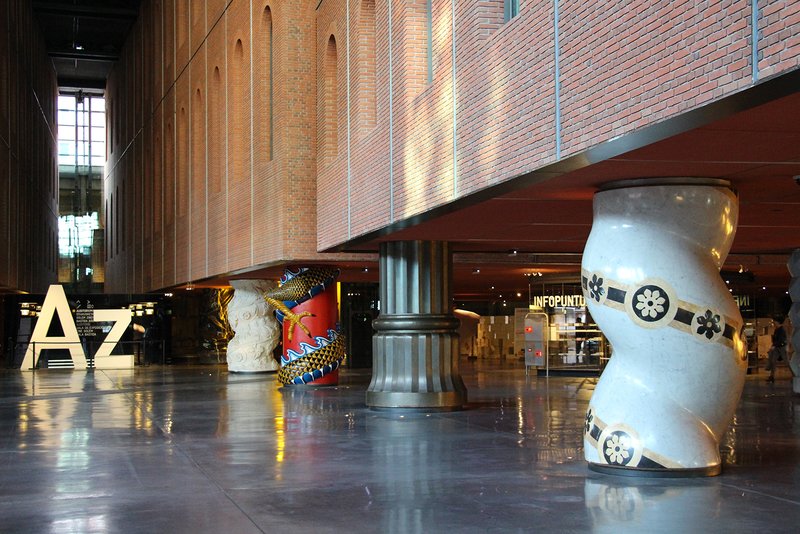
Philippe Starck transformed a 1909 wine warehouse into a cultural center with 43 eclectic columns — each unique, Egyptian to Baroque to industrial — an underground pool, cinema, and rooftop terrace. The atrium is free to enter.
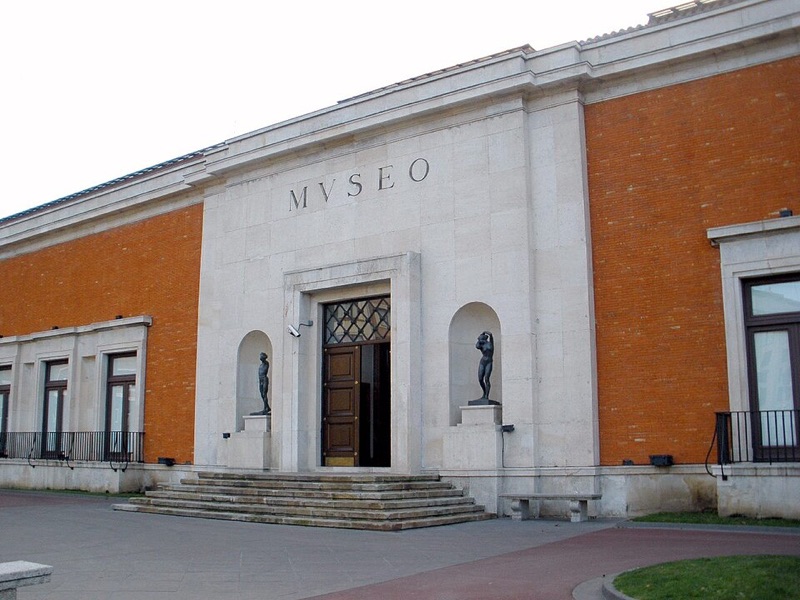
Often overshadowed by the Guggenheim but legitimately rivaling it for depth. Twelve centuries of art: Flemish masters, Spanish Golden Age, Impressionists, and a world-class Basque collection. Less crowded and more intimate.
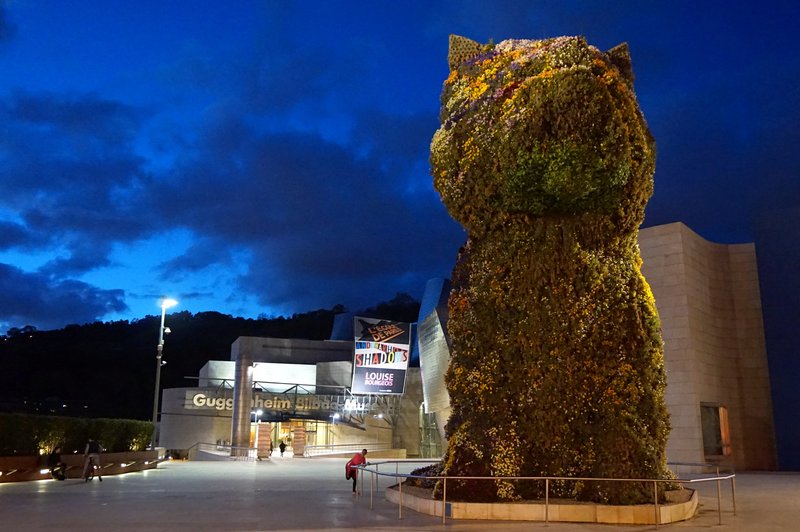
Jeff Koons' 12-meter flower-covered West Highland Terrier guards the museum entrance; Louise Bourgeois' monumental spider Maman stands beside it. Both are free to view from the riverside promenade at any hour.
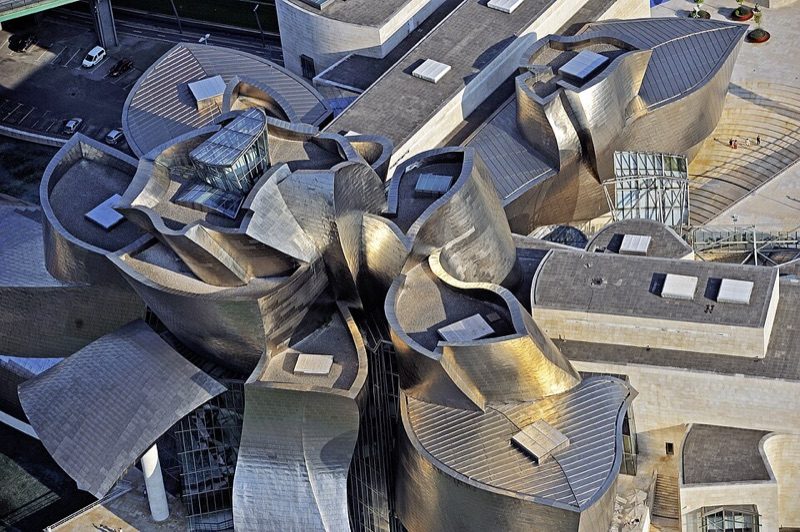
Frank Gehry's 1997 titanium-clad museum permanently transformed Bilbao from a declining industrial port into one of Europe's most visited cities. The building is as compelling as any work inside.
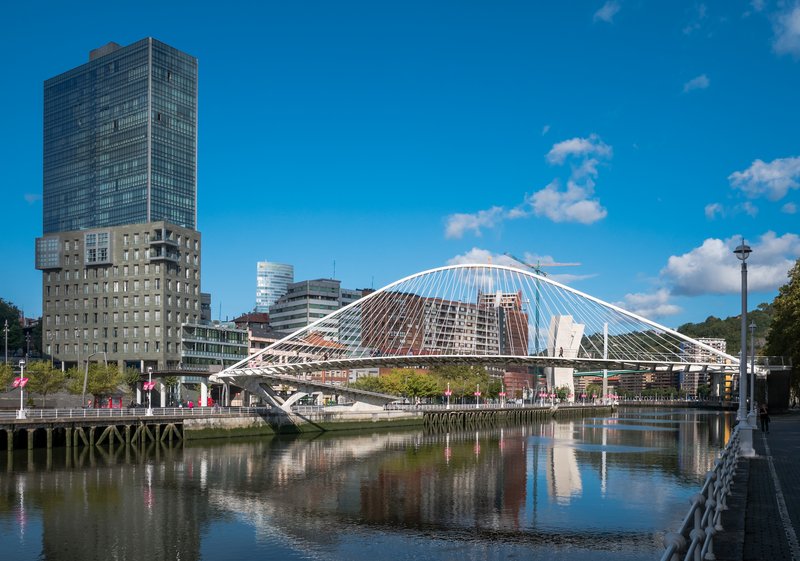
Santiago Calatrava's arched glass-and-steel footbridge spanning the Nervión River is one of the most photographed structures in the city. The white steel cables look best at dusk when the bridge illuminates against the river.
The Siete Calles — seven medieval streets — form the nucleus of the old town. Stone archways, bar culture, and the roar of the crowd from every doorway. The place where the city actually lives.
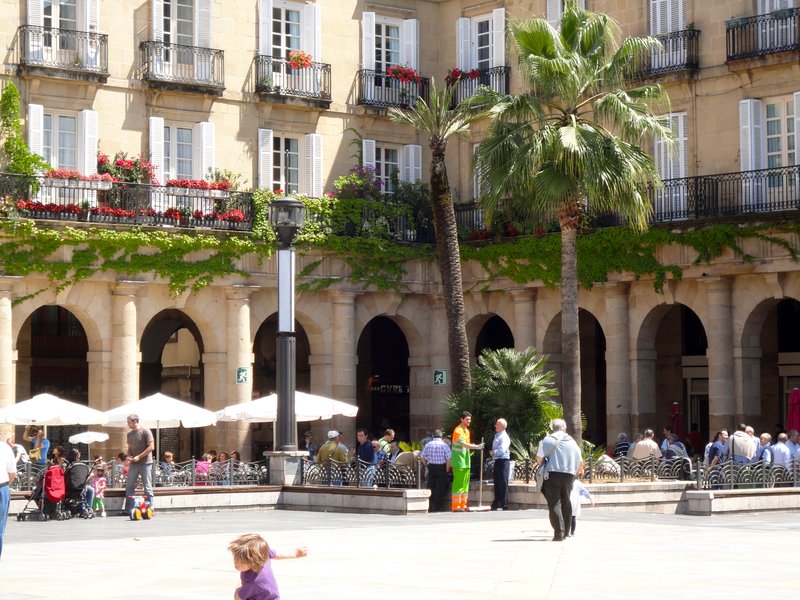
A neoclassical arcaded square completed in 1851 — the most photogenic gathering point in the city. Sunday market fills the arches with antiques and used books. The surrounding bars rank among the best in the Basque Country.
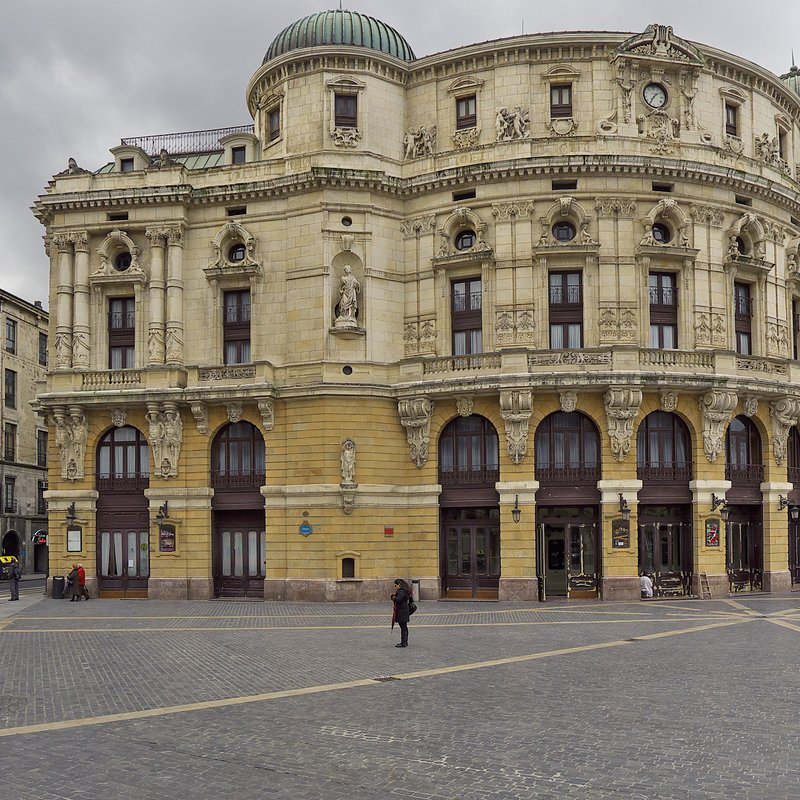
The 1890 neo-baroque opera house faces the Nervión at the gateway to Casco Viejo. Designed after the Paris Opera, it remains the premier performing arts venue. The riverfront plaza and ornate facade are worth the stop even without a ticket.
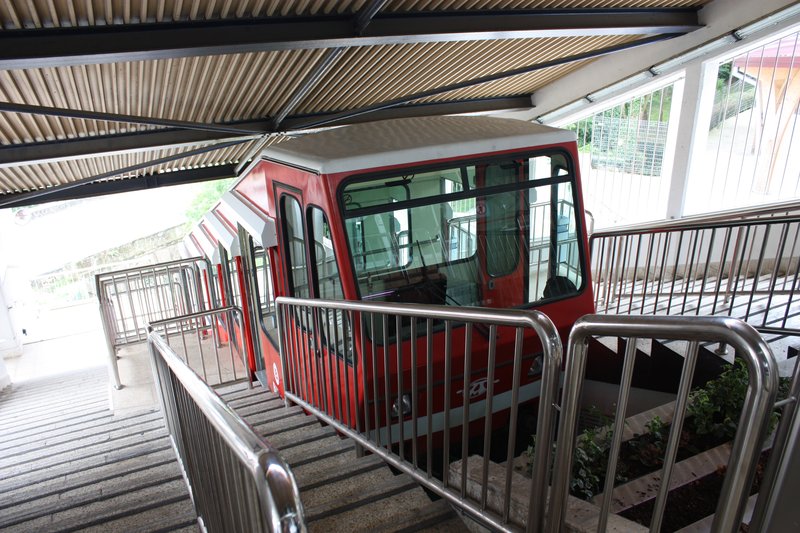
A 3-minute climb up Mount Artxanda delivers the best panorama of the city — the Guggenheim's titanium curves, the medieval quarter, and the Nervión winding toward the sea. The funicular has run since 1915; the viewpoint park at the top is peaceful and largely tourist-free.
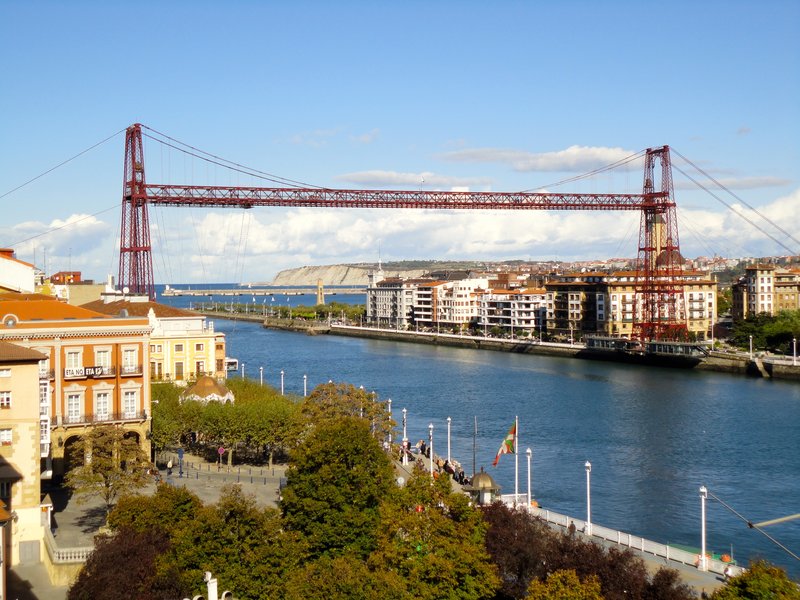
The world's first transporter bridge, built in 1893, still carries passengers and cars across the Nervión estuary in a hanging gondola. UNESCO World Heritage Site since 2006. The 45-meter-high catwalk offers commanding views over the Basque coast.
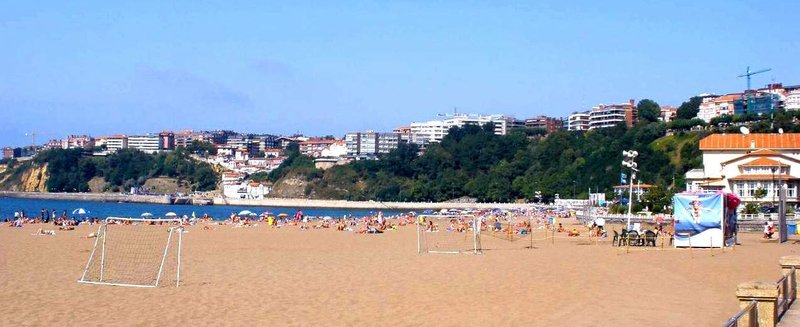
Getxo's most popular beach is a wide sandy arc backed by a promenade and the grand villas of Basque industrialists. The promenade walk south passes some of the most extravagant early-20th-century architecture in the region.
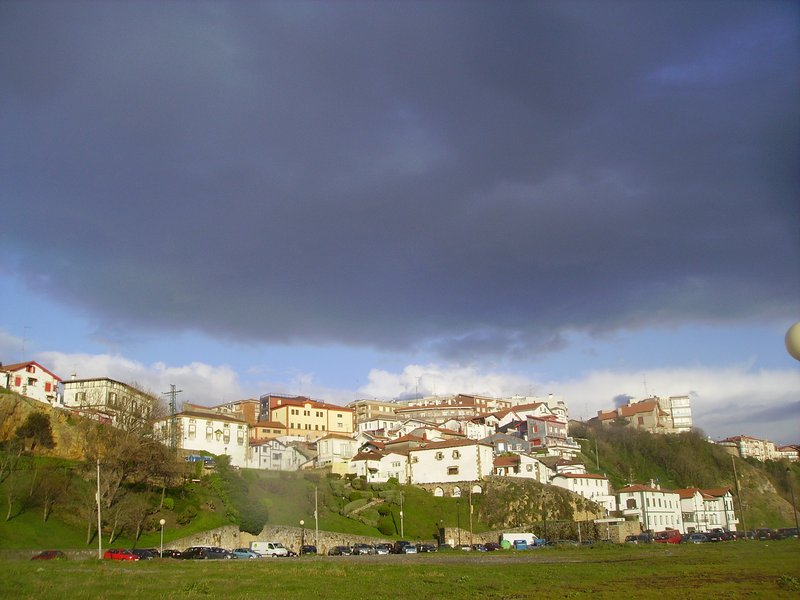
Algorta's old port is a warren of whitewashed fishermen's houses climbing a headland above a small working harbor. Seafood restaurants line the port; the contrast with the industrial city is stark. The Friday fish market still trades at dawn.
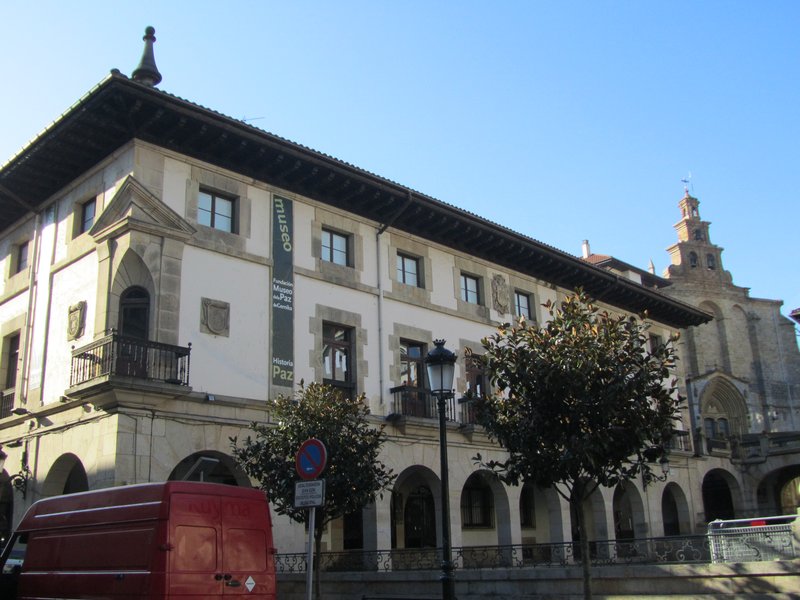
On April 26, 1937, the Nazi Condor Legion bombed Gernika — the spiritual heart of the Basque people — killing hundreds of civilians. This museum documents that event through testimony, photographs, and artifacts, connecting it to the wider history of 20th-century peace movements.
4 min · 3 min → Árbol de Gernika · Gernikako Arbola
2.Árbol de Gernika · Gernikako Arbola~30 min
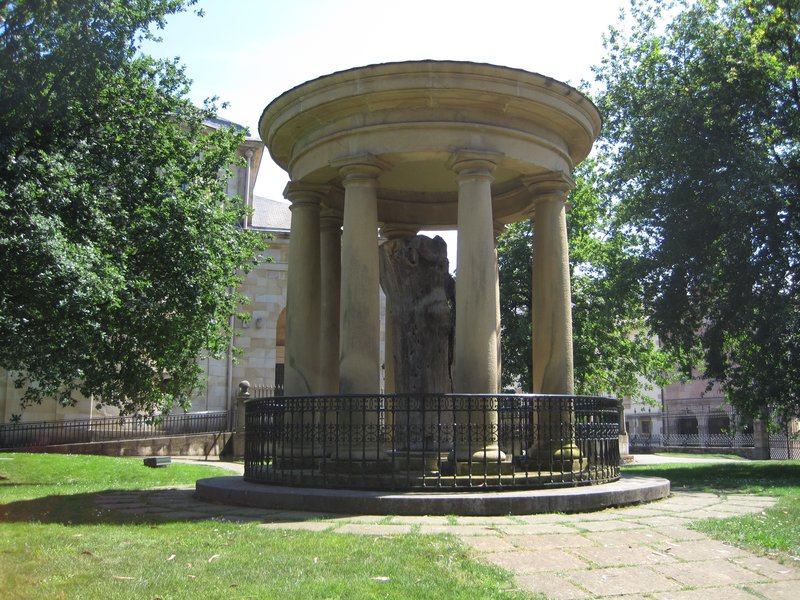
Under the ancient oak, the Lords of Biscay swore to uphold Basque traditional law for centuries. The current tree descends from a lineage dating to the 15th century. The Casa de Juntas beside it houses a ceremonial parliament chamber with a copy of Picasso's Guernica.
8 min · 4 min → Parque de los Pueblos de Europa · Chillida
3.Parque de los Pueblos de Europa · Chillida~30 min
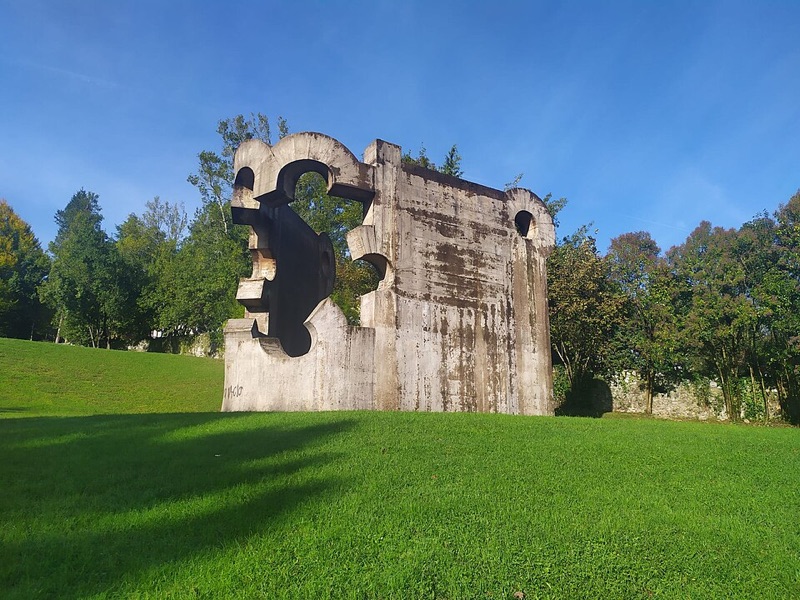
A riverside park created in 1990 as a symbol of reconciliation between the peoples of Europe. Eduardo Chillida's Gure Aitaren Etxea and Henry Moore's Large Figure in a Shelter anchor the grounds. Public sculpture and quiet gardens make this an unexpectedly moving stop.
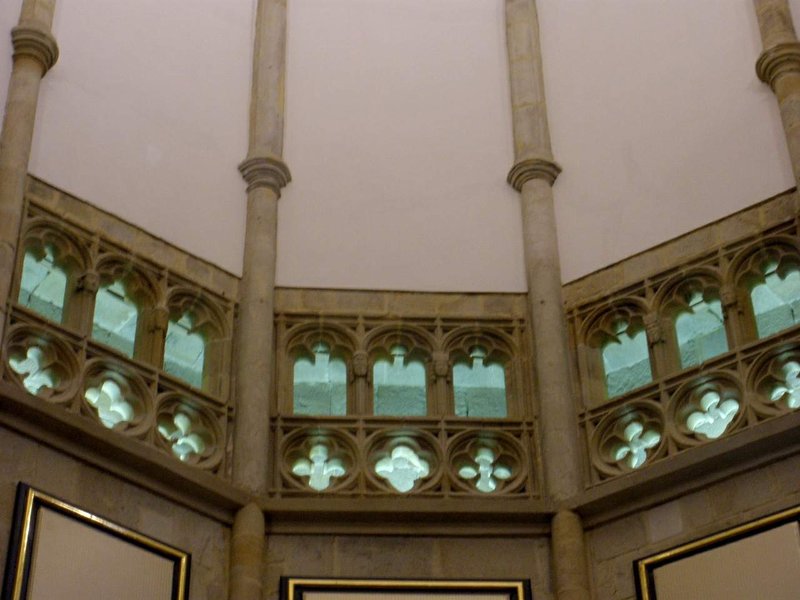
The Gothic parish church of Santa María stands at the center of the town Picasso memorialized. It survived the bombing — unlike most surrounding buildings — and remains an active parish. The quiet interior offers a calm close to a heavy day.
Small-group walk through the Casco Viejo and Abandoibarra waterfront, covering the Siete Calles, Plaza Nueva, and the city's transformation from industrial port to design capital. Runs daily in English with groups limited to 12.
Expert-led visit covering the architecture, permanent collection, and rotating exhibitions. Groups are capped at 8 and skip-the-line entry is included; English sessions run daily.
2-hour walk covering the Casco Viejo cathedral, La Ribera market, Ensanche district, and Guggenheim exterior. Led by a certified local guide with English and Spanish sessions available daily.
Full-day coastal drive with stops at San Juan de Gaztelugatxe hermitage with its 241-step climb, Bermeo fishing village, and the Gernika Peace Museum. The tour includes a small-group coach and returns to Bilbao by early evening.
Guided walk through the Casco Viejo with stops at Santiago Cathedral, Plaza Nueva, La Ribera market, and the San Antón bridge. Flexible pace with bilingual commentary available throughout.
Full-day tour stopping at San Juan de Gaztelugatxe hermitage, Mundaka surf beach, and the Gernika Peace Museum. Pickup available and small group capped at 16; consistently the top-booked day tour from Bilbao.
Small-group guided visit covering the permanent collection and featured exhibitions. Skip-the-line entry is included; meet at the Community Ticket Desk inside the museum lobby.
2-hour walk through the Siete Calles covering Santiago Cathedral, Plaza Nueva, La Ribera market, and the medieval bridges. Groups are limited to 10; English guide sessions run daily.
Full-day coach excursion visiting Hendaye, Hondarribia medieval old town, San Sebastián with La Concha beach and Parte Vieja, and the fishing village of Getaria. Bilingual English/Spanish guide; the tour returns to Bilbao by 8pm.
2-hour walk from the Casco Viejo through the Ensanche to the Abandoibarra waterfront, tracing the city's transformation from industrial port to cultural capital. Led by a certified guide with groups limited to 10 participants.
Full-day guided trip to San Juan de Gaztelugatxe, which served as the filming location for Dragonstone in Game of Thrones, Mundaka beach, and the Gernika Peace Museum. The tour returns to Bilbao by evening.
Guided tour of the Guggenheim led by a practicing artist, covering the permanent collection and special exhibitions from a creative perspective. English sessions available; museum entry is included.
Full-day trip covering the Sanctuary of Loyola, San Sebastián old town, and the fishing village of Getaria. Small group with an English-speaking guide; the tour returns to Bilbao by evening.
Expert-led guided tour of the Guggenheim covering the permanent collection and special exhibitions. English and Spanish guides are available; museum entry is included in the tour price.
Guided walk through the Casco Viejo with stops at Santiago Cathedral, Plaza Nueva, La Ribera market, and the San Antón bridge. Bilingual commentary is available and the pace adjusts to the group throughout.
The Basque bar snack: small bites on bread built into elaborate constructions and skewered with a toothpick. Order at the bar; pay by the piece. Best concentration around Plaza Nueva and the Siete Calles.
The local slightly sparkling bone-dry white wine poured from height to aerate it. Produced along the Basque coast; every bar stocks it and serves it by the glass.
Salt cod slowly cooked in olive oil and garlic until the gelatin emulsifies into a creamy sauce. The signature Basque dish — deceptively simple and technically demanding.
Smoked Basque sheep's-milk cheese with a firm texture and rich nutty flavor. Produced in the Basque mountains and served at most bars alongside txakoli.
Foreign number: not required. — it signs in with Google, Facebook or email, and a phone sign-up takes any prefix with the code by SMS or WhatsApp.
The dominant app in Bilbao and the only one carrying the small Casco Viejo kitchens, plus pharmacy and supermarket runs the food-only apps do not touch. Menus often stay in Spanish or Basque even with the interface set to English.
Foreign number: not required. — the account is made with Google, Facebook or an email address — there is no phone field, so no code has to arrive.
Better stocked with established Bilbao restaurants than Uber Eats and it lists pintxos bars Glovo does not, though the delivery windows run longer. Email sign-up makes it the easiest of the three to open on a foreign account.
Foreign number: accepted. — it runs on the same Uber account as the ride app, so no second code has to arrive.
A minor player in Bilbao next to Glovo — the listings run to chains and a handful of city-centre kitchens, and the Casco Viejo pintxos bars are largely absent. Fine for a late chain order, not for eating the way Bilbao eats.
Foreign number: not accepted. — registration requires a Spanish or other European number; the code does not reach further afield.
The dominant ride-hailing option in Bilbao; more reliable than Uber in the Basque Country and covers the Guggenheim, Old Town and surrounding neighborhoods without issue on a foreign number.
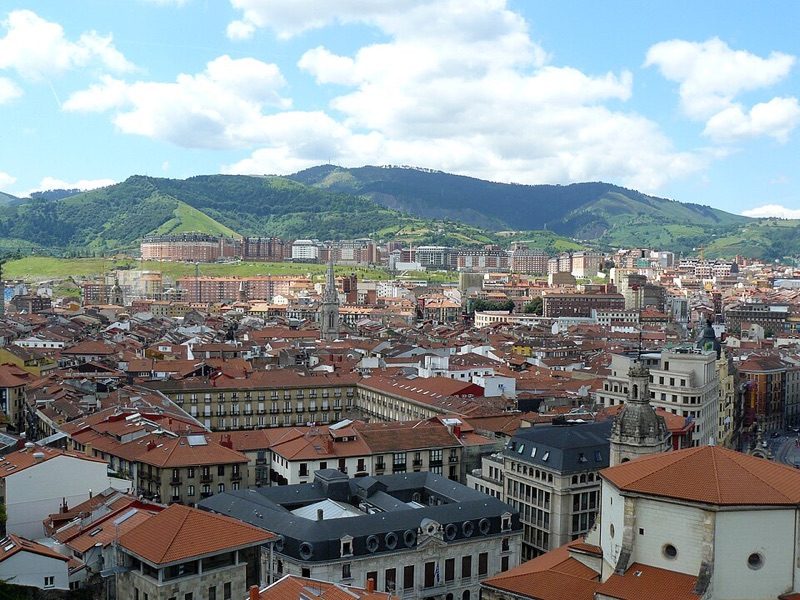
The Basque capital and UNESCO City of Gastronomy. The medieval old town — the largest in Spain by surface area — rings the hill above a thriving modern city.
A compact Castilian town on the Ebro River with a well-preserved old quarter, a Gothic church, and a Saturday market. Overlooked by virtually every visitor and genuinely local in feel.
Cantabria's capital sits on a wide bay above one of Spain's most beautiful urban beaches. The Magdalena Peninsula and the Cantabrian Museum of Prehistory are worth the morning.
The Parte Vieja packed with Michelin-starred restaurants and world-class bars, La Concha bay, and Monte Igueldo above. An unmissable addition to any Basque Country trip.
The walled city of Hemingway and the Running of the Bulls. The old town is a remarkably intact medieval grid, the bar scene rivals San Sebastián, and the 4-kilometer wall walk is superb.
Home to one of Spain's finest Gothic cathedrals and the tomb of El Cid. The cathedral's 15th-century spires and the cloister are UNESCO highlights; the old town is flat and easily walkable.
In 1991, Bilbao was a dying rust-belt city. The steel mills had closed. The shipyards were silent. Unemployment was above 25%. The Basque separatist conflict made international headlines. No one was visiting.
The decision to build the Guggenheim here was considered reckless by most urban economists. The building opened in 1997 and within two years had attracted more than a million visitors annually. The hotel tax revenues paid back the construction cost before the museum's fifth anniversary.
Urban planners coined a phrase for it: the Bilbao Effect. The idea that a single transformative cultural investment could reverse a city's economic and demographic trajectory. The concept has been cited — and often misapplied — in renewal projects in Liverpool, Malmö, Detroit, and dozens of other post-industrial cities. Most of them discovered what Bilbao's architects understood from the beginning: the building was necessary but not sufficient. The decades of investment in infrastructure, public space, and the Abandoibarra waterfront were what made the museum work. The Guggenheim was the catalyst. The city did the rest.