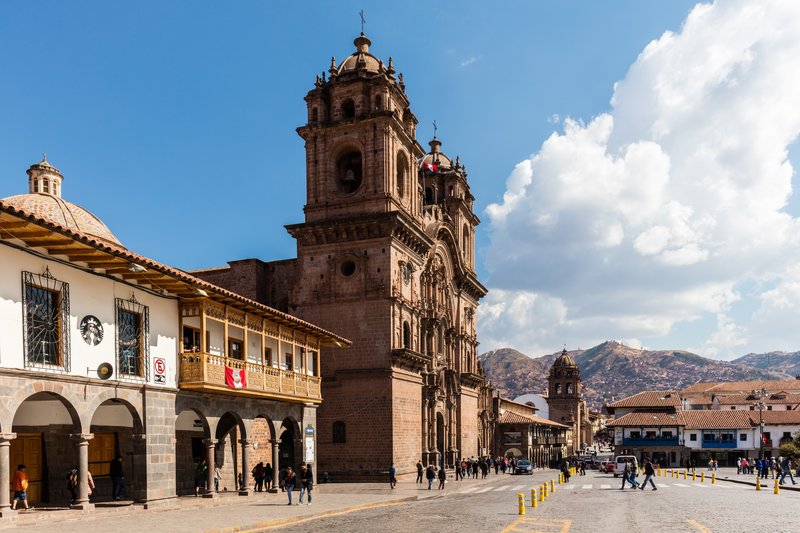
Built 1651–1668 by Jesuits on the palace of Huayna Cápac, this Baroque façade was so theatrically overdone the Pope ordered construction halted before it could eclipse the Cathedral. The gilded interior and carved portals are the finest Spanish Baroque work in Cusco.
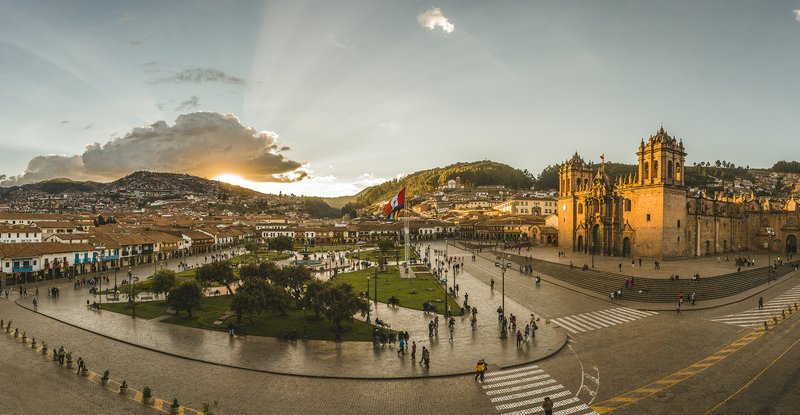
The civic heart of Cusco — a vast colonial plaza built atop the Inca ceremonial center of Huacaypata, where the empire once assembled for processions and festivals. The Cathedral and La Compañía frame two sides; the arcaded portals shelter restaurants and bars with balcony views over the square.
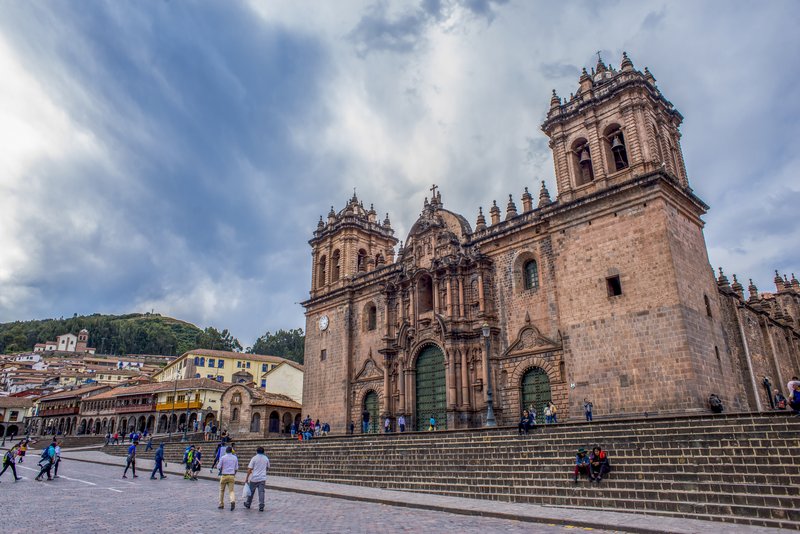
Built 1560–1654 on Inca palace foundations using stones from Sacsayhuamán, this is the masterwork of colonial Cusco. The interior holds 400 Cusco School paintings — including Marcos Zapata's Last Supper where Christ dines on guinea pig and chicha — and a silver altar weighing 1,500 kg.
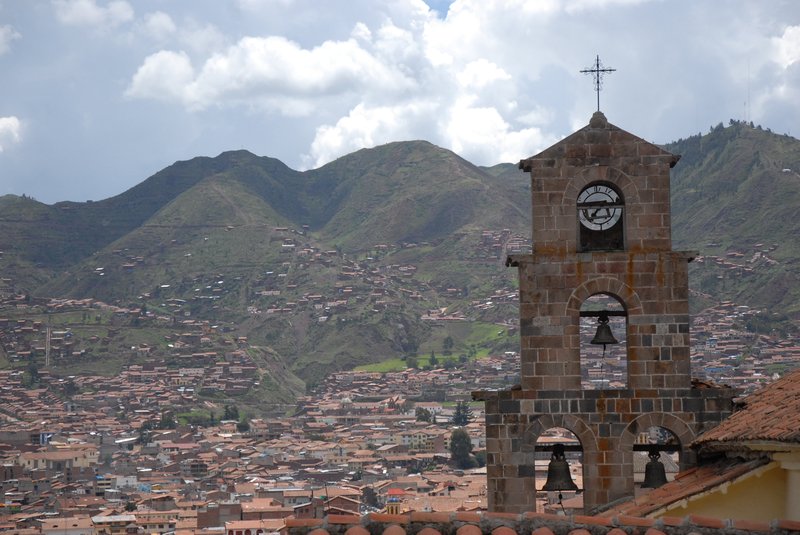
Cusco's artisan quarter since colonial times — steep cobblestone lanes and working workshops of weavers, ceramicists, and silversmiths. The church holds a single cedar pulpit carved from one tree by an anonymous Inca craftsman, considered the finest woodcarving in the Americas.
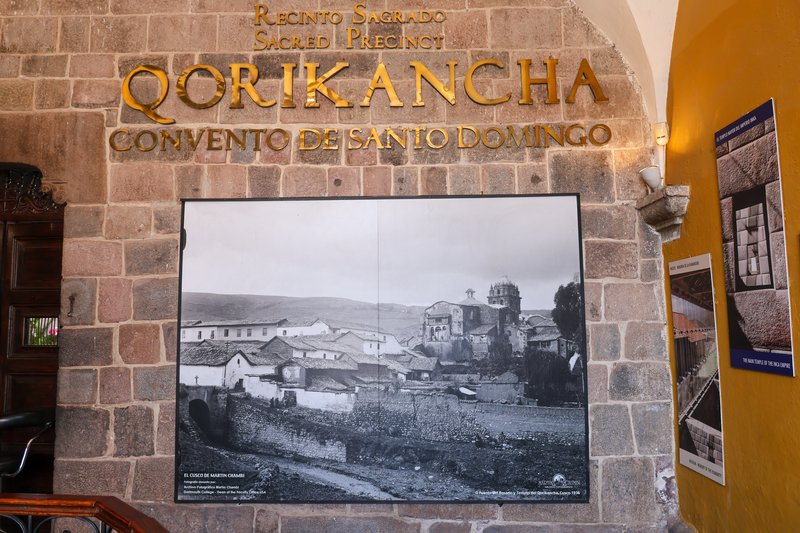
The Inca Temple of the Sun — walls once sheathed in gold sheet. The Spanish built the Convent of Santo Domingo directly atop the Inca foundations. Precision-fitted Inca masonry visible inside the cloister arches, perfectly intact while the colonial church above it sags. The finest stonework in Cusco.
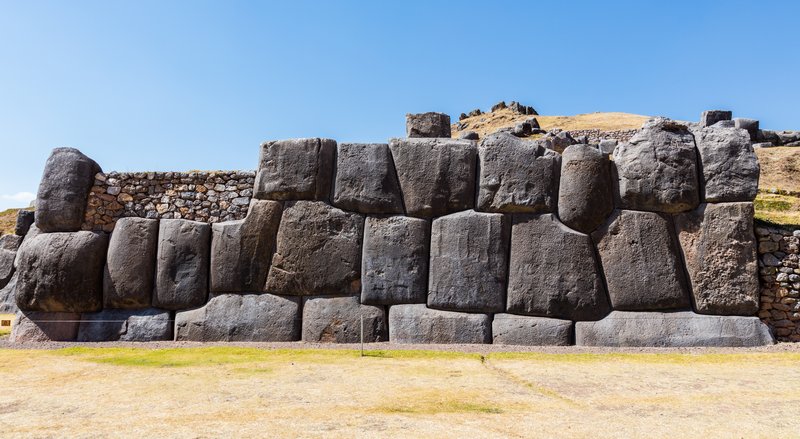
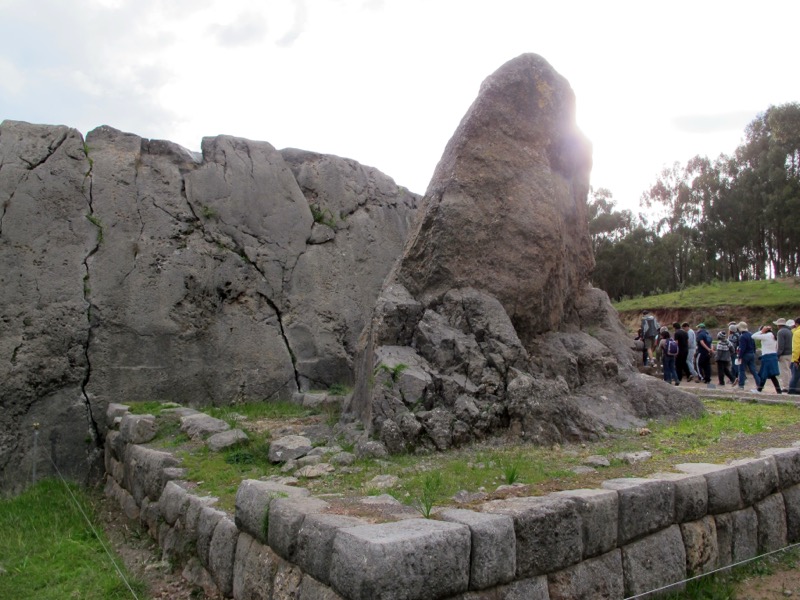
The Inca Empire's greatest monument — three zigzagging rampart walls of blocks up to 125 tonnes, fitted without mortar at 3,700 m above sea level by tens of thousands of workers over 70 years. The Spanish quarried it for generations and still could not remove all the stones.
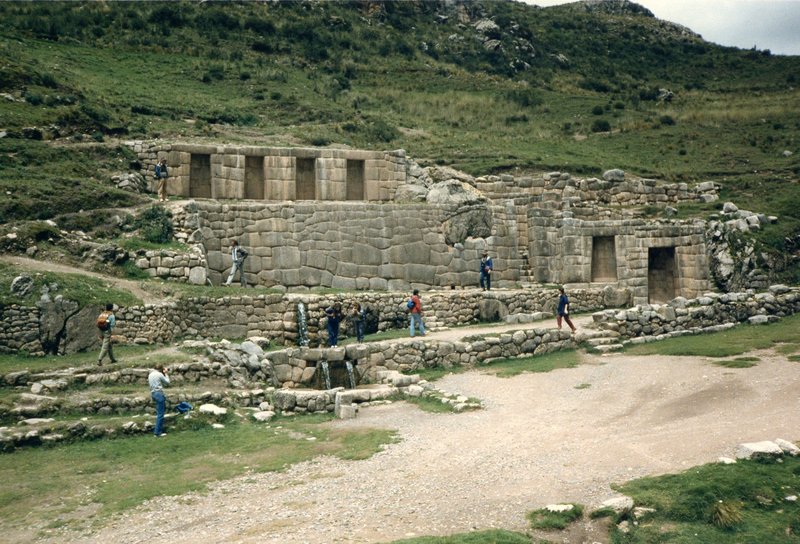
An Inca ceremonial bathing site — three tiers of perfectly fitted stone channels and fountains fed by an underground spring that has flowed since Inca times. Known as the Bath of the Inca, the hydraulic engineering is so precise that the flow rate has not changed perceptibly in 500 years.
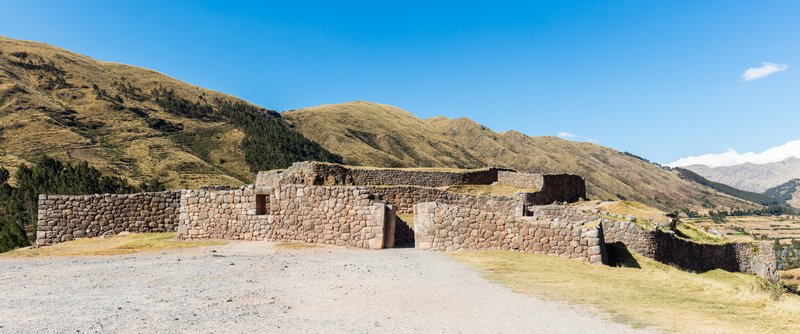
A red-stone Inca military complex at 3,700 m commanding the road to the Sacred Valley — a tambo and watchtower where armies and royal caravans were monitored. The masonry walls, stairways and niched chambers survive largely intact. Far quieter than Sacsayhuamán.
A labyrinthine Inca oracle site — channels, niches, and underground galleries carved into a limestone outcrop. The name means 'zigzag' in Quechua, referring to channels where priests poured chicha and llama blood to read omens. The cave below holds a stone table believed used for mummification.
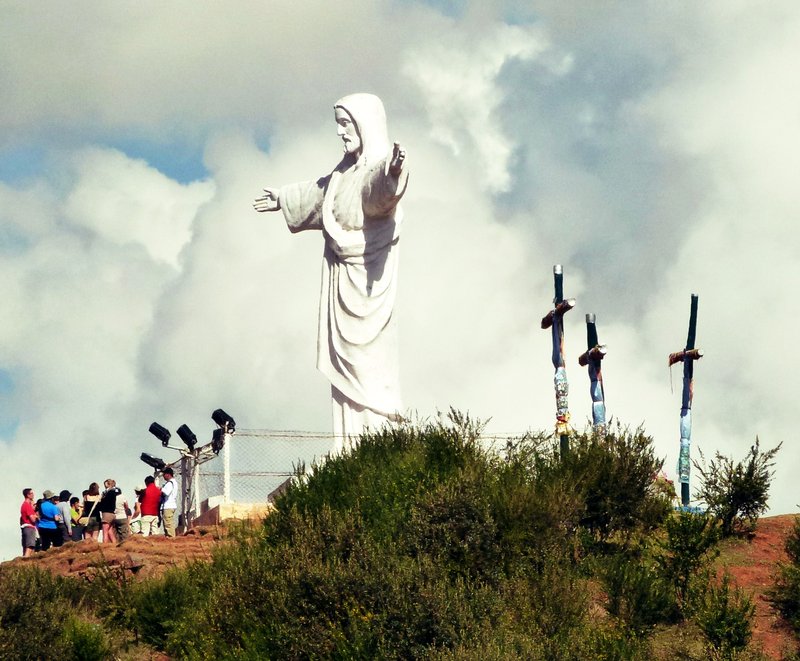
A 7.5-meter white Christ figure, arms extended, on a hilltop above Cusco — a gift from Palestinian immigrants in 1944. The panoramic view is the reason to come: the city spreads below in terracotta and white, the valley beyond, and Andean peaks on the horizon. The finest free viewpoint in Cusco.
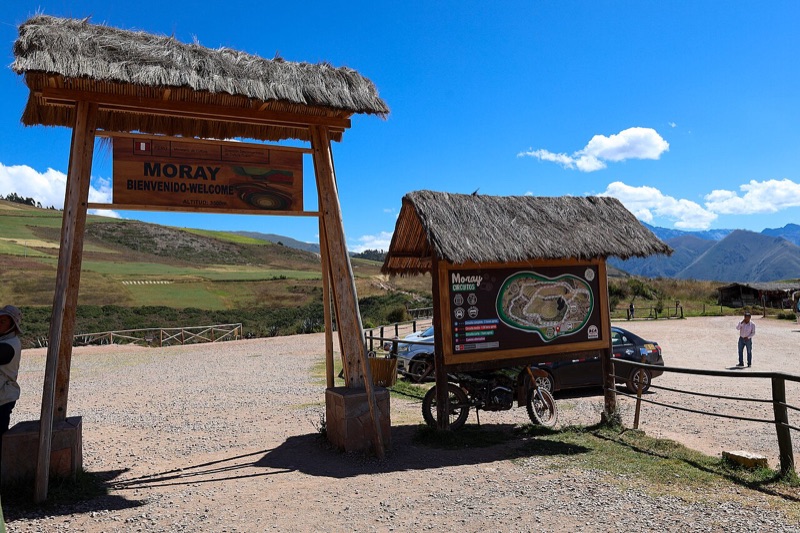
Concentric circular terraces dropping 30 m from rim to center, creating distinct growing conditions at each level. The leading theory: an Inca agricultural laboratory for testing crop adaptations at different altitudes. The geometry is precise and still not fully explained.
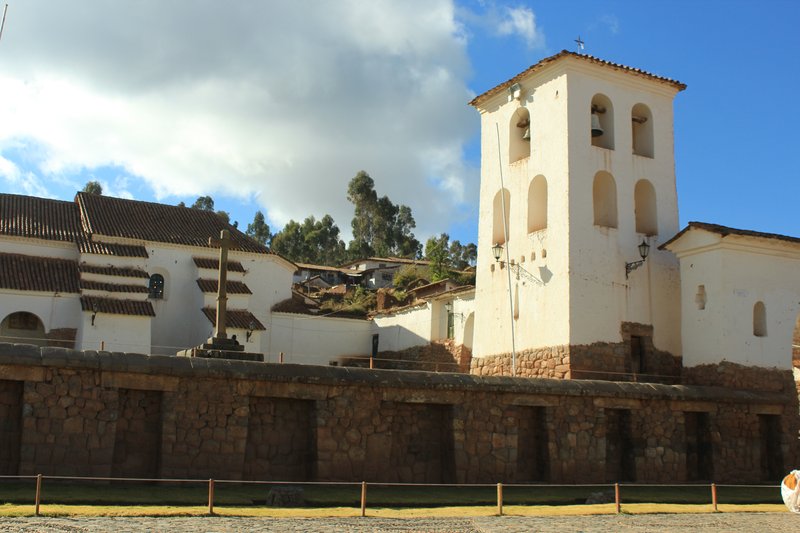
A village at 3,762 m whose colonial church was built directly on Inca palace walls — original masonry forms the foundation and the interior holds 17th-century murals. Extensive Inca terracing and a ceremonial plaza surround it. Far fewer visitors than Pisac.
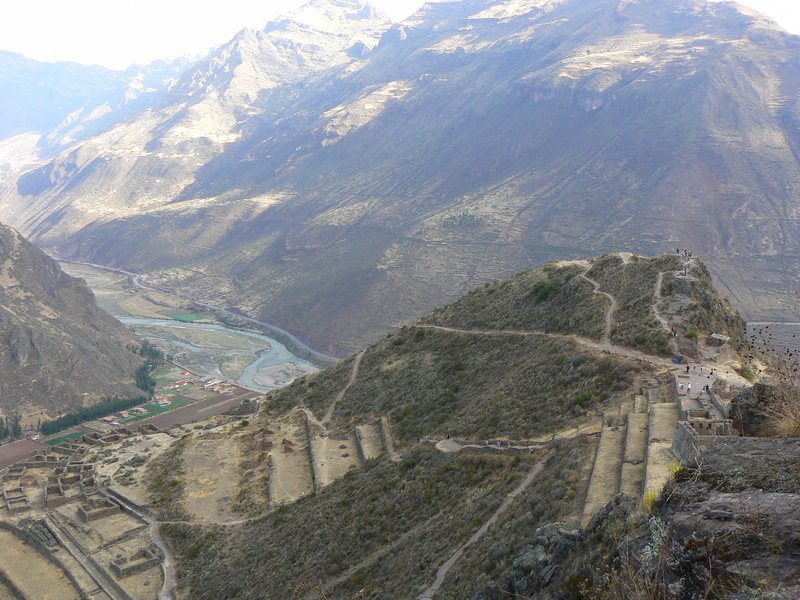
An Inca citadel on a mountain ridge above the Sacred Valley. Sweeping terraces cascade down the slope; the hilltop holds a ceremonial center with an intihuatana sun stone, temples, storehouses and the largest known Inca cemetery. Views over the valley are among the finest in the Andes.
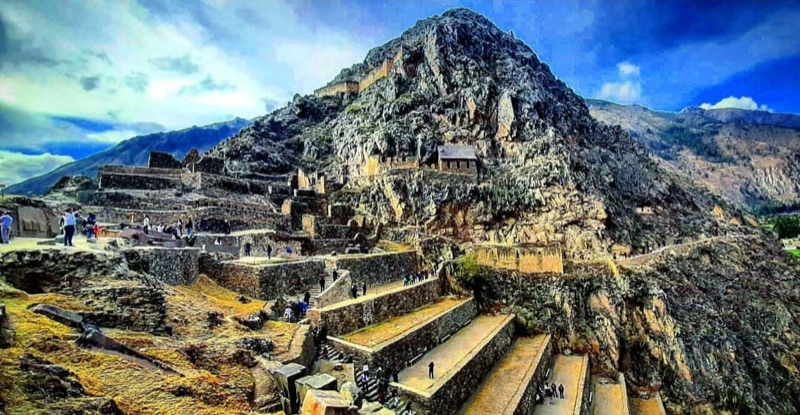
The best-preserved Inca town in existence — a living grid of original Inca streets and canals still occupied by residents. The terraced fortress temple above the plaza is where Manco Inca defeated a Spanish cavalry charge in 1537. The site commands the Sacred Valley at its narrowest point.
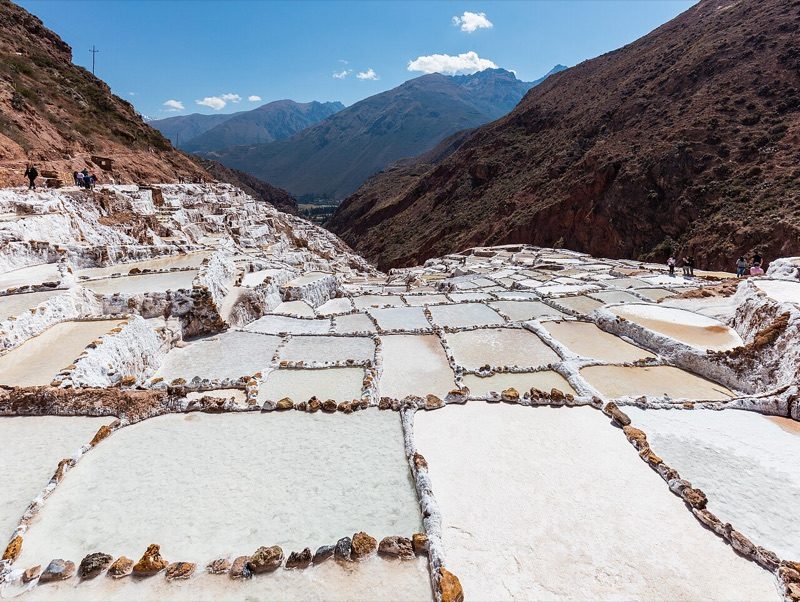
Over 3,000 terraced salt evaporation pools fed by a single saltwater spring in use since before the Inca Empire. Families have worked individual plots for generations — each pool hand-harvested several times a year. The terracotta-and-white patchwork across the hillside is visible from the path above.
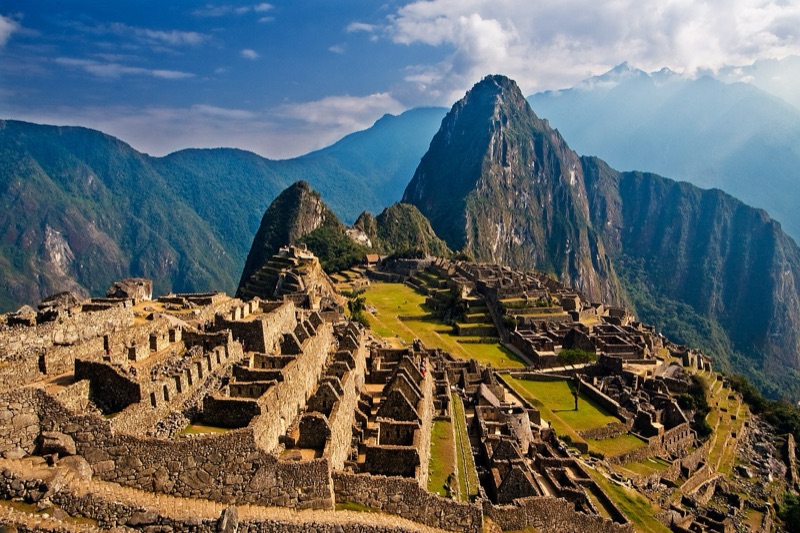
The Inca citadel at 2,430 m — built in the 15th century and abandoned within a century, unknown to the outside world until 1911. Terraced plateau holds temples, palaces, and agricultural zones in near-perfect preservation. The view from the Guardhouse over the full site is as dramatic as any photograph suggests.
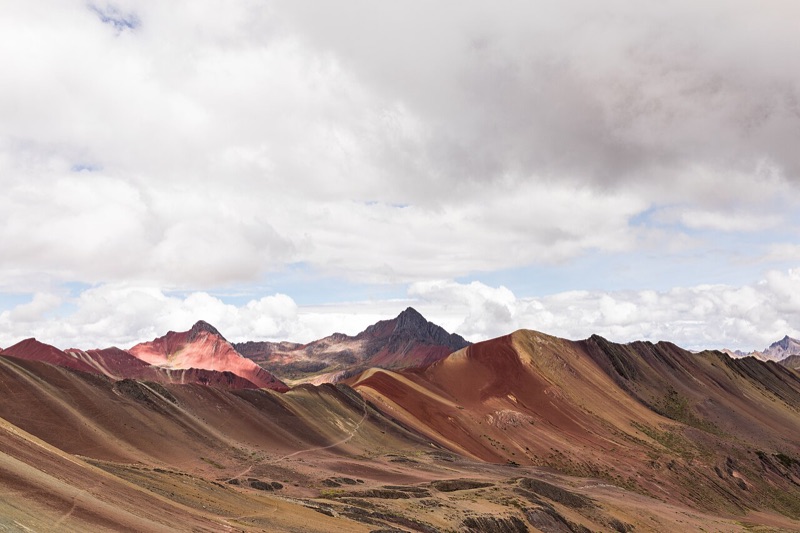
A 5,200 m mountain whose exposed mineral sediment layers produce vivid bands of red, yellow, green, and purple across the high Andean plain. The 8 km trek from the trailhead gains 300 m — strenuous at altitude. Requires at least 2 days of acclimatization in Cusco beforehand.
Two-hour tip-based walk through Cusco's UNESCO-listed historic center — Plaza de Armas, the Cathedral exterior, La Compañía, Qorikancha exterior, and the San Blas artisan quarter — led by a passionate local guide. The best single orientation to the city's Inca and colonial layers.
A focused walk through Cusco's hillside artisan neighborhood — visiting working workshops of ceramicists, silversmiths, and weavers, with a guide explaining the colonial craft traditions and Inca artistic legacy. Includes the carved pulpit in Iglesia de San Blas.
A full-day circuit through the Inca heartland: the terraced citadel at Pisac above the Saturday market, the massive fortress temple at Ollantaytambo, and the weaving village of Chinchero. The essential Cusco day trip that sets Machu Picchu in its proper geographical and historical context.
A full-day trek to Vinicunca — the mountain whose exposed mineral layers appear as vivid bands of red, green, yellow, and purple at 5,200 m. The final ascent is 1.5 hours of high-altitude hiking. The colors are exactly as dramatic as the photographs suggest. Acclimatize for at least 2 days first.
A guided full-day visit to Machu Picchu — train from Poroy or Ollantaytambo, bus to the citadel, a 2-hour guided tour of the site, and free time to explore. Entry ticket and train included. Book 3–4 weeks ahead; Machu Picchu caps daily visitors at 4,500.
A tip-based guided walk through Cusco's historic center covering the Inca and colonial layers of the city — the Cathedral, La Compañía, the San Blas quarter, and Qorikancha exterior. A solid orientation for the first morning with a passionate local guide.
An afternoon circuit of Cusco's four major Inca ruins outside the city center with an expert guide who explains the function and engineering of each site. Boleto Turístico included. An efficient way to cover the ruins if not tackling them independently on Day 2.
A guided full-day tour of the Sacred Valley visiting Pisac market and ruins, Ollantaytambo fortress, and Chinchero — covering the essential Inca sites between Cusco and Machu Picchu with a local expert explaining the agricultural terracing, water engineering, and cosmological planning.
Early-morning departure for the 5,200 m Vinicunca summit — the mountain whose exposed mineral sediment layers produce vivid natural color bands across the Andean high plains. Moderate-to-hard at altitude. Requires 2 days of prior acclimatization in Cusco.
Full-day guided excursion to Machu Picchu by train — covering the citadel's main sectors with a certified guide. Entry ticket and train included. Book at least 3 weeks ahead; Machu Picchu limits daily visitors and timed-entry slots sell out weeks in advance.
Full-day Sacred Valley circuit — Maras salt ponds, Moray circular terraces, and Ollantaytambo fortress, with a sit-down buffet lunch at a valley restaurant. Max 18 guests. Meet at Plaza Regocijo between 6:40–6:50am.
Premium Sacred Valley day trip in a max-8-guest van — Pisac ruins and market, Ollantaytambo, and Chinchero with a bilingual Peruvian guide. The small cap keeps it genuinely personal from Cusco.
Guinea pig roasted whole or fried — a genuine Andean staple for thousands of years, not a tourist novelty. The skin crisps, the dark meat resembles rabbit. Marcos Zapata painted it on the Cathedral's Last Supper. The definitive Cusco dish.
Giant white Andean corn served with fresh white cheese — kernels four times the size of sweet corn, starchier and less sweet. A staple cultivated here for millennia. Found at vendors and Mercado San Pedro.
Pork belly braised then deep-fried until the skin blisters and the fat renders into a crackling shell, served with corn and potatoes. A Cusco breakfast classic sold from dawn at Mercado San Pedro and surrounding stalls.
Fermented corn beer made from germinated yellow corn, boiled and left to ferment. Slightly sour, mildly alcoholic, and cloudy — an Andean staple predating the Inca. A white flag above a door marks a chichería serving fresh chicha.
Peru's national cocktail: pisco grape brandy, fresh lime, simple syrup, egg white shaken to a foam, and Angostura bitters on top. The altitude at 3,400 m means the effect arrives faster than expected. Every bar in Cusco has a version.
Foreign number: accepted. — the same Uber account and SMS verification as the ride app, so a foreign SIM receives the code.
Available in Cusco with a solid roster of restaurants across the historic center; the most accessible option for visitors who already have a global Uber account; covers a range of local Peruvian food, international chains, and cafés in the main tourist areas.
Foreign number: not accepted. — Rappi only accepts numbers from the countries where it operates.
Good Cusco coverage with a broad selection including local restaurants and convenience items; often includes establishments not listed on Uber Eats; worth setting up if you have a compatible number.
Foreign number: not accepted. — only a limited set of foreign country codes are supported at sign-up.
Peru's own delivery platform with strong Cusco presence; tends to include more local and neighborhood restaurants alongside the well-known spots; the most complete local option once you have a compatible number.
Foreign number: accepted. — the SMS code goes out through a global gateway and reaches a foreign SIM.
The most widely used ride-hailing app in Cusco; good coverage across the historic center, San Blas, and out to the main market and bus terminal areas; the negotiated-fare model means you agree a price before the ride, and local knowledge of drivers generally keeps prices fair.
Foreign number: accepted. — the verification code arrives by SMS on a foreign SIM, and the app can also verify through WhatsApp.
Available in Cusco with predictable metered fares; the familiar interface makes it useful for visitors who want upfront pricing; supply is somewhat thinner than InDrive, particularly at peak times and on runs to the bus terminal or the outskirts.
Cusco is a city that operates on two timelines simultaneously. The calendar you arrive with — the one that includes check-in times and tour reservations and altitude sickness remedies — sits on top of a much older chronology that the city itself has not forgotten. Walk far enough from the Plaza de Armas in any direction and you will find Inca stonework still in place under the foundations of Spanish churches, colonial mansions, and contemporary restaurants. The fit of the stones is precise enough to be unnerving. No mortar. No decay. Five hundred years of earthquakes and the joints remain tight.
The reason the Spanish built on top of rather than next to the Inca structures was not aesthetic — it was practical. The Inca masonry was better than anything the colonists could build. The 1650 earthquake that devastated the city's colonial buildings left the Inca foundations standing. The Qorikancha walls, the curved apse of the Temple of the Sun that the Spanish incorporated into Santo Domingo, have not moved perceptibly in five centuries. Sacsayhuamán's stones are so large that the Spanish quarried them for building material for generations and still could not remove them all. What remains is what was too big to take.
One thing worth knowing before you arrive: Cusco sits at 3,400 meters. The air at that altitude contains roughly 30% less oxygen than at sea level. This is not a metaphor or a polite warning — it is a physical reality that will affect your first day regardless of your fitness level. Walk slowly. Drink water. Accept the coca tea that everyone offers. The altitude taxes your body before you have any sense that it is happening, and then you stand up too quickly and the city tilts slightly. Give yourself 48 hours. The ruins will still be there.