From Hotel: 26 min → Red Rocks Park & Amphitheatre
1.Red Rocks Park & Amphitheatre~1 hr 30 min
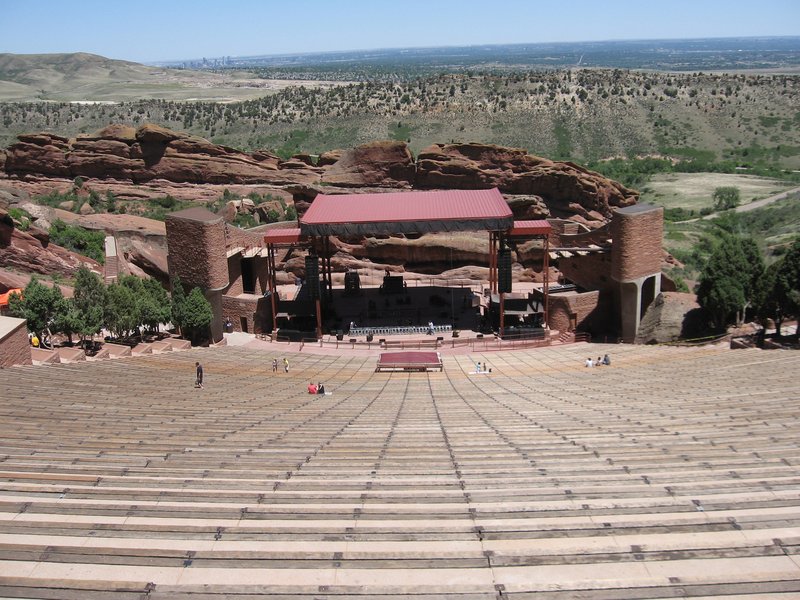
A natural amphitheatre cradled between two 300-foot sandstone monoliths in the foothills west of the city, with near-perfect acoustics and a view straight back to the Denver skyline. Free to wander on non-concert days — climb the seating rows or walk the short trails through the red rock formations.
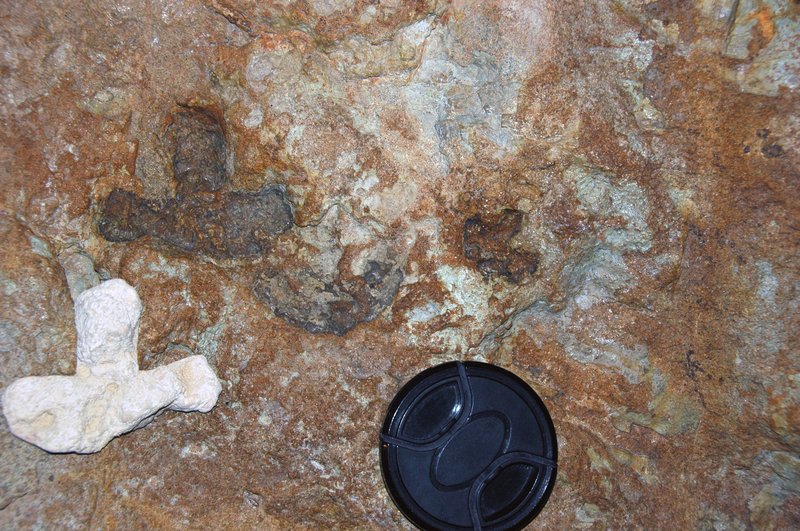
A tilted sandstone hogback where more than 250 Cretaceous dinosaur tracks and Jurassic fossil bones lie exposed along the roadside. This is where the first Stegosaurus and Apatosaurus were unearthed in 1877 — now a National Natural Landmark you can walk right up to on a self-guided road.
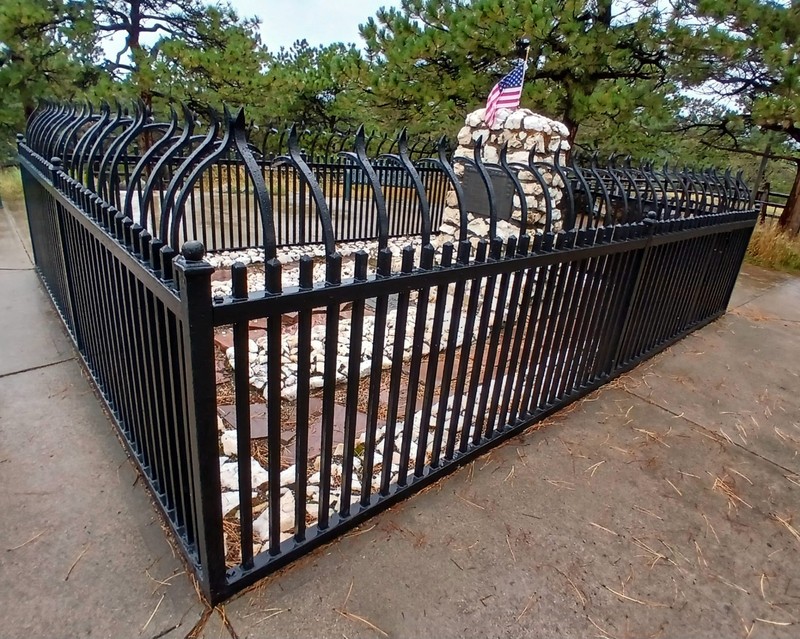
On the crest of Lookout Mountain, the grave of William "Buffalo Bill" Cody lies behind an iron rail beside an observation deck with a sweeping view over Denver and the Great Plains. The grave and deck are free; the adjoining museum holds Wild West Show posters, costumes, saddles, and antique firearms.
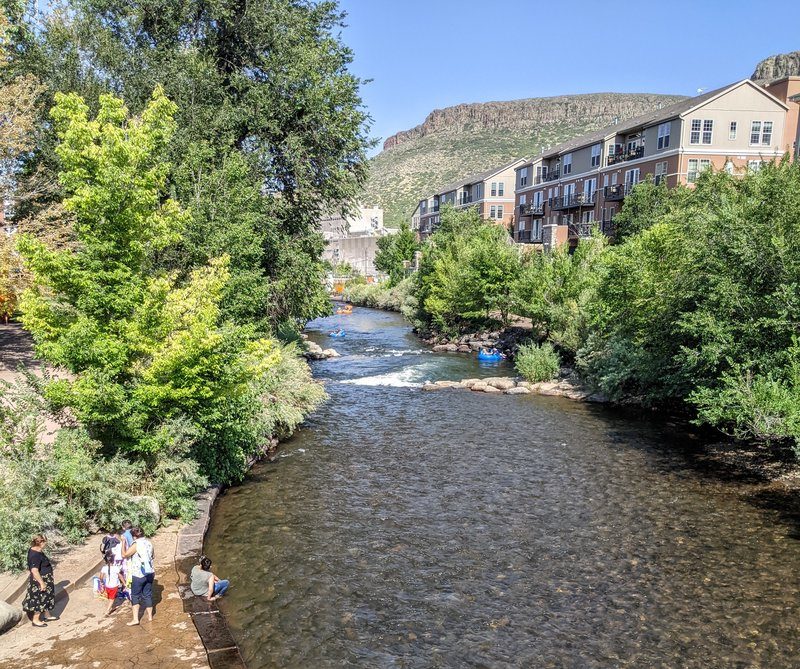
Colorado's former territorial capital, strung along Clear Creek at the foot of the foothills. The arched "Welcome to Golden" sign spans Washington Avenue above Victorian brick storefronts, kayakers and tubers ride the creek through town in summer, and North and South Table Mountains rise on either side.
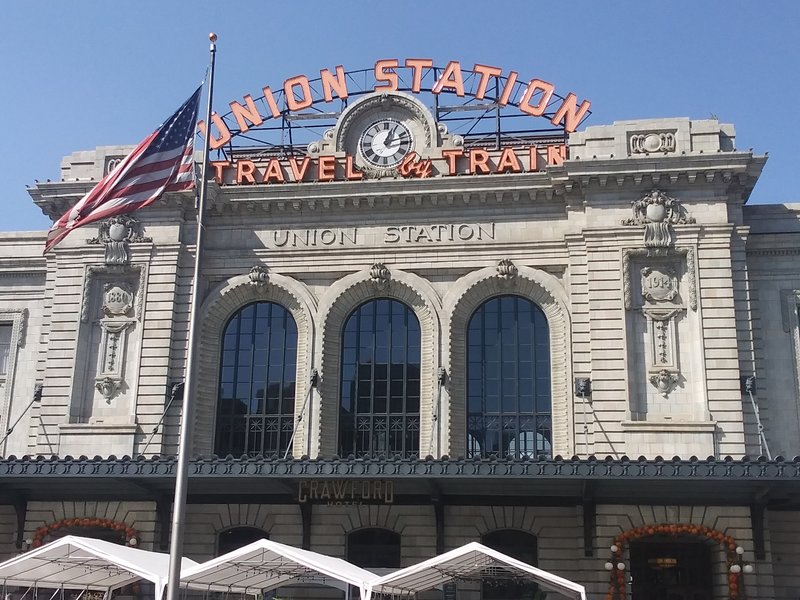
The 1914 Beaux-Arts terminal is the social heart of downtown — a restored Great Hall under soaring arched windows and brass chandeliers, lined with bars, cafés, and the boutique Crawford Hotel. Trains still run beneath it; the hall itself is the draw.
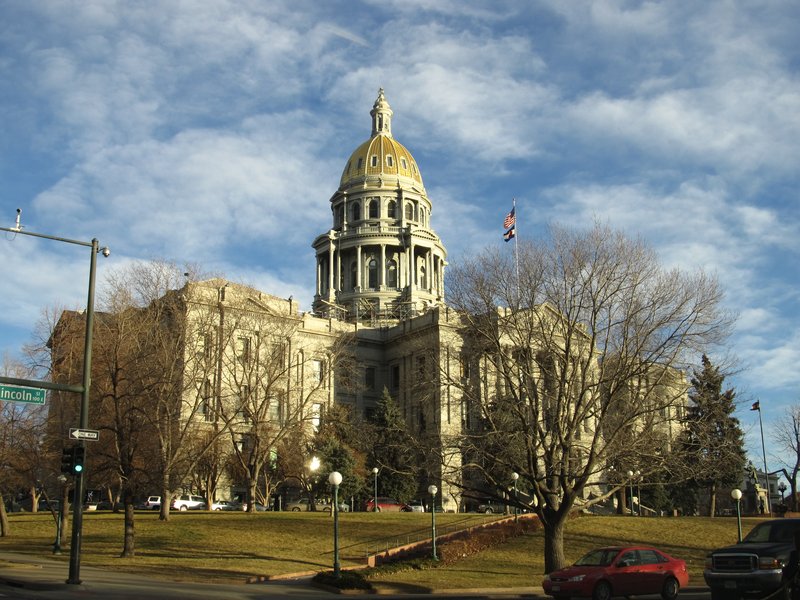
The gold-domed seat of Colorado's government, its dome leafed in real Colorado gold. Free dome tours climb 99 steps to an open-air gallery with a sweeping Front Range panorama, and the west steps carry the brass marker reading exactly one mile above sea level.
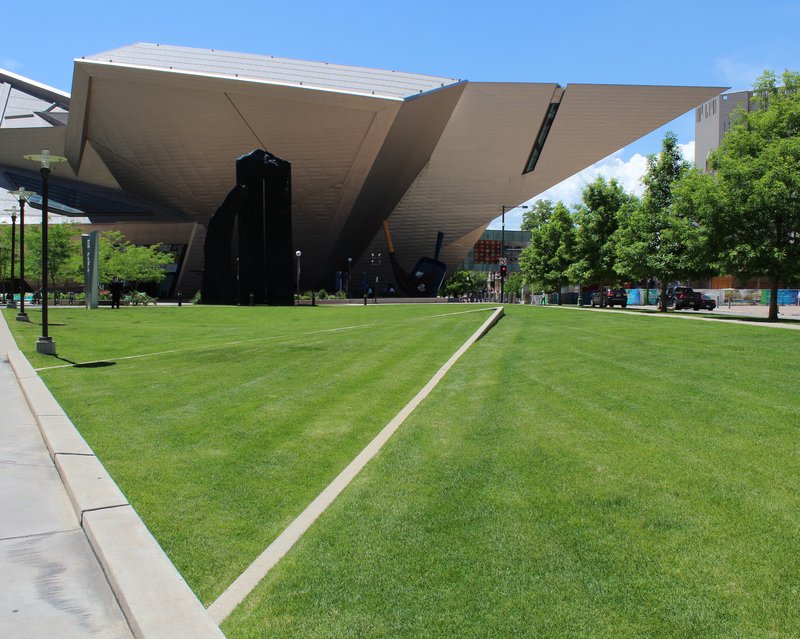
The building alone justifies a stop: Daniel Libeskind's titanium-clad Frederic C. Hamilton Building is a jagged burst of angular shards, one of the boldest pieces of deconstructivist architecture in the country. Inside is a deep American Indian collection and strong modern and Western galleries.
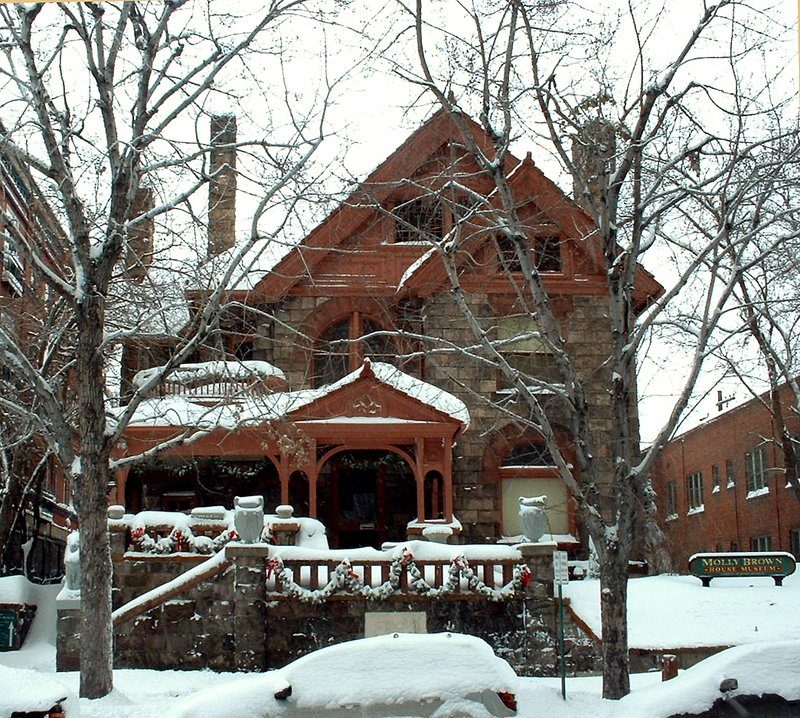
The 1889 Queen Anne and Richardsonian Romanesque mansion of Margaret "Molly" Brown — the Titanic survivor and reformer immortalized as the "Unsinkable Molly Brown." Guided tours walk its restored Victorian rooms, filled with period furnishings and her own belongings, behind an ornate rusticated-stone facade.
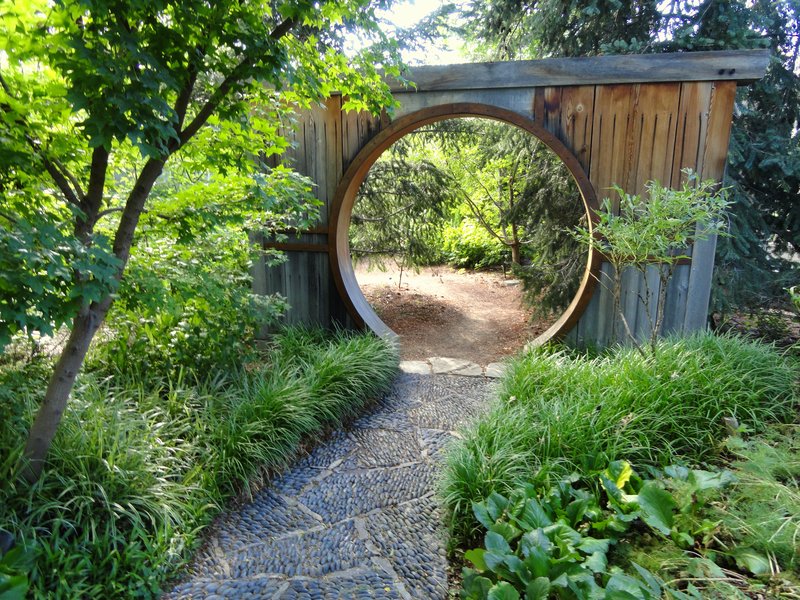
A 24-acre oasis a mile from downtown, laid out as a run of themed gardens — an alpine rock garden, water gardens, one of the largest Japanese gardens in the country, and the glass Boettcher Memorial Tropical Conservatory packed with rainforest plants. One of the finest botanical gardens in the country.
40 min · 9 min → Denver Museum of Nature & Science
2.Denver Museum of Nature & Science~2 hr
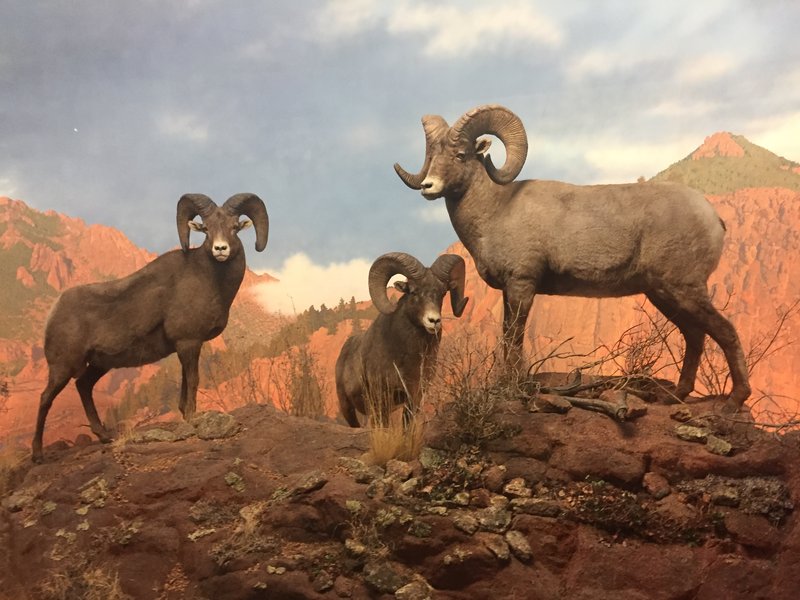
One of the largest natural-history museums in the western United States — towering mounted dinosaur skeletons, walk-through wildlife dioramas, a world-class gems-and-minerals hall, and the Gates Planetarium. Its north-facing windows frame downtown Denver against the full sweep of the Front Range.
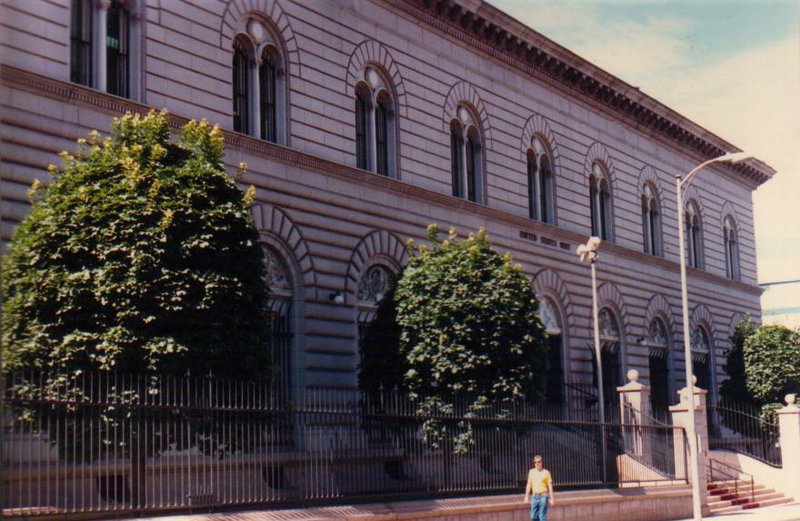
One of four operating US Mint facilities and the single largest coin producer in the world. The 1904 Neoclassical building on Colfax Avenue has struck every "D" mintmark coin since 1906 — quarters, dimes, and dollar coins circulating today. Free guided tours walk a viewing gallery above the production floor; tours are Monday through Thursday by advance online reservation.
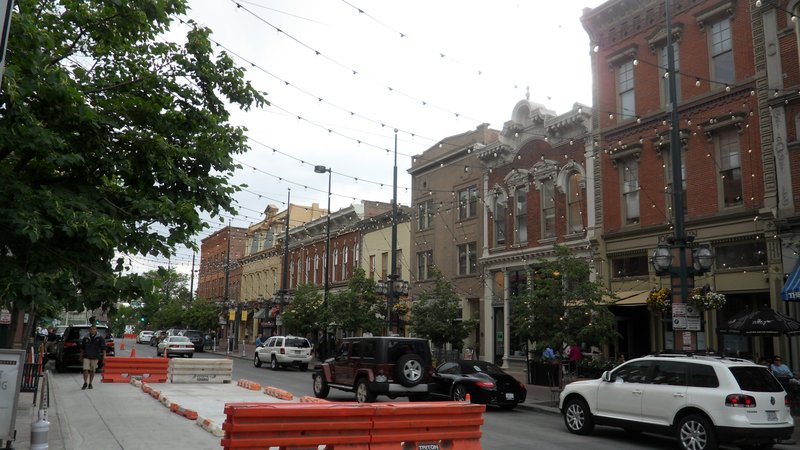
Denver's oldest commercial block, laid out in 1858 along the city's original gold-rush street. The Victorian Italianate storefronts lining Larimer Street between 14th and 15th — saved from demolition in the 1960s by preservationist Dana Crawford — became the city's first historic district in 1971. The 1858 street plan and Victorian facades survive intact beneath string lights.
Denver's signature urban park — 165 acres of lawns, perennial gardens, and two reed-fringed lakes in South Denver. Designed in 1899 by Reinhard Schuetze, the carriage drives loop past Smith Lake and Grasmere Lake, a working replica of George Washington's Mount Vernon flower garden occupies the north end, and the 1913 boathouse anchors the western shore.
A local-guide loop through Lower Downtown, Denver's oldest neighborhood — the city's first Chinatown, its most famous bordello, the oldest operating hotel, and the tunnel system beneath the streets, starting from Union Station.
A half-day small-group run into the Rocky Mountain foothills west of the city for canyon scenery, mountain views, and a taste of the high country before returning downtown.
Half-day run into the foothills — Red Rocks Park, the mountain town of Evergreen, and a climb to Echo Lake at 10,600 ft for Rocky Mountain vistas, returning to the downtown meeting point.
Full day south to Colorado Springs — the towering red sandstone of the Garden of the Gods, lunch in Manitou Springs, and a drive to the 14,115-ft summit of Pikes Peak before the scenic return to Denver.
A full day in Rocky Mountain National Park — Trail Ridge Road, one of North America's highest paved roads, plus alpine lakes, Continental Divide views, and a picnic lunch, with downtown pickup.
A slow-simmered pork-and-roasted-green-chile stew, ladled over burritos, eggs, and fries. The Front Range version leans on Pueblo chiles and runs thicker and meatier than New Mexico's.
Eggs folded around diced ham, onion, and green bell pepper — a railroad-era cook's creation that grew into a national breakfast standard still carrying the city's name.
Battered and deep-fried bull calf testicles, served with a horseradish or cocktail sauce — a frontier ranching tradition turned Colorado novelty, and the house specialty at Denver's oldest restaurant.
Denver is a craft-beer capital with 150-plus breweries in the metro. Wynkoop, the state's first brewpub, opened in 1988 and was co-founded by a future Colorado governor.
Foreign number: accepted. — the code arrives by SMS on a foreign SIM, and the account can also be opened with Google or Apple sign-in.
The dominant delivery platform in Denver with strong coverage across Capitol Hill, the Highlands, Baker, and the downtown core; restaurant selection spans fast-casual chains and local independents with reliable service into LoDo and RiNo.
Foreign number: accepted. — the same Uber account and SMS verification as the ride app, so a foreign SIM receives the code.
Wide coverage across Denver and the inner suburbs; partners with a solid mix of independent restaurants and national chains; useful for runs from Cherry Creek and the Denver Tech Center where DoorDash coverage can thin.
Foreign number: not accepted. — a US mobile number is required to sign up.
Operates in Denver with coverage concentrated in the central districts; restaurant selection overlaps substantially with DoorDash; the US-number requirement makes it impractical for most international visitors.
Foreign number: accepted. — the verification code arrives by SMS on a foreign SIM, and the app can also verify through WhatsApp.
Well-supplied across downtown Denver, LoDo, Capitol Hill, and the Highlands; reliable for longer cross-city runs including rides out to Red Rocks for evening concerts; surge pricing applies on Broncos, Nuggets, Avalanche, and Rockies game days.
Foreign number: not accepted. — Lyft's own help says the number must be a US, Canadian or Puerto Rican one, and the code is texted only to that number.
Competes closely with Uber across the city; useful as a price-check alternative for cross-city runs to the western suburbs and to Red Rocks; supply can be thinner late at night in neighborhoods east of Colorado Boulevard.
Amtrak's seasonal Winter Park Express runs straight to the base of Winter Park Resort on winter weekends — the one true same-day train trip the city offers. Boulder, Colorado Springs, and Rocky Mountain National Park have no useful passenger rail and need a car.
Downtown Denver sits crooked on purpose. The oldest streets — Larimer, Wynkoop, the whole LoDo core around your hotel — were laid out parallel to the South Platte River and Cherry Creek, so the historic center runs at a 45-degree diagonal to the strict north-south grid that governs the rest of the city. Once you notice the twist, it explains why Union Station and the 16th Street corridor feel like their own pocket of downtown.
And the "Mile High" line isn't one line. The Capitol's west steps have carried the exactly-5,280-feet mark in three different spots over the years, each re-surveyed as measurement got more precise. The current one is the brass word-marker reading "One Mile Above Sea Level" — stand on it and you're a mile up, give or take a re-survey.