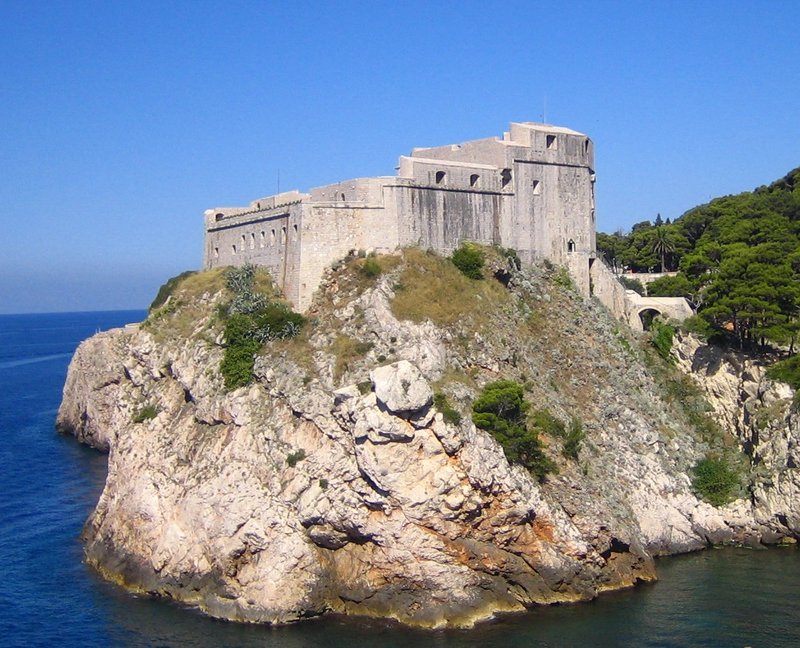
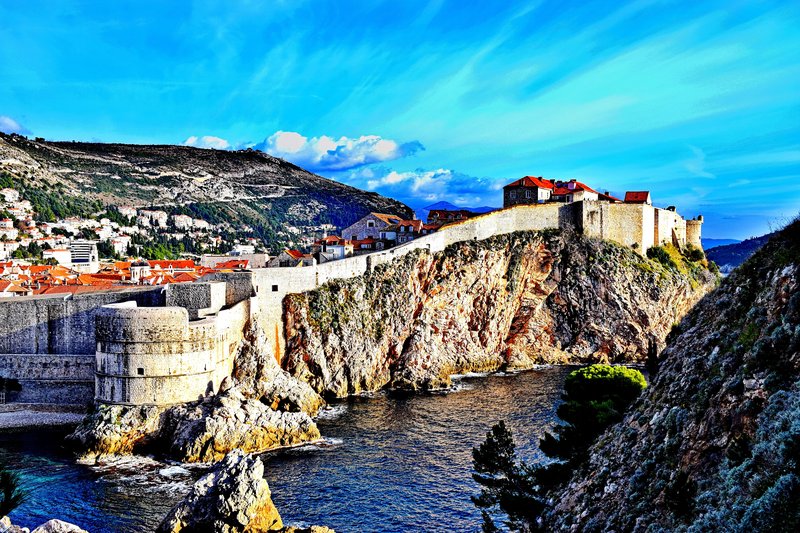
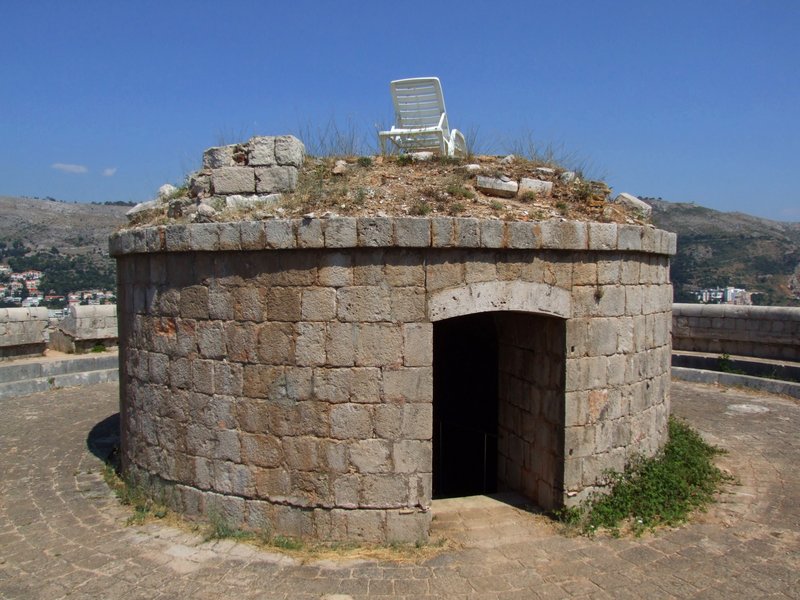
A free-standing fortress perched on a 37-metre cliff outside the western city walls, guarding the sea approach to Ragusa since the 11th century. The ramparts give unobstructed views of the walls from outside their curve — the one angle the walls walk itself never gives.
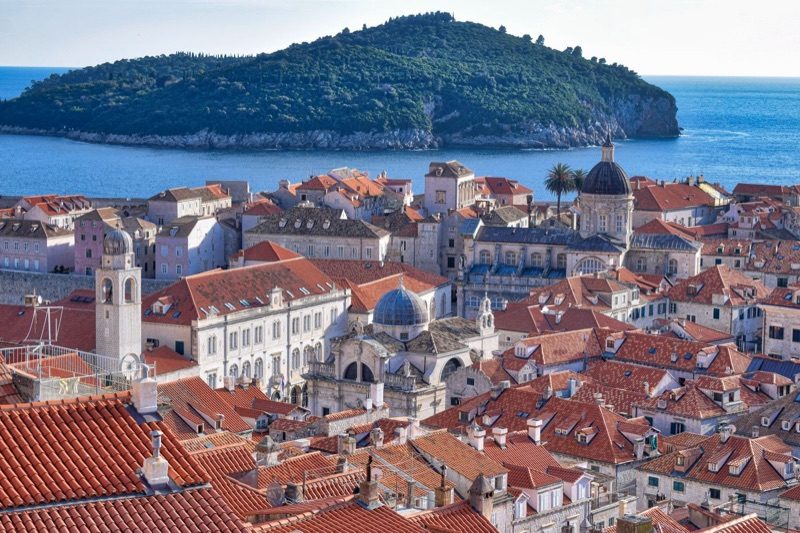
A 2-kilometre circuit along medieval fortifications enclosing the old city — walls up to 6 metres thick, reinforced with towers and bastions on three Adriatic sides. The full loop from Pile Gate to the eastern towers delivers every angle of the terracotta roofscape and the islands beyond.
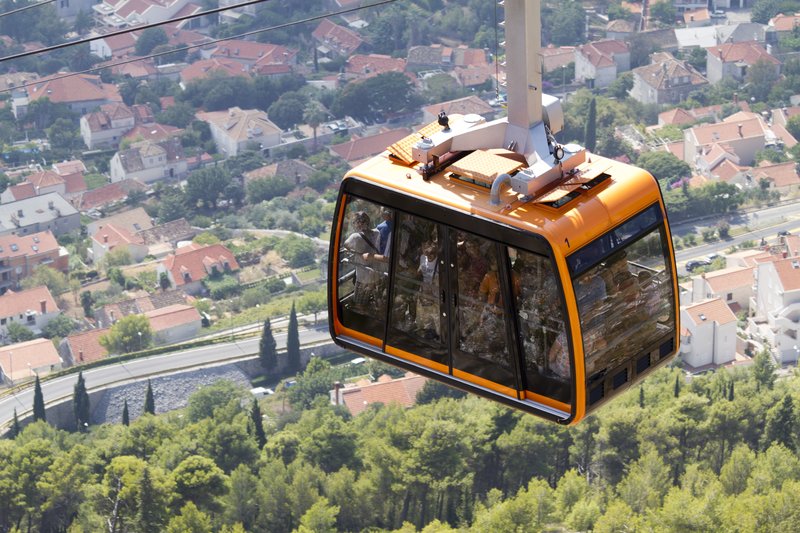
A 4-minute aerial ride from near Ploče Gate to the summit of Mount Srđ at 405 metres — high enough to take in the entire walled city at once, the Elaphiti Islands dissolving south into the Adriatic, and on clear days the coast of Montenegro.
From Hotel: 4 min · 7 min → Franciscan Monastery & Old Pharmacy
1.Franciscan Monastery & Old Pharmacy~1 hr
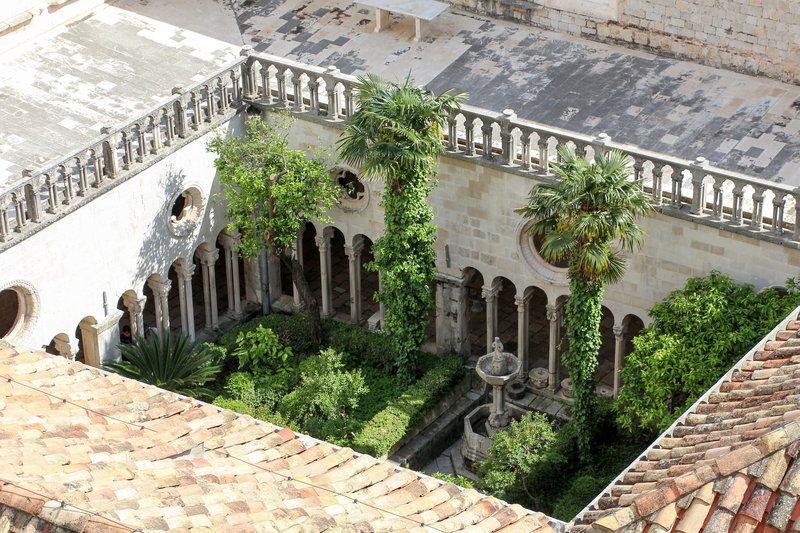
A 14th-century friary just inside Pile Gate, built around a Gothic cloister of double columns framing a small garden and well. Its pharmacy has operated continuously since 1317 — the third-oldest in the world — and still sells preparations made to the original Franciscan recipes.
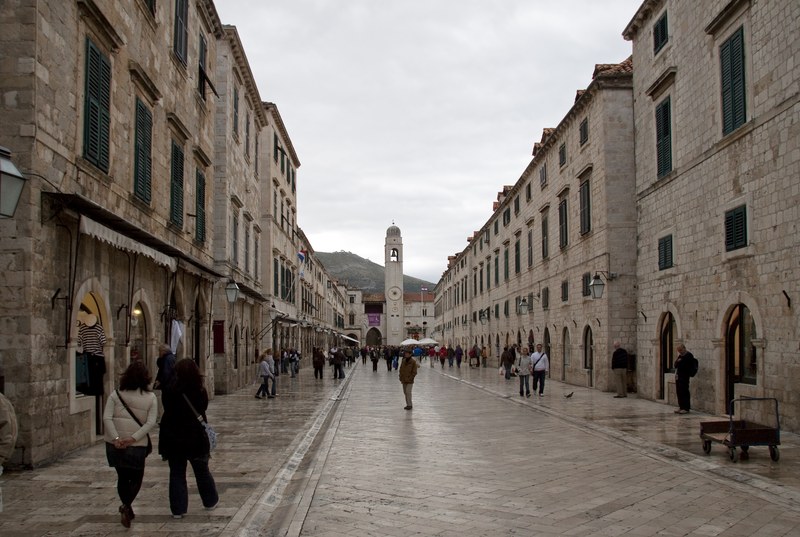
The 300-metre limestone-paved promenade running through the centre of Old Town from Pile Gate to Ploče Gate. Its uniform Baroque facades — rebuilt identically after the 1667 earthquake — create a street that feels deliberately composed rather than accumulated building by building across centuries.
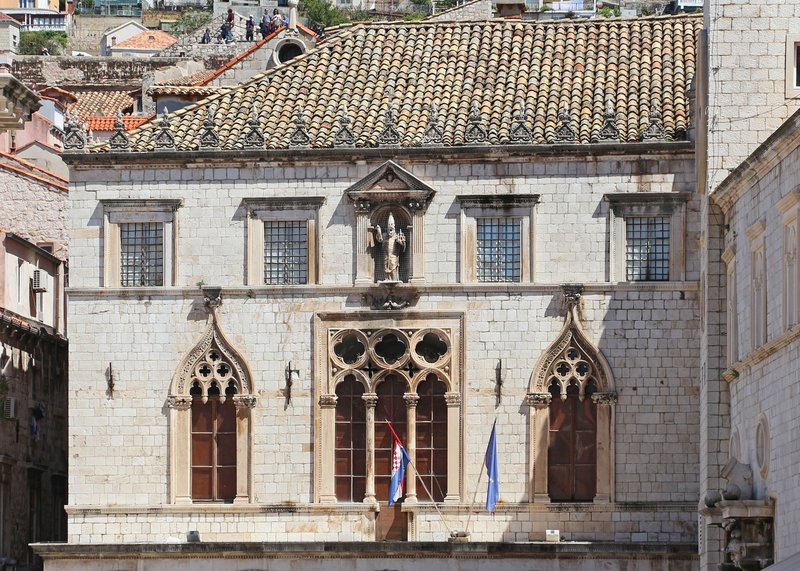
A Gothic-Renaissance customs house and mint from 1516-1522, standing on Luža Square beside the Bell Tower. It is the only major Old Town building to have survived the 1667 earthquake without damage, and its shaded atrium now houses the State Archive and a memorial room for Dubrovnik's 1991 war dead.
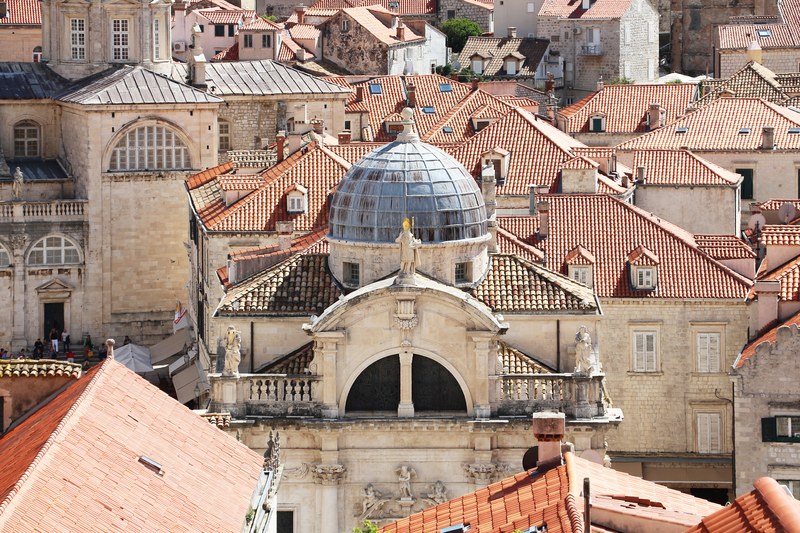
A Baroque church built in 1715 by Marino Gropelli on the foundations of the medieval church that burned in 1706. A facade statue of St. Blaise holds a model of Dubrovnik as it appeared before the 1667 earthquake — the most accurate surviving record of the pre-quake city.
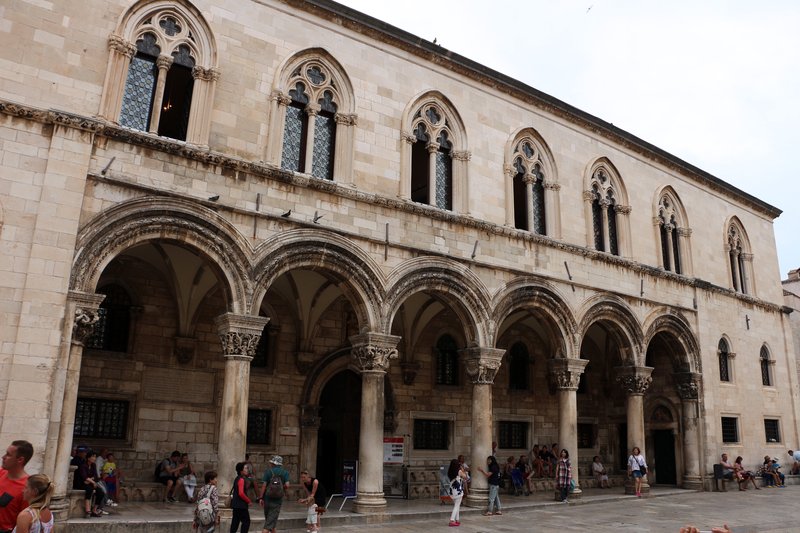
The administrative seat of the Republic of Ragusa from the 14th century until 1808, rebuilt in Gothic, Renaissance, and Baroque styles after repeated explosions and the 1667 earthquake. The arcaded courtyard is the highlight; upstairs, the Cultural History Museum holds Ragusan portraits, coins, and furniture.
A Baroque cathedral rebuilt after the 1667 earthquake and consecrated in 1713. The treasury holds over 200 relics of St. Blaise and a 12th-century Byzantine icon attributed to Richard the Lionheart. A Raphael polyptych of the Virgin hangs in the sacristy.
A protected nature reserve 600 metres off the Old Port, a 15-minute ferry crossing away. Pine-shaded paths lead past a Benedictine monastery dating to 1023, a botanical garden of subtropical species, the saltwater "Dead Sea" lake fed by underground caves, and the Fort Royal viewpoint.
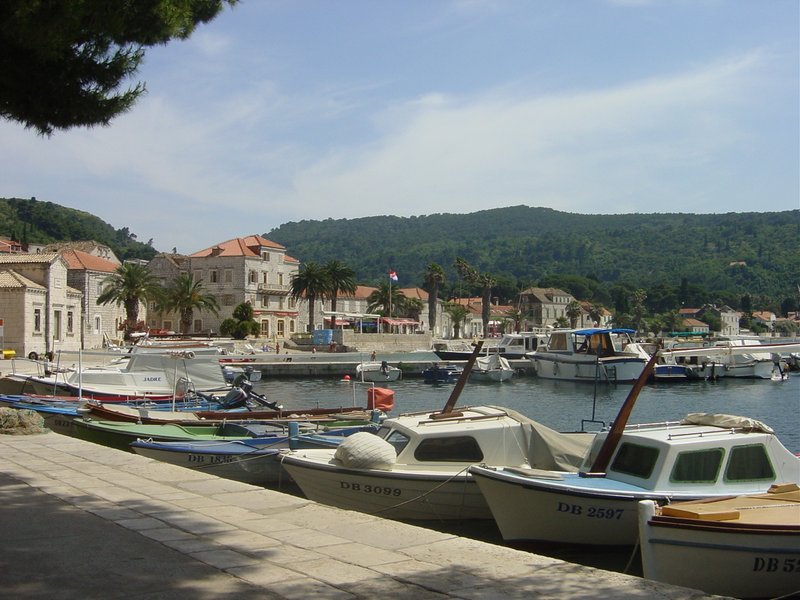
A 13-island archipelago northwest of Dubrovnik, of which Koločep, Lopud, and Šipan are permanently inhabited. The public ferry from Gruž Port calls first at Koločep, then Lopud — the most developed of the three, with a sandy harbour beach and car-free lanes shaded by pine and cypress.
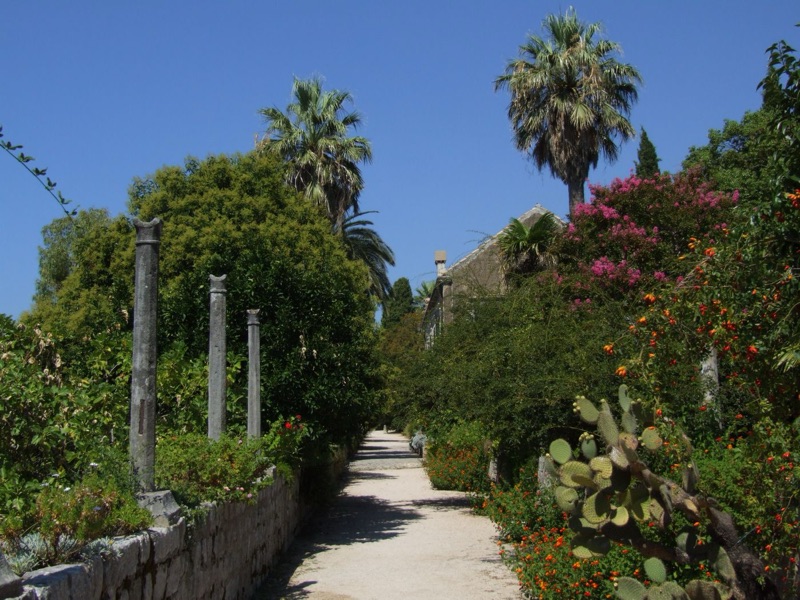
A Renaissance-period arboretum established in 1493 by the Gučetić-Gozze noble family on coastal cliffs 20km northwest of Dubrovnik. Two Oriental plane trees over 500 years old frame a central fountain. The walled garden terraces, aqueduct, and Neptune statue survive largely intact.
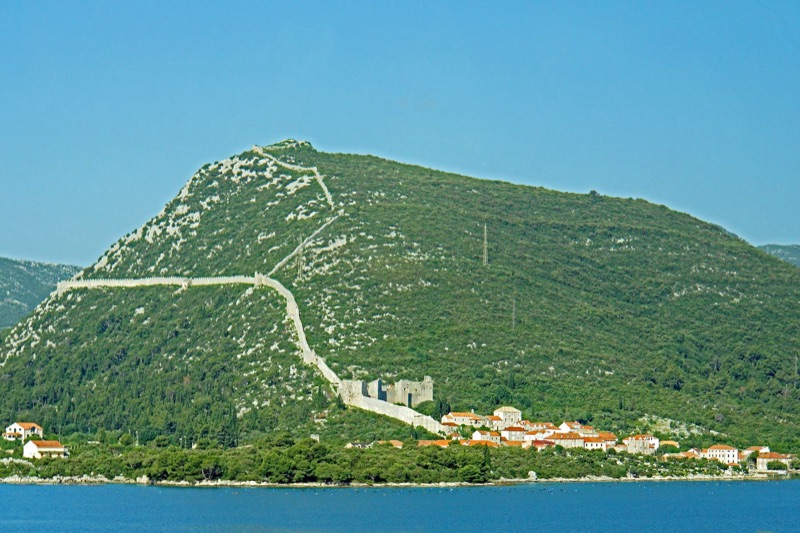
A 5.5-kilometre wall linking Ston to Mali Ston, built from 1358 under the Republic of Ragusa to protect the peninsula's salt pans. Ranked among the longest preserved fortification systems in the world, the wall traces a ridgeline with 20 surviving towers and five fortress bastions.
A village on the eastern shore of the Pelješac peninsula, one kilometre from Ston, set on a sheltered bay that has produced oysters and mussels since the 14th century. Waterfront restaurants serve oysters pulled directly from the bay's aquaculture beds.
A 90-minute walking tour through Old Town's medieval lanes — Onofrio's Fountain, Franciscan Monastery, Cathedral, and Rector's Palace — with local guides known for working lesser-known detail into the main narrative.
A 3-hour small-group walk through Old Town's culinary side — peka, black risotto, local wines, and rozata dessert — with tastings at five to seven stops and a guide sourcing local rather than tourist-track producers.
A full day south into Montenegro — Perast village on the Bay of Kotor, an optional boat to Our Lady of the Rocks, and three hours in Kotor's walled medieval city. One of the most-reviewed day trips on the Adriatic.
A full day into Bosnia — the Kravice travertine waterfalls where you can swim, the medieval hilltop village of Počitelj, and Mostar's restored Ottoman bridge over the Neretva. All entrance fees included.
A focused Montenegro itinerary — Perast's baroque palaces above the Bay of Kotor, an optional boat to the island church of Our Lady of the Rocks, and free time inside Kotor's walled medieval town.
A guided walk through Old Town with Dubrovnik's highest-reviewed operator — Onofrio's Fountain, Franciscan Monastery, Cathedral, and Sponza Palace, with the medieval walls as backdrop.
A 90-minute guided walk through the limestone heart of Old Town — bell tower, Franciscan Monastery, Stradun, Cathedral, and Rector's Palace — with guides rated five stars by nearly 4000 travellers.
A full day south into Montenegro — Perast, optional boat to Our Lady of the Rocks, and three hours in Kotor's walled medieval city. The most-reviewed Montenegro day trip on any platform.
Kravice's travertine cascades where you can swim, the hilltop village of Počitelj, and Mostar's rebuilt Ottoman bridge over the Neretva. All entrance fees included.
Mostar's Ottoman Old Town and the Old Bridge combined with Medjugorje — Bosnia's most-visited historic site paired with its most-visited pilgrimage destination in a single day.
Dubrovnik's signature dessert — a silky caramel custard flavoured with rožulin, a rose liqueur unique to the old Republic of Ragusa. Lighter than crème brûlée and found only in Dubrovnik.
Black risotto made with cuttlefish or squid ink — rice stained dark, flavoured with the sea, and finished with olive oil. The defining rice dish of Dalmatia, ubiquitous on Dubrovnik menus.
Lamb, veal, or octopus slow-cooked under a heavy iron dome buried in embers — Croatia's most distinctive preparation. Must be ordered at least an hour in advance.
Croatia's most prestigious red wine — a full-bodied PDO from Plavac Mali grapes grown on the steep southern slopes of the Pelješac Peninsula, the original Protected Designation of Origin for Croatian wine.
Foreign number: not required. — sign-up runs on Google, Apple, Facebook or email with no phone field at all, so no verification code is sent.
The leading delivery platform in Dubrovnik; covers the Old City area, Lapad, Gruž, and the hotel strips along the Lapad peninsula; restaurant selection includes local Croatian restaurants, pizza, and international options; reliable during the high summer season when in-person queues can be long.
Foreign number: not required. — it signs in with Google, Facebook or email, and a phone sign-up takes any prefix with the code by SMS or WhatsApp.
Available in Dubrovnik with coverage across the main hotel zones; restaurant selection overlaps with Wolt but includes some exclusives; useful as a fallback during peak evenings when Wolt delivery times extend.
Foreign number: accepted. — the verification code arrives by SMS on a foreign SIM, and the app can also verify through WhatsApp.
Operates across Dubrovnik; useful for rides between the cruise port at Gruž, the bus station, and the Old City Pile Gate; supply is consistent in summer though wait times can lengthen when a cruise ship docks; fares are clear in the app before you confirm.
Foreign number: accepted. — the verification code arrives by SMS on a foreign SIM, and the app can also verify by email.
Competes with Uber across the city; often a cheaper option for the Pile Gate to Lapad run and for rides from the ferry terminal; useful as a price-check alternative during the peak summer months when demand is high.
Above the entrance gate to Fort Lovrijenac, carved into the stone in Latin, is the motto of the Republic of Ragusa: Non bene pro toto libertas venditur auro — "Freedom is not to be well sold for all the gold." Ragusa spent five centuries using diplomacy, tribute payments, and commercial ingenuity to remain independent while surrounded by the Venetian and Ottoman empires. It paid tribute to both, allied with neither, and outlasted the arrangement until Napoleon dissolved the republic in 1808. The inscription was not aspirational — it described a policy the city had actually maintained.
Walking the walls of a city that survived that long on strategic caution, it is worth remembering that the limestone uniformity below was not always there. The earthquake of 1667 destroyed most of Old Town and killed between 2000 and 5000 people. What stands now — the identical facades, the measured Baroque proportions of Stradun — is a rebuild. The city decided to reconstruct itself as a coherent whole rather than recover building by building. That discipline is what gives the street its particular quality of feeling deliberately composed rather than merely old.