From Hotel: 11 min · 4 min → Al-Qarawiyyin Mosque and University
1.Al-Qarawiyyin Mosque and University~20 min
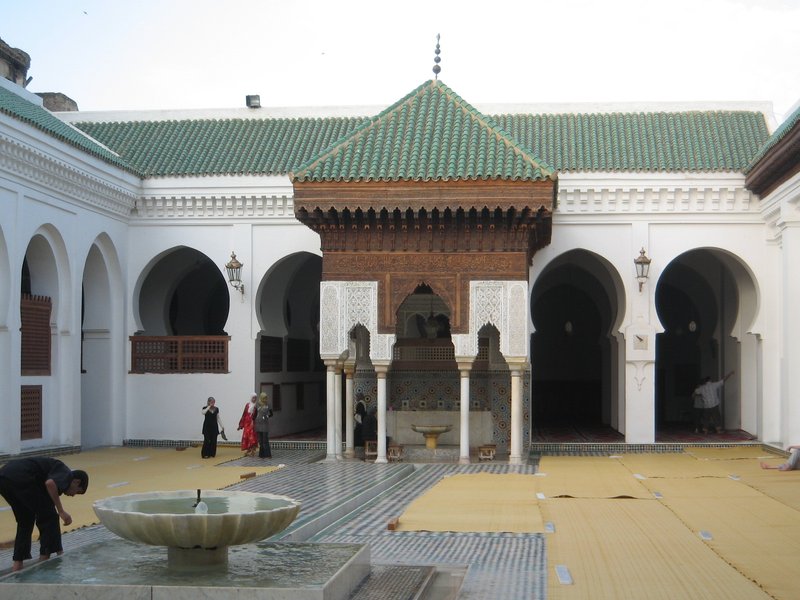
Founded in 857–859 by Fatima al-Fihri, Al-Qarawiyyin is recognized as the oldest continuously operating institution of higher education in the world; non-Muslims can't enter the prayer hall but can view the tiled courtyard and fountains through the main gate on Derb Boutouil.
4 min · 3 min → Nejjarine Museum of Wooden Arts and Crafts
2.Nejjarine Museum of Wooden Arts and Crafts~1 hr
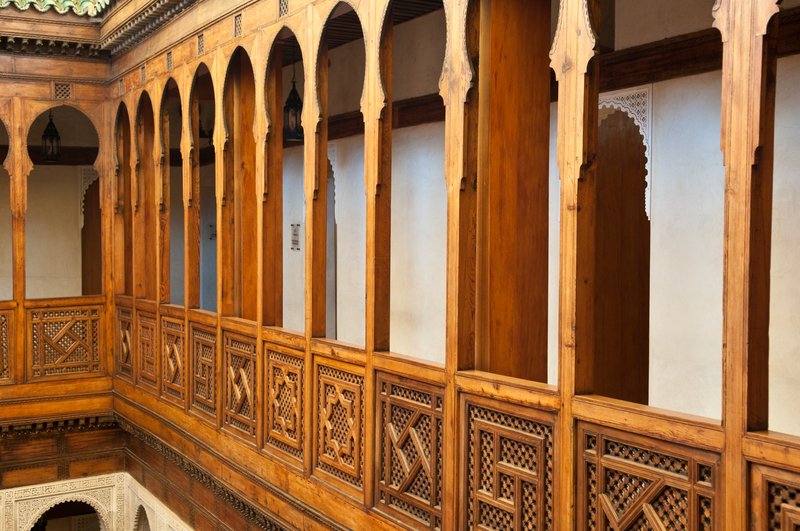
Built in 1711 as a funduq — a merchants' inn and storehouse arranged around a courtyard — the building now holds three floors of carved wooden crafts behind one of the medina's most ornamental gateways, beside the equally decorated Nejjarine Fountain.
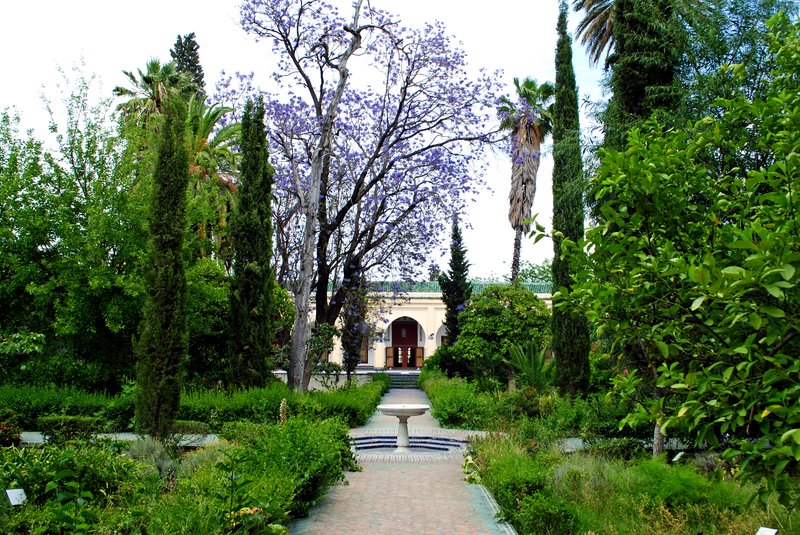
A former royal palace commissioned by Sultan Hassan I in the late 19th century, now the Al Batha Museum of Islamic Arts, with over 6,500 objects of ceramics, woodwork, textiles and traditional crafts set around a shaded Andalusian garden.
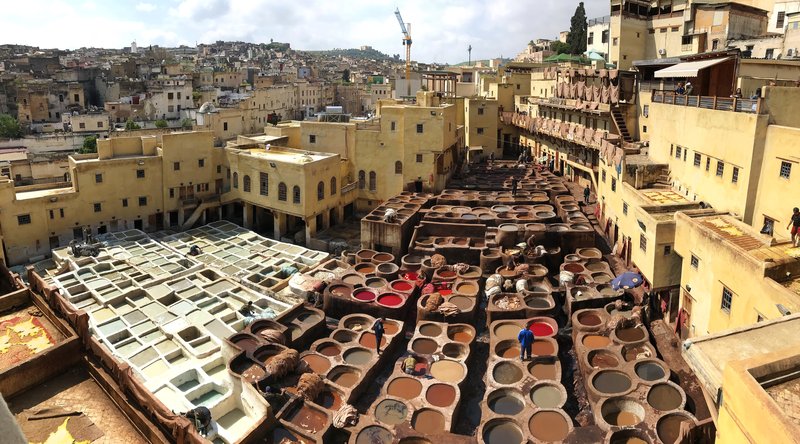
The largest and oldest of Fez's three tanneries, a grid of round stone vessels filled with dye and softening liquid, worked in the same manner since the medieval city's founding; leather-shop terraces around Tannery Square give the classic overhead view.
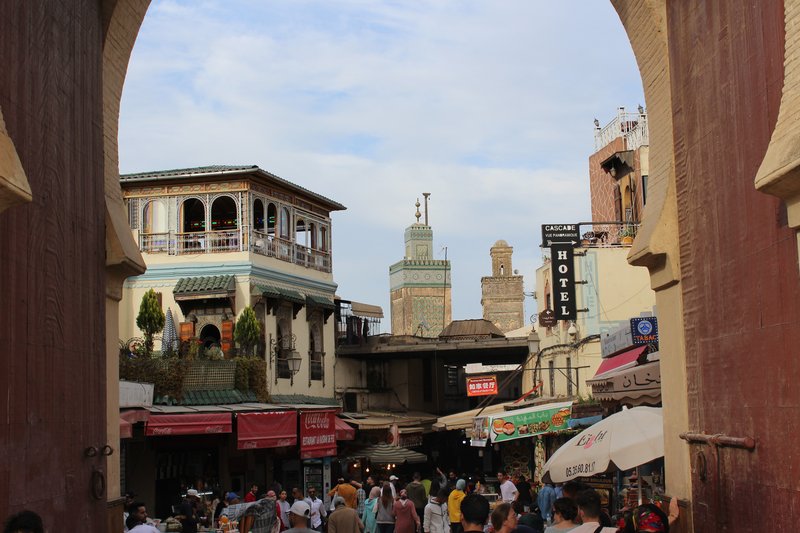
The blue-and-green tiled Blue Gate is the ceremonial entrance to Fes el-Bali — blue for the city on the outward face, green for Islam on the face turned toward the medina.
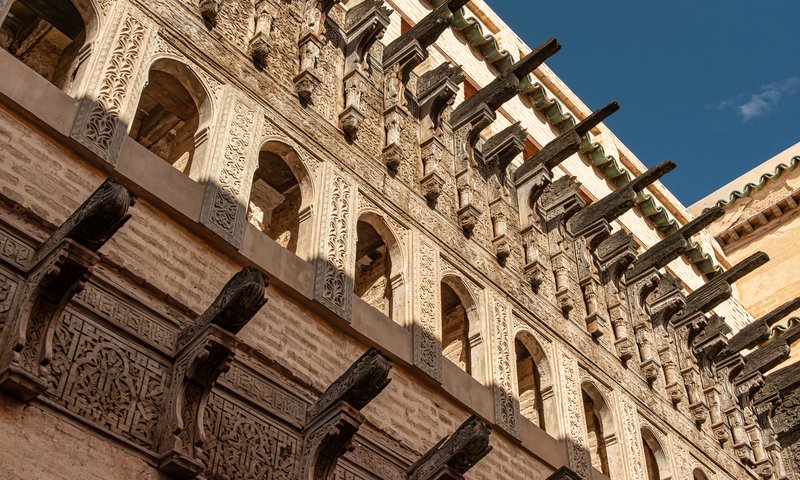
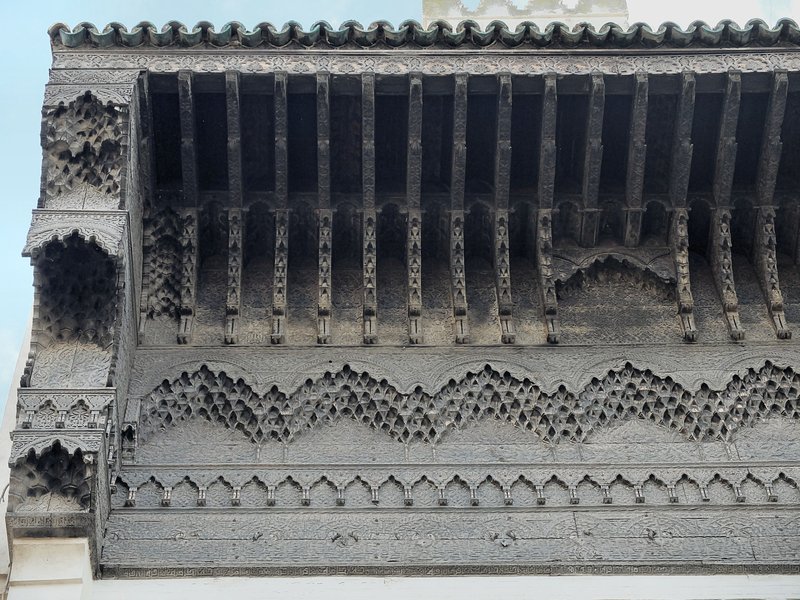
A 14th-century weight-powered water clock designed for Sultan Abu Inan Faris by the astronomer Abu'l-Hassan Ali — thirteen carved cedar beams and twelve arched windows survive on the facade opposite Bou Inania Madrasa, once fitted with brass bowls that rang the hours.
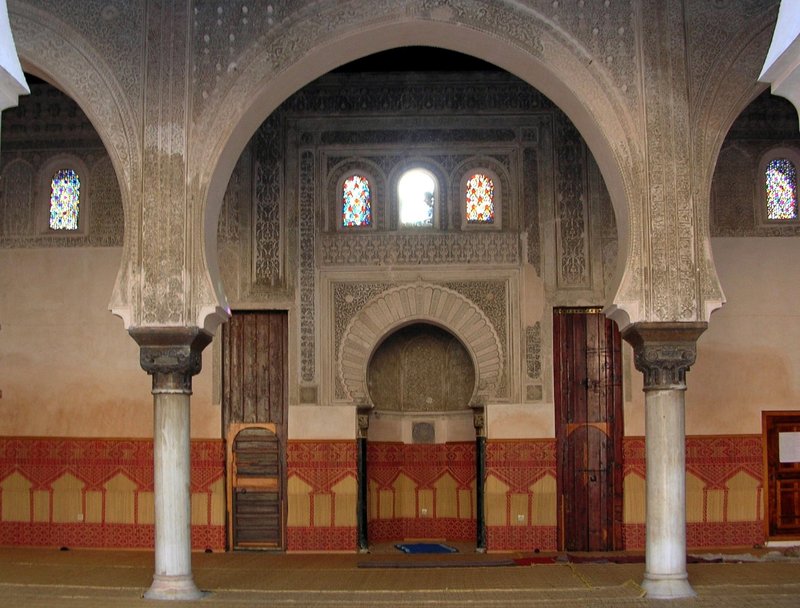
Built in 1350–55 by the Marinid sultan Abu Inan Faris, this is the only madrasa in Morocco that also functioned as a congregational mosque, with a minaret and a wide prayer hall behind a courtyard of carved cedar and zellij tilework.
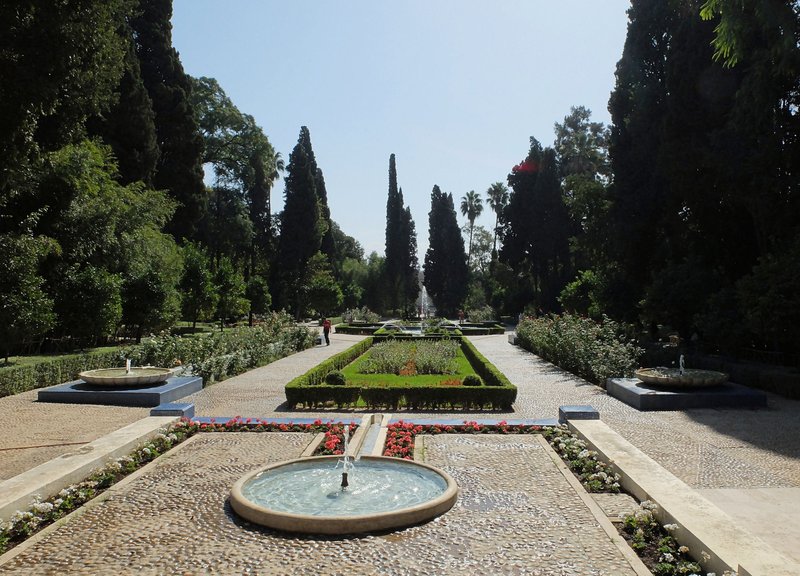
Laid out in the 19th century by Sultan Moulay Hassan I and fully reopened to the public in 1917, this 7.5-hectare garden between Fes el-Bali and Fes el-Jdid holds ponds, Moorish water features and over 3,000 plant species — a shaded, quiet close to a day of walking.
Built in 1582 by the Saadi sultan Ahmad al-Mansour and modeled on Portuguese forts, this hilltop bastion now houses the Museum of Arms — a collection of Moroccan and international weaponry inside thick fortified walls with sweeping views over the medina.
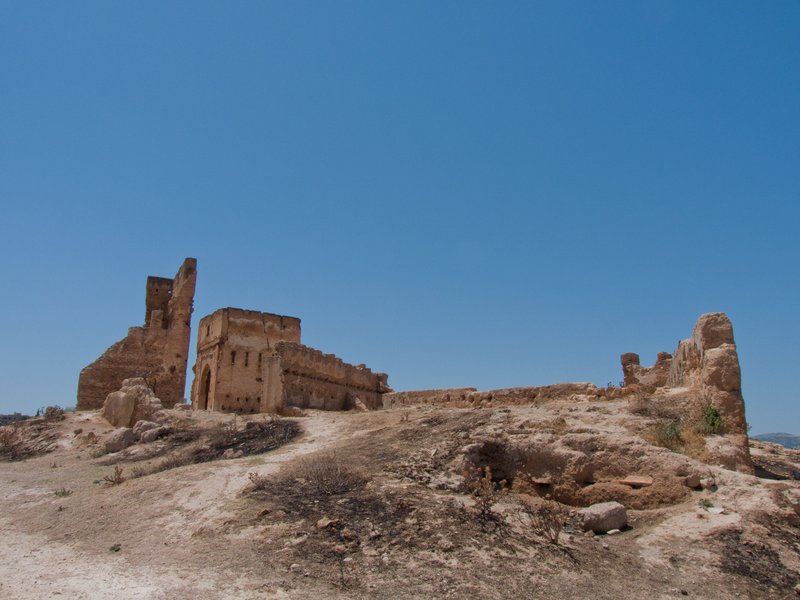
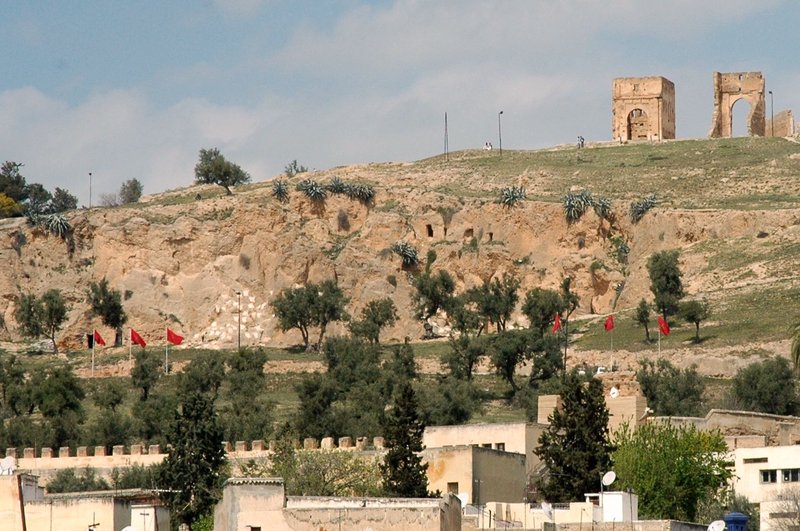
The ruined 14th-century royal necropolis of the Marinid dynasty sits on a hilltop above the old city and has become Fez's best panoramic viewpoint, looking down over the whole of Fes el-Bali to the Middle Atlas foothills beyond.
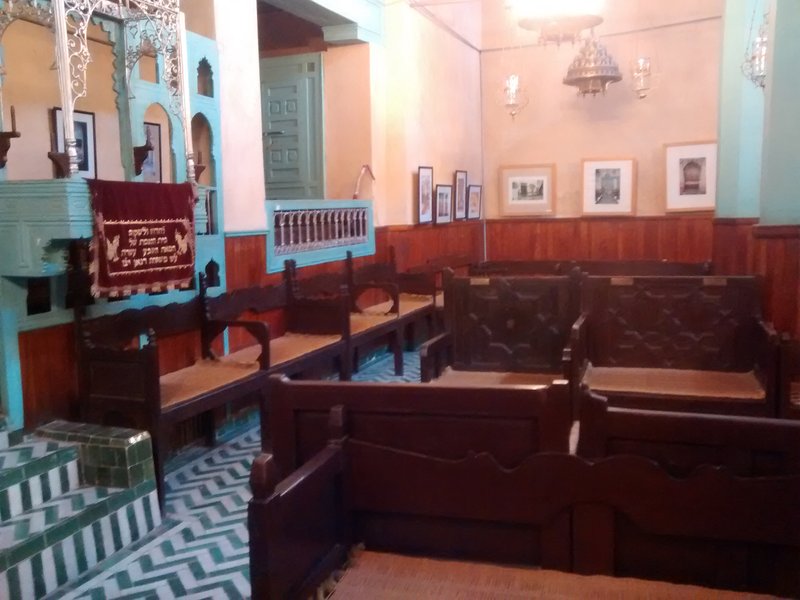
Dated to around 1680 and built by the merchant Mimon Boussidan, this Orthodox synagogue in the Mellah — Fez's historic Jewish quarter — was restored and reopened in 1999, and its painted wooden ark and tiled mikveh survive as one of Morocco's best-preserved pieces of Jewish heritage.
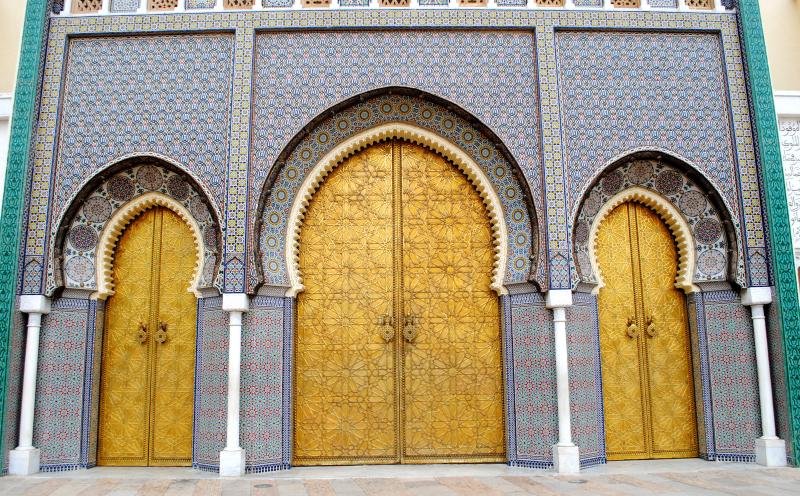
A working royal residence closed to visitors, but its seven monumental brass gates at Place des Alaouites — built 1969–71, framed in zellij tilework and carved cedar — are one of the most photographed sights in Fez and the closest the public gets to Dar al-Makhzen.
Founded in 859–860 for the Andalusi refugees who settled this side of the river, the mosque's 14-step monumental gateway was built in the 13th century by artisans from Nasrid Granada — carved cedar, sculpted plaster and glazed tile crowned by twin domes.
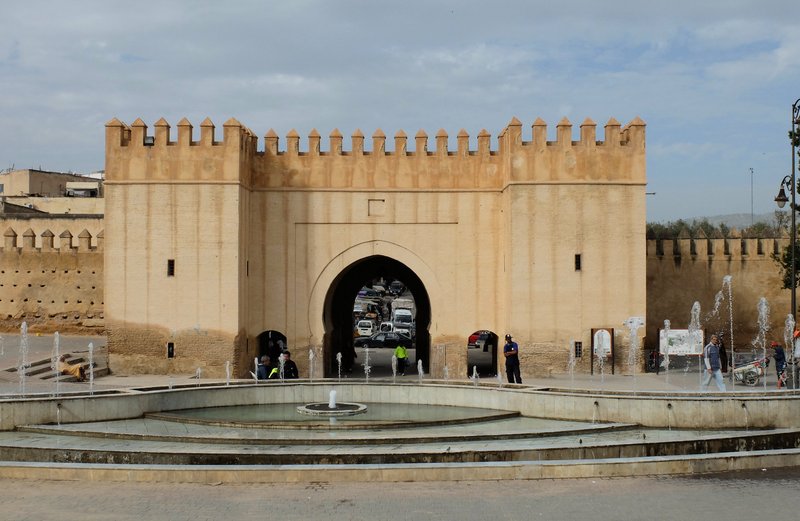
The "Gate of the Opening" marks the southeastern entrance to Fes el-Bali, opening onto the Andalusian quarter; the current gate dates from the Almohad rebuild of 1212, on a site fortified since the 11th century.
A family-run ceramics workshop founded by the Fakhari brothers in 1930, just outside Bab Ftouh, where free guided tours follow every stage of Fez's blue pottery and zellij tile-making — clay thrown on foot-powered wheels, hand-cut tesserae, and wood-fired kilns.
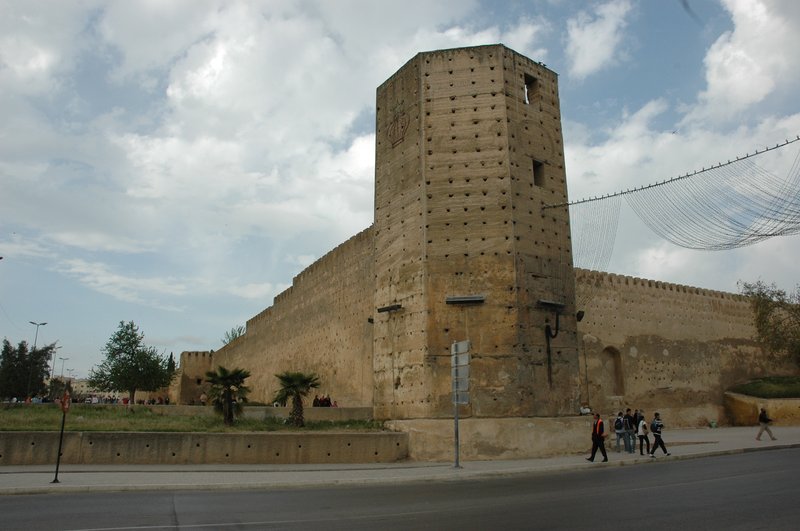
Refurbished as a garrison fortress by Sultan Moulay al-Rashid between 1664 and 1672 on the site of an earlier tribal granary kasbah, its long fortified walls — inscribed with the rest of the Medina of Fez as a UNESCO World Heritage Site — are viewed from outside; the interior now holds a hospital and school.
A guided walk through Fes el-Bali's food stalls and hole-in-the-wall kitchens, tasting bissara, msemen, and Fez's take on street snacks alongside a local guide who knows which stall is actually good.
A private half-day walk through the tanneries, madrasas and souks of Fes el-Bali with a local guide, built around the classic sights and enough side streets to actually get lost in a good way.
A private, flexible-length walk with a local expert through the medina's madrasas, fondouks and tanneries, pitched at whatever pace and depth the traveler wants.
A fixed three-hour private walking tour hitting the medina's core landmarks — Bou Inania, the tanneries, the souks — with a guide who navigates the alley network so nobody has to.
A small-group walk — private option available — through the medina's highlights: the tanneries, Bou Inania Madrasa and the Nejjarine Museum, with a live guide in a choice of five languages.
A three-hour cooking class with a Fassi family, covering local culture and cuisine alongside a hands-on Moroccan menu cooked from scratch in a home kitchen.
Fez's signature dish: warqa pastry wrapped around shredded pigeon or chicken, spiced scrambled egg and almonds, dusted with powdered sugar and cinnamon — a sweet-savory combination the city is famous for perfecting.
A thick split-pea soup, the peas slow-cooked and mashed by hand, served with olive oil and ground cumin — a breakfast staple sold from stalls in the Al Aachabin food section of the medina.
A tomato-based soup thickened with lentils and chickpeas and finished with fresh herbs — Morocco's most common soup, served daily across the medina and central to the Ramadan table.
Foreign number: accepted — the SMS code arrives on most international carriers; Moroccan users also verify via WhatsApp when SMS is slow.
Morocco's largest delivery platform, covering restaurants, groceries and pharmacies with typical delivery inside an hour; medina addresses can confuse the app's location pin, so share a landmark — a gate or square name — with the courier in the order notes.
Foreign number: accepted — the SMS code arrives on most international carriers, and inDrive is built for cross-border use.
Fez's only working ride-hailing app — Uber and Careem don't cover the city. Riders name their own fare and drivers accept or counter-offer, which takes some getting used to; useful for the trip between the train station and the medina gates, since cars can't enter Fes el-Bali itself.
A fellow Imperial City and UNESCO World Heritage Site, with the monumental Bab Mansour gate, the royal stables of Heri es-Souani, and — a short taxi beyond the city — the Roman ruins of Volubilis.
Morocco's largest city, anchored by the Hassan II Mosque — one of the largest mosques in the world, with a minaret over 200 m tall and a prayer hall that opens its roof to the sky.
The world's largest car-free urban zone shapes everything about a visit
Fes el-Bali has no cars, no scooters, and barely any bicycles — goods still move through the medina on handcarts and mules, exactly as they have for a thousand years. That is why every stop in this guide is measured in walking minutes rather than a mix of walking and driving: a taxi genuinely cannot reach most of these addresses, and the "ride" figure that appears on a few motion rows is the time to loop around the walls to the nearest point a car can stop.
The gate colors at Bab Boujloud are a small piece of urban planning disguised as decoration: blue facing outward toward the new city, green facing inward toward the old one, so a reader can tell at a glance which direction they are walking without needing to check street signs.
The Water Clock at Dar al-Magana and the Bou Inania Madrasa across the street from it were built by the same sultan in the same decade — Abu Inan Faris commissioned both within a few years of each other, which is why the pairing works so well as a single stop-to-stop hop.