TRIP OVERVIEW
Day 1 – Alcazaba & Nasrid Palaces · Generalife · Palace of Charles V · Bañuelo
Day 2 – Albaicín · Dar al-Horra Palace · Abadía del Sacromonte · Mirador de San Nicolás
Day 3 – Granada Cathedral · Monasterio de San Jerónimo · Monasterio de la Cartuja
Day 4 – Capilla Real · Palacio de la Madraza · Alcaicería · Corral del Carbón
Day 5 – Carmen de los Mártires · Fundación Rodríguez-Acosta · Huerta de San Vicente
Day 1
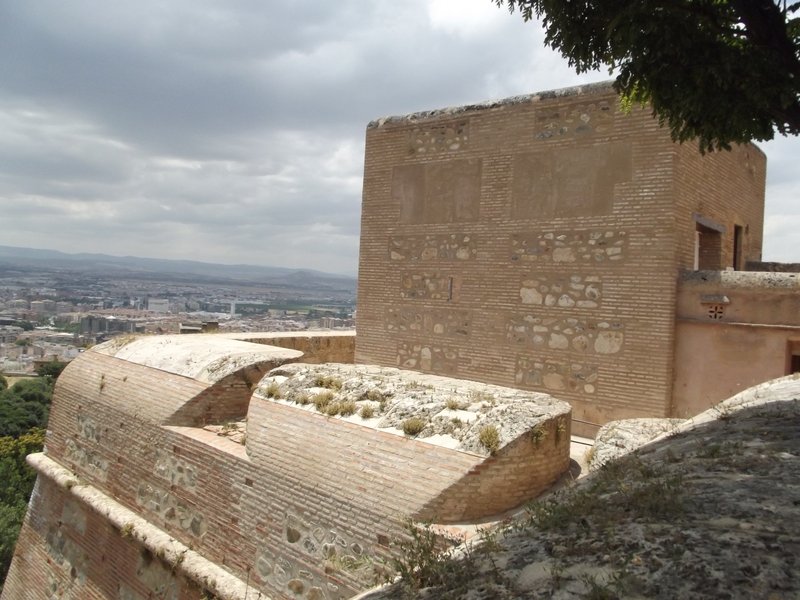
1.Alcazaba & Nasrid Palaces~2 hr 30 min
The military fortress and the intricately carved Nasrid state rooms — Patio de los Arrayanes, Patio de los Leones — form the historic and architectural core of the Alhambra complex.
Daily 8:30am - 8:00pm
Nasrid Palaces entry carries a fixed timed slot printed on the ticket — arriving late forfeits entry.
150 steps · no lift
2.Generalife~1 hr
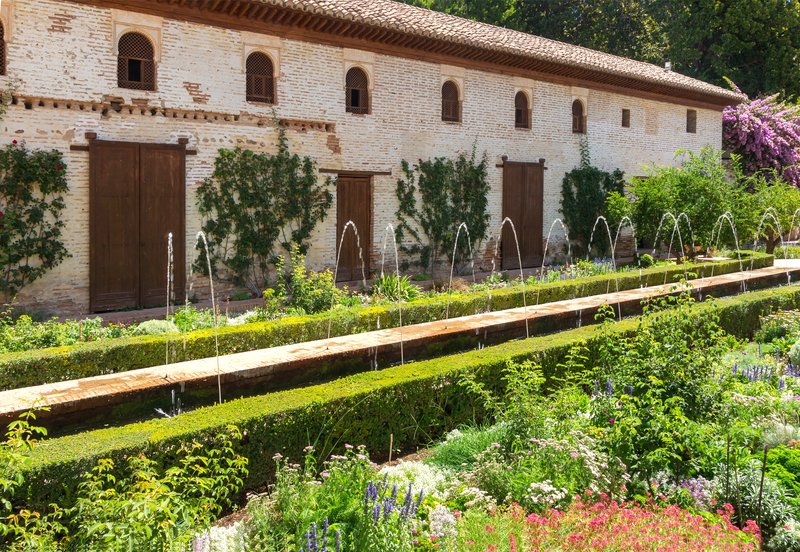
The Nasrid sultans' summer palace and garden retreat, built for cool air and running water — terraced courtyards, cypress walks, and the Patio de la Acequia's twin water channels.
← same combined ticket as Alcazaba & Nasrid Palaces
Daily 8:30am - 8:00pm
3.Palace of Charles V~30 min
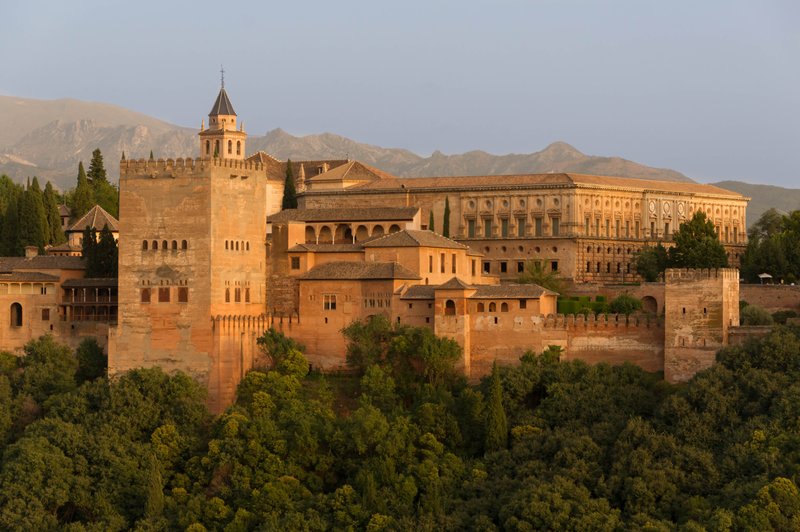
A Renaissance palace with a perfectly circular two-story courtyard set inside a square exterior — designed by Pedro Machuca, a startling contrast to the Nasrid architecture surrounding it.
4.Bañuelo~30 min
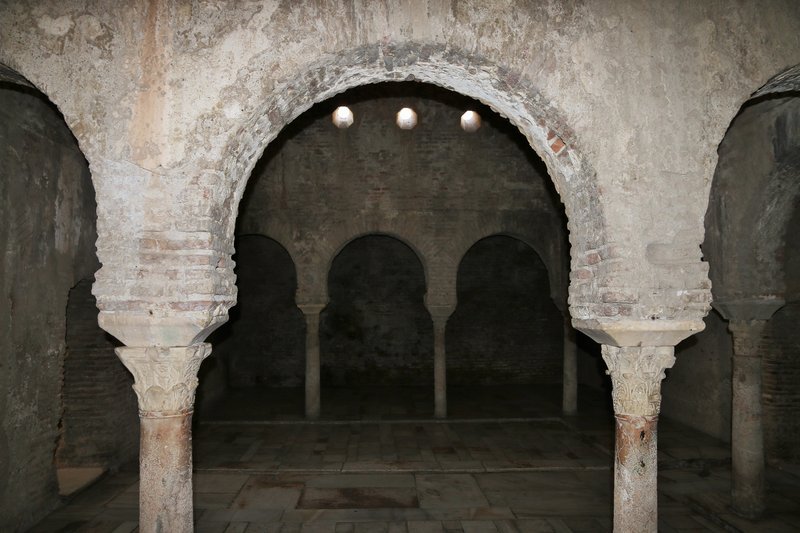
A Nasrid public bath from the 11th century, built along the Darro river at the base of the Alhambra hill. Five domed chambers — cold, tepid, and hot rooms — survive largely intact, with star-shaped skylights piercing brick vaults and horseshoe arches carried on Roman-era capitals reused from earlier buildings.
Tuesday - Saturday 10:00am - 2:00pm
Closed Monday & Sunday
Day 2
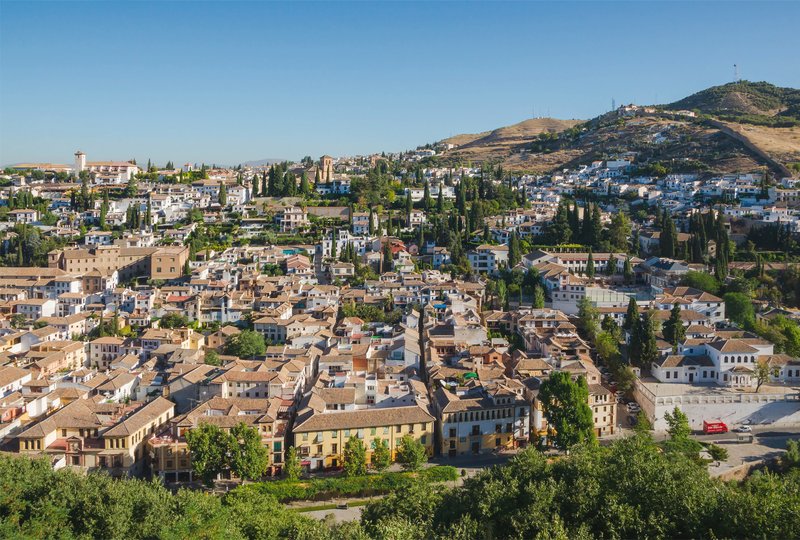
1.Albaicín~1 hr 30 min
The old Moorish quarter's whitewashed houses, hidden carmen gardens, and narrow cobbled lanes climb the hillside opposite the Alhambra — a UNESCO World Heritage Site since 1984.
Open 24/7
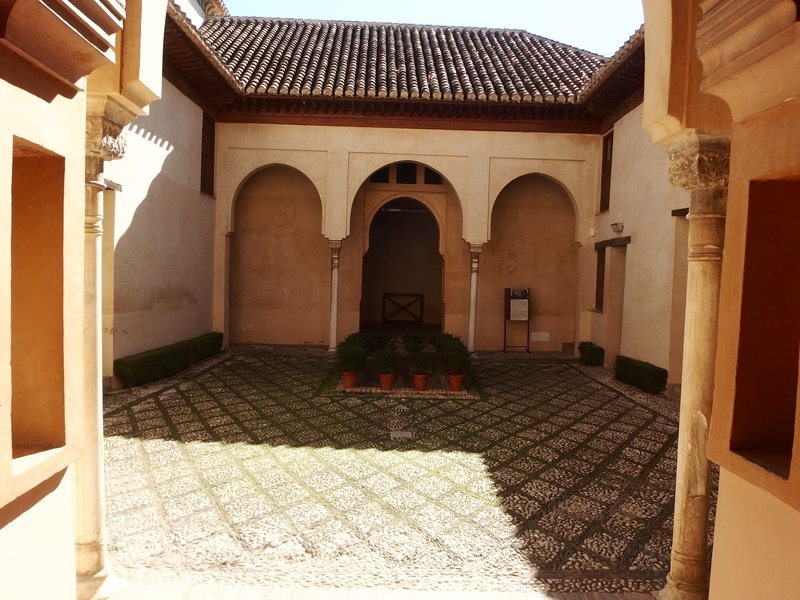
2.Dar al-Horra Palace~30 min
A rare surviving 15th-century Nasrid residential palace — home of Aisha al-Horra, mother of Granada's last sultan — arranged around a small courtyard pool. The quiet courtyard and intimate scale contrast with the Alhambra above.
Daily 10:00am - 5:00pm
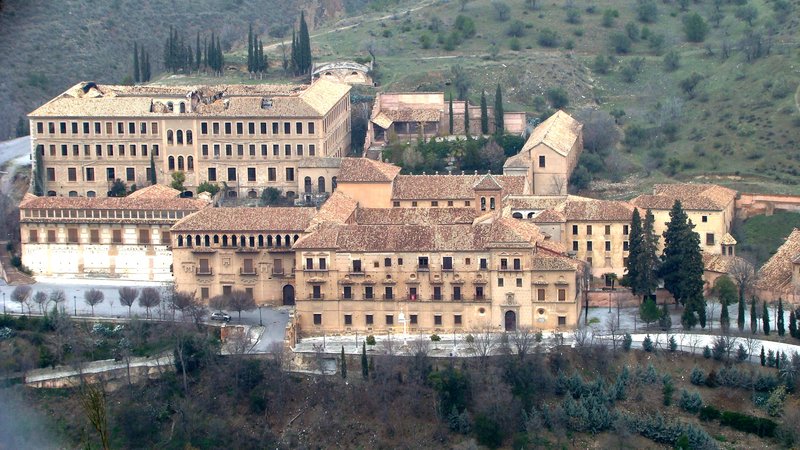
3.Abadía del Sacromonte~1 hr 30 min
A 17th-century abbey built over catacombs where Granada's patron saint, San Cecilio, was martyred — the Santas Cuevas, church, cloister, and museum sit above the Sacromonte hillside.
Daily 10:00am - 7:00pm
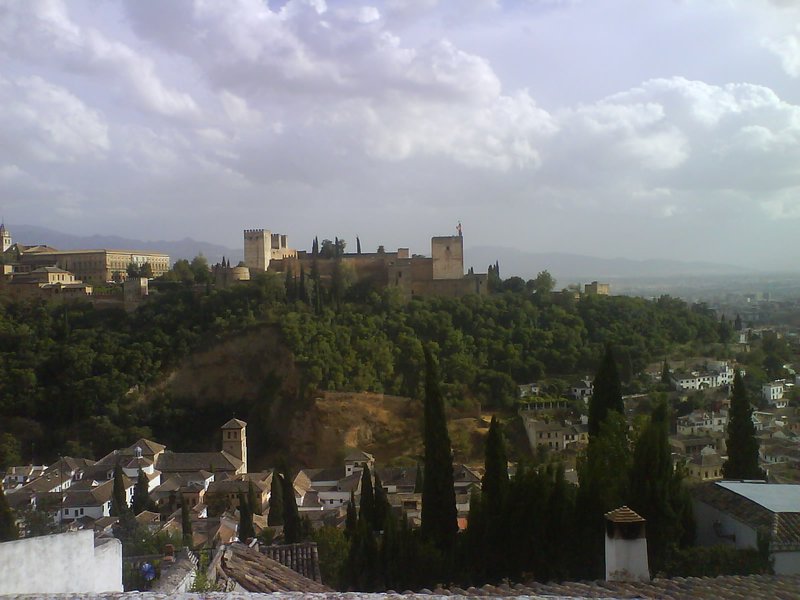
4.Mirador de San Nicolás~30 min
The iconic overlook framing the entire Alhambra and Generalife against the snow-capped Sierra Nevada — the single most photographed view in Granada. Arrive in late afternoon for the best light on the palace walls.
Open 24/7
Day 3
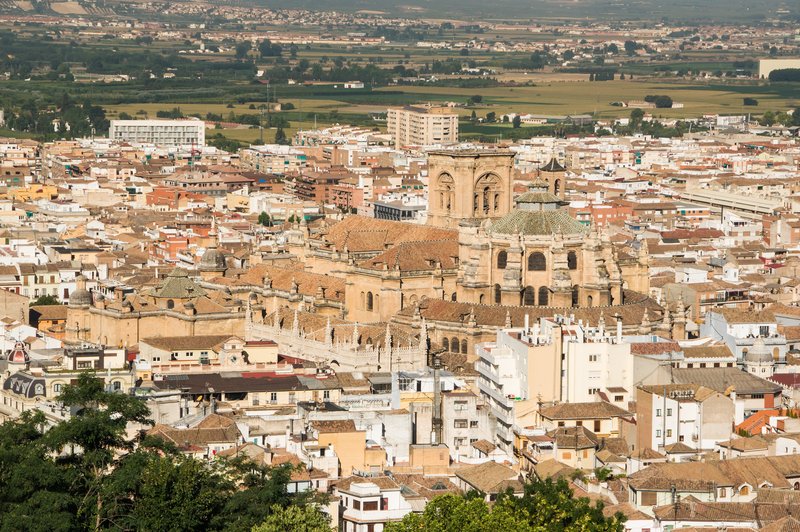
1.Granada Cathedral~1 hr
A Renaissance cathedral raised over the city's former Great Mosque after the Reconquista — soaring white-and-gold nave and a monumental rounded apse. Diego de Siloé led the design from 1529; construction took 181 years.
Daily 10:00am - 6:30pm
2.Monasterio de San Jerónimo~45 min
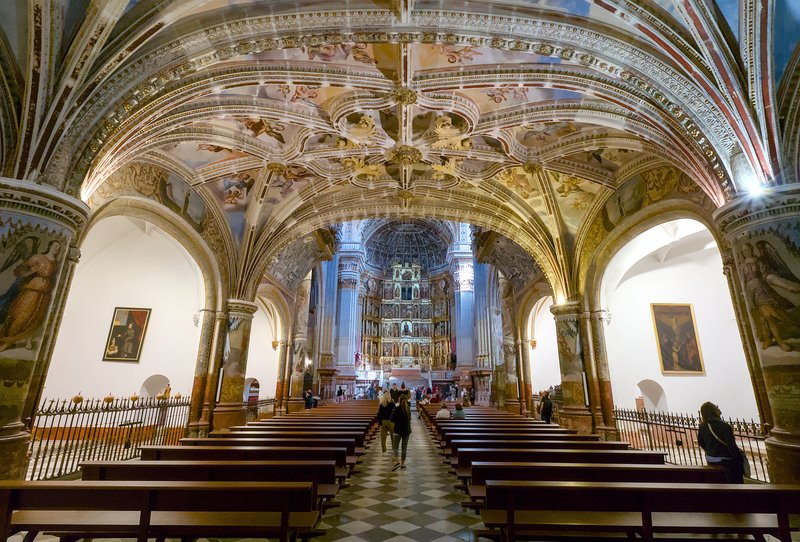
A Renaissance monastery church built around Spain's largest gilded retablo, and burial place of Gonzalo Fernández de Córdoba, "El Gran Capitán." The two-storey cloister and nave survive largely intact.
Daily 10:00am - 6:30pm
3.Monasterio de la Cartuja~1 hr
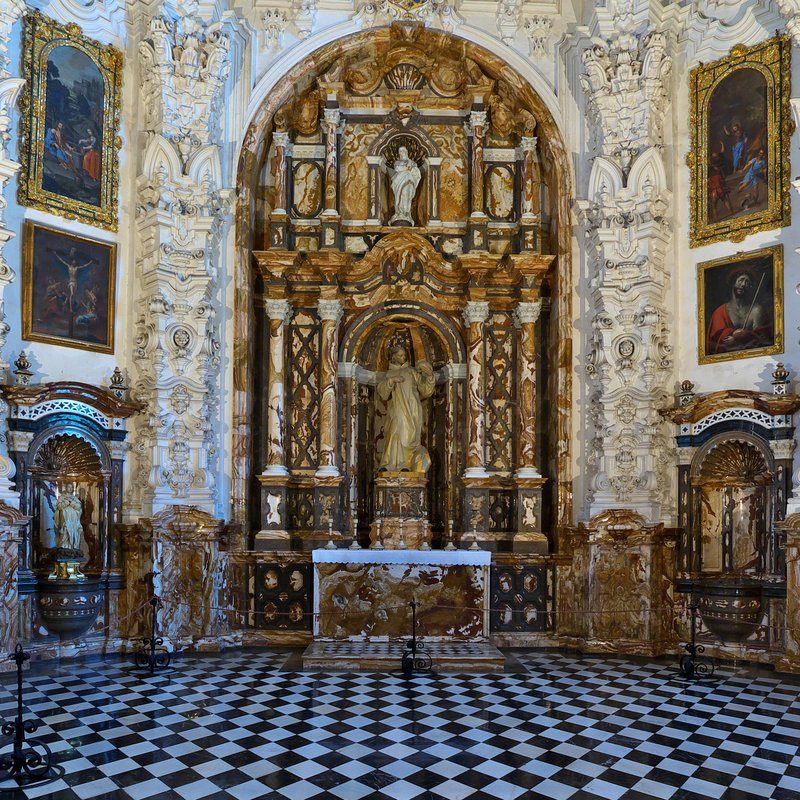
A restrained Renaissance exterior hides an explosively ornate Baroque sacristy — marble, gilt, and swirling stucco unlike anything else in the city. The sacristy, designed by Francisco Hurtado Izquierdo, was completed in 1727.
Daily 10:00am - 6:00pm
Day 4
1.Capilla Real~45 min
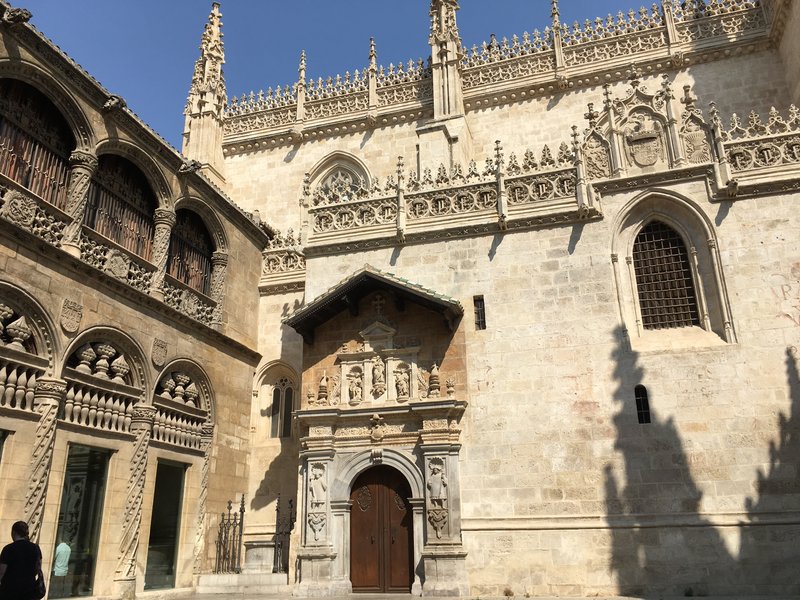
The Gothic royal chapel holding the marble tombs of Ferdinand and Isabella, the Catholic Monarchs who conquered Granada in 1492 — plus their crown, sceptre, and Isabella's personal art collection.
← same combined ticket as Granada Cathedral
Daily 10:00am - 6:30pm
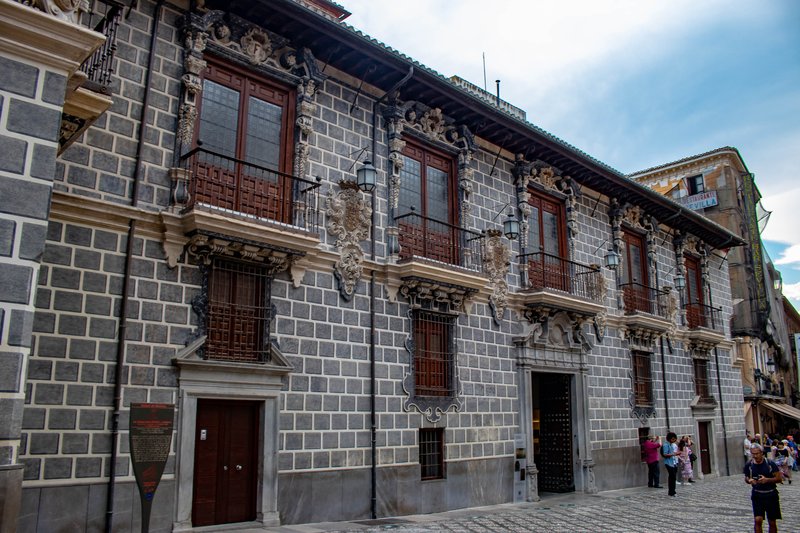
2.Palacio de la Madraza~30 min
Founded by Sultan Yusuf I in 1349, Granada's first madrasa served as a Quranic school before becoming the town hall after the Reconquista. The Baroque exterior conceals the original Nasrid oratory — its mihrab covered in 14th-century stucco tracery equal to anything inside the Alhambra.
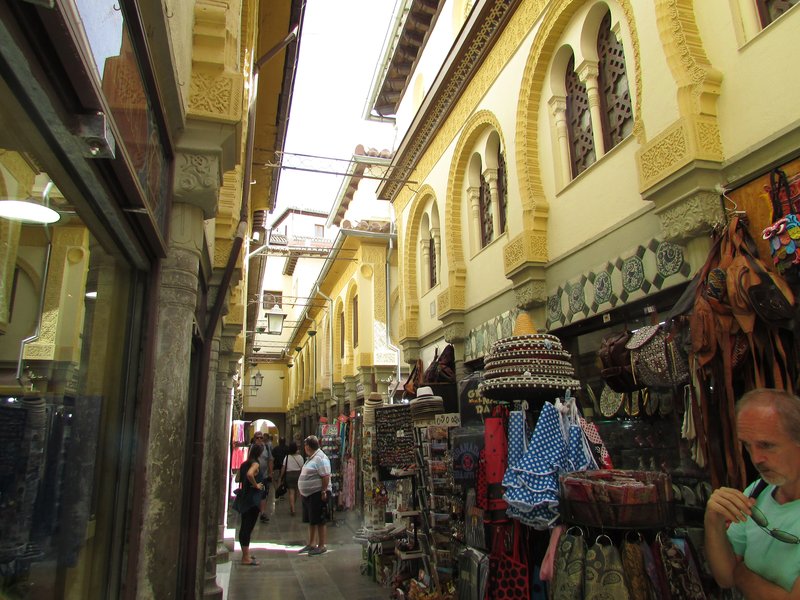
3.Alcaicería~45 min
A web of covered lanes occupying the site of the original Nasrid silk souk, rebuilt in Romantic-Moorish style after the 1843 fire. Lanterns, carved stucco, and tilework line the narrow passages; the market's silk trade has given way to ceramics, leather goods, and spice vendors alongside the Cathedral.
Open 24/7
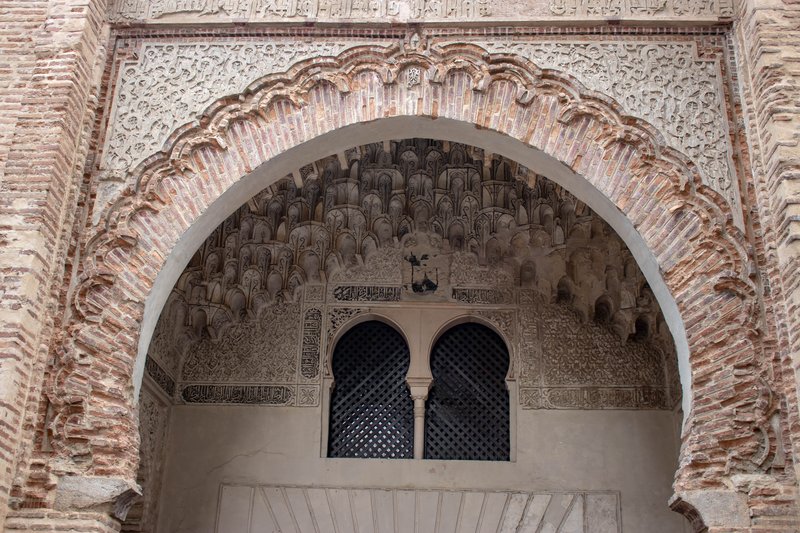
4.Corral del Carbón~30 min
Built around 1336 as a Nasrid caravanserai for the city's silk merchants, the Corral del Carbón is the oldest Islamic monument in Granada. The horseshoe gateway with its carved plaster frieze and the central courtyard survive intact; after 1492 the building became a coal yard, then a theatre.
Day 5
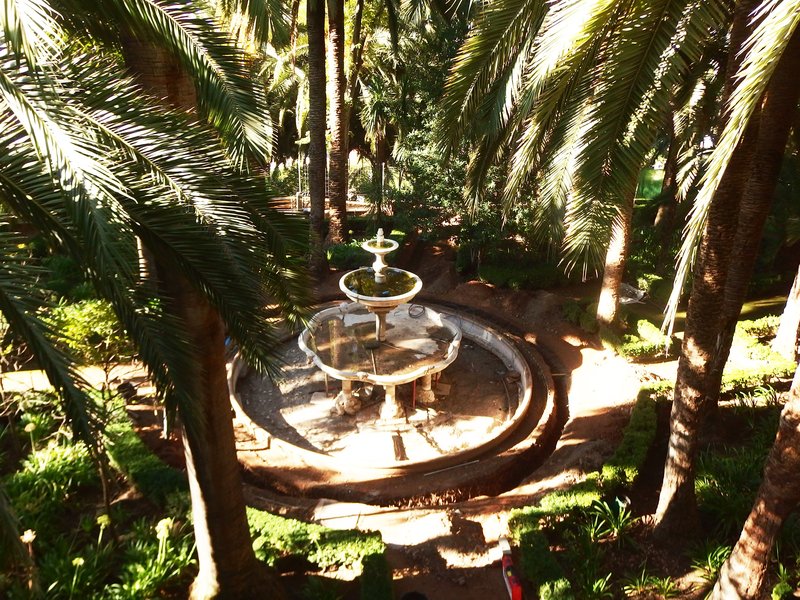
1.Carmen de los Mártires~1 hr
A 19th-century villa on the Alhambra's western slope, surrounded by terraced gardens built over the site of a Carmelite convent where Christian prisoners were held during the Nasrid period. The grounds include an English romantic section, a French formal garden, a small lake, and a reconstructed Nasrid patio courtyard.
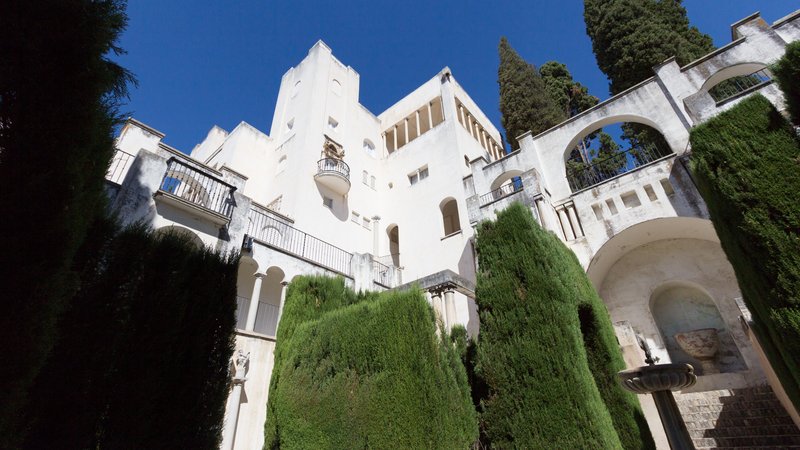
2.Fundación Rodríguez-Acosta~1 hr 30 min
A Carmen-studio built between 1914 and 1930 for Granadan painter José María Rodríguez-Acosta, descending the Alhambra's southern slope across four terraced gardens. The subterranean galleries below house the Instituto Gómez-Moreno — Roman mosaics, Islamic ivories, pre-Columbian ceramics, and medieval sculpture.
Tuesday - Saturday 10:00am - 2:00pm
Closed Monday & Sunday
Guided visits only — advance booking required through the foundation website.
3.Huerta de San Vicente~1 hr
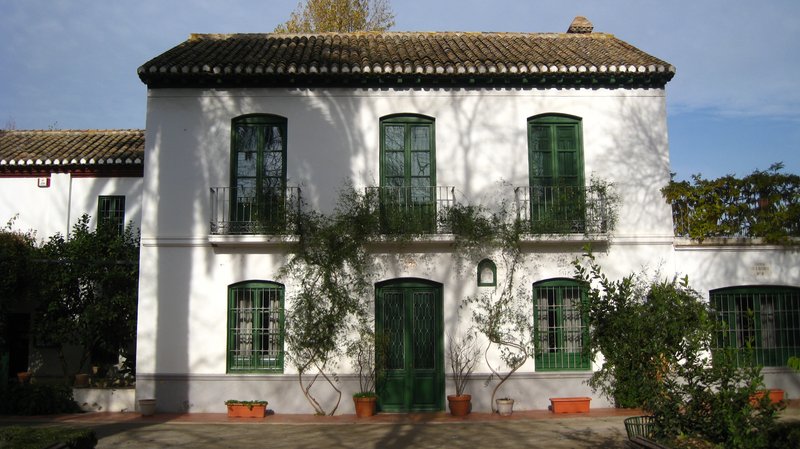
The García Lorca family's summer home from 1926 to 1936, where Federico wrote Blood Wedding, Yerma, and the Divan del Tamarit. The house is preserved as a working interior — Lorca's piano, desk, and personal library remain in place — surrounded by a small garden now absorbed into Parque García Lorca.
Tuesday - Sunday 9:30am - 2:30pm
Closed Monday
Tours
Viator
Walk through Albaicín's whitewashed lanes and Sacromonte's cave dwellings with a small-group guide covering Moorish heritage, gypsy culture, and Alhambra views from Mirador San Nicolás.
2 hr 30 min · Max 20
Two-hour small-group walk through Albaicín's medieval Muslim quarter and Sacromonte's cave homes, with a local guide sharing Arabic history and Granada's flamenco roots.
2 hr · Max 30
Full-day walk covering 3 hr at the Alhambra complex in the morning, then 2 hr through Albaicín and Sacromonte in the afternoon — Granada's most comprehensive overview in a single guided day.
5 hr · Max 30
Small-group walk through Albayzín's Arabic lanes and Sacromonte's cave dwellings, with two hilltop mirador stops for panoramic Alhambra views and a guide sharing gypsy culture and flamenco history.
2 hr · Max 15
Guided sunset walk through Albaicín and Sacromonte followed by a one-hour live flamenco show in a Sacromonte cave house — drink included. Ideal finale for a last evening in Granada.
3 hr · Check listing
GetYourGuide
Two-and-a-half-hour guided walk through Granada's historic center and lower Albaicín, covering key monuments, Arabic heritage, and the neighborhood's layered history with a local guide.
2 hr 30 min · Check listing
Restaurants Near Hotel
Taberna Salinas · 4.0 · 800+ reviews
Traditional Granada tapas bar — a complimentary tapa with every drink.
Daily 12:00pm - 12:00am
Bar Minotauro · 4.1 · 260+ reviews
Neighborhood tapas bar where every drink arrives with a free tapa.
Daily 1:00pm - 12:00am
Taberna La Tana · 4.4 · 3400+ reviews
Small vintage wine bar with an extensive cellar and classic tapas.
Daily 1:00pm - 12:00am
Downtown Restaurants
Casa Torcuato · 4.2 · 800+ reviews
Historic tapas house serving Andalusian classics since 1932.
Daily 12:00pm - 12:00am
Bar Aliatar Los Caracoles · 4.0 · 260+ reviews
Local institution known for snails in spiced sauce and flaming chorizo.
Daily 1:00pm - 12:00am
Dining Areas
Campo del Príncipe · Realejo
Local Tastes
Free Tapas
Every drink ordered at a bar in Granada arrives with a complimentary tapa, a tradition largely unique to Granada among major Spanish cities.
Piononos
A small syrup-soaked rolled sponge cake invented in nearby Santa Fe, sold across Granada's pastry shops as the city's signature sweet.
Food Delivery
Glovo
Foreign number: not required. — it signs in with Google, Facebook or email, and a phone sign-up takes any prefix with the code by SMS or WhatsApp.
Glovo is the most widely used delivery platform in Granada, covering restaurants across the city centre, Realejo, and university areas with fast delivery and a broad restaurant selection.
Uber Eats
Foreign number: accepted. — the verification code arrives by SMS to any international number.
Uber Eats covers central Granada with solid restaurant selection around the Albaicín and Realejo. Reliable for late-night orders when other platforms have fewer restaurants online.
Shows, Performances & Concerts
Cuevas Los Tarantos
Flamenco performed inside a genuine Sacromonte cave dwelling — the zambra gitana style native to Granada's Roma community.
Getting Around
Cabify
Foreign number: not accepted — registration requires a Spanish or European phone number; use a local SIM or a VoIP number.
Cabify is the dominant ride-hailing option in Granada, covering the Albaicín, Sacromonte, and the broader city. Reliable at all hours and covers the whole city.
Bolt
Foreign number: accepted. — the verification code arrives by SMS to any international number.
Bolt operates across Granada with competitive fares and a solid driver pool — good alternative to Cabify, particularly in the city centre and around the university district. Foreign numbers from most countries are accepted at sign-up.
Train Stations Near Hotel
Estación de Granada
High-speed and regional trains to Antequera, Málaga, Córdoba, Sevilla, and Madrid.
Day Trips by Train
Málaga · 1 hr
Coastal Andalusian city with a Picasso museum, Roman theatre, and the Alcazaba fortress.
Córdoba · 1 hr 40 min
Home of the Mezquita-Catedral, one of the largest and most striking mosque-cathedrals in the world.
Seville · 2 hr 40 min
Michelin Restaurants
María de la O
Contemporary Andalusian tasting menus in a 19th-century mansion.
FM
Farm-to-table Andalusian tasting menus built around seasonal local produce.
Hiking
Los Cahorros de Monachil · Moderate
A river gorge trail crossing hanging metal bridges over cascading pools.
8 km loop · 260 m ascent
3 hr
Puerto Lobo Trail · Easy
A pine-forest loop through Sierra de Huétor Natural Park's limestone hills.
6 km loop · 180 m ascent
2 hr
Worth Knowing
The Alhambra's Nasrid Palaces ticket is timed to the minute and non-transferable — book the earliest morning slot available if flexibility matters, since afternoon slots sell out first in high season.
The walk down from Mirador de San Nicolás into Plaza Nueva at golden hour, past the sound of a distant guitar drifting out of a cave-house on Sacromonte, captures Granada's atmosphere better than any single monument on this itinerary.
Also on this site