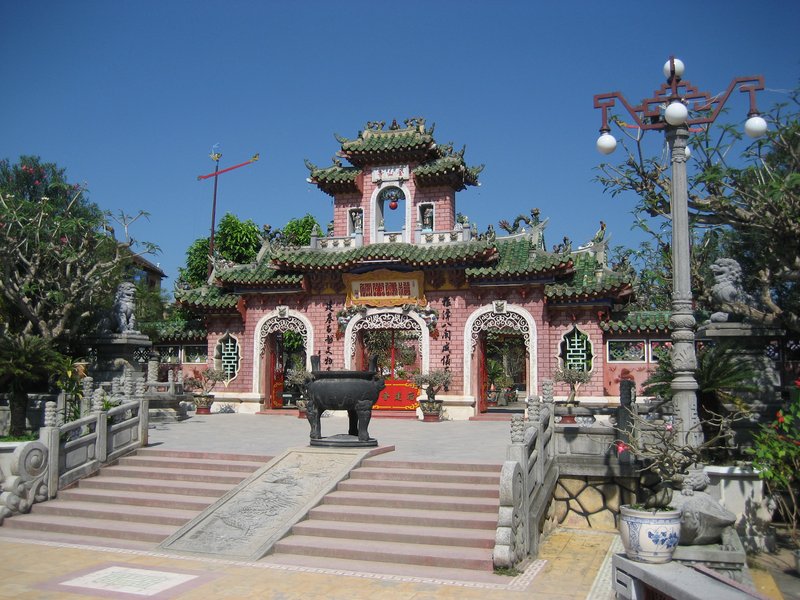
The largest of five Chinese assembly halls, originally a Buddhist temple built in 1697 and later dedicated to Thien Hau, goddess of the sea. Triple courtyards lead past incense spirals and gilded woodwork to altar rooms where Fujian merchants once prayed for safe passage across the South China Sea.
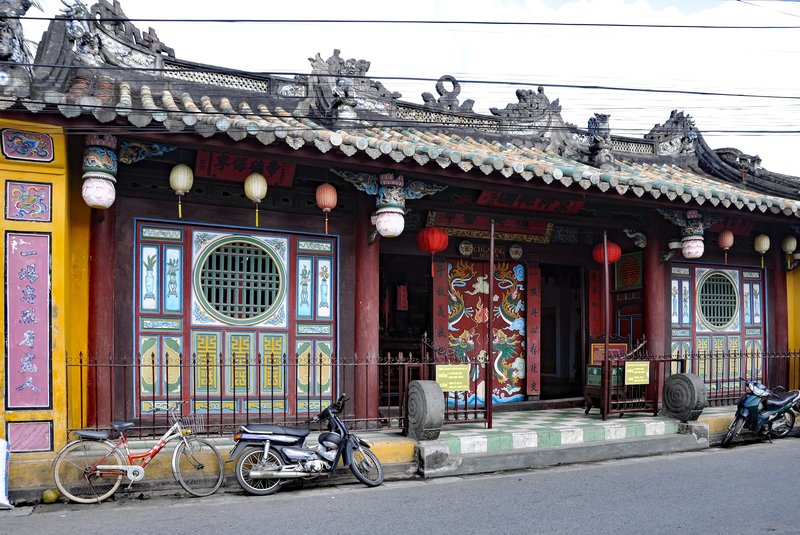
A Chinese folk temple built in 1653 to venerate Guan Yu, the deified general revered as a paragon of loyalty. The rear hall holds a nearly 3-metre statue of Guan Yu in green robes on a white horse, flanked by his bodyguard and horse handler.
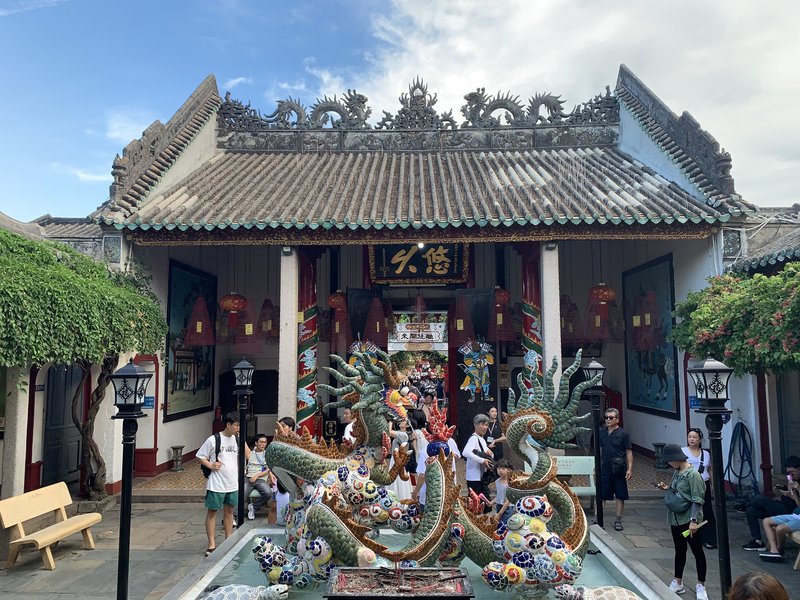
Built in 1885 by Guangdong merchants, this hall centres on a courtyard with a porcelain-mosaic fountain depicting a carp leaping over a dragon gate. The triple-gate entrance and roof dragons are the finest examples of southern Chinese decorative architecture in the Ancient Town.
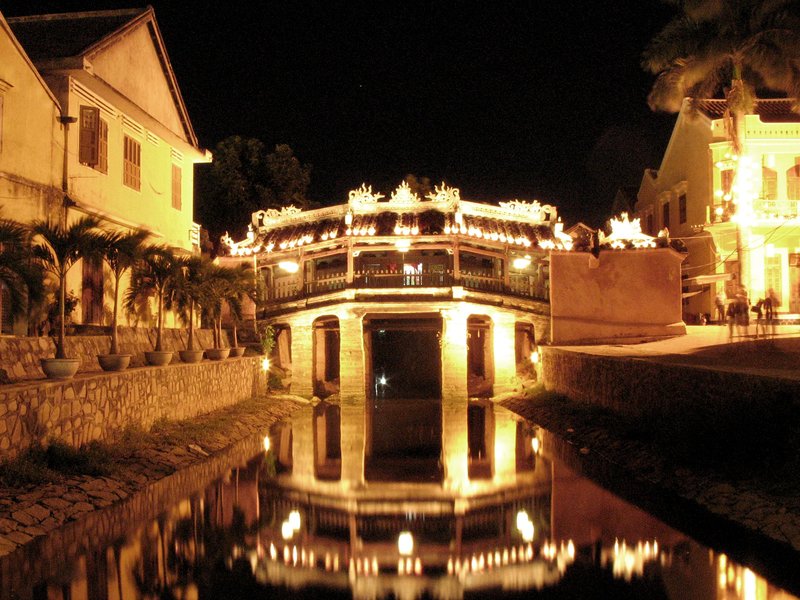
A 400-year-old wooden footbridge with a Buddhist temple built into its northern end, constructed by Japanese merchants around 1593. The 18-metre span carries carved monkeys at one entrance and dogs at the other — legend says construction began in the Year of the Monkey and finished in the Year of the Dog.
A two-storey merchant house built over 200 years ago, blending Japanese ceiling beams, Chinese carved panels, and Vietnamese mother-of-pearl inlay under one roof. The family's seventh generation still lives upstairs and guides visitors through rooms where silk, cinnamon, and pepper once changed hands.
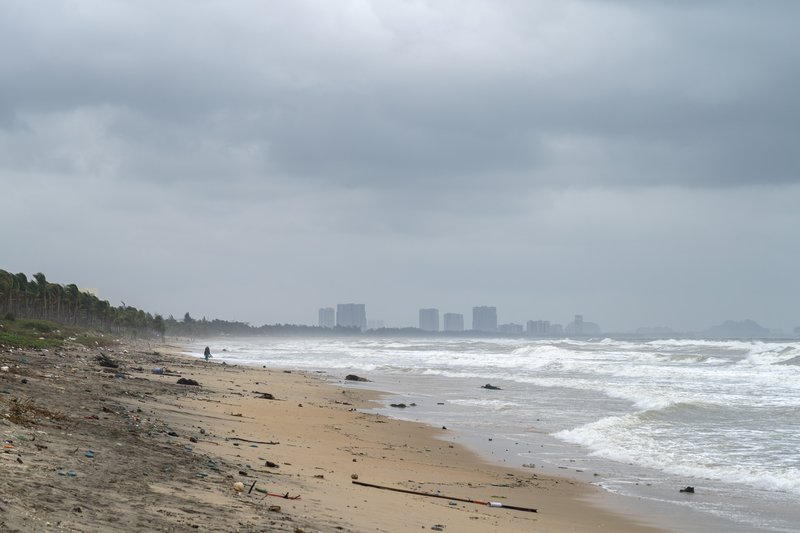
A wide stretch of white sand 5 km east of the Ancient Town. Low-key beach bars line the shore, fishing boats anchor at the north end, and the water stays warm year-round. Far quieter than Cua Dai Beach to the south and free of resort sprawl.
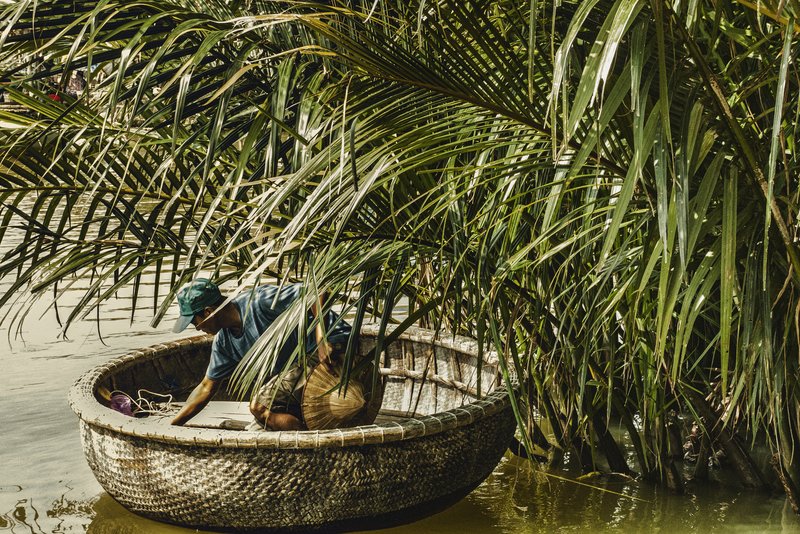
A waterway village 5 km southeast of the Ancient Town, nicknamed the Little Mekong Delta. Locals paddle circular basket boats through Bay Mau nipa palm forest — the same craft their families have built by hand since the 15th century. The forest sheltered resistance fighters during the war.
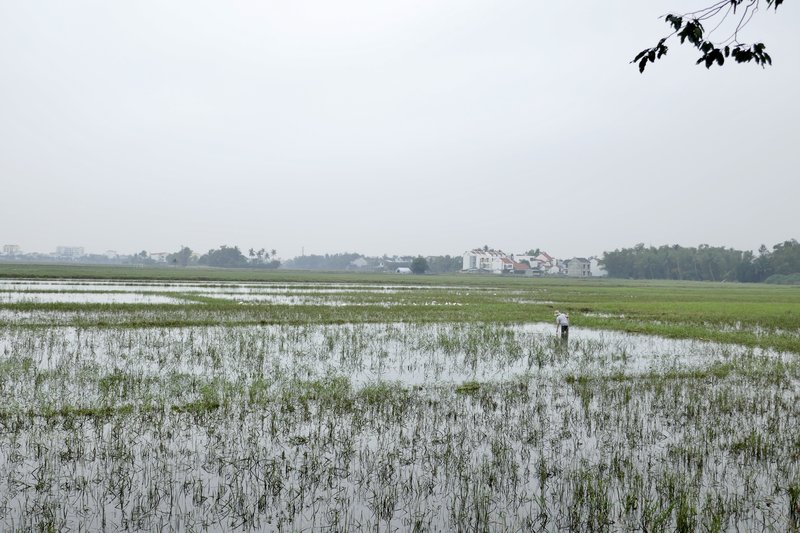
A 300-year-old farming village 2.5 km north of the Ancient Town where families still grow herbs and vegetables using traditional methods — fertilising with seaweed from the De Vong River. The mint, basil, and lettuce grown here supply every restaurant in the old quarter.
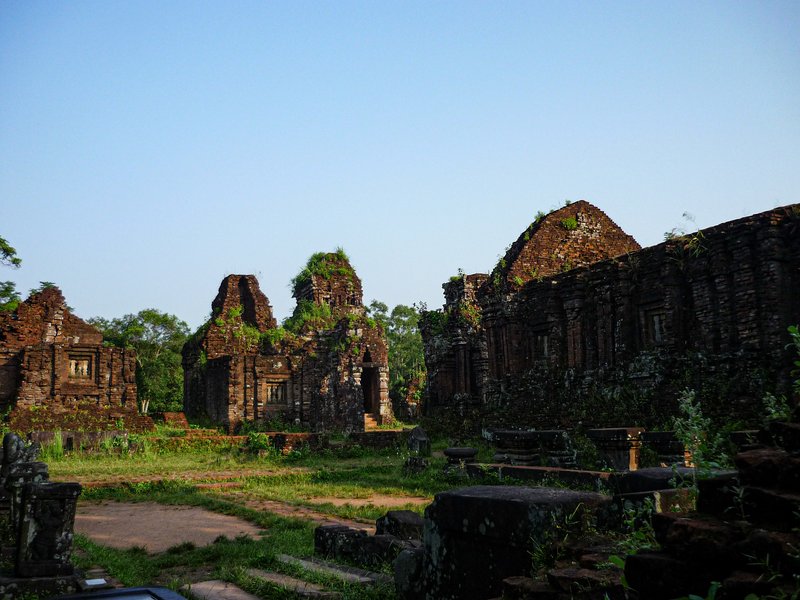
Partially ruined Hindu temples built between the 4th and 13th centuries by the kings of Champa, in a forested valley 40 km west. The brick towers were dedicated to Shiva and served as the religious centre of the Cham kingdom for nearly a millennium. UNESCO World Heritage Site since 1999.
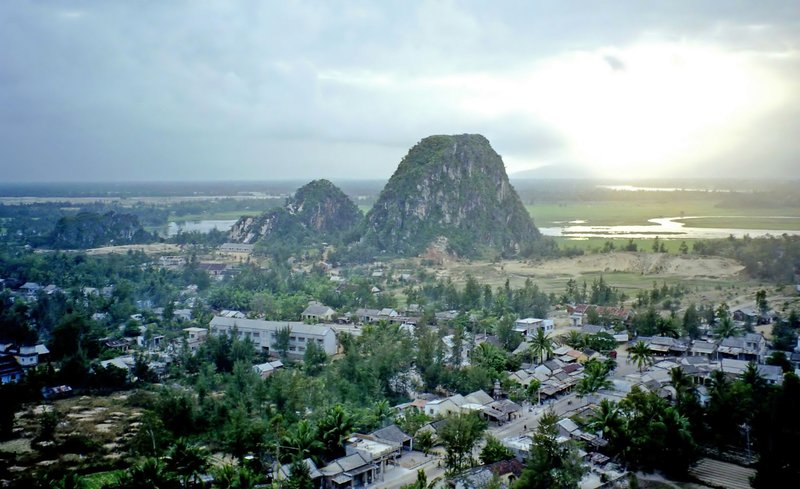
Five marble and limestone hills rising abruptly from the coastal plain, each named for one of the five elements — Kim, Thuy, Moc, Hoa, Tho. Stone stairways climb through natural caves holding Buddhist and Cham sanctuaries, including the cavern pagoda of Am Phu and the summit views from Thuy Son, the tallest and most visited of the five.
A marble-working settlement at the foot of the Marble Mountains, founded by migrant artisans in the 17th century using stone quarried from the mountains themselves. Recognised as a National Intangible Cultural Heritage Site in 2014, its several hundred workshops still carve statues and reliefs by hand along narrow lanes filled with chisel dust.
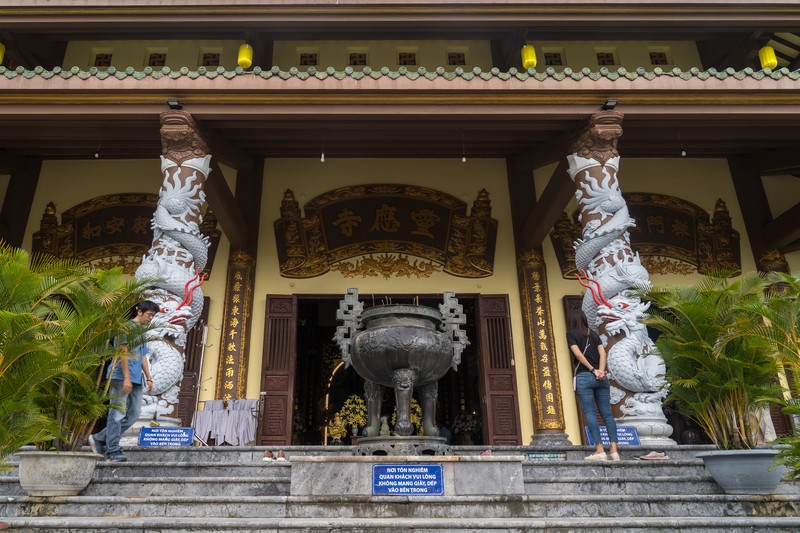
A Buddhist sanctuary on Son Tra Peninsula's forested slopes, built in 2004 around a 67-metre statue of Quan Am — the tallest Buddha statue in Vietnam — visible from across Da Nang Bay. The grounds sit inside the Son Tra Nature Reserve, a pocket of primary rainforest home to the endangered red-shanked douc langur.
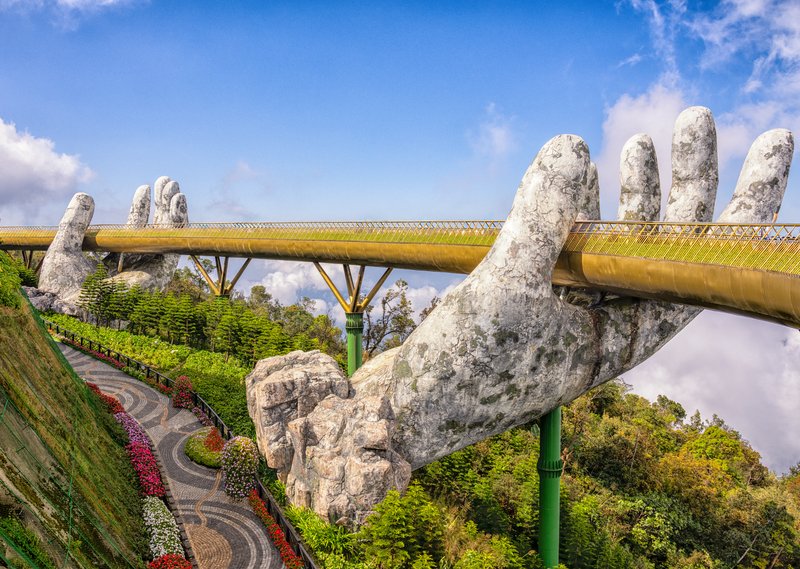
A French-era hill station 1,487 metres up in the Truong Son range, reached by a cable car that held the world record for longest non-stop single-track line at 5.8 km. The summit carries a restored French Village of 1920s-style villas and a chapel, alongside the Golden Bridge — a pedestrian span held aloft by two giant moss-covered stone hands, opened in 2018.
ARRIVE Hue Station: 32 min · 5 min → Hue Imperial City
1.Hue Imperial City~2 hr 30 min
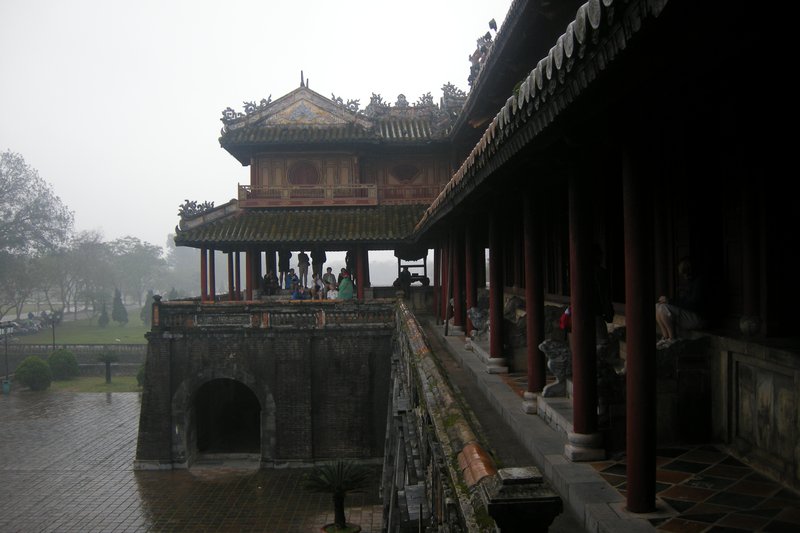
The walled palace complex of the Nguyen dynasty, built from 1804 as the political and ceremonial seat of Vietnam's last royal house. Modelled in part on Beijing's Forbidden City within a moated citadel more than 10 km around, its surviving halls, gates and temples — including Ngo Mon Gate and the Thai Hoa Palace throne room — form a UNESCO World Heritage Site.
A local guide leads through the Ancient Town's lesser-visited alleys, assembly halls, and family workshops, covering history, architecture, and street food along the way.
A comprehensive walking tour of the Ancient Town's key heritage sites with a knowledgeable local guide covering architecture, trade history, and daily life.
A photography-focused tour through the Ancient Town's most photogenic lanes, lantern streets, and riverside spots with a local photographer providing composition tips.
Thick rice noodles in a small amount of rich broth with sliced pork, fresh herbs, bean sprouts, and crispy croutons. Made with water from Ba Le Well and lye from Cham Island ash — a dish unique to this town.
Translucent shrimp dumplings shaped like tiny roses, steamed in banana leaf and topped with crispy shallots and fish sauce. Made by only one family, who supply every restaurant in town.
Wide turmeric-yellow rice noodles in a small amount of broth with shrimp, pork, quail egg, peanuts, rice crackers, and fresh herbs. A Quang Nam province signature — drier than pho, richer than bun.
Vietnam's famous baguette sandwich — the local version uses a shorter, crispier roll stuffed with pate, cold cuts, pickled daikon and carrot, fresh chilli, cilantro, and mayonnaise.
Foreign number: not accepted — requires a Vietnamese phone number.
Extensive local restaurant coverage, often at lower prices than GrabFood. Requires a Vietnamese phone number — ask hotel staff to order on your behalf.
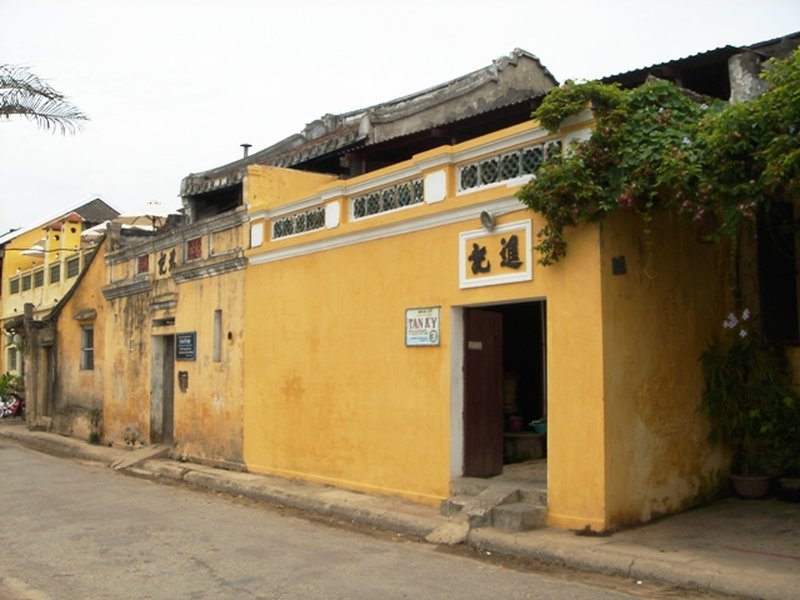
This was once the busiest trading port in Southeast Asia. Japanese silver traders, Chinese silk merchants, and Portuguese spice buyers all anchored here between the 15th and 19th centuries — and each left a permanent mark on the town. The Japanese built the covered bridge. The Fujian Chinese built assembly halls. The Vietnamese merchant families built two-storey houses that borrowed from both.
Then the Thu Bon River silted up, the port died, and Da Nang took over. The town was too poor to demolish its old buildings and replace them with concrete. By the time UNESCO arrived in 1999, it had accidentally preserved itself for 150 years. Walk Trần Phú Street at dusk, when the lanterns come on and the motorbikes stop, and you are standing in the only intact Southeast Asian trading port from the age of sail.