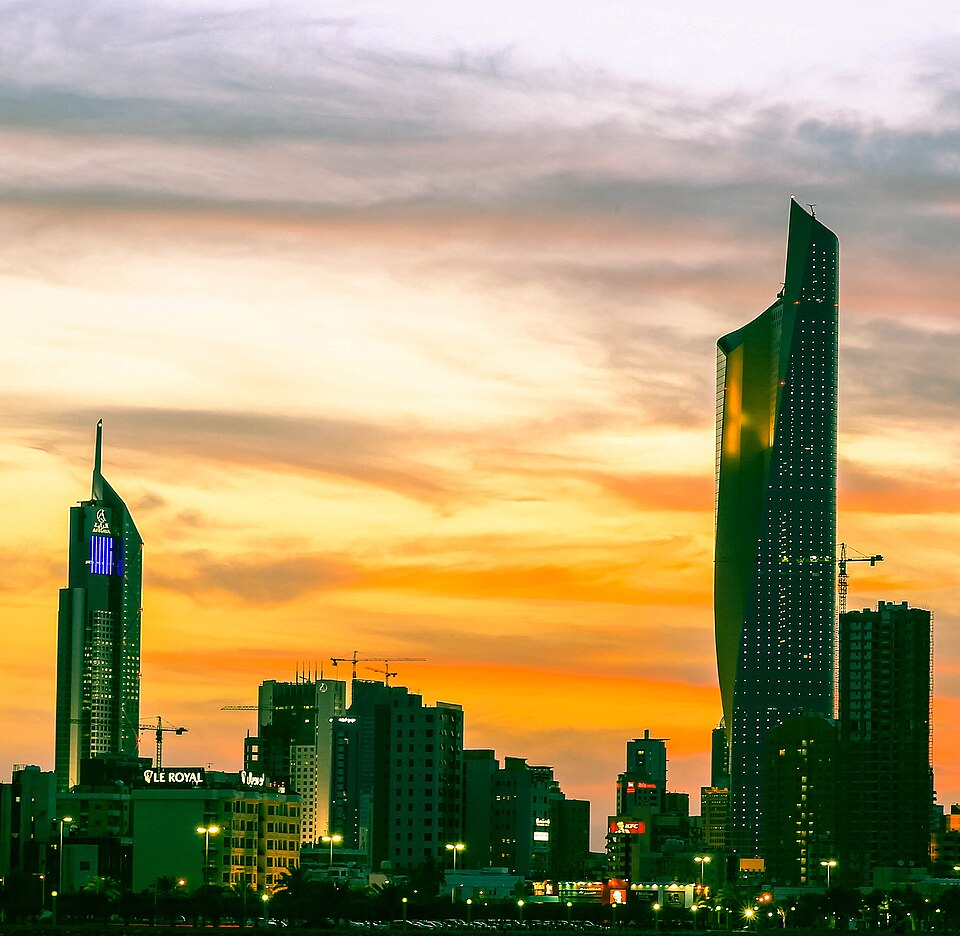
Kuwait's tallest building at 412 metres, completed in 2011 — a sculptural skyscraper with an asymmetric spiral façade carved out of the upper floors to channel prevailing Gulf winds through the structure. The result is one of the most visually striking pieces of contemporary architecture in the region. The exterior, the plaza, and the Skyrise Mall at the base are all accessible to visitors.
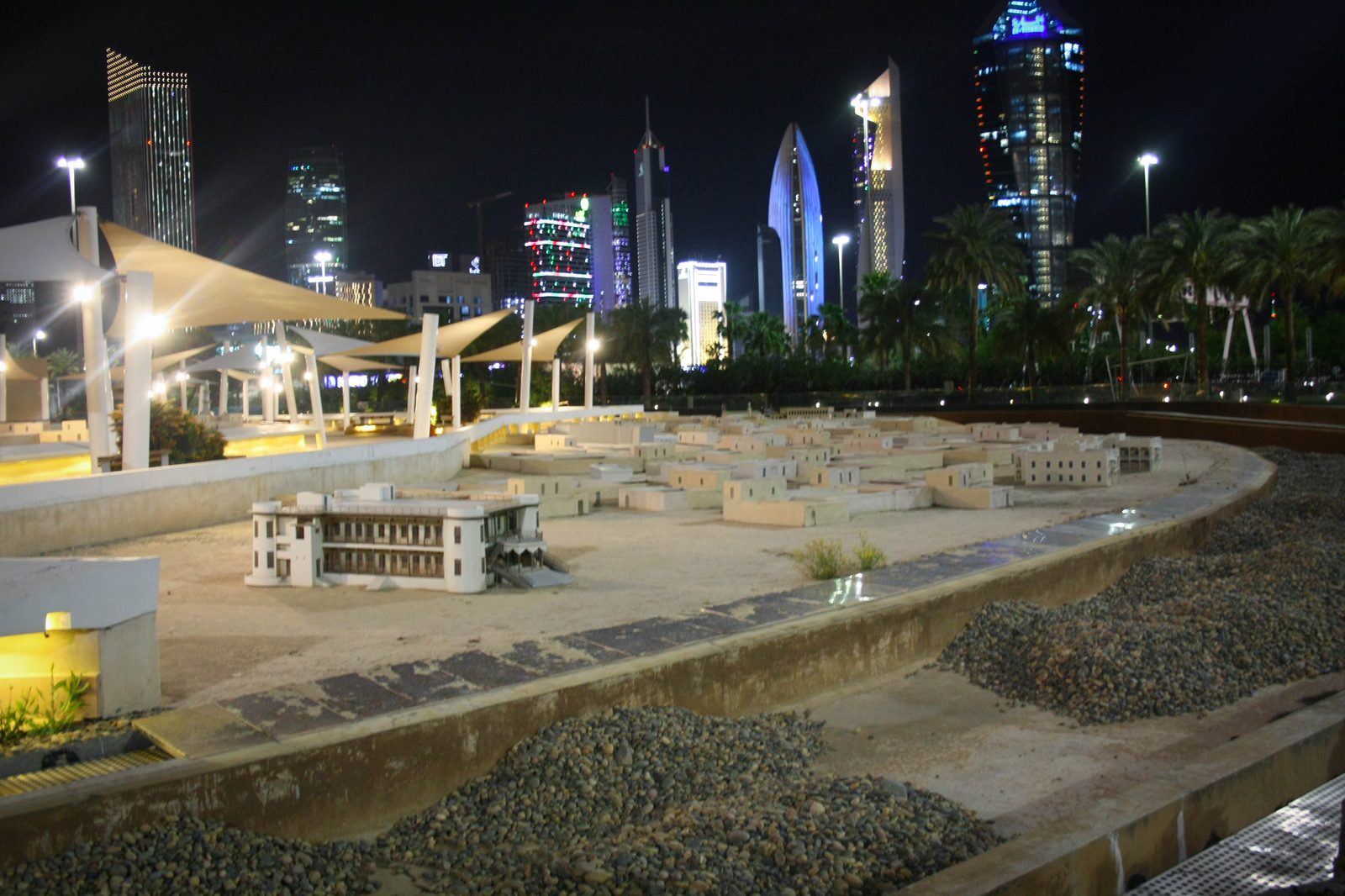
A vast urban park opened in 2015 on the Arabian Gulf waterfront, with landscaped meadows, cycling tracks, a contemporary culture pavilion, and an underground museum celebrating Kuwait's natural and political history.
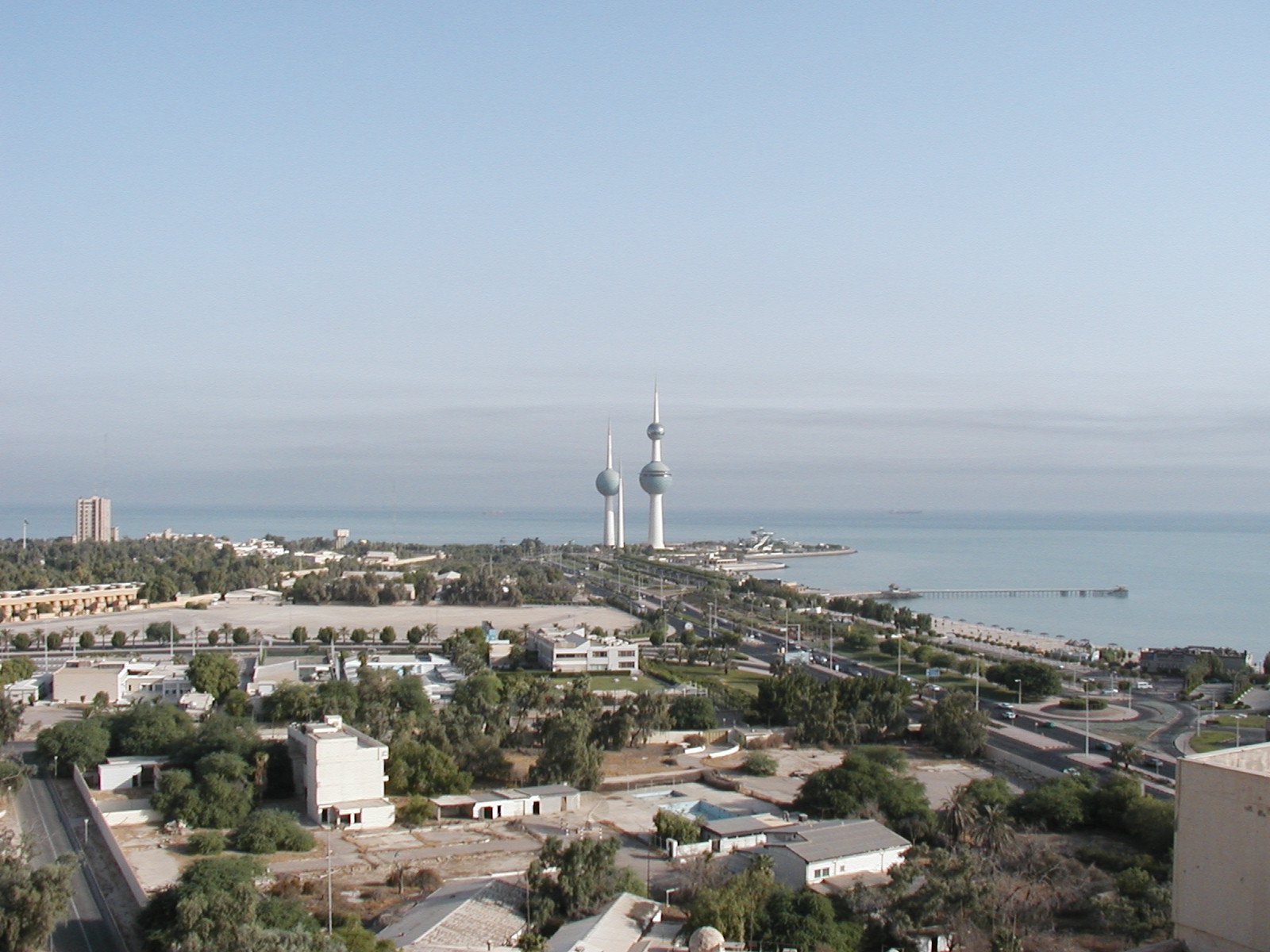
Kuwait's most iconic landmark — three slender towers built in the 1970s, the largest carrying a rotating observation sphere and restaurant at 123 metres above the Arabian Gulf.
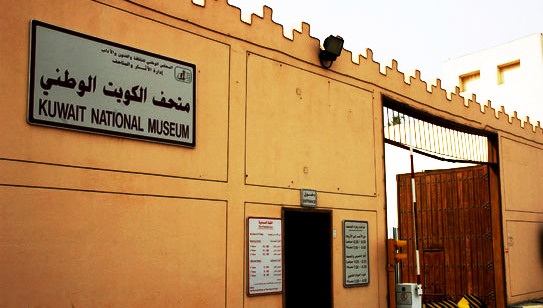
Kuwait's foremost museum, housing Hellenistic-era archaeological finds from Failaka Island and artifacts spanning 5,000 years of Gulf and Arabian Peninsula history, from prehistoric settlement through the pearling era.
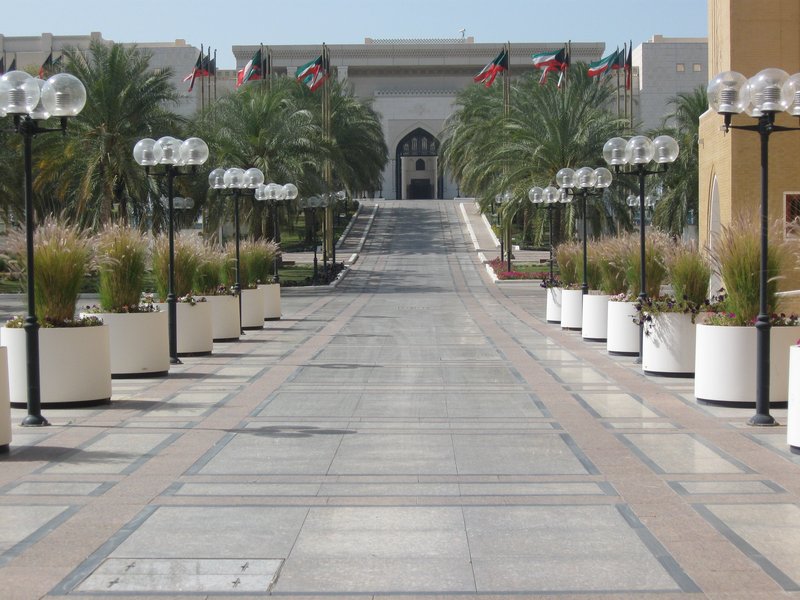
The ornate 1896 palace complex that serves as the Emir's Diwan — the administrative seat of Kuwait's ruler — with a celebrated blue clock tower above gilded gates and a colonnade of Moorish arches facing the Arabian Gulf. The exterior and the view from the waterfront promenade is the sight; the interior is not open to the public.
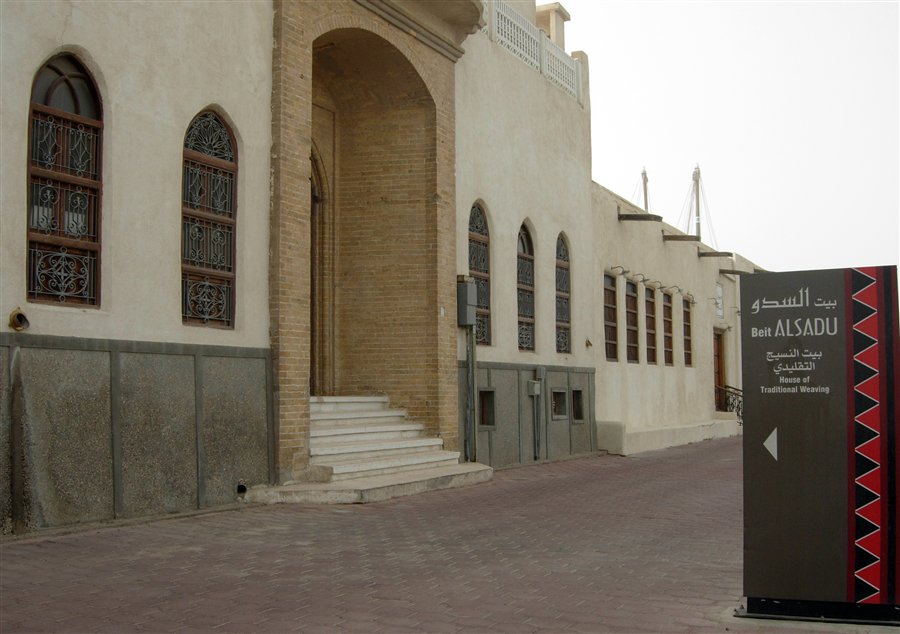
A restored heritage courtyard house in the Dasman district, dedicated to preserving the ancient Bedouin art of Sadu geometric weaving — recognised on UNESCO's Intangible Cultural Heritage list — with weavers working in the courtyard daily.
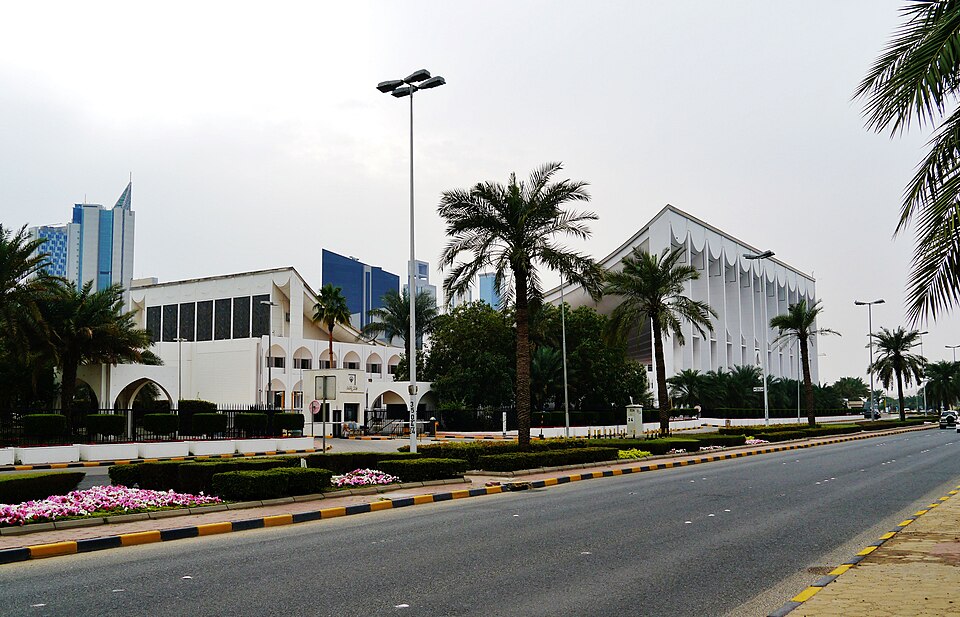
Kuwait's parliament building, Majlis Al-Umma, designed by Jørn Utzon — architect of the Sydney Opera House — and completed in 1986. The sweeping tent-like canopy, drawn from Bedouin canvas imagery, is among the finest modernist civic buildings in the Arab world. View from Gulf Road; interior not open to visitors.
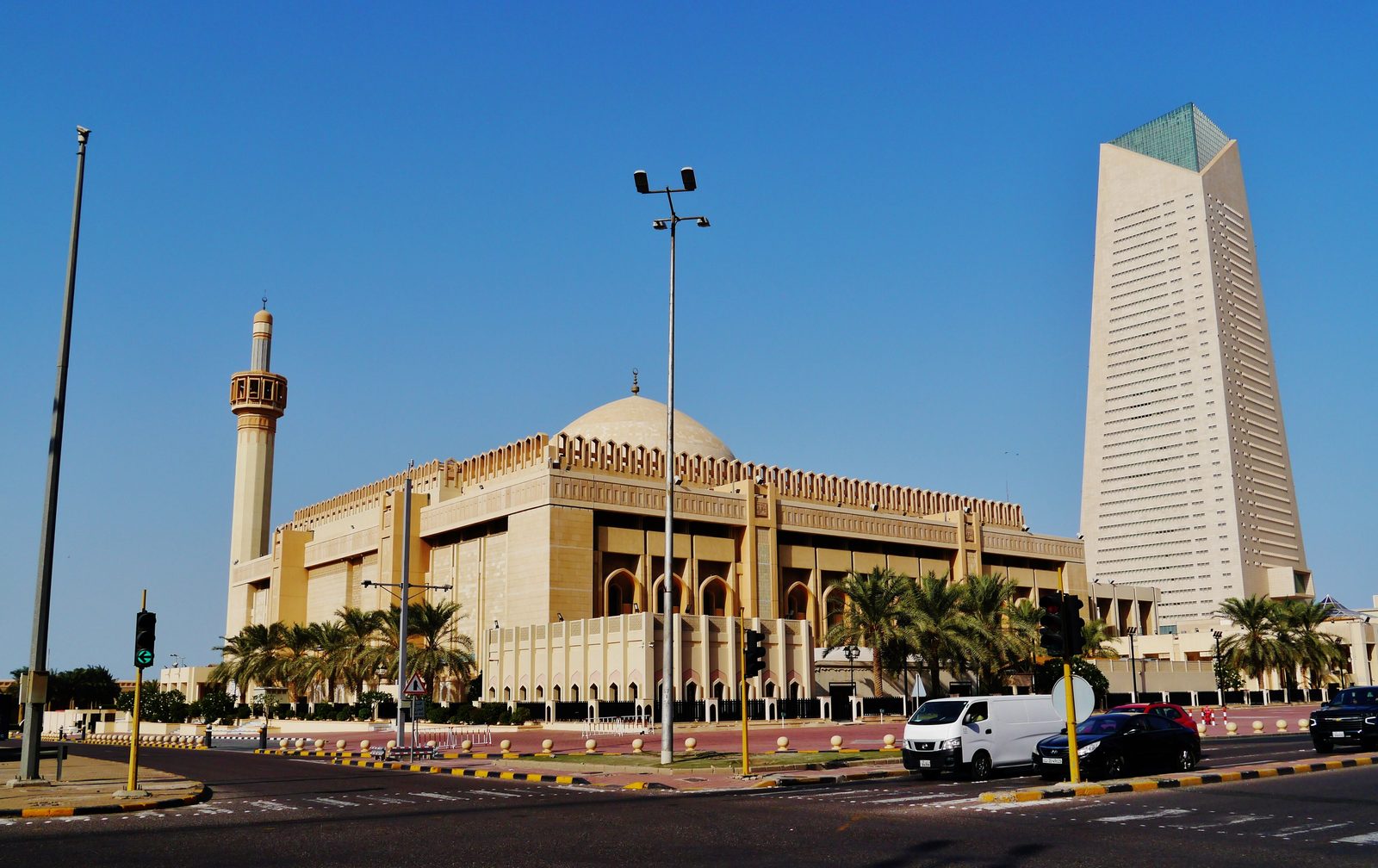
Kuwait's largest mosque and most important Islamic building, opened in 1986 and built to hold 10,000 worshippers, with free guided tours for visitors of all faiths on weekday mornings and afternoons.
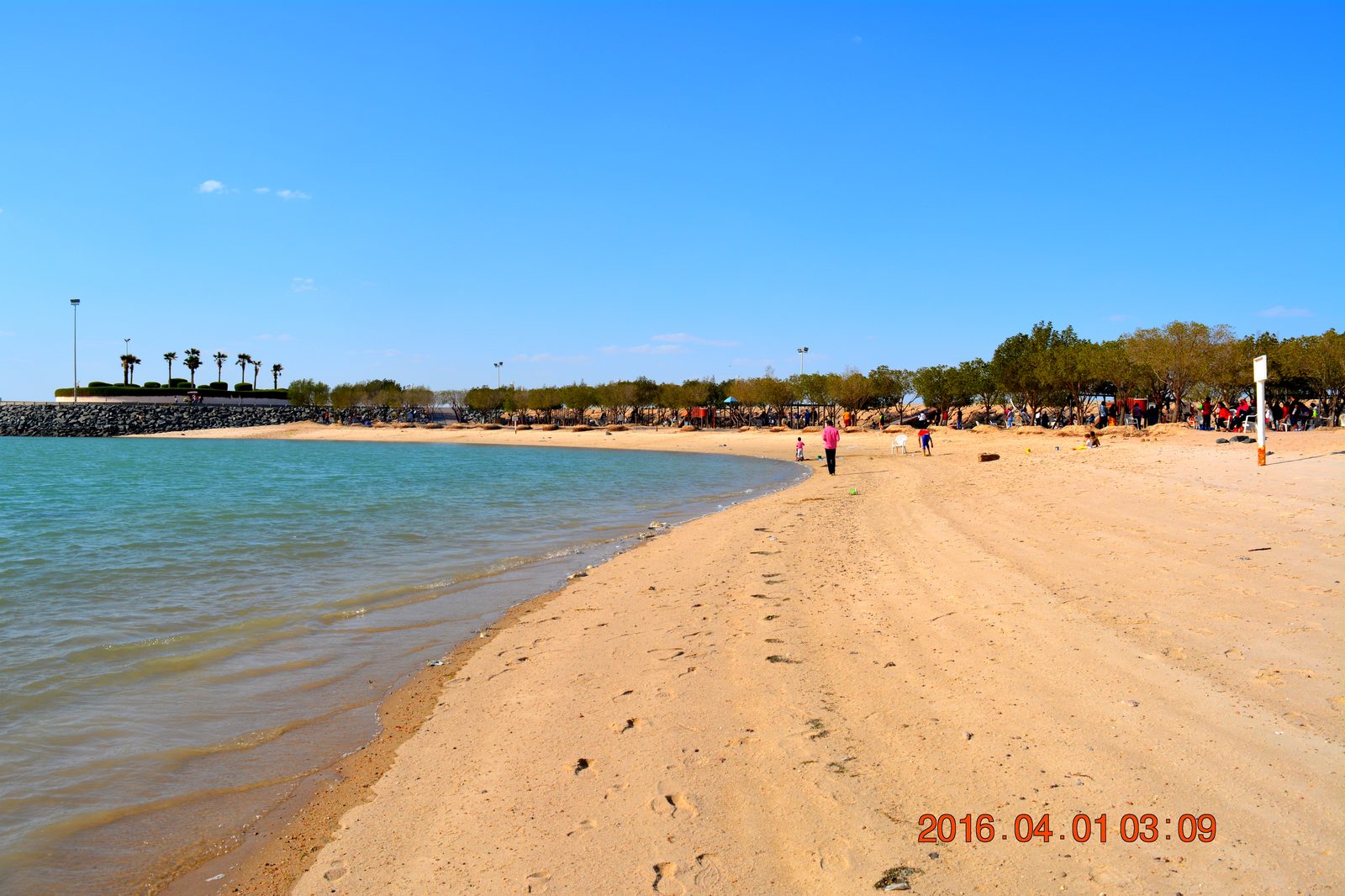
A man-made peninsula jutting into the Arabian Gulf, with a lighthouse, children's play areas, and sweeping views of the Kuwait City skyline — best visited at sunset for the golden light on the towers.
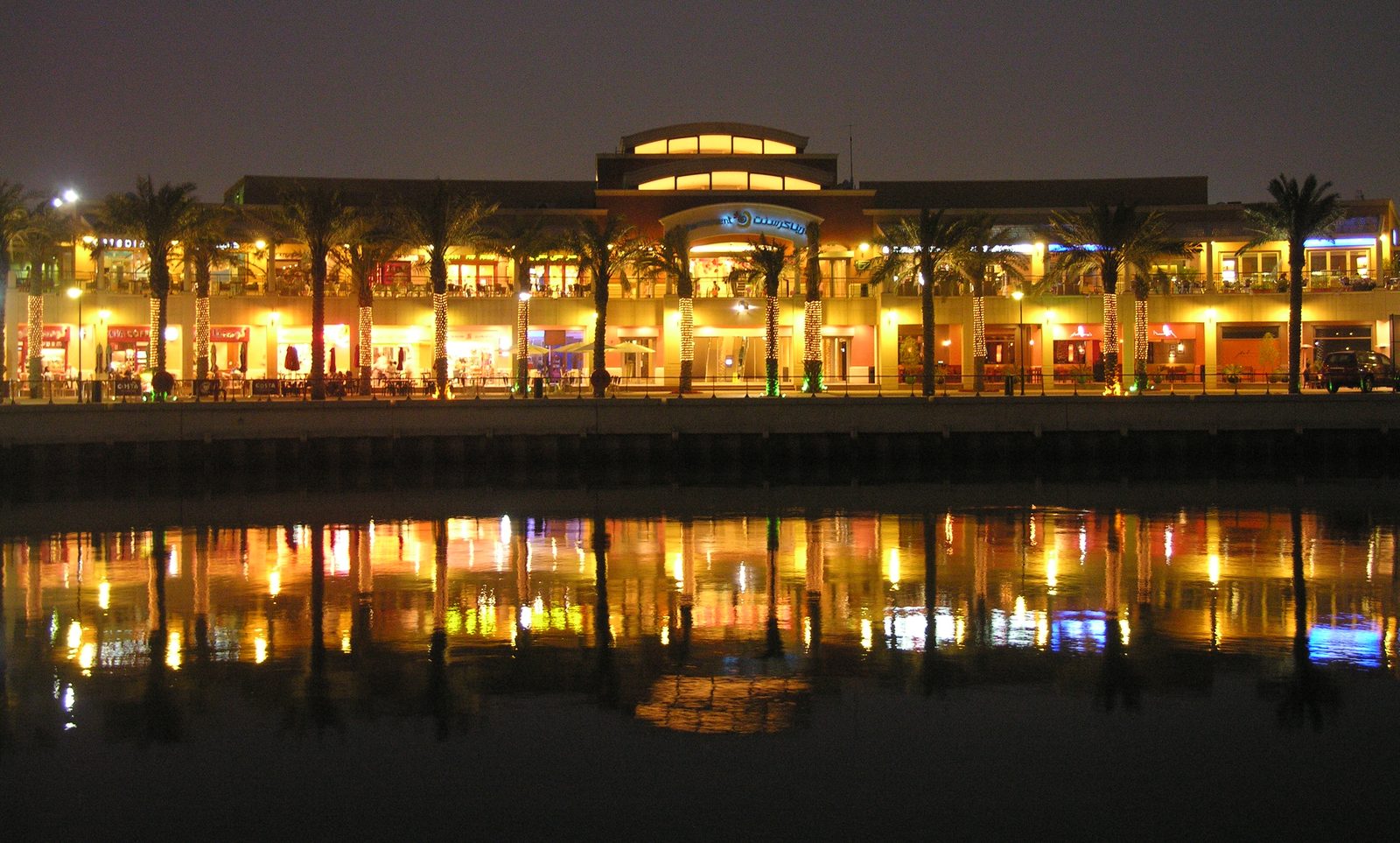
Salmiya's lively waterfront promenade lined with cafés, restaurants, and shisha spots overlooking the Arabian Gulf — the neighbourhood's social hub, busiest from evening onwards when locals come to take the air.
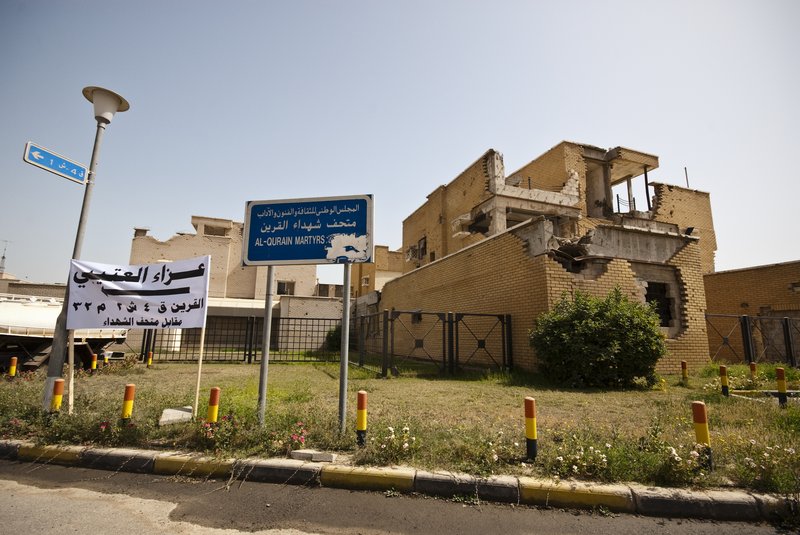
A Rumaithiya house preserved exactly as it stood on the night of 24 February 1991, when a group of Kuwaiti resistance fighters held off Iraqi forces in a last stand until they were killed — bullet holes, scorched walls, and personal effects remain in place. The most moving and historically significant memorial site in Kuwait.
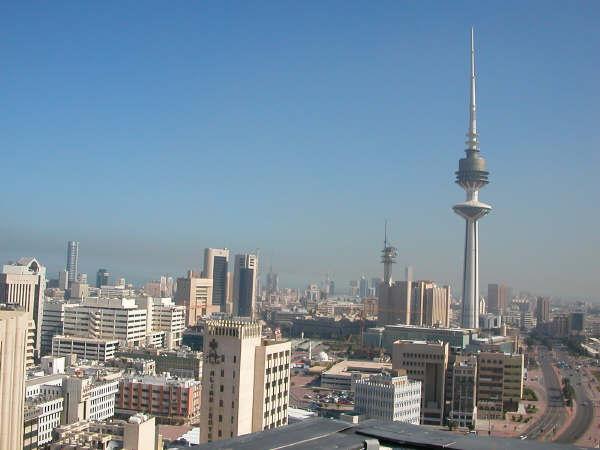
A 372-metre telecommunications tower completed in 1996 as Kuwait's symbol of liberation and a landmark of the modern skyline. The observation deck is not open to walk-in visitors — AWARE Center and TIES Center occasionally arrange guided tours by appointment, but there is no public admission. Viewed from Al Sha'ab Roundabout — the tower itself is the sight.
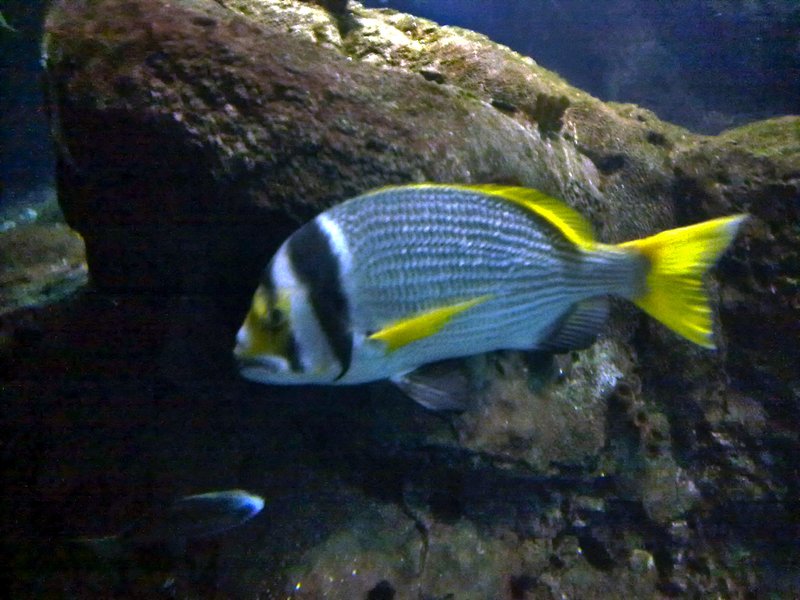
The Gulf's largest aquarium combined with an IMAX theatre, a traditional dhow harbor, and hands-on science exhibits across three interconnected buildings on the Salmiya waterfront.
From Hotel: 25 min · 7 min → Dar al-Athar al-Islamiyyah
1.Dar al-Athar al-Islamiyyah~1.5 hr
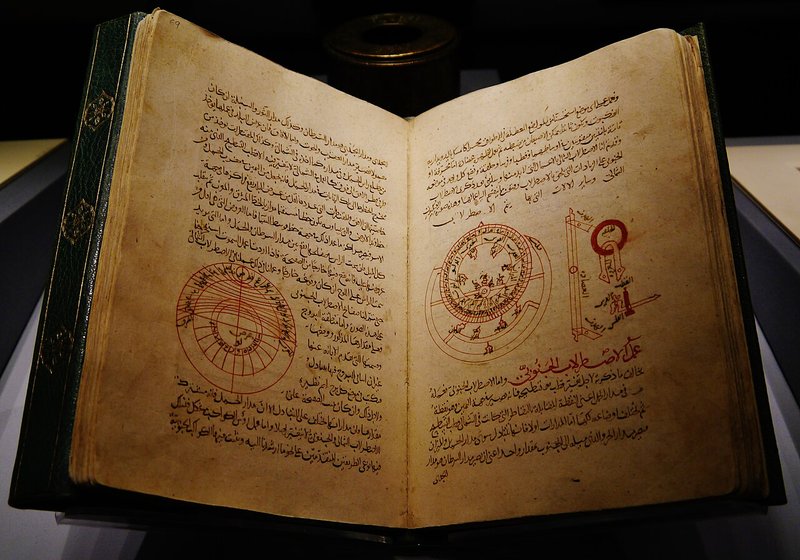
One of the world's finest Islamic art collections — over 30,000 objects assembled across five decades by Sheikh Nasser Al-Mohammed Al-Sabah and Sheikha Hussa Sabah Al-Salim Al-Sabah, spanning Islamic manuscripts, Iznik ceramics, Quran folios, ancient textiles, and pre-Islamic Arabian artefacts. Housed in galleries within the Sheikh Abdullah Al-Salem Cultural Centre complex.
Kuwait's most ambitious modern building — a 2016 cultural campus of five theatres, an opera house, and exhibition galleries under an interlocking system of domes and canopy roofs inspired by traditional Islamic geometry. The Great Theatre seats 1,800 and hosts international opera, ballet, and orchestral seasons; the public atrium and exterior are open to walk-in visitors at all times.
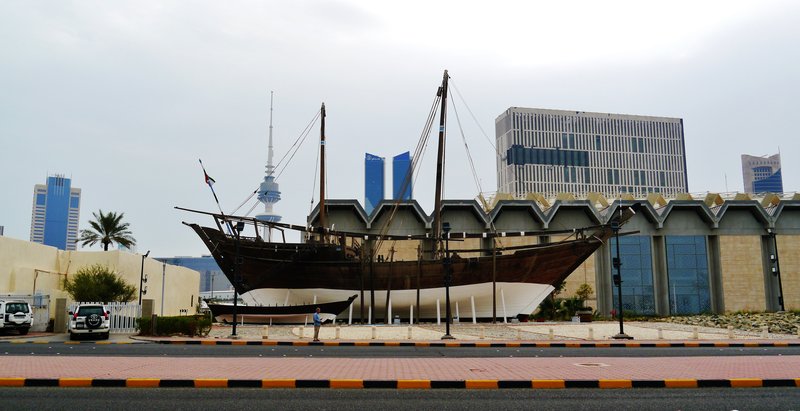
Traditional wooden dhow boats moored along the Arabian Gulf corniche — many still maintained as working vessels for fishing and coastal trade, the direct descendants of the craft that made Kuwait a Gulf trading power. Best in the late afternoon when the light turns gold on the water and the city skyline is reflected behind the rigging.
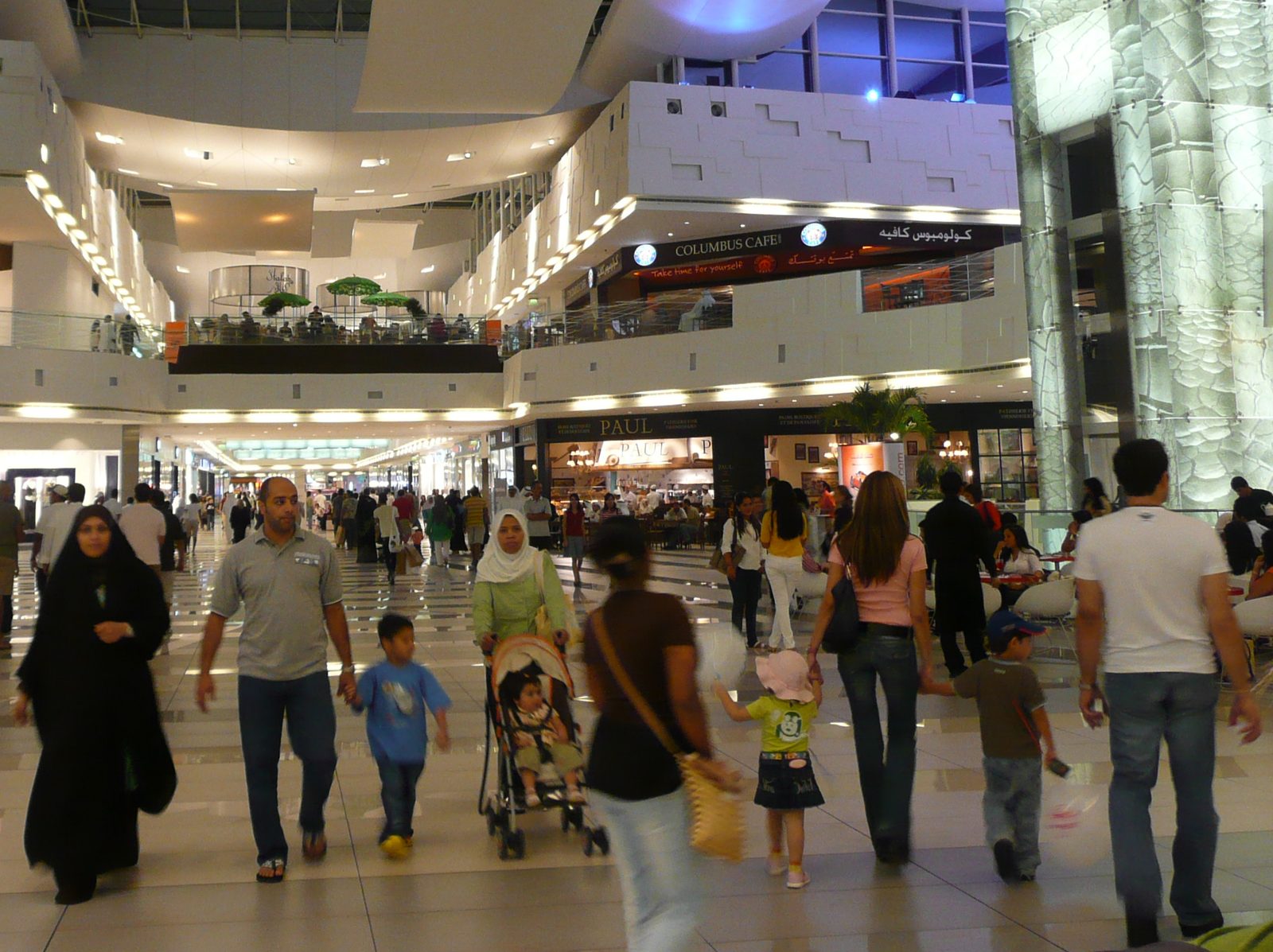
One of the largest shopping malls in the Middle East, with over 1,200 stores across themed districts that include a replica Parisian street, an indoor canal, and an extensive international food hall.
A private heritage collection spanning 5,000 years, housed in a Jabriya villa — the main museum holds ancient Gulf ceramics, Islamic jewellery, textiles, and arms; the adjacent Museum of Islamic Calligraphy displays over 700 hand-written Qurans and manuscripts spanning the full history of the Arabic script. Founded by the late Kuwaiti diplomat Tareq Rajab and his wife Jehan.
A small-group day through Kuwait Towers, the Grand Mosque, Sadu House, Souq Al-Mubarakiya, museums, the fish market and Jaber Bridge, with a guide and an itinerary adapted to opening days.
Kuwait's national dish — fragrant basmati rice slow-cooked with lamb, chicken, or fish in a blend of dried lime, cinnamon, cardamom, and saffron. Found at every traditional Kuwaiti restaurant.
A Bedouin staple of slow-cooked crushed wheat with chicken broth and spices, thick and warming — most authentic at Freej Swaileh and traditional restaurants in the old city area.
A coastal classic of aromatic rice cooked with dried shrimp, fried onions, and rose water — a distinctly Kuwaiti flavour rooted in the city's pearling heritage.
Kuwait's ubiquitous street tea — strong black tea simmered with cardamom and condensed milk. Sold from roadside stalls and small tea shops for a fraction of a dinar; essential.
Foreign number: not accepted — the sign-up form requires a Kuwaiti +965 number; SMS does not reach international numbers. Use a local SIM or ask the hotel concierge to place orders.
Kuwait's dominant delivery platform, covering hundreds of restaurants across all districts — from international chains to independent Kuwaiti spots. Real-time tracking, English interface, wide cuisine variety.
Foreign number: accepted — Careem accepts international numbers and SMS verification arrives reliably.
Careem's food delivery arm covers fewer restaurants than Talabat in Kuwait but accepts international numbers without a local SIM — a practical choice for visitors who already have a Careem account from another Middle East destination.
Uber operates citywide in Kuwait and is the most reliable ride-hailing option for visitors. Coverage is strong across Kuwait City, Salmiya, and surrounding areas. Kuwait is a car-dependent city — ride-hailing replaces almost all transit; walkable distances between attractions are rare.
Careem gives Uber strong competition on pricing and is widely used by locals and expats alike. Reliable for downtown, Salmiya, and surrounding areas — a useful second option if surge pricing affects Uber at peak times.
Kuwait prohibits the sale and consumption of alcohol — this applies to hotels, restaurants, and private residences with no exceptions.
Dress modestly when visiting the Grand Mosque; women are loaned an abaya at the entrance. Cover shoulders and knees at mosques and traditional areas throughout the city.
The best months to visit are October through March; the summer heat makes outdoor sightseeing genuinely unpleasant for most of the day.
Friday is the first day of the weekend — many government museums and some cultural sites close Friday morning and reopen mid-afternoon. Plan day two's itinerary around this.
The Kuwaiti Dinar — KWD — is one of the world's highest-valued currencies; most purchases cost a fraction of a dinar. ATMs accept major international cards widely across the city.
English is widely spoken in hotels, malls, and tourist areas — Arabic phrases are welcomed but not required.
Many restaurants in Kuwait open for lunch from noon and stay open until after midnight, with a mid-afternoon lull. The city comes alive in the evening.