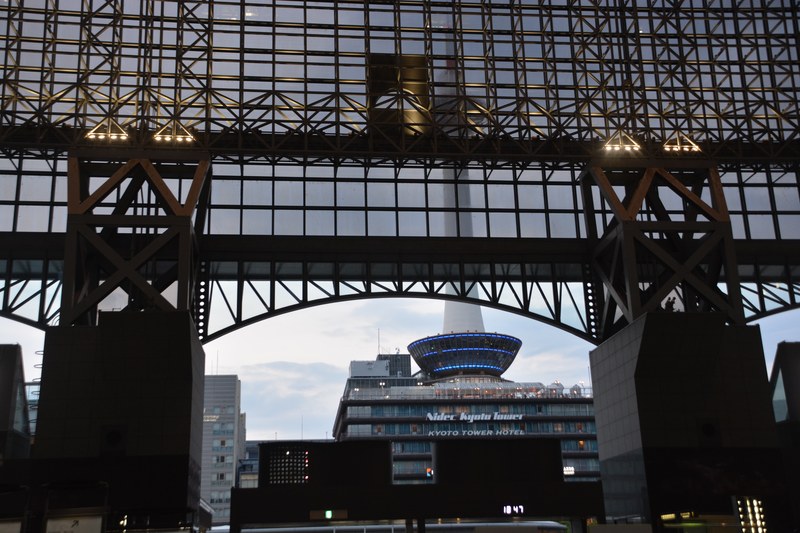
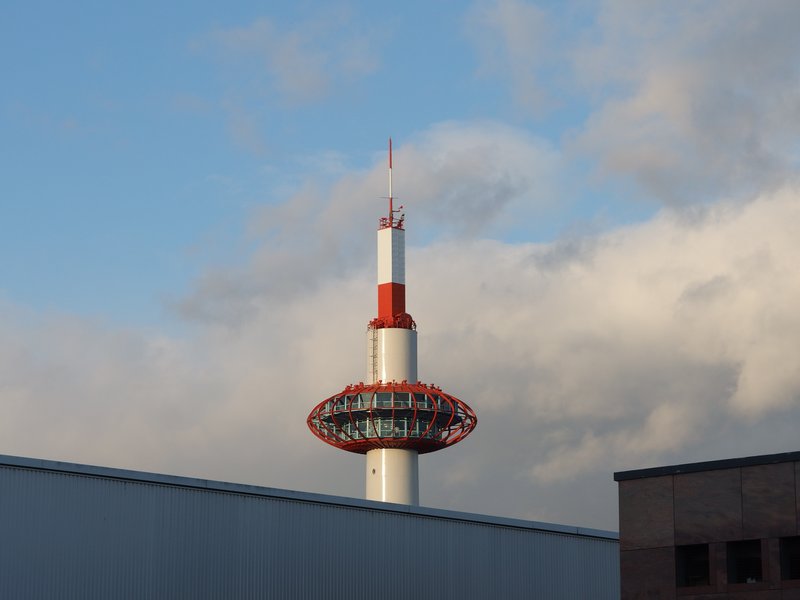
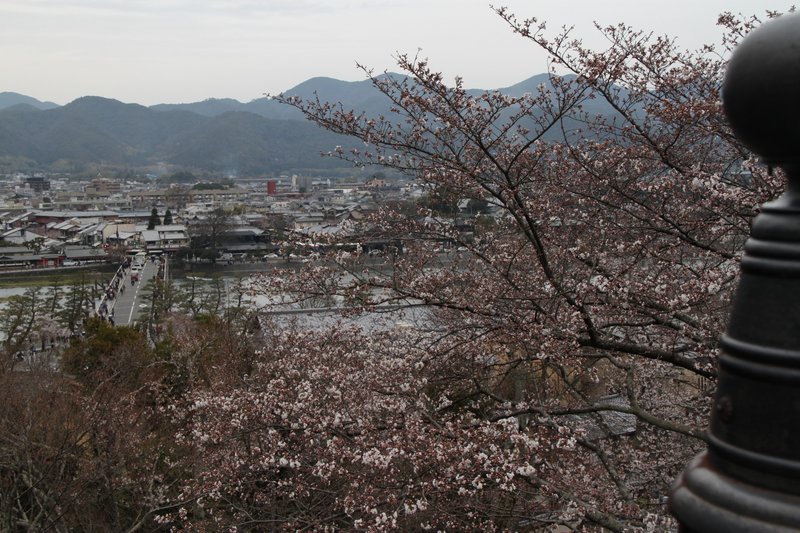
At 131m the tallest structure in the city, its white cylindrical form modeled on a lighthouse rising above Kyoto Station. The observation deck delivers a 360° panorama across the low rooftops toward the surrounding mountain walls — a view that makes visible why the wide basin geography preserved the old-city fabric.
The rooftop garden atop Hiroshi Hara's 1997 station spans 470 meters along the 11th floor, offering unobstructed views toward the encircling mountains. The station became an architectural landmark despite controversy when built. Entry is free and consistently the least-crowded panoramic viewpoint in the city.
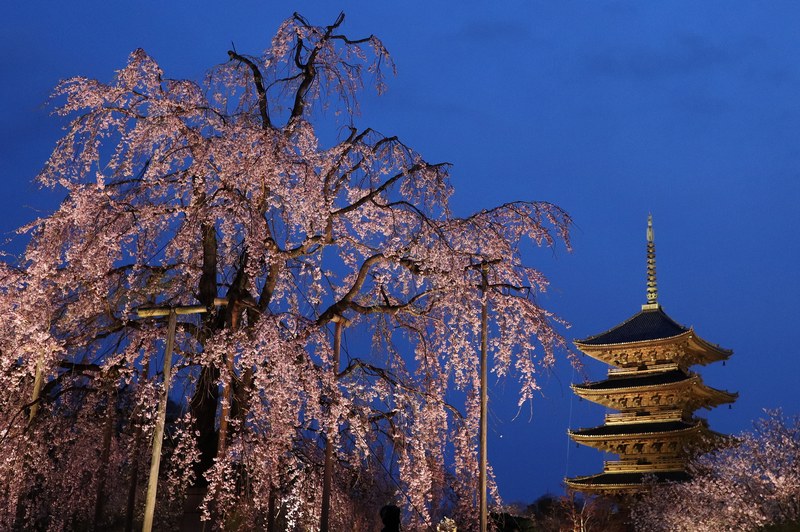
Founded in 796 CE as one of only two temples permitted inside the Heian capital, Tōji houses Japan's tallest wooden structure — a 57-meter five-story pagoda built in 826 CE. The main hall holds 21 Esoteric Buddhist sculptures arranged in a three-dimensional mandala. UNESCO World Heritage since 1994.
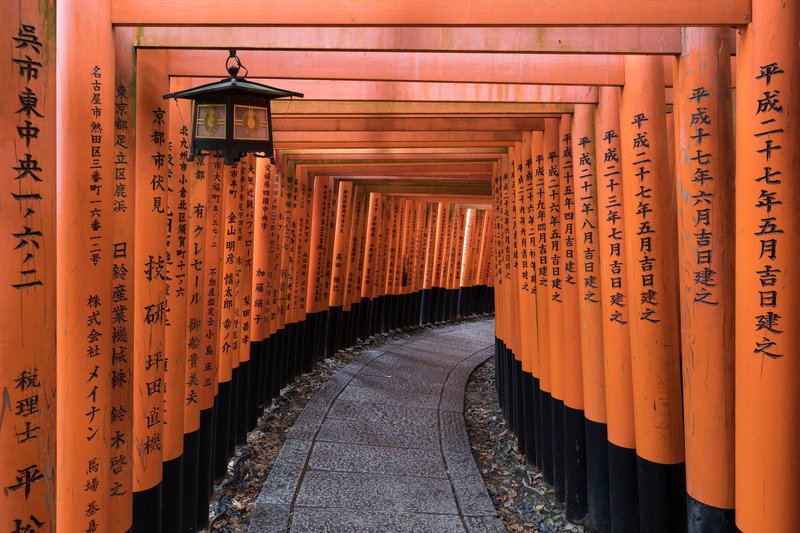
Japan's most visited shrine — a mountain covered in over 10,000 vermilion torii gates donated by individuals and businesses. The lower trails take 30-40 min; the full ascent to the 233m summit takes 2 hrs and rewards with forest solitude. The shrine dates to 711 CE and heads 30,000+ Inari shrines across Japan.
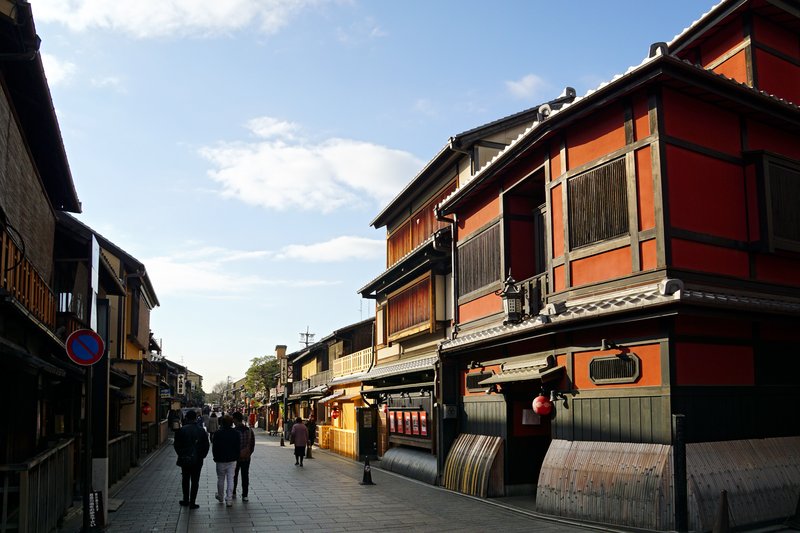
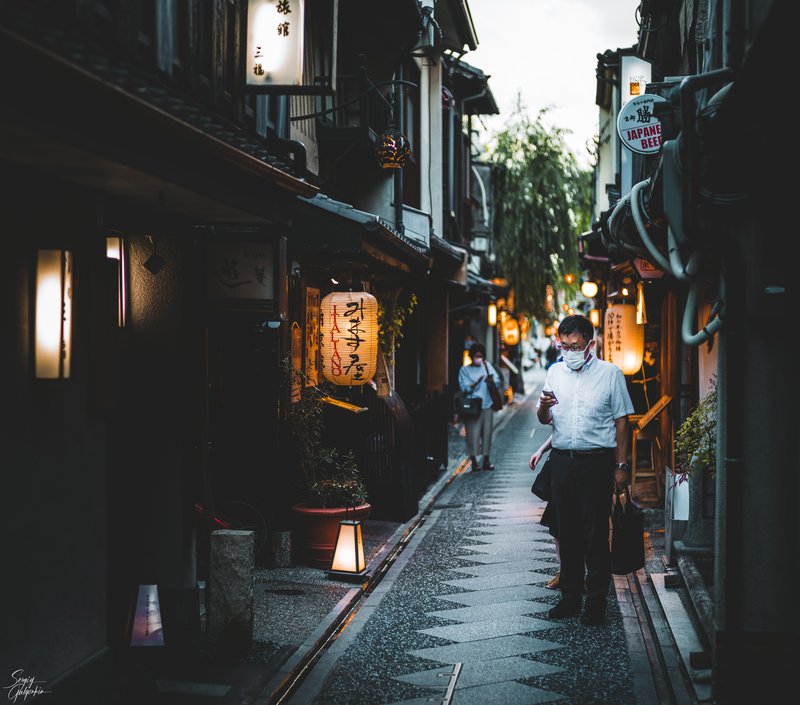
Kyoto's celebrated geisha quarter, its narrow stone-paved lanes flanked by wooden machiya townhouses and ochaya teahouses where maiko and geiko still practice their art. Hanamikoji-dori is the defining image of traditional Japan — a single street unchanged in atmosphere since the Edo period, especially at dusk.
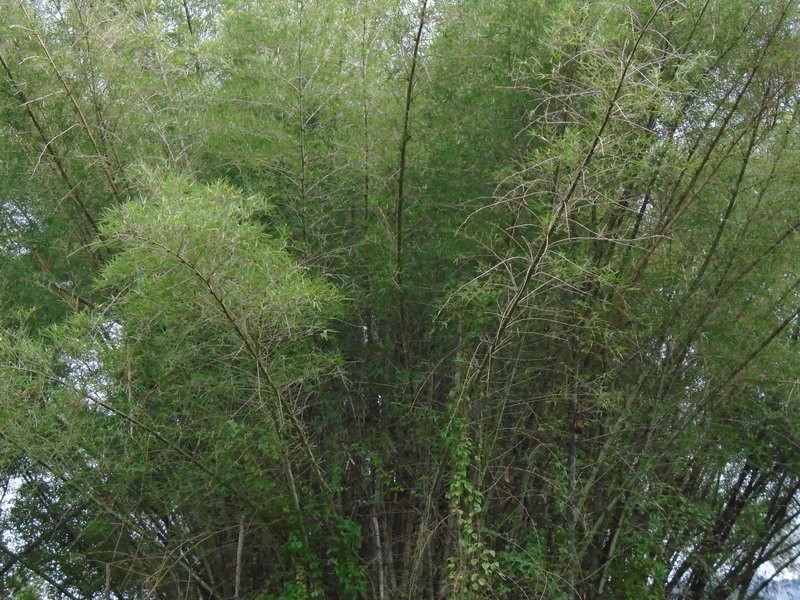
Dense moso bamboo lining the path north of Arashiyama — the rustling of the 15-meter stems in any wind creates a sound designated one of Japan's One Hundred Soundscapes worth preserving. Most otherworldly at first light before the crowds arrive, when green light filtering through the columns transforms the path.
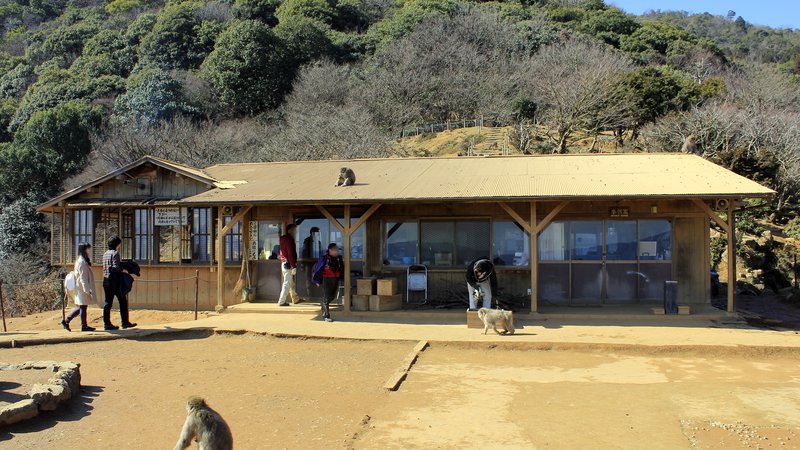
A forested hike up Arashiyama mountain leads to a summit where over 120 wild macaques roam freely. Visitors enter a feeding hut to offer food through wire mesh while the monkeys remain outside — the reversal is intentional. The summit views across the city basin and surrounding hills are genuinely exceptional.
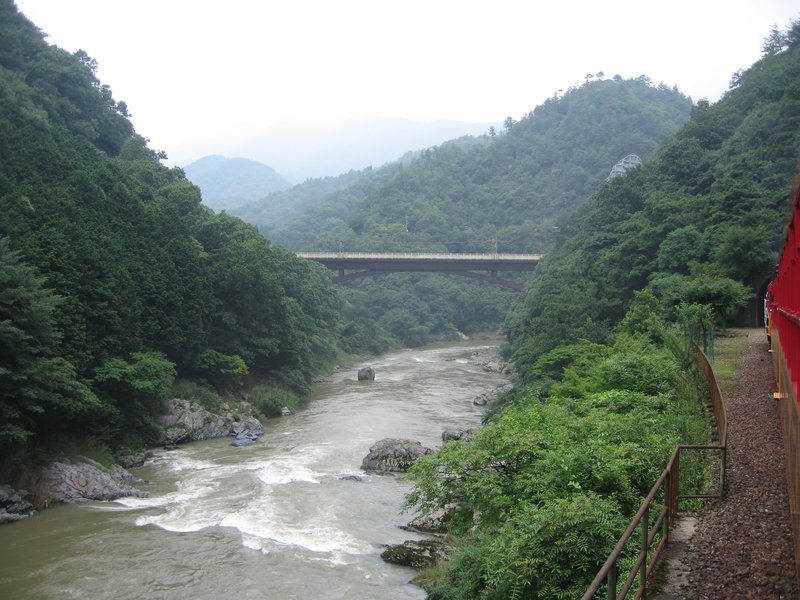
A 16km wooden boat descent through the Tamba gorge — a 2-hour journey past sheer granite walls, cascades, and canyon forest. The boats depart from Kameoka and arrive at Arashiyama's riverfront, making this the ideal Arashiyama day opener — arriving by river as travelers have for centuries.
The Moon-Crossing Bridge spans the Katsura River against a backdrop of forested mountains designated a National Historic Site. A bridge has stood here since the 9th century. The view upstream toward Arashiyama mountain framing the wooden span is among the most replicated images in Japanese travel photography.
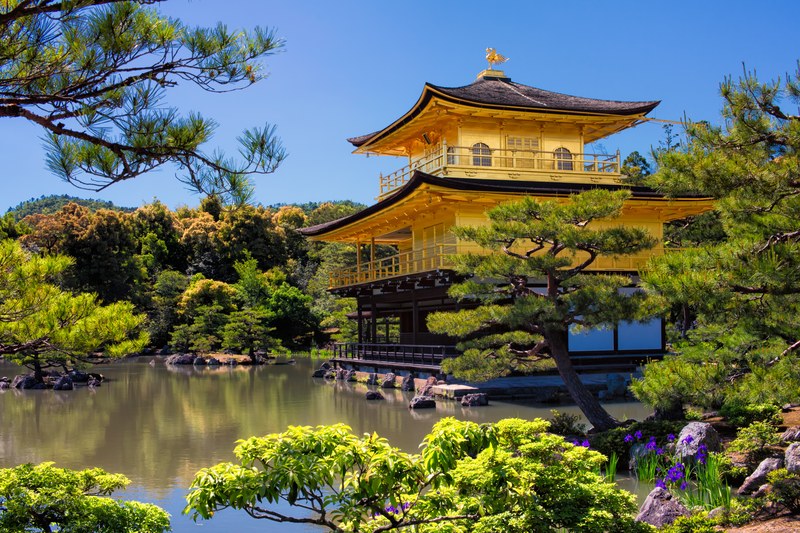
The Golden Pavilion — a three-story Zen Buddhist temple whose top two floors are clad in gold leaf. The structure sits on a reflecting pond in a strolling garden, making it Kyoto's most photographed image. UNESCO World Heritage since 1994.
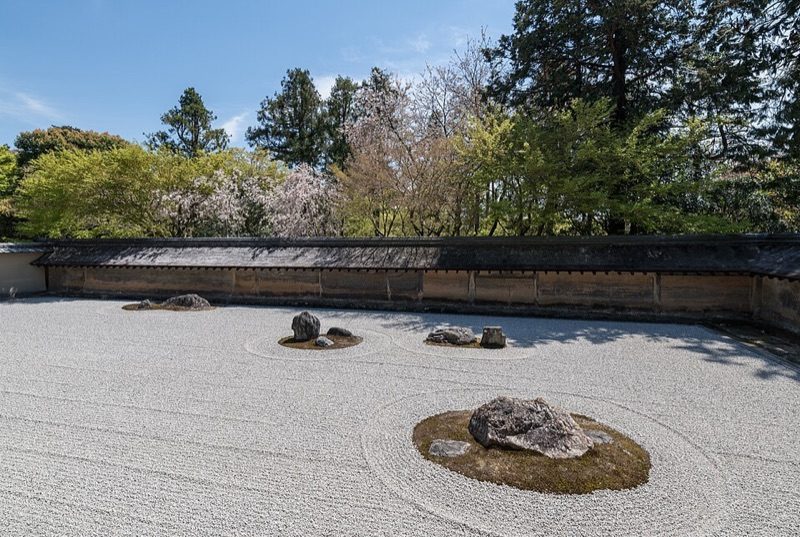
Home to Japan's most celebrated Zen rock garden — 15 moss-covered stones arranged in raked white gravel on a rectangle of bare ground. From any angle, only 14 stones are visible simultaneously; the full set only resolves at enlightenment. The garden dates to the late 15th century. UNESCO World Heritage since 1994.
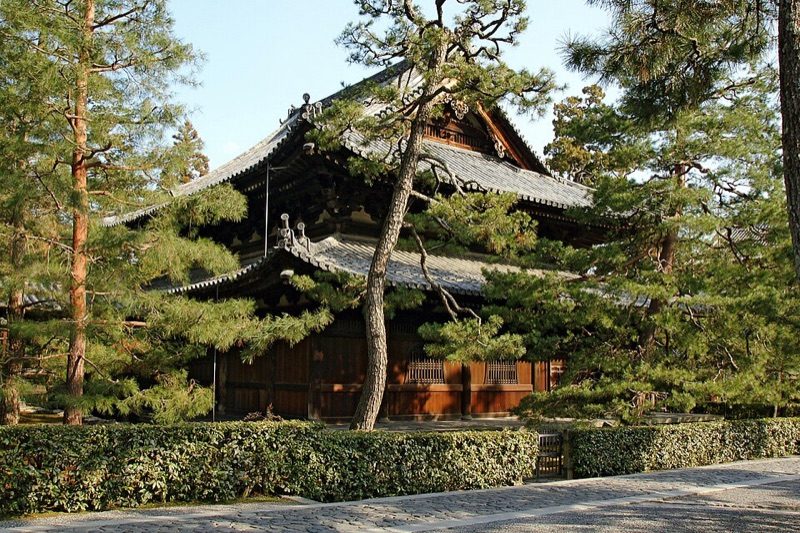
A Rinzai Zen complex with 22 active sub-temples, each housing a karesansui garden and tea house. The complex was the headquarters of tea ceremony culture under Sen no Rikyū in the 16th century. Zuiho-in and Daisen-in are consistently open to visitors.
A 500-meter stone-paved alley running parallel to the Kamogawa River between Sanjo and Shijo — one of Kyoto's five hanamachi geisha districts and home to some of the city's most atmospheric restaurants and bars. In summer restaurants extend wooden platforms over the river in the tradition of kawayuka dining.
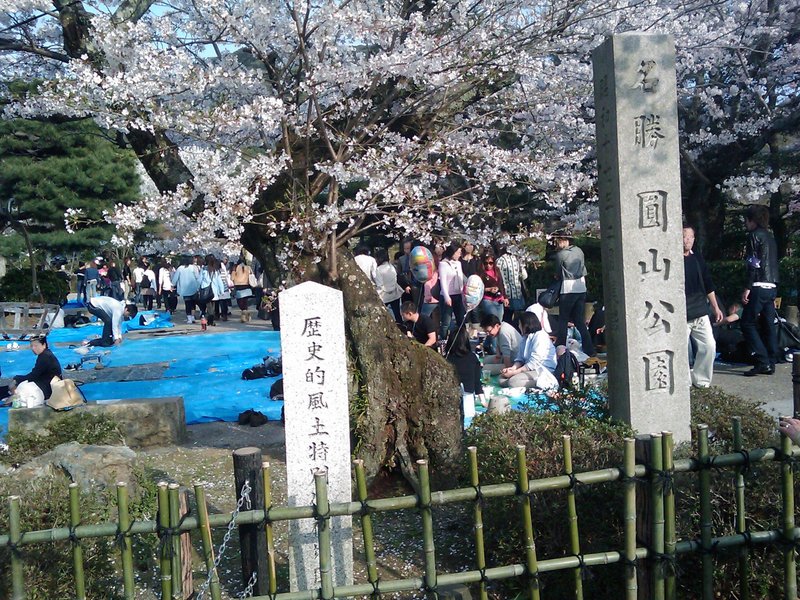
Kyoto's oldest public park, anchored by a massive weeping cherry tree — the most famous in the city — that becomes the focal point of every spring hanami gathering. Stone lanterns and teahouses are scattered across the grounds that blend seamlessly into the surrounding Higashiyama landscape.
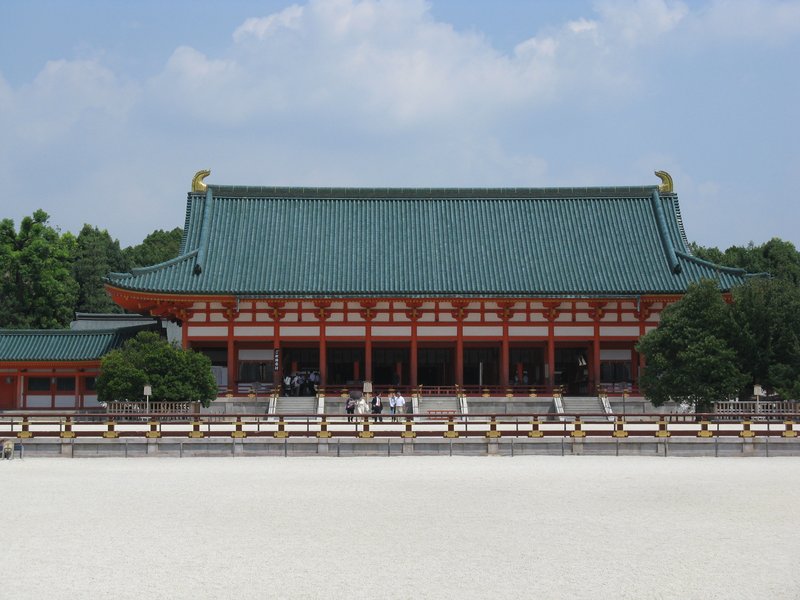
Built in 1895 to mark the 1,100th anniversary of the founding of the city, replicating the original Heian Palace at two-thirds scale. Its 24-meter torii gate is one of Japan's largest. The Shin-en garden is a Meiji-era landscape masterpiece — four seasonal sections around a central pond and stepping-stone path.
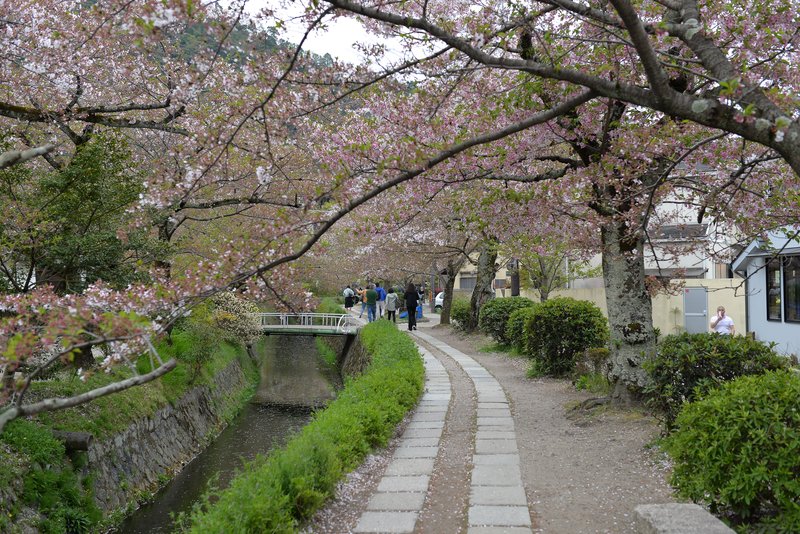
A 2km stone-paved path along the Shishigatani canal, named for philosopher Nishida Kitaro who walked it daily en route to Kyoto University. Lined by 450 cherry trees — one of Japan's 100 Most Famous Cherry Blossom Sites — equally compelling outside blossom season as a quiet promenade through northern Higashiyama.
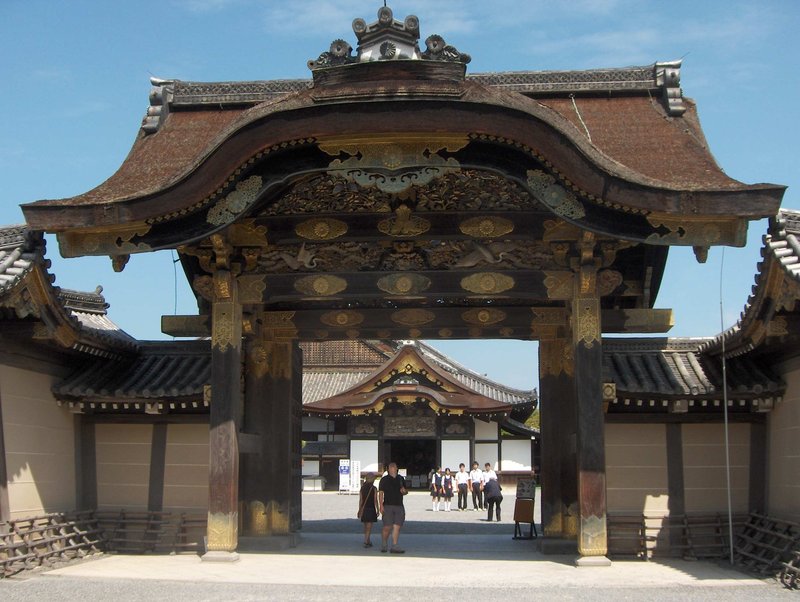
The Tokugawa shogunate's seat here, completed in 1626 to project political authority rather than repel sieges. The Ninomaru Palace has exceptional Momoyama-period screen paintings and famous nightingale floors — boards engineered to chirp underfoot as an anti-intruder measure. UNESCO World Heritage since 1994.
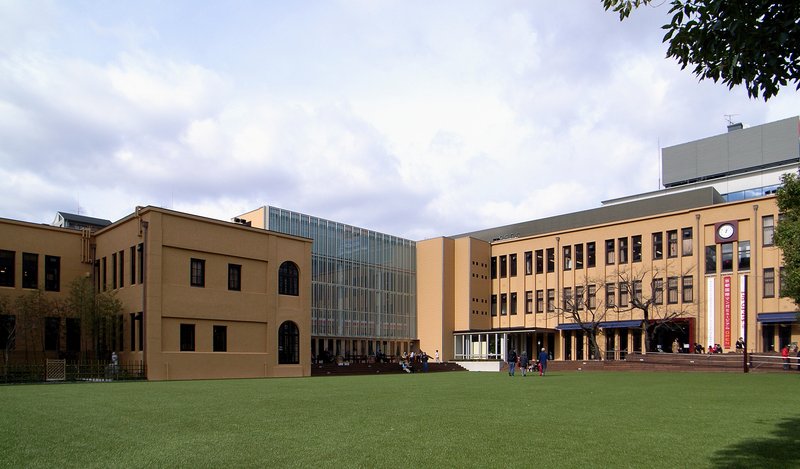
A former elementary school housing 300,000 manga volumes — pull books from floor-to-ceiling shelves and read anywhere in the building or on the lawns. Founded by the city and Kyoto Seika University, the museum has rotating exhibitions on technique and cultural history alongside the vast open library.
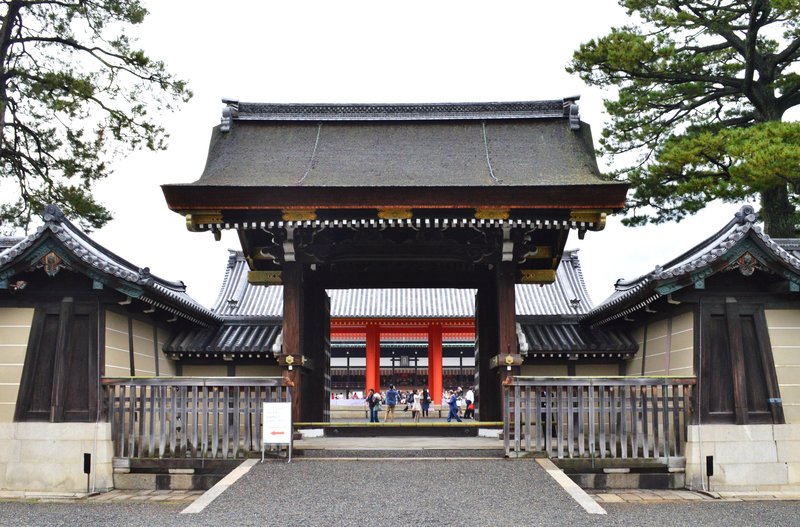
The former seat of Japan's Imperial family — the city was the imperial capital for over a millennium until the court relocated to Tokyo in 1869. The current palace dates to 1855 and sits within Kyoto Gyoen, a 65-hectare park open to the public. Entry is free with no reservation required.
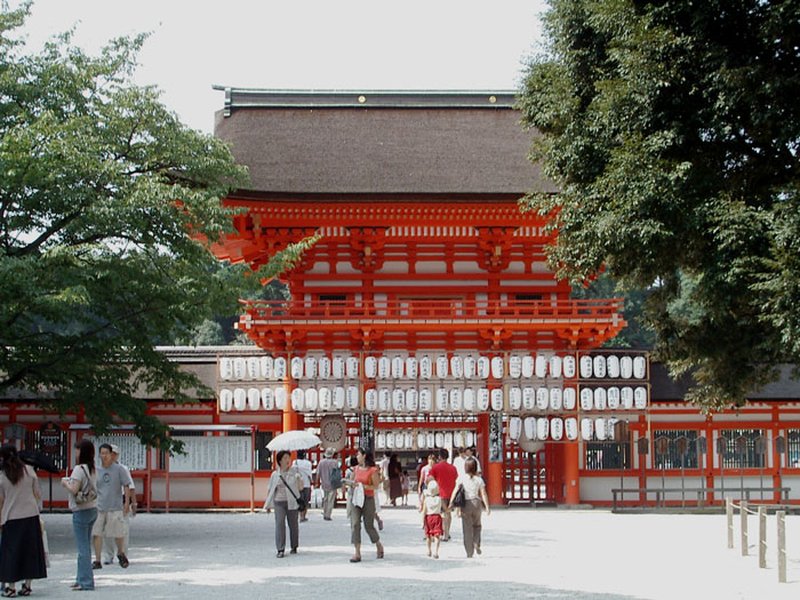
One of Japan's oldest shrines, established in the 6th century at the confluence of the Kamo and Takano rivers. The approach passes through Tadasu no Mori — a 12-hectare primeval forest, one of the last old-growth forests inside a Japanese city. UNESCO World Heritage since 1994.
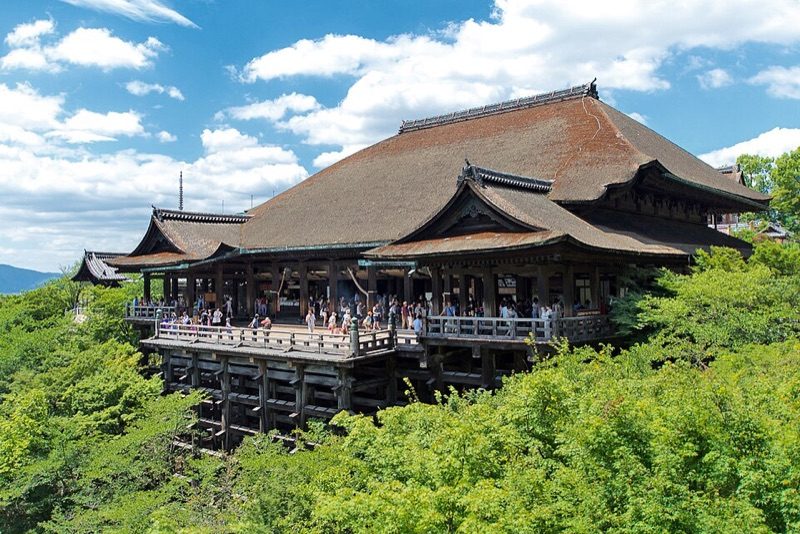
An 8th-century Buddhist temple on the eastern hills of Kyoto, famous for its veranda — a massive wooden stage projecting 13 meters over a wooded valley, built without a single nail. Otowa waterfall below splits into three streams for health, longevity, and success. UNESCO World Heritage since 1994.
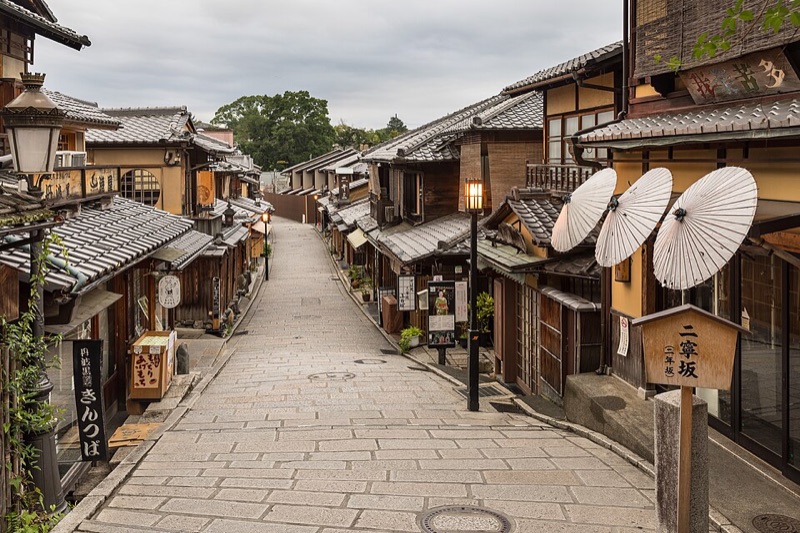
Two stone-paved lanes connecting Kiyomizu-dera to Maruyama Park through Higashiyama's historic district. The cobblestone paths are lined with machiya townhouses converted to matcha cafés, ceramics shops, and lacquerware studios. A Starbucks in a century-old building sits at the junction.
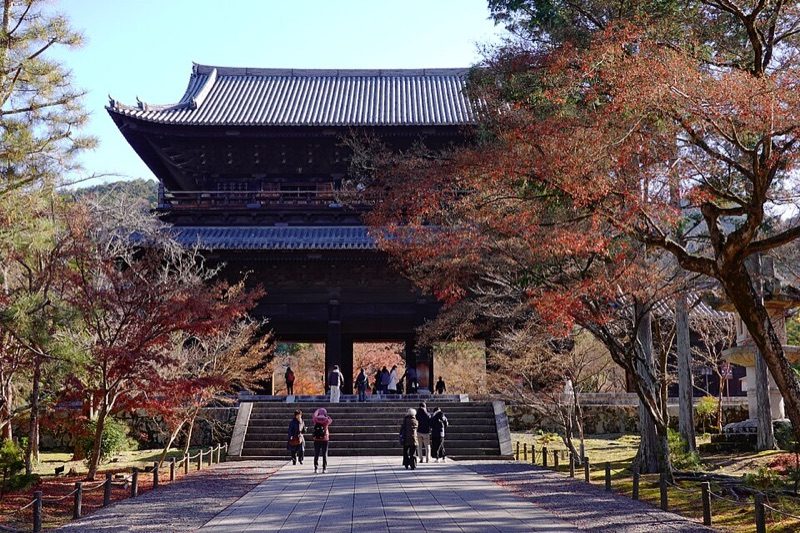
The head temple of the Nanzen-ji branch of Rinzai Zen, established in 1291. The three-story Sanmon gate towers over the approach; a red-brick Roman-style aqueduct from 1890 carries water through the temple grounds — a striking anachronism. Free to walk the grounds.
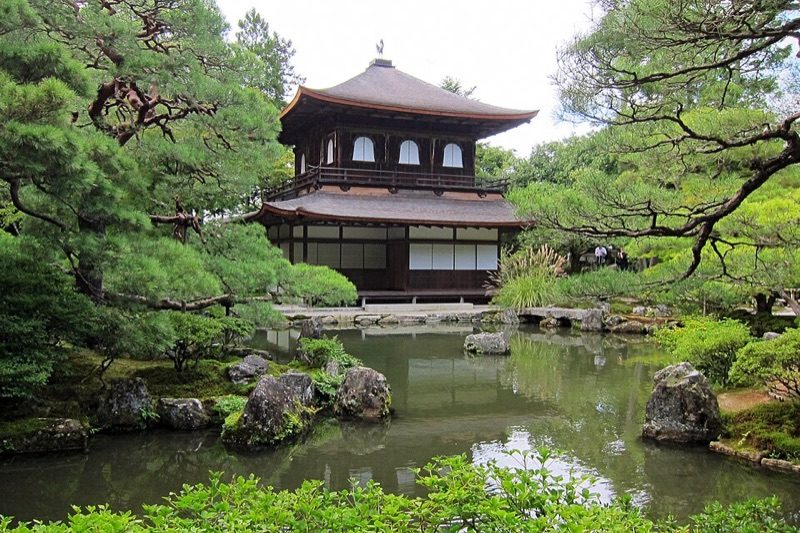
The Silver Pavilion — a 15th-century Zen villa never actually silvered, giving it a quiet elegance absent from Kinkaku-ji. The garden features a raked sand cone and flat white gravel leading to a moss garden path with elevated views across Kyoto. UNESCO World Heritage since 1994.
Three-stop evening through Gion and Pontocho with 9+ dishes and 6 sake varieties — obanzai, tofu, Kobe beef, and regional spirits at small bars only a local finds. The definitive evening experience in this city.
Local guide removes the language barrier through 4 curated Gion eateries — seasonal specialties including tempura, taiyaki, and local vegetables. Complimentary drinks at two venues. Free cancellation.
Morning circuit through historic Gion followed by 7 tastings in the 400-year-old Nishiki Market. Best way to learn the market's food culture before the noon crowds hit the narrow alley.
Guided through Nishiki Market and Gion sampling 5 specialties — yuba, seasonal vegetables, matcha treats — with cultural commentary on centuries of culinary tradition.
Evening crawl through Gion's atmospheric lanes tasting 15 dishes — crispy tempura, fresh sushi, yakitori, and seasonal cooking at a mix of stalls and small restaurants. Guide handles all ordering.
Two-hour walk through 3 of the 5 hanamachi geisha districts — Pontocho · Gion-Kobu · Gion-Higashi — with deep dives into maiko and geiko culture, hidden backstreets, and a 1,000-year-old shrine.
Lantern-lit evening walk through Gion's most photogenic lanes — maiko sightings, geisha culture deep-dive, and the atmospheric backstreets the guide takes you to that are otherwise hard to find.
Three hours through Nishiki Market's 100+ stalls tasting 7 specialties — yuba · dashi-maki · seasonal sweets — with cultural context on the market's 400-year history as the city's kitchen.
Guided evening through Gion and Pontocho's small restaurants and izakaya — seasonal cuisine, local sake, and real conversation with a guide who knows which doors to knock on. Includes full meal equivalent.
Local guide leads a focused tour through Nishiki's hidden gems — vendors the tourists walk past, ingredients essential to the city's cooking, and tastings that add up to a full meal by tour's end.
Daytime culture experience through Nishiki Market and Gion — 5 tastings with a guide explaining the cultural significance of each dish in the context of 400 years of culinary history.
Half-day historical walk through Gion and Higashiyama tracing the area's origins from Heian-period aristocratic culture to the geisha traditions still alive today. Covers hidden alleys on a deliberate route.
Guided discovery of Gion's quieter back lanes — hidden alleyways, a 1,000-year-old shrine, insider stories about geisha life, and the spots that give the city its reputation for holding back its best.
The most-reviewed evening in Gion and Pontocho — 9+ dishes and 6 sake tastings at three venues chosen for authenticity over tourist appeal. Includes Kobe beef and obanzai small plates.
Morning through Gion before diving into Nishiki Market for 7 included tastings — the most efficient way to experience the market's kitchen culture before the alley fills at midday. Ends with a full brunch.
A multi-course meal built on seasonal ingredients and visual precision — every dish reflects the exact moment of the year. Originated as the meal accompanying the tea ceremony. This city's defining contribution to world cuisine.
Home-style small dishes — pickled vegetables, simmered tofu, grilled fish, and seasoned rice that form the everyday counterpart to kaiseki's ceremony. Found at izakaya and small restaurants throughout Gion and Pontocho.
Silken tofu simmered in kombu dashi — the signature dish of the Nanzenji district, where tofu makers have used the exceptionally soft local water for centuries. Simple and profound.
The finest ceremonial-grade matcha comes from Uji, 15km south — the same terroir supplying the city's tea houses since the 14th century. Matcha soft-serve, wagashi, and full tea ceremony experiences throughout the city.
Pickled vegetables — nishiki-zuke · shibazuke · senmaizuke — made with local produce in brine, sake lees, or vinegar. Nishiki Market is the best place to taste the range of pickling traditions across a single walk.
Foreign number: accepted. — the SMS code reaches foreign carriers, and signing in with Google or Apple skips the code entirely.
The most accessible delivery option for visitors in Kyoto. Covers the Gion, Higashiyama and Kawaramachi areas well, with restaurant selection that includes English-language menus.
Foreign number: not accepted. — sign-up takes a Japanese mobile only, so the SMS code never goes abroad; Uber Eats is the app for visitors.
Japan's largest domestic delivery platform, with deep restaurant coverage in Kyoto including local kaiseki-style bento and ramen from places that do not deliver on Uber Eats. Requires a Japanese mobile number to register.
Foreign number: accepted. — a non-Japanese mobile registers and the code comes by SMS, never to a data-only SIM; a passport-and-selfie route needs no phone code at all.
Japan's leading taxi-hailing app, covering Kyoto's main areas including Gion, Fushimi Inari and the Arashiyama district. Fares are metered with a small app fee, cards are taken in the app, and at peak evening hours around Gion a wait of several minutes is normal.
Tokaido-Sanyo Shinkansen → Tokyo 2 hrs 15 min · Osaka 15 min · Hiroshima 1 hr 40 min · Nagoya 35 min. JR Nara Line → Nara 35 min. JR Sagano Line → Arashiyama 30 min.
Japan's kitchen and commercial capital — Dotonbori neon district, takoyaki and okonomiyaki street food, Osaka Castle, and Kuromon Ichiba market. The contrast with quiet restraint is immediate. Easiest day trip.
Japan's first permanent capital — Todai-ji Temple housing the largest bronze Buddha in Japan, Kasuga Taisha shrine, and over 1,000 free-roaming deer designated as national treasures. The entire historic area is UNESCO listed and within a 15-minute walk of Kintetsu Nara Station.
The Peace Memorial Museum and Atomic Bomb Dome deliver one of the most sobering experiences in Japan. A 15-min ferry reaches Miyajima Island and the floating torii gate of Itsukushima Shrine — one of Japan's most iconic images. Full day needed.
The interesting thing about this itinerary is that it contains no Buddhist temples — in the most Buddhist city in Japan. That constraint was imposed for reasons unrelated to religion, and yet it turned out to reveal something true: the city most people come to see is actually built on a different foundation entirely. Shinto shrines. A shogun's political theater. Geisha districts that are fundamentally about performance and pleasure. A bamboo forest maintained for its aesthetic effect. None of it is contemplative in the way temples are contemplative.
What this city actually is, beneath the temple overlay, is a place that has been obsessively curated. Every corridor of it — every stone lantern, every folded napkin in a kaiseki restaurant, every torii gate placed just so — has been arranged to produce a particular experience of beauty. The result may be the most deliberately beautiful place on earth, one that rewards exactly the kind of slow, attentive looking this itinerary demands. Fushimi Inari reveals its character only when you go past the first thousand gates. Gion at dusk is categorically different from Gion at noon. The city was designed to be experienced at the right time and in the right order.