TRIP OVERVIEW
Day 1 – Osaka Tenmangu · Osaka Castle · Osaka Museum of History · Isshinji
Day 2 – Tempozan Ferris Wheel · Osaka Aquarium Kaiyukan · Namba Yasaka Shrine
Day 3 – Cup Noodles Museum Osaka Ikeda · Umeda Sky Building · Dotonbori
Day 4 – Nakanoshima Library · Osaka Central Public Hall · Osaka Science Museum · National Museum of Art Osaka
Day 5 – Tsutenkaku Tower · Shitenno-ji · Osaka Museum of Natural History · Sumiyoshi Taisha
Day 6 – Minō Falls · Katsuo-ji
Day 1
1. Osaka Tenmangu~30 min
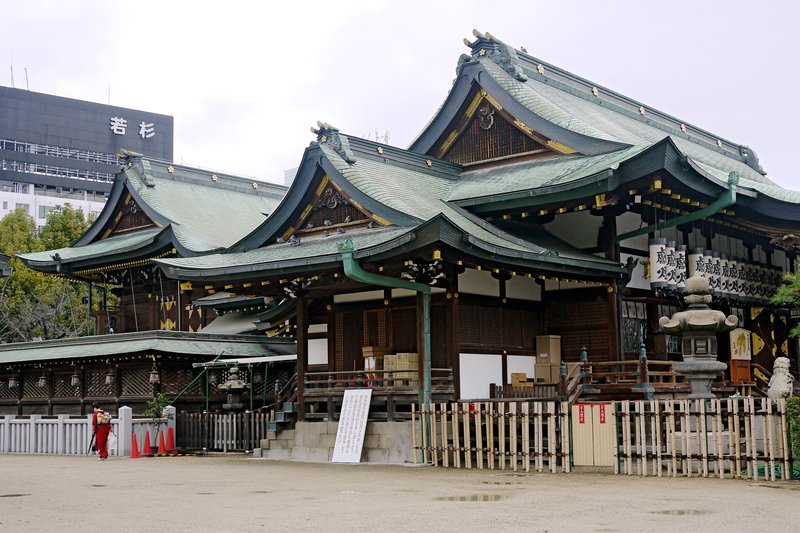
A Shinto shrine founded in 949 dedicated to Sugawara no Michizane, patron of scholarship. The annual Tenjin Matsuri held here each July ranks among Japan's three greatest festivals. The main hall's ornate roof carvings repay close inspection.
2. Osaka Castle~1 hr 30 min
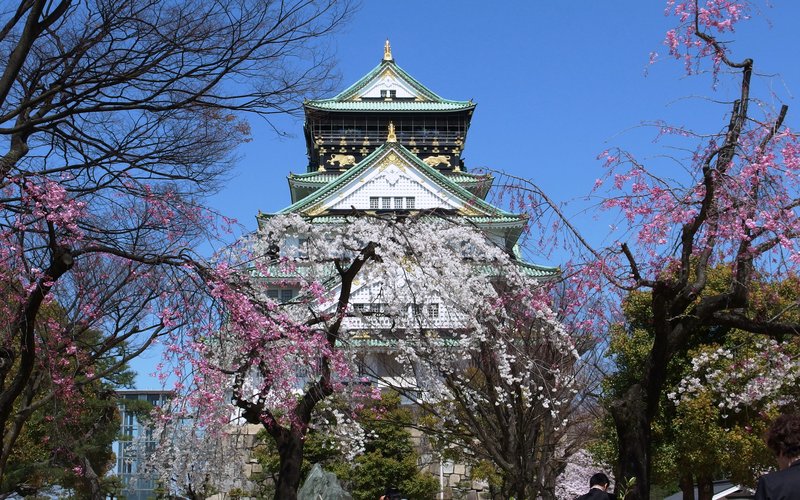
The city's defining landmark, a reconstructed castle tower rising above vast moats and stone walls. Eight floors of museum exhibits chart Toyotomi Hideyoshi's unification campaigns. The observation deck commands a full-circle panorama over the central skyline.
3. Osaka Museum of History~1 hr
Ten floors trace the city from ancient Naniwa Palace to the modern metropolis. Full-scale period reconstructions occupy each level. Upper floors offer unobstructed views of the castle across the road.
No pictures available.
4.
Isshinji
~45 min
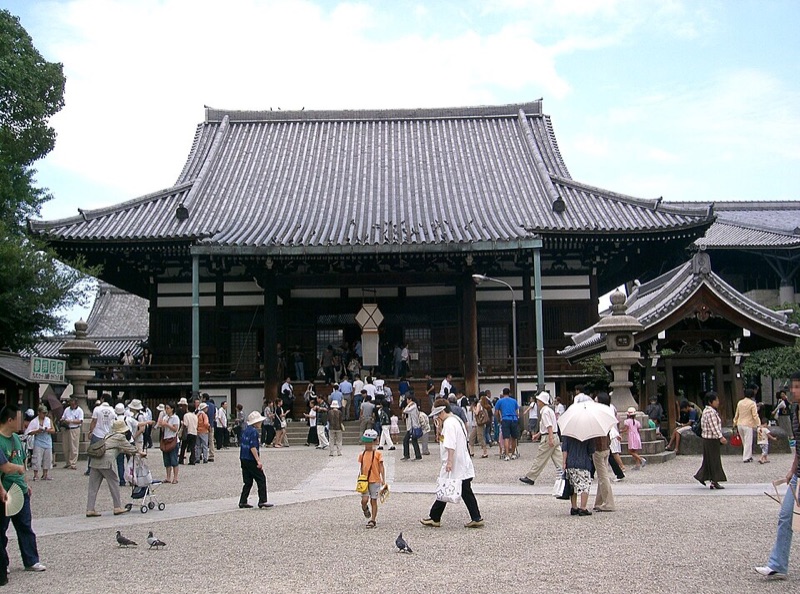
An 1185 temple adjacent to Shitennoji, known for the Okotsu Butsudan — a series of Buddha statues cast from the compressed ash and bones of cremated donors, made every 10 years since 1887. Each statue incorporates the remains of approximately 200,000 people. The main hall is a striking 1957 concrete building.
Day 2
1.
Tempozan Ferris Wheel
~45 min
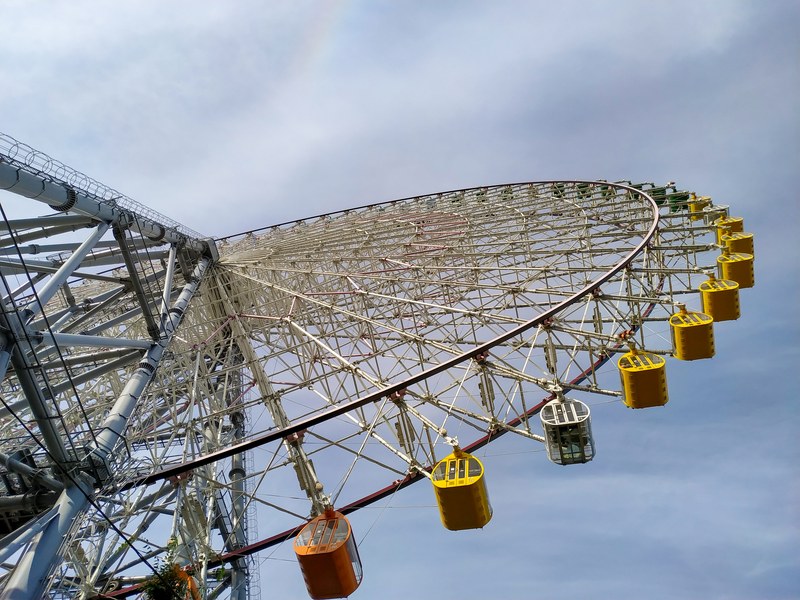
A 112.5-meter Ferris wheel at Tempozan Harbor Village on Osaka Bay. When it opened in 1997 it was the world's largest; it still ranks among the tallest in Japan. Each gondola circuit takes 15 minutes; transparent-floor gondolas are available on request. The nightly illumination forecasts next-day weather by color.
Daily 10:00am - 10:00pm
28 min
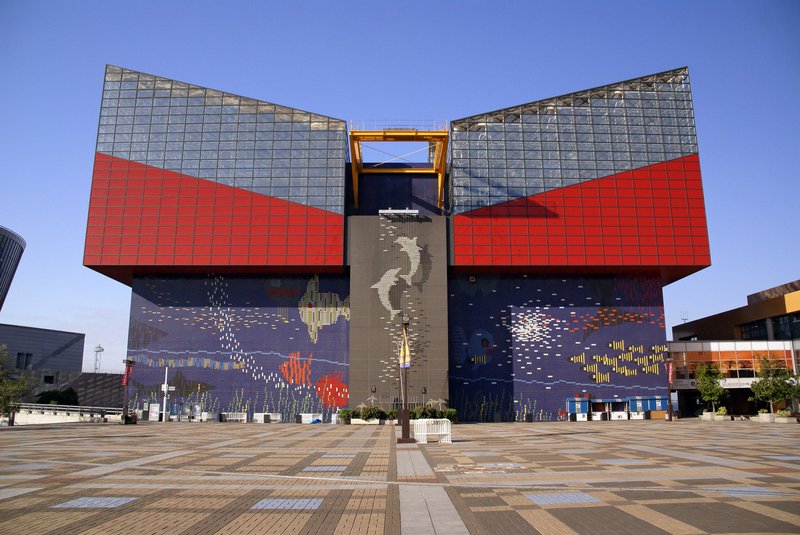
2. Osaka Aquarium Kaiyukan~2 hr 30 min
One of the world's largest aquariums, built around a central Pacific Ocean tank nine metres deep housing whale sharks. A descending spiral ramp passes through 15 habitat zones from Arctic ice to tropical reef. Over 30,000 creatures across 620 species.
Daily 10:00am - 8:00pm
3. Namba Yasaka Shrine~30 min
A Shinto shrine dominated by a 12-metre lion-head stage built in 1975. The lion's eyes double as lights and its nose as a speaker. Locals believe standing before the open mouth devours misfortune.
Open 24/7
Day 3
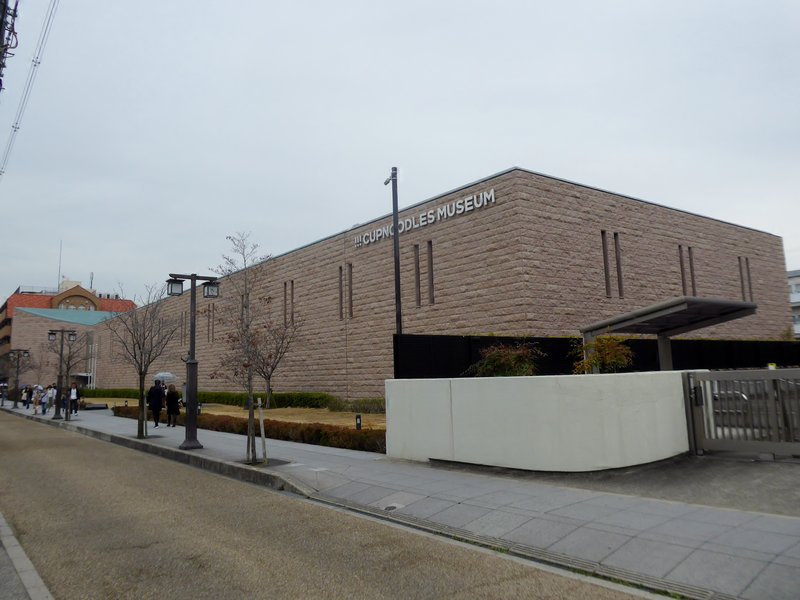
1. Cup Noodles Museum Osaka Ikeda~1 hr 30 min
Built where Momofuku Ando invented instant ramen in 1958. A tunnel of 800 product packages lines the entrance hall. The My CupNoodles Factory lets visitors design a personal cup and choose from four soups and 12 toppings.
2. Umeda Sky Building~1 hr
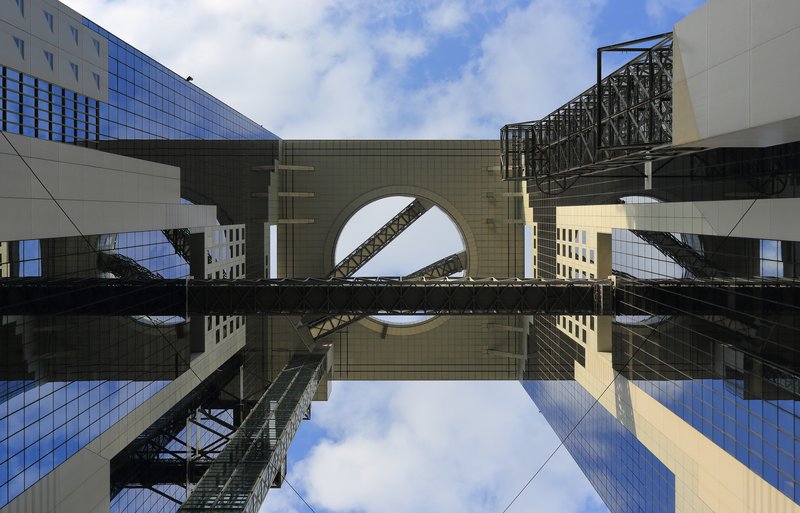
Two 40-storey towers joined at the top by a circular Floating Garden Observatory at 173 metres. An open-air rooftop deck offers unobstructed 360-degree views. The escalator crossing between towers through open air is the architectural set piece.
3. Dotonbori~1 hr
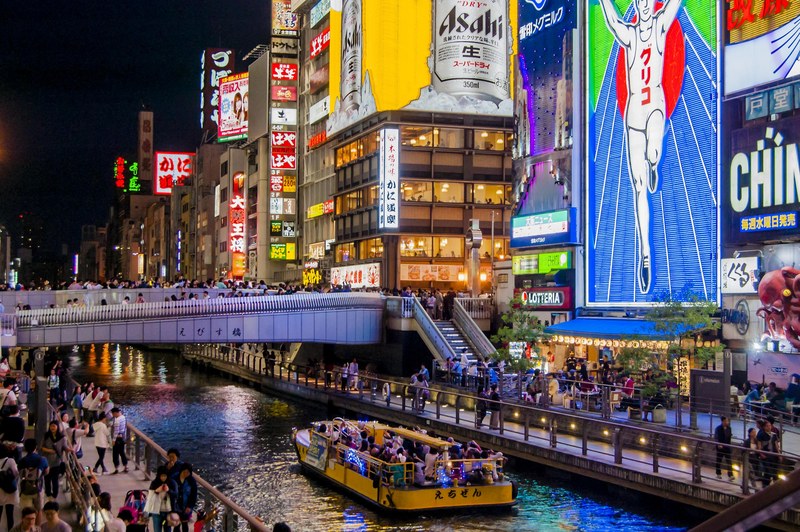
A canal-side entertainment strip lined with giant mechanical signs, neon facades, and open-front food stalls. The Glico Running Man sign has marked the Ebisu Bridge crossing since 1935. Best visited after dark when every surface glows.
Open 24/7
Day 4
1.
Nakanoshima Library
~45 min
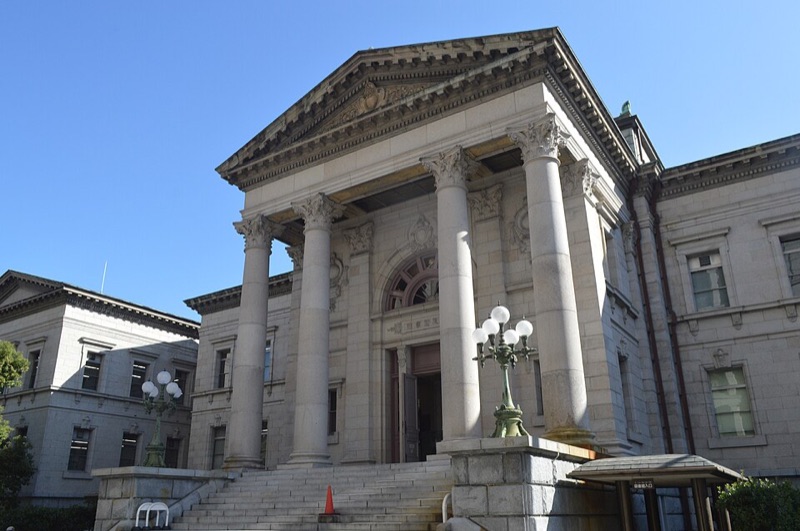
A 1904 Greco-Roman building on Nakanoshima island, one of Japan's three national historic libraries. Designated an Important Cultural Property. The symmetric facade with paired columns and central dome was designed by Noda Tokutaro. The reading room retains original carved wood shelves.
Tuesday - Friday 9:00am - 7:00pm · Saturday - Sunday 9:00am - 5:00pm
Closed Monday
12 min
2.
Osaka Central Public Hall
~45 min
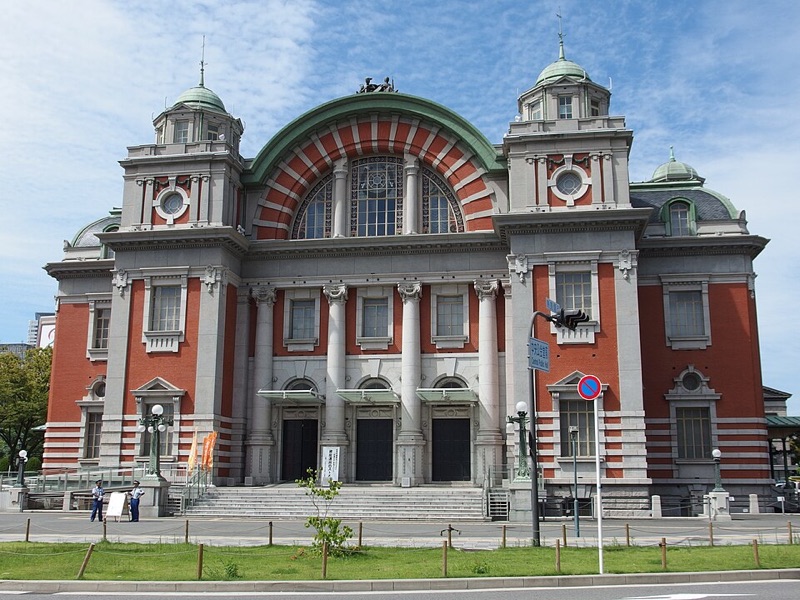
A 1918 Baroque-Renaissance civic building on Nakanoshima island, designated an Important Cultural Property. The domed central tower and red-brick exterior were designed after European civic halls; the interior has ornate assembly rooms used for concerts and exhibitions. A café-restaurant operates in the basement.
3.
Osaka Science Museum
~1 hr 30 min
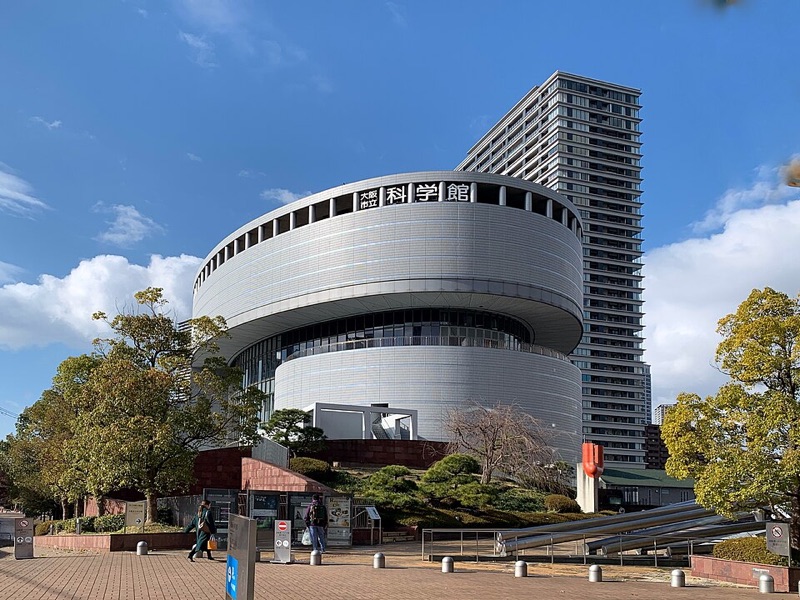
A science museum with four floors of hands-on exhibits on electricity, space, life, and chemistry — including a walk-through human heart model and a Mars surface simulator. The rooftop planetarium shows programs on a 4K dome. Located on the western tip of Nakanoshima island.
Tuesday - Sunday 9:30am - 5:00pm
Closed Monday
12 min · 5 min
4.
National Museum of Art Osaka
~1 hr 30 min
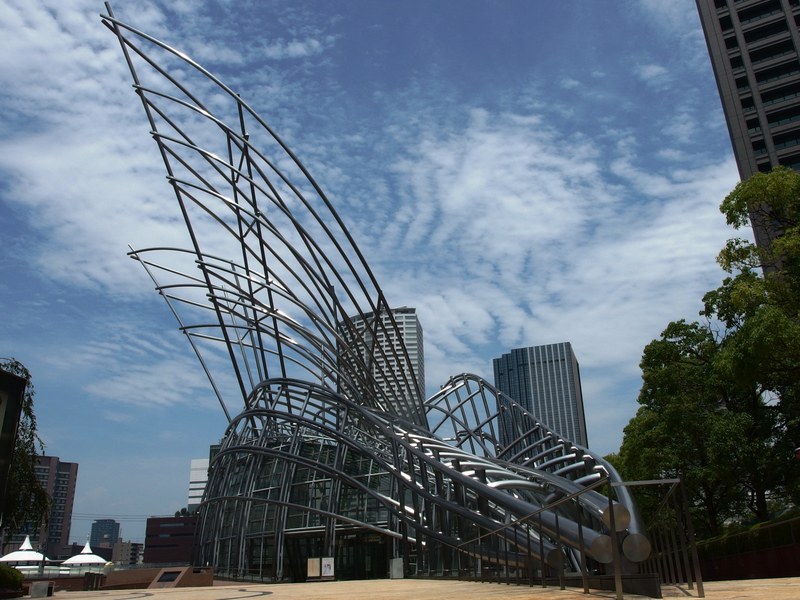
An entirely underground museum housing a 3,500-work collection of post-1945 Japanese and international art. The only above-ground element is Cesar Pelli's twin steel arch — a 43-meter sculpture that marks the entrance. The museum is one of Japan's five national museums and admission is low.
Tuesday - Sunday 10:00am - 5:00pm
Closed Monday
8 min · 4 min
Day 5
1. Tsutenkaku Tower~1 hr
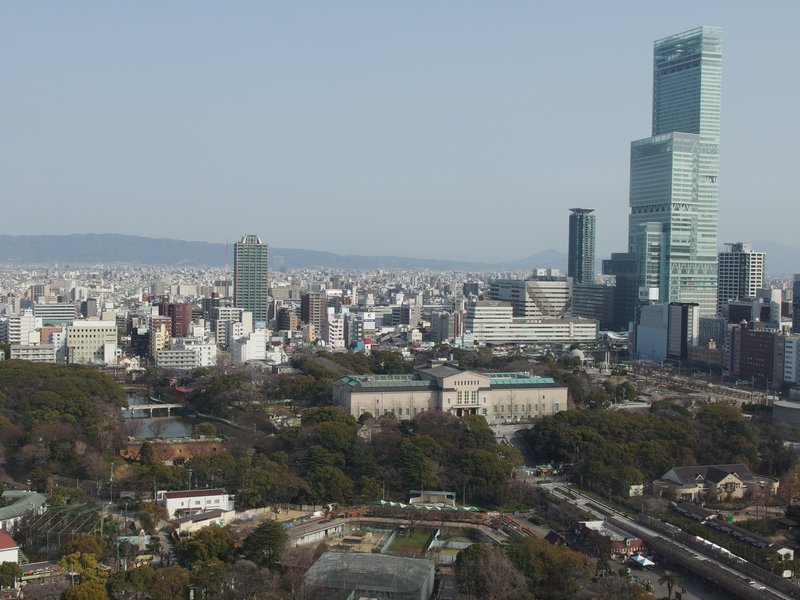
A 103-metre observation tower rebuilt in 1956 at the heart of Shinsekai, the city's retro entertainment quarter. The district around its base preserves a postwar atmosphere of kushikatsu shops and game arcades unchanged for decades.
Daily 10:00am - 8:00pm
2.
Shitenno-ji
~1 hr
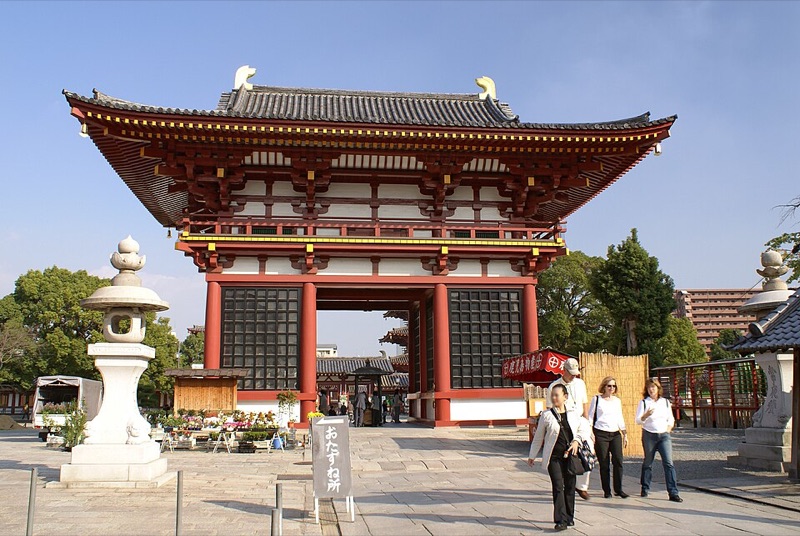
Japan's oldest officially established Buddhist temple, founded in 593 CE by Prince Shotoku. The classic Indian-style arrangement of gates, pagoda, and main hall follows a layout unchanged in form for 14 centuries. The outer precinct and the stone torii gate at the west entrance are free to enter.
3.
Osaka Museum of Natural History
~1 hr 30 min
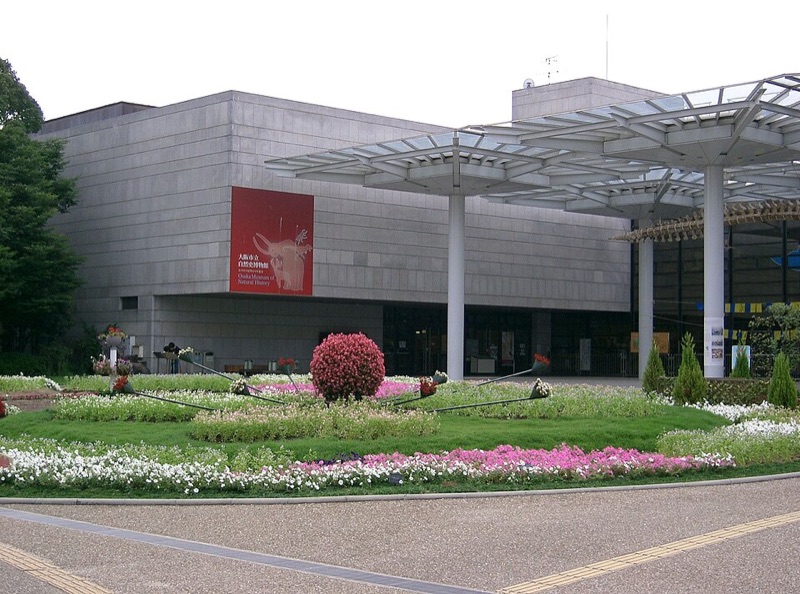
The largest natural history museum in western Japan, in Nagai Park. The collection spans Osaka's geology, local ecosystems, and a full dinosaur gallery with mounted skeletons. The permanent collection is free; a lotus pond at the entrance blooms in summer. Park walking paths wrap the building.
Tuesday - Sunday 9:30am - 5:00pm
Closed Monday
Free
22 min
4. Sumiyoshi Taisha~45 min
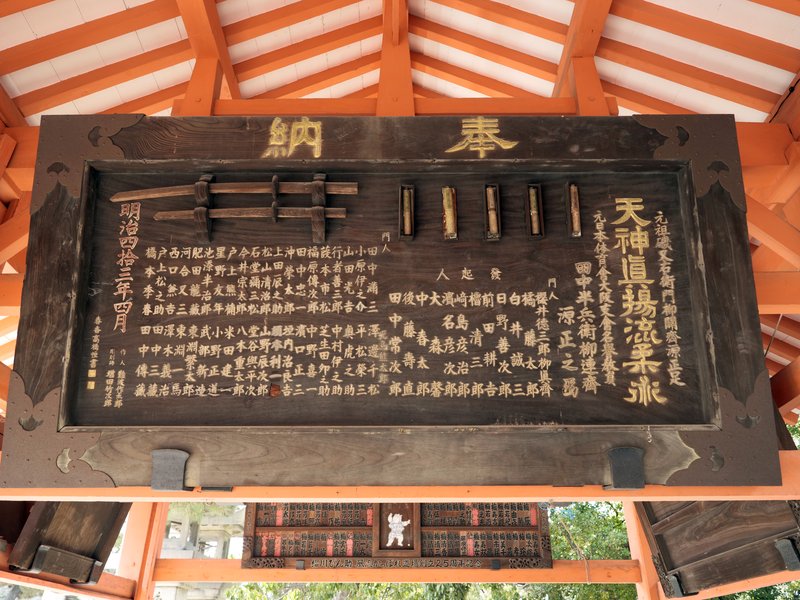
One of Japan's oldest shrines, founded in the third century before Buddhism arrived. Its four main halls use the pure Sumiyoshi-zukuri style with straight roofs free of continental influence. The steeply arched Sorihashi Bridge is the visual centrepiece.
Day 6
1.
Minō Falls
~2 hr
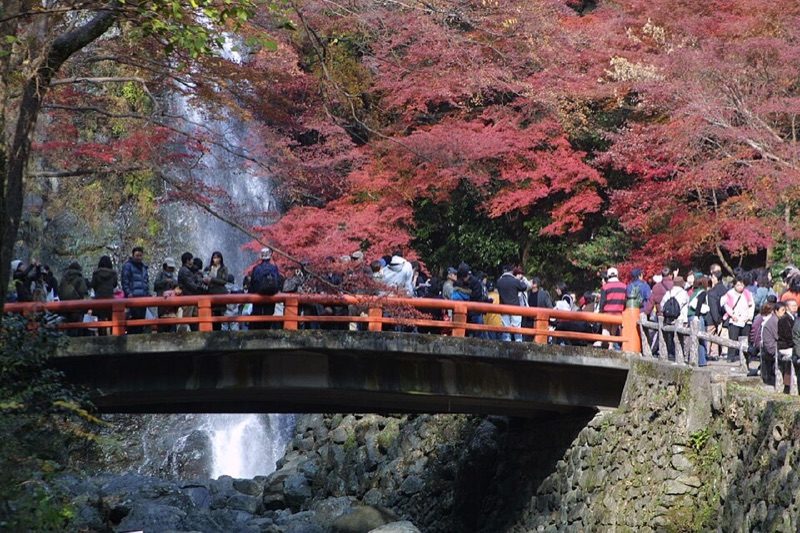
A 33-meter waterfall in Meiji no Mori Minō Quasi-National Park, reached by a 2.5 km trail from Minoo Station. The path follows a river through cedar forest, passing tea houses selling tempura maple leaves — a local specialty. The surrounding maples blaze red in autumn.
2.
Katsuo-ji
~1 hr
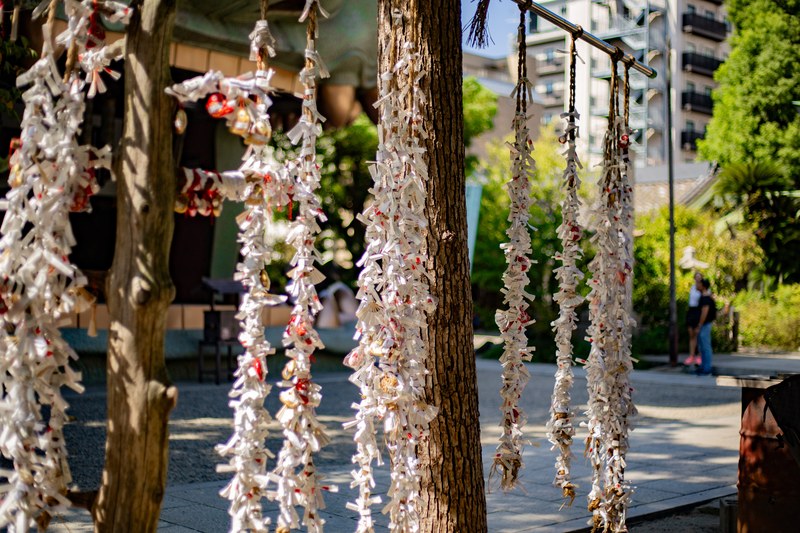
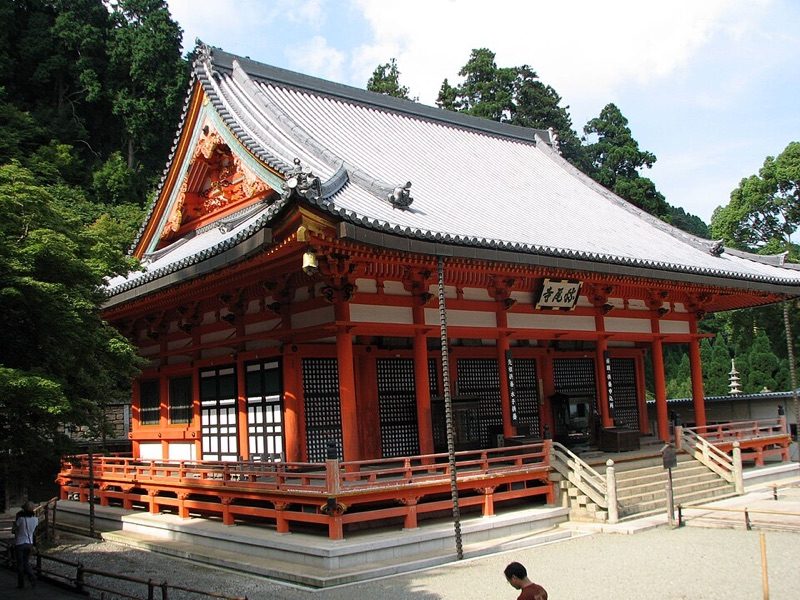
A 7th-century temple on Mount Minoo covered in thousands of red daruma dolls placed by worshippers praying for victory in sports, exams, and business. The main hall is a Muromachi-period Important Cultural Property. Mossy stone steps and forested mountain setting make it one of the region's most striking temples.
Daily 8:00am - 5:00pm
15 min
Weekly Closures
Museums & Galleries · Closed Monday & Tuesday
Tours
Viator
A three-hour evening walk through backstreet bars and food stalls with a local guide. Covers hidden izakaya and late-night street food scenes tourists rarely find on their own.
3 hr · 8
Four-hour daytime circuit covering the castle through Shinsekai to Dotonbori. A certified guide connects the historic and modern districts with local context and food stops.
4 hr · 10
A two-and-a-half-hour introduction to food culture, covering Kuromon Market through back alleys to Dotonbori. Includes tastings at local stalls along the way.
2 hr 30 min · 10
A focused two-hour walk through the kitchen of Japan, stopping at six stalls for fresh seafood, wagyu, and seasonal fruit. The guide explains vendor relationships and market history.
2 hr · 8
A four-hour walk hitting the main sights with detours through residential neighbourhoods and craft workshops. Small group with a knowledgeable local guide and included lunch.
4 hr · 8
GetYourGuide
Three-hour food journey starting in Shinsekai before crossing to Dotonbori. Visit hidden local spots for takoyaki, okonomiyaki, and kushikatsu with an English-speaking guide.
3 hr · 8
An evening street food walk through Dotonbori sampling six local dishes and two drinks. The guide shares food history and recommends additional spots.
3 hr · 10
A three-and-a-half-hour walk through Shinsekai with 15 tastings and three drinks at five authentic neighbourhood spots. Award-winning operator, maximum six guests.
3 hr 30 min · 6
A three-hour morning walk covering the castle through Tenjinbashi-suji to Umeda. Covers history, architecture, and local life with a small group.
3 hr · 10
Two hours through the Kuromon Market with six food stops and six tastings. The guide explains each ingredient's role in the local food culture.
2 hr · 8
TripAdvisor
Award-winning operator running small-group food walks through Shinsekai and Dotonbori with 15 dishes and three drinks.
3 hr 30 min · 6
Three-hour guided walk exploring street food culture with tastings of takoyaki, okonomiyaki, and gyoza at family-run stalls.
3 hr · 8
A two-and-a-half-hour tip-based tour covering the castle, Dotonbori, and local neighbourhoods. Knowledgeable English-speaking guides provide historical context.
2 hr 30 min · 20
Three-hour evening food walk through Shinsekai to Dotonbori. Visits six local eateries for regional specialties with an English-speaking guide.
3 hr · 8
A two-hour morning tour through Kuromon Market with tastings at local vendors followed by a street food walk in the surrounding alleys.
2 hr · 10
Cappuccino
Notequal Coffee · 4.9 · 848+ reviews
Monday - Friday 8:00am - 7:00pm · Saturday - Sunday 8:00am - 6:00pm
Ourlog Coffee Honmachi · 4.3 · 330+ reviews
Monday - Friday 8:30am - 11:00pm · Saturday - Sunday 10:00am - 11:00pm
The Coffee Market Lab · 4.7 · 362+ reviews
Saturday - Sunday 9:00am - 6:00pm
Monday - Tuesday 9:00am - 6:00pm
Closed Wednesday – Friday
LiLo Coffee Roasters · 4.5 · 380+ reviews
Mel Coffee Roasters · 4.6 · 1024+ reviews
Tuesday - Friday 9:00am - 7:00pm · Saturday - Sunday 11:00am - 7:00pm
Closed Monday
Restaurants Near Hotel
Sukiyaki Kushikatsu Haruna · 4.8 · 1088+ reviews
Sukiyaki and kushikatsu featuring rare Ibu Biton pork from Wakayama — course-only dinner, counter seating.
Daily 11:30am - 2:00pm · Daily 5:30pm - 11:00pm
Shinsekai Kushikatsu Ittoku Honmachi · 4.4 · 740+ reviews
Shinsekai-style deep-fried skewers — classic sauce, lantern-lit entrance, low prices.
Monday - Saturday 5:00pm - 12:00am
Closed Sunday
Gyujirou Honmachi · 4.2 · 290+ reviews
A5 Kuroge Wagyu yakiniku run by a Kansai meat wholesaler — rare cuts at non-tourist prices.
Monday - Friday 11:30am - 2:30pm · Monday - Friday 5:00pm - 10:30pm
Saturday - Sunday 11:30am - 10:30pm
Tonkatsu KATSU Hana · 4.7 · 593+ reviews
Michelin Bib Gourmand — 6-seat counter tonkatsu with Tokyo X pork, husband-and-wife kitchen. Reservations essential.
Monday 11:20am - 3:00pm · Monday 6:00pm - 10:30pm · Thursday 11:20am - 3:00pm · Thursday 6:00pm - 10:30pm
Friday 6:00pm - 10:30pm · Sunday 11:20am - 3:00pm
Closed Tuesday & Wednesday & Saturday
Jibundoki · 4.3 · 119+ reviews
Michelin Bib Gourmand — okonomiyaki counter with broth-based batter and five finishing sauces, cooked teppanyaki-style at the bar. Reservations essential.
Tuesday - Saturday 5:30pm - 12:00am
Closed Sunday & Monday
Downtown Restaurants
Mizuno Dotonbori · 4.5 · 1100+ reviews
Famous okonomiyaki restaurant with yam-based batter.
Daily 11:00am - 10:00pm
Kinryu Ramen Dotonbori · 4.2 · 580+ reviews
Chibo Dotonbori · 4.4 · 640+ reviews
Multi-floor okonomiyaki restaurant with canal views and 50+ varieties.
Daily 11:00am - 11:00pm
Dining Areas
Dotonbori
Shinsekai
Local Tastes
Takoyaki
Crisp-shelled wheat batter balls filled with diced octopus, pickled ginger, and green onion. Invented in 1935. Finished with thick sauce, mayonnaise, bonito flakes, and seaweed.
Okonomiyaki
A savoury cabbage pancake griddled with pork, egg, and a yam-enriched batter. The local style mixes all ingredients before cooking, unlike Hiroshima's layered method. Each table has its own teppan griddle.
Kushikatsu
Deep-fried skewers of meat, seafood, and vegetables coated in panko and dipped once in a communal sauce. Double-dipping is famously forbidden. Shinsekai is the original heartland.
Kitsune Udon
Thick wheat noodles in light dashi broth topped with a large slab of sweetened fried tofu. Created in the 1890s at Usami Tei Matsubaya, the city's oldest surviving udon shop.
Food Delivery
Uber Eats
Foreign number: accepted — the SMS verification code arrives on most international numbers.
Uber Eats covers central Osaka well, with strong restaurant selection around Namba and Shinsaibashi and reliable delivery times across Chuo-ku and Kita-ku.
Demae-can
Foreign number: not accepted — a Japanese phone number is required to receive the SMS verification code.
Japan's most established delivery platform with wider local restaurant selection than Uber Eats, particularly strong for izakayas, bento shops and convenience-style hot food.
Shows, Performances & Concerts
1. National Bunraku Theatre
Japan's premier venue for bunraku puppet theatre, a UNESCO Intangible Heritage art. Performances run in January, April, June, July, August, and November.
2. Shochikuza Theatre
A theatre hosting kabuki and modern drama productions since 1923. The ornate Western-style facade is a registered cultural property.
Getting Around
GO
Foreign number: accepted — the app registers with an international number and the SMS code arrives without issue.
Japan's most widely used ride-hailing service, operated by domestic taxi companies; accepts credit cards and covers Osaka city thoroughly with generally shorter wait times than traditional street taxis.
Train Stations Near Hotel
1. Namba Station · JR & Metro
JR Yamatoji Line → Tennoji · Nara · Midosuji Line → Umeda · Tennoji · Sennichimae Line → Nippombashi.
2. Nankai Namba Station
Nankai Main Line → Sakai · Kansai Airport · Koya Line → Koyasan.
Day Trips by Train
Kyoto · 15 min
Shinkansen or 30 min JR Special Rapid. Ancient capital with 2,000 temples, bamboo groves, geisha districts, and imperial palaces across 17 UNESCO World Heritage Sites.
book at: Omio
Kobe · 20 min
JR Special Rapid. Compact port city known for wagyu beef, Chinatown, sake breweries in Nada, and the Nunobiki Herb Garden ropeway overlooking the harbour.
book at: Omio
Nara · 45 min
JR Yamatoji Line direct. Japan's first permanent capital with free-roaming deer, the colossal bronze Buddha at Todai-ji, and 1,300-year-old Kasuga Taisha shrines in a forested park.
book at: Omio
Michelin Restaurants
Kashiwaya
Hajime
French-Japanese innovation with multi-course tasting menu.
Taian
Creative kaiseki blending seasonal ingredients with modern technique.
Worth Knowing
The city's identity is built on street food in a way no other Japanese city matches. Dotonbori and Shinsekai offer the purest version of kuidaore — eating yourself bankrupt — the local philosophy of prioritizing food over appearances. The combination of accessible shrines, castle history, modern observation points, and a food culture dense enough to fill three days makes this one of the most rewarding short trips in East Asia.
Also on this site