TRIP OVERVIEW
Day 1 – Lugdunum · Fourvière Basilica · Vieux Lyon Traboules · Cathédrale Saint-Jean
Day 2 – Musée des Confluences · Musée des Beaux-Arts · Maison des Canuts
Day 3 – Place des Terreaux · Place Bellecour · Musée Miniature et Cinéma · Institut Lumière
Day 4 – Musée Gadagne · Amphithéâtre des Trois Gaules · Parc de la Tête d'Or · Musée d'Art Contemporain de Lyon
Day 1
1.
Lugdunum
~1 hr 30 min
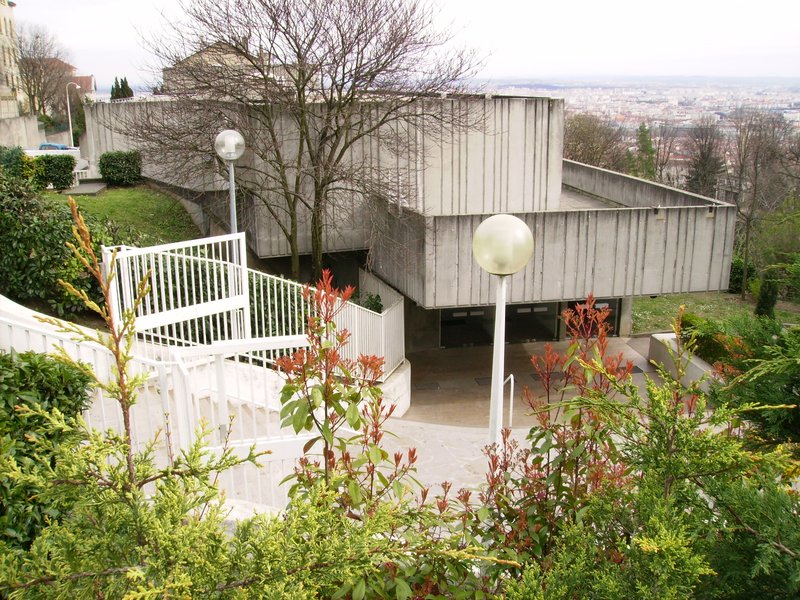
The only museum dedicated to Roman Lyon, built into the hillside below the ancient theatre. The capital of Gaul under Augustus, Lyon was birthplace of emperors Claudius and Caracalla. Covers 500 years through sculpture, mosaics, daily objects, and the world's largest collection of Gallo-Roman inscriptions.
Tuesday - Friday 11:00am - 6:00pm · Saturday - Sunday 10:00am - 6:00pm
Closed Monday
2.
Fourvière Basilica
~1 hr
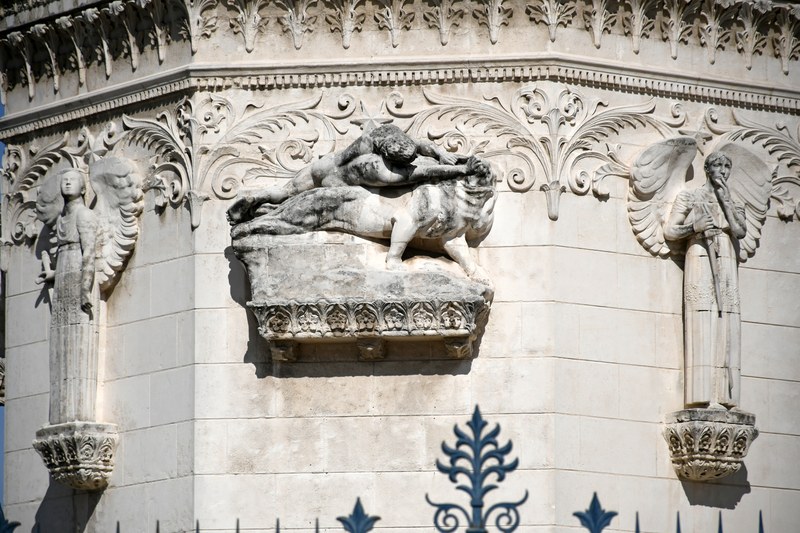
The basilica defining Lyon's skyline — neo-Byzantine, built 1872–1896 as a votive offering after the Franco-Prussian War. The interior glitters with 5,000 sq metres of mosaics. The esplanade commands the finest panorama in the city: all of Lyon stretching south along the Saône and Rhône.
3.
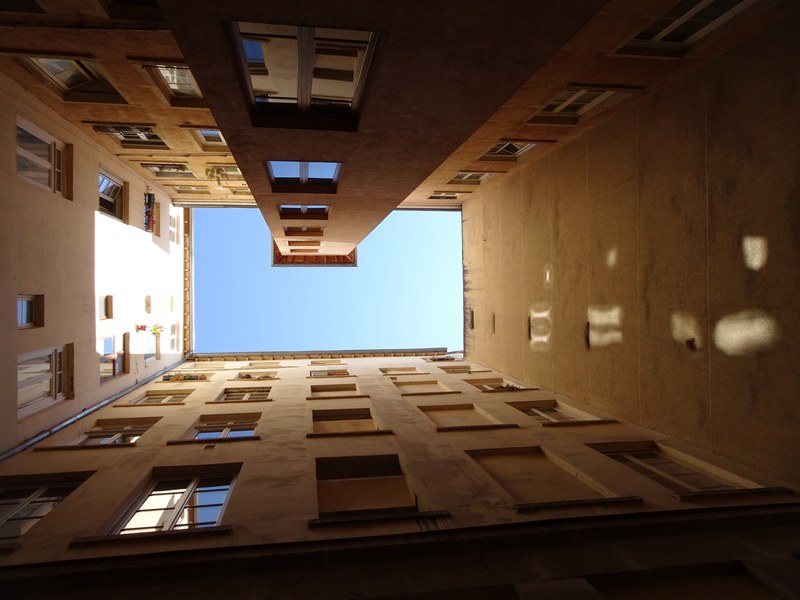
Vieux Lyon Traboules
~1 hr
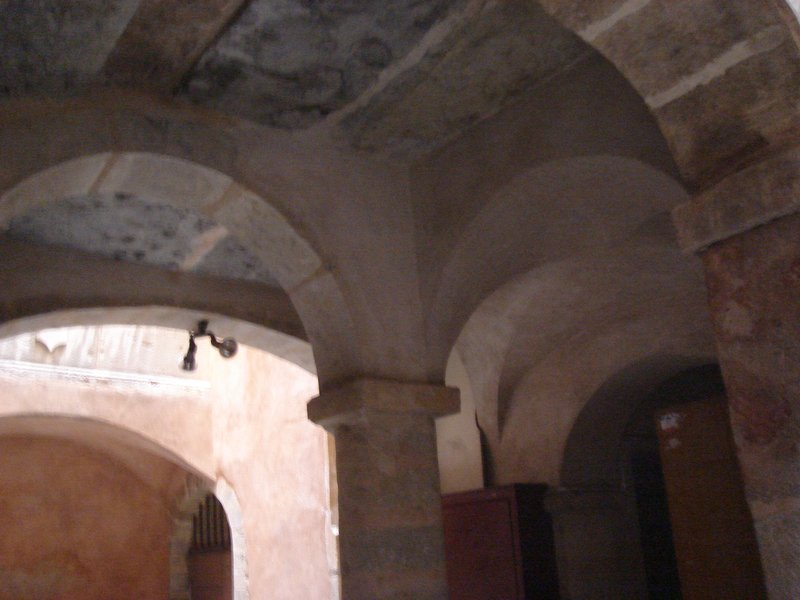
Secret passageways threading through Renaissance courtyards connecting parallel streets. Built by silk merchants to carry silk away from rain, later used by the French Resistance to move unseen. The largest Renaissance urban district north of the Alps — no other city has this scale of traboule network.
Daily 7:00am - 7:00pm
Free
Most traboules are in private residential buildings — look for blue plaques marking public-access entries; ring the buzzer and push the door.
Enclosed space
4.
Cathédrale Saint-Jean
~45 min
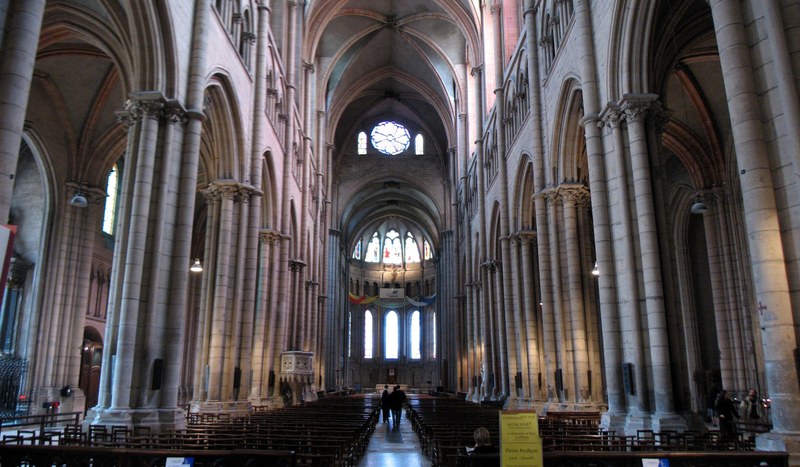
Lyon's Gothic cathedral, built 1180–1480. The facade holds 280 carved medallions; the interior features a 14th-century astronomical clock that still chimes with moving figures. Consecrated by Pope John XXII in 1316, it anchors the old quarter and marks the start of the main traboule routes.
Monday 2:00pm - 7:00pm · Tuesday - Friday 8:30am - 7:00pm · Saturday 8:30am - 7:30pm · Sunday 8:00am - 7:30pm
Free
Day 2
1.
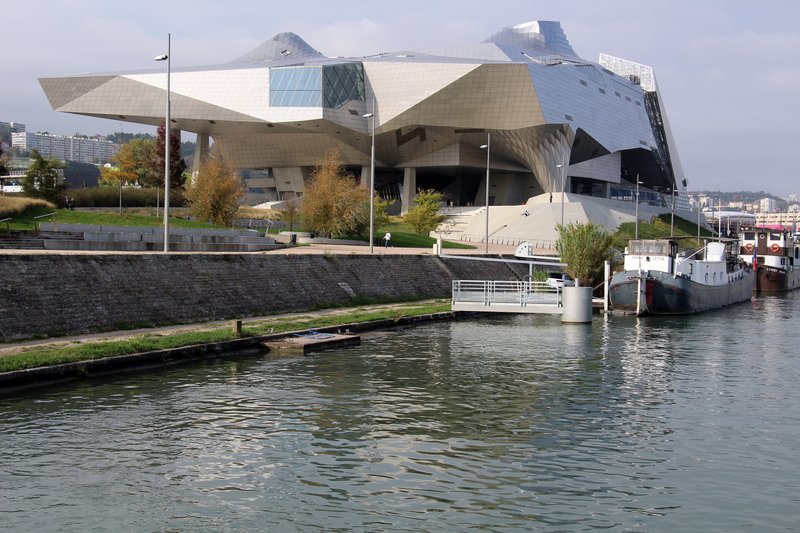
Musée des Confluences
~2 hr
Lyon's most visited museum at the tip of the Presqu'île, where the Saône meets the Rhône. A spectacular deconstructivist building covering natural history, anthropology, cosmology, and civilisation across all continents — fossils, Egyptian mummies, contemporary ethnography. Worth visiting for the building alone.
Tuesday - Sunday 10:30am - 6:30pm
Closed Monday
2.
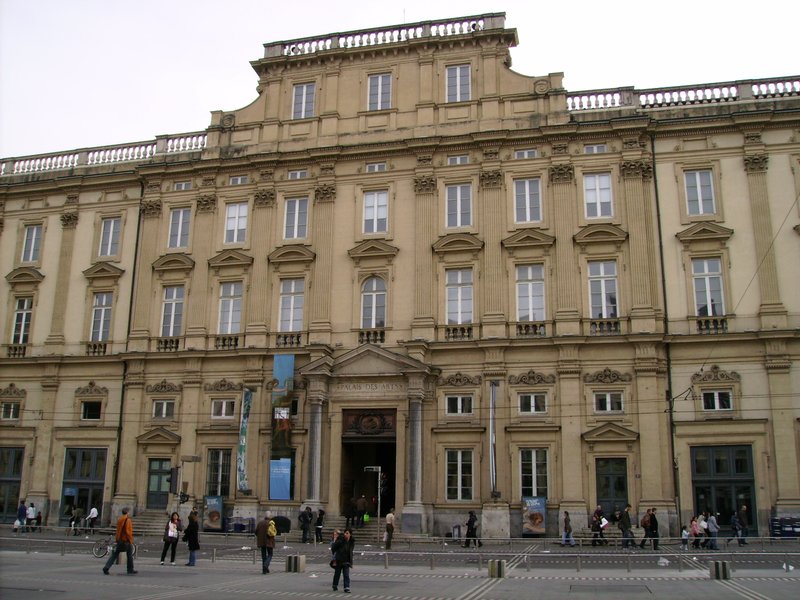
Musée des Beaux-Arts
~2 hr
One of France's greatest art museums outside Paris, housed in a former Benedictine abbey on Place des Terreaux. Spans 5,000 years from ancient Egypt through Impressionism — Monet, Renoir, Gauguin, Matisse. The permanent collection fills 70 rooms; the serene cloister courtyard is one of Lyon's finest spaces.
Wednesday - Thursday 10:00am - 6:00pm · Friday 10:30am - 6:00pm · Saturday - Monday 10:00am - 6:00pm
Closed Tuesday
3.
Maison des Canuts
~1 hr
The last working silk house in Lyon — guided tours demonstrate 19th-century Jacquard looms showing how Lyon's famous silk was produced. The 1831 canut uprising was one of the first workers' revolts in European history. The only place in the city where the full silk-weaving process can be watched live.
Tuesday - Friday 10:00am - 1:00pm · 2:00pm - 6:00pm · Saturday 10:00am - 6:00pm
Closed Sunday & Monday
Entry by guided tour only — tours run throughout the day.
Day 3
1.
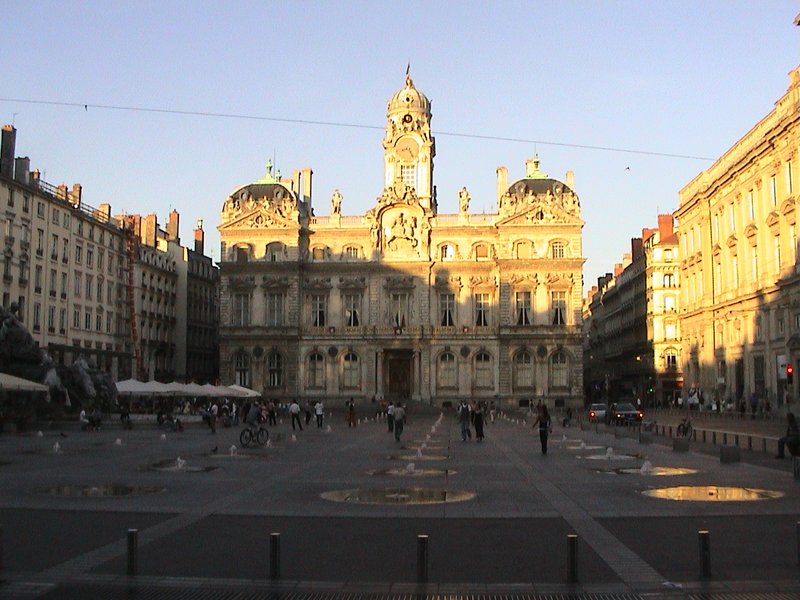
Place des Terreaux
~30 min
Lyon's great civic square, dominated by the 17th-century Hôtel de Ville and the monumental Bartholdi fountain — four rearing horses pulling a chariot of France, cast in 1892. Beneath the square, 69 water jets are set flush in the paving, illuminated after dark as part of Daniel Buren's 1994 redesign.
Open 24/7
2.
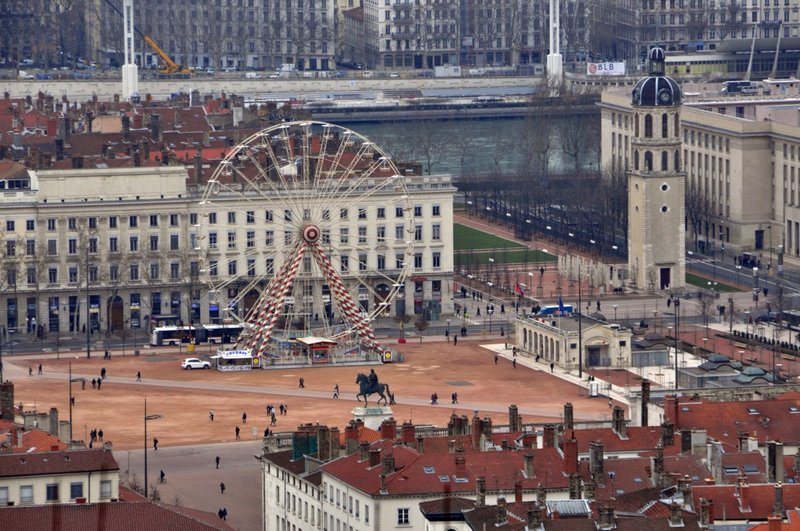
Place Bellecour
~30 min
The great open square at the heart of Lyon's Presqu'île — 312 m by 200 m, one of Europe's largest pedestrian plazas. At its centre stands an equestrian statue of Louis XIV, commissioned by the king himself in 1686.
Open 24/7
3.
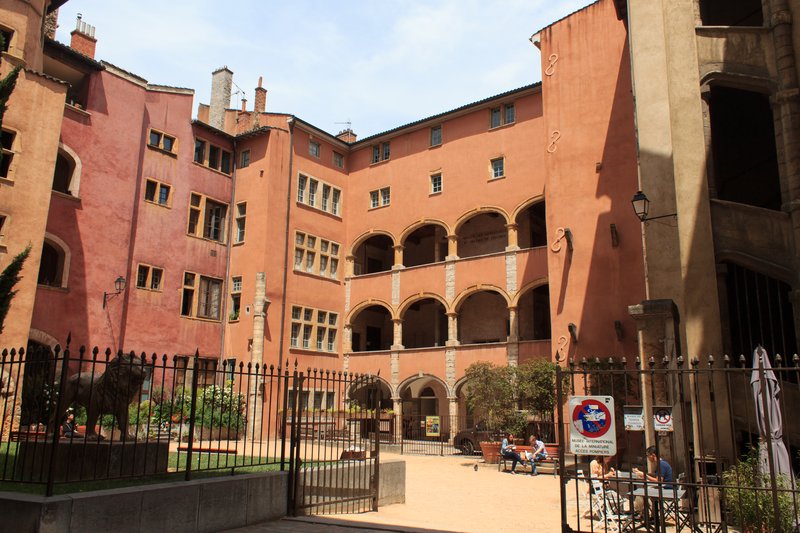
Musée Miniature et Cinéma
~1 hr 30 min
Hyperrealistic miniature room sets — each built to extraordinary detail by a single artist — alongside original film props from Alien, Indiana Jones, and Jurassic Park, housed in a 16th-century Renaissance mansion in Vieux Lyon.
Monday - Friday 10:00am - 6:30pm · Saturday - Sunday 10:00am - 7:00pm
4.
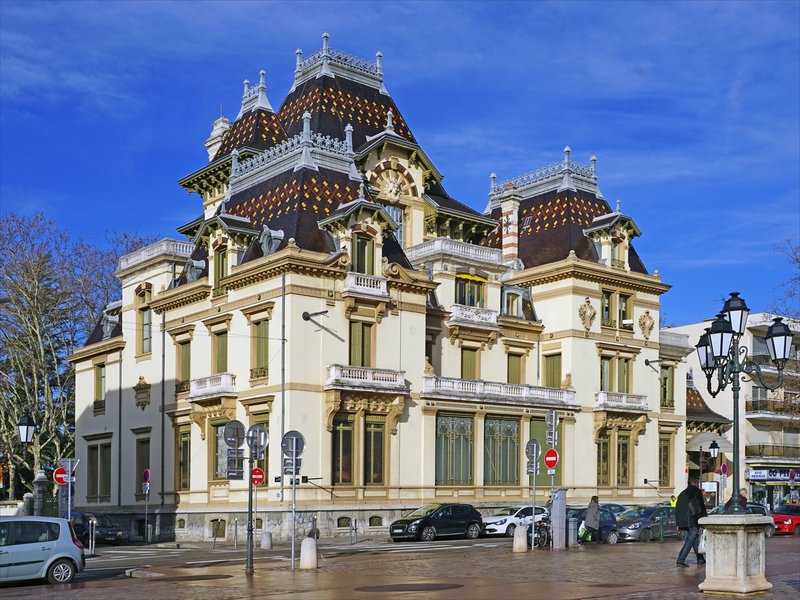
Institut Lumière
~1 hr 30 min
The Lumière family villa where cinema was born on 28 December 1895. The Belle Époque house and gardens are preserved as a museum covering the Cinématographe, early colour photography, and the Lumières' scientific legacy. The original hangar still stands.
Tuesday - Sunday 10:00am - 6:30pm
Closed Monday
Day 4
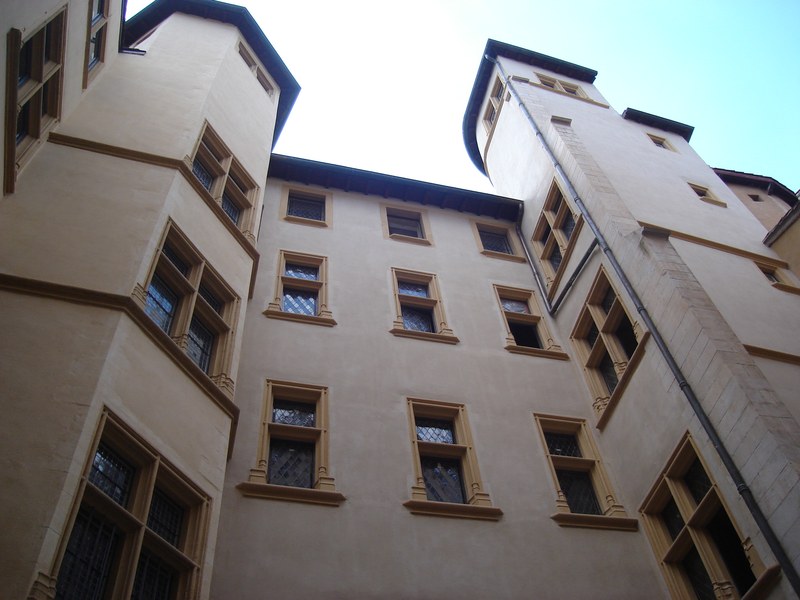
1. Musée Gadagne~1 hr 30 min
A 16th-century Renaissance mansion in Vieux Lyon housing two museums: the Musée d'Histoire de Lyon, tracing the city from Gallo-Roman times through the silk-weaving era, and the Musée des Marionnettes du Monde — the world's most important puppet collection, including original Guignol figures created in Lyon in 1808.
Wednesday - Sunday 10:30am - 6:00pm
Closed Monday & Tuesday
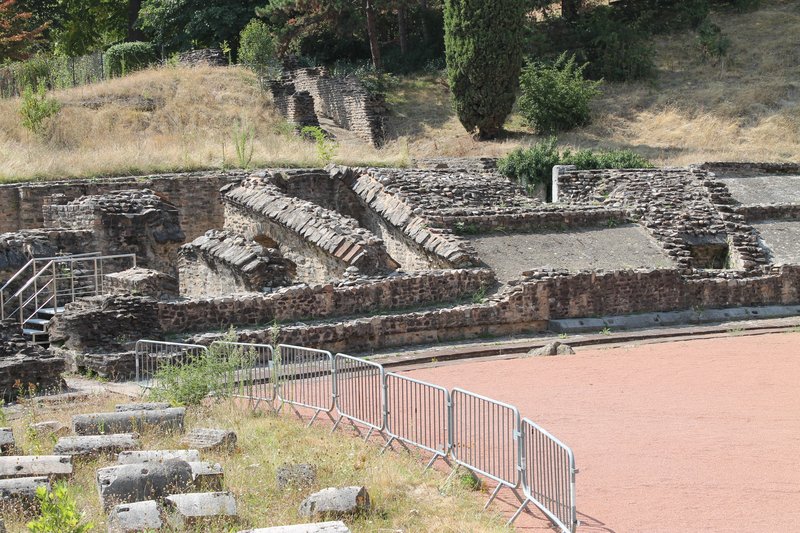
2. Amphithéâtre des Trois Gaules~45 min
Built in 19 CE, this is the oldest Roman amphitheater in Gaul outside Italy — constructed to host the annual assembly of the three Gallic provinces at the confluence of the Saône and Rhône. The partially excavated ruin sits in the Croix-Rousse hillside, its curved seating banks still visible against the slope.
Open 24/7
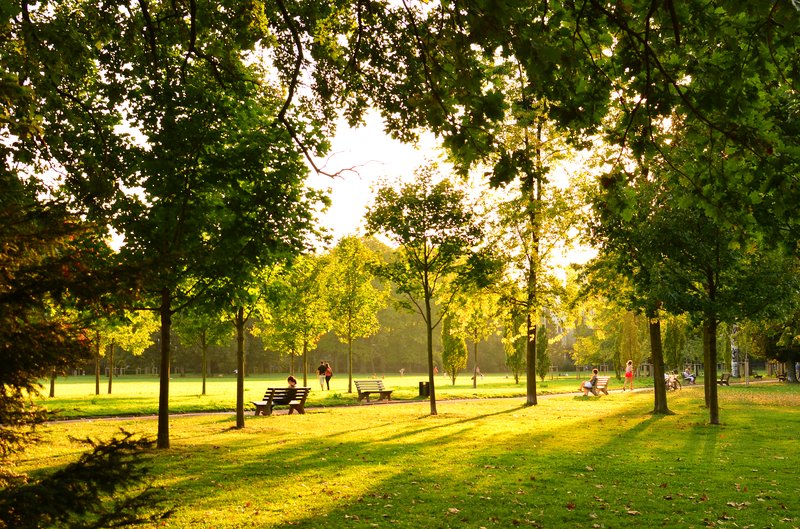
3. Parc de la Tête d'Or~2 hr
The largest urban park in France at 117 hectares, laid out in 1856 by the Bühler brothers along the Rhône in the 6th arrondissement. The park contains a free zoological garden, a large lake with rowing boats, rose gardens with over 16,000 plants, and botanical greenhouses — Lyon's defining open-air space.
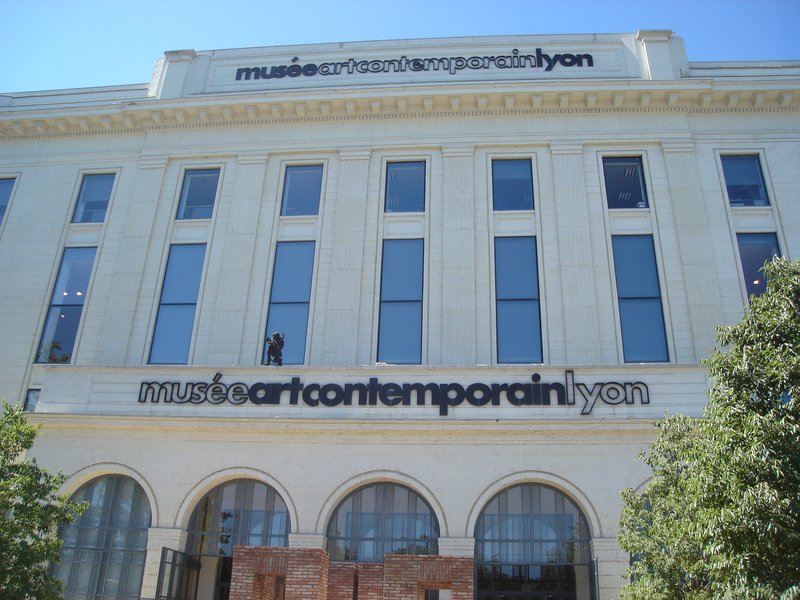
4. Musée d'Art Contemporain de Lyon~1 hr 30 min
Renzo Piano's Cité Internationale complex on the Rhône quay, directly at Parc de la Tête d'Or. The MAC holds no permanent collection — the entire building reorganises around each temporary exhibition, making every visit a different architectural experience.
Wednesday - Sunday 11:00am - 6:00pm
Closed Monday & Tuesday
Weekly Closures
History & Science Museums · Closed Monday
Fine Arts Museums · Closed Tuesday
Tours
Viator
The top-rated tour in Lyon — a small-group walk through Fourvière, Vieux Lyon, and the traboule network with a funicular ride included. Covers 3,000 years of history from Roman amphitheatres to Renaissance silk merchants.
3 hr · Small group
A 2-hour English-language walking tour covering Lyon's essential sites and lesser-known corners — traboules, Roman hilltop, Renaissance courtyards, the Presqu'île riverfront, and the Croix-Rousse textile heritage.
2 hr · Small group
A 1-hour river cruise along the Saône past the Vieux Lyon quays, Île Barbe, and the old Roman hillside — the best angle on the city's riverside architecture.
1 hr · Open boarding
GetYourGuide
A 2-hour small-group walking tour covering Fourvière Basilica, the Roman amphitheatres, Vieux Lyon, the traboules, Place Bellecour, and the Hôtel-Dieu on the Rhône quay.
2 hr · Max 18
A 1-hour guided sightseeing boat cruise along the Saône and Rhône rivers, passing Vieux Lyon, the Presqu'île, and the Hôtel-Dieu quay — an easy way to see Lyon's UNESCO-listed riverfront from the water.
1 hr · Open boarding
A full-day shared minivan tour combining Beaujolais vineyard visits and wine tastings in the morning with an afternoon walk through the perfectly preserved medieval village of Pérouges, 35 km northeast of Lyon.
8 hr · Small group
↔
Full-day shared tour stopping first at the cobbled medieval citadel of Pérouges, then continuing to Annecy — the old town canals, the château, and the turquoise Alpine lake — before returning to Lyon.
10 hr · Small group
↔
Cappuccino
Slake Jacobins · 4.6 · 204+ reviews
Les Cafetiers · 4.5 · 63+ reviews
Monday - Friday 9:00am - 7:00pm · Saturday 10:00am - 6:00pm · Sunday 10:00am - 5:00pm
Slake Terreaux · 4.5 · 43+ reviews
Loutsa St Nizier · 4.6 · 229+ reviews
Monday - Saturday 8:30am - 7:00pm · Sunday 8:30am - 5:30pm
Restaurants Near Hotel
Epona · 4.3 · 80+ reviews
Bouchon classics with a lighter hand — in the hotel, directly on the Rhône quay.
Daily 12:00pm - 2:00pm · Daily 7:00pm - 9:30pm
Monsieur P · 4.7 · 21+ reviews
Modern French tasting menu — precise technique, excellent value at lunch.
Monday - Friday 12:00pm - 2:00pm · Monday - Friday 8:00pm - 9:30pm
Closed Saturday & Sunday
La Mère Jean · 4.4 · 500+ reviews
Classic bouchon since 1924 — quenelles, andouillette, praline tart.
Monday - Saturday 12:00pm - 2:00pm · Monday - Saturday 7:00pm - 10:00pm
Closed Sunday
PEPPE Pizzeria · 4.4 · 1000+ reviews
Neapolitan pizza with 72-hour dough and Italian imports.
Daily 12:00pm - 2:30pm · Daily 7:00pm - 11:00pm
Downtown Restaurants
Café des Fédérations · 4.2 · 2000+ reviews
Lyon's most famous bouchon — 120 years · vaulted cellar · Beaujolais pitchers.
Monday - Saturday 12:00pm - 2:00pm · Monday - Saturday 8:00pm - 9:30pm · Sunday 12:00pm - 2:00pm
Bouchon Les Lyonnais · 4.1 · 50+ reviews
Certified authentic bouchon — handwritten menu, all Lyonnais classics.
Monday - Friday 12:00pm - 2:15pm · Monday - Friday 7:00pm - 10:30pm · Saturday 12:00pm - 11:00pm · Sunday 12:00pm - 9:00pm
Daniel et Denise · 4.4 · 500+ reviews
Bib Gourmand bouchon by Joseph Viola — celebrated quenelle de brochet.
Tuesday - Saturday 12:00pm - 2:00pm · Tuesday - Saturday 7:00pm - 10:00pm
Closed Sunday & Monday
Dining Areas
Croix-Rousse
Local Tastes
Quenelle de brochet
Lyon's signature dish — a light, airy pike-fish dumpling with Nantua sauce. Between soufflé and mousse; no other city eats these. Every bouchon serves them; Daniel et Denise makes the most celebrated version.
Rosette de Lyon
Lyon's icon of charcuterie — a large dry-cured pork sausage in a natural pork bladder casing, aged for months until dense and deeply flavoured. Served sliced thin on charcuterie boards in every bouchon.
Cervelle de canut
The silkworkers' fresh cheese — fromage blanc beaten with cream, shallots, garlic, chives, and herbs. The name was a mock-insult aimed at the canuts; the dish outlasted it and appears on every bouchon menu as starter or dessert.
Tarte aux pralines roses
A vivid pink tart filled with molten caramel of crushed sugar-coated almonds — the colour is entirely natural from the almond coating. Sweet, crunchy, and unique to Lyon. Found in every boulangerie.
Bugne lyonnaise
Deep-fried strips of sweet enriched dough dusted with powdered sugar — Lyon's version of a fried dough pastry, traditionally eaten at Mardi Gras but available year-round. Crisp at the edges, chewy at the centre.
Food Delivery
Uber Eats
Foreign number: accepted — the verification SMS works for most international numbers.
Uses the same Uber account and number as the ride app. Good coverage across the Presqu'île, Vieux-Lyon and Part-Dieu with a wide selection of local bouchons and modern restaurants; one of the most reliable platforms in the city.
Deliveroo
Foreign number: not required — sign-up uses Google, Apple, Facebook or email with no phone verification step.
Sign-up runs on Google, Apple, Facebook or email with no phone field at all, so no verification code has to arrive. Strong coverage of central Lyon with a particularly good selection of independent Lyonnaise restaurants and bistrots; the bouchons around Vieux Lyon are better represented here than on any other app.
Just Eat
Foreign number: not required — account created with Google, Facebook or email; no phone field during sign-up.
The account is made with Google, Facebook or an email address — there is no phone field, so no code has to arrive. A useful alternative to the other two platforms with solid coverage of the Perrache and Guillotière areas; tends to list restaurants at the lower price point not always found on Uber Eats.
Shows, Performances & Concerts
Opéra National de Lyon
Opera, ballet and orchestral concerts in one of France's top opera houses — Jean Nouvel's 1993 glass vault over an 1831 neoclassical shell.
Getting Around
Uber
Foreign number: accepted — the verification SMS reaches most international numbers.
Reliable coverage across Lyon with generally short wait times in the Presqu'île and Part-Dieu areas; a good option for late-night journeys when the metro stops running.
Bolt
Foreign number: accepted — the verification SMS reaches most international numbers.
Active in Lyon with competitive fares; useful as a secondary option when Uber has surge pricing, particularly during major events at the stadium or Confluence.
Train Stations Near Hotel
Lyon Perrache
TER regional trains → Annecy · Grenoble · Chambéry · Mâcon. Also intercity services southbound to Marseille and Avignon.
Lyon Part-Dieu
TGV → Paris 2 hrs · Marseille 1 hr 40 min · Bordeaux 3 hrs 10 min · Brussels 3 hrs 30 min. Main hub for long-distance travel.
Day Trips by Train
Grenoble · 1 hr 30 min
The capital of the French Alps — surrounded on three sides by mountain ranges, with a cable car ascending to the 18th-century Bastille fortress above the city. The Musée de Grenoble is one of the finest modern art museums in France.
book at: SNCF Connect or Omio
Beaune · 1 hr 40 min
The wine capital of Burgundy — a compact medieval walled city built around the Hôtel-Dieu, surrounded by the greatest Pinot Noir vineyards in the world. The Marché aux Vins lets you taste across multiple appellations in one building.
book at: SNCF Connect or Omio
Geneva · Switzerland · 1 hr 55 min
Lakeside Swiss city at the foot of the Alps — the jet d'eau fountain on Lake Geneva, the Palais des Nations, old town with Saint-Pierre Cathedral, and the Carouge quarter. Direct TGV with frequent departures via Lyon Part-Dieu station.
book at: SNCF Connect or Omio
Annecy · 2 hrs
A medieval lakeside city ringed by the Alps — the lake water is the clearest in Europe, the old town is built along canals, and the Château d'Annecy dates to the 11th century. Best of the Alpine day trips.
book at: SNCF Connect or Omio
Dijon · 2 hrs
The capital of Burgundy and of mustard — a preserved medieval city with the Palais des Ducs de Bourgogne, a covered market full of regional cheeses and wines, and the starting point for the Route des Grands Crus wine road.
book at: SNCF Connect or Omio
Michelin Restaurants
La Mère Brazier
The restaurant that defined Lyonnais haute cuisine — 6 Michelin stars · 1921.
Takao Takano
Japanese-born chef — most technically refined food in Lyon · singular two-star.
Prairial
Market-driven one-star in Presqu'île — plant-forward menu · superb value lunch.
Christian Têtedoie
One-star on Fourvière hillside — panoramic city views · contemporary French.
Miraflores
Peruvian-French fusion one-star in the 6th — most unexpected restaurant in Lyon.
Not shown: 0 · 0 · 10+ more in the city.
Heads Up
TCL Tickets — Validate on Every Ride
Validate each ride and transfer, except between metro lines. Keep your ticket until you exit; non-validation can mean a fine.
Hiking
La Croix Vitaise Loop · Easy
A short climb through the Monts d'Or hills to a viewpoint over the Saône.
2.8 mi loop · 660 ft ascent
1 hr 15 min
Mont La Roche · Mont Thou · Mont Cindre · Moderate
A ridge traverse over three summits in the wooded hills north of Lyon.
6.3 mi loop · 1,315 ft ascent
3 hr
Worth Knowing
A Note on Lyon
Lyon rewards those who resist the obvious. The city's greatest pleasures are hidden inside it — through the blue plaque, behind the buzzer, down the corridor that connects rue Saint-Jean to nowhere in particular. The traboules were built to keep silk dry; they ended up keeping an entire city's soul intact.
Plan for two good meals a day, not one spectacular one. The bouchon at lunch — carafe of Beaujolais, quenelle in Nantua sauce, praline tart — is an institution that no amount of fine dining can replace. Save the starred restaurants for dinner and let the afternoon belong to the museum you weren't expecting to love.
Also on this site
Nearby Guides