From Hotel: 30 min · 10 min → Oceanographic Museum of Monaco
1.Oceanographic Museum of Monaco~2 hr
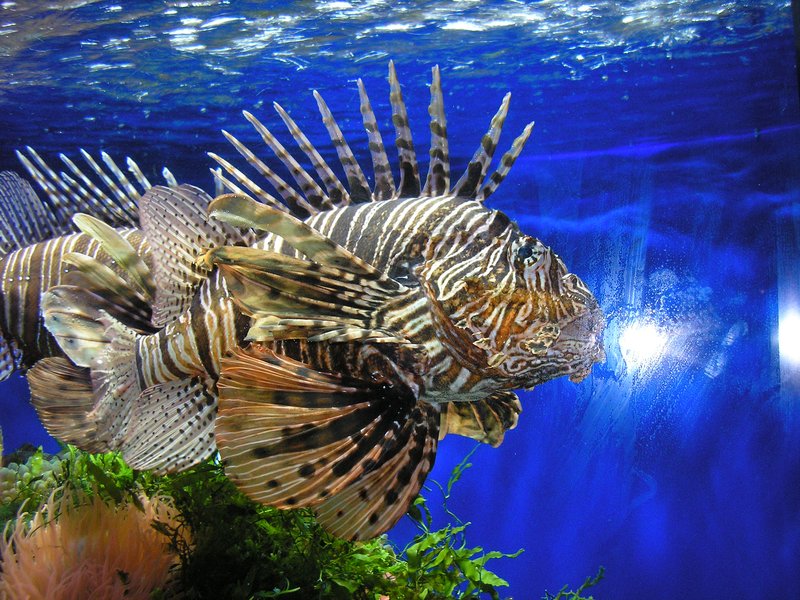
Founded by Prince Albert I and once directed by Jacques Cousteau, this monumental museum rises straight from a sheer cliff above the sea. Its aquarium holds a living coral reef and sharks in a 400,000-litre lagoon, above galleries of whale skeletons and the Prince's deep-sea instruments.
Monaco's oldest public garden, laid out in the early 19th century along the southern cliff of the Rock. Shaded paths wind past Aleppo pines, agaves, and a bronze statue of Prince Albert I, opening onto wide views over the Mediterranean and the Oceanographic Museum just beyond.
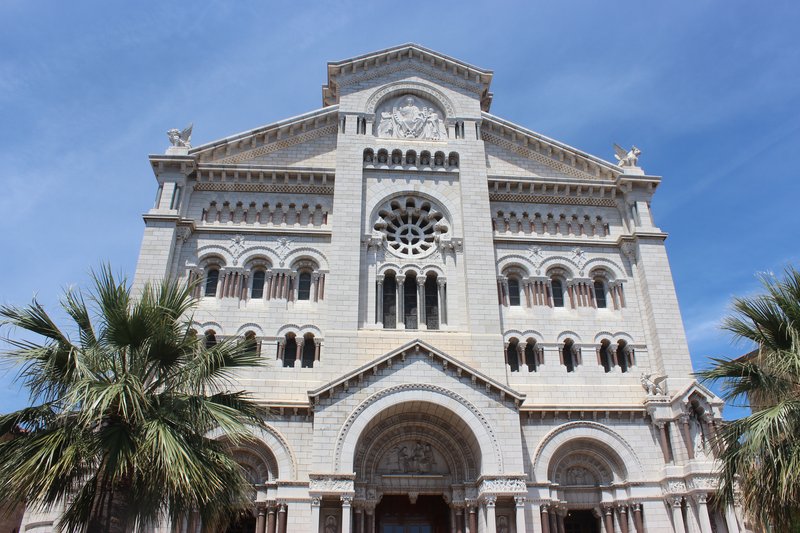
Monaco's neo-Romanesque cathedral, raised in the 1870s from white La Turbie stone on the site of a 13th-century church. Princess Grace and Prince Rainier III married here in the 1950s and both rest in the choir beside earlier Grimaldi princes. A Ludovico Brea altarpiece hangs in the ambulatory.
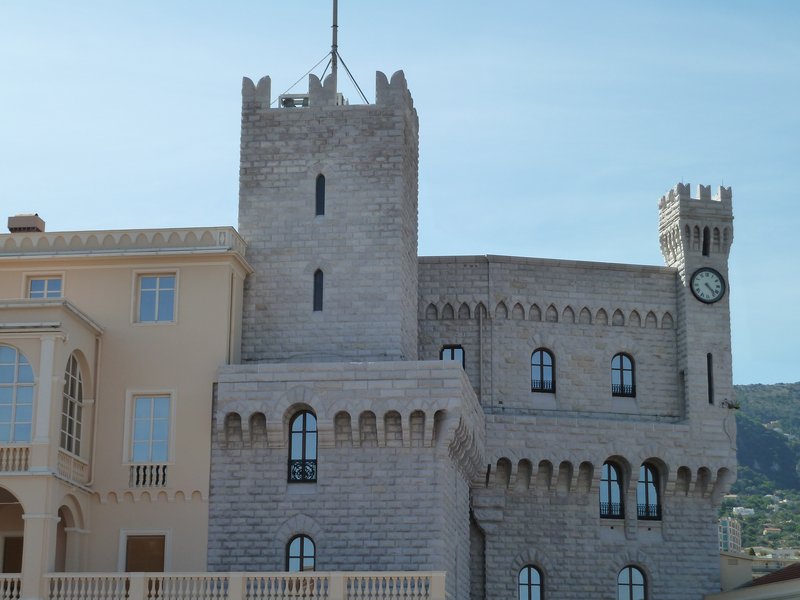
Built on a 12th-century Genoese fortress, this clifftop palace has been the Grimaldi seat since the 13th century and is still Prince Albert II's official residence. The frescoed State Apartments, Throne Room, and horseshoe courtyard open to visitors in season; the changing of the guard runs daily at 11:55am.
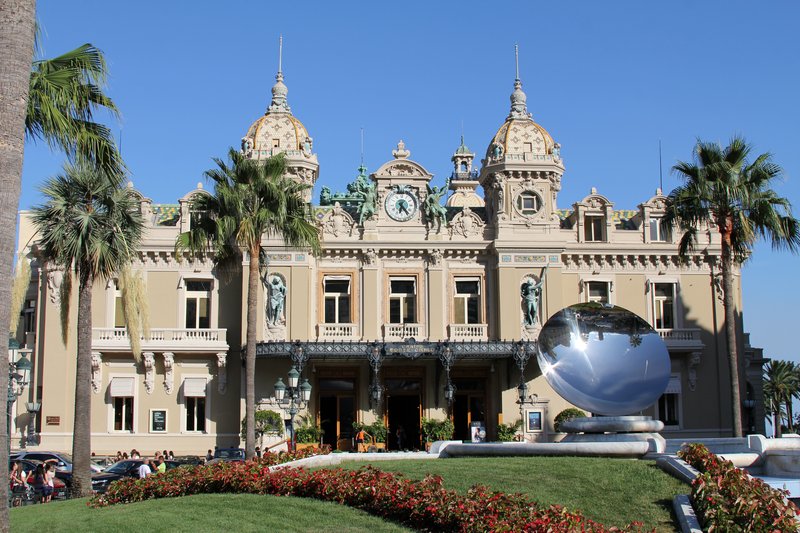
The gilded heart of Monte-Carlo, framed by Charles Garnier's casino and opera house, the Hôtel de Paris, and the Café de Paris. The marble Atrium is free to step into, and the manicured terraced gardens and the famous Grand Prix hairpin make this the Principality's most photographed corner.
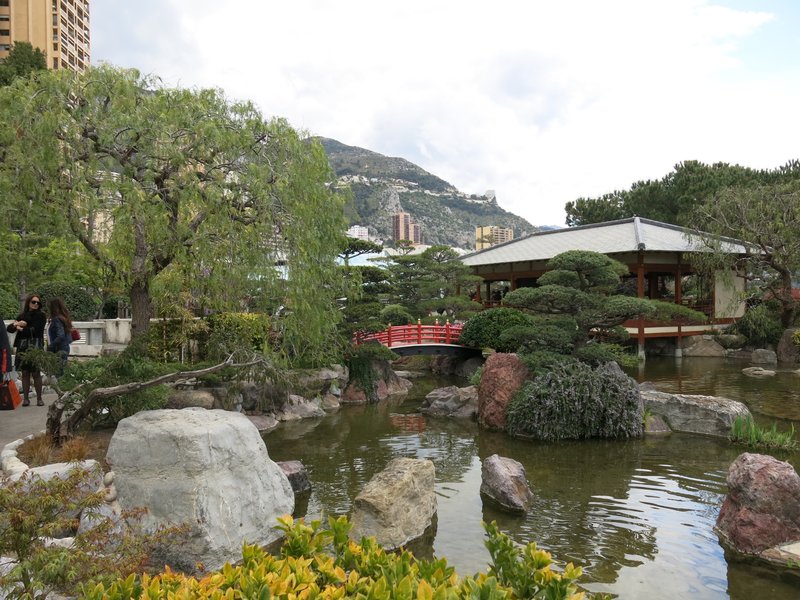
A 7,000 m² formal Japanese garden on the Larvotto seafront, designed by landscape architect Yasuo Beppu and blessed by a Shinto priest. Raked gravel, a koi pond, a tea pavilion, and pruned pines follow strict Zen principles — a pocket of stillness between the beach and the towers.
A cliffside garden of thousands of succulents and cacti from the Americas and Africa, thriving on a sun-baked rock face high above Monaco. Reopened after a six-year renovation, it takes in the Observatory Cave — a deep limestone grotto of stalactites — and sweeping views east toward Italy.
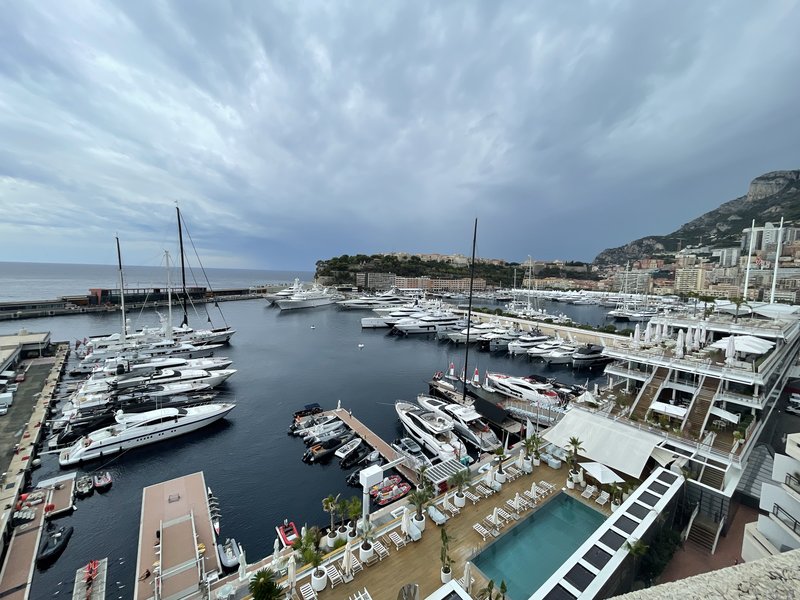
The Principality's only deep-water harbour, carved from a natural inlet below the Rock and now lined with superyachts, fishing trawlers, and cruise-ship tenders. Every May the quayside barriers rise for Formula 1 — the famous chicane and tunnel entrance are visible from Quai Antoine 1er.
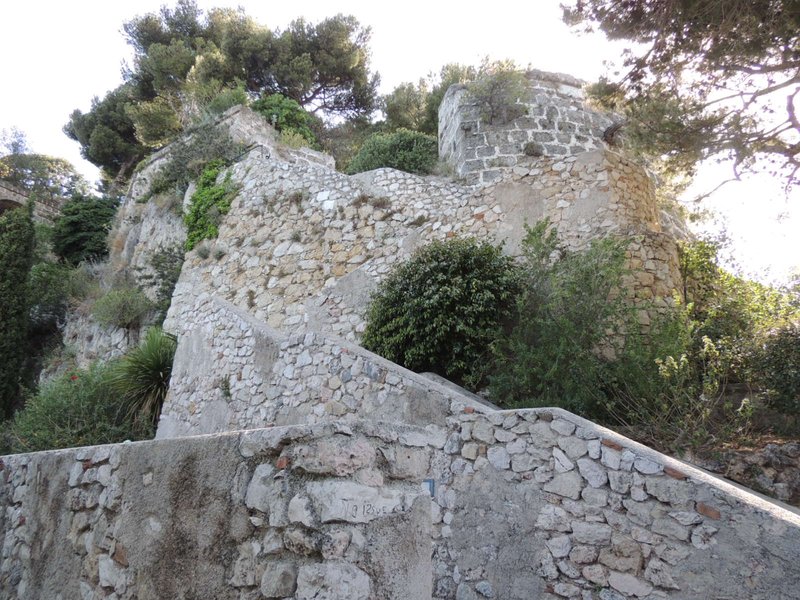
Built in 1714 on the north-eastern tip of the Rock, this fortress was gutted in World War II and rebuilt as an open-air stone amphitheatre. Its battlements serve as stage wings for a free summer season of theatre and music; outside that season the terrace and its views over the port are freely open.
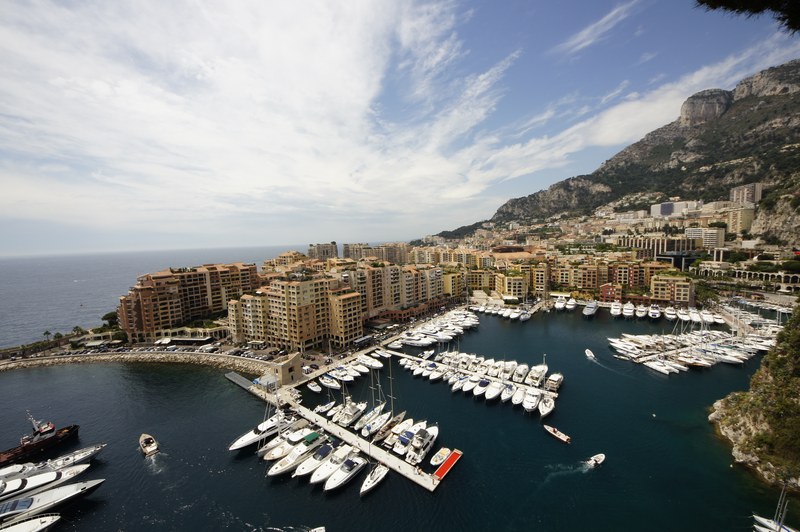
Monaco's youngest district, built almost entirely on land reclaimed from the sea between 1966 and 1981. The port-side walkway passes the windmills and opens onto the Fontvieille Park and Princess Grace Rose Garden — 4,000 rose bushes planted in memory of Princess Grace Kelly, with views back to the Rock above.
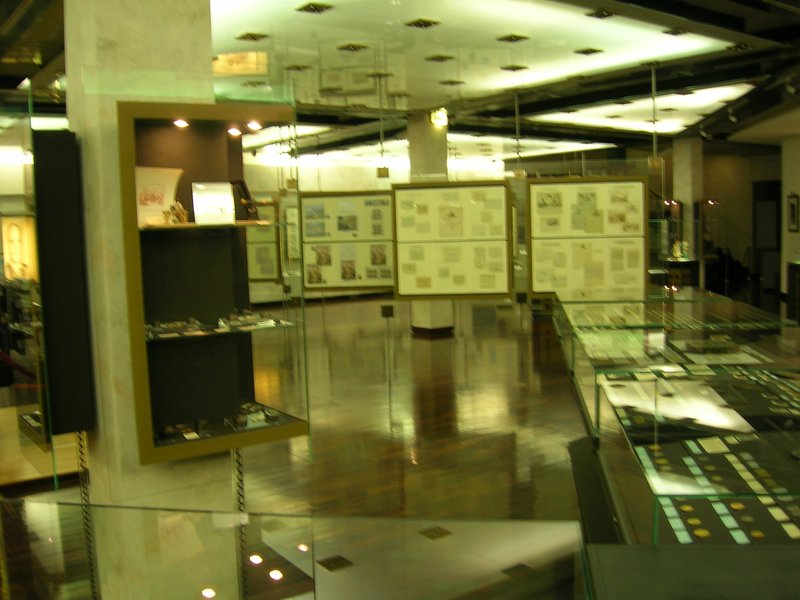
Prince Rainier III's personal collection of Monegasque stamps and coins, opened in 1950 and now housed in Fontvieille's Terrasses complex — a chronology of Monaco's currency since 1640 and its postage stamps since 1885, alongside temporary philatelic and numismatic exhibitions.
Walk the entire 3.3 km Grand Prix circuit with a local guide — Sainte-Dévote, the climb to the casino square, the tunnel, the harbour chicane, and the Rascasse — hearing the stories, crashes, and drivers behind Formula 1's most famous street race.
A guided loop through Monaco and Monte-Carlo's landmarks and quiet corners — the casino square, the Palace, modern sculptures, and monumental exotic trees — with a short hop across Port Hercule aboard the solar-electric shuttle and a taste of local food.
A half-day small-group excursion from Nice by minibus — the perched village of Eze with panoramic Riviera views, the casino square and palace district of Monaco, and Monte-Carlo's grand boulevard in central Nice.
A coastal ferry from Nice to Monaco with commentary on the return leg — 45 minutes each way along the Riviera coastline, arriving at Port Hercule with the day free to explore Monaco before the afternoon sailing back.
A full-day small-group tour from Monaco · max 8 through the French Riviera — Antibes' yacht harbour, Cannes' Festival Palace, the hilltop perfume village of Eze, and Monte-Carlo's casino square, with a local guide and in Monaco.
A small-group guided tour through Monaco's legendary districts — the Palace Rock, the casino quarter, the port, and the hidden stories behind the principality's glamour and history, with a certified local guide.
A full-day shared minibus from Nice covering Monaco's port and palace, Monte-Carlo's casino square, and the eagle's-nest village of Eze — 8 hours with a knowledgeable driver-guide and in Nice.
A 7-hour small-group day from Nice by shared minibus — Monaco's harbour, palace and casino, plus the hilltop perfume village of Eze — in central Nice included.
A full-day 8-hour circuit from Cannes by small minibus — Monaco's port and palace, Monte-Carlo's casino and grand square, and the perched medieval village of Eze — in central Cannes.
A 2-hour small-group stroll through Monaco with a certified local guide — the Rock, the Palace, the cathedral, the port, and Monte-Carlo's casino quarter — covering the principality's history and daily life.
Travellers' Choice — walk every metre of the Grand Prix street circuit with a guide who knows every corner, barrier and crash story, from the Sainte-Dévote hairpin to the tunnel and the harbour chicane.
A 7-hour Riviera circuit from Nice: Monaco's port and rock, Monte-Carlo's casino square, the eagle's-nest village of Eze, and the Roman trophy monument at La Turbie — typically max 6 in the vehicle.
An 8-hour small-group day from Nice — Monaco's landmarks and the cliff-top perfume village of Eze, with time to explore independently and in central Nice included.
A 7-hour shared tour from Cannes covering Monaco, Monte-Carlo's casino quarter, Eze village, and the ancient Roman trophy at La Turbie — in Cannes included.
A guided small-group boat from Nice along the Riviera coast to Monaco, with a snorkeling stop in clear Mediterranean water — an active alternative to the coach day trip, returning to Nice port by afternoon.
Monaco's national dish: a fried pastry parcel stuffed with Swiss chard, ricotta, and onion. Eaten as street food and served in quantity on National Day, 19 November.
A sweet brioche flavoured with orange-blossom water and anise, scattered with red and white sugared aniseeds and nuts — the Principality's celebration bread.
Foreign number: accepted. — the account is created by email and the number is only used for delivery updates, so no code has to arrive.
Monaco's dedicated local delivery service, covering the Principality's restaurants and a curated supermarket selection. Good coverage of Condamine market-area restaurants and Monte-Carlo dining; delivery windows are typically 30–45 minutes. Better suited than pan-European apps for reaching Monaco-specific addresses.
Foreign number: accepted. — checkout takes any country code and confirms the order by email rather than by SMS code.
A Monaco-focused delivery platform listing restaurants across the Principality, including hotel dining and premium establishments not found on larger apps. Useful for upmarket orders; smaller overall selection than Delovery but better for high-end venues. Sign-up is quick with a foreign number.
Foreign number: accepted. — the sign-up form takes any country code and the SMS code reaches foreign carriers.
Monaco's official taxi app, hailing licensed cars via a metered fare with no surge pricing. Stand hailing is also available at the Casino and the main hotel ranks, and a booked car reaches the hotel from anywhere in the Principality within 10 minutes. English-speaking drivers are the norm.
The seaside foot of the medieval village of Èze, perched high on its rock. A steep coastal path climbs through pine and cactus to the village and its exotic garden.
The last French town before Italy — a pastel-coloured old town stacked above the sea, citrus gardens, and the Jean Cocteau museum. Known for its lemon festival each winter.
The Riviera's capital — the curving Promenade des Anglais, the ochre lanes and market of Vieux Nice, and the hilltop Colline du Château with views over the Baie des Anges. TER trains run along the coast every few minutes.
A walled Provençal port with the largest pleasure harbour in Europe — the Picasso Museum occupies the castle where he painted in 1946, the covered market is among the finest on the Côte d'Azur, and the old town ramparts overlook the sea.
Monaco is the second-smallest country on earth, and almost the entire thing fits inside these two days on foot. You can stand on the Rock at the Palace, look across Port Hercule to Monte-Carlo, and trace nearly the whole Grand Prix circuit with your eyes — Sainte-Dévote, the hairpin, the tunnel, the harbour chicane — all of it ordinary public road for fifty-one weeks of the year.
The thread running through the trip is one family and one taste for the dramatic. The Grimaldis arrived disguised as monks, built a palace on a fortress, and centuries later turned a barren headland into Monte-Carlo so a gaming house could pay the bills. Even the gardens are theatrical: a botanical collection clinging to a vertical cliff, a Japanese garden blessed by a Shinto priest beside the beach, and a museum that grows straight out of the sea rock — built by Albert I, the prince who went to sea to study it.