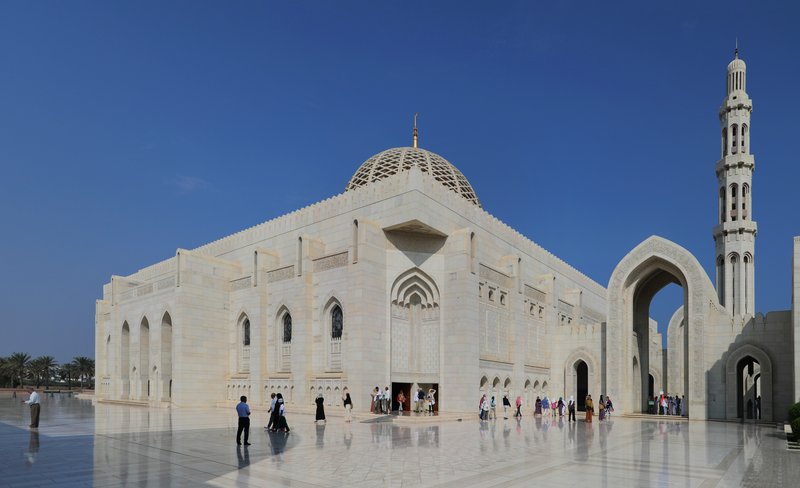
The largest mosque in Oman — one of the few on the Arabian Peninsula open to non-Muslim visitors. The main prayer hall holds a hand-knotted Persian carpet: 4,343 m², woven by 600 craftspeople over four years, 1.7 billion knots — still the largest hand-knotted carpet in the world.
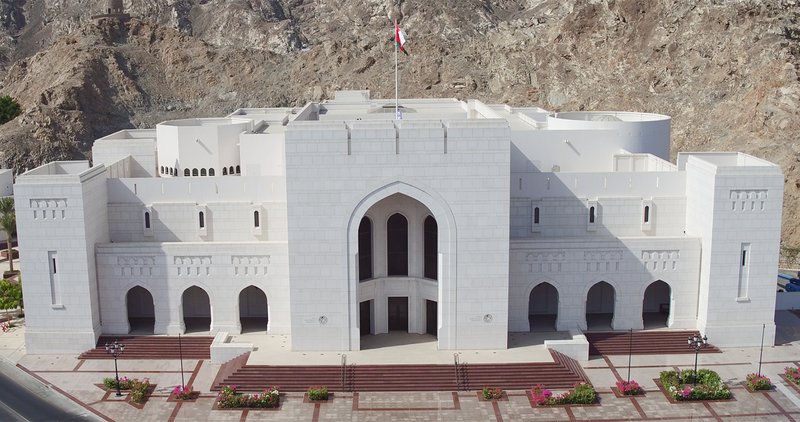
Oman's flagship state museum — 14 galleries across 13,700 m² tracing Omani civilization from prehistoric times to the modern era. Bronze Age metalwork, a maritime history gallery on Oman's Indian Ocean trade routes, and the Aflaj gallery on the underground irrigation systems still in use today.
15 min · 5 min → Al Jalali & Al Mirani Fort Viewpoints
3.Al Jalali & Al Mirani Fort Viewpoints~30 min
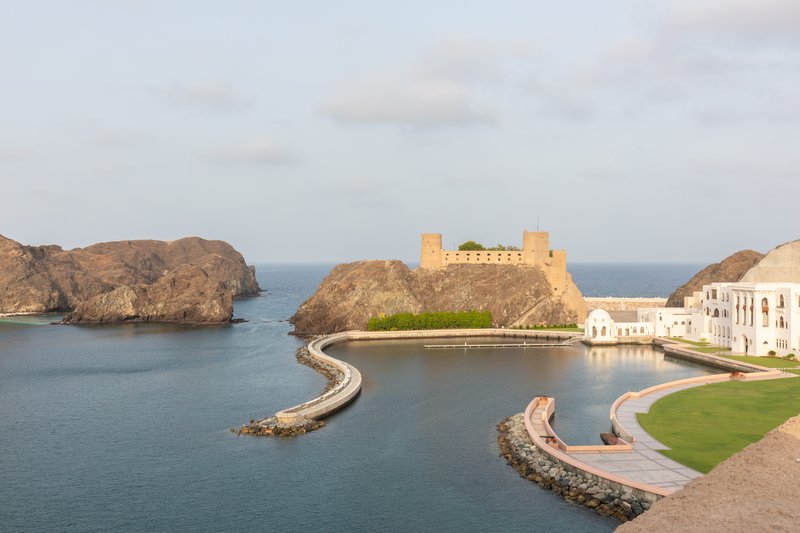
Twin Portuguese forts built in 1587 to guard Old Town's natural harbor. Al Jalali on the east promontory, Al Mirani on the west — both closed to the public, but viewed from the promenade with Al Alam Palace between them, they form the most photographed panorama in Muscat.
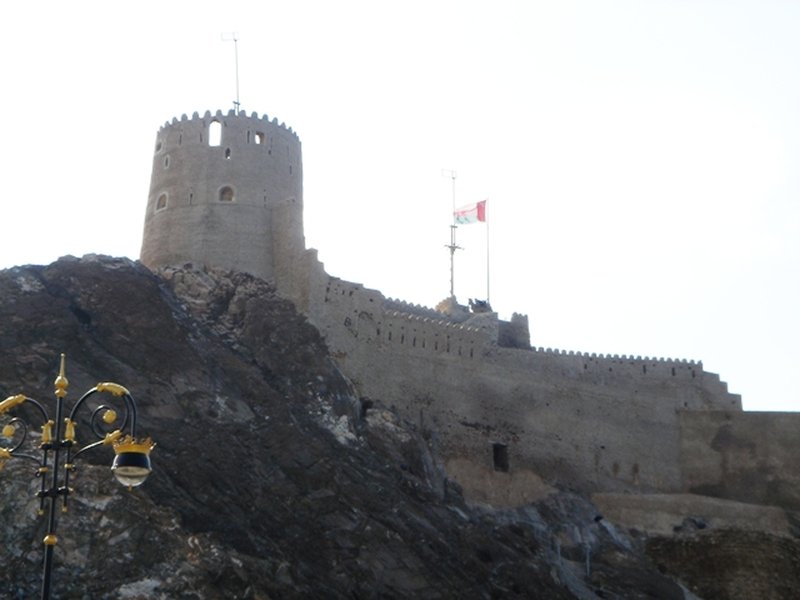
A 16th-century Portuguese fort on the hill above Muttrah, part of the ring of fortifications built after the Portuguese took Muscat in 1507. The fort overlooks the Corniche and harbor, giving a panoramic view of the dhow-lined bay. The battlements and exterior are accessible.
The city museum of Muscat, in a restored 1920s merchant house on the Muttrah Corniche. Covers Muscat's geological formation, prehistoric settlement, and maritime trade history from the Bronze Age through the Portuguese era. One of the most focused city history museums in Oman.
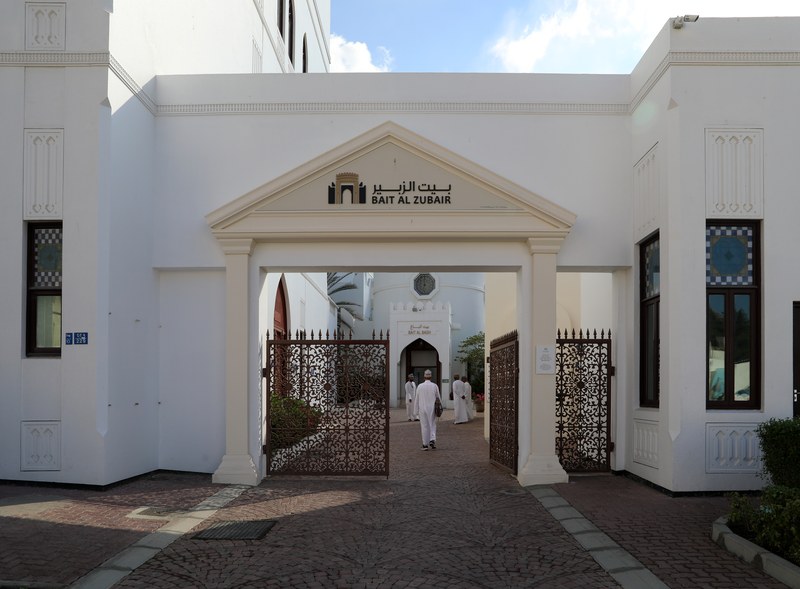
Muscat's finest private heritage museum in a restored Omani house complex. The Zubair family collection spans khanjar daggers, silver jewelry, traditional costumes, and manuscripts across five interconnected buildings around a garden courtyard. Received Sultan Qaboos' Award for Architectural Excellence in 1999.
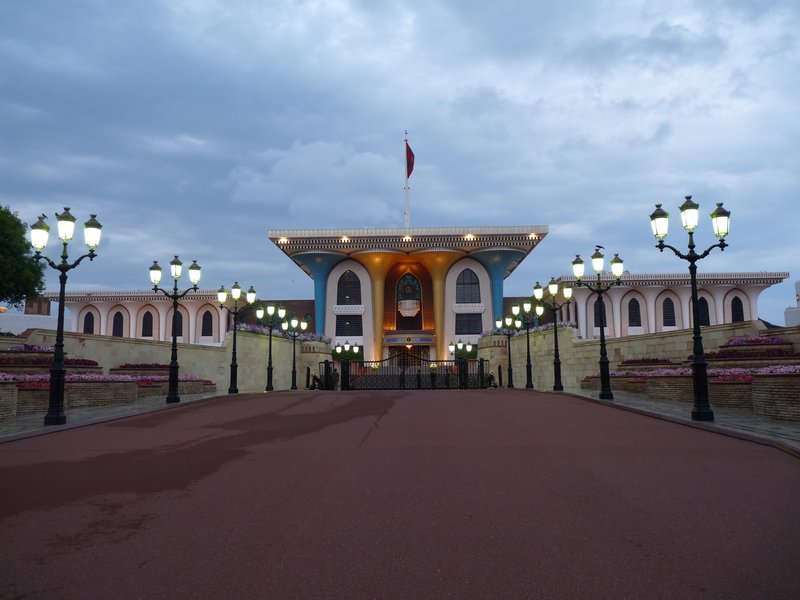
The Sultan of Oman's ceremonial palace, built in 1972, positioned between the twin Portuguese forts on Old Town's natural harbor. The striking blue-and-gold facade is the defining image of Old Town. Viewed from the courtyard and adjacent promenade — the interior is not open to the public.
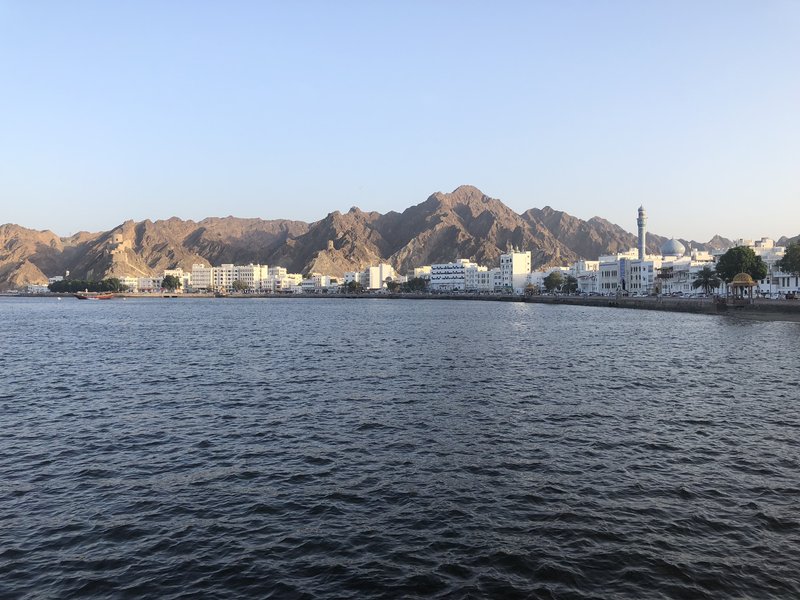
A 3-kilometer waterfront promenade along Muttrah's natural harbor, lined with date palms and moored wooden dhows against the Hajar Mountains. One of the most photogenic waterfronts in the Gulf — best in the early morning and at dusk when fishing boats return.
15 min · 5 min → Al Riyam Park & Incense Burner Monument
6.Al Riyam Park & Incense Burner Monument~45 min
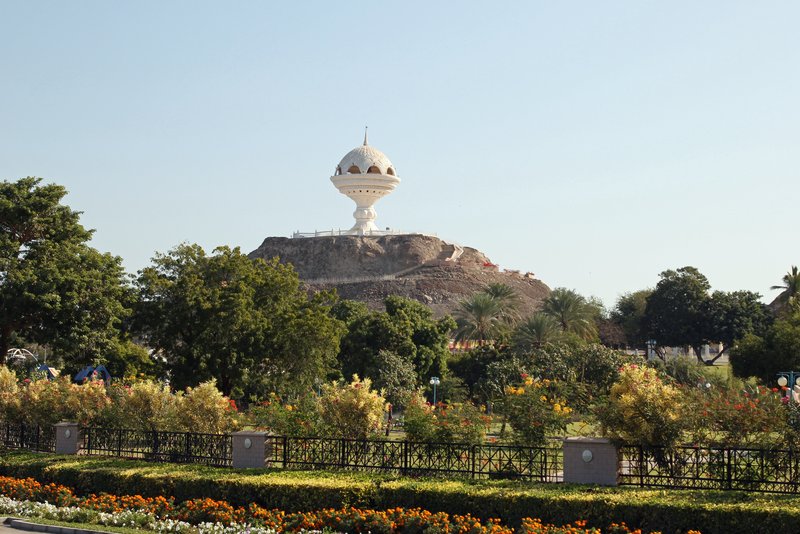
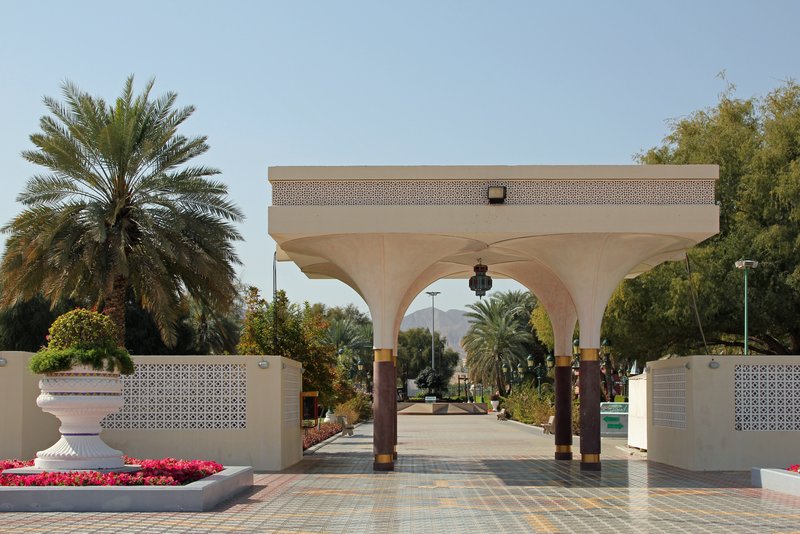
A hilltop park at the eastern end of the Muttrah Corniche, anchored by a giant stone incense burner — a Mabkhara — built for Oman's 20th National Day in 1990. Panoramic views across Muttrah harbor and the Hajar Mountains. Best at golden hour when the light catches the white stone.
From Hotel: 20 min → Qurum Natural Park & Nature Reserve
1.Qurum Natural Park & Nature Reserve~1.5 hr
Muscat's largest urban park with spacious lawns, a lake, and direct access to 4 km of public beach on the Gulf of Oman. The adjacent Qurum Nature Reserve is a protected mangrove estuary with boardwalk access to grey herons, egrets, and kingfishers — one of the best urban birdwatching spots in Oman.
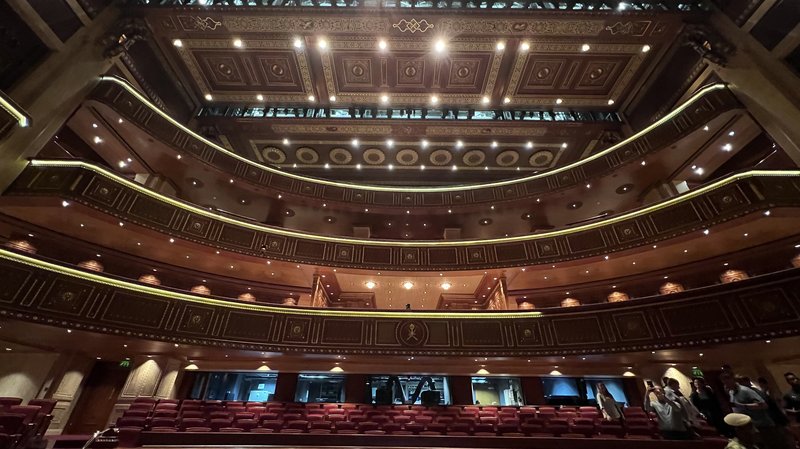
The first opera house on the Arabian Peninsula, opened October 2011. The building blends contemporary Omani architecture with Italian craftsmanship — the same artisans who carved the mahogany interior ceilings also designed the adjacent Al Angham restaurant. Season October–May; building tours year-round.
From Hotel: 18 min · 8 min → Sultan's Armed Forces Museum
1.Sultan's Armed Forces Museum~1 hr
Set in the 19th-century Bait Al Falaj Fort — once the Sultan's Armed Forces headquarters — this museum covers Omani military history from the 19th-century East African campaigns to the 1970s Dhofar War. The parade ground holds vintage aircraft, tanks, and artillery; inside, the fort's rooms display uniforms, weapons, medals, and a permanent exhibition on the 1972 Battle of Mirbat.
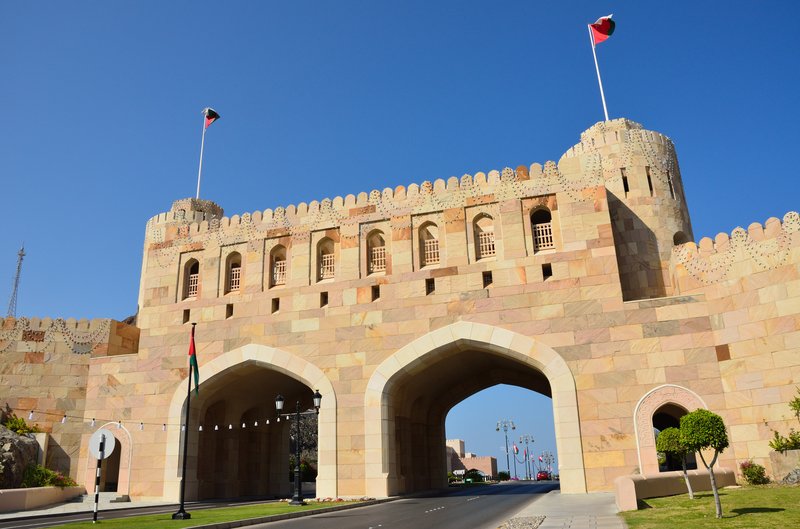
Built into the ceremonial arch that marks the entrance to the walled Old Muscat, this museum traces the city's history from early settlement through the Portuguese occupation to the modernisation era under Sultan Qaboos. The upper gallery ends on an open terrace with coastline views of the twin Portuguese forts of Al Jalali and Al Mirani framing the harbour entrance.
A museum built and furnished as a mid-20th-century Omani home, its rooms styled decade by decade from the 1950s through the 1970s. Vintage radios, furniture, and family photographs recreate a lived-in household rather than a conventional exhibit hall — a rare, intimate look at everyday Omani life before the country's 1970 modernization.
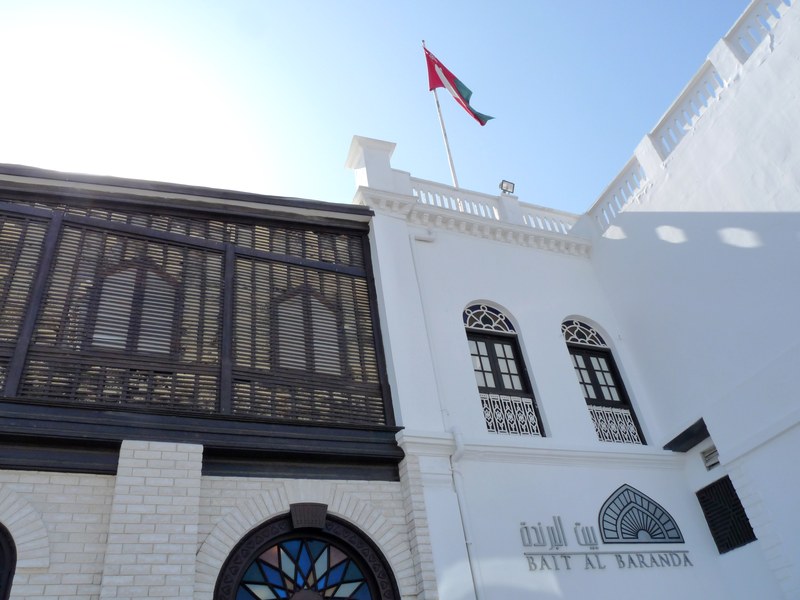
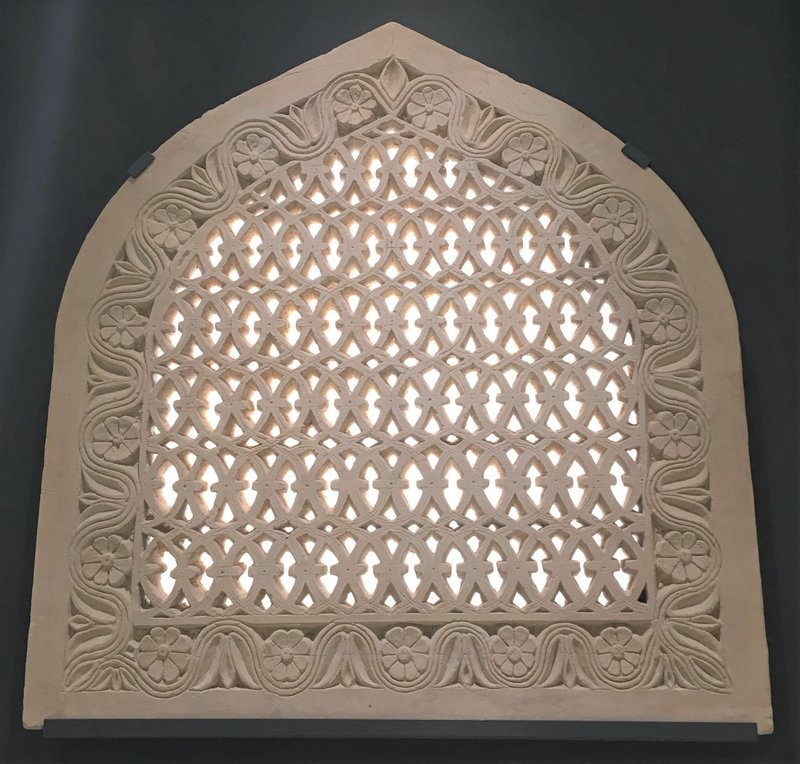
The former residence of the French Consul in Old Muscat, gifted by Sultan Faisal bin Turki in 1896 and inaugurated as a museum of Franco-Omani diplomatic history in 1992 by Sultan Qaboos and President Mitterrand. Carved-stucco mashrabiya window screens and a walled courtyard preserve one of the old town's most distinctive 19th-century buildings.
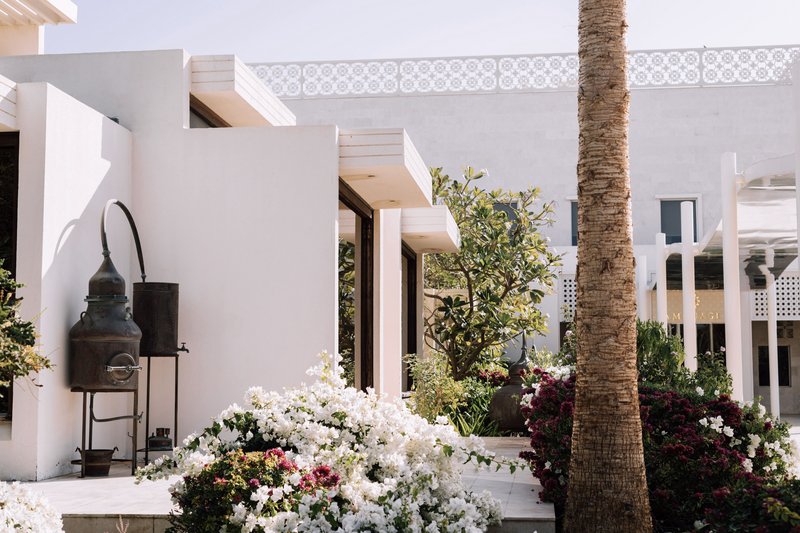
A free factory tour through the visitor centre of Amouage, the Omani luxury perfume house founded in 1983 at Sultan Qaboos' request and renowned worldwide as "The Gift of Kings." Glass-walled galleries look directly onto the distillation and bottling floor, tracing frankincense, rose oil, and agarwood from raw ingredient to finished bottle.
A small cove village on Muscat's southern coast road, its calm turquoise bay sheltered by rocky headlands. Qantab is home to Oman's traditional dhow-building yards — the replica ninth-century trading vessel Jewel of Muscat was built here — and a hillside pull-off above the village looks back over the bay to the Hajar Mountains.
A clifftop pull-off above the fishing village of Yiti, looking down over a crescent of pale sand where the Hajar Mountains meet the Gulf of Oman. One of the quietest stretches of coastline within reach of the city, and a favorite sunset spot for Muscat residents.
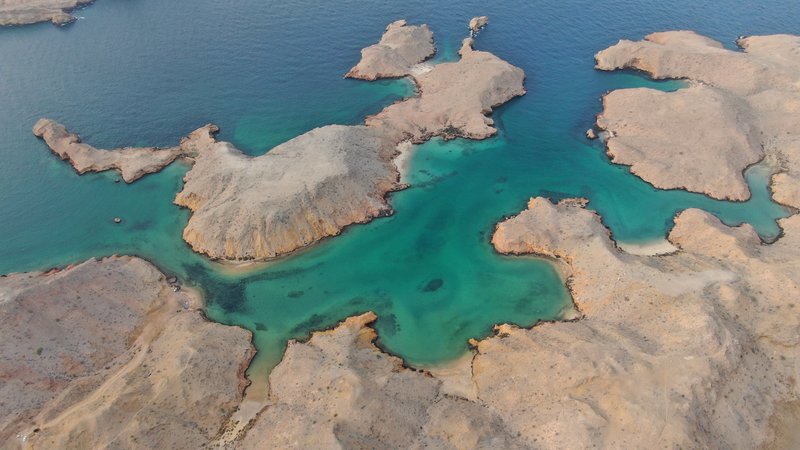
A fjord-like inlet of jagged, sun-baked headlands enclosing turquoise water, reached by a mountain road that dead-ends at a clifftop viewpoint. Undeveloped and entirely natural — no shops, no facilities, no crowds — its winding coves are often compared to the fjords of Norway transplanted to the Arabian Peninsula.
Half-day group tour of Muscat's Old Town highlights — Grand Mosque, Al Alam Palace, Bait Al Zubair Museum, and the Muttrah Souq — with a licensed guide and air-conditioned coach.
Group city tour covering the Grand Mosque, Al Alam Palace, the National Museum, and Muttrah Corniche — with a licensed English-speaking guide and air-conditioned coach.
Full-day group excursion to Nizwa Fort and Souq, then up the switchbacks of Jebel Al Akhdar to the cool highland villages of Al Ain and Ash Sharayjah — guided with air-conditioned coach.
Evening van tour through Muscat's illuminated landmarks — Grand Mosque exterior, Al Alam Palace promenade, Muttrah Corniche and Souq — with a licensed guide.
Group landmarks tour of Muscat — Grand Mosque, National Museum, Al Alam Palace, Muttrah Corniche, and the Souq — with a licensed English-speaking guide and air-conditioned vehicle.
Full-day guided exploration of Muscat's top landmarks — Al Alam Palace, Bait Al Baranda, Muttrah Souq, the Grand Mosque, and Qurum Beach — departing from Al Alam Palace in Old Town.
Half-day group tour hitting Old Town, the Grand Mosque, Al Alam Palace, Bait Al Zubair Museum, and Muttrah Souq — with a licensed guide and air-conditioned coach.
Oman's national dish — whole lamb marinated in spices, wrapped in banana leaves, and slow-cooked in an underground earth oven for 24 to 48 hours. Served on Fridays.
Oman's most common daily rice dish — spiced basmati cooked in a rich broth with chicken or lamb, flavored with dried limes, saffron, turmeric, and rose water. Found at every local restaurant.
The defining Omani sweet — a dense, gelatinous confection of sugar, ghee, cornstarch, saffron, rose water, and cardamom, often studded with nuts. Served with qahwa coffee at every traditional gathering.
Ceremonial Arabic coffee — lightly roasted beans steeped with cardamom and saffron, served in handle-less cups called finjan. Poured continuously until the guest shakes the cup to signal enough. Always served with dates and halwa.
Foreign number: accepted — a local eSIM or hotel Wi-Fi verification is more reliable than roaming SMS for the code.
The dominant food-delivery platform in Oman — wide coverage across Ruwi, Muttrah and all main Muscat districts; strong selection of Omani, Indian and Lebanese restaurants alongside international chains. Delivery typically 30–45 minutes across the city.
Foreign number: accepted — a local eSIM or hotel Wi-Fi verification is more reliable than roaming SMS for the code.
Careem's food-delivery arm covers the main Muscat districts — good selection of Omani and Middle Eastern restaurants plus international options. A reliable alternative when Talabat shows longer wait times or limited availability in your area.
Foreign number: accepted — register with any international number; SMS verification works on roaming.
The official Oman government taxi app with metered fares across Muscat — government-regulated pricing with no surge during peak hours or events. Available throughout the city; reliable pick-up times in central Ruwi and the main hotel areas.
Foreign number: accepted — works with any international number; SMS OTP delivers on roaming.
Widely used across Muscat with both economy and premium ride options — typically faster pick-up times than OTaxi in the main districts. Accepts international cards; competitive fares for short in-city hops and for the longer haul between Ruwi and Muttrah.
The main prayer hall of the Sultan Qaboos Grand Mosque is anchored by a single hand-knotted Persian carpet measuring 4,343 square meters — woven over four years by 600 craftspeople in Iran, shipped in sections, assembled on-site, and still the largest hand-knotted carpet in the world. The math alone stops you: 1.7 billion knots. 28 tonnes. One room.
What the carpet symbolizes is as striking as the carpet itself. Sultan Qaboos came to power in 1970 in a country with fewer than 10 kilometers of paved road, one hospital, and three schools. The mosque opened in 2001. A civilization-scale transformation in the lifetime of people who remember the before — and a city that still has the calm and openness of somewhere that hasn't quite caught up to being famous yet.