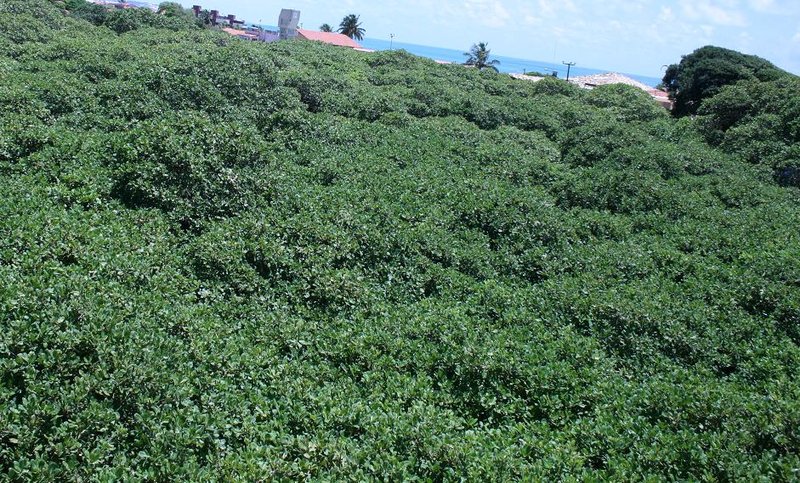
A single cashew tree spread to cover 7,300 square meters — the size of 70 normal trees — earning a Guinness World Record. An elevated timber walkway above the canopy lets visitors trace all 70 trunks, which are the same tree's branching limbs resting on the ground and re-rooting.
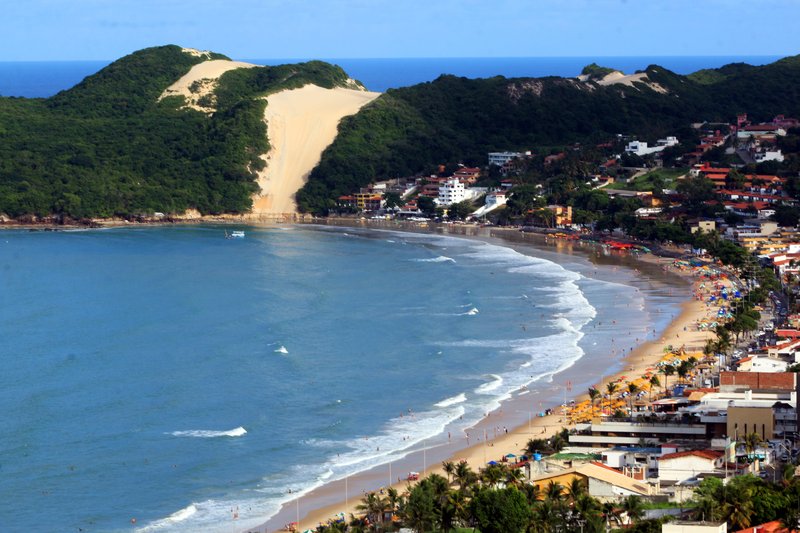
Natal's most celebrated beach — a 4-kilometer crescent with calm warm waters. At the southern tip, Morro do Careca rises 120 meters from the shoreline; a sand dune whose bare wind-eroded patch became Natal's most recognized silhouette. Climbing is prohibited; the view from the base remains the experience.
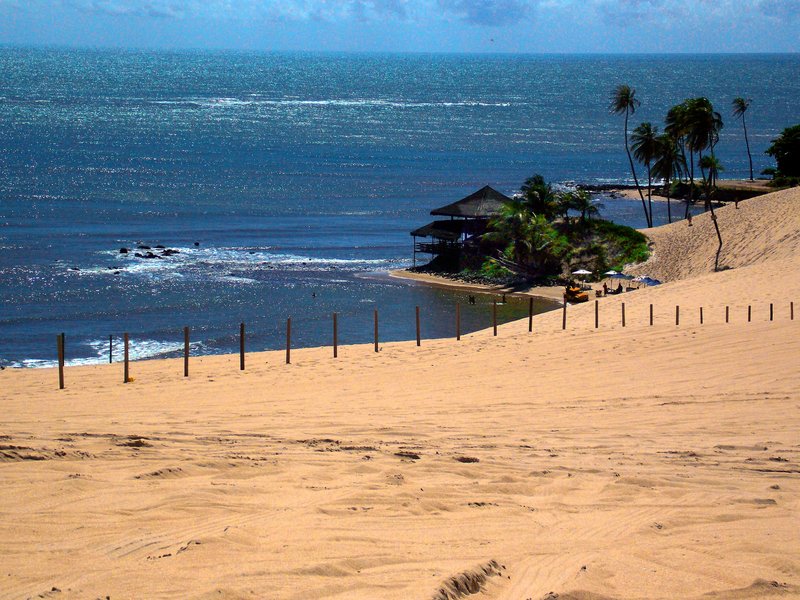
The open-sea beach at the base of the Genipabu dune system, where fishing boats anchor in calm surf and the dune wall rises directly behind the sand line. The only vantage point to see the full scale of the dune complex from sea level — the perspective from the water differs entirely from the park interior.
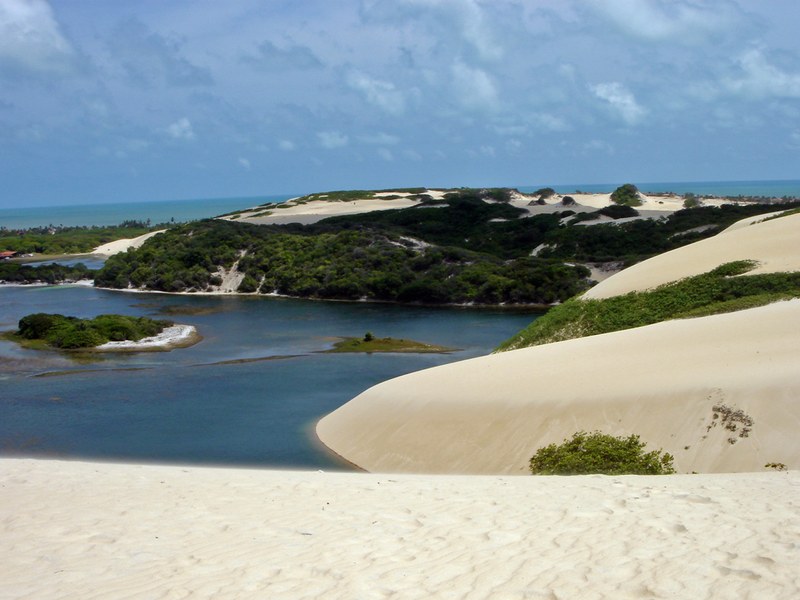
A freshwater lagoon enclosed by white dune walls within the Genipabu complex, where turquoise water contrasts against the bleached sand. Pedal boats and kayaks can be hired at the lakeside. Vivid blue-green water framed by stark dune walls make it one of the most photographed scenes in Rio Grande do Norte.
A large freshwater lagoon 30 kilometers north of the city, ringed by white dunes and sheltered from the wind. Crystal-clear water reaches 5 meters deep at the center. The Pitangui Lagoa Park complex manages day-use access with hammock areas, kayaks, a restaurant, and a zip-line over the water.
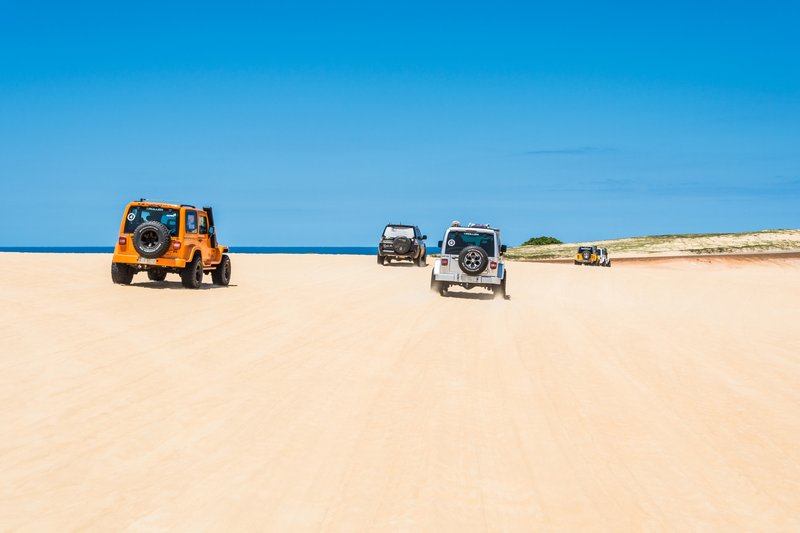
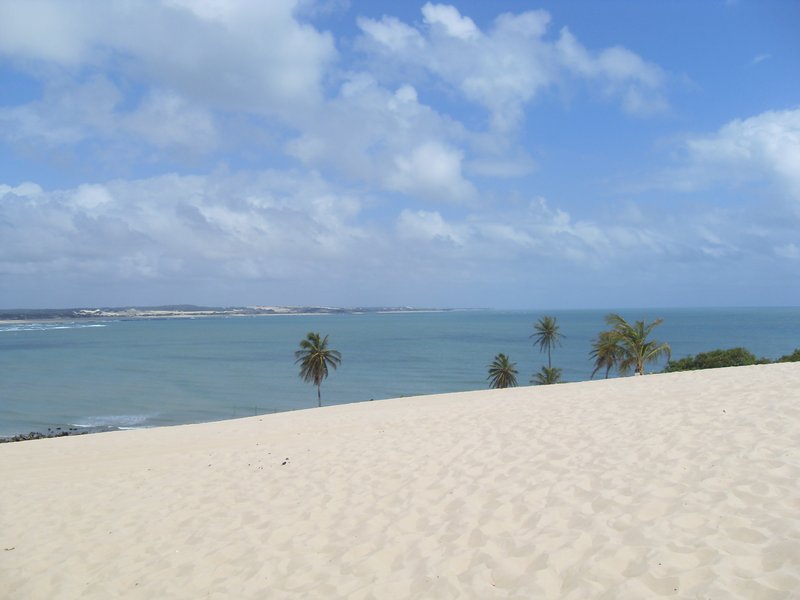
A protected ecological park where wind-sculpted white dunes reshape against the sea — the defining dune landscape of northeastern Brazil. Licensed buggy operators run the "com emoção" route with near-vertical descents, and the "sem emoção" circuit for families. Buggies seat up to 4, booked at the gate.
Natal's principal performance venue with an eclectic exterior carrying French Art Nouveau detail. Inside, gilded plasterwork, a painted ceiling mural, and three horseshoe balcony tiers make it one of the most ornate buildings in northeastern Brazil. Visitors walk freely through the lobby and hall when open.
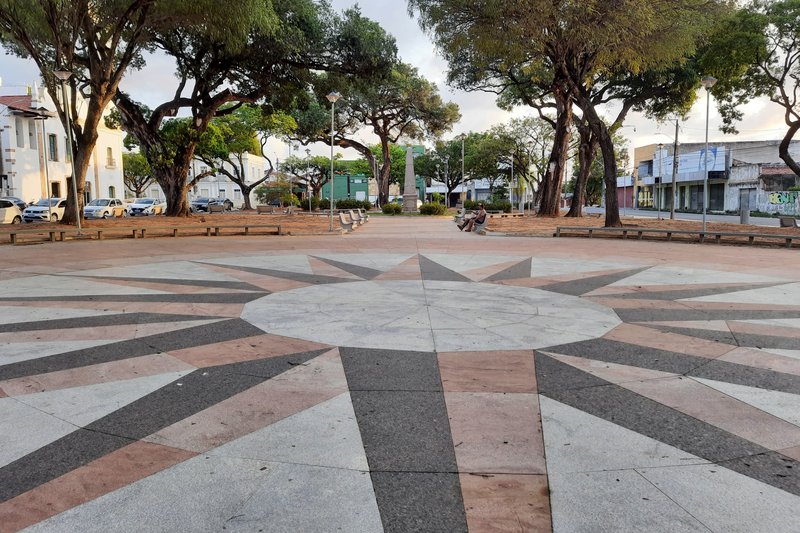
Natal's oldest neighborhood on elevated ground above the Potengi River. Buildings spanning colonial, neoclassical, Art Deco, and modernist styles line cobblestone streets. Praça André de Albuquerque — where the founding mass was celebrated — anchors the district, ringed by the Cathedral and historic market building.
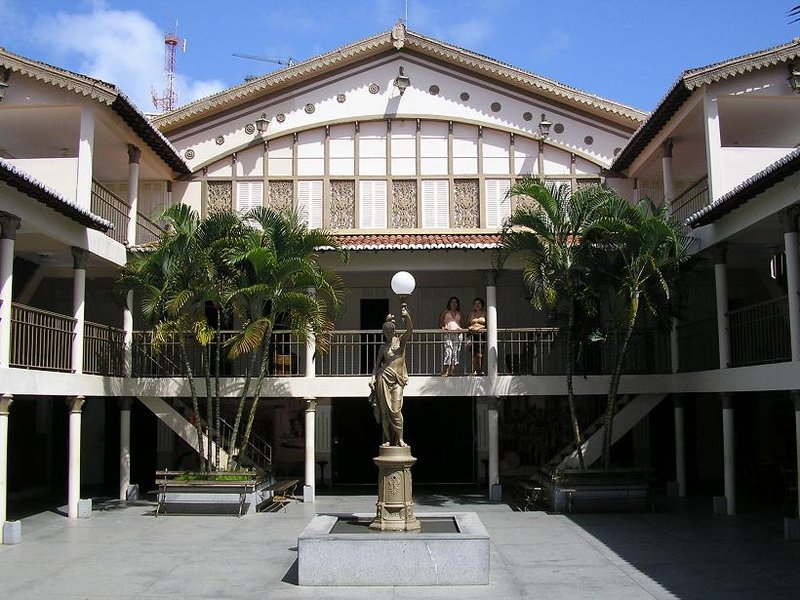
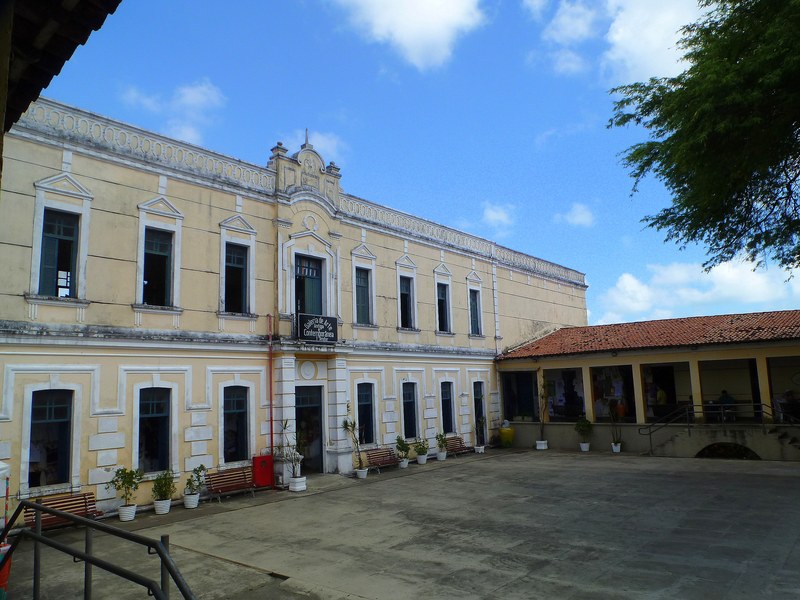
A 1916 prison converted to Natal's main artisan market. Cell blocks house over 100 stalls with handmade renda renascença lace, clay pottery, hammocks, and forró recordings. The watchtower is a gallery; open-air corridors ring a central courtyard.
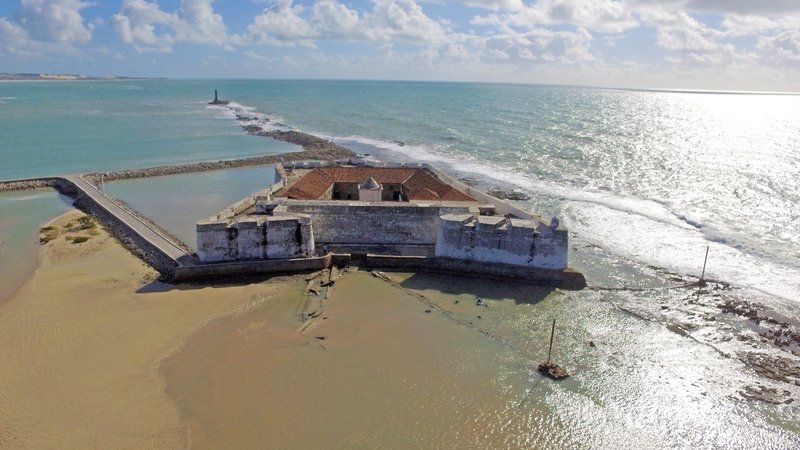
A five-pointed star-shaped Portuguese fortress on a reef at the mouth of the Potengi River, retaining its original chapel, soldiers' quarters, well, and cannons. Declared National Historic Heritage. A 500-meter causeway across the reef gives sweeping views of the coastline and the open Atlantic.
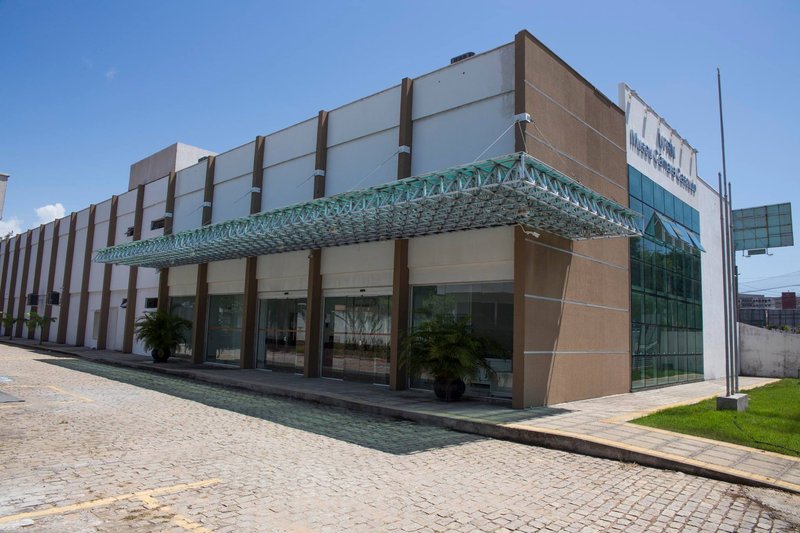
The largest museum in Rio Grande do Norte, named after Luís da Câmara Cascudo — the northeastern folklorist who catalogued the region's oral traditions and indigenous cultures. Collections span ethno-archaeology, paleontology, colonial-era objects, and folklore from across the sertão and coast.
15 min · 5 min → Igreja Matriz Nossa Senhora da Apresentação
6.Igreja Matriz Nossa Senhora da Apresentação~30 min
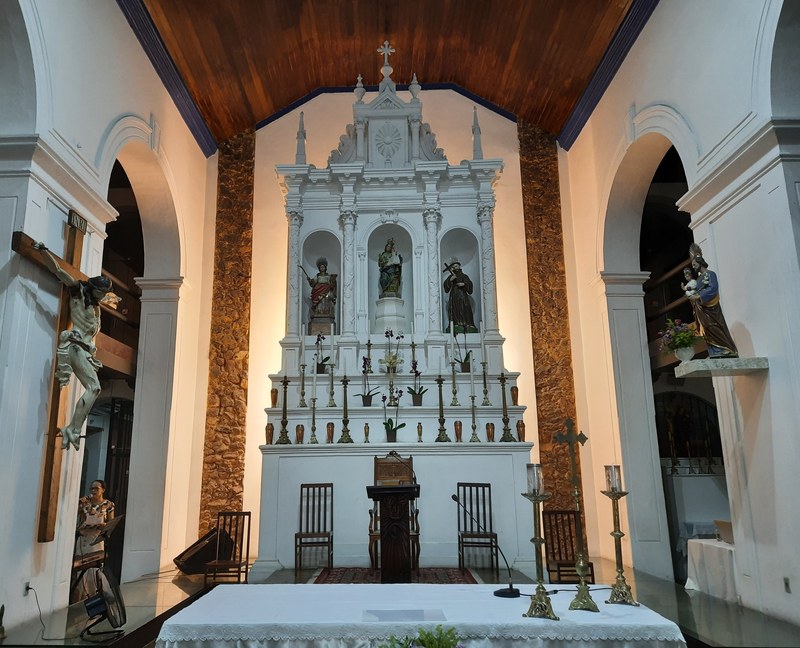
The first church in Rio Grande do Norte on Praça André de Albuquerque — where the founding mass was celebrated when the colony was established. It survived Dutch occupation, briefly used as a Calvinist temple, and a later restoration removed additions to recover the original colonial character.
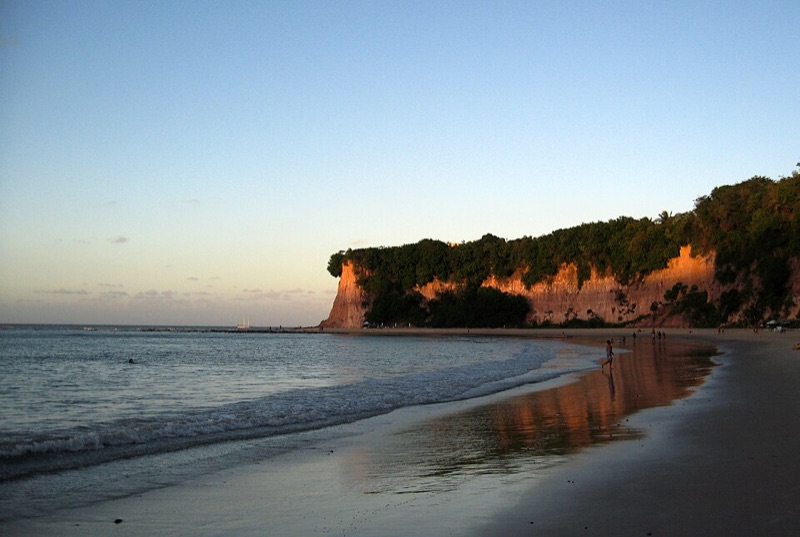
A curved bay below 40-meter sandstone cliffs at Chapadão where a resident colony of spinner dolphins congregates daily — the only mainland Brazil site where wild dolphins reliably appear within meters of shore. Best viewed from the cliff overlook at low tide.
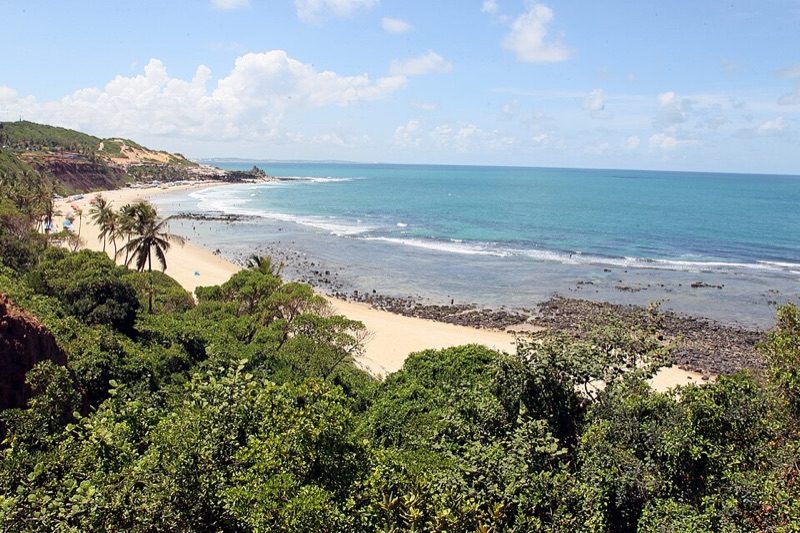
A heart-shaped bay at the base of Chapadão — Pipa's signature 40-meter cliff. Stairs carved into rock descend to the beach at low tide; at high tide the cliff-top walk is the only access. The left side has strong surf; the right cove is sheltered by the headland.
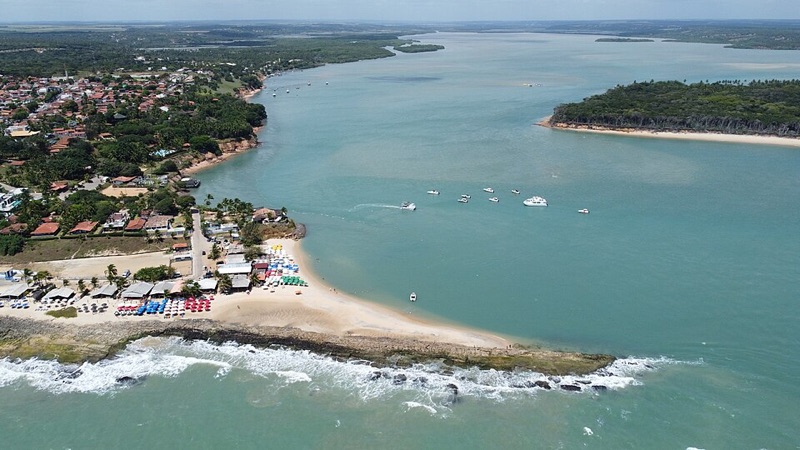
A 15 km² estuary between Pipa and Tibau do Sul. Sandbars emerge at low tide — including mid-lagoon bars where boats anchor and passengers step into ankle-deep water. Sunset boat tours last 90 minutes; mangrove tributaries to the northwest are accessible by kayak.
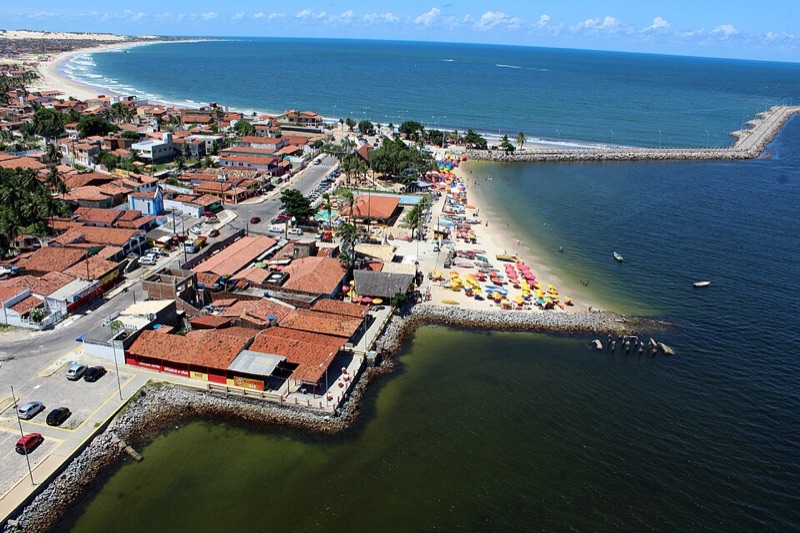
The only beach in Natal's north zone, at the mouth of the Potengi River. Traditional jangadas anchor in the surf. The beachside Mercado da Redinha sells ginga com tapioca — local fish fried in dendê oil and wrapped in cassava tapioca, declared Intangible Cultural Heritage of Rio Grande do Norte.
The second-largest urban park in Brazil, protecting 1,172 hectares of Atlantic Forest dunes in the middle of the city. Over 270 tree species inhabit the ecosystem. Three certified hiking trails wind through the Bosque dos Namorados public-use zone — all require advance booking with a minimum group of five.
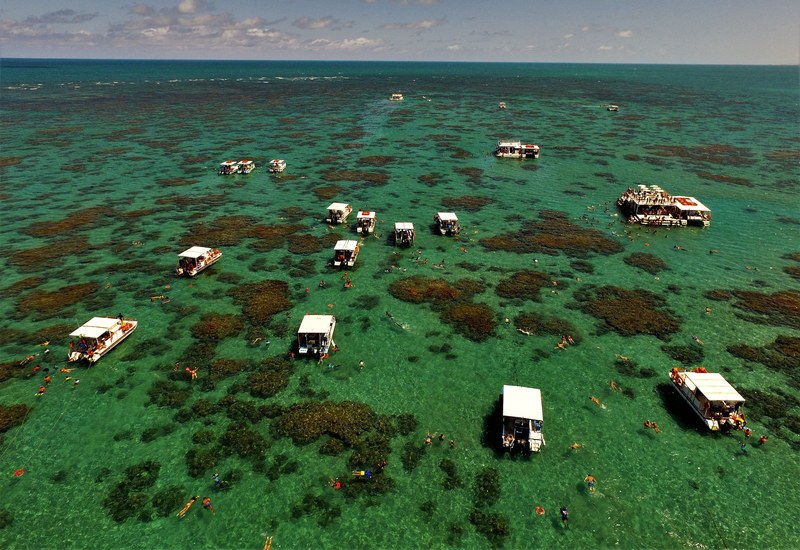
A 15 km² reef 7 km offshore — one of the largest shallow reef systems on the Brazilian coast, averaging 3 meters depth. Inter-reef lagoons form at low tide. Boats tie to floating platforms at the reef; snorkeling gear provided. Departures are tide-dependent.
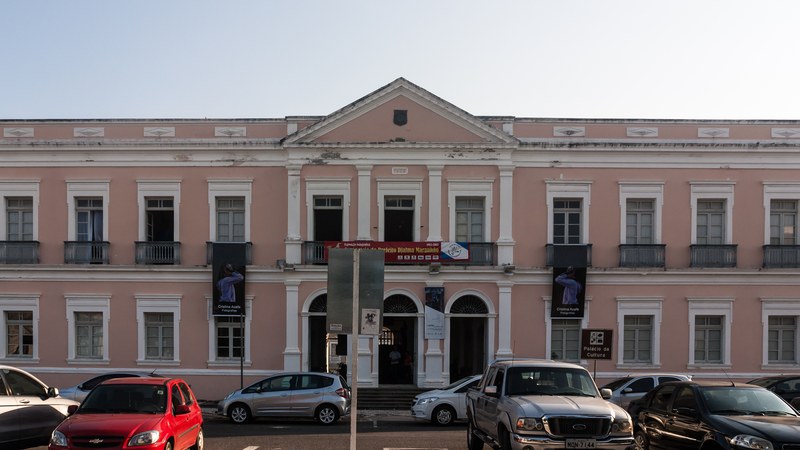
An 1873 neo-classical palace on Praça Sete de Setembro, housing the Pinacoteca Potiguar — the state collection of 19th and 20th-century painting, sculpture, and printmaking by Rio Grande do Norte artists. One of the most intact examples of imperial-era civic architecture in the northeast.
A reef-protected bay in Parnamirim with a coral shelf parallel to shore, creating calm water and tide pools at low tide. One of the few south-coast beaches where the reef is safe to walk across. The slight curve gives the beach its name — cotovelo meaning elbow in Portuguese.
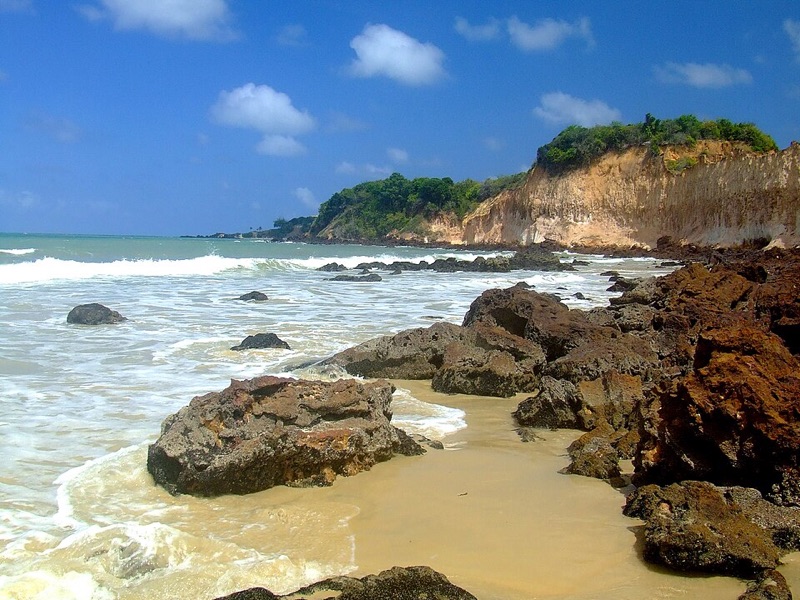
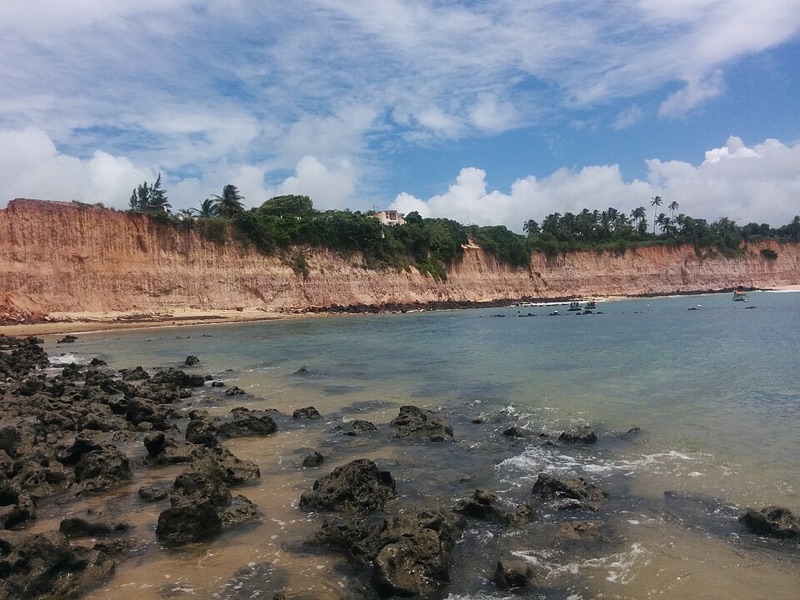
Ochre and red Barreiras Formation sandstone cliffs rising 30 meters above Barra de Tabatinga beach. Coral rock pools form at the cliff base at low tide. The viewpoint at the cliff edge gives the widest coastal panorama on the south shore.
Shared buggy covering 7 beaches, 3 lagoons, and 4 dune areas along the north coast — Redinha, Pitangui, Jacumã, and Genipabu — with optional aerobunda and skibunda at the dunes. Ferry crossing included.
Group van tour to the Genipabu dune system with buggy rides, a lagoon stop, and time on Genipabu beach. Suited to first-time visitors to the north coast dunes.
Full-day group excursion to João Pessoa, capital of neighboring Paraíba state. Covers the historic Cidade Alta, Ponta do Seixas — the easternmost point of the Americas — and the Tambaú beachfront at sunset.
Full-day group excursion to João Pessoa covering the historic center, Ponta do Seixas, and the beachfront promenade. Air-conditioned transport and a local guide included throughout.
Shared buggy covering 7 beaches, 3 lagoons, and 4 dune areas on the north coast, with optional aerobunda, skibunda, and kamikaze runs at Genipabu. Ferry crossing included.
Group van tour along Natal's south coast covering Barreira do Inferno, Búzios and Tabatinga beaches, Cajueiro de Pirangi, Arituba Lagoon, and Camurupim Beach.
Full-day group trip to the Parrachos de Maracajaú natural reef pools 70 km north, where shallow inter-reef lagoons form at low tide. Snorkeling gear and life vests included; air-conditioned coach transfer.
Speedboat transfer to the Maracajaú reef platform for snorkeling at the natural pools. Faster than the coach alternative — the lancha cuts north coast transfer time significantly.
Group van tour to Praia da Pipa, 85 km south, stopping at Madeiro Beach, Baia dos Golfinhos, Chapadão Hill viewpoint, Praia do Amor, and the main Pipa village. Maximum 25 travelers.
Natal's most iconic dish and official Intangible Cultural Heritage. Tiny Potengi River fish fried in dendê oil, wrapped in a tapioca crepe with fresh coconut and coconut milk. Authentic at Mercado da Redinha, Box 3 — Bar Sandra e Ivanize.
Cassava-starch crepe cooked on a flat griddle, served at any hour with fillings ranging from coalho cheese and carne de sol to banana with condensed milk. Natal's street-food staple, sold at corner stands throughout the city.
Shrimp stew thickened with mashed manioc, coconut milk, dendê oil, and ginger. Natal's historic identity as the Potiguar — the shrimp eaters — makes this the flagship plate, appearing on menus throughout Ponta Negra.
Air-cured lightly salted beef from the sertão tradition, served with manteiga de garrafa and baião de dois. Found on nearly every northeastern restaurant menu in Natal and a reliable non-seafood anchor dish throughout the city.
Fresh cheese from the northeastern tradition, grilled on skewers and sold by vendors along Ponta Negra beach. Firm, squeaky, and mild — the canonical beach snack of Rio Grande do Norte.
Foreign number: not accepted — iFood requires a Brazilian phone number for registration; use a local SIM or a Brazilian VoIP number.
Dominant food delivery app in Natal; covers Ponta Negra, Tirol, Petrópolis, and the beachfront strip with a wide range of restaurants from casual tapioca stands to full seafood houses.
Foreign number: not accepted — Rappi requires a Brazilian number for SMS verification; a local SIM or VoIP is the practical workaround.
Useful for groceries and convenience items in addition to restaurant meals; coverage is good in Ponta Negra and the central neighbourhoods though lighter than iFood overall in this city.
The people of Natal are called Potiguar — a word from Tupi meaning "shrimp eater." The name comes from the indigenous Potiguar people who inhabited this coastline when the Portuguese arrived, and it has been worn with such pride that the whole state of Rio Grande do Norte adopted it as the demonym. Every person from RN is a Potiguar. The shrimp-eating identity is not an embarrassment but a founding fact, embedded in the language before the city existed.
Natal was founded on Christmas Day — the same day the Forte dos Reis Magos was started the year before, also on Christmas Day. The name "Natal" is the Portuguese word for Christmas. The founders named the fort for the Feast of the Magi on Epiphany, and named the city for the day it was born. Three acts on two consecutive Christmas Days produced a fort, a church, and a city — all named for the same calendar.
The ginga fish at the Mercado da Redinha is tiny and anchovy-like, living in the Potengi River — the same river that wraps around the reef where the Forte dos Reis Magos sits. The fort and the dish share the same water. The river appears in the founding documents as the reason the Portuguese chose this location; centuries later, the fish that live in it became an official Intangible Cultural Heritage.