From Hotel: 2 min · 2 min → Museo Textil de Oaxaca
1.Museo Textil de Oaxaca~1 hr
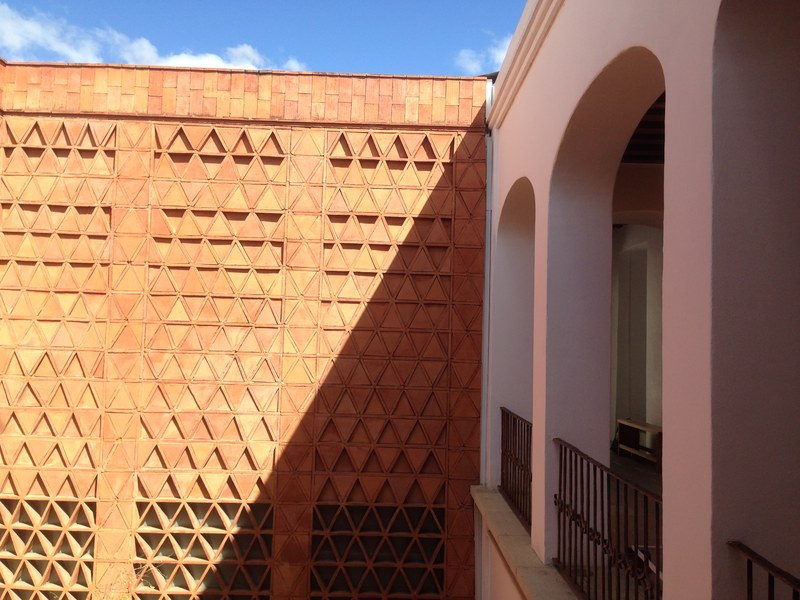
A free textile museum in a restored 16th-century Dominican building, holding the largest textile collection in Mexico — over 10,500 pieces from Oaxaca's seven regions. Rotating exhibitions focus on weaving techniques, natural dyes, and the cultural significance of textiles in indigenous communities.
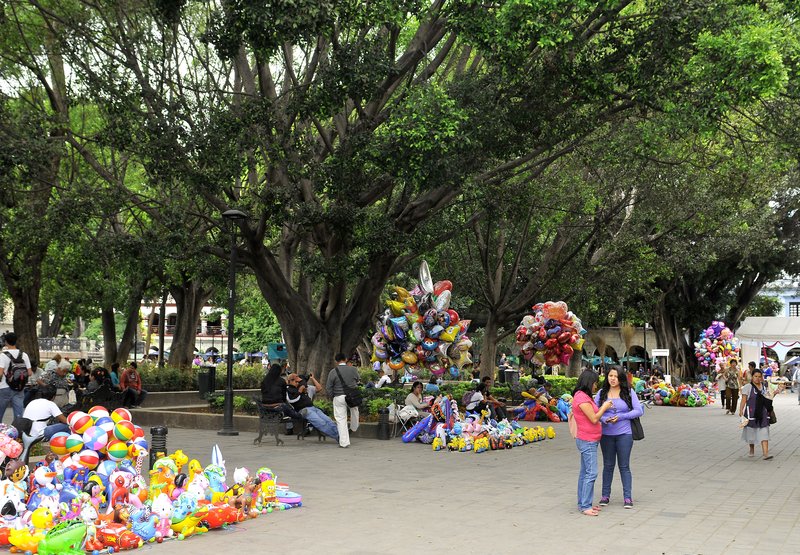
The main public square of Oaxaca, established at the city's 1529 founding and bordered by the Palacio de Gobierno and the 17th-century Cathedral. The plaza has served as gathering ground for political events, markets, and festivals for nearly five centuries.
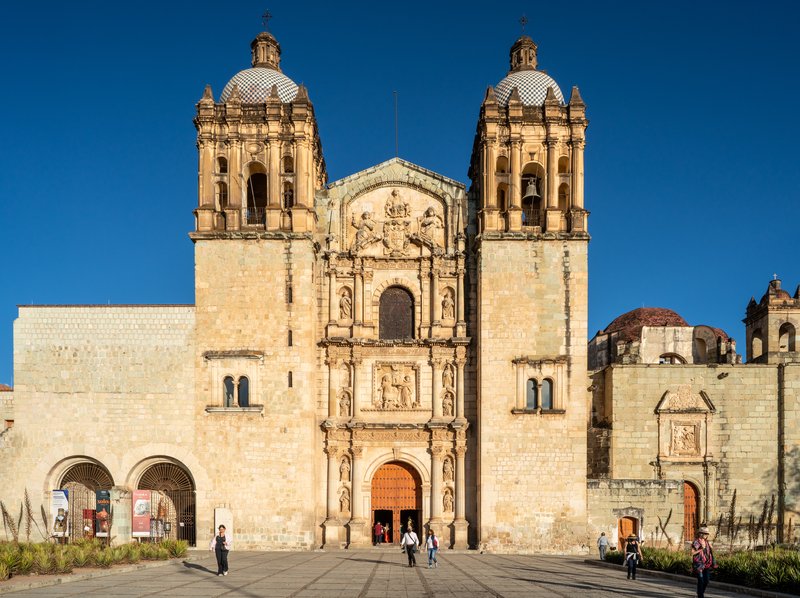
A Dominican church begun in 1572 with one of the most ornate Baroque interiors in the Americas. A gilded genealogical tree of the Guzmán family spreads across the choir ceiling vault; the nave is encrusted with more than 100 relief figures of saints and apostles.
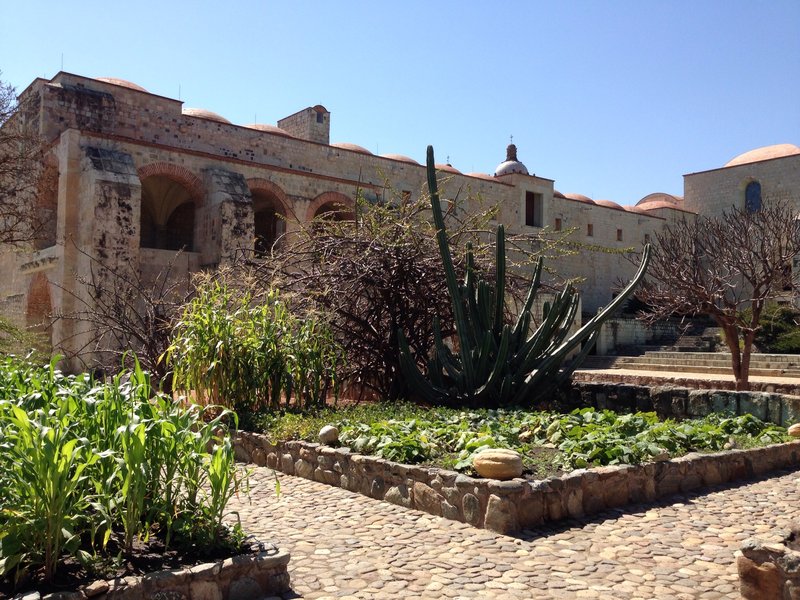
A 2-hectare botanical garden inside the former Dominican convent of Santo Domingo, documenting the plant heritage of Oaxaca's 16 ecosystems. The collection spans wild and cultivated agave species, copal trees, cacti, and medicinal plants. Guided tours only — booked at the museum office.
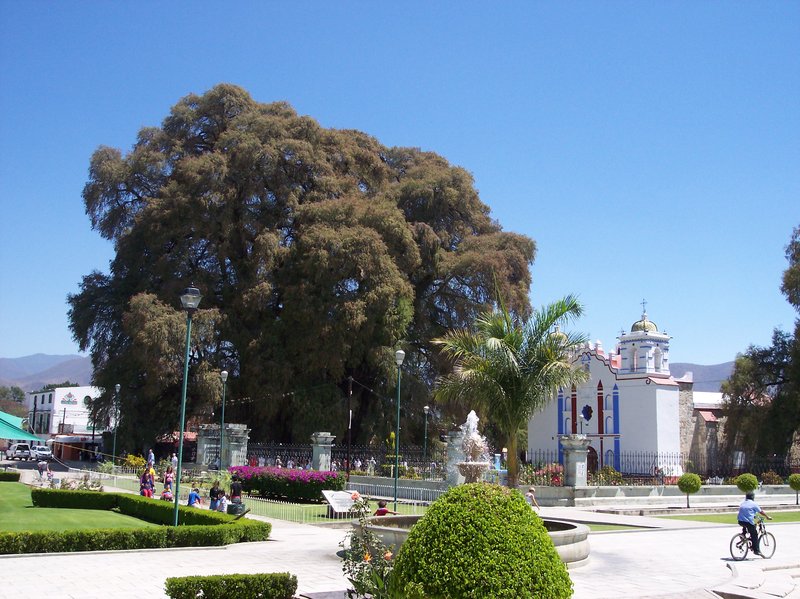
A Montezuma cypress in the churchyard of Santa María del Tule with the widest trunk circumference of any tree on earth — 58 meters around the base. Carbon-dating supports an age of at least 1,400 years. The trunk's furrowed surface reveals shapes locals have named: an elephant, a lion, a puma.
15 min · 5 min → Basílica de Nuestra Señora de la Soledad
6.Basílica de Nuestra Señora de la Soledad~45 min
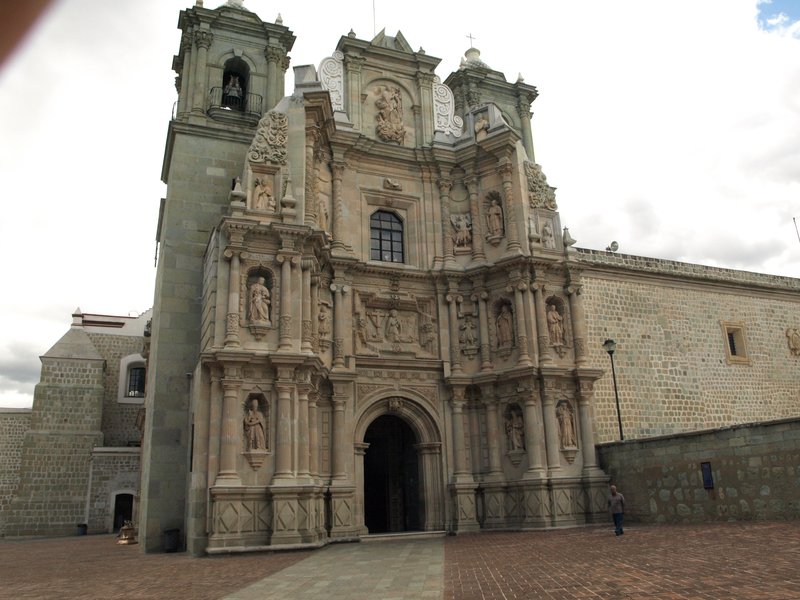
Oaxaca's most beloved pilgrimage church, built between 1682 and 1690 in local Baroque style with a facade carved from green cantera stone. The interior holds the image of the Virgen de la Soledad — patroness of the state — encased in a pearl-embroidered robe and topped with a silver crown studded with diamonds.
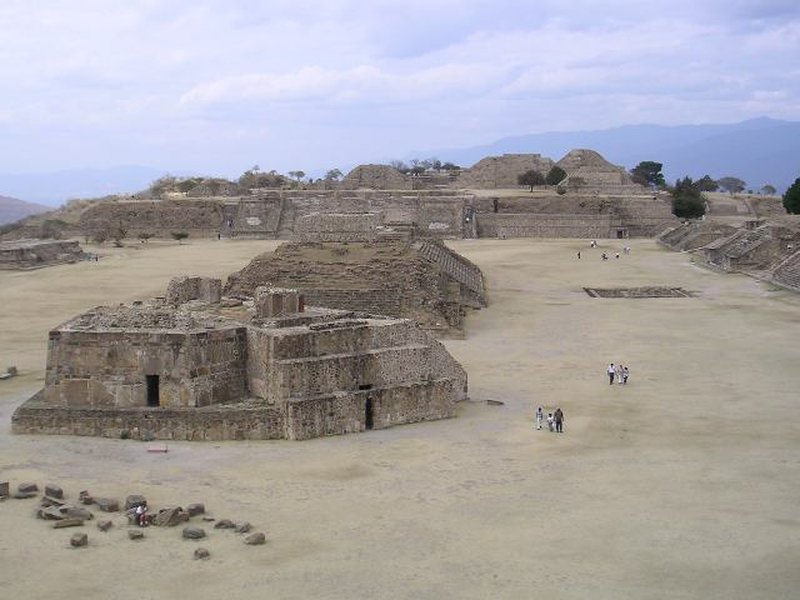
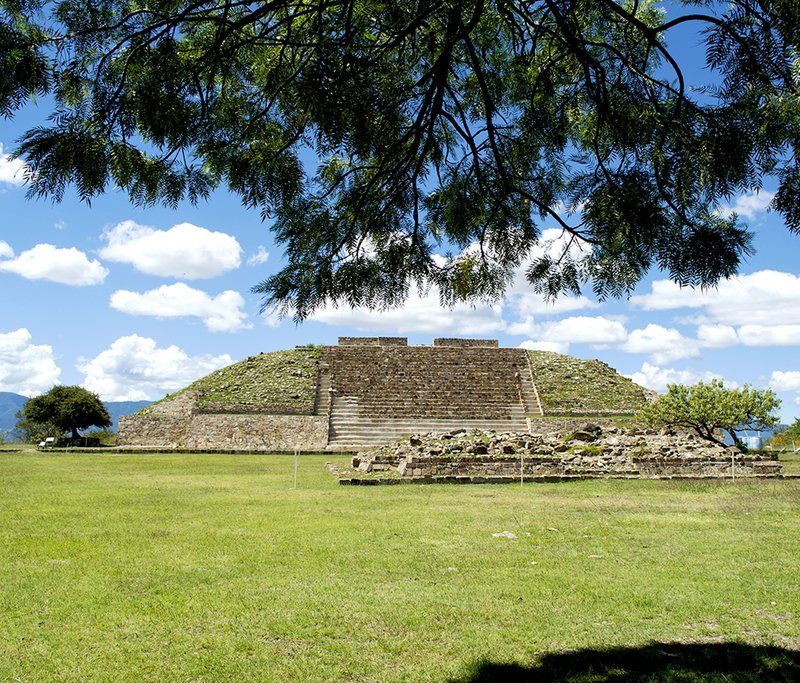
The Zapotec capital for 1,300 years, built on a mountain artificially leveled 400 meters above the Oaxaca Valley. The ceremonial core — the Grand Plaza, Building J observatory, the Ball Court, the North Platform, and the South Platform — served a city of 25,000 at its peak. UNESCO World Heritage Site since 1987.
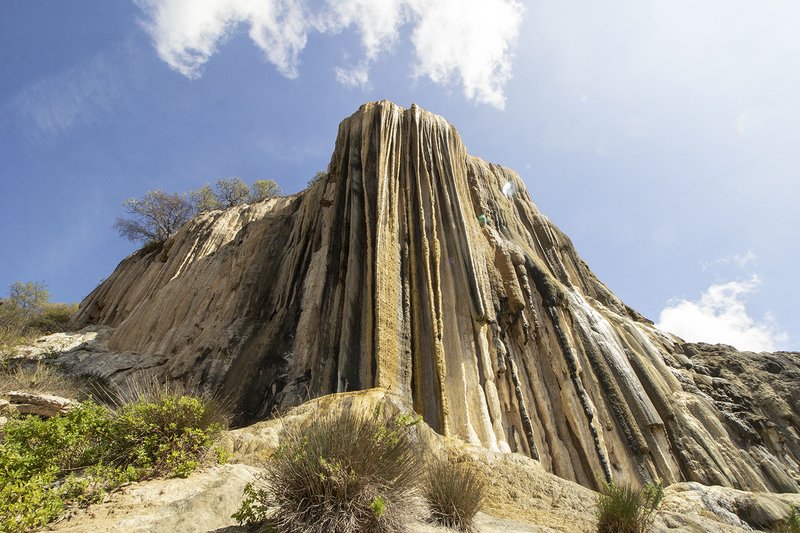
Mineral-laden springs deposit calcium carbonate over millennia, building cliff cascades resembling frozen waterfalls. Two natural pools at the cliff edge look out over the Oaxacan valley. The name means the water boils — a reference to the visible carbonation, not temperature.
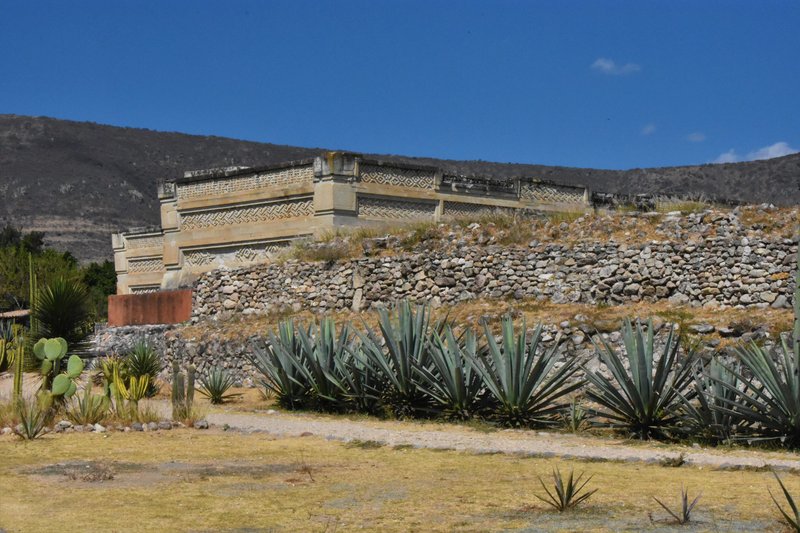
The Zapotec religious capital after Monte Albán's decline. Palace walls are faced with the most sophisticated stone mosaic work in pre-Columbian Mesoamerica — cut pieces forming 14 distinct interlocking geometric motifs, assembled without mortar. The name means "Place of the Dead" in Nahuatl.
A Zapotec hilltop city active between 300 BCE and 900 CE, 8 km northwest of the city center. The site includes restored palace complexes, a ball court, and a ceramic workshop area producing distinctive green-glazed pottery. Far less visited than Monte Albán.
15 min → Ex-Convento de Santiago Apóstol · Cuilapam de Guerrero
2.Ex-Convento de Santiago Apóstol · Cuilapam de Guerrero~1 hr
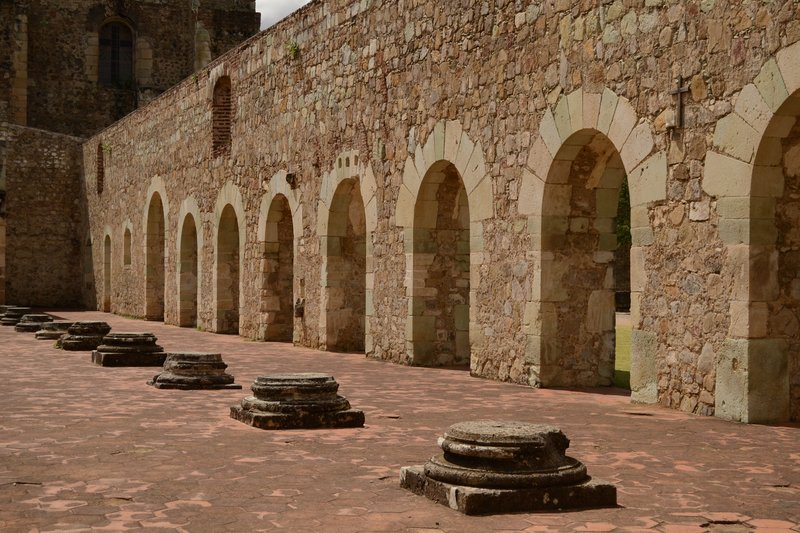
A Dominican convent begun in 1555 and abandoned unfinished around 1570 when indigenous labor was withdrawn after a dispute with colonial authorities. The roofless basilica nave — 74 meters long — now stands open to the sky. Vicente Guerrero, first president of independent Mexico, was executed here in 1831.
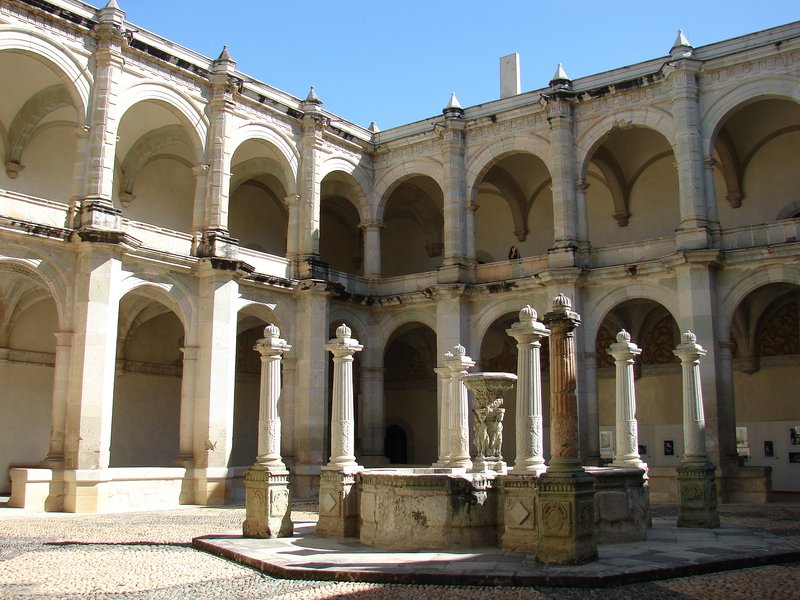
The state's pre-eminent archaeology museum in the Ex-Convento de Santo Domingo. Its centerpiece is the Mixtec treasure from Monte Albán Tomb 7 — the largest pre-Columbian burial hoard ever found in the Americas, excavated in 1932: gold pectorals, jade masks, turquoise mosaics.
Small-group guided tour of the Zapotec hilltop capital — the Grand Plaza, Building J observatory, the ball court, and the North and South platforms — with a licensed guide covering 1,300 years of Zapotec history and astronomical alignments.
Full-day small-group excursion through the Valle de Tlacolula — the Árbol del Tule, the geometric stone mosaics of Mitla, and the mineral petrified waterfall formations of Hierve el Agua — with a licensed guide and round-trip transport included.
Small-group day hike through pine-oak cloud forest in the Pueblos Mancomunados at 2,800–3,100 m elevation — three route options of 2–25 km guided by community members, with views across the entire Oaxaca Valley.
Full-day small-group tour combining Monte Albán's Zapotec ruins with hands-on craft workshops in the artisan villages of San Bartolo Coyotepec and San Martín Tilcajete, with a certified guide throughout.
Full-day group tour to Monte Albán for Zapotec culture and astronomy, then south to the 16th-century Ex-Convento de Cuilapam and the black clay and carved wood artisan villages of Arrazola and Coyotepec.
A guided walk through Oaxaca's colonial center — the Zócalo, Santo Domingo church, the pedestrian Andador Turístico, and the city's history from Zapotec, Mixtec, and colonial periods — with a licensed local guide.
Half-day small-group tour to Monte Albán with a certified guide — the Grand Plaza, Building J astronomical observatory, the ball court, and the North Platform — with entrance ticket included and return transfer.
Full-day group tour through the Valle de Tlacolula — guided visits to Mitla's stone mosaic palaces and Hierve el Agua's petrified waterfall cliffs — with certified guide, round-trip transport, and entrance fees included.
Tip-based group walking tour of Oaxaca's Centro Histórico — the Zócalo, Cathedral, Santo Domingo, the pedestrian Andador, and the Xochimilco quarter — with local guides covering pre-Hispanic through colonial history.
Small-group day tours led by local certified guides — city walking orientation, Monte Albán, and full-day valley circuits covering Mitla, Árbol del Tule, and Hierve el Agua — with deep focus on Zapotec and Mixtec cultural context.
Small-group cultural and archaeological tours departing from Oaxaca — Monte Albán, Hierve el Agua, Mitla, and Árbol del Tule — led by local guides with strong knowledge of Zapotec history and traditions.
Oaxaca's signature dish — a large crisped corn tortilla spread with black bean paste, Oaxacan string cheese, and a choice of tasajo dried beef, chorizo, or cecina. Eaten flat or folded, with fresh salsa.
Oaxaca produces 85% of Mexico's mezcal — distilled from agave varieties across the state's valleys. Batches differ by species, terroir, and distillation. In Situ Mezcalería holds the city's broadest small-producer selection.
Foreign number: accepted — the SMS verification code arrives on most international numbers.
Uber Eats covers the centro histórico and surrounding colonias reliably; most major restaurants and taquerias are listed. Delivery windows are typically 25–40 min and the app is easy to use without a Mexican number.
Foreign number: accepted — the SMS code arrives on most international numbers; no Mexican SIM needed.
DiDi Food is the local alternative and often undercuts Uber Eats on price; coverage is strong in the centre and extends into the Jalatlaco and Reforma neighbourhoods. Useful when Uber Eats shows a long wait.
Foreign number: not accepted — a Mexican phone number is required to receive the SMS verification code.
Rappi requires a Mexican phone number to register and is the least used of the three in Oaxaca; stick to Uber Eats or DiDi Food unless you already have a local number set up.
Foreign number: accepted — the app verifies by SMS and most international numbers receive the code.
DiDi is the main ride app in Oaxaca — Uber pulled out of the city. The app accepts foreign payment cards without a Mexican number. Fares are metered and quoted upfront; the fleet is large enough in the centre that wait times are generally under five minutes during the day.
Oaxaca is where three of Mexico's most significant pre-Columbian civilizations — Zapotec, Mixtec, and later Aztec — overlapped in time and territory without merging. Monte Albán was Zapotec for over a millennium; by 700 CE it was abandoned and the Mixtec moved into the surrounding valleys. Mitla, which Day 3 visits, served as the Zapotec sacred city through all of this — then became a Mixtec religious center, then fell to the Spanish. The 16th-century Spanish built their cathedral directly atop the Zapotec temples at Mitla's central group. Three civilizations, one sacred site.
The Mixtec treasure from Tomb 7 at Monte Albán — on display at the Museo de las Culturas — was found in a tomb the Zapotec had built but the Mixtec reused as a burial chamber around 1350 CE. Alfonso Caso opened it in 1932 and found nine individuals interred with gold pectorals, jade masks, and turquoise mosaics. The volume and quality of the objects make it the largest pre-Columbian burial hoard ever found in the Americas — hiding inside a site that had already been partially excavated for decades.