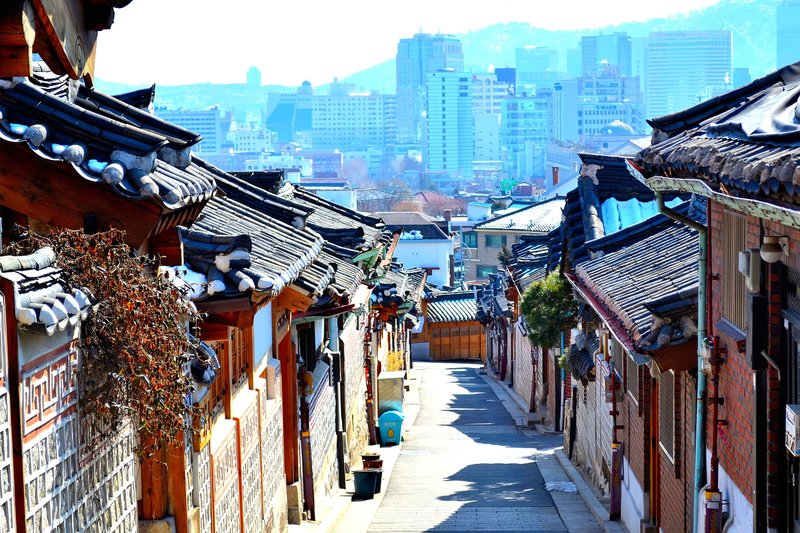
Six hundred traditional Korean hanok houses from the Joseon Dynasty, tucked between Gyeongbokgung and Changdeokgung. The alleyways function as a living residential quarter while opening views of curved tiled roofs against the Seoul skyline — the most concentrated traditional streetscape remaining in the city.
13 min · 3 min → Changdeokgung Palace & Secret Garden
2.Changdeokgung Palace & Secret Garden~3 hr
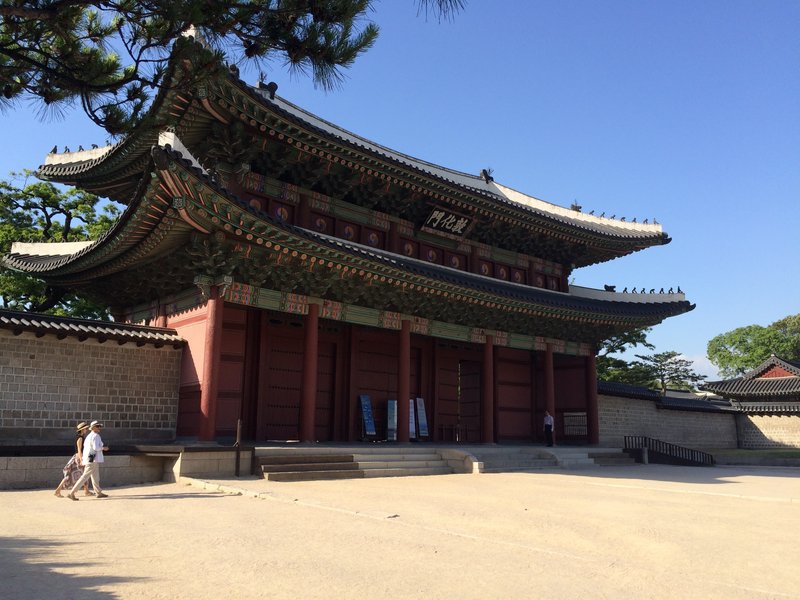
The UNESCO-listed Palace of Prospering Virtue, completed in 1412, is crowned by Huwon — the Secret Garden — an extraordinary 78-acre pleasure garden of ancient pavilions over lotus ponds and thousand-year-old trees. Entry to the garden is by guided tour only, with English tours four times daily.
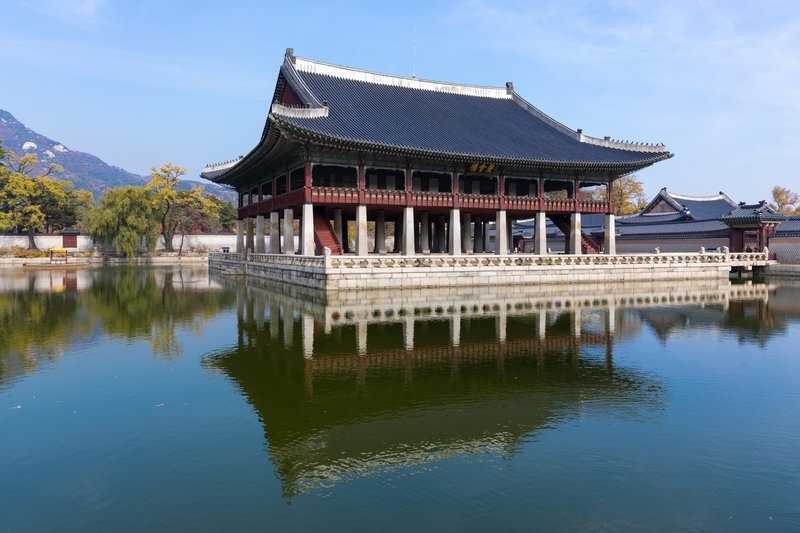
The largest of Seoul's five Joseon-era palaces, built in 1395 at the foot of Bugaksan. Lily-pond pavilions, gate towers, and ceremonial halls sprawl across a complex that once held 7700 rooms. The Changing of the Guard ceremony runs twice daily at the main Gwanghwamun Gate.
From Hotel: 50 min → Seodaemun Prison History Hall
1.Seodaemun Prison History Hall~1.5 hr
Japan's colonial-era lockup, built in 1908 and used by successive authoritarian regimes until 1987. Independence fighters were imprisoned, tortured, and executed here. The preserved cell blocks, underground execution chamber, and permanent exhibition document Korea's most harrowing chapter with unflinching honesty.
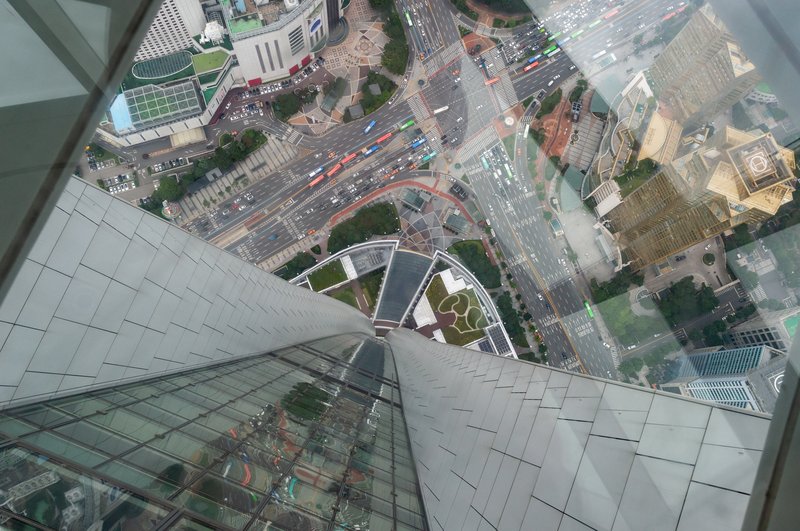
The 5th tallest building on earth — 555m, 123 floors — houses the highest glass-floor observatory in the world at 478m, holding a Guinness World Record. The elevator ride at 600 metres per minute is a spectacle before you reach the top. The glass floor walkway and Sky Terrace deliver the most dramatic perch in Seoul.
A UNESCO-listed pair of Joseon royal tombs set in a wooded park amid the towers of Gangnam. Grassy burial mounds ringed by stone guardians hold King Seongjong, Queen Jeonghyeon, and King Jungjong, reached along forest paths that make an abrupt green counterpoint to the business district pressing in on every side.
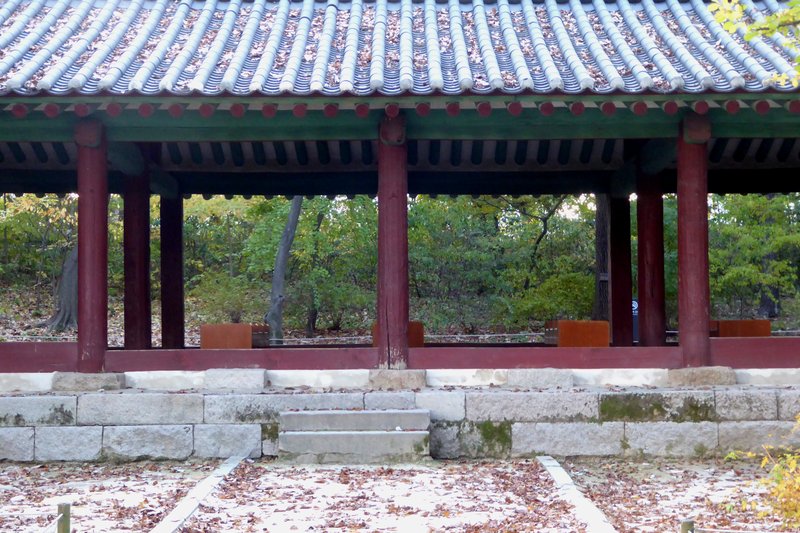
Korea's oldest and best-preserved Confucian royal shrine, housing the spirit tablets of 19 Joseon Dynasty kings and 30 queens. The main hall Jeongjeon is the longest wooden structure in East Asia. On weekdays entry is by English guided tour only, running four times daily. UNESCO World Heritage Site since 1995.
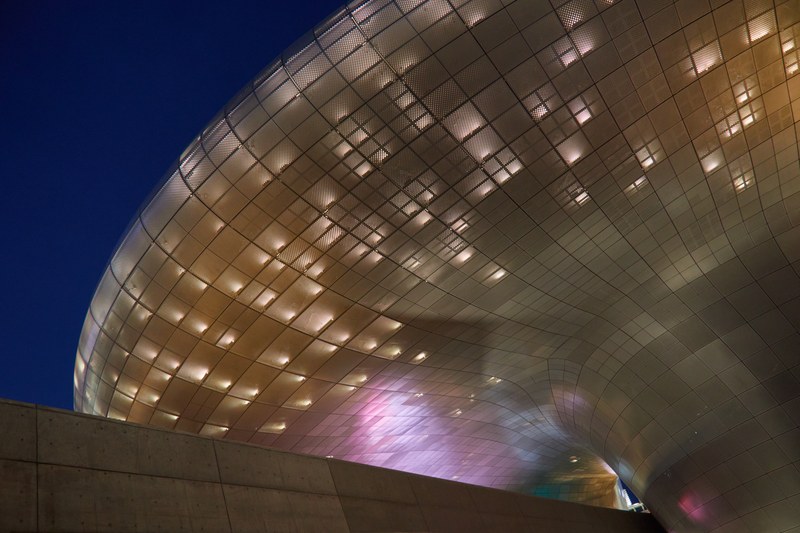
Zaha Hadid's visionary 2014 landmark — a sweeping aluminium-clad structure with zero straight lines or right angles flowing across an entire city block. The most striking piece of contemporary architecture in Seoul and the anchor of the city's design scene. The exterior grounds and public spaces are free.
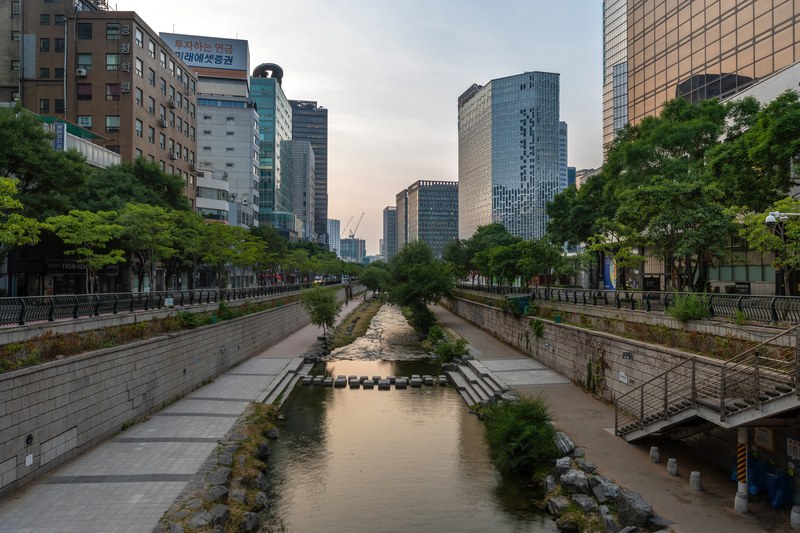
A 5.8km historic stream restored in 2005 by tearing out the elevated expressway that had buried it since the 1960s. The sunken greenway of stepping stones, waterfalls, and lit bridges threads through downtown Seoul's concrete canyons. Start at Cheonggye Plaza and stroll east to Dongdaemun.
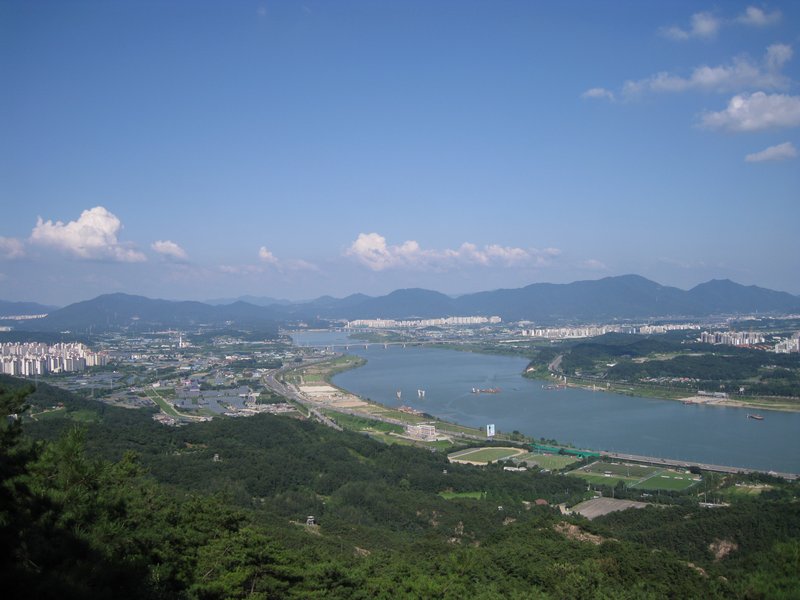
E-Land's Hangang River cruise departs Yeouido, tracing 40 minutes through Seoul's skyline and twelve illuminated bridges. Best timed at dusk when N Seoul Tower glows against Namsan's ridge and the bridges light their spans across the wide river — a perspective impossible to achieve from land.
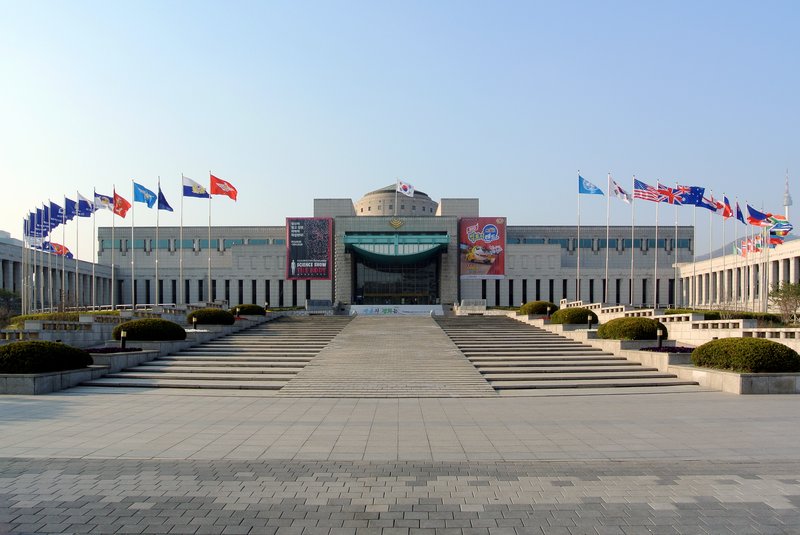
The world's largest war memorial complex, anchored by tanks, artillery, and warplanes in its forecourts. Inside, immersive galleries trace Korean military history through the Korean War, including the famous Brother Meets Brother bronze sculpture at the entrance — one of the most powerful public monuments in Asia.
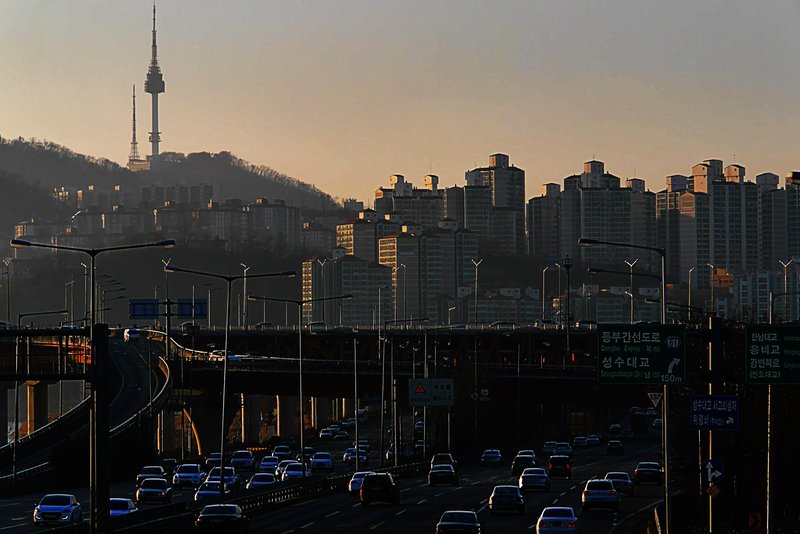
Seoul's defining communications tower stands at 480m elevation on Namsan Mountain, with a public observatory delivering a 360-degree panorama across one of Asia's largest cities. Plan for dusk — when the city transitions from sunlit sprawl to a neon sea, the view from Namsan becomes exceptional.
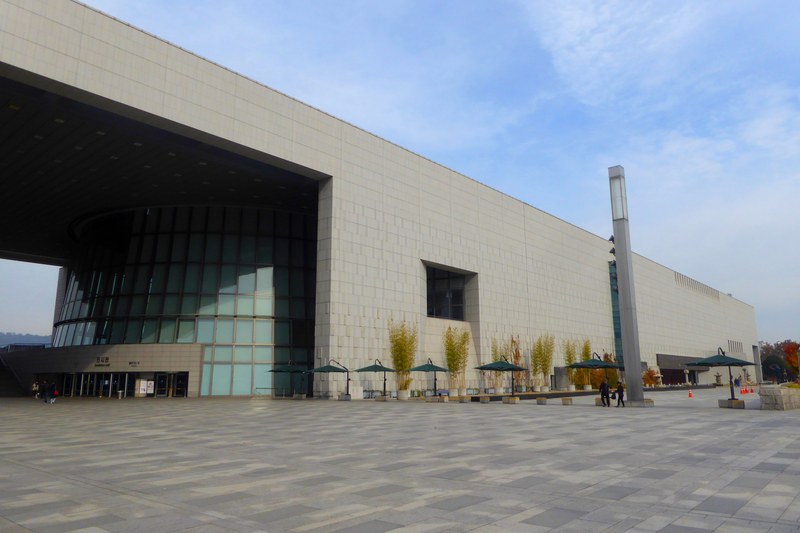
Korea's flagship national museum and one of the largest on earth, tracing the peninsula from Paleolithic tools to Joseon court art across six floors. The soaring central hall frames the ten-story Gyeongcheonsa Pagoda; the collection holds the gold crowns of Silla and the gilt-bronze Pensive Bodhisattvas.
ARRIVE Suwon Station: 22 min · 8 min → Hwaseong Fortress
1.Hwaseong Fortress~3 hr
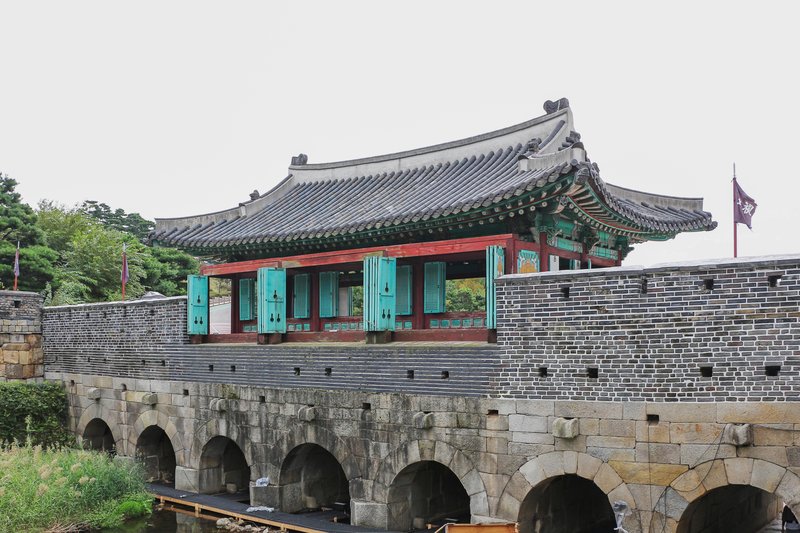
A UNESCO World Heritage fortress wrapping 5.7km of stone rampart around old Suwon, built by King Jeongjo in the 1790s as a model of Korean military engineering. The circuit strings together great gates — Janganmun and Paldalmun — beacon mounds, and the arched Hwahongmun floodgate over the Suwoncheon stream.
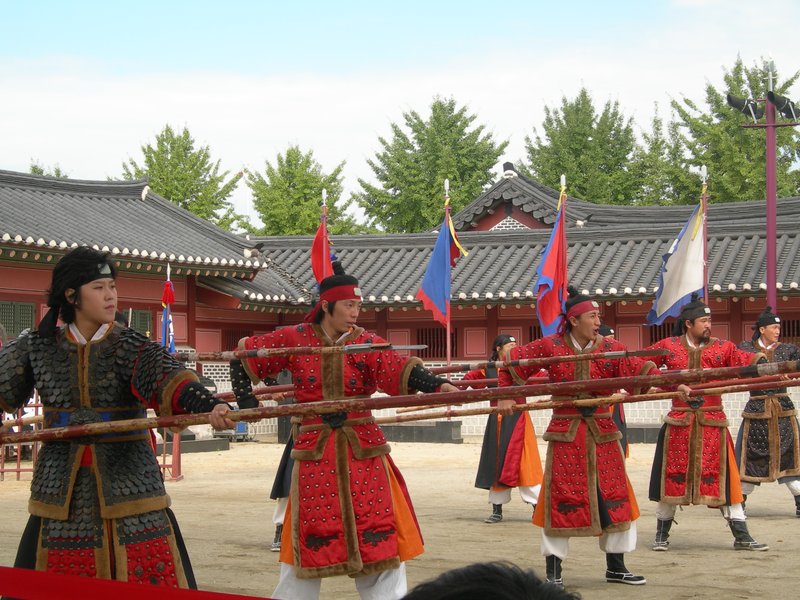
The largest Joseon detached palace, a 600-room complex at the foot of Paldalsan inside the fortress walls where King Jeongjo lodged on his processions from Seoul to his father's tomb. Restored courtyards stage daily martial-arts demonstrations and hosted the king's grand 1795 birthday feast for his mother.
The closest you can get to North Korea — Joint Security Area, 3rd Infiltration Tunnel, Dora Observatory, and Imjingak Peace Park in a full half-day. No shopping stops. Free cancellation.
Full-day loop covering three Seoul icons — the royal palace, the Joseon-era hanok village at Namsan's base, and the tower above it — with expert local commentary throughout. Jogyesa Temple included.
Gwanghwamun · Gyeongbokgung with Changing of the Guard · Bukchon Hanok Village · Jogyesa Temple · Insadong · Gwangjang Market · N Tower Park — all in a small group with optional Korean tea ceremony. Dropoff included.
Imjingak Park · Freedom Bridge · the 3rd Infiltration Tunnel dug by North Korea through solid granite · DMZ Exhibition Hall — and a live meet-up and Q&A with a North Korean defector.
One of Seoul's largest food markets — 10 renowned local dishes · Korean drinking games · cultural storytelling with a friendly guide. All food and drinks included.
A local historian leads through spots foreigners can't find alone — Ehwa Mural Village · Naksan Dragon Art · the moonlit Hanyang City Wall above Seoul's neon-lit grid.
Changgyeong Palace under floodlights · Gwangjang Market for street food · a walk along the Cheonggyecheon Stream · a climb to Naksan Park's moonlit city-wall panorama.
The 2nd Infiltration Tunnel dug through solid granite by North Korea · Cheorwon Observation Deck with views into the North · a full Korean War history briefing. Lunch included.
The full Korean DMZ story — 3rd Infiltration Tunnel · Dora Observatory · Imjingak Peace Park · and a live Q&A with a North Korean defector. Suspension Bridge included.
Korea's most-reviewed DMZ tour — JSA Museum · 3rd Infiltration Tunnel · Dora Observatory · and Imjingak, with an optional crossing of the iconic Red Suspension Bridge. Free cancellation.
The Freedom Bridge · 3rd Infiltration Tunnel · the NK Experience Hall · and a North Korean defector meet-up — the most complete DMZ story in a single tour.
Travelers' Choice Best of the Best. Hidden gems off every tourist trail — Ehwa Mural Village · the moonlit Hanyang City Wall · and Naksan Park's Seoul panorama with a local historian.
Gwangjang Market — Seoul's oldest and Netflix-famous — mung bean pancakes · dumplings · minced fish fillets · followed by a walk along Cheonggyecheon Stream ending at Euljiro.
Full-day guided loop through royal Seoul — Gyeongbokgung · Jogyesa Temple · traditional Namsangol Hanok Village at Namsan's base · and N Seoul Tower. Dropoff included.
Rice mixed with seasoned vegetables and gochujang paste. The dolsot version arrives in a stone pot hot enough to crisp the rice base — Seoul's most iconic bowl, served everywhere.
Ice-cold Pyongyang-style buckwheat noodles in a chilled beef broth — Seoul's most storied cold dish, a century-old institution most famously served at Woo Lae Oak.
Chewy rice cakes in a deep-red gochujang sauce — Seoul's most beloved street food, found at pojangmacha tent stalls and at Sindang-dong Tteokbokki Town since 1953.
Foreign number: not accepted. — sign-up asks for ID verification tied to a Korean number.
Korea's largest food delivery app by market share; dominant restaurant selection across all Seoul neighbourhoods; interface and sign-up entirely in Korean.
Foreign number: not accepted. — a Coupang account needs a Korean number linked to an ARC.
Fast delivery across Seoul backed by Coupang's own courier fleet; strong restaurant and convenience variety; interface and registration entirely in Korean.
Foreign number: accepted. — the verification code reaches most international numbers via SMS.
Korea's dominant ride-hailing app — wider coverage than Uber across Seoul; English-language interface; foreign-issued Visa and Mastercard accepted without additional verification.
The former capital of the thousand-year Silla Kingdom — royal burial mounds at Tumuli Park, Asia's oldest observatory at Cheomseongdae, Bulguksa Temple against forested hills, and the stone-carved cave shrine of Seokguram. UNESCO World Heritage.
Seoul does something almost no city achieves: it makes five centuries of history feel urgent. The Joseon palaces are not relics — they are the organizing logic of the city. Stand at Gwanghwamun Gate and look north at Gyeongbokgung against Bugaksan's ridge, then turn south toward the glass towers of Gangnam. That is the whole arc of Korean modernity in a single turn of the head.
What struck me most is the resilience embedded in the landscape itself. Cheonggyecheon was a highway overpass thirty years ago. Seodaemun was still a functioning prison within living memory. Bukchon's alleyways were nearly lost to redevelopment. Seoul saved each of these things — not from nostalgia, but from an insistence that where you come from shapes where you are going. Every city talks about that. Seoul actually did it.