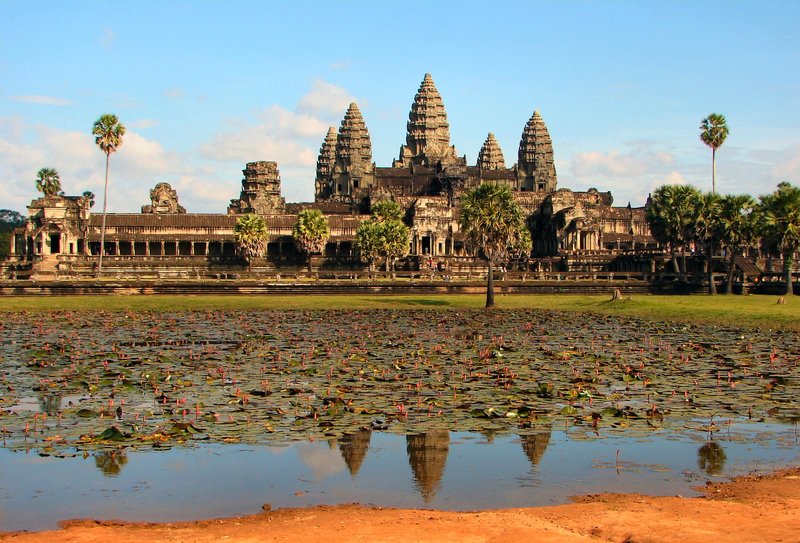
The largest religious monument on Earth, this 12th-century temple built by King Suryavarman II as a Hindu shrine to Vishnu later became a Buddhist site, its five lotus towers rising behind a moat nearly 200 meters wide.
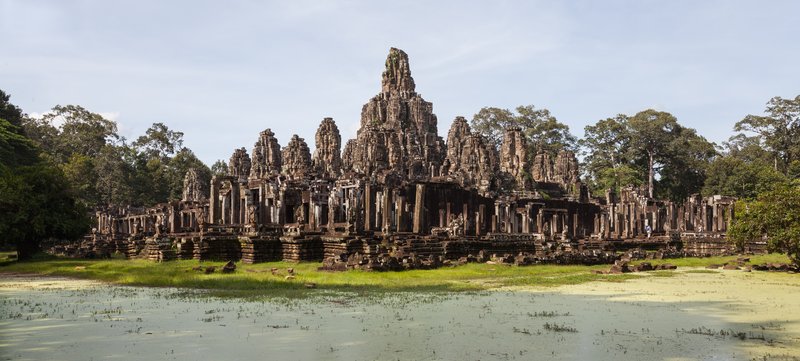
The state temple of King Jayavarman VII at the exact center of Angkor Thom, its 54 towers carved with 216 giant, serene stone faces looking out in every direction.
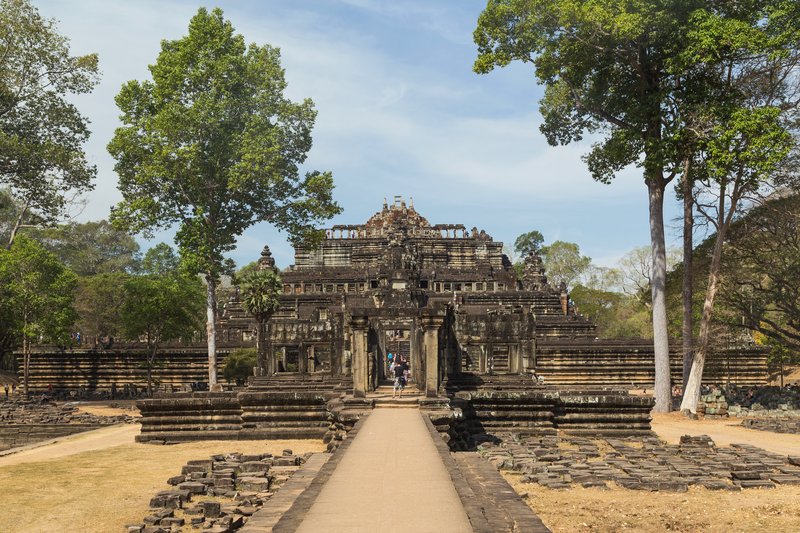
A three-tiered pyramid temple built as Udayadityavarman II's state temple, painstakingly rebuilt after its sandstone core collapsed, with a giant reclining Buddha built into its western wall in the 16th century.
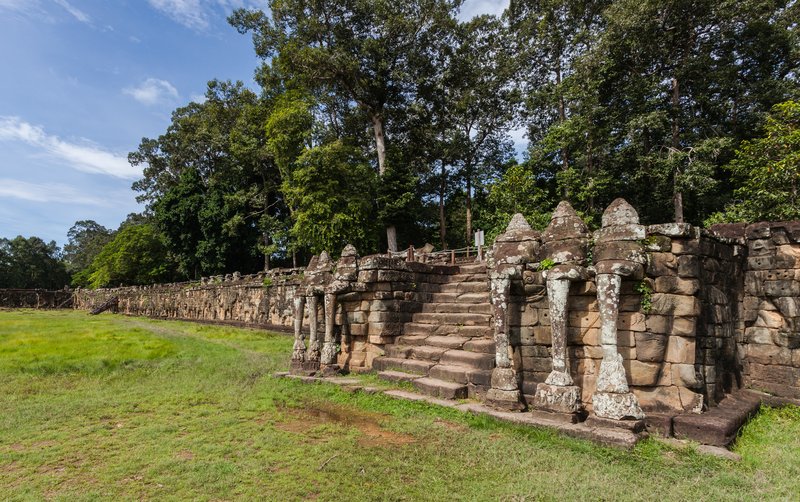
A 350-meter reviewing stand Jayavarman VII once used to watch royal ceremonies and army processions, its retaining wall carved with life-sized elephants and Garuda figures.
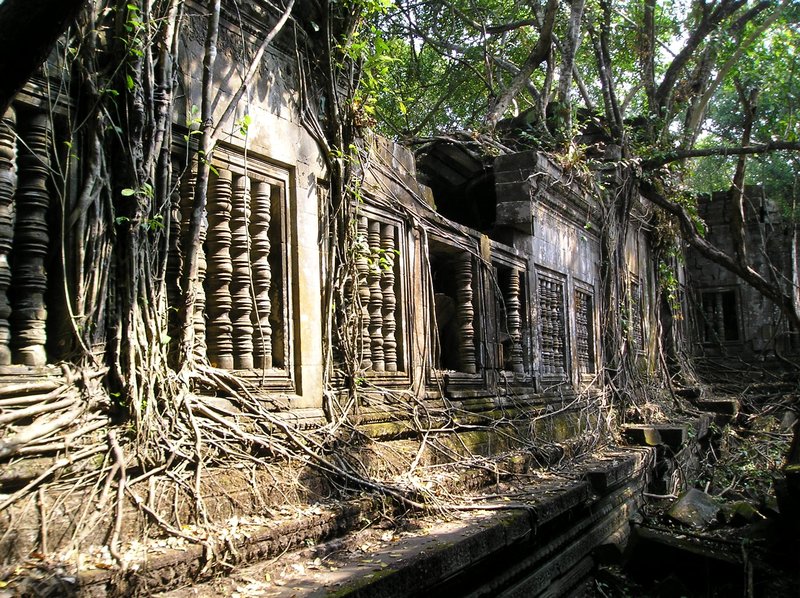
A Buddhist monastery Jayavarman VII built for his mother, left deliberately half-swallowed by giant strangler fig and silk-cotton trees whose roots pry apart the sandstone galleries.
Built by Jayavarman VII and dedicated to his father, this sprawling temple served as his temporary residence while Angkor Thom was under construction, its two-story hall of round columns unlike any other structure at Angkor.
A small artificial island temple set in a central pond ringed by four smaller pools, built to represent a mythical Himalayan lake believed to hold healing waters.
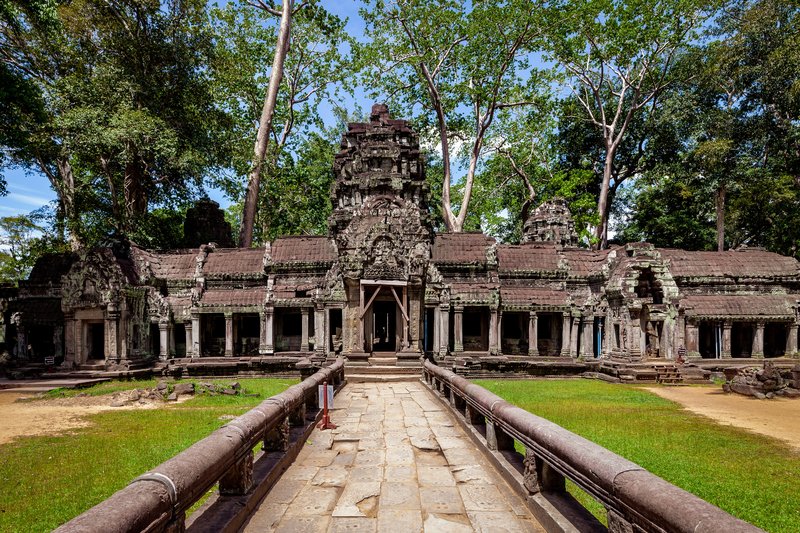
A small Bayon-style temple whose eastern gate tower is almost entirely engulfed by the roots of a single giant strangler fig, one of the most striking tree-and-stone sights at Angkor.
A brick-and-laterite temple-mountain built as Rajendravarman's state temple, its steep tiered pyramid long popular as a sunset viewpoint over the surrounding countryside.
A temple-mountain built on an artificial island in the now-dry East Baray reservoir, its corner platforms guarded by large free-standing stone elephant statues at each level.
The state temple of King Indravarman I and the first sandstone temple-mountain the Khmer empire ever built, predating Angkor itself by more than a century and anchoring the older Roluos group of temples.
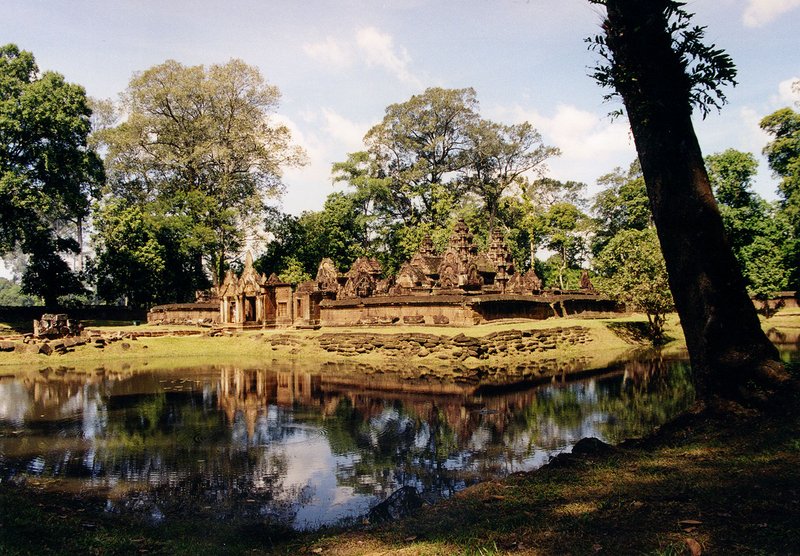
A moated temple built in classic Angkor Wat style but on a far smaller scale, its sandstone galleries and carvings among the best-preserved anywhere in the Angkor Archaeological Park.
A 10th-century temple dedicated to Shiva, built in pink sandstone with some of the deepest, most intricate carving anywhere at Angkor, on a scale far more intimate than the empire's later state temples.
The sacred mountain where King Jayavarman II declared himself universal monarch in 802 CE, founding the Khmer Empire, now home to a giant reclining Buddha carved into a single riverbed boulder and a river carved with hundreds of lingas.
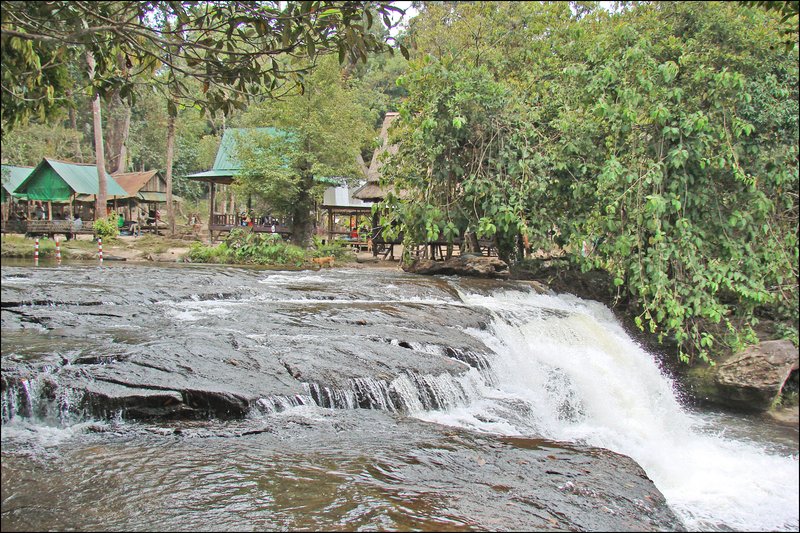
A 15-meter waterfall inside the national park where the Kulen River drops into a swimmable pool, a shaded, cool break after the climb around the mountain's temple sites.
A vast 12th-century temple built in the same style as Angkor Wat but never cleared or restored, its collapsed galleries and courtyards explored on wooden walkways threading through the rubble and jungle.
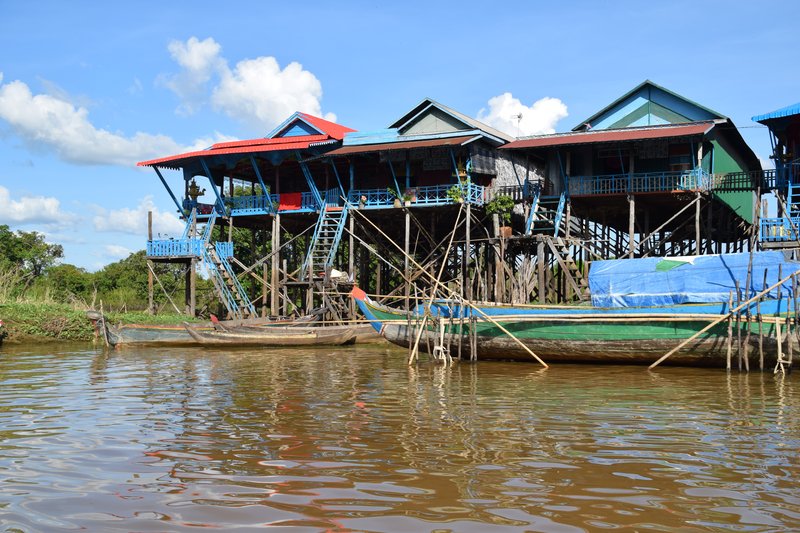
A stilted fishing village on the Tonle Sap floodplain, its houses raised six to nine meters on wooden stilts to clear the lake's seasonal rise, reached by boat through a flooded mangrove forest.
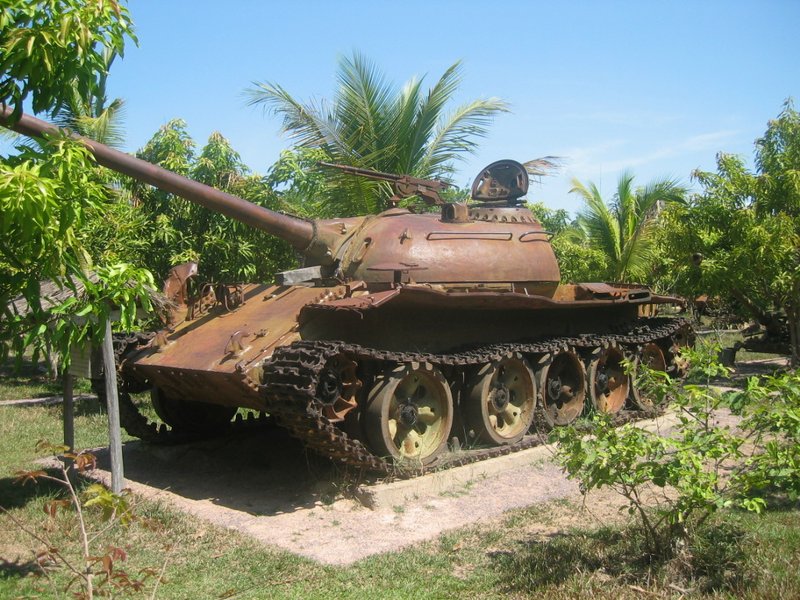
An outdoor collection of tanks, artillery and aircraft left over from three decades of war in Cambodia, with grounds staffed by former soldiers who guide visitors through the exhibits.
Run by the social enterprise Artisans Angkor, this working farm walks visitors through the full process of Khmer silk-making, from mulberry leaves and silkworms to hand-dyeing and traditional looms.
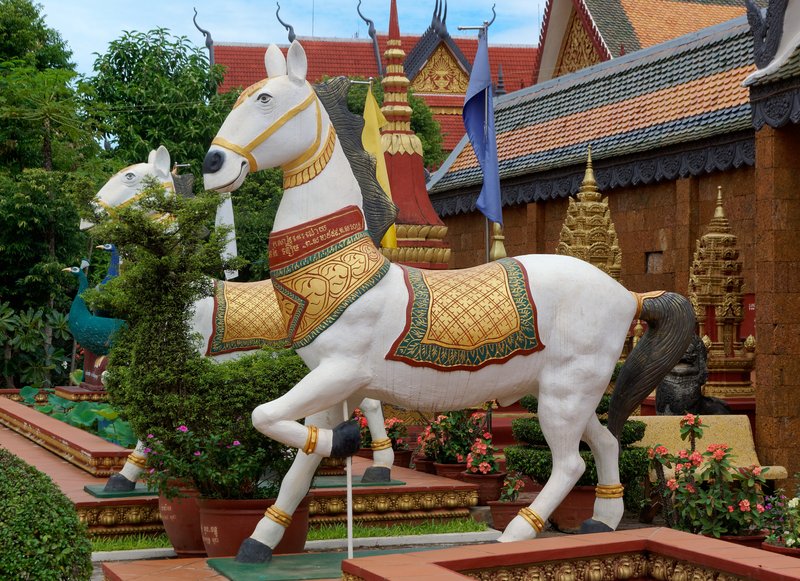
An active Buddhist temple on the Siem Reap River just north of Pub Street, its grounds mixing a giant reclining Buddha, brightly painted murals and a small monument built from an old fighter plane fuselage.
A full day covering Angkor Thom, Bayon and Ta Prohm with an English-speaking guide, timed for sunrise or sunset at Angkor Wat, with cold water and cool towels provided along the way.
A small-group cooking class inside a local home, capped at six travelers, shopping for ingredients by tuk-tuk before preparing and eating a four-course Khmer meal.
An 8-hour guided sweep of Angkor's headline temples timed around sunrise, covering Angkor Wat, Angkor Thom and Ta Prohm with an English-speaking guide.
A hands-on Khmer cooking class at Paper Tiger Restaurant with a professional local teacher, covering technique and background before the group sits down to eat what they made.
A half-day visit to an elephant sanctuary outside Siem Reap, watching rescued elephants bathe and roam in a natural setting rather than perform, with round-trip transport included.
An evening tuk-tuk tour through Siem Reap's night market with ten stops for street food, including a cocktail tasting at Old Wooden House Cocktail Bar along the way.
A visit to a lotus silk workshop followed by a boat ride through lotus fields on the lake, with a stop for traditional tea and an explanation of how the rare fiber is hand-processed.
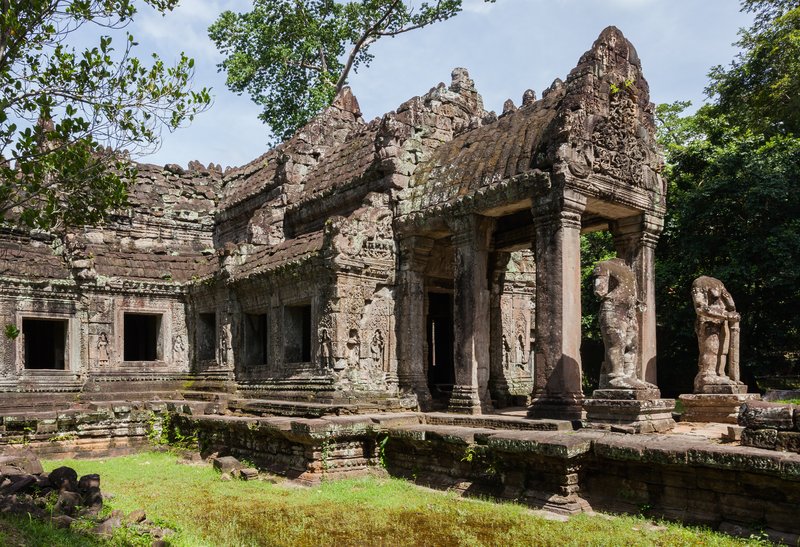
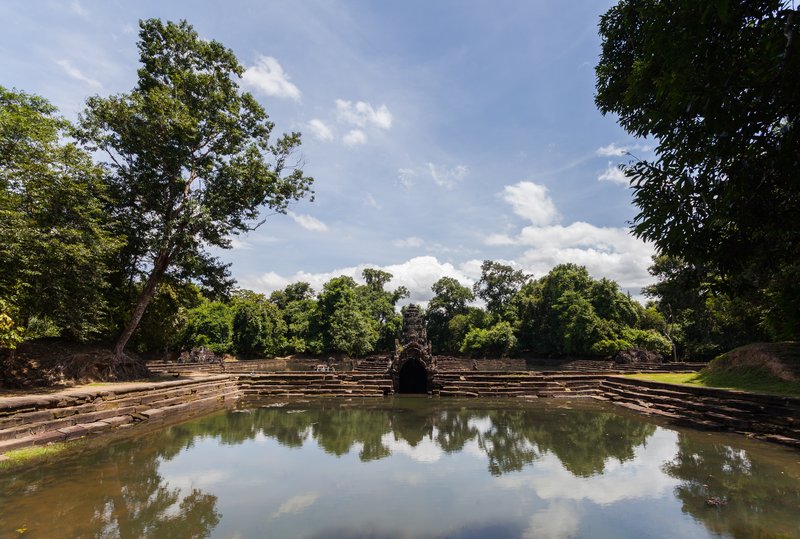
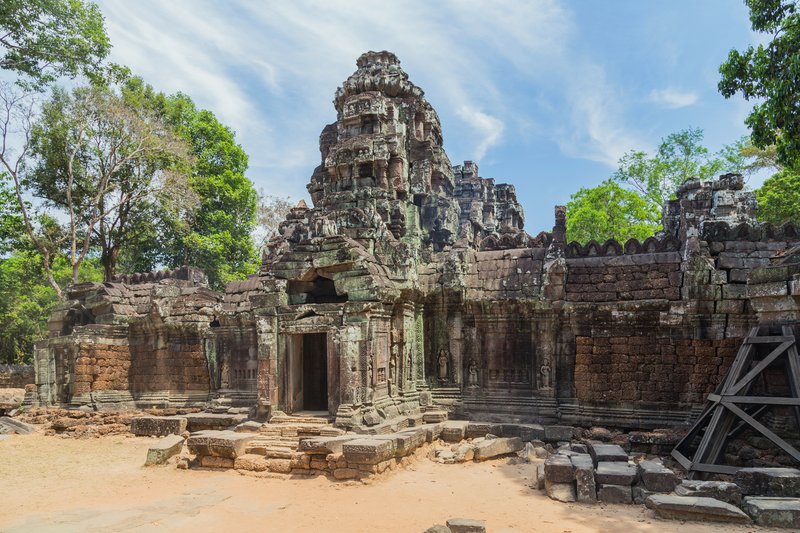
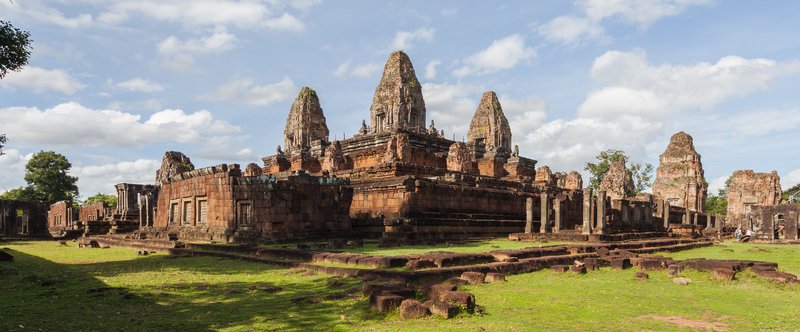
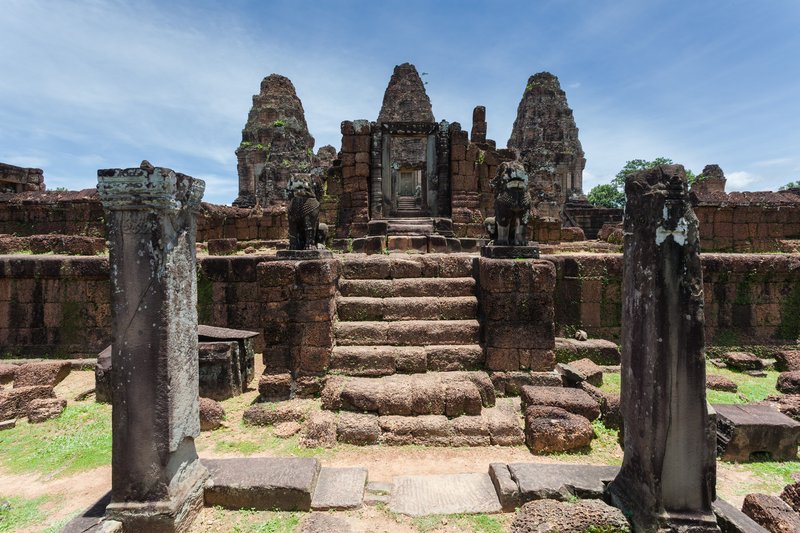
A full-day shared minibus tour of Banteay Srei plus four lesser-visited temples — Pre Rup, East Mebon, Ta Som and Preah Khan — with an Apsara Authority-certified English-speaking guide.
A boat tour through the stilted floating village of Kampong Phluk on the Tonle Sap, including a stop at a local school and a smaller boat ride into the mangroves.
A dinner-theater evening blending a Cambodian dance performance with fire dancing and staging and a full-course French-Khmer meal at The Labyrinth in Siem Reap.
Cambodia's national dish — a silky fish curry steamed in banana leaf with coconut milk, kroeung spice paste and slivered kaffir lime leaf, traditionally served in the leaf itself.
Foreign number: accepted — the app takes a foreign country code at sign-up, but the verification SMS does not always reach a foreign carrier; a local SIM avoids the issue.
The widest restaurant coverage in Siem Reap and the cleanest app for non-Khmer speakers, with reliable delivery times inside the Pub Street and Old Market radius.
Foreign number: accepted — the app takes a foreign country code at sign-up, but the verification SMS does not always reach a foreign carrier; a local SIM avoids the issue.
A strong second app on the same driver network as Grab's ride-hailing service, occasionally listing a restaurant or promo that Foodpanda does not carry.
A nightly hour-long circus blending acrobatics, music and theater to tell Cambodian folktales, performed by graduates of an arts school for at-risk youth.
Foreign number: accepted — the app takes a foreign country code at sign-up, but the verification SMS does not always reach a foreign carrier; a local SIM avoids the issue.
The Cambodian-born app locals default to, with fixed fares and no haggling; it usually comes out cheaper than Grab for the same tuk-tuk or car route around town.
Foreign number: accepted — the app takes a foreign country code at sign-up, but the verification SMS does not always reach a foreign carrier; a local SIM avoids the issue.
The Southeast Asian super-app, running 20 to 50 percent pricier than PassApp on the same local route, but the same account works across Thailand, Vietnam and other border crossings.
The Angkor Pass has three tiers, and the 3-day option is the one built for a trip this length
The official Angkor Pass, sold only through Angkor Enterprise, comes in three tiers: a 1-day pass for US$37, a 3-day pass for US$62 that stays valid across any 7 days from first use, and a 7-day pass for US$72 valid across any 30 days. Temple entry opens at 5:00am and the park closes at 6:30pm. A passport photo is taken on-site for the pass, so there is no need to bring one, and the physical card doubles as the ticket at every gate for its whole validity window.
Buying the pass a day ahead removes the single biggest risk to a sunrise visit: showing up at 4:45am to find the ticket line still moving. The 3-day tier fits this itinerary's Angkor-heavy days with room to spare if a sunrise gets clouded out and is worth retrying.
Riel and US dollars circulate side by side in Siem Reap, and prices under a dollar are settled in riel as small change — ATMs across town dispense dollars, not riel. Carrying riel on purpose is unnecessary; it arrives as change and spends the same as a dollar bill everywhere it is handed over.