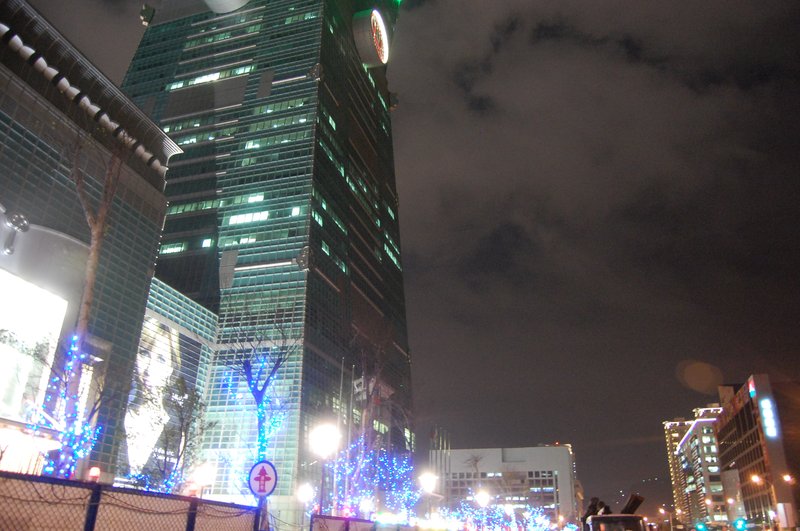
For a decade the world's tallest building — its segmented pagoda silhouette defines Taipei's skyline. The 89th-floor observatory gives a 360° view over the river basin, the Yangmingshan volcanic massif, and the north coast. The 101-tonne golden damper sphere is an attraction in itself.
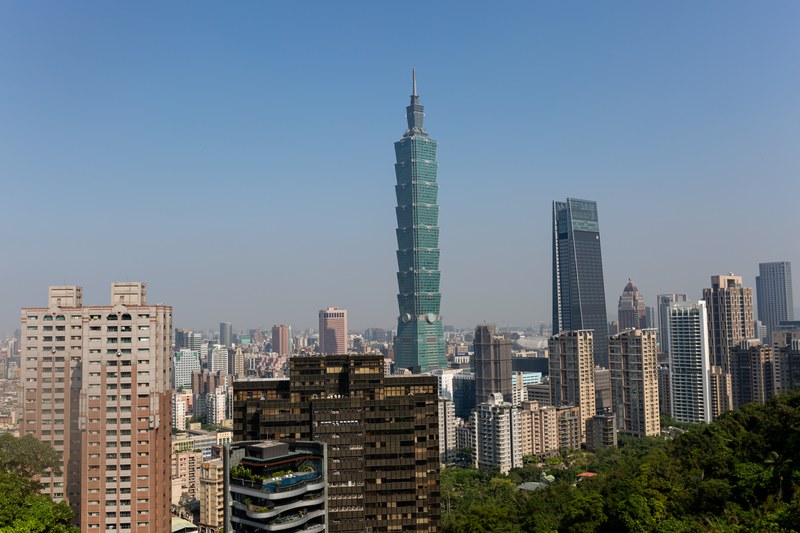
Four rocky peaks rising directly from the edge of Xinyi District — a 20-minute climb to granite outcrops where Taipei 101 fills the centre of the frame. At sunset the tower turns gold, then blue, then erupts in light. One of the city's unmissable views, open day and night.
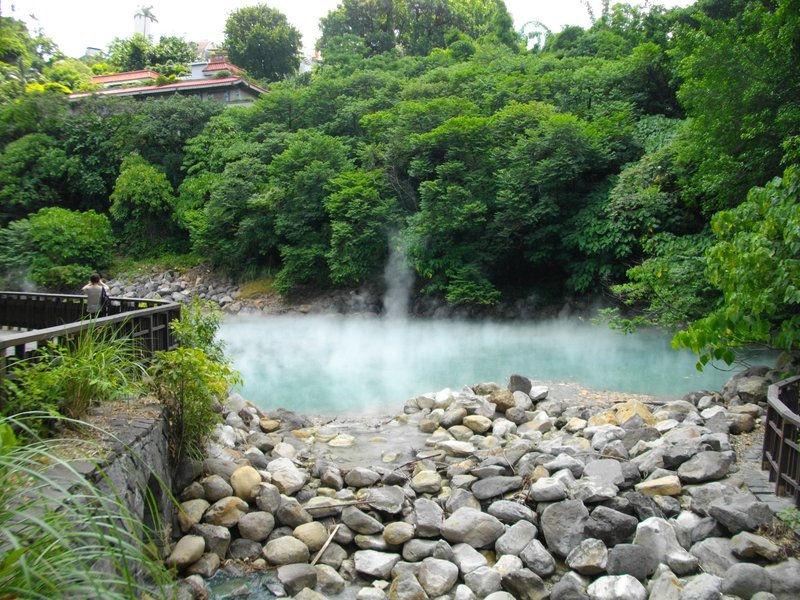
A steaming jade-green lake of highly acidic hot-spring water — one of only two places on Earth with Radon Spring water. The vivid sulphur-blue surface and mist rolling off the valley floor make this Taipei's most otherworldly sight. A short boardwalk loops the lake rim.
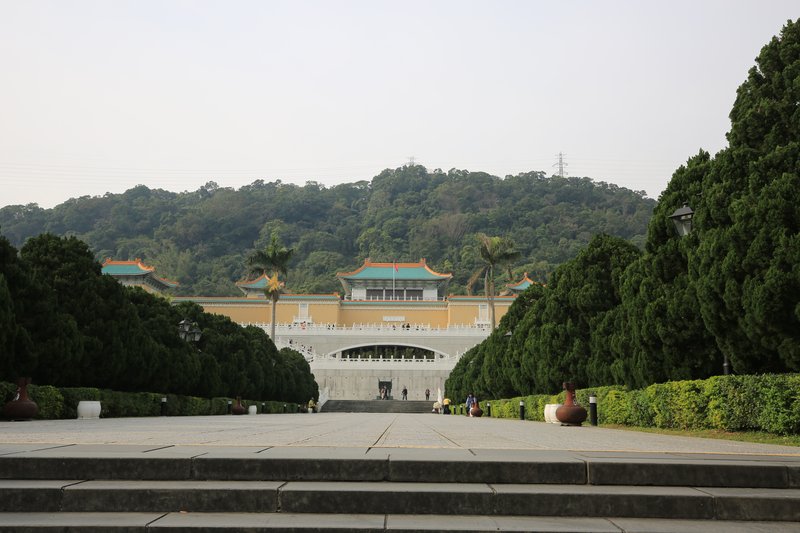
One of the world's great collections — 700,000 objects spanning 8,000 years: Shang bronzes, Song porcelain, imperial jade, and the Jadeite Cabbage, a palm-sized carving that draws its own queue. The collection was evacuated from Beijing's Forbidden City and never returned.
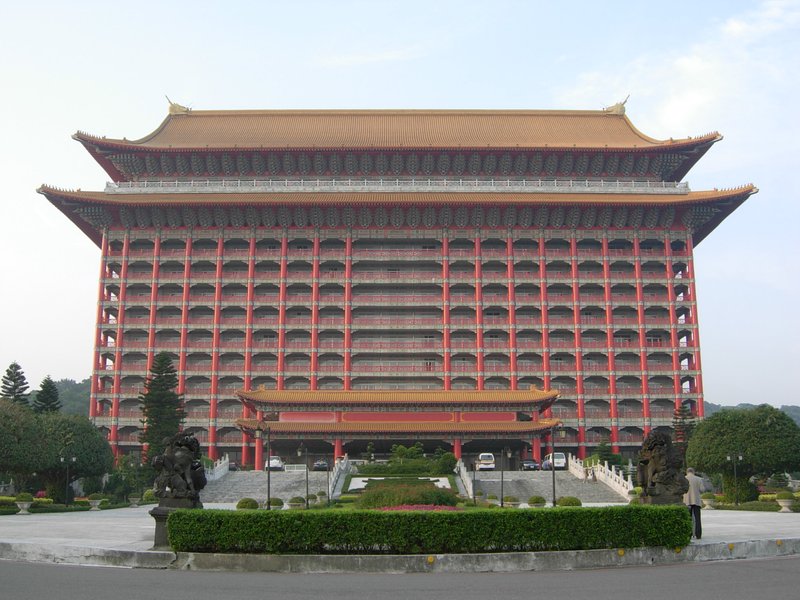
A 14-storey Tang-dynasty-style palace built on a hill — commissioned as a state guesthouse in the 1950s and still one of Asia's most photographed buildings. The main lobby is a sequence of lacquered red columns, gilded ceilings, and carved dragons. The hilltop grounds are open to all visitors.
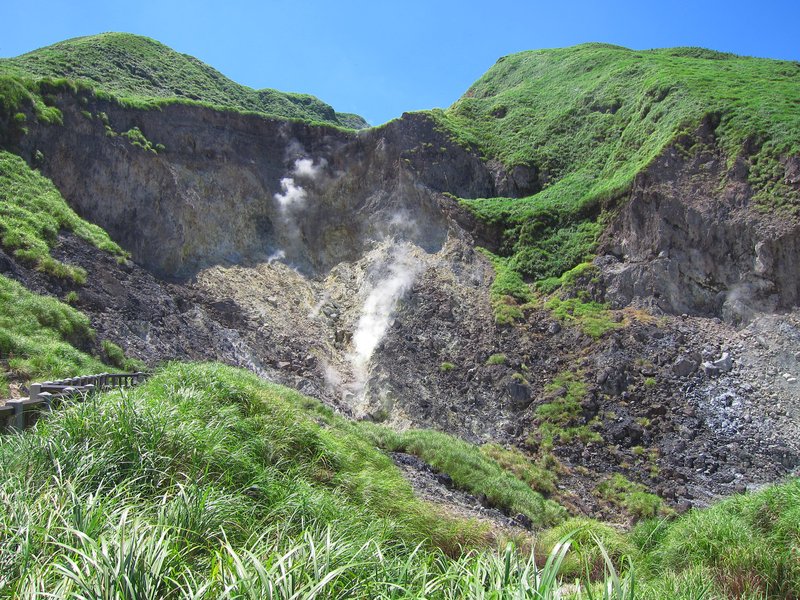
The geothermal field of Yangmingshan National Park at 800 metres — fumaroles, sulphur vents, and acid-bleached slopes. Boardwalks wind through the steam; on a clear day the view south over Taipei is extraordinary. The park's most dramatic volcanic terrain.
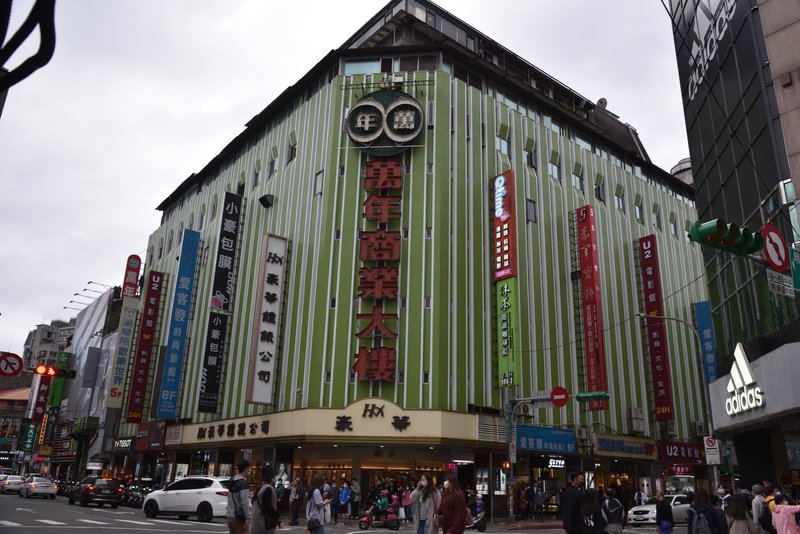
Ximending is a pedestrianized shopping and entertainment district in the Wanhua District of Taipei. The area contains fashion boutiques, street food stalls, and venues for live performances. It operates throughout the day and into late evening.
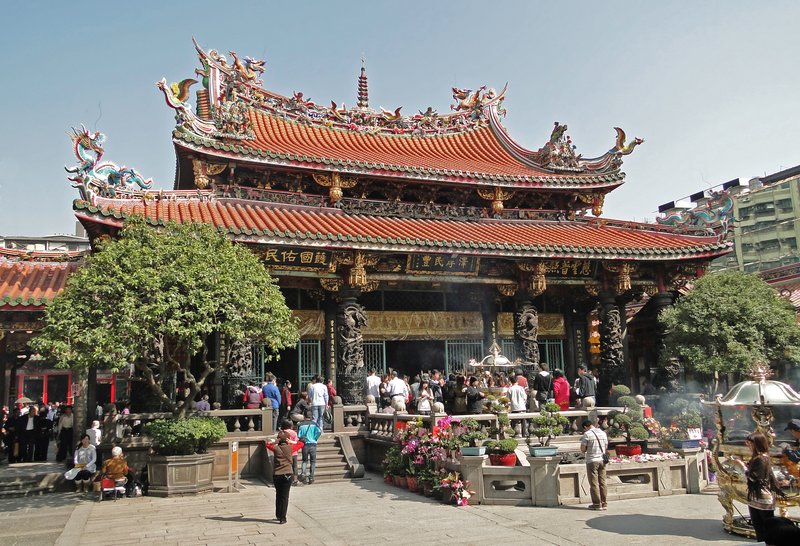
Longshan Temple is one of Taipei's oldest places of worship, founded in 1738 by settlers from Fujian province. It is dedicated primarily to Guanyin, the Buddhist goddess of mercy, and houses dozens of additional Taoist and folk religion deities. The nearby Huaxi Street Night Market is a short walk away.
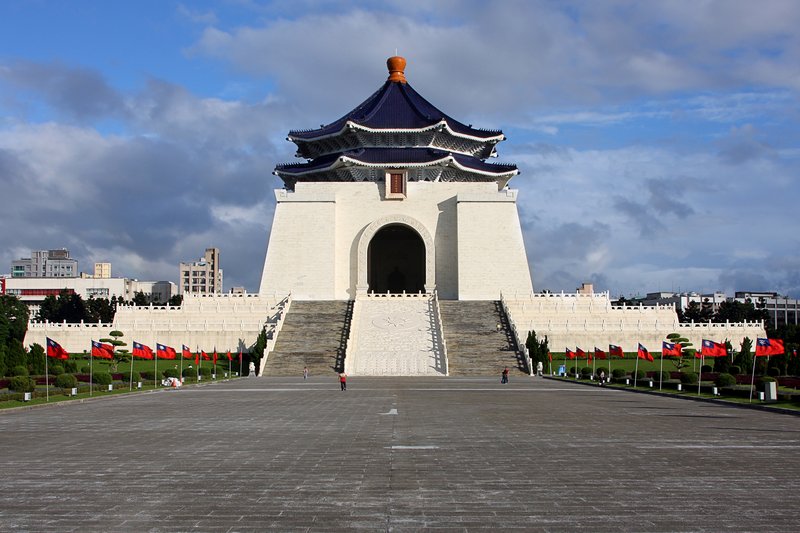
A white-marble monument anchoring one of Asia's grandest ceremonial squares — the main hall faces the National Concert Hall and National Theater across a vast axial plaza. The hourly changing of the guard draws crowds for its precise choreography; the underground museum covers Taiwan's 20th-century history.
A former tobacco factory repurposed into Taipei's most vibrant arts campus — red-brick warehouses, sunlit courtyards, and exhibition halls hosting indie markets, installations, and pop-up performance spaces year-round. Weekend streets fill with local designers and food vendors.
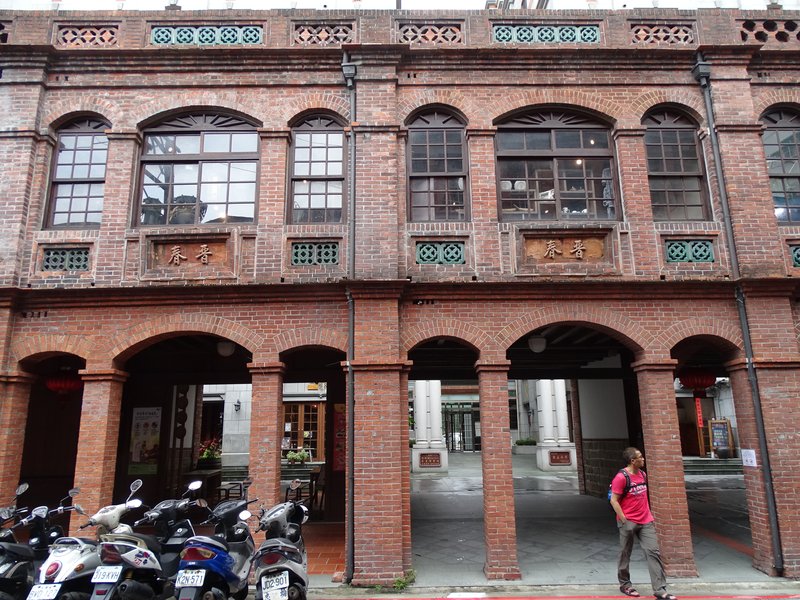
Taipei's oldest commercial street — preserved Baroque shophouses from the Japanese colonial era still selling dried goods, medicinal herbs, and fabric along a 19th-century trading district.
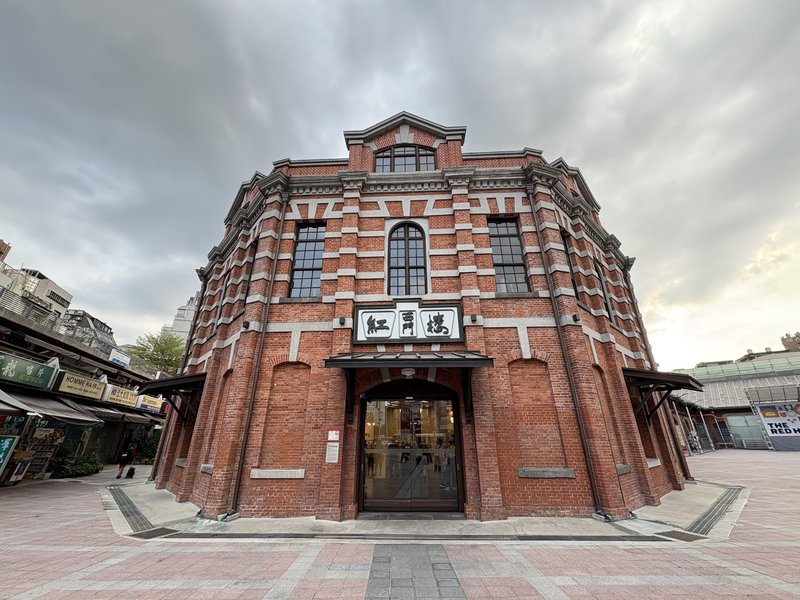
An octagonal red-brick building constructed in 1908 — the oldest public market in Taiwan. Built by the Japanese colonial government, it now operates as an arts and creative market with independent shops and a weekend outdoor market.
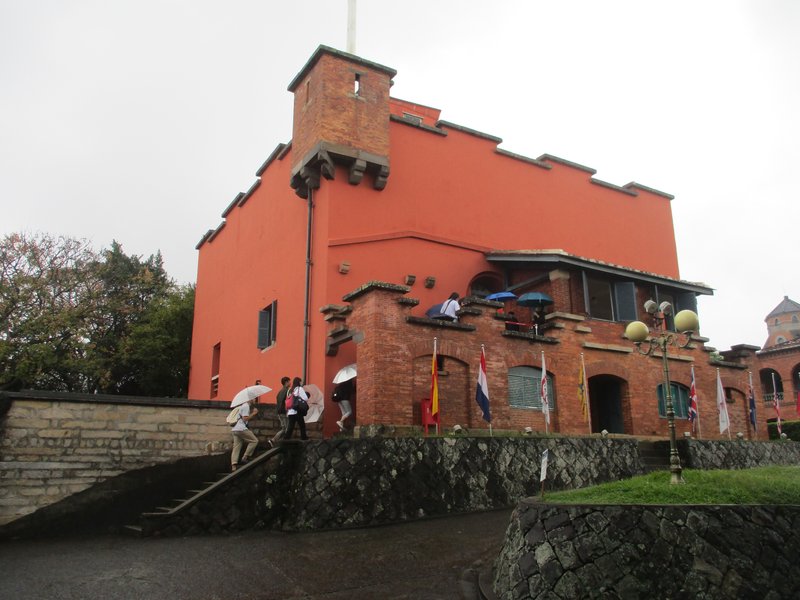
A 17th-century Spanish fort rebuilt by the Dutch and leased to Britain for over 130 years — the red-walled Red Castle and the adjacent Former British Consulate Residence form one of Taiwan's most layered colonial heritage sites. The Victorian consulate retains its parlors, terrace garden, and river views.
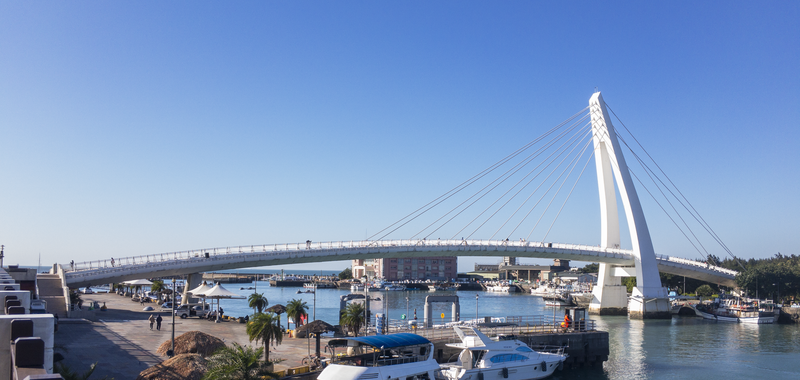
Tamsui's northwestern harbor — a wide pedestrian promenade of fishing boats, seafood stalls, and the cable-stayed Lovers Bridge. The mouth of the Tamsui River opens straight into Taiwan Strait sunsets, with seating along the entire waterfront and a relaxed pace suited to the end of a morning at the fort.
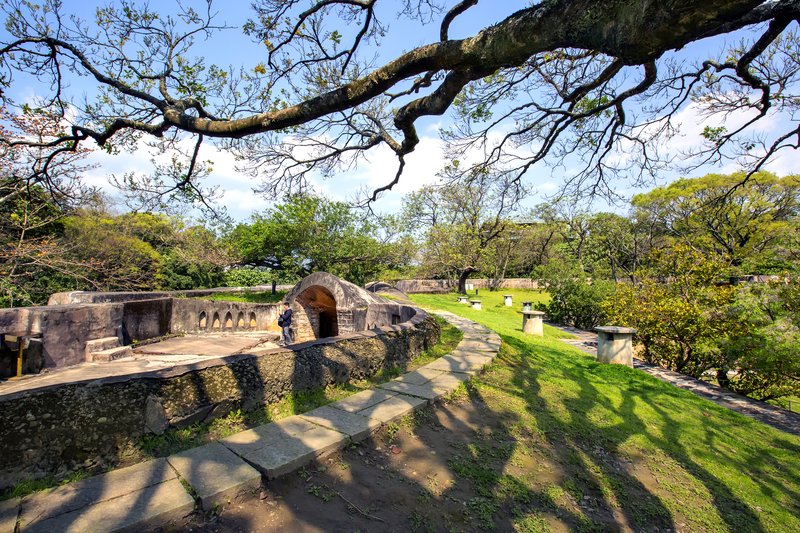
A late-Qing coastal battery from 1889, designed by German engineers after the French bombardment of 1884. The curved artillery platforms, powder magazine, and casements are in near-original condition — a compact but remarkably complete military site with river views and grassy grounds.
A full-day sweep of Taipei's historic core: Chiang Kai-shek Memorial Hall, Longshan Temple, Beitou hot springs, and the Shilin Night Market — small group, English guide, free cancellation.
A day in Taipei's volcanic north: the jade-green Thermal Valley in Beitou, the sulphur fumaroles of Xiaoyoukeng, Yangmingshan flower gardens, and Zhuzihu azalea fields — small group, free cancellation.
The classic north-coast day trip: Yehliu Geopark's mushroom-rock formations, the steep gold-rush lanes of Jiufen, and Pingxi's sky-lantern village — the most-reviewed small-group day tour, free cancellation.
The northeast coast in a day: Yehliu's Queen's Head rock formations, the old gold-rush alleys of Jiufen, the sky-lantern ceremony at Shifen Old Street, and Shifen Waterfall — max 8 guests, English commentary.
The most-reviewed northeast-coast day trip on GetYourGuide — lanterns over Shifen, Jiufen Old Street at golden hour, and Yehliu's wind-sculpted rock formations, with an English-speaking guide throughout.
A full day in Taipei's volcanic north: the crater meadows and flower fields of Yangmingshan National Park, the geothermal lake at Xiaoyoukeng, and a visit to the Beitou Hot Spring Museum — small group, English guide.
A full-day guided sweep of Taipei's landmarks — National Palace Museum, Chiang Kai-shek Memorial Hall, Longshan Temple, Taipei 101, and Dadaocheng old quarter — with a Michelin-rated lunch stop in Ximending.
Steamed soup dumplings with 18 folds per piece — a gossamer skin and a burst of hot broth on the first bite. Tradition: take a small bite off the side, let the broth cool, then add ginger and black vinegar in a soup spoon.
Braised beef shin and tendon in a dark soy-and-spice broth over thick wheat noodles — the city's most contested comfort food. The red-braised style is the standard: deep and sticky, with star anise and broad bean paste in the base.
A flaky lard-laminated flatbread rolled with chopped scallions and pan-fried to order — Taipei's street-corner breakfast. Best with an egg cracked on and folded inside. At any breakfast stall from 6am.
A buttery shortbread shell around pineapple jam — Taiwan's signature souvenir sweet. Bakeries along Zhongshan North Road stock the best artisan versions; airport shops are a distant second.
Glass noodles braised in thick sweet-potato-starch gravy with fresh oysters, topped with garlic, black vinegar, and cilantro. Eat standing at the counter — the Ximending stall is the city benchmark.
Foreign number: accepted. — it runs on the same Uber account as the ride app, so no second code has to arrive.
Strong coverage across Taipei's districts with a broad restaurant selection from Da'an's Japanese imports to Shilin night-market staples; delivery windows typically run 30–45 minutes in the city centre.
Foreign number: not accepted. — the SMS code goes only to a Taiwanese +886 number, and couriers phone that number on arrival.
Market leader for Taiwanese cuisine, with deep listings of local bento shops, beef noodle restaurants and bubble tea chains; Panda Pro membership reduces delivery fees on frequent orders.
Foreign number: accepted. — the code comes by SMS to any international number, and "Call me with code" reads it out if the SMS is blocked.
Operates across Taipei with reliable coverage; international cards register without issue, making it the most straightforward option for visitors who arrive without a local payment app.
Foreign number: not accepted. — it runs on a LINE account bound to a Taiwanese mobile number, so there is no international sign-up.
Taiwan's homegrown ride-hailing service, formerly LINE Taxi, integrated into the LINE messaging platform; drivers are professional licensed taxi operators and fares are metered with no surge pricing.
Foreign number: not accepted. — registration needs a Taiwanese mobile number; a local SIM bought on arrival is the only way in.
Taiwan Taxi–operated ride-hailing brand partnering with the country's largest regulated taxi fleet; fixed-rate metered fares make longer trips to Danshui or Jiufen predictable with no surge pricing.
Taiwan's second city — Rainbow Village is a neighbourhood painted in exuberant murals by a retired soldier, Miyahara is an ice cream parlour in a restored early-20th-century ophthalmologist's office, and Fengjia Night Market is the island's largest.
Taiwan's oldest city and culinary capital — colonial-era forts, Qing-dynasty shrines, and a street-food culture denser than anywhere else on the island. Eat along Haian Road and the alleys around Chihkan Tower; the coffin bread and milkfish congee are morning staples.
Gateway to Taroko Gorge — a 19-km marble canyon with turquoise water, suspension bridges, and walking tunnels cut through cliffs. Travel by TRA; Hualien is not on the THSR network. Go early — gorge road access is managed after rainfall.
Most people arrive in Taipei thinking it's a city. It is, but it's also an encircled basin at the foot of Yangmingshan, a live volcanic massif where fumaroles hiss in the highland meadows and hot-spring water runs through the pipes of buildings that would otherwise be apartments in any other city. Day 2's route makes this visible: grand palace on a hill, then imperial collection in the mountain foothills, then an actual geothermal lake in a valley, then sulphur vents at 800 metres. The city progressively peels away.
The thread running through both days is the weight of contested identity — a tobacco factory turned art park, a memorial hall whose meaning is actively debated, a collection evacuated from one country and never returned. Taipei carries more unresolved history per square metre than almost any city its size. The food, at least, is not contested: the xiao long bao count is sacred, the beef noodle broth is non-negotiable, and the scallion pancake stall opens before sunrise whether anyone is watching or not.