From Hotel: 10 min · 4 min → Ping An Finance Centre
1.Ping An Finance Centre~1 hr 30 min
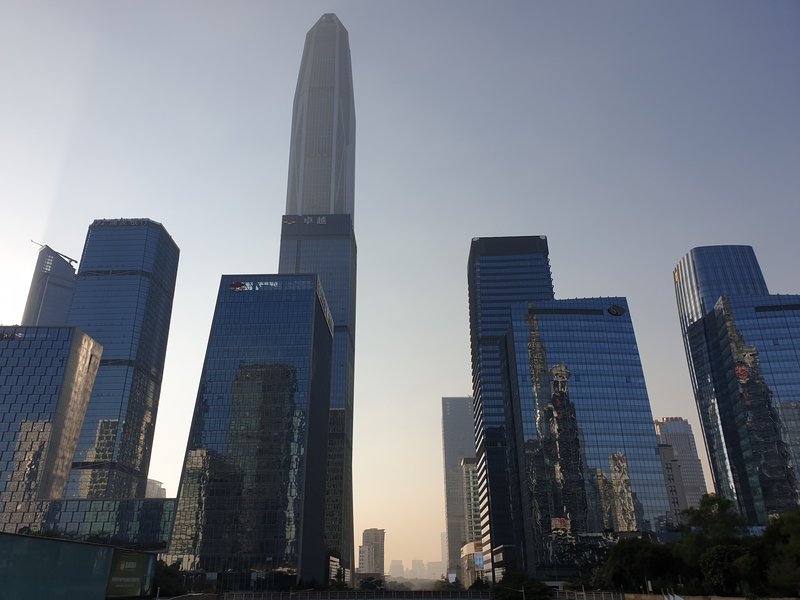
Kohn Pedersen Fox's 599 m tower is the fourth-tallest building in the world, and the Free Sky deck on floor 116 puts you 541 m up behind a wall of glass — Futian's towers below, the container cranes west, and the hills of Hong Kong across the bay.
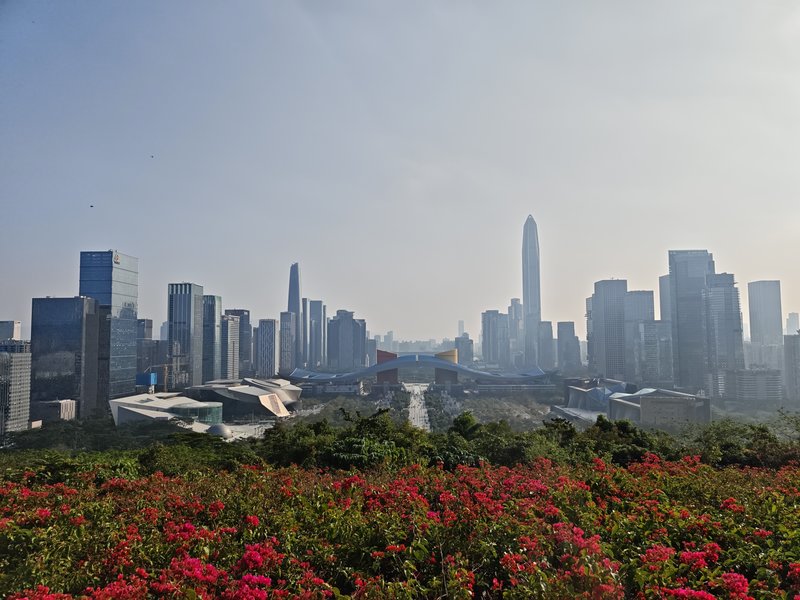
A wooded 150-hectare hill closing the north end of the Futian axis. A six-metre bronze of Deng Xiaoping stands on the summit, and behind it the city lines up exactly as it was planned — Civic Center, then the towers, then Ping An dead centre.
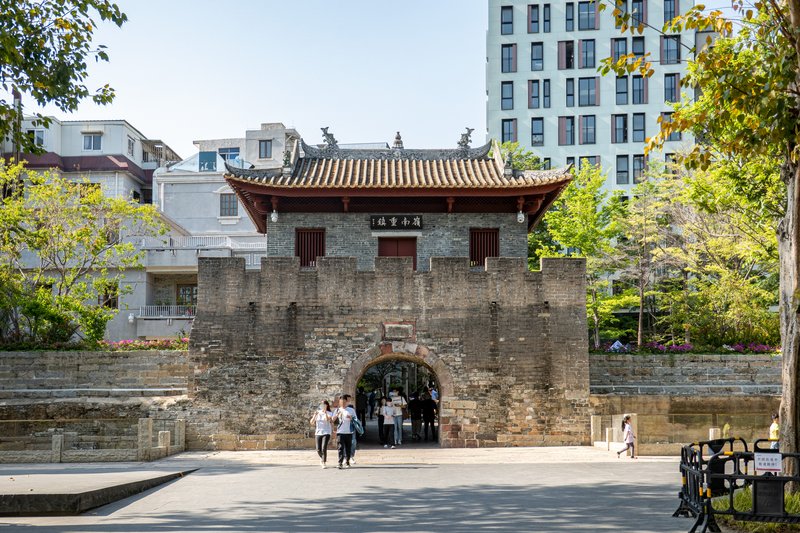
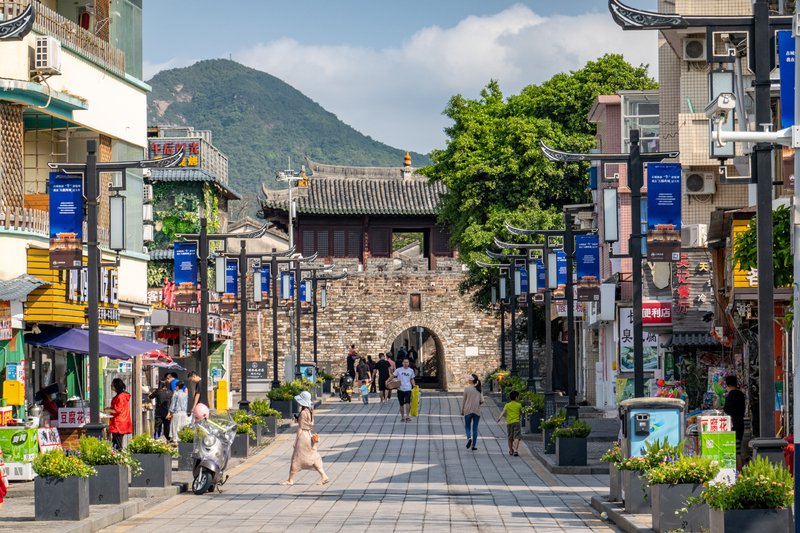
Shenzhen reads as a city with no past until you walk through this gate. Nantou was the seat of Xin'an County, which governed everything from Dongguan to Hong Kong; the site has been settled since 331 CE and the Ming ramparts went up in 1394. Lanes of shophouses, ancestral halls and a county office run behind the south gate.
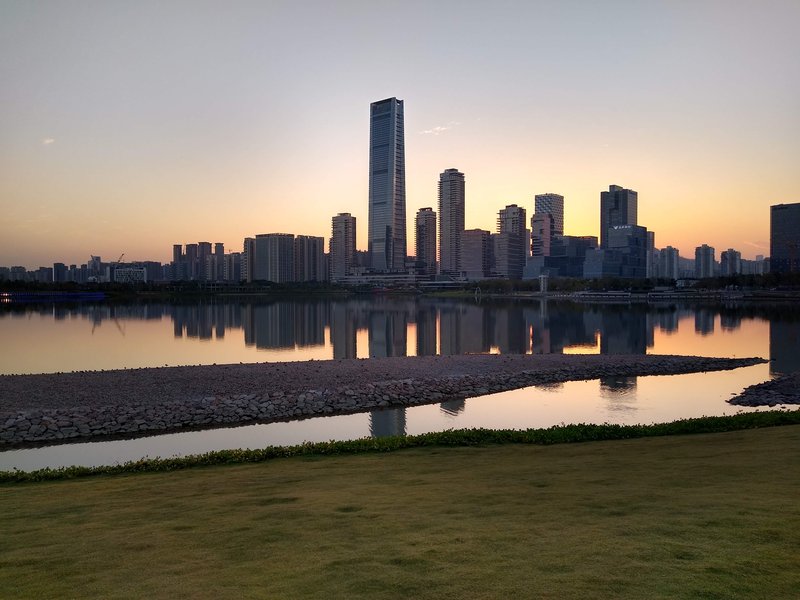
Ten kilometres of seafront running the Nanshan and Futian coast, ending in the Mangrove Coastal Eco-Park — part of a reserve that feeds migratory birds on the East Asian flyway. Come for the last hour of light: the water goes still, the Nanshan towers turn to silhouette, and the far shore is Hong Kong.
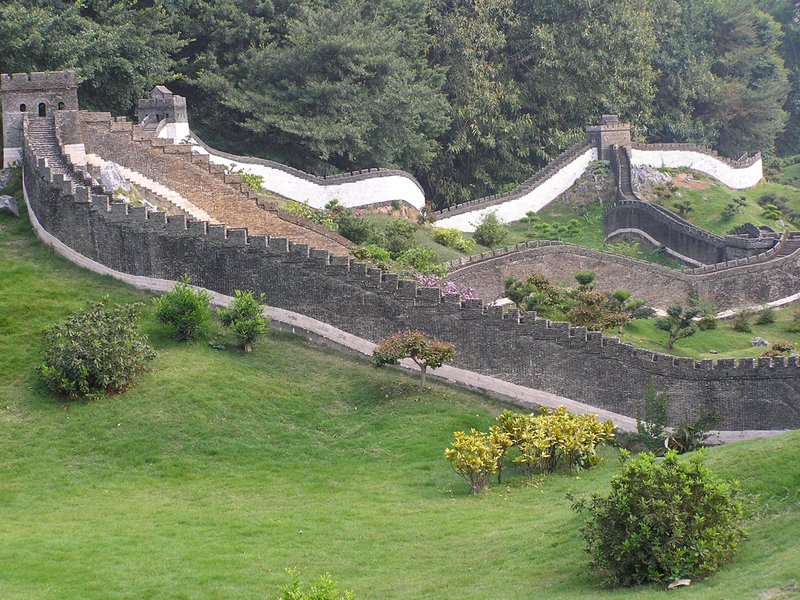
More than 100 of China's most famous landmarks rebuilt at 1:15 scale across 30 hectares — the Great Wall, the Forbidden City, the Potala Palace, the Terracotta Army — arranged on the ground exactly as they sit across China itself. The adjoining China Folk Culture Villages reproduce the architecture of the country's 56 ethnic groups, with folk performances running through the day.
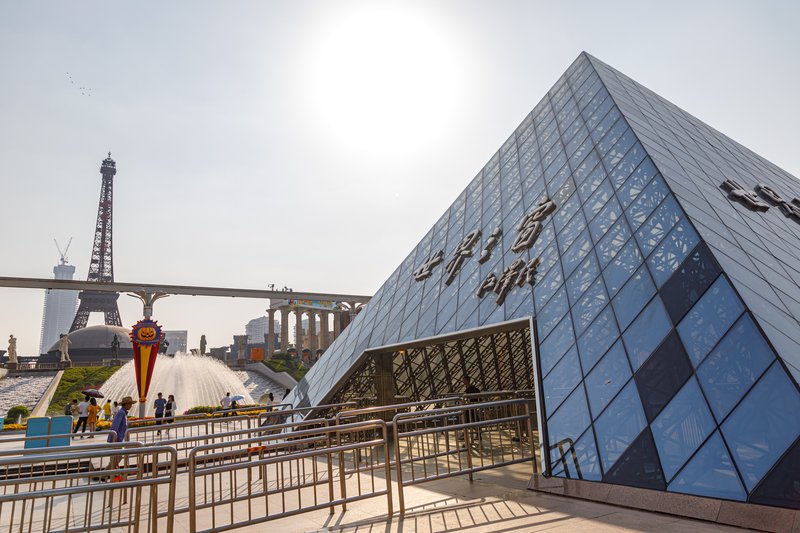
A one-third-scale Eiffel Tower anchors a park of 130 reproduced landmarks — the Pyramids, the Taj Mahal, Niagara Falls, the Matterhorn — grouped by continent across 48 hectares. Opened in 1993 and still the most-visited theme park in the city, drawing more than 3 million visitors a year, with light shows under the tower after dark.
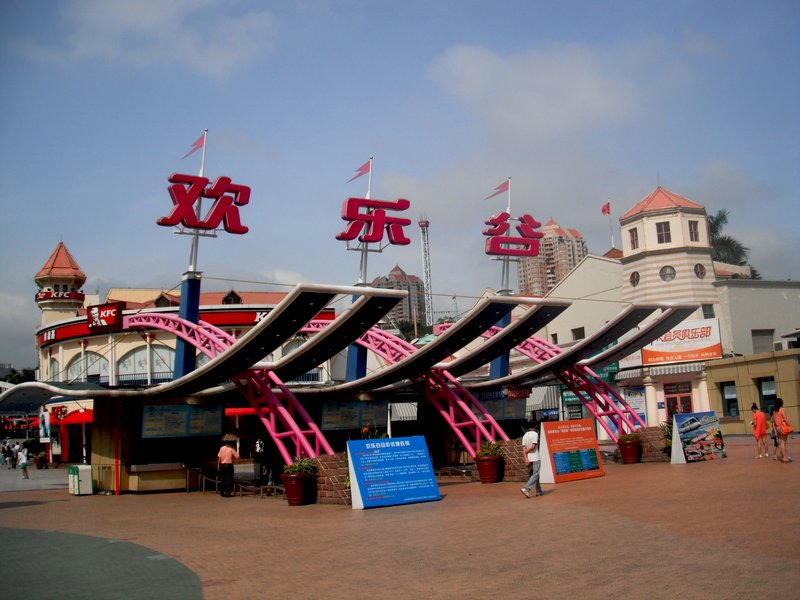
The first park in the nationwide Happy Valley chain, opened in 1998 and still the template for every one that followed it. Nine themed zones carry the rides — Spanish Square, Cartoon City, Mt. Adventure, Gold Mine Town among them — and the Playa Maya water park runs through the summer months.
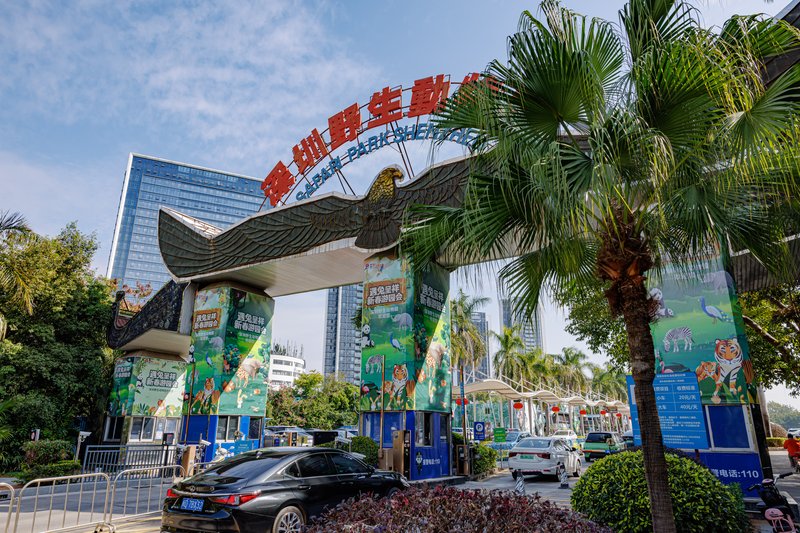
China's first zoo built without cages, set beside Xili Lake since 1993. More than 300 species and 10,000 animals live across enclosures walked or driven through, giant pandas and South China tigers among them — one of the last captive-breeding populations of a tiger now close to extinct in the wild.
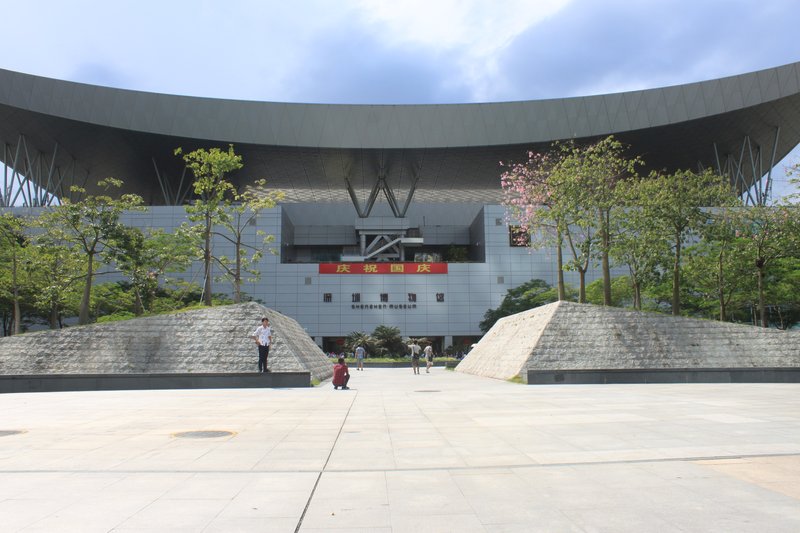
The city's own account of itself, inside the Civic Center: more than 20,000 relics across four branches, the History and Folk Culture wing tracing this coast from Neolithic settlement through the walled county town at Nantou to the Special Economic Zone. The clearest answer in the city to "was there anything here before the towers."
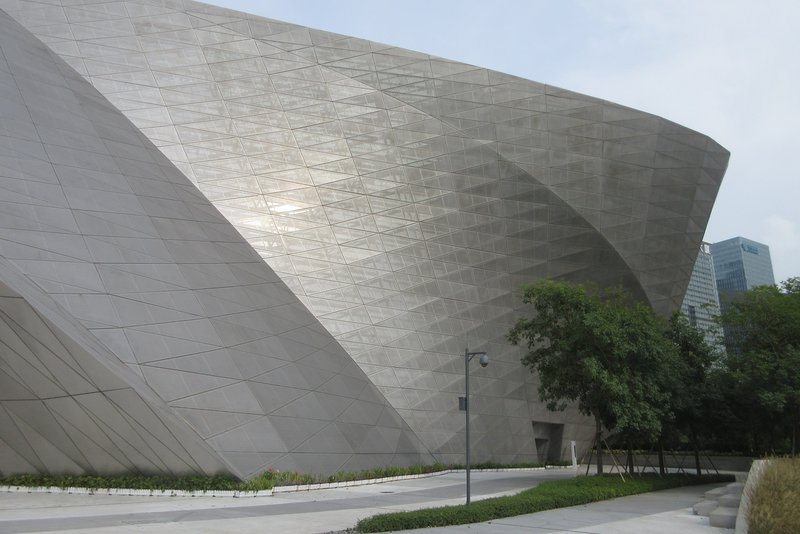
The Museum of Contemporary Art and Urban Planning, Coop Himmelblau's angular glass-and-steel building next door to Shenzhen Museum. One half runs contemporary art; the other lays out the model of the city itself — the planning exhibition that explains, in scale models and drawings, how a fishing county became this skyline in four decades.
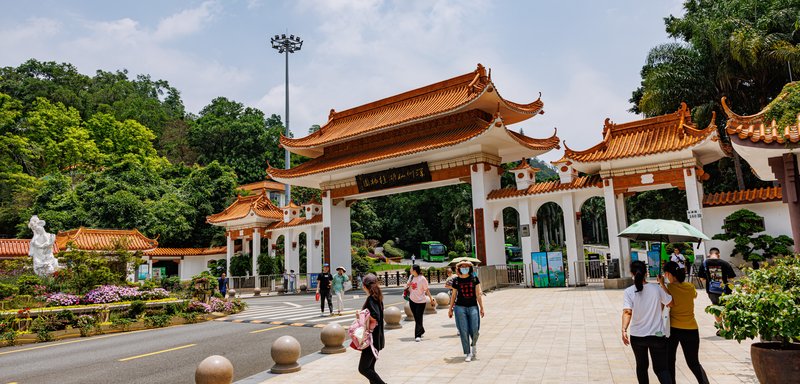
A 546-hectare botanical garden and arboretum at the foot of Wutong Mountain, beside the Shenzhen Reservoir — palm, bamboo, cactus and bonsai gardens laid out since 1983. Inside the grounds, Hongfa Temple carries the Linji Chan lineage in a monastery built in 1985, the largest working Buddhist site in the city.
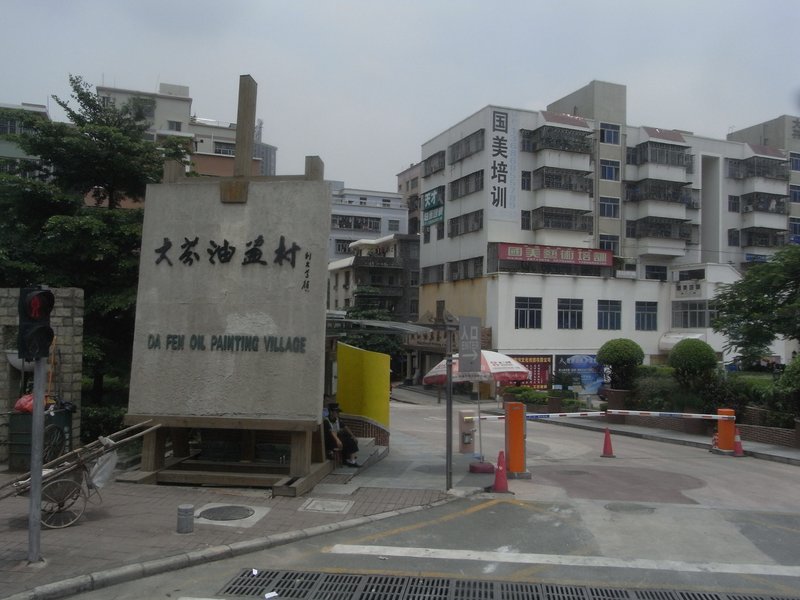
A Buji suburb that has painted for the world's living rooms since 1989 — at its peak, 60% of the planet's oil-painting reproductions left this one square kilometre. Studios still line every lane, canvases drying against the walls, Van Gogh and Monet copies stacked beside portrait commissions and originals from a growing resident-artist scene.
Reform-era China starts here, not in Futian. On 31 January 1979 — before Shenzhen itself was a Special Economic Zone — Hong Kong's China Merchants Group broke ground on the Shekou Industrial Zone under Yuan Geng, and the slogan born on this waterfront, "time is money, efficiency is life," became the line the whole country repeated for a decade.
12 min · 9 min → Sea World Culture and Arts Center
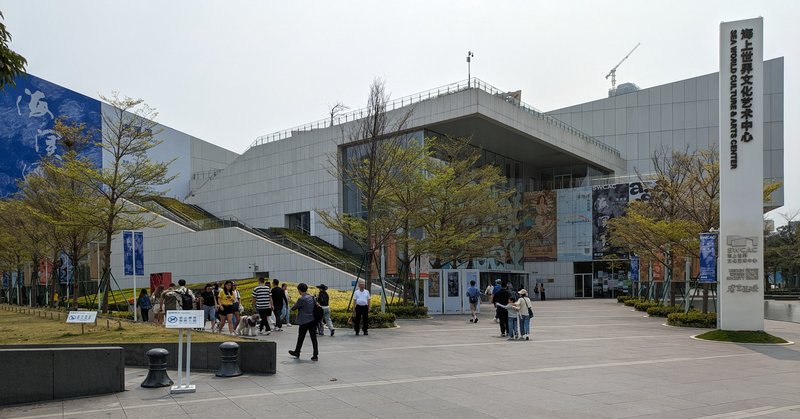
2.Sea World Culture and Arts Center~1 hr 30 min
Fumihiko Maki's 2017 waterfront complex, built as a joint venture between China Merchants Group and London's Victoria and Albert Museum. The "sculptural podium" holds Design Society, the V&A's first outpost outside Britain, with rotating design and craft exhibitions closing at 7:00pm under a low white roofline that reads as sail or sea foam depending on the light.
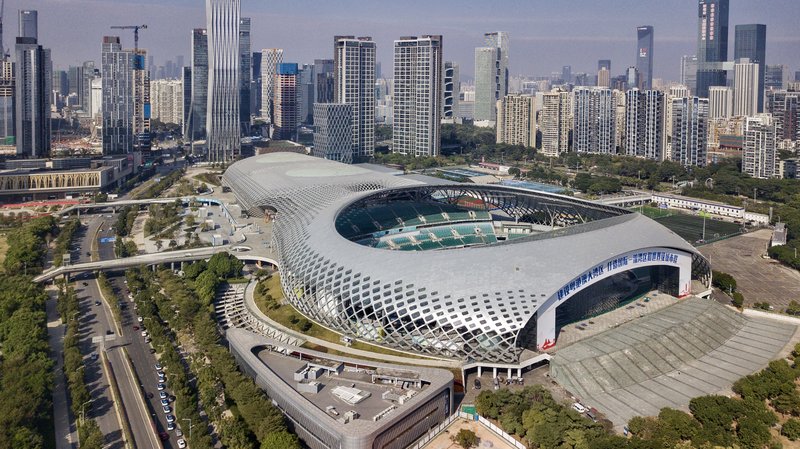
Nicknamed the Spring Cocoon for the white lattice wrapping every building on the site as one continuous skin, built for the 2011 Summer Universiade at a reported cost of $2.3 billion. The 20,000-seat stadium, gymnasium and natatorium sit inside a single sculpted form a short walk from the bay — striking by day, lit from within after dark.
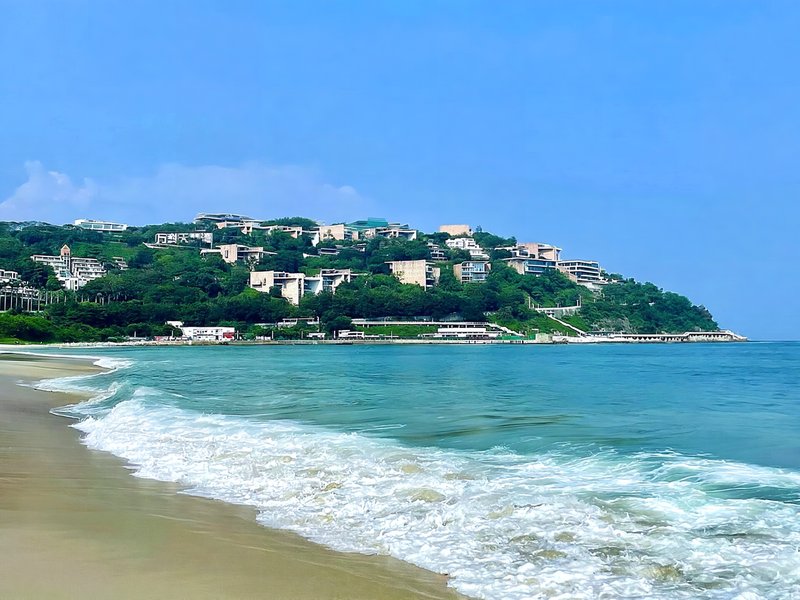
The largest of the city's public beaches, 1.8 kilometres of sand along Mirs Bay opened in 1999 and still the closest real coastline to downtown. A Sheraton resort anchors one end; the rest is the beach Shenzhen actually uses on a weekend, the water noticeably clearer than anything inside the bay on the Futian side.
A 900-hectare resort built into the hills above Dameisha, opened in 2007 and split into three valleys — Knight Valley for rides, Tea Stream Valley for tea terraces and gardens, Wind Valley for cable cars over the ridgeline. Eight hotels and a Buddhist temple are folded into the same grounds; Tea Stream Valley alone is worth the ride up for the view back down to the coast.
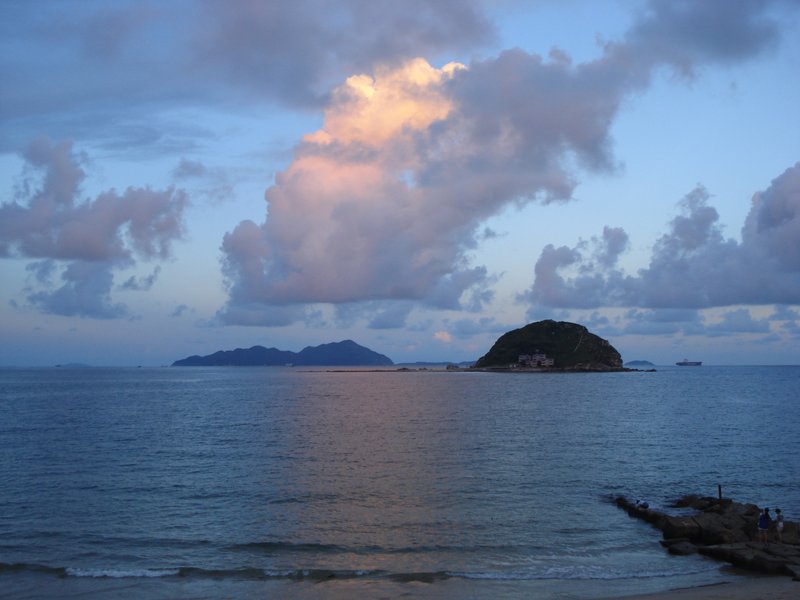
The far edge of the Dapeng Peninsula, facing Dapeng Bay on one side and Daya Bay on the other — the coastline the city sends its own residents to when Dameisha feels too close to downtown. Named a national demonstration beach in 2006, the water here runs clearer than anywhere else the itinerary reaches, backed by hills rather than resort towers.
A walled coastal garrison town built in 1394 to hold this shore against pirates, and it worked: in 1571 it survived a forty-day siege by Japanese raiders with scaling ladders. Ming and Qing houses still line the lanes inside the walls, 55 kilometres from the towers of Futian and centuries apart from them — the fortress the city's entire modern history skipped past.
A robotaxi across the CBD, a drink delivered to your hand by drone, and the inno100 innovation centre — humanoid robots, wearable exoskeletons, AI glasses — then the flagship stores of DJI, Huawei and Xiaomi. The city sells itself as the future and this is the shortest way to test the claim.
Guide and driver for the day with the route left to you — the practical answer to a city whose sights sit twenty kilometres apart and whose taxi drivers read no English. On a single day whose stops span Futian and Nanshan, it removes the transit problem entirely.
The same operator's listing on GetYourGuide, and the one carrying the deepest review history of any Shenzhen tour on any platform. Half-day and full-day lengths; the longer version adds the Huaqiangbei electronics halls and a robot showroom.
The operator's own TripAdvisor page, where the reviews run long enough to be useful — drone delivery, driverless taxi, the powered-suit demo, the Xiaomi showroom. Reviewers name the guide as the reason it works rather than the gadgets.
Shajing in Bao'an has farmed oysters since the Song dynasty and the local ones are prized for plump meat and thin bellies. Eaten grilled over charcoal, or folded into an oyster pancake by stalls that have sold nothing else for decades.
A Cantonese roast that made its name in Bao'an's Gongming nearly a century ago: lacquered skin taken to a hard crackle over meat that stays juicy underneath, carved to order and served over rice.
Foreign number: not accepted. — The standalone app wants a +86 number at the OTP step; the Meituan mini-program inside WeChat rides the WeChat login and sends no code at all.
Meituan is the default in Shenzhen and its restaurant list is wider than anything else by a distance — most of Futian and Nanshan inside half an hour, with the rider tracked to the door. It runs in Chinese throughout, menus included, so budget time for translation and expect a Chinese-format address.
Foreign number: not required. — Reached as a mini-program inside Alipay, which already carries the sign-in and the card, so no separate verification code is ever sent.
Ele.me — folded into Taobao Instant but still called Ele.me by everyone — is Alibaba's answer to Meituan and the easier door for a visitor, because Alipay has already done the identity and payment work. The restaurant list thins out faster outside the central districts.
The city's principal classical stage presents the Shenzhen Symphony Orchestra alongside year-round visiting orchestras · chamber groups · solo recitals.
Foreign number: accepted. — The code arrives by SMS on foreign carriers; where it does not, the DiDi mini-program inside WeChat signs in on the WeChat account and skips the code entirely.
DiDi absorbed Uber's China business in 2016 and is the only ride app that matters here — coverage is total across Shenzhen and a car arrives in minutes. The app runs in English; the drivers rarely do. Set the destination by pin rather than by typing an address, and let the in-app translation carry the rest.
Guangzhou–Shenzhen–Hong Kong Express Rail Link → Hong Kong West Kowloon and Guangzhou South. The first underground railway station built under a Chinese city centre and the largest of its kind in Asia.
Express Rail Link plus the Hangzhou–Fuzhou–Shenzhen and Ganzhou–Shenzhen lines → Guangzhou, Xiamen, Changsha and Shanghai. Twenty platforms, the widest reach of any station in the city.
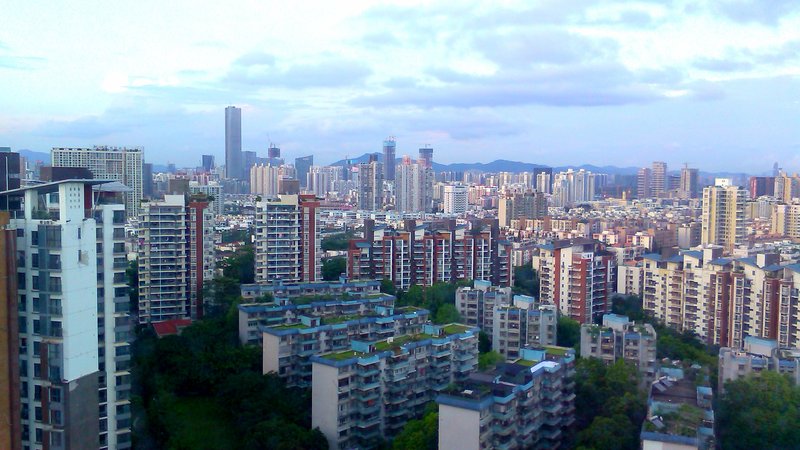
A county town, a border, and half a kilometre of glass — all inside one day.
Shenzhen is sold as a city with no history, and the itinerary quietly disproves it. The walled town at Nantou was administering this coast roughly sixteen centuries before the first tower went up in Futian. The skyline is the young part; the county seat is not.
The view from Lianhuashan is not a happy accident. The park, the Civic Center and the tower beyond it sit on a single north–south axis, a planning device borrowed from imperial China and applied to a city built from scratch. Stand at the statue and you are standing at the top of a composition that was drawn before most of what you can see existed.
One pattern governs almost every app here: the standalone version gates on a Chinese mobile number, and the mini-program inside WeChat or Alipay does not. Ride-hailing is the exception that proves it, because DiDi takes a foreign number outright. Install WeChat and Alipay before the flight and most of the rest of the city opens up behind them.
The far shore at Shenzhen Bay is another jurisdiction. Hong Kong sits across the water from the mangroves, close enough to pick out buildings, and the Express Rail Link under Futian Station reaches West Kowloon — so the border is both the view at the end of the day and a short ride from the middle of it.