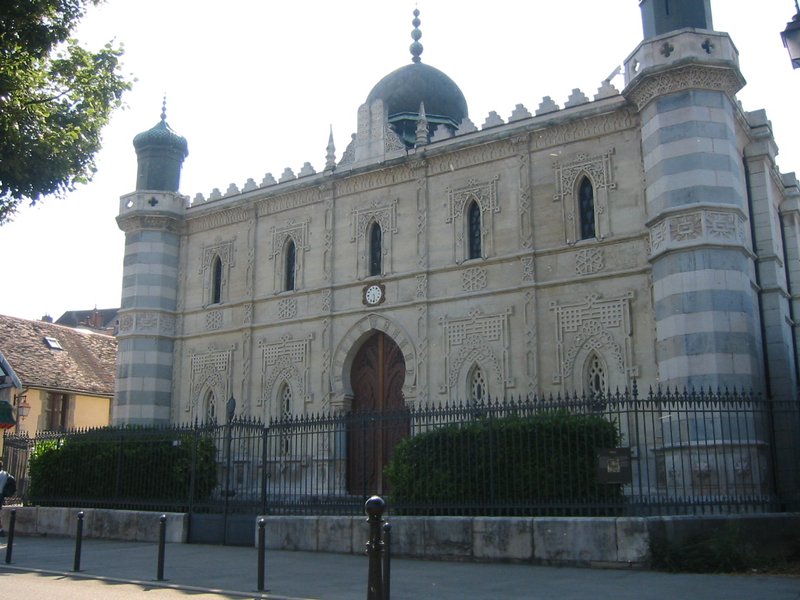
Founded in 1796 by Sephardic Jews who fled the Spanish Inquisition via Curaçao — the second-oldest synagogue in continuous use in the Western Hemisphere. Its sand floor honours the Exodus; the tradition of silent worship has survived hurricanes, fires and two centuries of colonial rule.
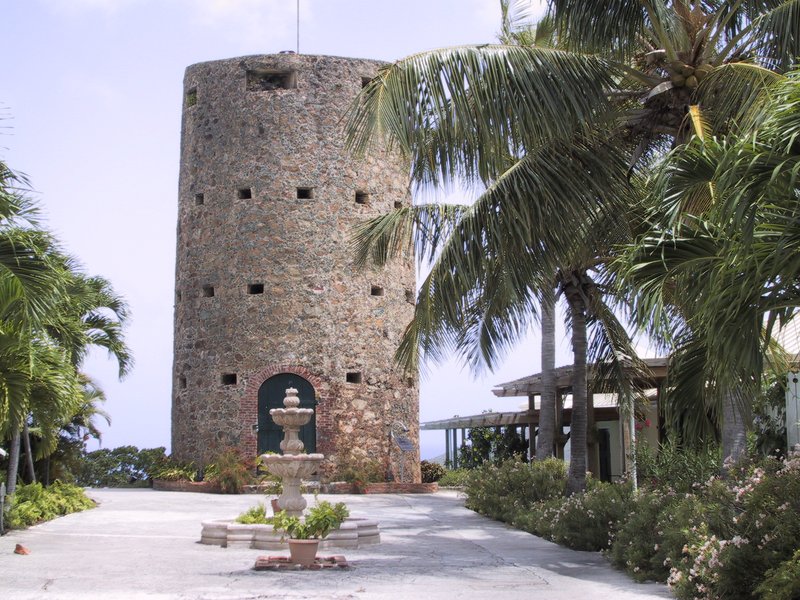
A 1679 Danish watchtower on one of Charlotte Amalie's highest hilltops — one of five national historic landmarks on St. Thomas. The tower gave Danish forces clear sight lines over the harbor; the complex today includes terraced gardens, a museum and 360° views over Charlotte Amalie and the surrounding islands.
St. Thomas's oldest French-Creole neighborhood, settled by Huguenots from St. Barthélemy in the 1800s. Fishing boats still line the dock at dawn and the lanes retain a distinct character from Charlotte Amalie's bustle — small bars, local restaurants and wooden houses in faded island colors.
The highest accessible point on St. Thomas at 1,547 ft, overlooking Magens Bay — voted one of the world's most beautiful beaches by National Geographic. Views stretch to Tortola on clear days. Mountain Top is credited as the birthplace of the banana daiquiri, first mixed here in the 1940s.
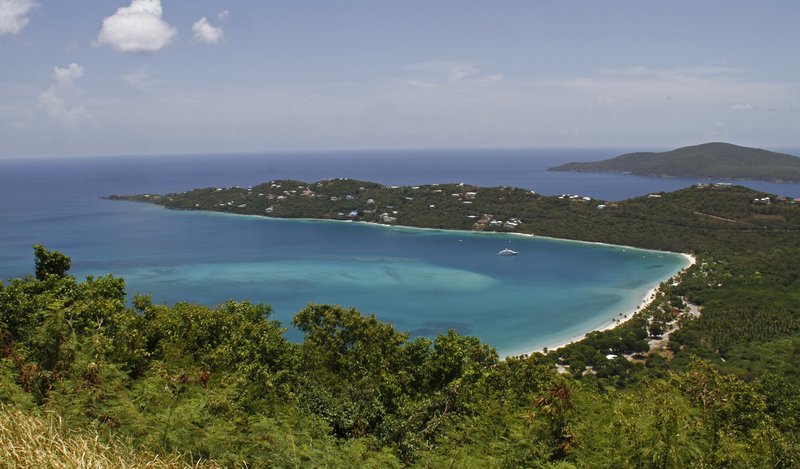
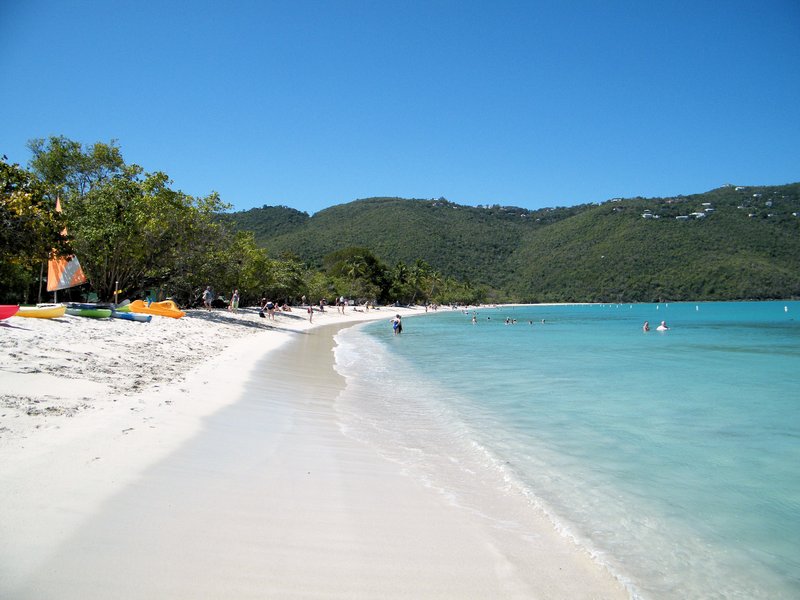
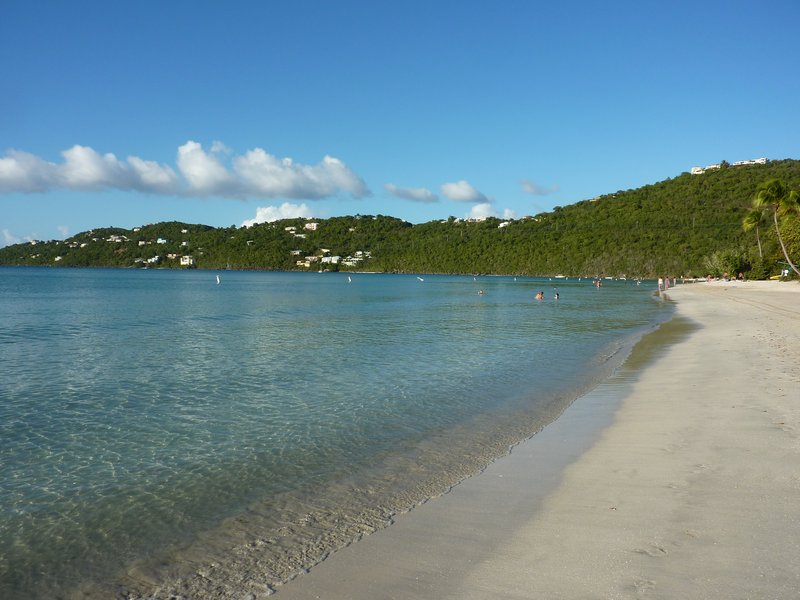
A sheltered crescent of white sand almost a mile long, backed by hills and palm groves, and protected from ocean swells by two headlands. The water is calm enough to swim to the far shore. National Geographic named it one of the world's ten most beautiful beaches.
A hilltop viewpoint on Crown Mountain Road with one of the most commanding panoramas in the Caribbean — Magens Bay curving below, Tortola and the British Virgin Islands visible on clear days. Legend holds that Sir Francis Drake surveyed his fleet here in the 16th century.
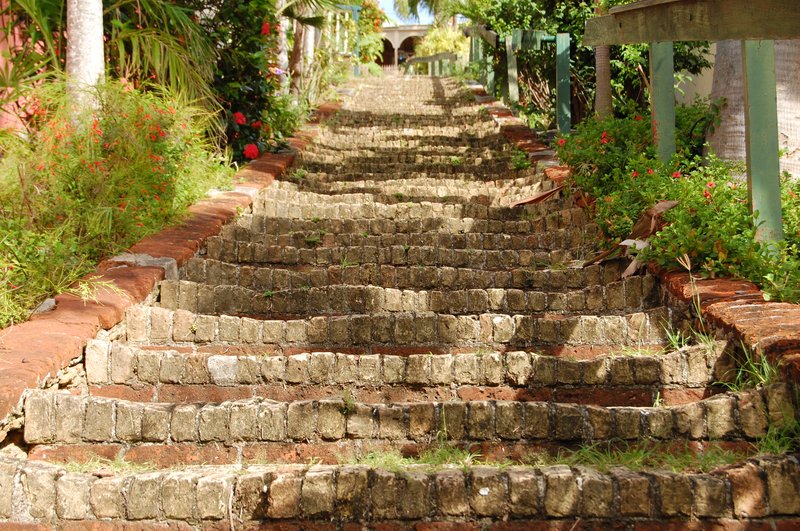
A staircase of 103 brick steps — named before anyone counted accurately — built by the Danes in the 1700s to connect the harbor to the hilltop neighborhood above. One of the best-preserved Danish colonial structures in Charlotte Amalie, and the steepest shortcut in the city.
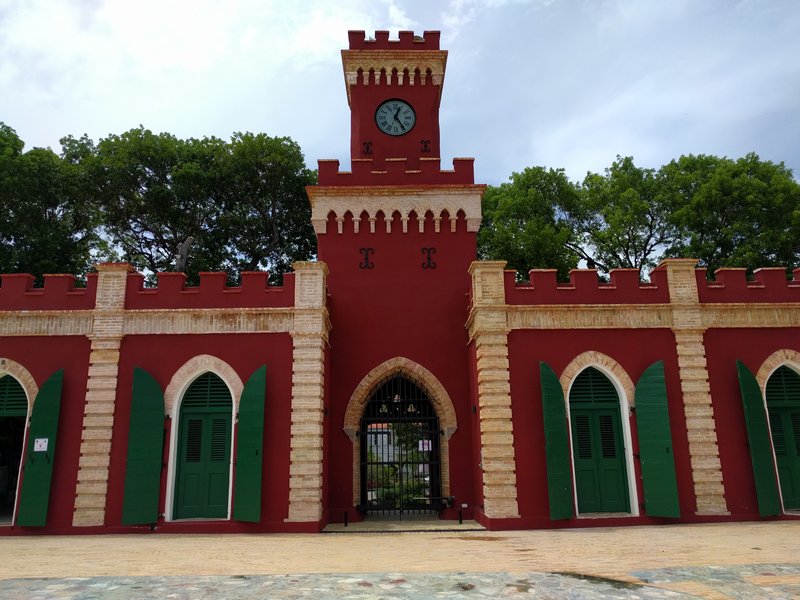
The oldest standing structure in the US Virgin Islands, built 1672–1680 as the first Danish foothold on St. Thomas. Red-brick and fortified against sea attack, it served as courthouse, church, jail and governor's residence at different points over 300 years.
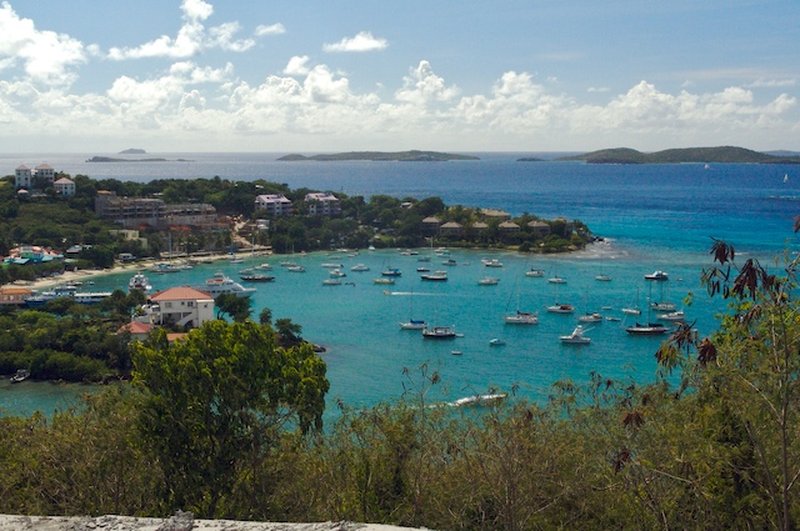
The main town on St. John and the island's ferry gateway, a cluster of pastel-painted buildings around a small harbor. Passenger ferries from Red Hook land here roughly every hour, and the Virgin Islands National Park visitor center sits a short walk from the dock — the starting point for most of the park's beaches and trails.
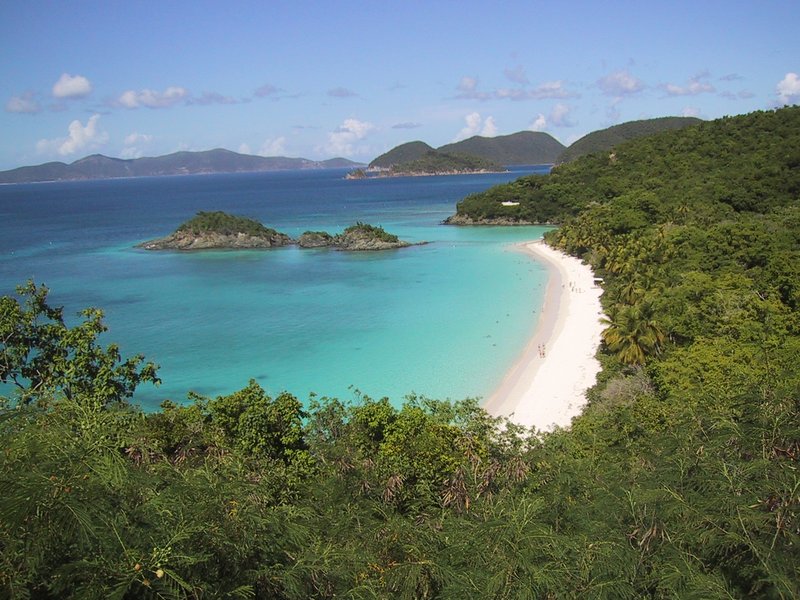
A half-moon of white sand and turquoise water inside Virgin Islands National Park, routinely named one of the most beautiful beaches in the world. A marked underwater snorkeling trail loops through the bay's reef, with waterproof signs identifying coral and fish along the way.
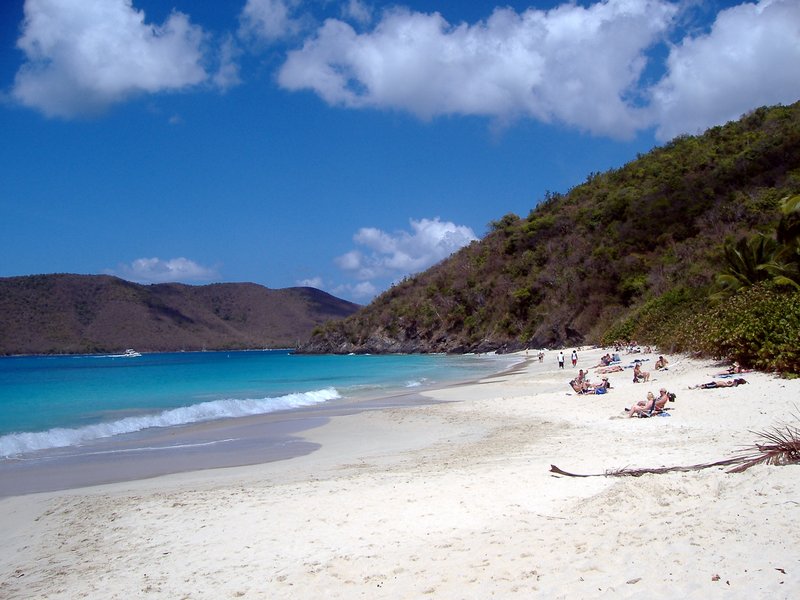
The largest beach on St. John, backed by dense bush and a low mangrove pond. The ruins of an 18th-century Danish sugar plantation sit just inland from the sand — stone walls, a windmill base and factory foundations still standing among the trees, reachable by a short interpretive trail.
14 min → Cruz Bay · 20 min → Red Hook · 15 min → hotel
Day 4
From Hotel: 12 min · 10 min → Water Island
1.Water Island~3 hr
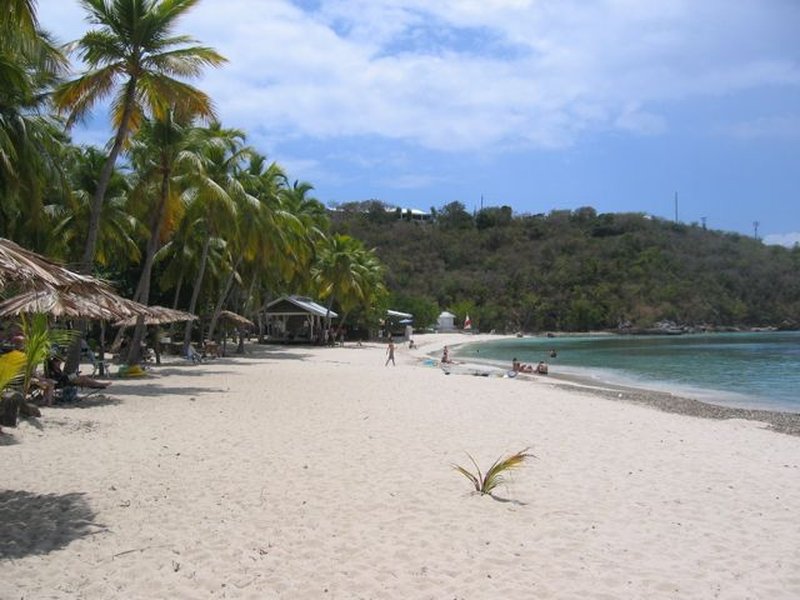
The fourth and least-visited of the U.S. Virgin Islands, a volcanic outcrop in Charlotte Amalie harbor with fewer than 200 year-round residents. Denmark held onto it even after the US bought the rest of the territory in 1917. Most day-trippers head straight for Honeymoon Beach, a calm sandy crescent facing the harbor with a beach bar renting chairs, kayaks and paddleboards.
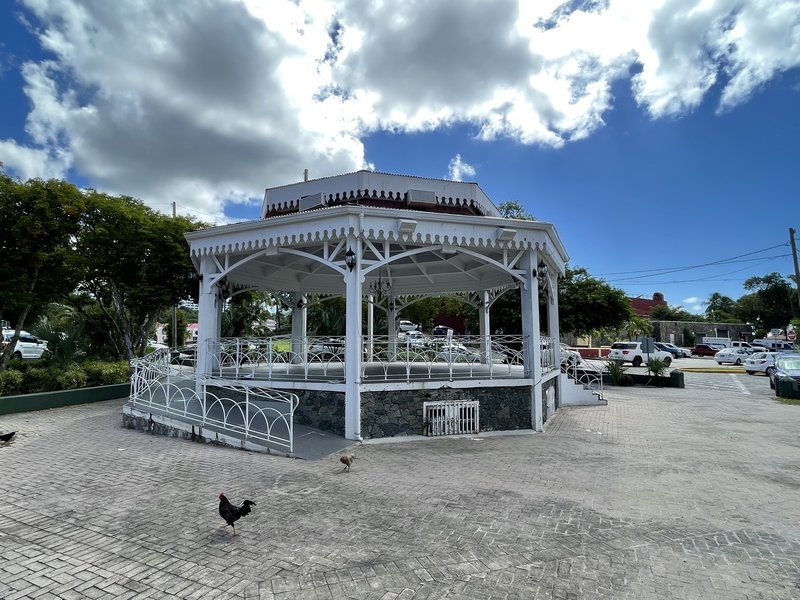
A small downtown park commemorating the 1848 emancipation of enslaved people in the Danish West Indies, marked by a liberty bell replica and a bandstand gazebo still used for concerts and government ceremonies. Fort Christian and the Legislature Building both face onto it.
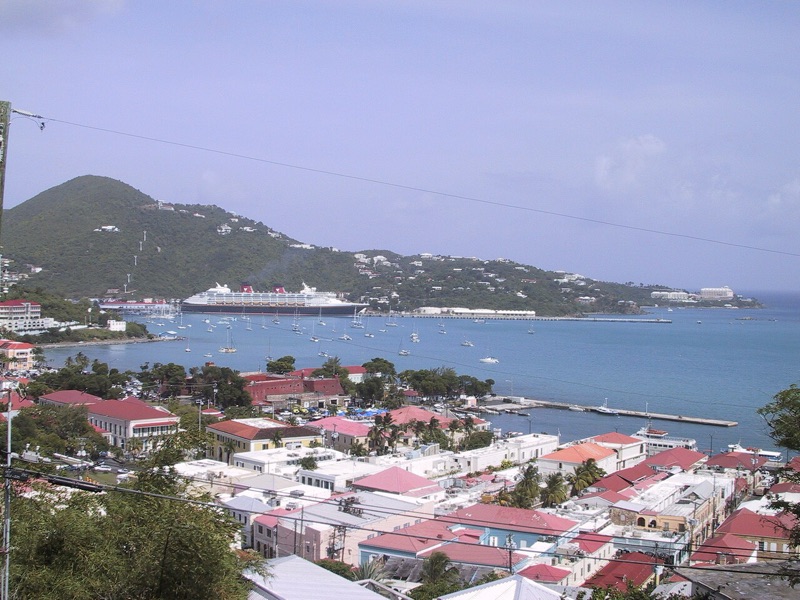
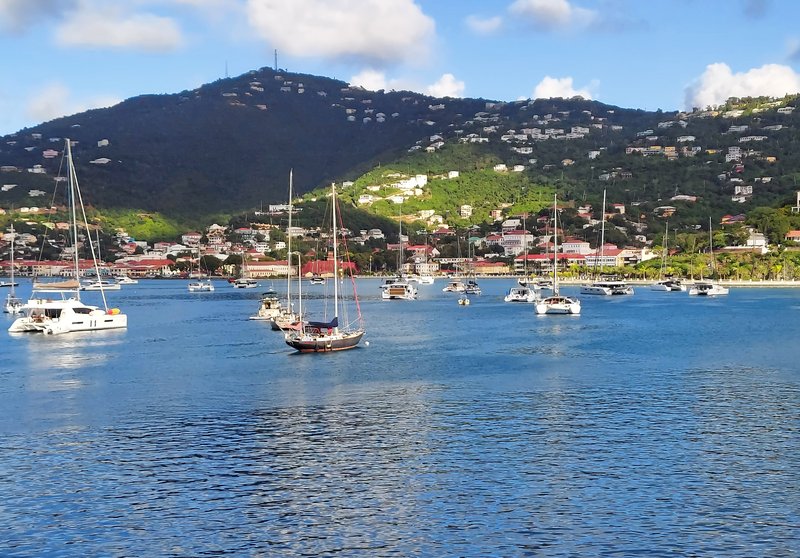
The territorial capital, built by the Danish around one of the Caribbean's best natural deep-water harbors and still one of the region's busiest cruise ports. Steep lanes of 18th- and 19th-century warehouses — now painted in ochre, coral and mustard — climb the hillside above the waterfront.
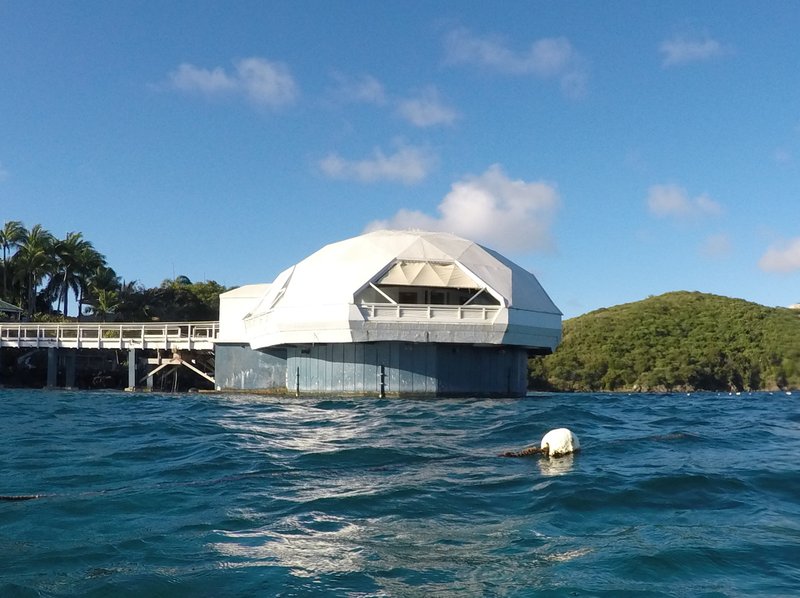
A marine park on Coki Point built around an offshore underwater observatory tower, sunk into the reef so visitors can watch fish and coral through windows below the surface without getting wet. The park also runs a walk-through predator tank, a sea lion pool and shallow pools for stingray and shark encounters.
A full-day sail to the British Virgin Islands — snorkelling the dramatic sea-eroded granite boulders of The Baths at Virgin Gorda and swimming in the turquoise shallows of White Bay on Jost Van Dyke. Lunch and drinks included on board. US passport or USVI-issued ID required for re-entry to the USVI.
A full day on Jost Van Dyke — the small British Virgin Island famous for its unspoiled beaches and the legendary Soggy Dollar Bar at White Bay. Swimming, snorkelling and rum cocktails aboard a small-group boat with the Stormy Pirates operator. Passport required.
A guided walk through Charlotte Amalie's most storied streets — the waterfront forts, colonial alleyways, plantation-era buildings and the dark history behind them. Covers 400 years of piracy, Danish colonialism and Caribbean folklore in the island's oldest quarter.
A 2.5-hour kayak and snorkel tour through St. Thomas's Mangrove Lagoon — winding channels, mangrove forests, and crystal-clear water teeming with stingrays, brown pelicans, and reef fish. Small group guided eco-adventure on the island's protected south coast.
A 3.5-hour snorkelling tour into the crystal waters of the Virgin Islands National Park — two reef sites in St. John's protected marine zone, rich with sea turtles, spotted eagle rays, and coral gardens rarely reached by larger boats.
A 3.5-hour small-group snorkelling excursion exploring two of St. Thomas's best reef sites with an in-water guide who spots marine life and assists throughout — green sea turtles, yellowtail snappers, rays, and tropical fish along the island's southeast coast.
A 4-hour half-day sail on a 36-foot power catamaran visiting Honeymoon Beach and Maho Bay on St. John's south coast with guided snorkelling and relaxing beach time. Small group limited to 12; departs American Yacht Harbor in Red Hook.
A 5-hour sailing excursion from St. Thomas to snorkel the Virgin Islands National Park in St. John — breakfast on board, two snorkel stops in crystal-clear protected waters, open bar, and a hosted lunch on the return. English-speaking instructor on board.
A 3-hour guided kayak, hike, and snorkel tour around Cas Cay — a pristine uninhabited island off St. Thomas's southeast coast — exploring mangrove channels, tidal pools, and clear reef waters with a Virgin Islands Ecotours naturalist guide. Meets at Red Hook.
A 5-hour all-inclusive catamaran snorkelling tour to the pristine waters of St. John National Park — two reef stops, full open bar, breakfast and lunch on board, and guided snorkelling in the Caribbean's most protected marine zone.
A 3-hour catamaran sailing and snorkelling excursion to Little Buck Island's Turtle Cove — a protected bay known for its resident green sea turtles. Open bar and snorkel gear included; departs Sapphire Marina in the East End.
A 6-hour powerboat excursion to three snorkelling sites in the Virgin Islands National Park at St. John — breakfast, open bar, and picnic lunch included. Departs 8:30am from Margaritaville or 7:45am from Sapphire Resort. Max 32.
Deep-fried fritters packed with conch — sweet sea snail seasoned with scotch bonnet, lime and island herbs; served as appetizer or street snack across St. Thomas. The essential USVI bite.
The Virgin Islands' national side dish — dense cornmeal porridge cooked with okra, similar to polenta. Served alongside fish or stewed meat in local restaurants; a weekday staple across all three islands.
Fried cornmeal flatbreads — crispy outside, soft within, subtly sweet. A Caribbean staple found at roadside stands and bakeries island-wide; in the USVI they are fried, not baked.
Flaky fried pastry turnovers stuffed with spiced meat, saltfish or conch — the quintessential USVI street food sold from vendors and small bakeries across St. Thomas.
The signature Caribbean rum cocktail — Pusser's Rum with pineapple juice, orange juice and cream of coconut, topped with grated nutmeg. Invented at the Soggy Dollar Bar on Jost Van Dyke; the USVI's unofficial drink.
No food delivery apps operate on St. Thomas; restaurants require direct visits, and hotel in-room dining or concierge ordering is the standard option for visitors.
Getting Around
Taxi
Foreign number: not required — taxis operate on fixed zone rates; no app or account is needed.
USVI uses government-regulated safari taxis and regular cabs that run between the ferry terminals, cruise ship piers, beaches and main visitor areas on fixed zone rates; they can be flagged from the street or arranged through any hotel.
On March 31, 1917, the United States took possession of the Virgin Islands — the largest per-acre purchase of territory in American history, more than ten times what was paid per acre for Alaska. The Danish Empire had controlled St. Thomas since 1672; the Americans wanted the harbor to protect the Panama Canal from the German Navy during World War I. The transaction was remarkably bureaucratic for such a profound transfer of 26,000 human lives: Danish and American officers exchanged flags over Government House in Charlotte Amalie, and overnight, people who had never chosen to be Danish became Americans — without being asked.
The harbor they traded away had been one of the most important in the Western Hemisphere. Charlotte Amalie was a declared free port under Danish rule — neutral in European wars, open to all flags — and at its 18th-century peak it was also one of the busiest slave markets in the Americas. The Emancipation Garden at the center of town marks where, on July 3, 1848, the enslaved population of the Danish West Indies rose in revolt and forced the colonial governor to declare freedom unilaterally — 15 years before the American Civil War, and more than a decade before Denmark's Parliament ratified it. A few blocks away, the sand floor of the Synagogue is a quiet counterpoint to all of it: Sephardic Jews who had already fled one empire found sanctuary here under another, and built a house of worship that has outlasted both.