From Hotel: 🚶 5 min · 🚕 3 min → Castelmola
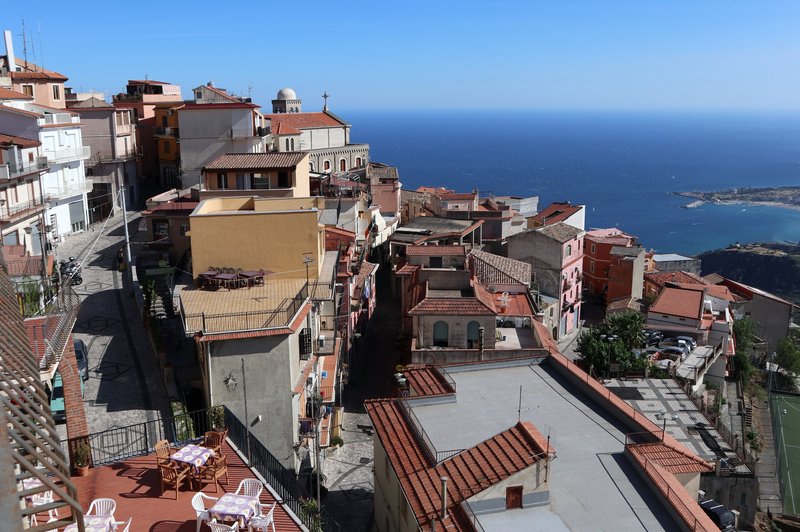
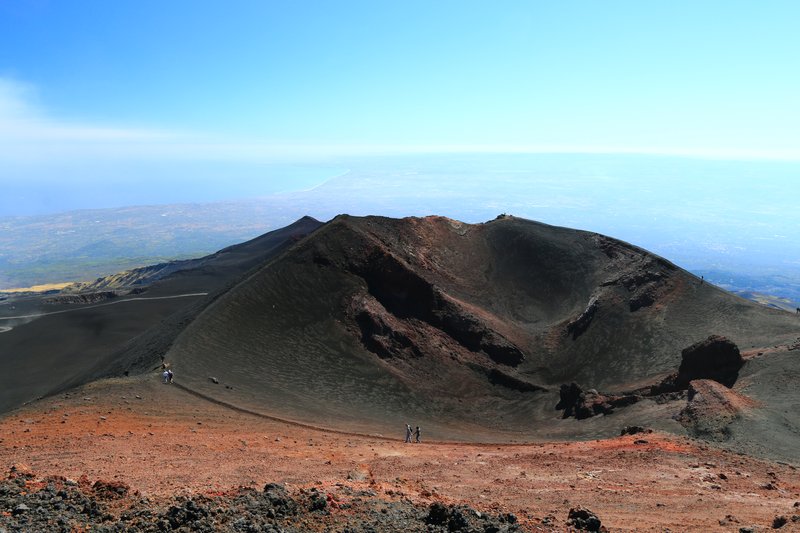
A medieval hilltop village 550 metres above Taormina, perched on a rocky peak with Norman castle ruins. The 78-step climb to the top delivers a 360-degree panorama of Mount Etna, the Ionian coast, and the Strait of Messina. Listed among the Most Beautiful Villages in Italy.
🏛️ Open 24/7
⏰ ~1 hr 30 min
🚶 14 min · 🚕 4 min → Villa Comunale
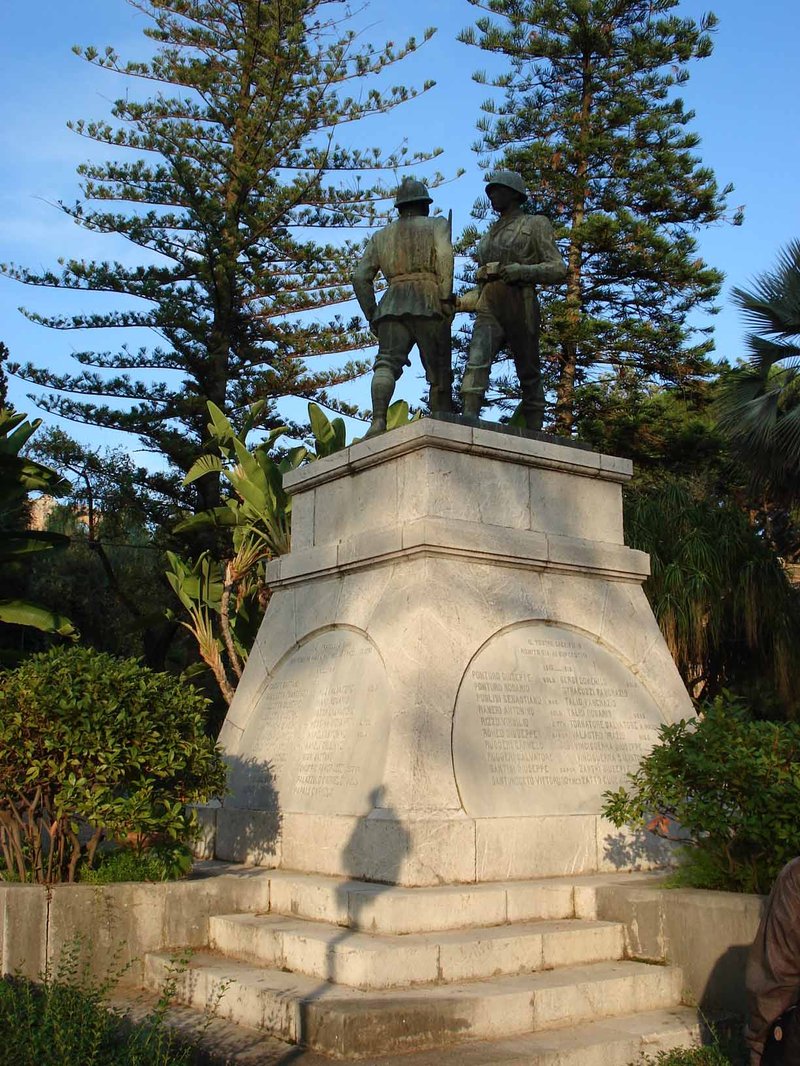
A terraced public garden perched above the coast, built in the 1890s by Florence Trevelyan. Subtropical plants, eccentric Victorian follies called beehives, and unobstructed views across the bay to Calabria. The most tranquil spot in Taormina.
🏛️ Daily 9:00am - 6:00pm
⏰ ~45 min
🚶 4 min · 🚕 2 min → Teatro Antico di Taormina
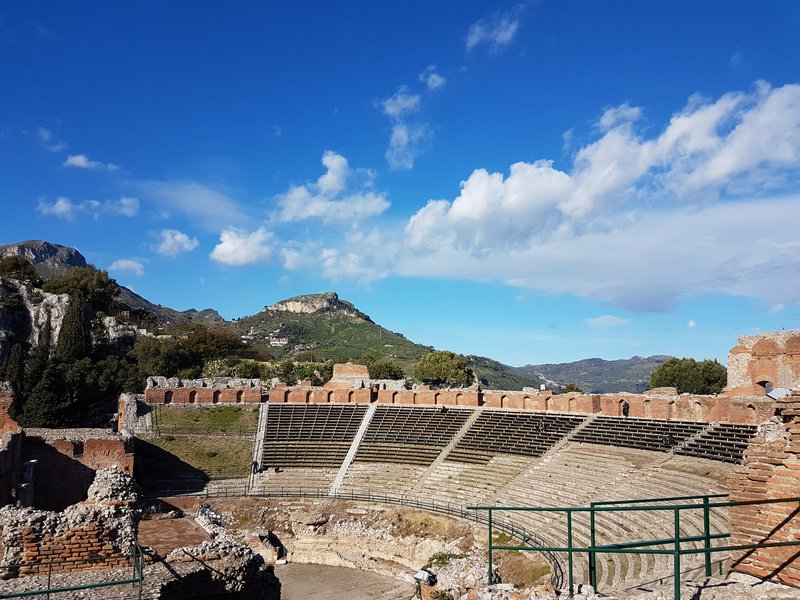
A 3rd-century BC Greco-Roman theatre carved into the hillside, seating 10,000. The tiered stone seats frame Mount Etna and the Ionian Sea through the remains of the ancient stage wall — one of the most dramatic backdrops in the ancient world.
🏛️ Daily 9:00am - 7:00pm
⏰ ~1 hr 30 min
🚶 9 min · 🚕 2 min → Isola Bella
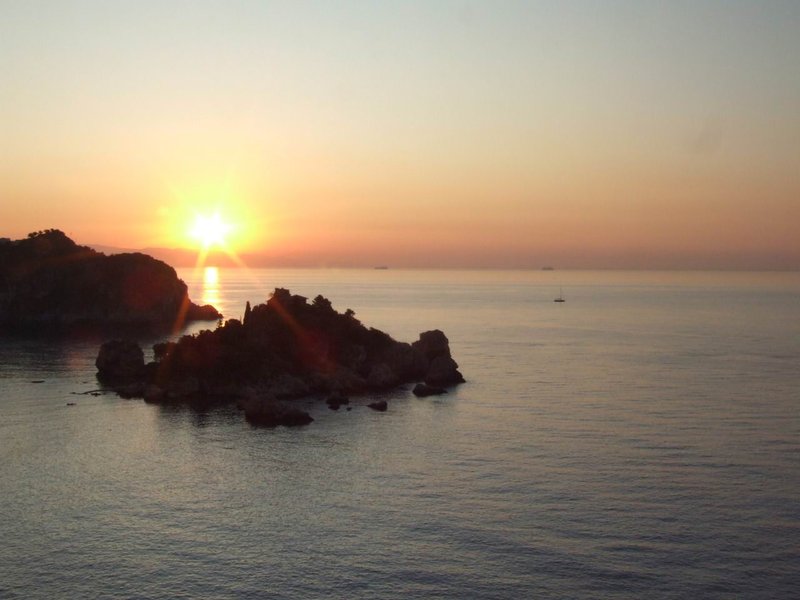
A tiny tidal island connected to the shore by a narrow sand spit, set in a turquoise cove below vertical cliffs. Known as the Pearl of the Ionian Sea, it became a nature reserve in 1990. The interior houses a small museum of Mediterranean plants.
🏛️ Tuesday - Sunday 9:00am - 6:00pm
🚫 Closed Monday
⏰ ~1 hr 30 min
🚕 38 min → Alcantara Gorge
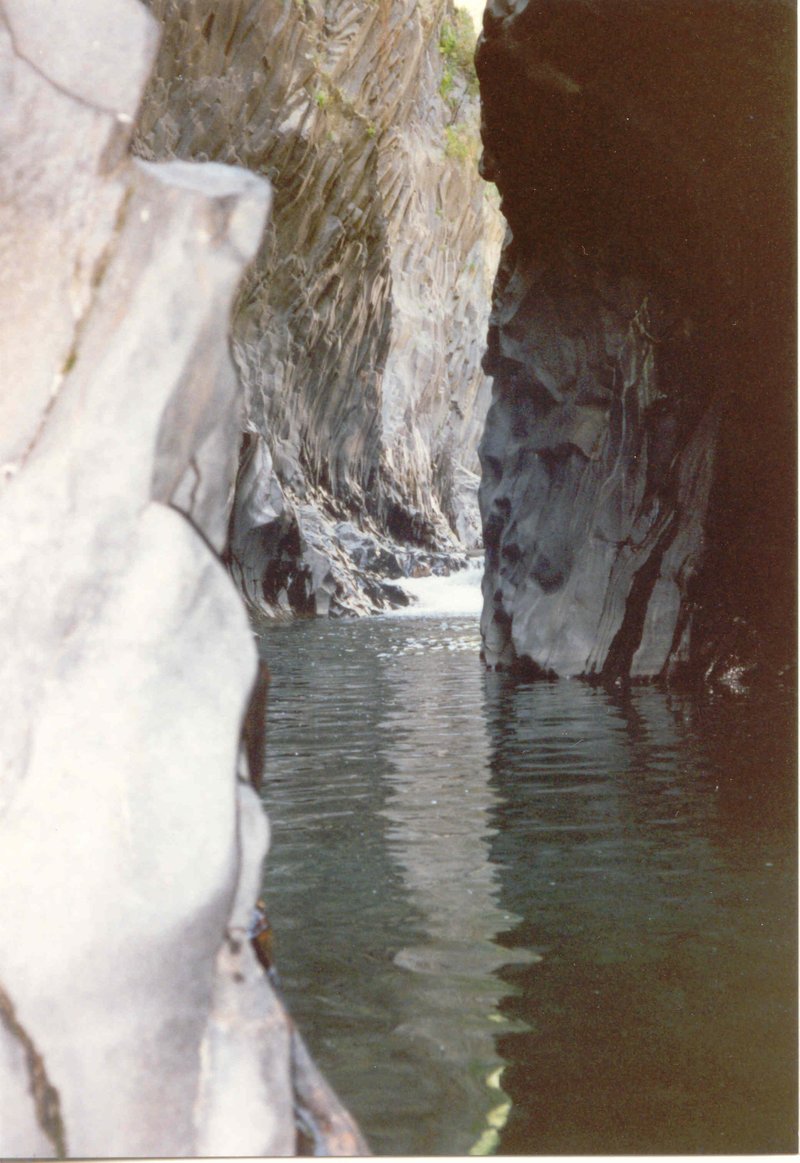
A dramatic volcanic canyon carved by the Alcantara River through ancient Etna lava flows. Walls rise 25 metres in hexagonal basalt columns — the same crystalline geometry as the Giant's Causeway — with cold, clear river water running through the narrows.
🏛️ Daily 9:00am - 7:00pm
⏰ ~1 hr 30 min
🚕 15 min → hotel
From Hotel: 🚕 1h 20 min → Neapolis Archaeological Park
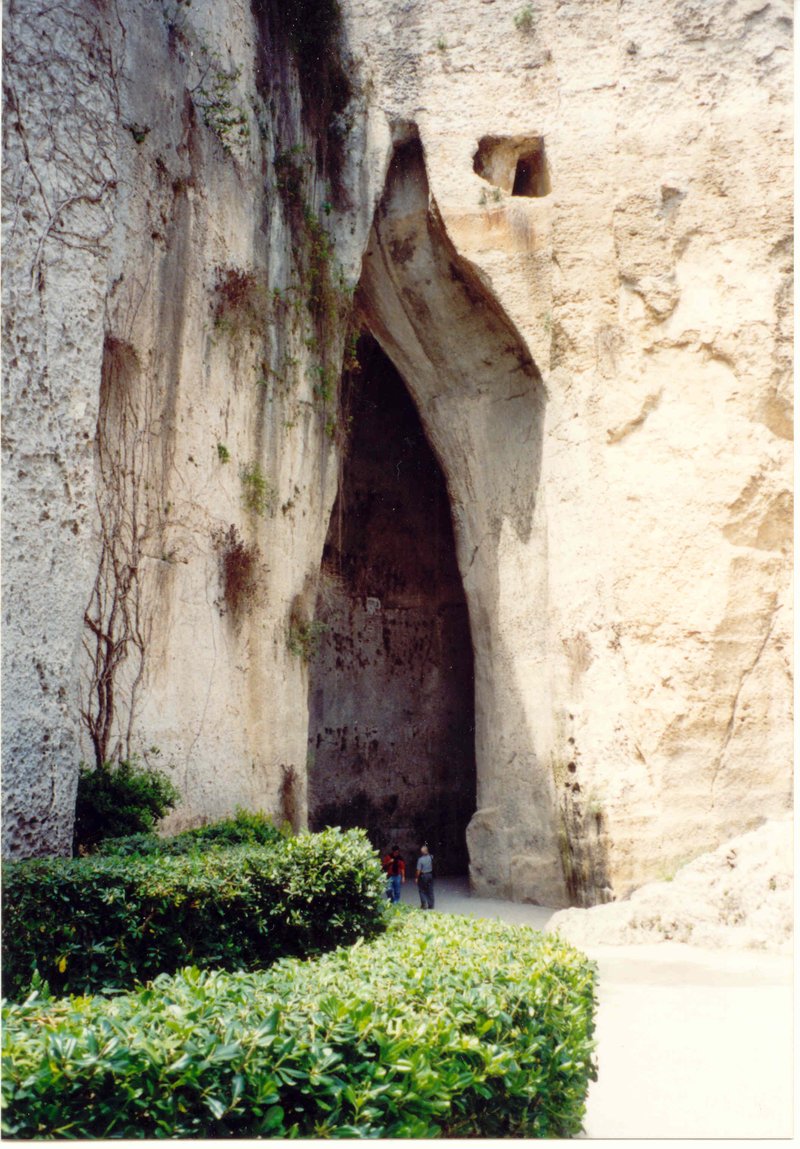
A vast open-air museum containing the 5th-century BC Greek Theatre, the 23-metre-high Ear of Dionysius cave with extraordinary acoustics, and the Latomie quarries. The theatre once held 15,000 spectators and is still used for performances in summer. UNESCO World Heritage.
🏛️ Daily 8:30am - 7:00pm
⏰ ~2 hr 30 min
🚶 23 min · 🚕 6 min → Temple of Apollo
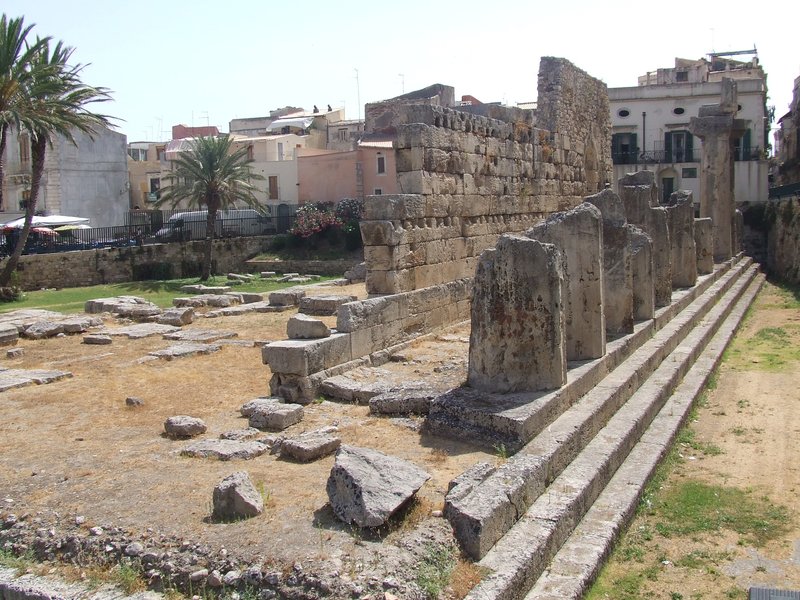
The oldest Doric temple in Sicily, dating to 565 BC. Its massive stone columns mark the entrance to Ortigia island and have survived transformations into a Byzantine church, Islamic mosque, and Norman chapel — 2,600 years of layered history visible in a single structure.
🚶 9 min · 🚕 2 min → Fountain of Arethusa
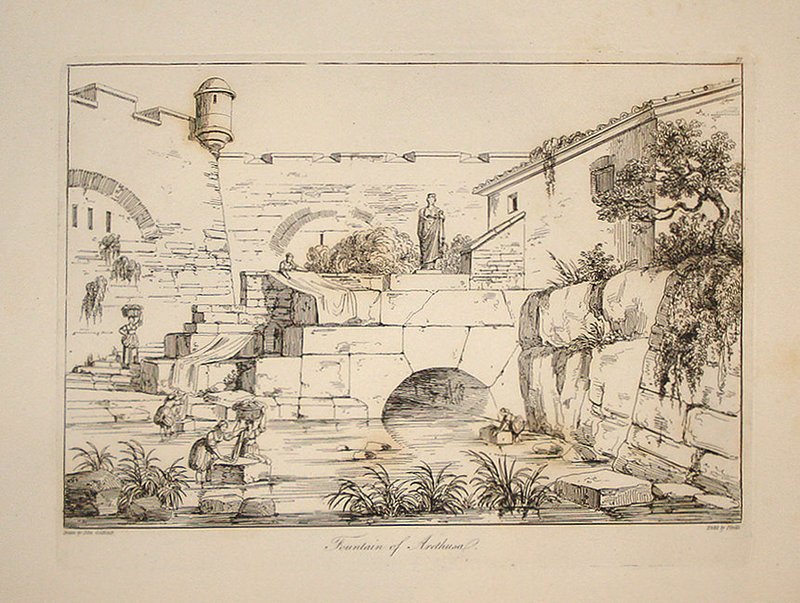
A freshwater spring that flows directly into the sea on Ortigia's western shore, surrounded by papyrus plants — the only place in Europe where papyrus grows naturally outside Egypt. Named for the Greek myth of the nymph Arethusa, who was transformed into this spring by Artemis.
🚕 1h 49min → Cathedral of Syracuse
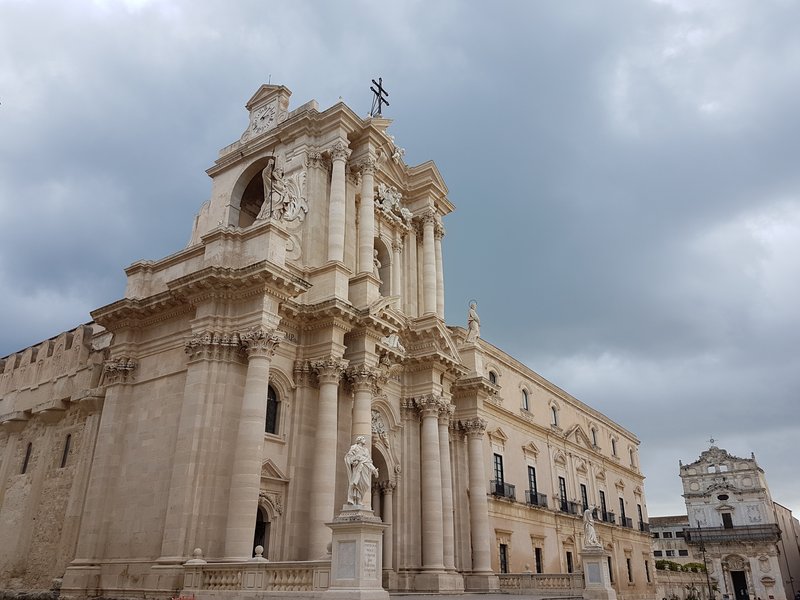
A Baroque cathedral built directly into a 5th-century BC Greek temple — the original Doric columns of the Temple of Athena are still embedded in the nave walls. The ornate 18th-century facade conceals 2,500 years of continuous sacred use. One of the most extraordinary architectural palimpsests in the Mediterranean.
🏛️ Daily 9:00am - 6:30pm
⏰ ~45 min
🚕 1h 20 min → hotel
From Hotel: 🚕 50 min → Piazza del Duomo
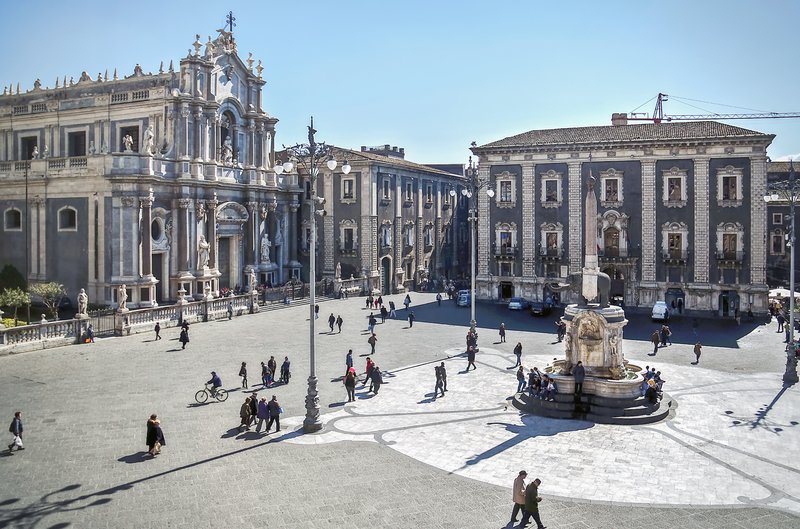
The theatrical heart of Catania's UNESCO Baroque quarter, rebuilt in black volcanic lava stone after the 1693 earthquake. The Elephant Fountain — a lava-stone elephant carrying an Egyptian obelisk — anchors the square, backed by the Cathedral of Sant'Agata's white limestone facade.
🏛️ Monday - Saturday 7:00am - 12:00pm · 4:00pm - 7:00pm · Sunday 7:30am - 12:00pm · 4:30pm - 7:00pm
⏰ ~1 hr
🚶 5 min · 🚕 3 min → Roman Theatre of Catania
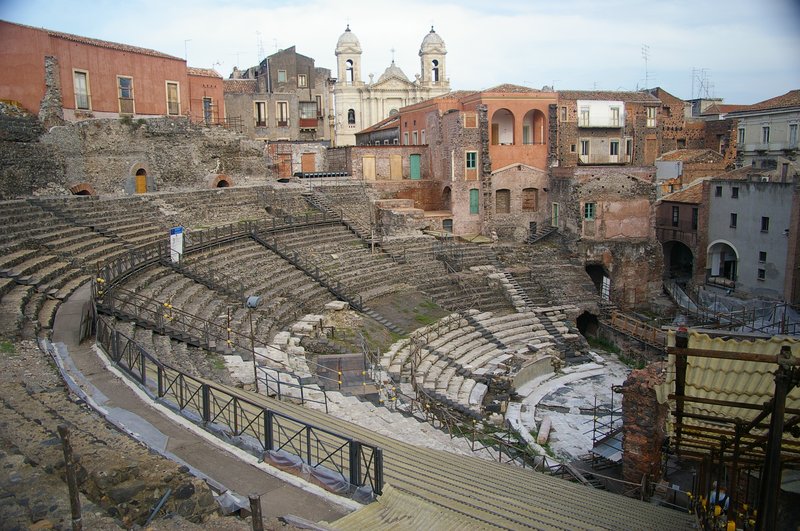
A 2nd-century AD Roman theatre seating 7,000, built in lava stone and partially buried under medieval buildings. Roman arches emerge through apartment basements — a surreal layering where ancient infrastructure and modern life occupy the same walls.
🏛️ Daily 9:00am - 7:00pm
⏰ ~45 min
🚶 8 min · 🚕 3 min → Monastery of San Nicolò l'Arena
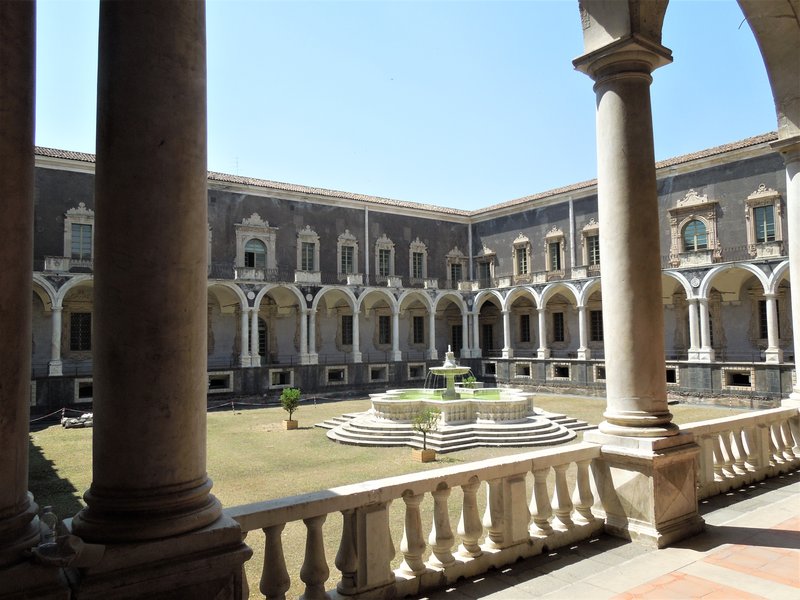
The second-largest Benedictine monastery in Europe. Founded in 1558 and rebuilt after the 1693 earthquake, it now houses the University of Catania. The massive cloister and Roman-era remains beneath the floors are the highlights. UNESCO World Heritage.
🏛️ Daily 9:00am - 5:00pm
⏰ ~1 hr
🚶 10 min · 🚕 4 min → Castello Ursino
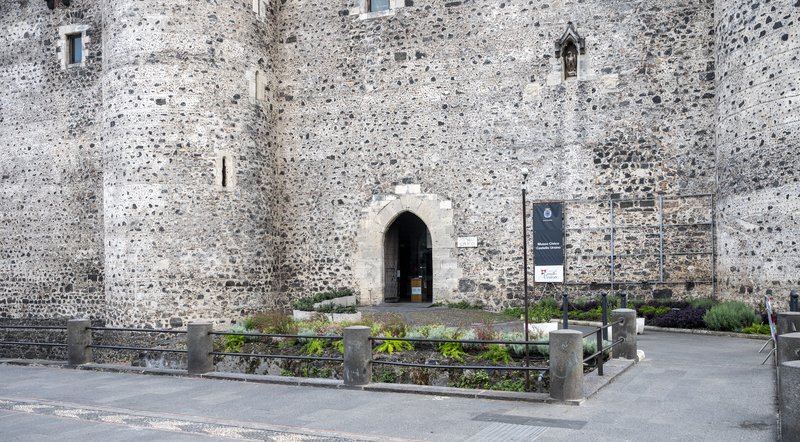
A 13th-century fortress built by Frederick II as a coastal stronghold — the 1669 Etna eruption pushed the shoreline 500 metres out, leaving the castle stranded inland. Its four cylindrical towers and thick walls now house Catania's civic museum, with Greek, Roman, and medieval collections.
🏛️ Monday - Saturday 9:00am - 7:00pm · Sunday 9:00am - 1:30pm
⏰ ~1 hr
🚕 50 min → hotel
🐘 A Painter's Cave and a Sorcerer's Elephant
The name "Ear of Dionysius" is younger than it sounds. The limestone quarry-cave had been there for over two thousand years, but it was the painter Caravaggio, touring Syracuse in the early 1600s with a local scholar, who first pointed at the S-shaped grotto and said it looked like a giant ear — then spun the idea that the tyrant Dionysius I had it carved so he could crouch outside and eavesdrop on whispers from prisoners locked inside. The story stuck so well that it's still the cave's official name, even though modern acoustic testing shows the shape amplifies sound but garbles it too badly for eavesdropping to have actually worked.
The lava-stone elephant anchoring Catania's Piazza del Duomo has an even stranger backstory attached to it. Medieval legend credited it to a nobleman-turned-sorcerer named Heliodorus, said to have carved the statue himself and ridden it through the air between Catania and Constantinople before being burned as a heretic. Historians now trace the elephant to a much older, unglamorous origin — an ancient talisman locals believed protected the city from Etna's eruptions — but the sorcerer's name won anyway: Catanese still call the statue "u Liotru," a garbled mispronunciation of Heliodorus that's outlived the true history by centuries.