TROMSØ
Radisson Blu Hotel
Norway
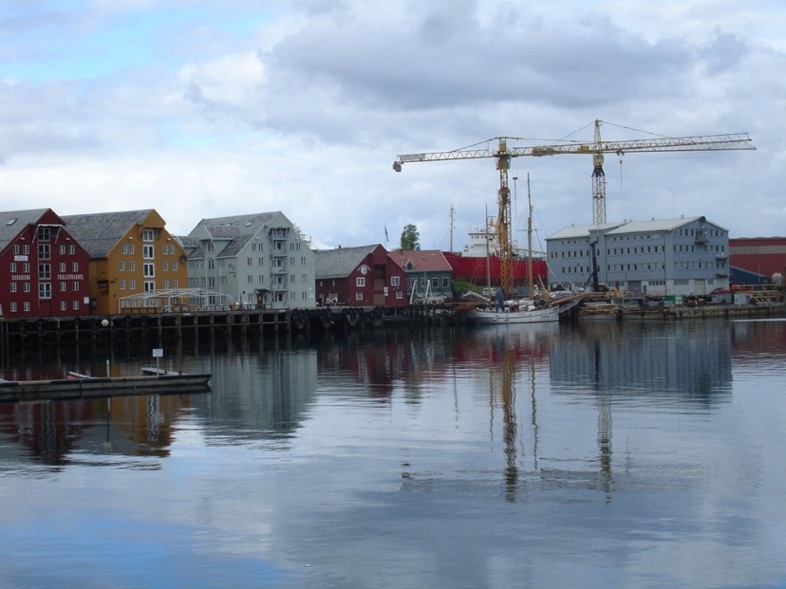
From Hotel: 🚶 2 min · 🚕 3 min → Harbour Promenade
The main quay along Tromsø's inner harbour — historic fishing vessels, the old Strandtorget fish market, and views across the water to the Arctic Cathedral and Tromsøbrua bridge. The clearest introduction to Tromsø's position as a working Arctic port.
🏛️ Open 24/7
⏰ ~45 min
🚶 2 min · 🚕 3 min
🚶 7 min · 🚕 3 min → Polar Museum
Arctic exploration history housed in a red timber warehouse from 1830. The permanent exhibitions cover Nansen's early expeditions, Amundsen's Antarctic and Northeast Passage voyages, and the life of Svalbard seal hunters and trappers from the 18th to 20th century.
🏛️ Monday - Sunday 9:00am - 5:00pm
⏰ ~1 hr 30 min
🚶 9 min · 🚕 4 min
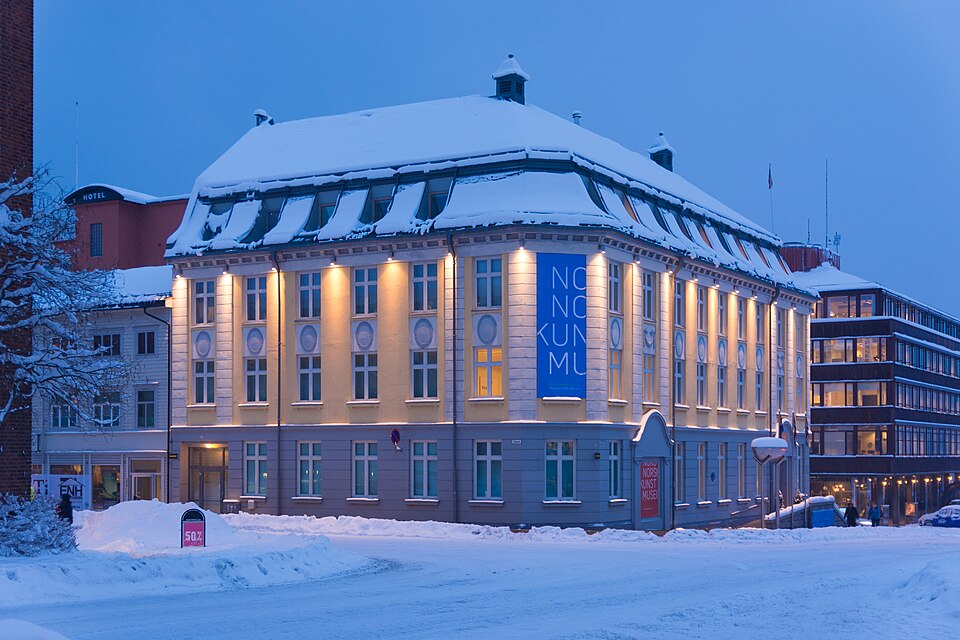
🚶 3 min · 🚕 3 min → Northern Norwegian Art Museum
Northern Norway's principal art museum in a neoclassical harbour building from 1917. Collections span contemporary northern Norwegian painting, Sami art and craft, and rotating international shows. The permanent display traces northern Norwegian visual culture from 1814 to the present.
🏛️ Tuesday - Wednesday 11:00am - 5:00pm · Thursday 11:00am - 8:00pm · Friday - Sunday 11:00am - 5:00pm
🚫 Closed Monday
⏰ ~1 hr 30 min
🚶 2 min · 🚕 3 min
🚶 2 min · 🚕 3 min → hotel
From Hotel: 🚶 10 min · 🚕 4 min → Tromsø Cathedral
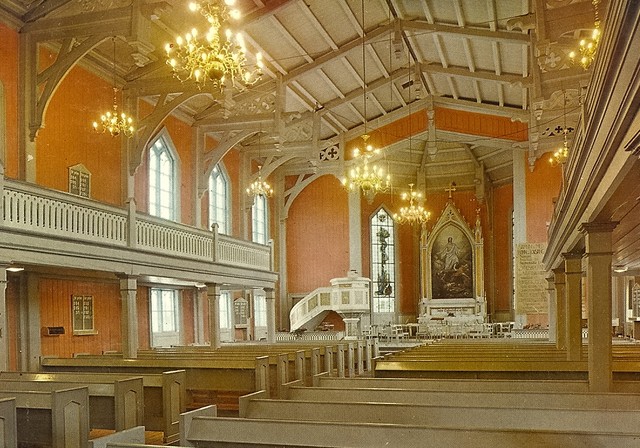
The world's northernmost Protestant cathedral, designed in Gothic Revival style in 1861 by Christian Heinrich Grosch, built entirely from timber. Stained glass by Per Vigeland; altarpiece after Adolph Tidemand's Resurrection. One of the few large wooden churches still standing in Norway.
🏛️ Tuesday - Saturday 10:00am - 5:00pm · Sunday 10:00am - 2:00pm
🚫 Closed Monday
⏰ ~45 min
Free
🚶 10 min · 🚕 4 min
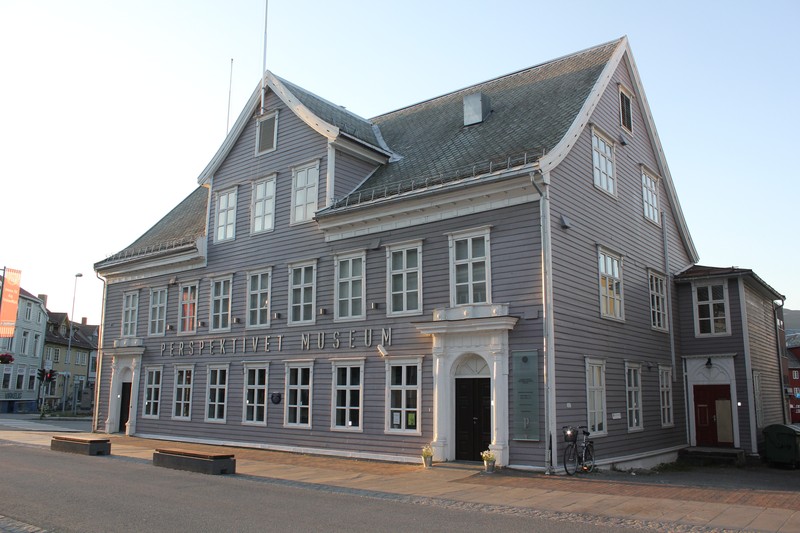
🚶 5 min · 🚕 3 min → Perspektivet Museum
Photography and cultural history museum in a 19th-century mercantile building. Permanent exhibitions document everyday life in Tromsø and northern Norway across the past 150 years through original photographs, domestic objects, and archive material. Changing photography exhibitions run throughout the year.
🏛️ Tuesday - Friday 10:00am - 4:00pm · Saturday - Sunday 11:00am - 5:00pm
🚫 Closed Monday
⏰ ~1 hr 30 min
🚶 15 min · 🚕 5 min
🚶 10 min · 🚕 4 min → Storgata
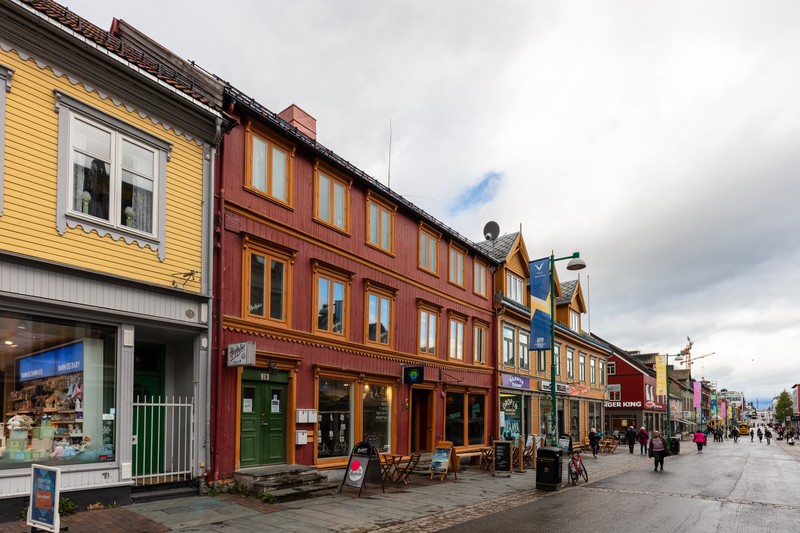
Tromsø's main pedestrianised street, running through the city centre from the cathedral south to the harbour. Local shops, bakeries, and mid-century buildings alongside timber townhouses. The street marks the route south toward Mack Ølhallen and the old brewery quarter.
🏛️ Open 24/7
⏰ ~1 hr
🚶 11 min · 🚕 4 min
🚶 3 min · 🚕 3 min → Mack Ølhallen
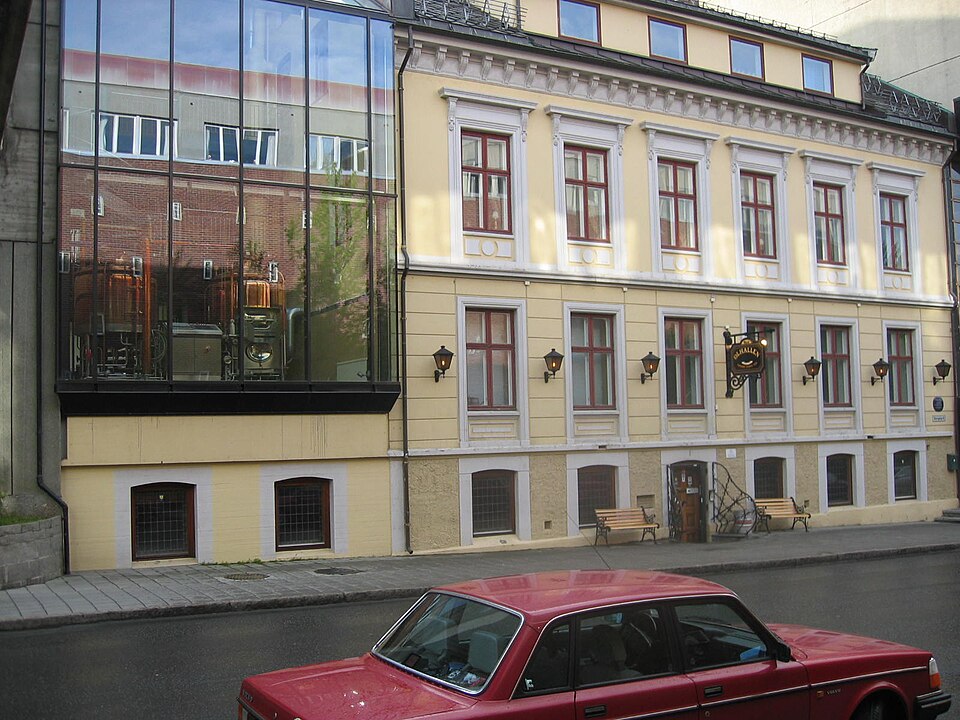
The world's northernmost large pub, operating since 1928 in the original Mack Brewery building. Seventy-two taps pour Mack's own Arctic ales, stouts, and seasonal beers in a cavernous wood-panelled hall. The Mack Brewery, founded in 1877, is the world's northernmost brewery still in production.
🏛️ Monday - Thursday 12:00pm - 12:30am · Friday - Saturday 12:00pm - 1:30am · Sunday 1:00pm - 6:00pm
⏰ ~1 hr 30 min
Free
🚶 12 min · 🚕 5 min
🚶 12 min · 🚕 5 min → hotel
From Hotel: 🚕 45 min → Sommarøy
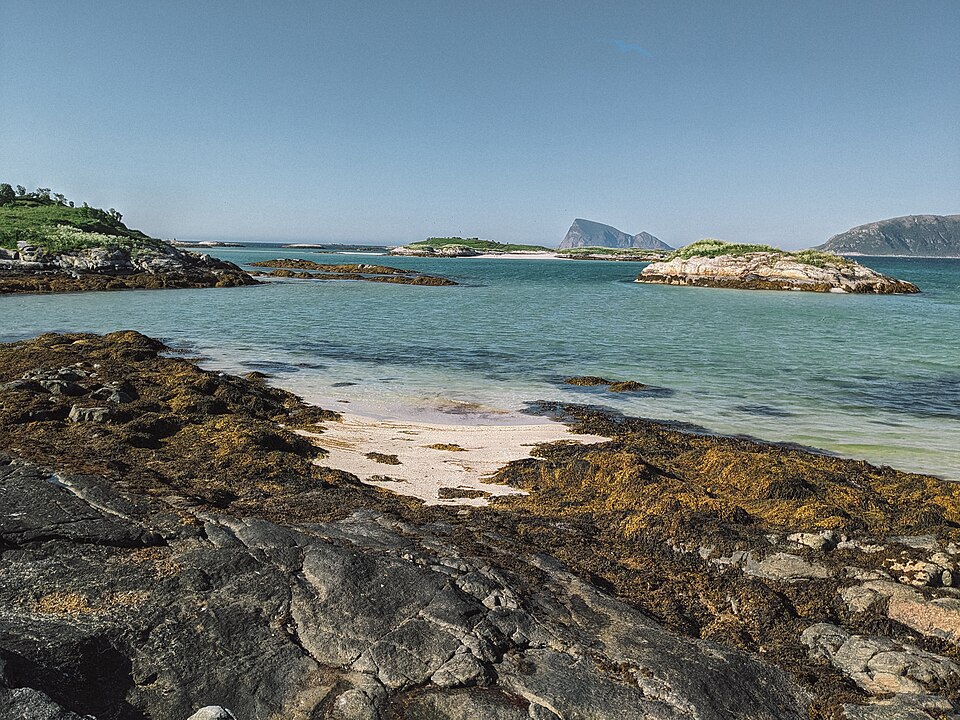
A small fishing island 36 km west of Tromsø, connected to the mainland by a bridge. Turquoise Arctic waters, white coral-sand beaches, and sharp peaks visible from the shoreline. In 2019 residents proposed abolishing clocks during summer — the midnight sun makes time redundant from May through July.
🏛️ Open 24/7
⏰ ~8 hr
🚕 45 min
🚕 45 min → hotel
From Hotel: 🚶 14 min · 🚕 5 min → Polaria
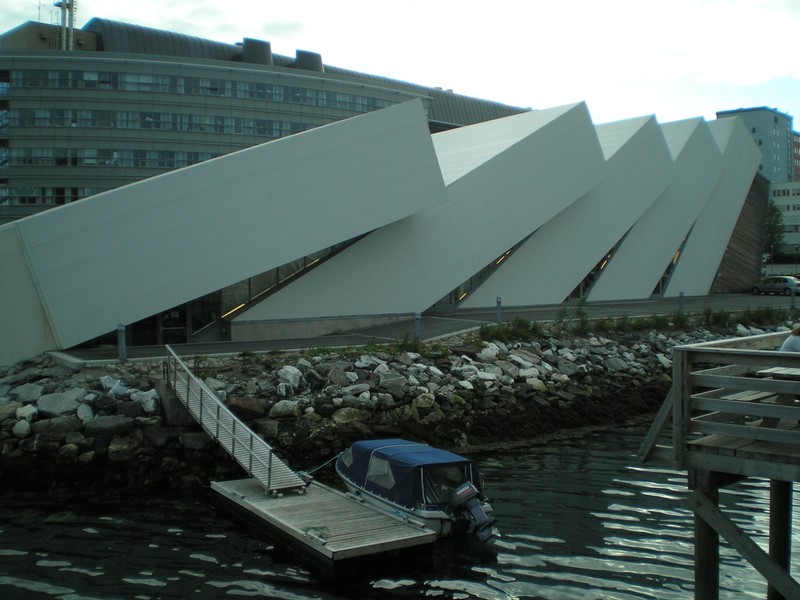
The world's northernmost aquarium, designed to resemble ice floes stacked by wind and opened in 1998. Live bearded seals, Arctic fish tanks, and a panoramic film on Svalbard wildlife and ecology. Seal feeding and training sessions run three times daily.
🏛️ Monday - Sunday 10:00am - 5:00pm
⏰ ~1 hr 30 min
🚶 14 min · 🚕 5 min
🚶 20 min · 🚕 7 min → Arctic-Alpine Botanic Garden
The world's northernmost botanical garden, established in 1994 on the University of Tromsø campus. Over 2,000 species of Arctic, alpine, and subarctic plants — cloudberries, mountain avens, Sami medicinal herbs, and rock gardens arranged by continent. Free and outdoors; best from June to August.
🏛️ Open 24/7
⏰ ~1 hr
🚶 22 min · 🚕 7 min
🚶 3 min · 🚕 3 min → Arctic University Museum of Norway
The natural and cultural history of northern Norway in eight permanent galleries. Highlights include High Arctic geology, an extensive Sami culture display with traditional clothing and tools, and exhibitions on Arctic flora and fauna. Part of UiT The Arctic University of Norway.
🏛️ Monday - Friday 10:00am - 6:00pm · Saturday - Sunday 11:00am - 5:00pm
⏰ ~2 hr
🚶 24 min · 🚕 7 min
🚶 25 min · 🚕 9 min → Telegrafbukta
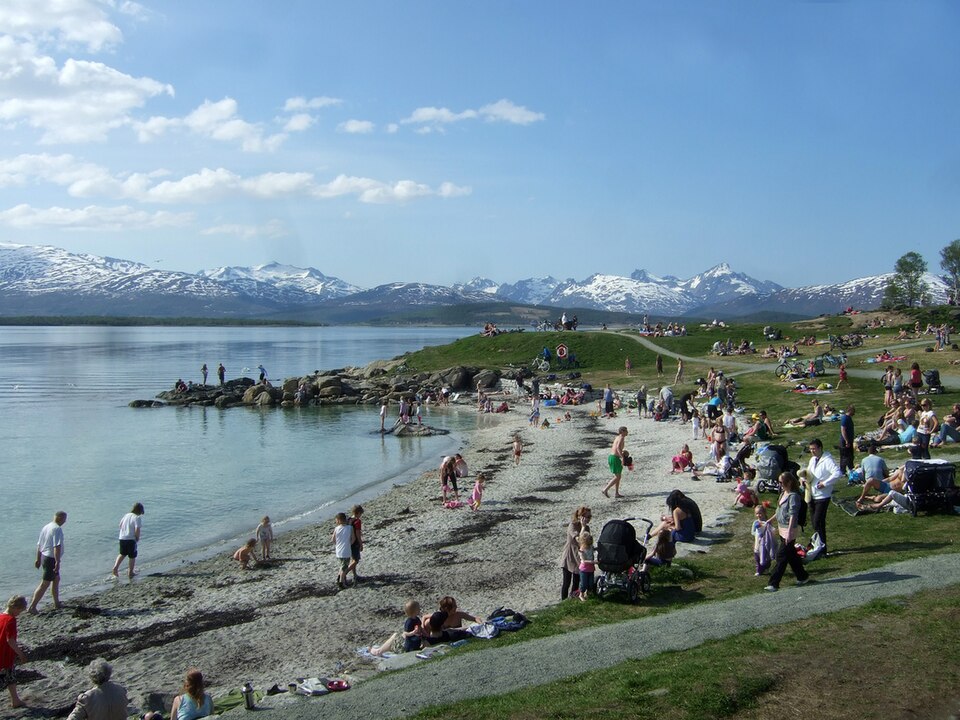
Sandy beach at the southern tip of Tromsøya, facing the Tromsøysund strait and the mountains of Kvaløya beyond. Calm, shallow water and smooth rocks make it the city's most popular summer swimming spot. The name comes from the 19th-century telegraph station that once operated here.
🏛️ Open 24/7
⏰ ~1 hr 30 min
🚕 8 min
🚕 8 min → hotel
From Hotel: 🚶 16 min · 🚕 5 min → Tromsøbrua
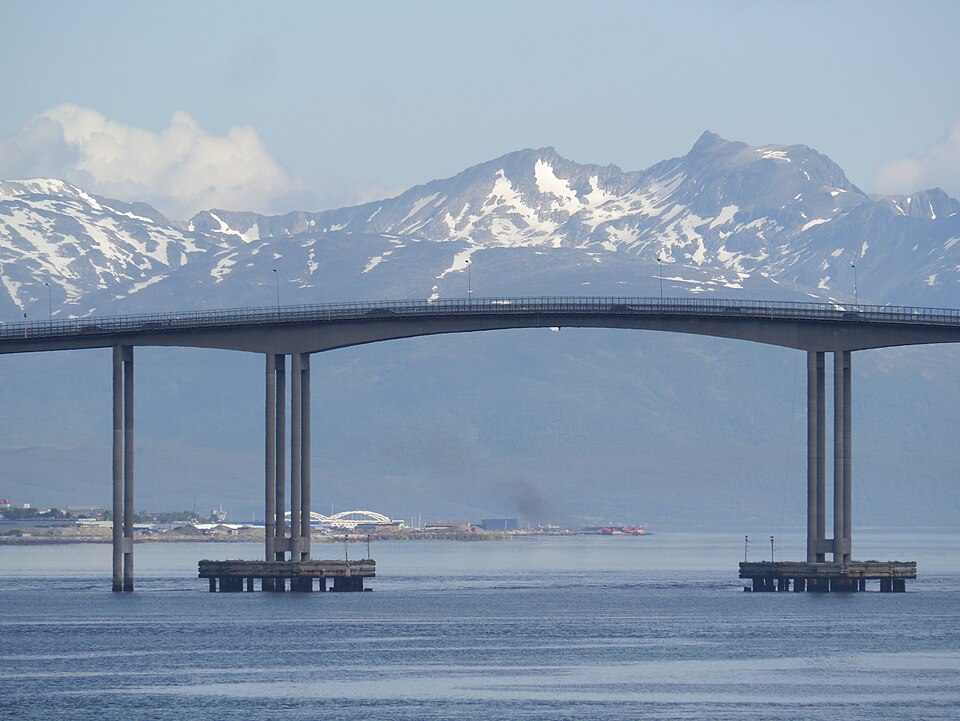
The 1,016-metre suspension bridge connecting Tromsøya to the Tromsdalen mainland, opened in 1960. Walking across gives unobstructed views of the city, the surrounding fjords, and on clear days the peaks of Kvaløya. The bridge appears in nearly every photograph taken from the Fjellheisen summit.
🏛️ Open 24/7
⏰ ~30 min
🚶 16 min · 🚕 5 min
🚶 12 min · 🚕 5 min → Tromsø Science Centre
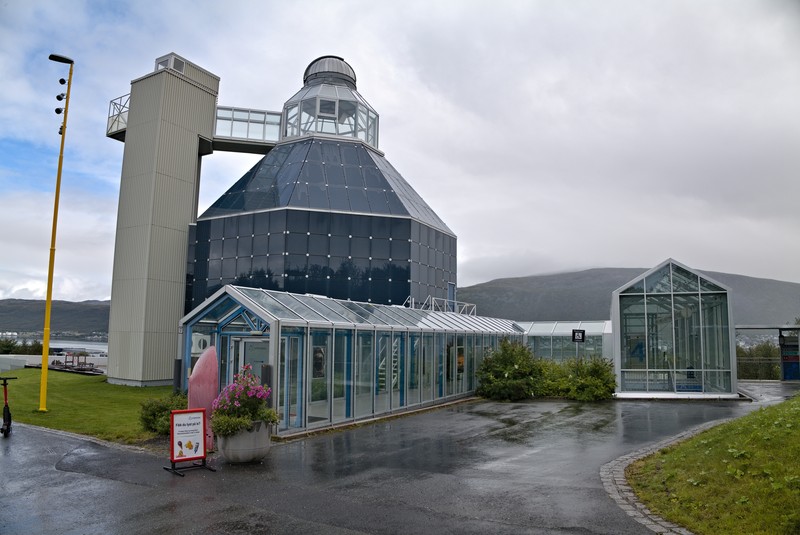
Hands-on science museum on the university's Tromsdalen campus, with exhibits on aurora borealis, Arctic physics, and space science. The Northern Lights Planetarium runs dome shows with simulated and archival aurora footage — the closest substitute during summer when the sun never sets.
🏛️ Monday - Sunday 10:00am - 5:00pm
⏰ ~2 hr
🚶 25 min · 🚕 7 min
🚶 8 min · 🚕 3 min → Arctic Cathedral
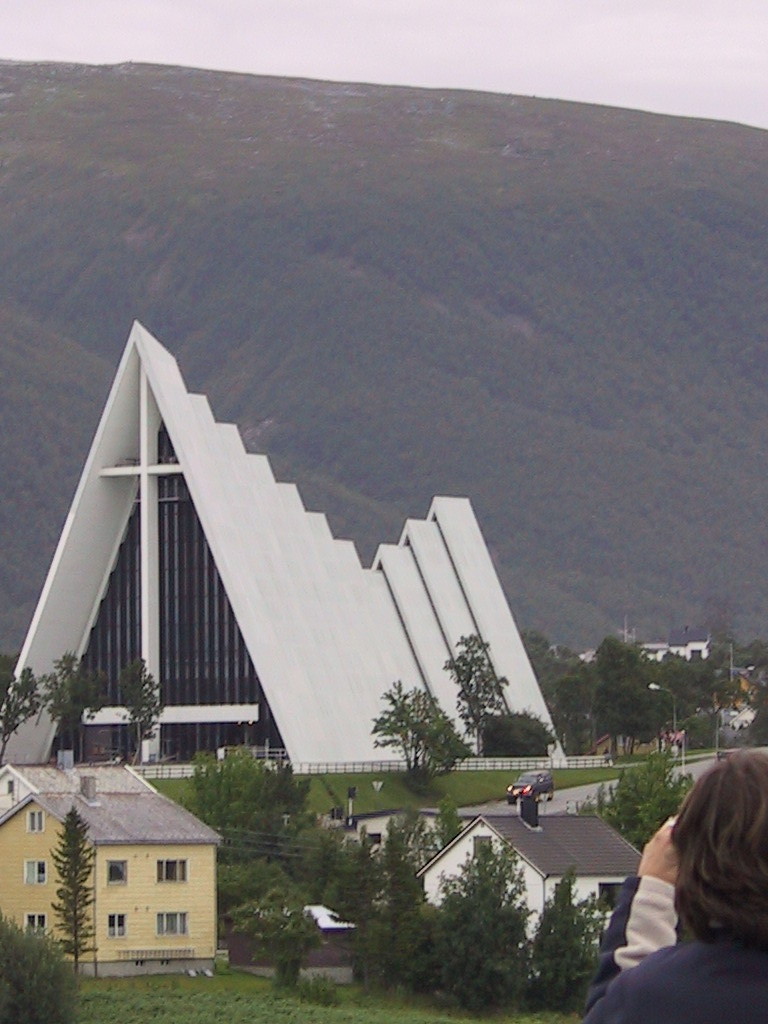
Designed by Jan Inge Hovig and completed in 1965, the Arctic Cathedral is Tromsø's defining landmark. The aluminium-triangle exterior refracts light like glacial ice. The interior's east-facing glass mosaic — one of Europe's largest at 140 m² — depicts the Second Coming in white, gold, and arctic-blue.
🏛️ Monday - Sunday 10:00am - 6:00pm
⏰ ~45 min
🚶 28 min · 🚕 8 min
🚶 15 min · 🚕 5 min → Fjellheisen
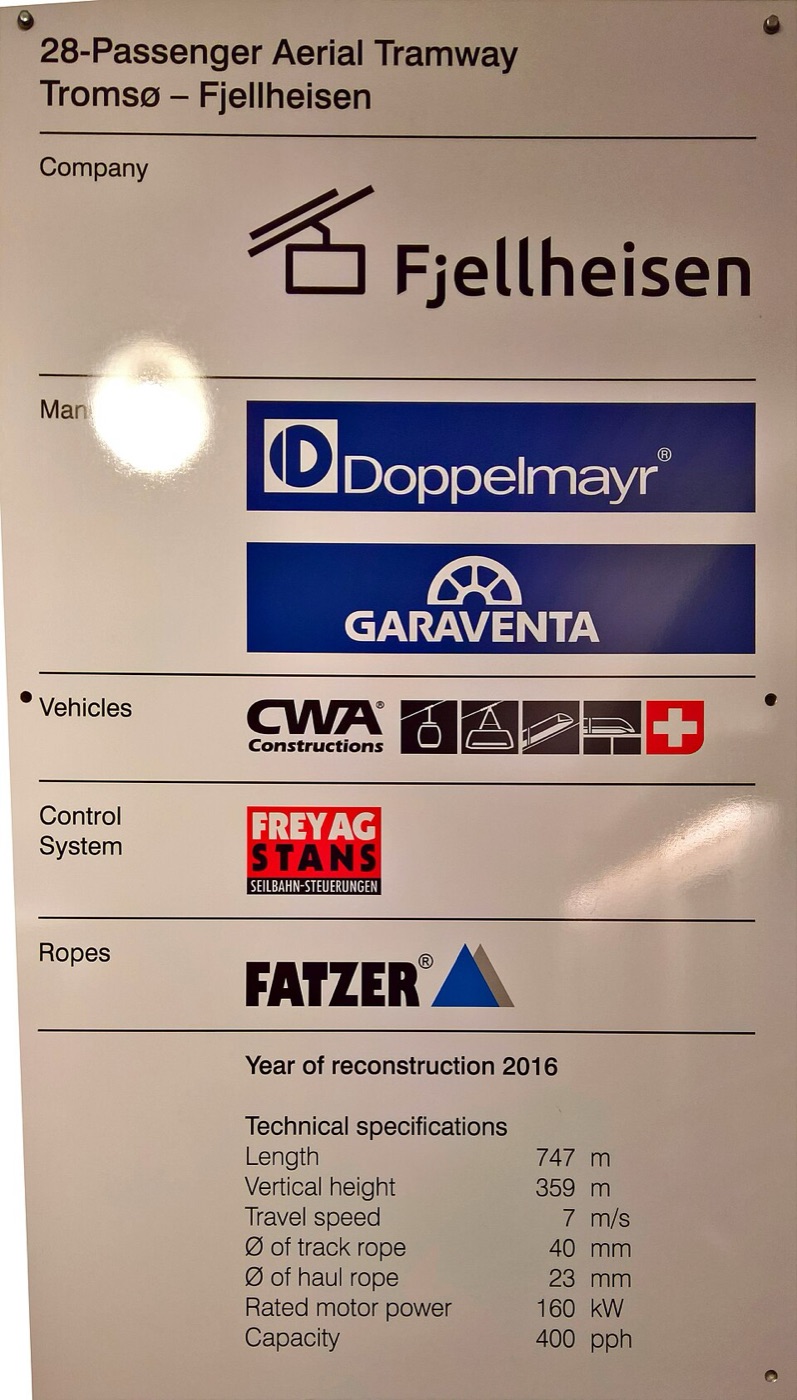
The cable car ascends 421 metres to the summit of Storsteinen in four minutes, arriving at a platform overlooking Tromsø, the surrounding fjords, and — from late May through late July — the midnight sun above the horizon. The full geometry of Tromsøya's island position is clear from the top.
🏛️ Monday - Sunday 10:00am - 9:00pm
⏰ ~1 hr 30 min
🚶 35 min · 🚕 10 min
🚕 45 min → Ersfjordbotn
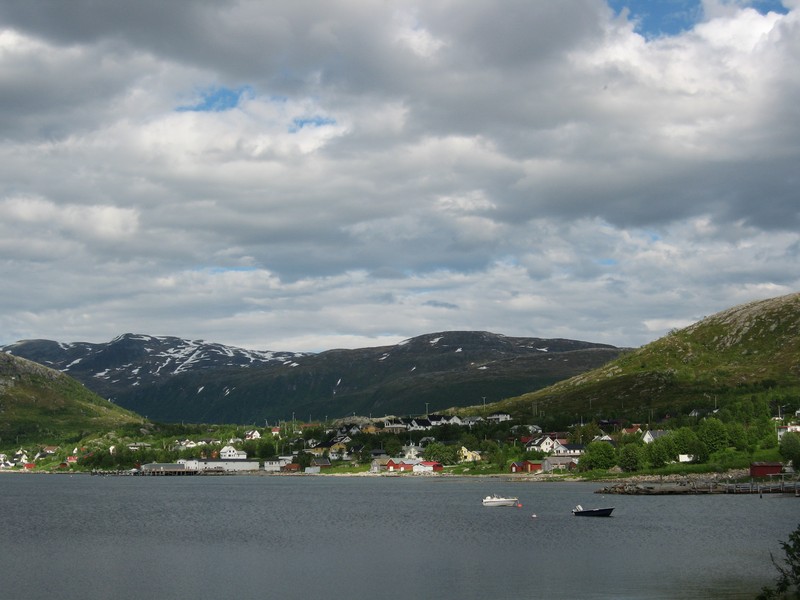
A small farming village at the head of Ersfjorden on Kvaløya island, 40 km west of Tromsø. The surrounding peaks — Storsteinnestinden at 1,132 m — reflect in calm water. Widely considered one of the most photogenic fjord scenes in the region. The coastal return route along Rv862 passes several additional inlet views.
🏛️ Open 24/7
⏰ ~1 hr 30 min
🚕 45 min
🚕 45 min → hotel
From Hotel: 🚕 1h 15min → Lyngen Alps
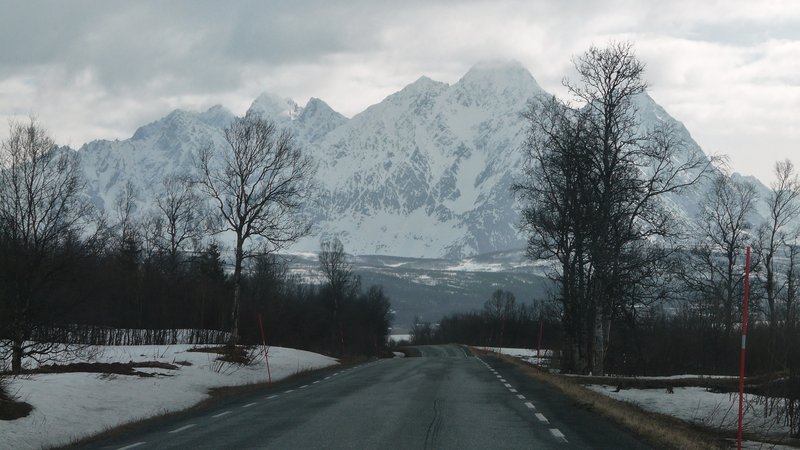
A glacier-capped mountain range on the Lyngen peninsula, rising to 1,833 m directly from the fjord. Driving through Lyngsdalen on Riksveg 91, the valley floor runs between walls of snow-patched peaks year-round. The range is the defining Arctic landscape of mainland Norway outside the Lofoten.
🏛️ Open 24/7
⏰ ~3 hr
🚕 1h 15min
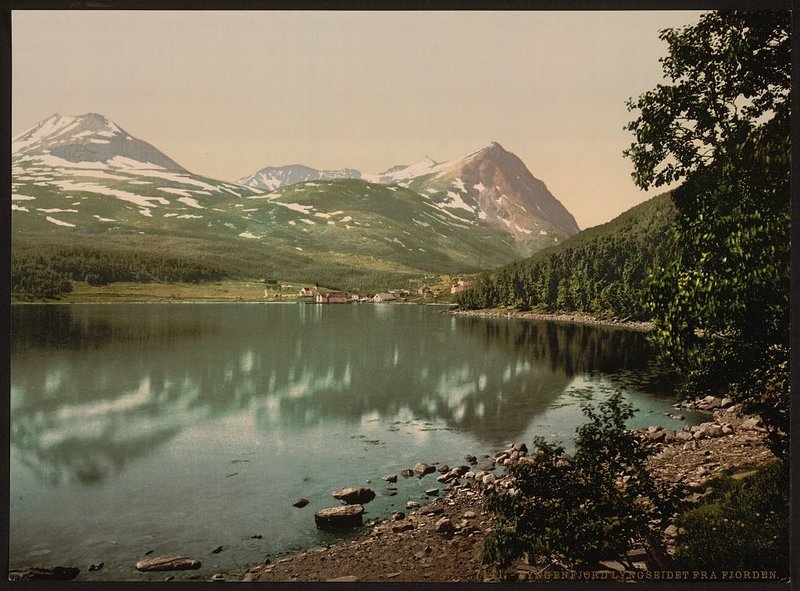
🚕 10 min → Lyngseidet
The main village on the Lyngen peninsula, set at the narrowest point of Lyngenfjorden. The village sits on a flat river delta backed by steep mountains, with the waterfront giving direct views across to the Kåfjord peaks. A ferry crosses to Olderdalen here, the traditional shortcut north to Alta.
🏛️ Open 24/7
⏰ ~45 min
🚕 10 min
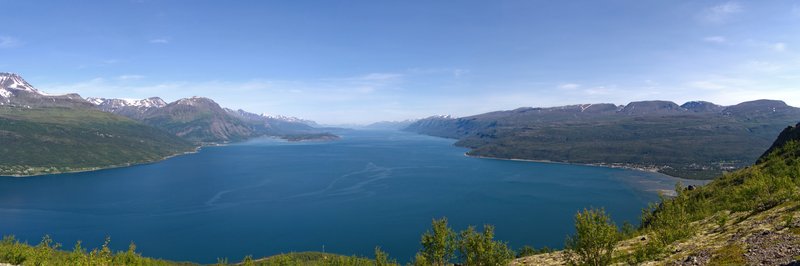
🚕 15 min → Lyngen Fjord
The fjord between the Lyngen peninsula and the mainland — 82 km, glacier mountains on both sides. From elevated viewpoints near Falsnesfjellet, the water stretches north and south with the Lyngen Alps behind and the Kåfjord peaks across. The range attracted 19th-century alpinists who mapped and named its summits.
🏛️ Open 24/7
⏰ ~1 hr
🚕 15 min
🚕 1h 15min → hotel
🧭 An Explorer Who Never Came Back, a Battleship That Never Left
The Polar Museum's Amundsen collection covers a career that ended not at the poles but in the air above these same waters. In June 1928, at age 55, Roald Amundsen took off from Tromsø in a French seaplane to help search for the crew of a crashed Italian airship near Svalbard. A fisherman watched the plane disappear into fog over the Barents Sea that afternoon, and it was never seen again. Search parties recovered only a fuel tank and a float; despite modern sonar sweeps in 2004 and 2009, no trace of Amundsen, his five crewmates, or the aircraft has ever been found.
Sixteen years later, the largest battleship in the German navy met its end just offshore. The Tirpitz had been moved to an anchorage near Håkøya island, close enough to Tromsø that the Germans believed the shallow water would keep it upright even if hit again. On 12 November 1944, 29 RAF bombers dropped Tallboy bombs designed to punch through a battleship's armored deck before exploding inside the hull. The Tirpitz capsized within minutes, killing over 900 crew — while not a single British airman was lost.
 1.jpg)
 01.jpg)