VENICE
The Gritti Palace
Italy
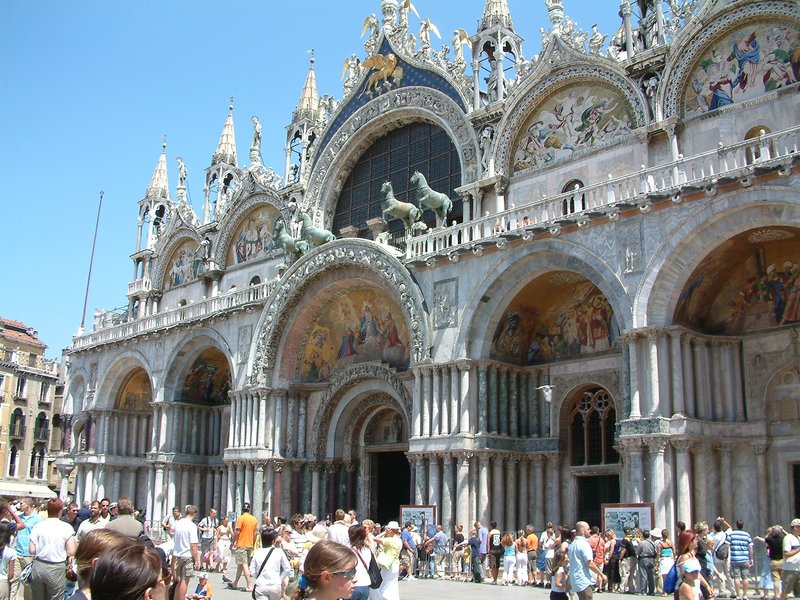
From Hotel: 🚶 9 min · 🚤 5 min → St Mark's Basilica
Venice's golden cathedral, begun in 1063 to house the relics of St Mark. Its five-domed Italo-Byzantine facade and interior of more than 8,000 square metres of gold-ground mosaics make it the most opulent church in Italy — the jewelled Pala d'Oro and the bronze Horses of Saint Mark are inside.
🏛️ Daily 9:30am - 5:15pm
⏰ ~1 hr
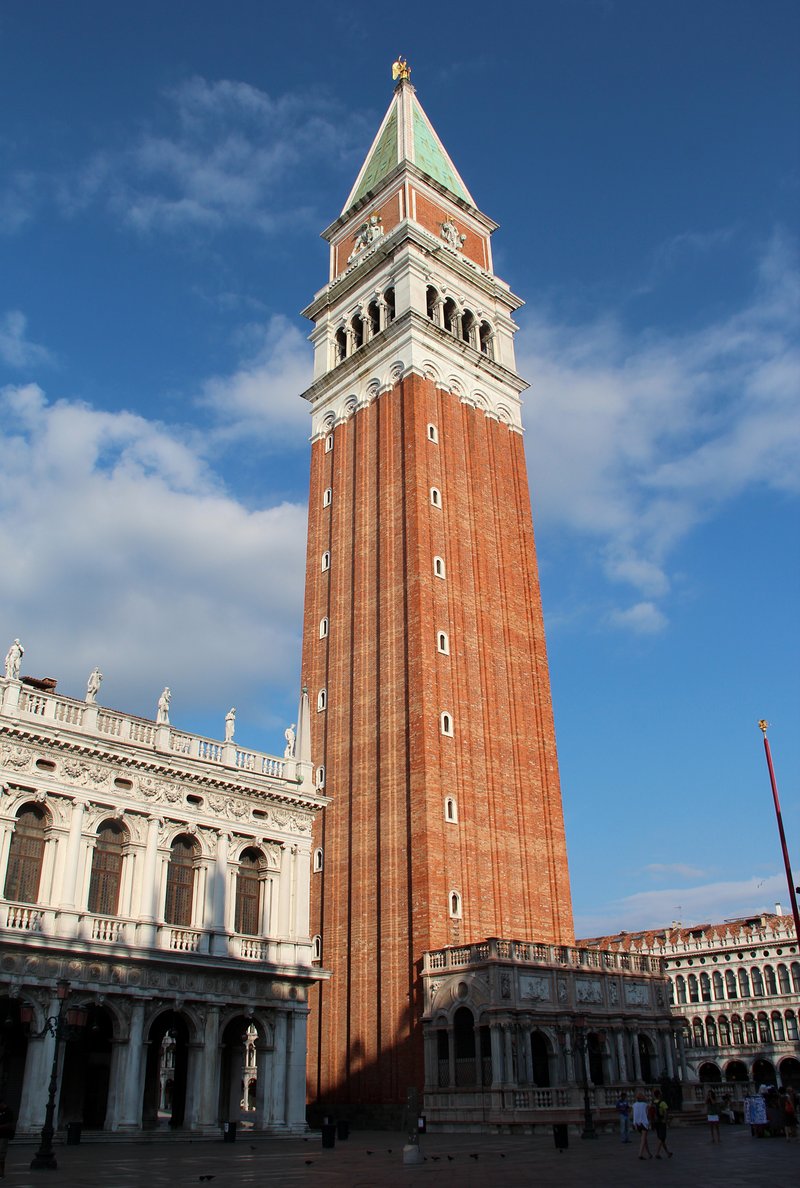
🚶 1 min · 🚤 1 min → St Mark's Campanile
The 98.6 m brick bell tower of the basilica, first raised in the 9th century and rebuilt exactly after its 1902 collapse. An elevator climbs to the top for the finest panorama in Venice — the rooftops, the lagoon, and on clear days the Dolomites.
🏛️ Daily 9:30am - 9:15pm
⏰ ~45 min
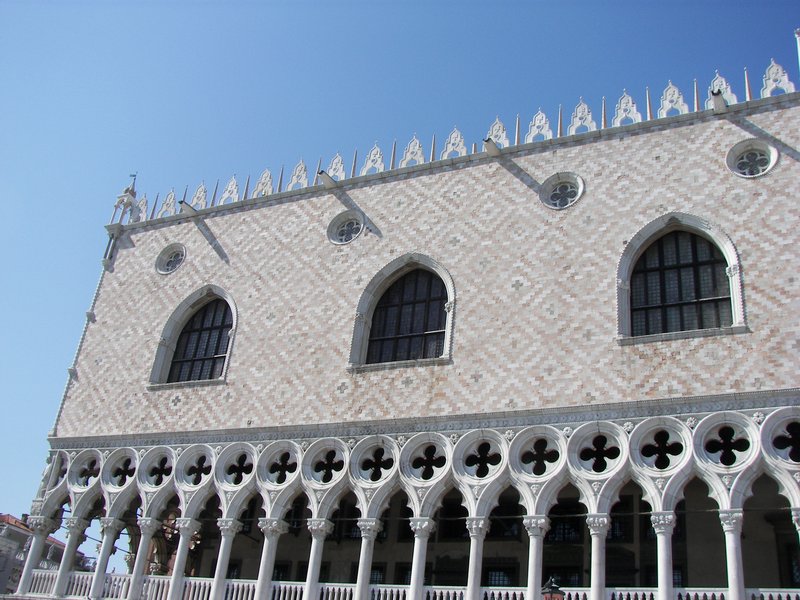
🚶 2 min · 🚤 2 min → Doge's Palace
The seat of Venetian power for a thousand years — a Venetian Gothic masterpiece of pink-and-white marble loggias over the Piazzetta. Inside are the vast Chamber of the Great Council, Tintoretto's "Paradise," gilded state apartments, the armoury, and the prisons reached across the Bridge of Sighs.
🏛️ Daily 9:00am - 7:00pm
⏰ ~2 hr
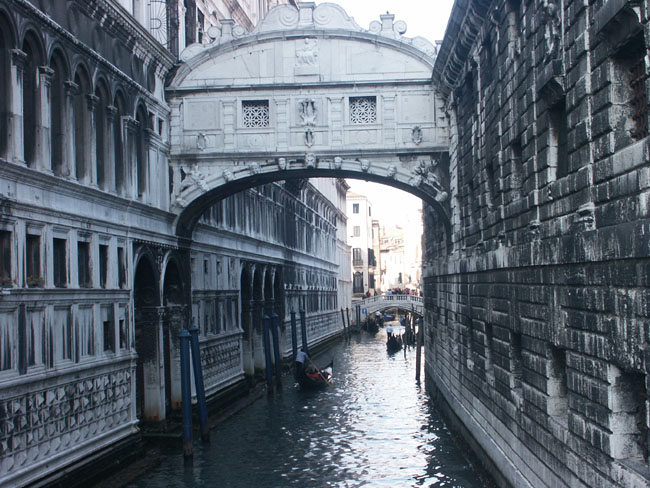
🚶 1 min · 🚤 1 min → Bridge of Sighs
The enclosed white-limestone bridge of 1600 that carried prisoners from the Doge's Palace interrogation rooms to the New Prison. Its name is Romantic-era legend — the sighs of convicts glimpsing the lagoon a last time. The classic view is from the Ponte della Paglia on the waterfront.
🚶 10 min · 🚤 6 min → Rialto Bridge
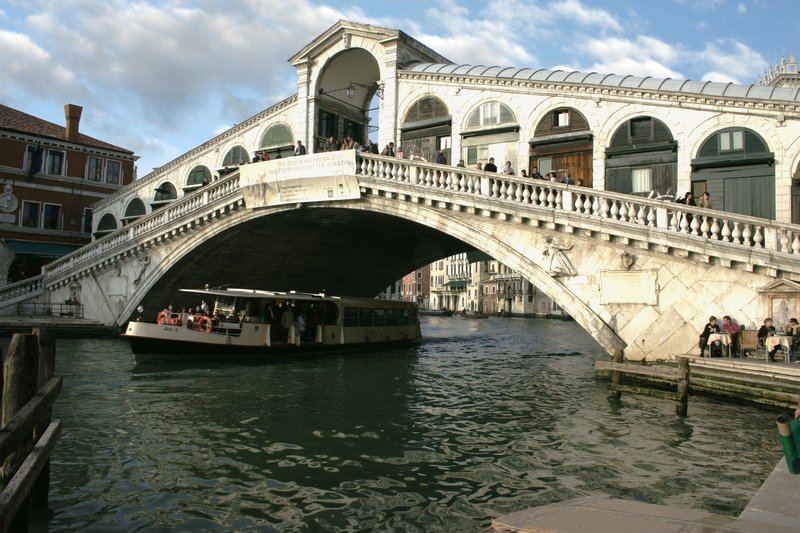
The oldest and most famous bridge across the Grand Canal, completed in stone in 1591 by Antonio da Ponte. A single 28 m marble arch lined with shops, it links San Marco to the Rialto market district and frames the canal's grandest view.
🚶 14 min · 🚤 7 min → hotel
From Hotel: 🚶 18 min · 🚤 6 min → Santa Maria della Salute
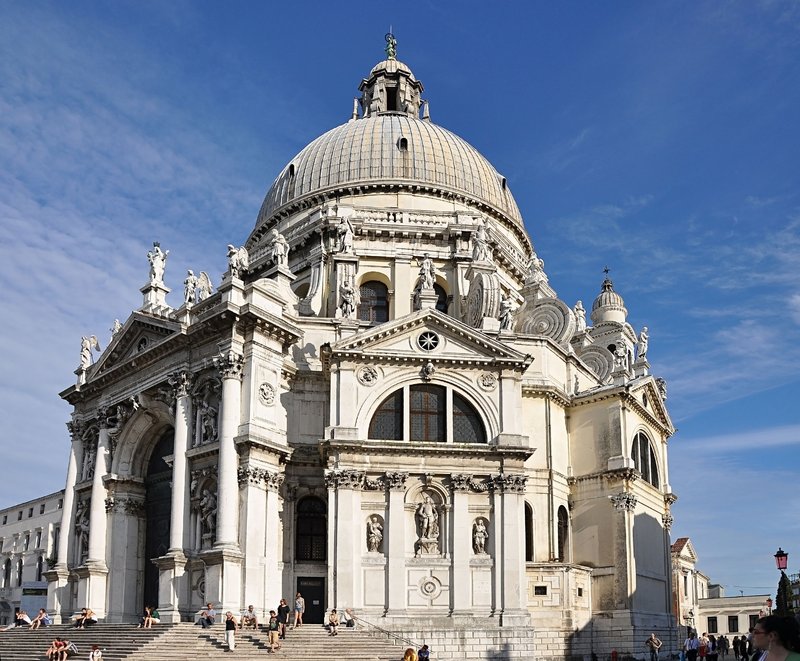
The great white octagonal Baroque church that crowns the entrance to the Grand Canal, built by Baldassare Longhena from 1631 as the city's thanksgiving for deliverance from the plague. Its vast dome is a defining silhouette of Venice; inside hang Titian and Tintoretto canvases.
🏛️ Daily 9:00am - 12:00pm · 3:00pm - 5:30pm
⏰ ~40 min
🚶 3 min · 🚤 3 min → Peggy Guggenheim Collection
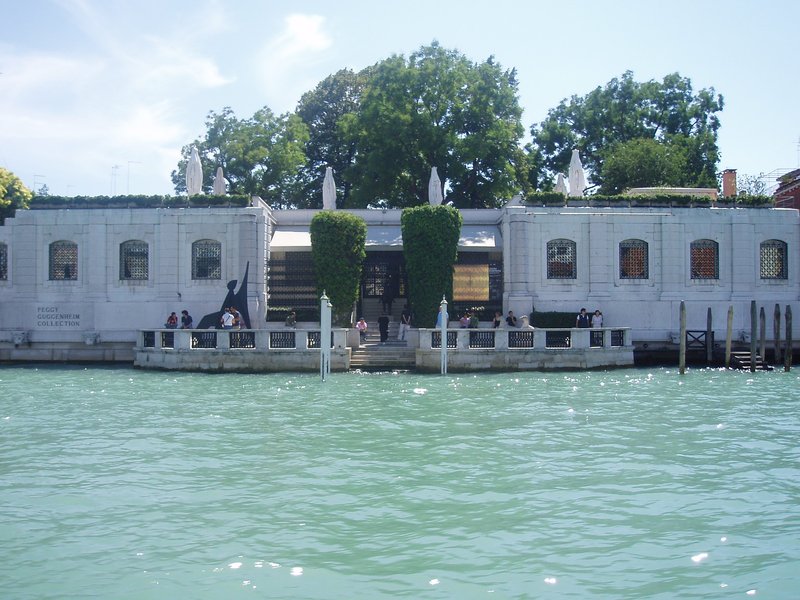
The unfinished one-storey Palazzo Venier dei Leoni on the Grand Canal, home of heiress Peggy Guggenheim from 1949 and now one of Europe's great modern-art museums — Picasso, Pollock, Ernst, Magritte, Brancusi, and Marino Marini's bronze rider in the canal-side garden.
🏛️ Wednesday - Monday 10:00am - 6:00pm
🚫 Closed Tuesday
⏰ ~1 hr 30 min
🚶 5 min · 🚤 4 min → Gallerie dell'Accademia
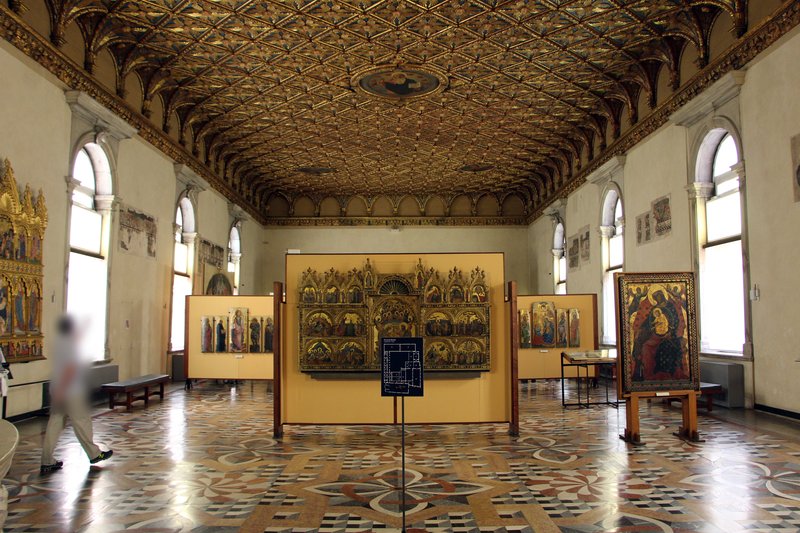
The supreme collection of Venetian painting, housed in the former Scuola della Carità at the foot of the Accademia Bridge. Five centuries of Bellini, Giorgione, Carpaccio, Titian, Veronese and Tintoretto — including Giorgione's "Tempest" and Leonardo's "Vitruvian Man."
🏛️ Daily 9:00am - 7:00pm
⏰ ~1 hr 30 min
🚶 13 min · 🚤 8 min → Scuola Grande di San Rocco
A confraternity hall near the Frari that Tintoretto spent 24 years filling — more than 60 vast canvases of biblical scenes covering walls and ceilings, his answer to the Sistine Chapel. The Sala dell'Albergo's "Crucifixion" is among the most overwhelming paintings in Italy.
🏛️ Daily 9:30am - 5:30pm
⏰ ~1 hr
🚶 14 min · 🚤 8 min → hotel
From Hotel: 🚶 7 min · 🚤 4 min → Gondola Ride
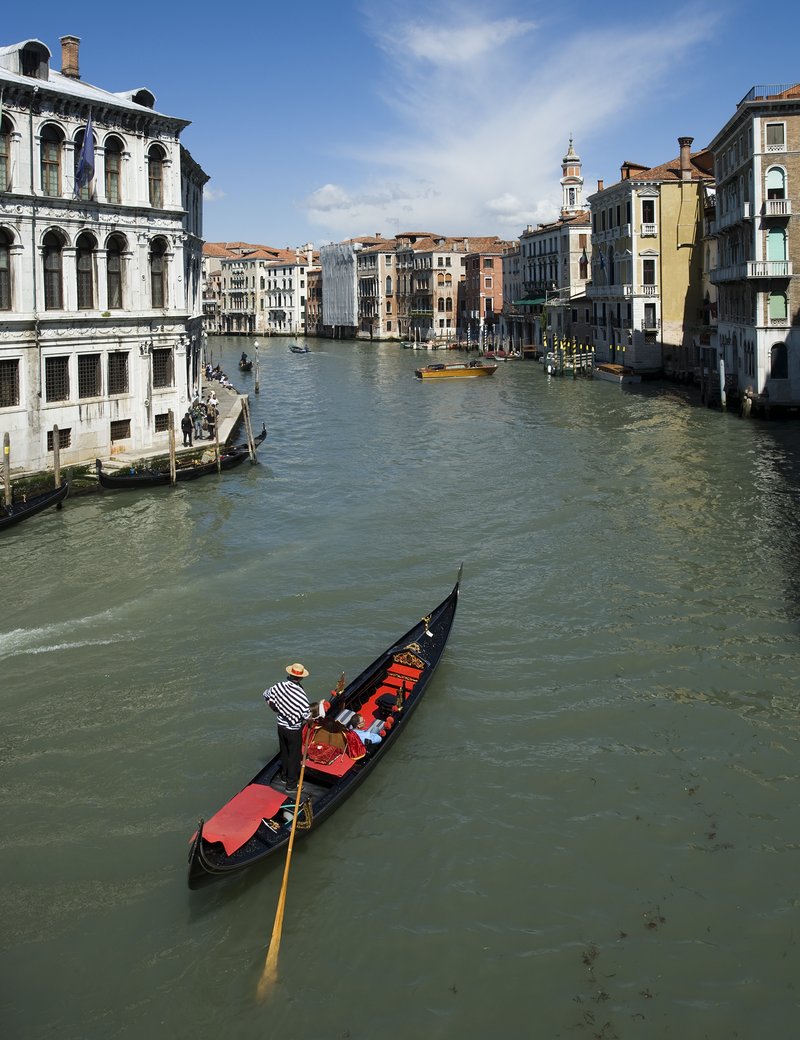
Venice's signature experience — a flat-bottomed black gondola poled through narrow back canals and under low stone bridges. The standard route threads the smaller sestiere waterways invisible from foot traffic, giving the closest read of the city's layered Gothic and Renaissance facades from water level.
🏛️ Daily 9:00am - 7:00pm
⏰ ~40 min
🚶 14 min · 🚤 8 min → Basilica dei Frari
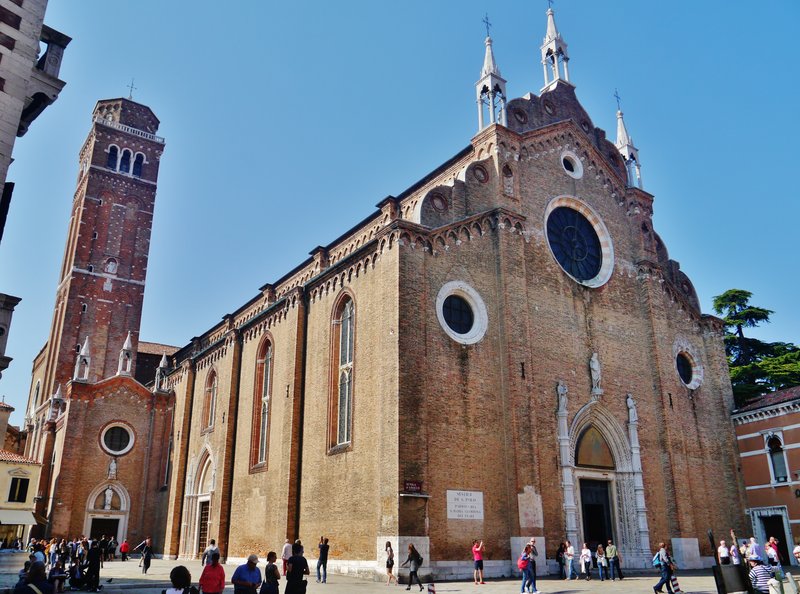
Venice's great Franciscan Gothic basilica, built from 1250, holding some of the city's most important paintings. Titian's Assumption of the Virgin blazes above the high altar, alongside his Pesaro Madonna, Giovanni Bellini's sacristy triptych, and the tomb monuments of Titian and Canova.
🏛️ Monday - Saturday 9:00am - 6:00pm · Sunday 1:00pm - 6:00pm
⏰ ~1 hr
🚶 17 min · 🚤 11 min → Ca' d'Oro
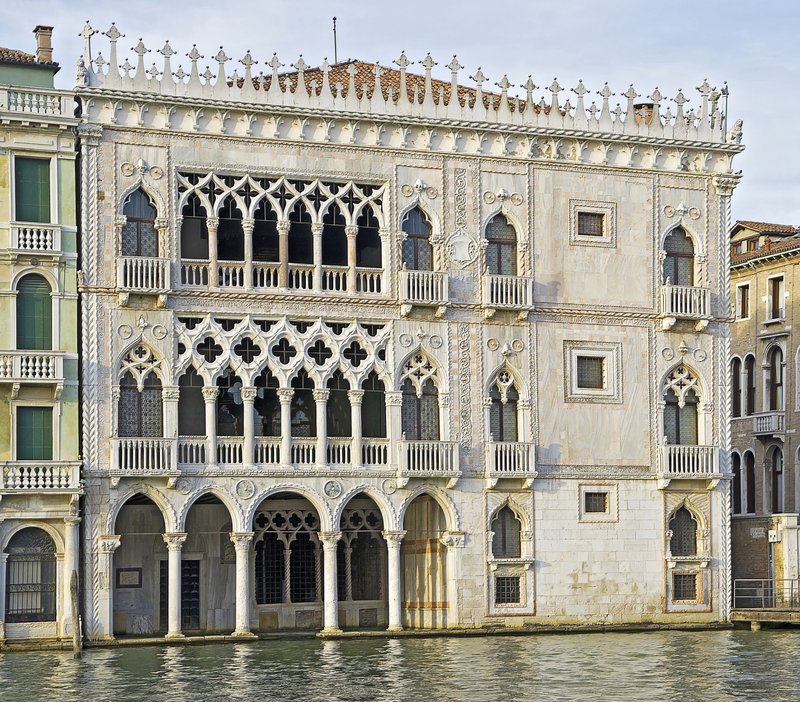
The most ornate Gothic palace on the Grand Canal, built 1422–1440 and originally gilded — the House of Gold. Its loggia of carved tracery is the signature of Venetian Gothic architecture. Inside, the Galleria Franchetti holds Mantegna's St. Sebastian, Titian bronzes, and Flemish tapestries.
🏛️ Daily 10:00am - 6:00pm
⏰ ~1 hr
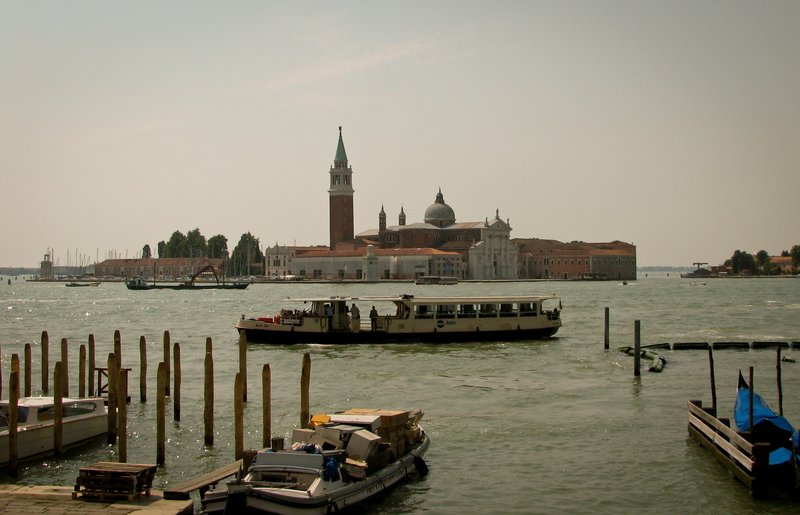
🚤 12 min → San Giorgio Maggiore
Andrea Palladio's greatest church, completed in 1610 on its own island across from San Marco. The gleaming white facade of classical columns faces St Mark's across the water; inside are Tintoretto's Last Supper and Fall of Manna. The campanile offers a panorama equal to St Mark's with far shorter queues.
🏛️ Daily 9:00am - 7:00pm
⏰ ~1 hr
🚤 7 min → hotel
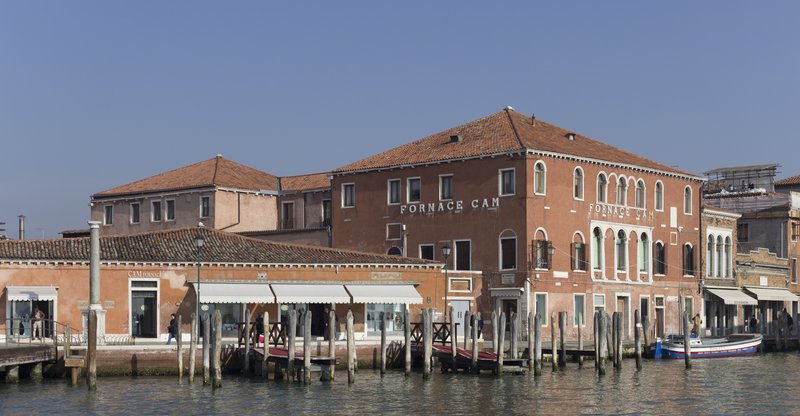
From Hotel: 🚶 26 min · 🚤 15 min → Fondamenta dei Vetrai
Murano's main canal promenade and the historic heart of Venetian glass since 1291, when Venice ordered all its furnaces moved here. Walking the fondamenta, open workshop doors reveal maestros shaping molten glass into vases, horses, and chandeliers in real time.
🏛️ Daily 9:00am - 5:00pm
⏰ ~1 hr 30 min
Free
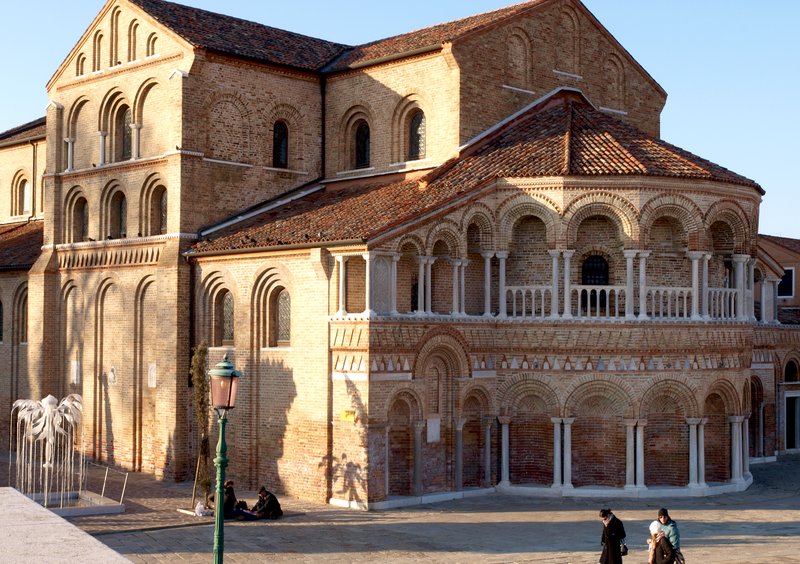
🚶 8 min · 🚤 5 min → Basilica dei Santi Maria e Donato
Venice's oldest church, documented since 999 and rebuilt in 1125. The 12th-century floor is a Byzantine mosaic of porphyry and glass — peacocks, eagles, and griffins across 500 square metres. In the apse hang four large bones: relics of the dragon slain by Saint Donato, brought here from Byzantium.
🏛️ Monday - Saturday 9:00am - 12:00pm · 3:30pm - 7:00pm
🏛️ Sunday 3:30pm - 7:00pm
⏰ ~45 min
Free
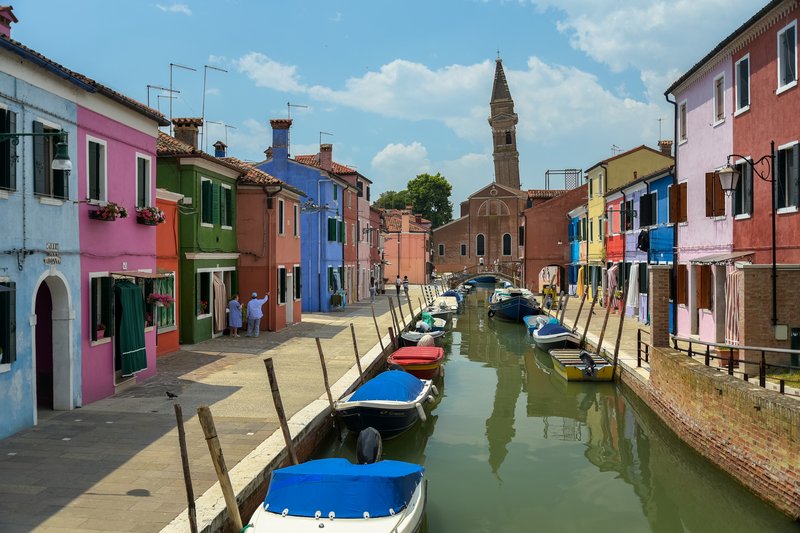
🚶 5 min · 🚤 3 min → Murano-Navagero · 🚢 38 min → Burano
A fishing island 7 km from Venice where every house is a different vivid color — cobalt, tangerine, pistachio, crimson — each shade registered in a municipal color ledger. The tradition dates to fishermen who painted their homes in bold family colors to pick out their own doorway through the lagoon fog.
🏛️ Open 24/7
⏰ ~1 hr 30 min
🚶 7 min · 🚤 4 min → San Martino
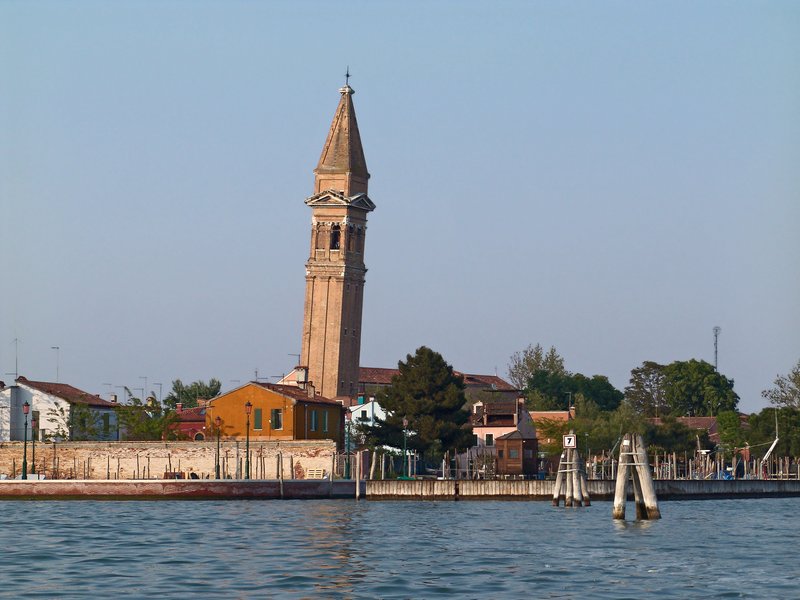
Burano's only church, consecrated in 1645, with a campanile that tilts so dramatically it appears about to fall. Built between 1703 and 1714 on the soft lagoon ground, the tower began leaning as it rose. Inside hangs Tiepolo's large Crucifixion, painted in 1727, one of his earliest masterworks.
🏛️ Daily 9:00am - 5:00pm
⏰ ~30 min
Free
🚶 7 min · 🚤 4 min → Burano · 🚢 45 min → Fondamenta Nuove · 🚶 26 min · 🚤 15 min → hotel
🪵 The City Resting on Ten Million Trees
Venice is built on 118 small islands, but what it actually rests on is an estimated ten million wooden piles driven into the lagoon mud — mostly Istrian oak logged from forests in Slovenia and Croatia. The piles have held for centuries not because wood is indestructible, but because the mud they're driven into is anaerobic: no oxygen, no organisms that eat wood, no decay. The wood essentially petrifies over time. Engineers examining the piles in the 20th century found them as hard as stone. The city's structural problem is not the wood rotting beneath it — it's the centuries of subsidence from groundwater extraction — largely halted since the 1970s — and the gradual rise in Adriatic sea levels that together have lowered the city relative to the water around it.
The Arsenale di Venezia, Venice's shipyard complex, was arguably the world's first large-scale industrial facility. At its height in the 15th and 16th centuries, the Arsenale employed up to 16,000 workers and could reportedly produce a fully equipped war galley in a single day — assembly-line production centuries before the Industrial Revolution, with standardized parts and a moving production sequence. The word "arsenal" entered European languages from the Venetian via Arabic: the Arabic "dar al-sana'a" — meaning "house of industry" — was the term Venice borrowed, which then spread as "arsena" or "arsenal" across Spanish, French, English, and Italian. Dante visited the Arsenale and used it as the setting for one of the circles of hell in the Inferno — a furnace of boiling pitch where corrupt politicians were submerged.