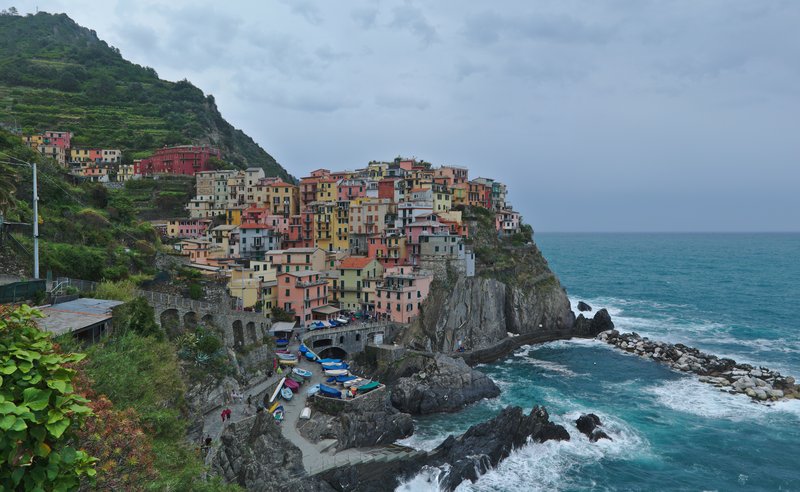
Arguably the most photographed of the five — a cluster of rainbow houses tumbling down a black-rock promontory above a swimming cove. The Nessun Dorma terrace and the seaside cemetery frame the classic shot, while vineyards producing Sciacchetrà wine climb the hills behind.
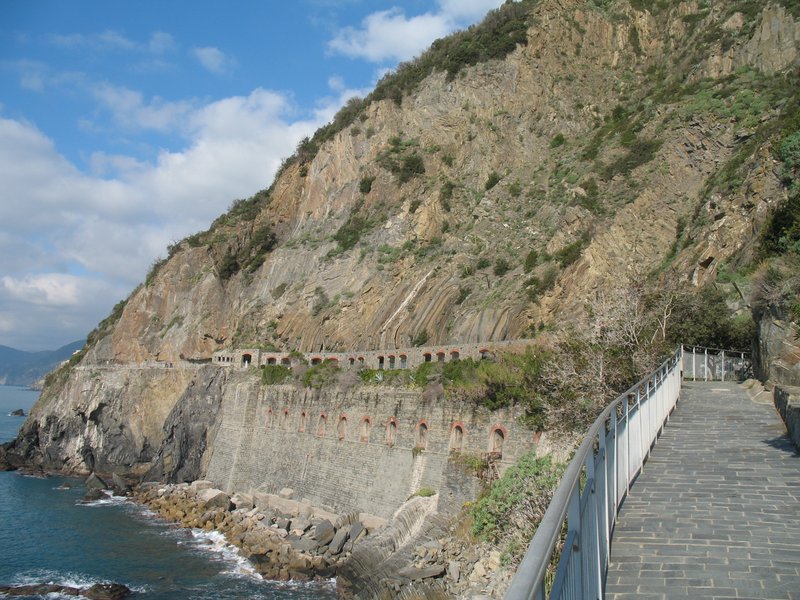
The Path of Love is a 900-metre cliff promenade carved into the rock between Riomaggiore and Manarola — the easiest and most romantic walk in the park, hanging right above the sea. Long closed by a rockfall, it has fully reopened and now runs on timed, reserved entry.
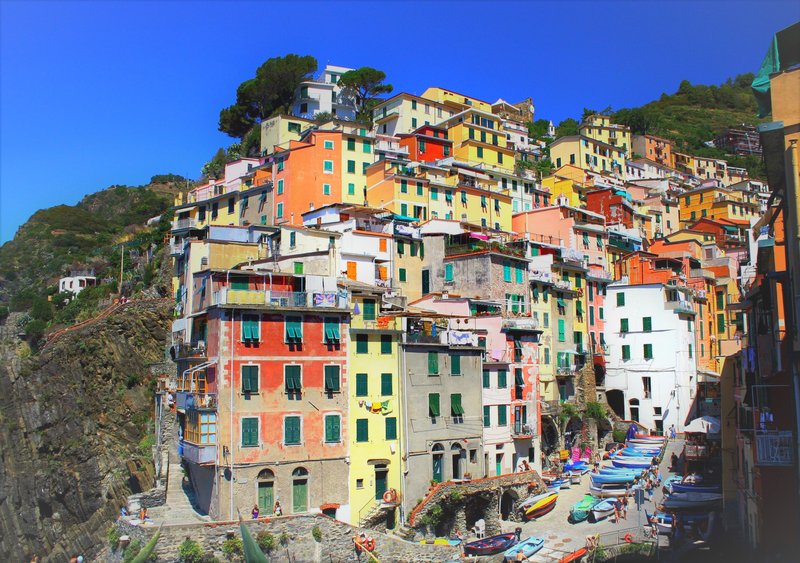
The easternmost of the five villages stacks pastel tower-houses up a steep ravine to a tiny harbor wedged between cliffs — the postcard image of the Cinque Terre. Its one main street, Via Colombo, drops from the station to the boat slip; the Cinque Terre Express train reaches it from Monterosso in minutes.
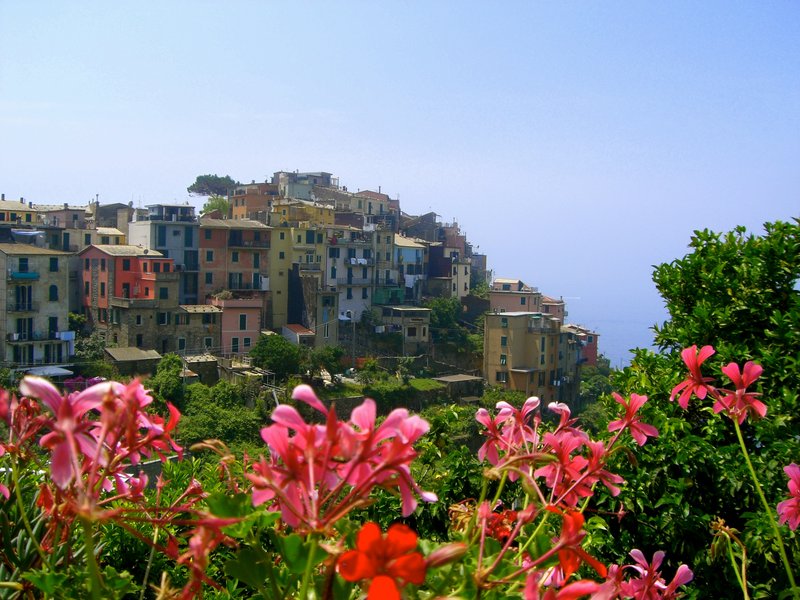
The only village not set on the water, Corniglia perches on a 90-metre headland reached by the Lardarina — a brick staircase of 382 steps — or a shuttle bus. Quieter and more rural than its neighbors, it rewards the climb with terraced-vineyard views in both directions along the coast.
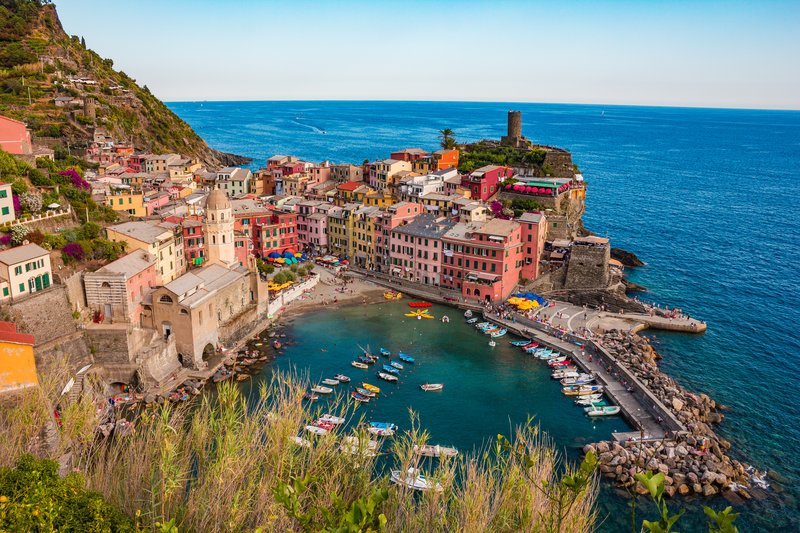
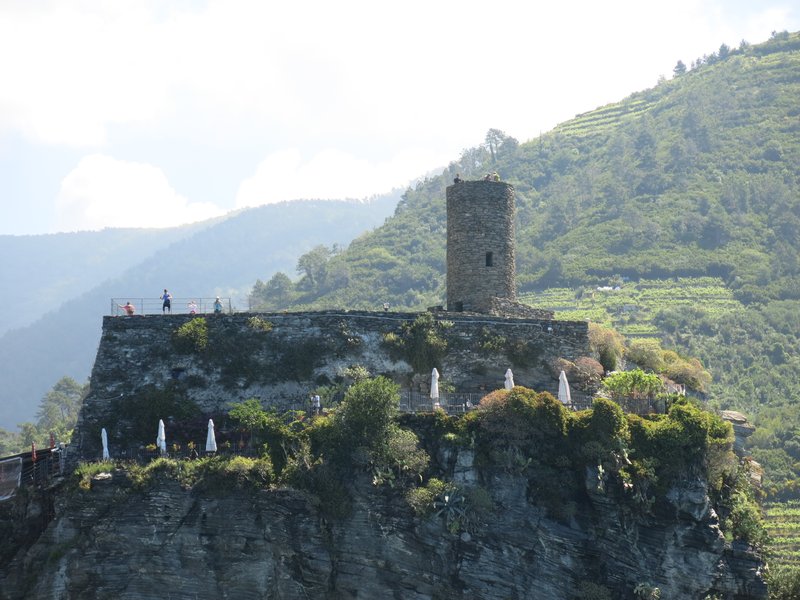
Widely called the prettiest of the five, Vernazza wraps a natural harbor with a café-lined piazza, the round Belforte watchtower, and the church of Santa Margherita right at the water's edge. The ruined Doria Castle above the rooftops gives the classic aerial view back over the village.
The Blue Trail's headline stretch links Vernazza and Monterosso — 3.3 km of cliff path winding through vineyards and terraces, the hardest and most spectacular section of the whole coastal route. The Cinque Terre Card covers access; buy it online or at any village station before the trailhead.
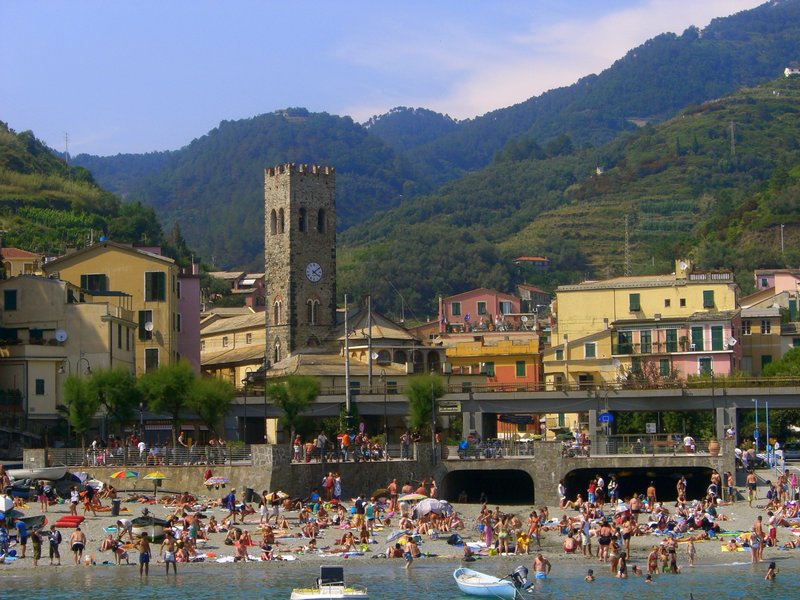
The largest and northernmost village splits into a medieval old town, Borgo Vecchio, and the beach-lined new town, Fegina. It has the Cinque Terre's only real sand beaches, the giant Neptune statue called Il Gigante, and a name built on salted anchovies and lemons. This is your home base.
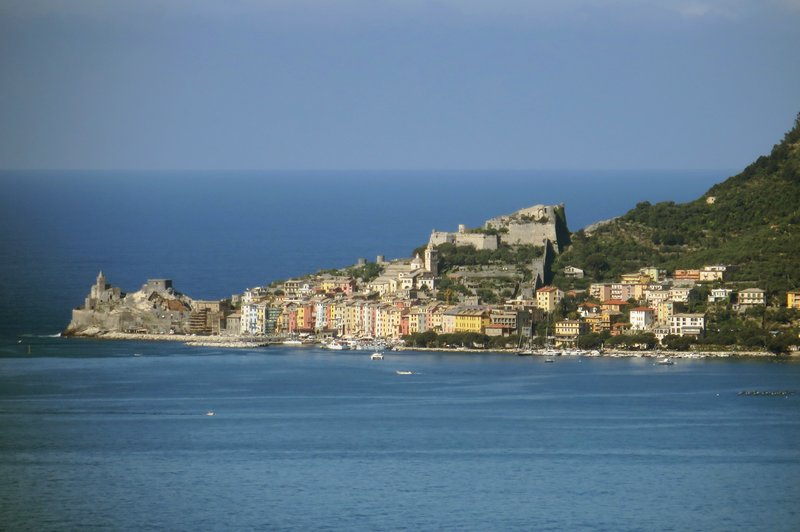
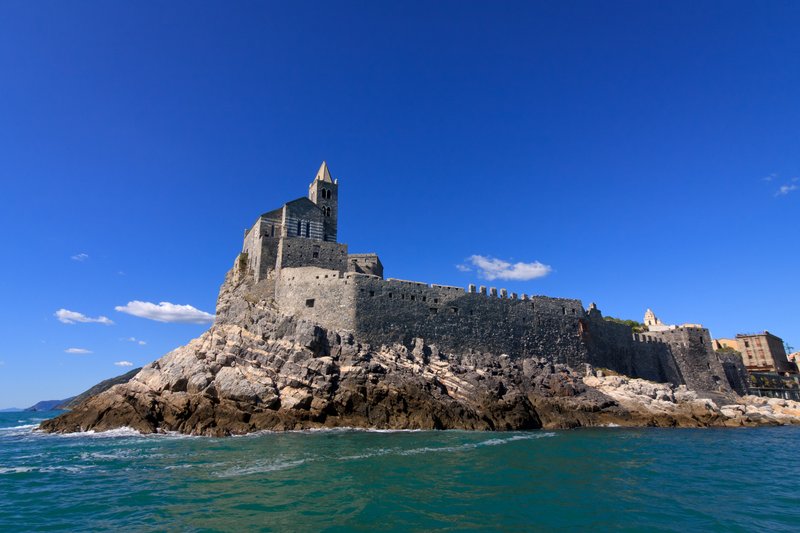
A fortified medieval village at the southern tip of the Cinque Terre's protected coastline — its UNESCO listing covers both the national park and this Gulf of Poets promontory. Via Capellini's tall, narrow tower-houses in orange and ochre line the waterfront above the rocky shoreline, with the striped Church of San Pietro visible from the sea at the far tip of the headland.
An 11th-century Romanesque church in black-and-white striped marble, perched on the very tip of the promontory directly above the sea — the defining silhouette of Porto Venere and one of the most dramatically sited churches in Liguria. The adjacent loggia frames a direct view back across the water to the five cliff villages. Built over a 5th-century early-Christian oratory, it still holds Masses.
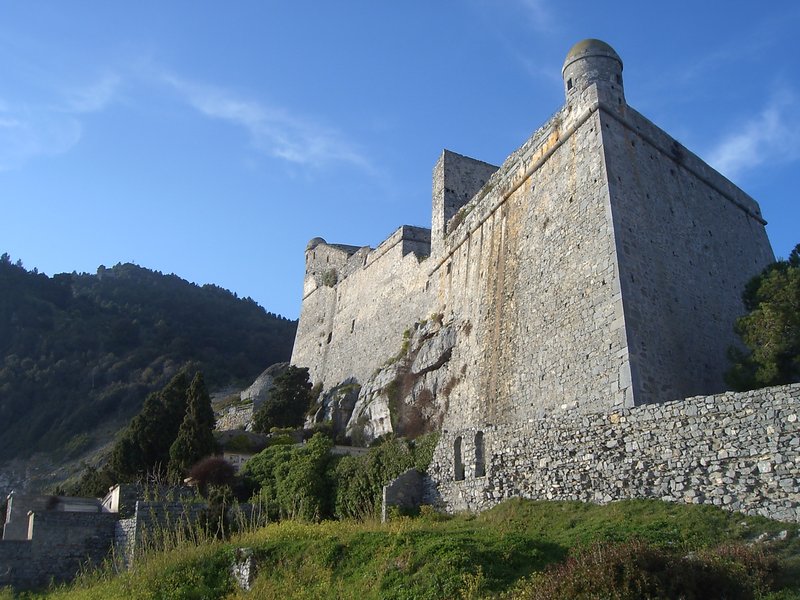
The Genoese fortress that towers over Porto Venere dates to the 12th century and was expanded repeatedly to defend the mouth of the Gulf of Poets. Its ramparts give an unbroken panorama: the Cinque Terre coast to the north, Palmaria and Tino islands directly below, and the open Ligurian Sea to the west. The internal courtyard holds an open-air theatre in summer.
Liguria's largest island sits a five-minute ferry ride from Porto Venere harbor and belongs to the same UNESCO World Heritage zone. Its northwestern cove, the Lazzaretto, is one of the cleanest swimming spots on the Ligurian coast — accessible only by sea, with crystalline water against pale limestone cliffs. A walking trail circles the island in under two hours.
The Cinque Terre's northern gateway has a medieval centre that rewards a slow walk. The 13th-century arcaded loggia on Piazza del Popolo, the Romanesque church of Sant'Andrea with its black-and-white striped facade, and flat lanes built for a town that never needed to cling to a cliff make it the most walkable historic centre on the Ligurian coast between La Spezia and Genoa.
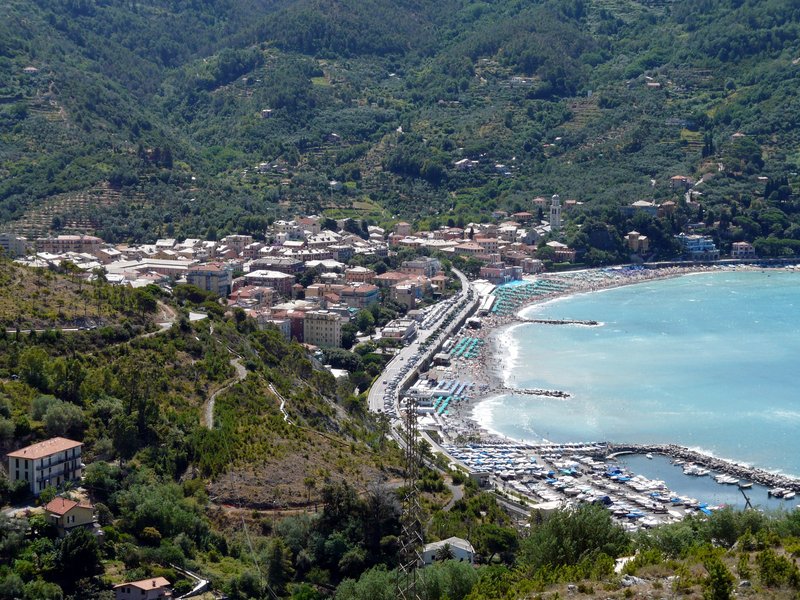
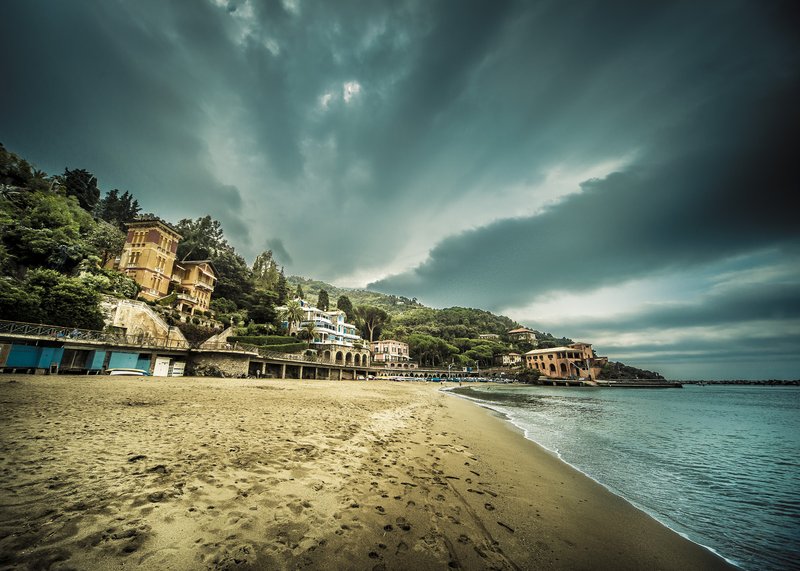
A wide crescent of golden sand stretching north of the town centre — the longest beach accessible from the Cinque Terre rail network and noticeably less crowded than Monterosso's strip. The bay is a modest surf break in winter; in summer the water is calm and the beach backed by a palm-lined promenade. Sunbeds for hire at the south end; free beach at the north.
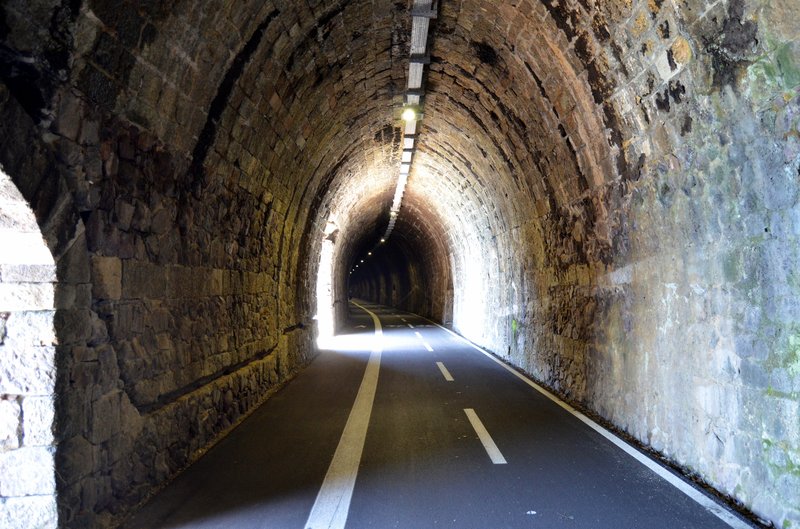
The old coastal railway between Levanto and Framura was decommissioned when the modern line moved inland through the mountain — leaving behind five tunnel-bores carved into the cliff above the sea, now a paved cycling and walking path open to everyone. The route passes through the tunnels above Bonassola's bay, emerging with sudden sea views between each section.
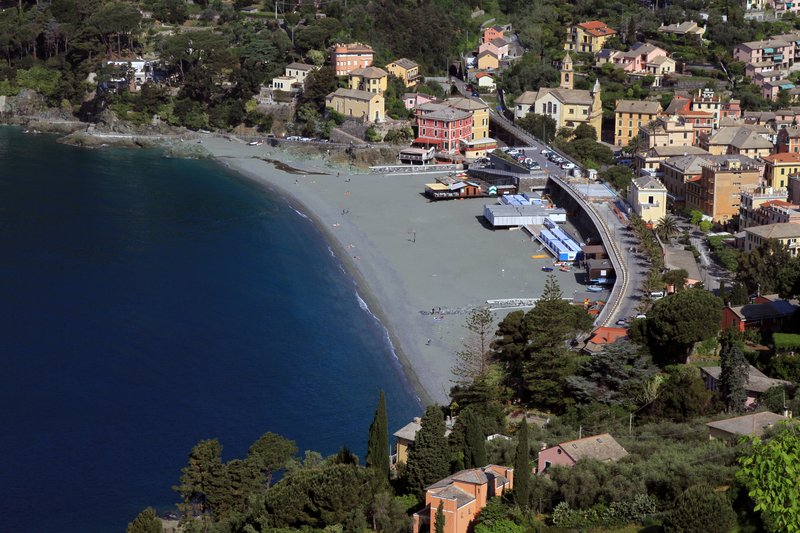
A small Ligurian village just south of the cycle-path exit — its stone belltower, a quiet sandy cove, and the yellow-and-white oratory of Sant'Antonio all visible from the sea-level promenade. Much quieter than the CT villages; the beach chairs are half-empty even in summer and the gelateria on the seafront keeps local hours. The cycle path's southern portal opens directly onto the waterfront.
The 13th-century tower of the Castello dei Fieschi crowns the hill directly above Riomaggiore's painted harbour — visible from Via Colombo below but only reachable by the steep Via del Castello, which climbs the ridge past the church of San Giovanni Battista. From the ramparts, the view extends over all five Cinque Terre villages on a clear day and down to the black-rock harbor.
A tiny stone hamlet on the ridge above Manarola, at 340 metres, where the cliff vineyards producing Sciacchetrà passito wine are at their most spectacular. The terraces drop directly from the village lanes to the sea below, and Trail 6 through the working vines gives a view of the dry-stone terracing system impossible to see from the coastal path.
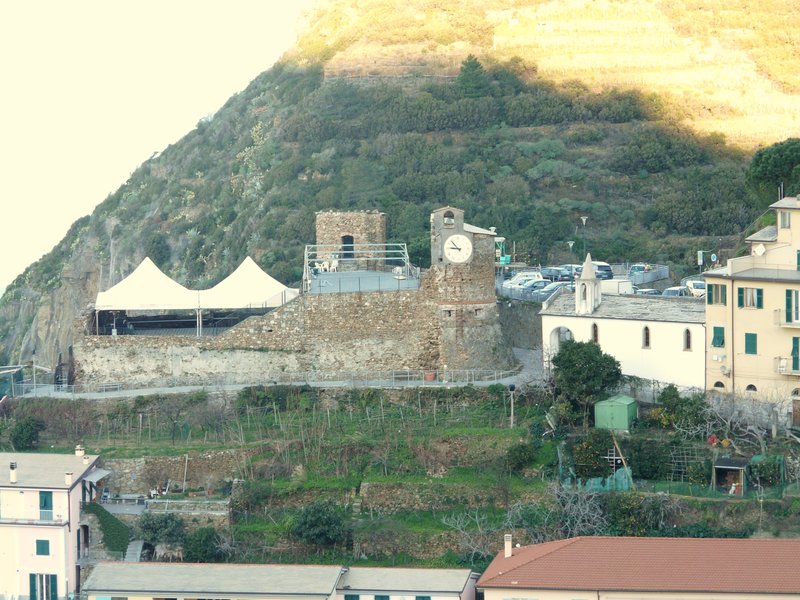
The ruined 15th-century Genoese watchtower on the headland above Vernazza's harbor is the highest reachable point of the village — a short staircase from the main square leads to the circular tower. From the top: the harbor piazza, the church of Santa Margherita, the breakwater, and the coast curving north toward Monterosso.
Late-afternoon cruise past all five villages with a swim stop, a stroll through Vernazza, and an aperitivo of local products as the sun sets over the Ligurian Sea.
Sail the coast aboard Giulin, a restored wooden gozzo, on a small-group tour with two swimming stops, snorkel gear, and an Italian aperitivo with prosecco served on handmade ceramics.
Half-day cruise from the Gulf of Poets up the Cinque Terre coastline, taking in the villages from the water with time to swim in the clear coves below the cliffs.
The most-reviewed Cinque Terre boat tour — an electric-hybrid gozzo from Monterosso dock visiting all five coastal villages from the sea, with two swimming stops in hidden coves and prosecco served on handmade ceramics. Max 12 guests.
Eight-hour vintage wooden-boat cruise past all five villages and Portovenere with unlimited wine, prosecco and beer, and an authentic Ligurian lunch on board — bruschetta, pesto pasta, caprese, fresh fruit and limoncino before the return.
Pesto class in a characteristic Vernazza cellar — grind basil in a marble mortar, taste the result on fresh gnocchi, and pair it with three Ligurian wines, cheeses, focaccia, EVO oils and a final limoncino. Steps from the train station.
The Cinque Terre's top-rated boat tour — an electric-hybrid gozzo from Molo dei Pescatori past all five clifftop villages, with two swimming stops in hidden coves accessible only by sea and prosecco served aboard. Max 12 passengers.
A golden-hour cruise from Monterosso pier as the light turns amber across the cliff villages — the aperitivo · prosecco, local snacks is served on board while the Ligurian coast glows. Max 12 guests on the charter evening departure.
Cook in a XVI-century Riomaggiore home with rooftop sea views — make trofie pasta, pound pesto the traditional way, and prepare tiramisu, then sit down to eat the full meal with a welcome prosecco. Max 6 guests, very intimate.
A 3-4 hour daytime cruise from Monterosso past all five cliff-face villages — swimming stop in a secluded cove, snorkelling option, and aperitivo with local products as you loop back along the coast. Small boat, small group.
Hand-rolled Ligurian pasta twists tossed in basil pesto — basil, pine nuts, garlic, Parmesan, Pecorino, and local olive oil, traditionally crushed by hand. The region's signature plate.
Monterosso's prized salted anchovies, a Slow Food presidium — served marinated in lemon, lightly fried, or stuffed and baked. The village's most famous catch.
A rare sweet passito wine pressed from sun-dried Bosco, Vermentino, and Albarola grapes grown on the cliff terraces — poured in tiny glasses as a dessert wine.
No delivery apps operate in the Cinque Terre villages — the car-free lanes and steep staircases make doorstep delivery unworkable; eat at the village restaurants or pick up takeaway directly.
Getting Around
5 Terre Transfer
Foreign number: not required. — book in advance via their website; no app or local SIM needed.
Private transfer service linking the villages with La Spezia, Pisa, and Genoa; the main option for luggage-heavy arrivals or late-night returns when the train stops running; reliable and covers all five villages.
Cinque Terre Express regional trains → Levanto · Vernazza · Corniglia · Manarola · Riomaggiore · La Spezia. The hub for hopping between villages, with trains a few minutes apart in season.
The sandy beach town just north of Monterosso — surf, a long crescent of sand, and a flat seaside cycle path through old rail tunnels to Bonassola and Framura. An easy, low-key half-day by the sea.
The gateway city at the head of the Gulf of Poets — a lively covered market, the Amedeo Lia art museum, a naval museum, and a palm-lined waterfront. The transfer point for high-speed trains and the ferry.
An elegant Belle Époque resort on the Riviera, palm-fringed and full of pastel villas — and the easy gateway to Portofino, a short bus or boat ride further along the headland.
Liguria's grand maritime capital — a vast medieval old town of caruggi, the Rolli palaces of Via Garibaldi, Europe's biggest aquarium, and the birthplace of pesto and focaccia.
The Leaning Tower and the Piazza dei Miracoli, with its cathedral and baptistery, make an easy day out — change at La Spezia for the direct regional line down to Pisa Centrale.
Until the railway tunneled through these headlands in the late nineteenth century, the five villages were linked only by mule paths and boats — which is why each one still feels like its own small world. That same isolation is what makes the Cinque Terre Express so addictive today: the train spends most of its time in the dark, then bursts out for a four-minute hop and you step off into an entirely different village.
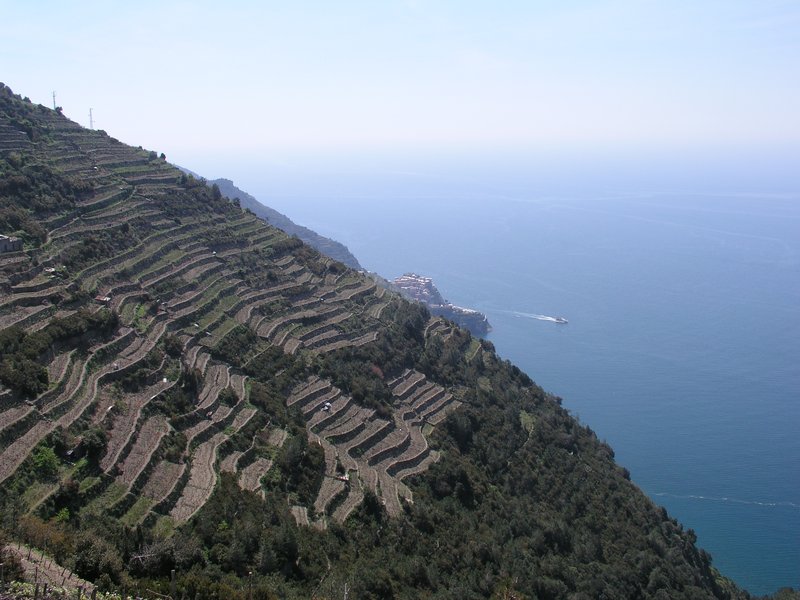
Look up at the hills and you are seeing one of the largest hand-built landscapes in Europe. The dry-stone walls — the muretti a secco — terracing these slopes for vineyards are estimated to run to some 7,000 km laid end to end, longer than the Great Wall of China, all stacked without mortar by generations of farmers.
A small trick that changes the trip: take the train one way and the ferry back the other. From the rails you get the villages in quick, intimate flashes; from the water you finally see what the place actually looks like — those impossible stacks of houses clinging to the cliffs, the way sailors first saw them.