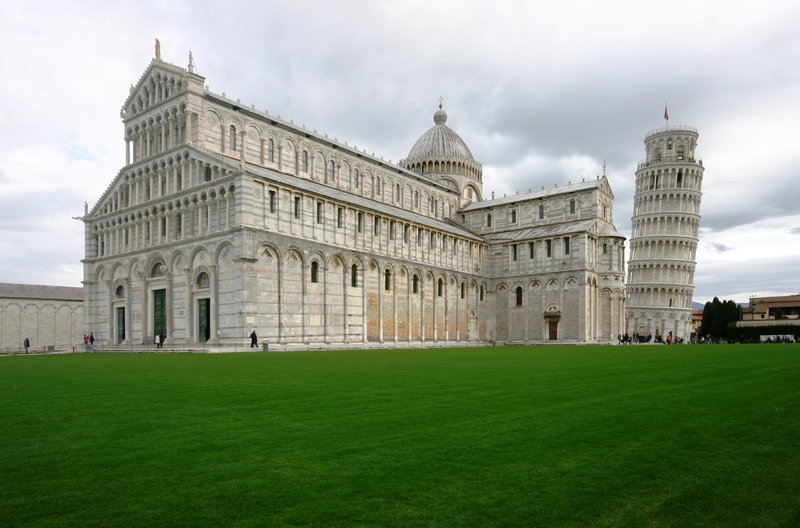
The cathedral that gave Pisan Romanesque its name, begun in 1063 from the spoils of a naval victory. Inside: Giovanni Pisano's carved pulpit, a gilded coffered ceiling, and the swinging bronze lamp said to have set Galileo thinking about pendulums.
Any Piazza dei Miracoli monument ticket includes a flexible Cathedral pass; for Cathedral-only visits, collect a free timed pass at the on-site ticket office same-day
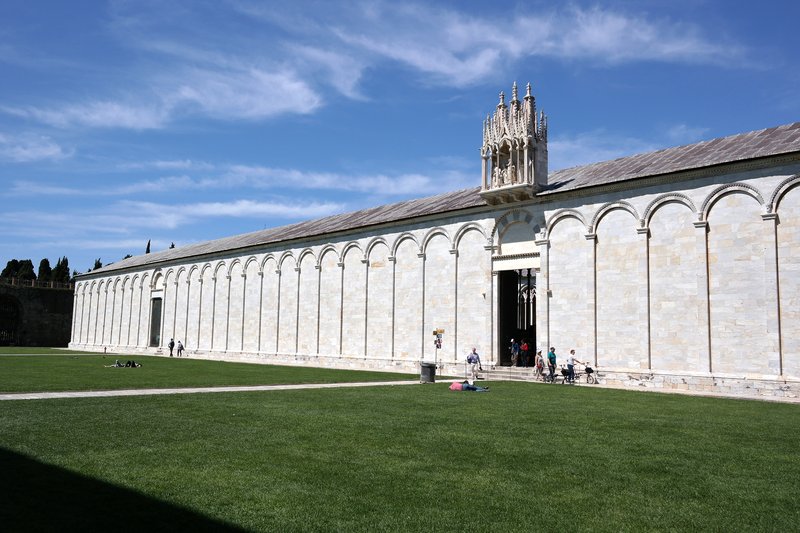
A vast walled cloister said to enclose soil shipped from Golgotha. Its marble galleries hold Roman sarcophagi and once-lost frescoes — including the harrowing Triumph of Death, scorched in a 1944 bombing and painstakingly restored over decades.
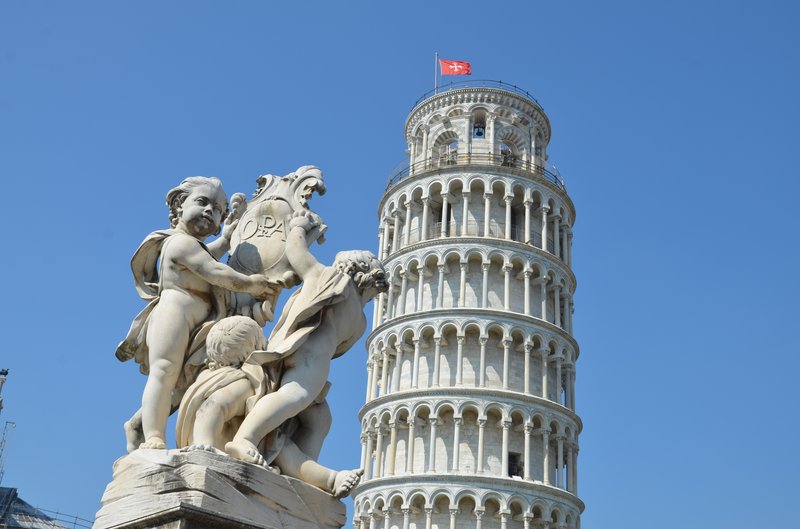
The cathedral's bell tower, tilting since the third storey went up in 1178 on soft river silt. Eight storeys of stacked marble arcades climb to a 294-step spiral; a decade-long rescue finished in 2001 steadied it and reopened the climb to the top.
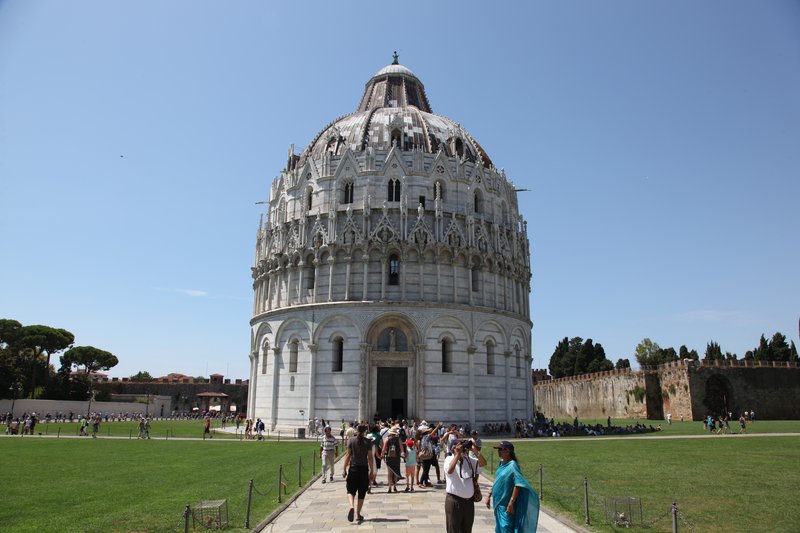
Italy's largest baptistery, a marble drum begun in 1152 that rises from Romanesque arcades to Gothic pinnacles. Inside are Nicola Pisano's 1260 pulpit and a famous echo — ask a custodian to sing and the double dome holds the note for seconds.
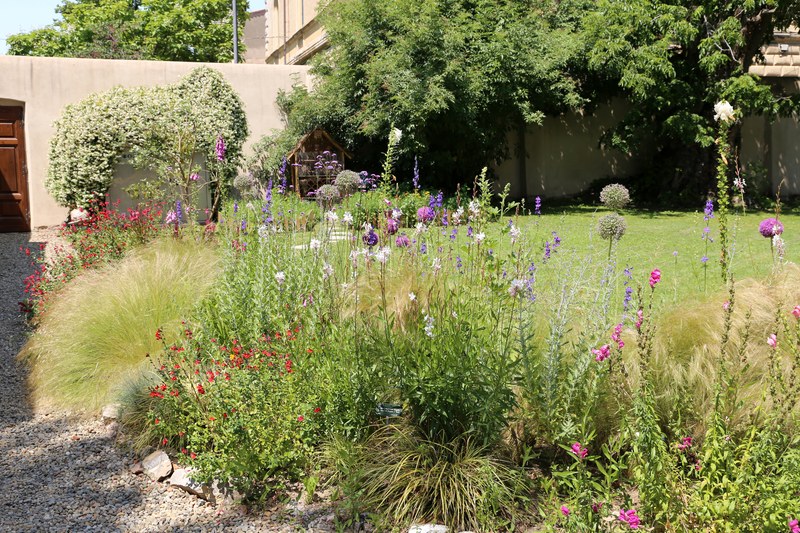
The world's first university botanical garden, founded in 1543 by Luca Ghini and moved here in 1591. Gravel paths thread past centuries-old magnolias, a ginkgo, ranks of glasshouses and a shell-crusted fountain — a quiet green pocket by the tourist crush.
From Hotel: 3 min · 2 min → Santa Maria della Spina
1.Santa Maria della Spina~15 min
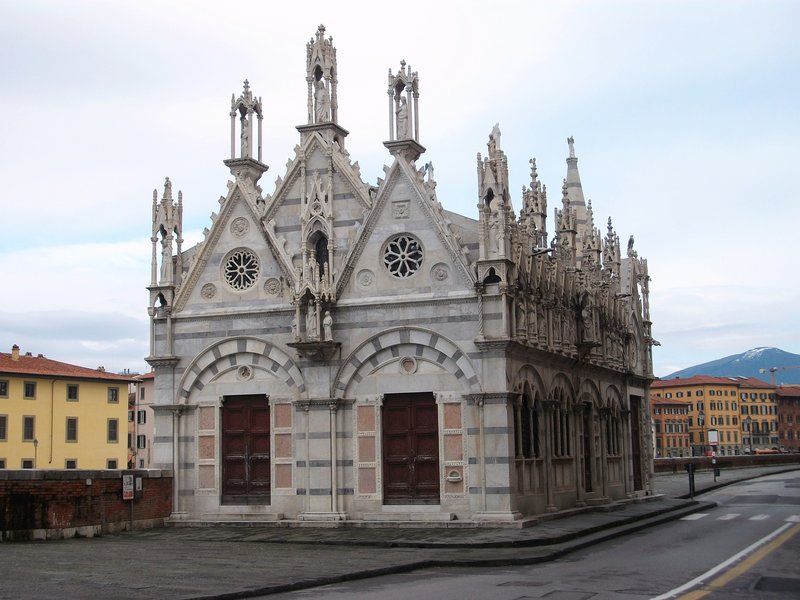
A jewel-box of Pisan Gothic at the river's edge, bristling with gables, pinnacles and Pisano-workshop statues. Built around 1230 for a thorn from Christ's crown, it was taken apart in 1871 and rebuilt higher to escape the Arno's floods.
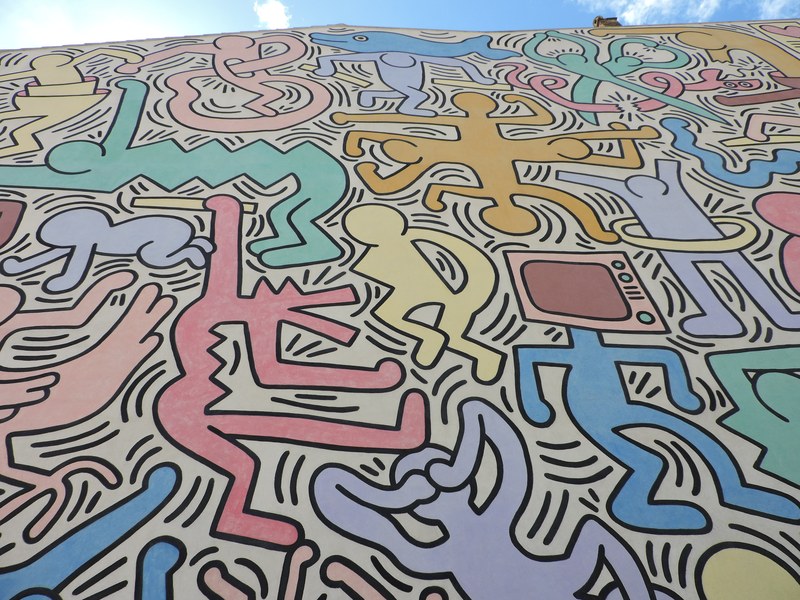
Keith Haring's last great public mural, painted on the wall of Sant'Antonio church in 1989, months before his death. Thirty interlocking figures in flat colour climb the wall like a puzzle of human connection — New York street art on a medieval Tuscan town.
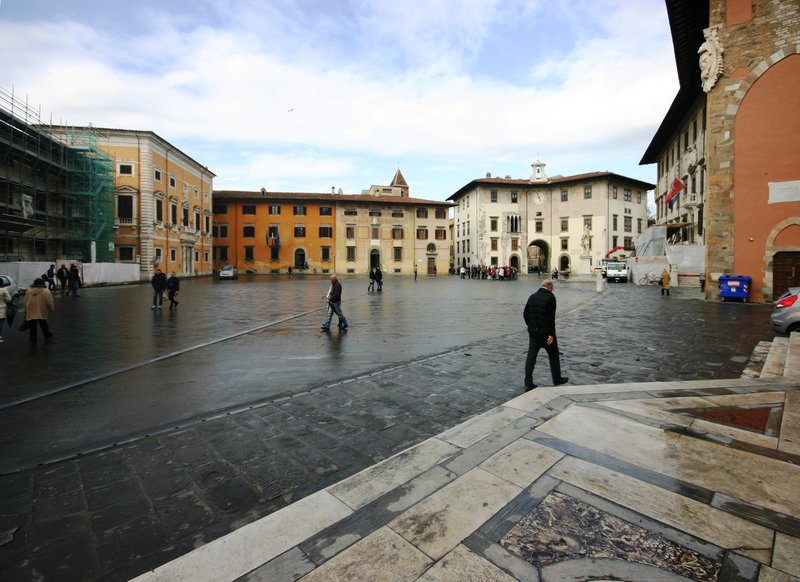
Medieval Pisa's civic heart, remade by Vasari in the 1500s for the Knights of St Stephen. The sgraffito-covered Palazzo della Carovana — now the elite Scuola Normale — anchors a square that traded political power for scholarship; Galileo studied here.
From Hotel: 12 min · 6 min → Museo Nazionale di San Matteo
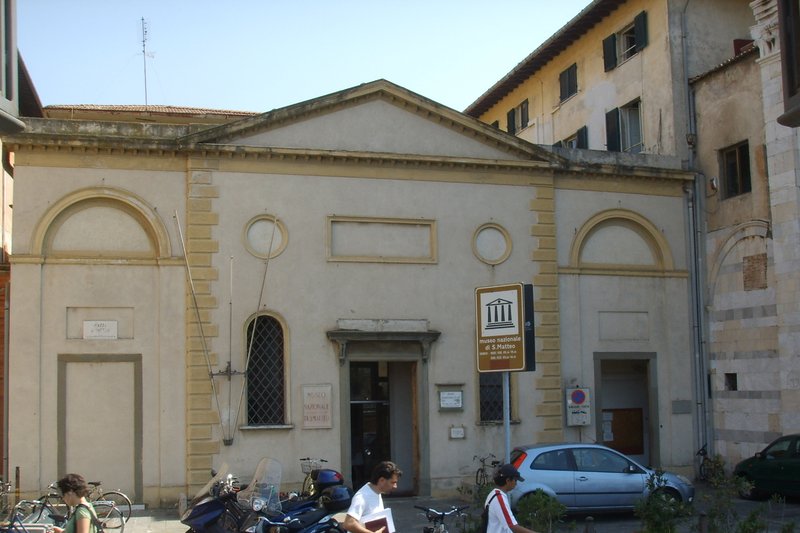
1.Museo Nazionale di San Matteo~1 hr 15 min
Pisa's principal art museum in a former Benedictine convent on the north Lungarno. The medieval galleries hold Pisan and Tuscan sculpture outside Florence — Nicola and Giovanni Pisano originals, Simone Martini's polyptych, and painted crucifixes tracing experimentation before Giotto.
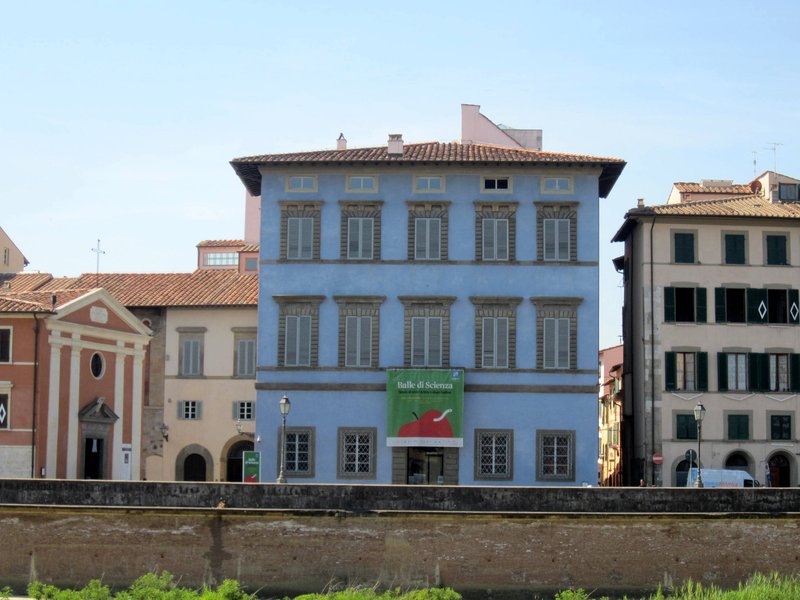
A 14th-century Gothic palace on the south Lungarno with a deep blue facade facing the river. The permanent collection traces Pisan art from medieval panel paintings to 20th-century works across restored frescoed rooms; the building also hosts the city's most important temporary exhibitions.
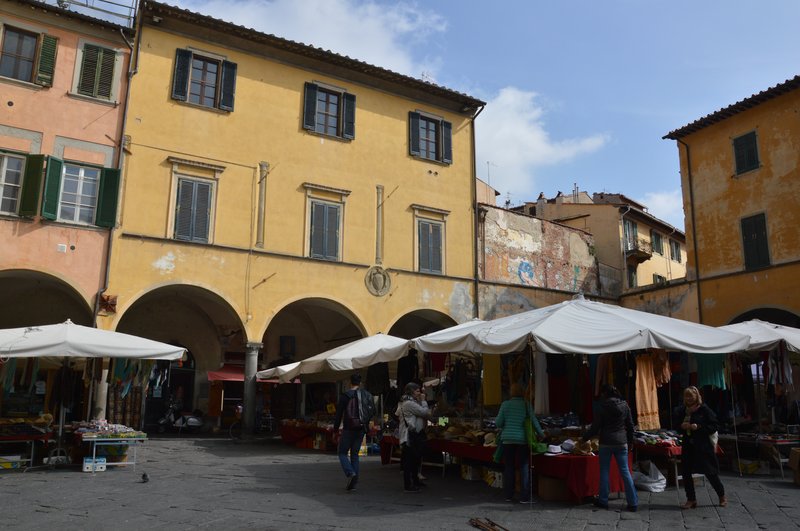
Pisa's oldest public square, enclosed by Romanesque market porticoes sheltering stalls since the 12th century. Mornings bring a fresh produce and flower market; by afternoon bars and tables take over — the real city far from the tourist crowds of the Campo dei Miracoli.
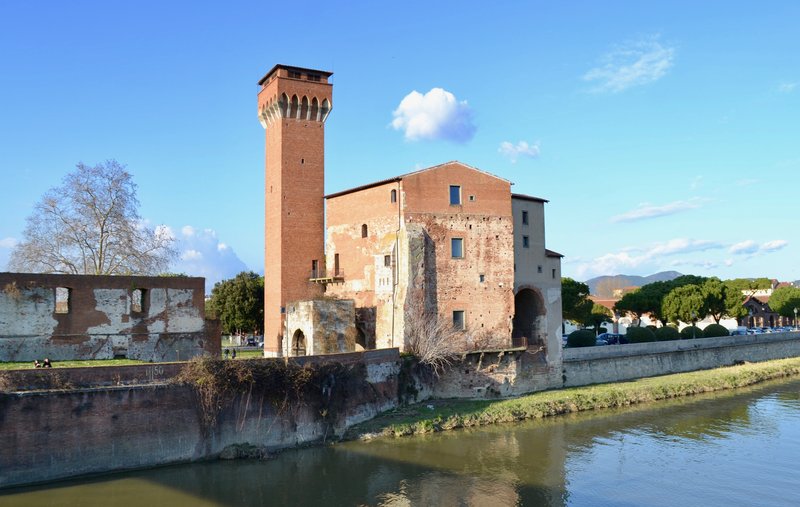
A 14th-century fortress at the western bend of the Arno, crenellated towers and thick walls built to control the river mouth. The rampart walk above the water gives one of the quietest elevated views in Pisa — the river below, medieval towers above.
Pre-reserved tickets and a local guide move you through the Cathedral, Baptistery and Leaning Tower without the queues, with optional tower-climb access.
A full-day small-group minivan trip from Pisa to the UNESCO-listed Cinque Terre — colourful cliff-hugging villages, spectacular Ligurian coast views, and wine tasting included. Minivan then ferry or train between villages.
A licensed guide covers all of Piazza dei Miracoli with humour and local legends — Cathedral, Baptistery, Monumental Cemetery and optional Leaning Tower climb via pre-booked timed-entry tickets.
A half-day minivan excursion from Pisa to the perfectly preserved medieval walled city of Lucca — stroll the Renaissance rampart walls, explore the cathedral and the Roman amphitheatre piazza, and wander the historic lanes with a local guide. Returns to Pisa by afternoon.
A 2-hour guided city walk starting at Piazza dei Miracoli — Cathedral, Baptistery, Leaning Tower, Botanical Gardens, Piazza dei Cavalieri and the bustling Piazza delle Vettovaglie. English guide.
A full-day small-group minivan tour from Pisa to the Cinque Terre — discovering the pastel villages of the Ligurian coast with a friendly guide and wine tasting included. Groups kept small for a personal experience.
A half-day guided excursion from Pisa to the medieval walled city of Lucca — walk the Renaissance rampart walls, see the Romanesque cathedral and the elliptical Piazza Anfiteatro built over a Roman amphitheatre. English guide, small group; returns to Pisa by early afternoon.
A licensed-guide walk through the Cathedral and the Baptistery with entry to the Camposanto and the OPA museums included, and a timed-entry climb of the Leaning Tower as an option. Groups capped at 15.
A one-hour electric golf-cart loop of eleven city sights beyond the Campo dei Miracoli — Palazzo Blu, Ponte di Mezzo, the Keith Haring Tuttomondo mural, Santa Maria della Spina and Piazza dei Cavalieri — with a live guide and audio in five languages. Six seats per cart.
A 2½-hour small-group walk with a passionate local guide through medieval Pisa's streets, palaces and hidden corners — with local food tastings along the route. Meets just outside Porta Nuova gate at Piazza del Duomo.
A guided half-day excursion from Pisa to the medieval walled city of Lucca — Piazza Anfiteatro, Romanesque cathedral, rampart walls and the historic lanes, with a knowledgeable local guide. Small group; returns to Pisa by early afternoon.
A thin golden flatbread of chickpea flour and olive oil, baked in a copper pan until crisp-edged and creamy inside. Pisa's signature street food — eaten hot, often tucked into a wedge of focaccia.
A shortcrust tart from the Pisan countryside filled with chocolate, rice, pine nuts, raisins and candied fruit, its edges pinched into the little points — "bischeri" — that give it its name.
Foreign number: not required. — it signs in with Google, Facebook or email, and a phone sign-up takes any prefix with the code by SMS or WhatsApp.
The widest roster in Pisa — the Borgo Stretto trattorie, the pizzerie along Corso Italia and grocery runs from Conad — with live courier tracking; fees stack on small orders and couriers hand over at the hotel door, so add the room number to the note.
Foreign number: not required. — the account is made with Google, Facebook or an email address — there is no phone field, so no code has to arrive.
The larger takeaway list in town, strongest for the family-run pizza and kebab places that sit on no other app; many restaurants deliver themselves, so tracking is weaker and cash on delivery is often an option.
No ride-hailing app operates in Pisa — Uber, Bolt and FreeNow stop at Florence. Taxis come from the CoTaPi cooperative: the ranks outside Pisa Centrale and at Piazza dei Miracoli, or a car booked through the hotel desk, which is a five-minute wait most of the day.
The closest beach resort on the Versilia coast — a long promenade of Liberty-style bathhouses, pine-backed sands, and seafood restaurants. Regional trains run throughout the day on the Pisa-Genova line.
Perfectly preserved Renaissance walls encircle a medieval city of Roman amphitheatre foundations, Romanesque churches, and tree-lined ramparts wide enough to cycle. The birthplace of Puccini is compact enough to cover on foot in a single afternoon.
The cradle of the Renaissance — Brunelleschi's Duomo, the Uffizi's galleries, Michelangelo's David and the goldsmith-lined Ponte Vecchio, all within a walkable historic core around Santa Maria Novella station.
The gateway port to Cinque Terre and the Gulf of Poets — the Museo Navale, the Castello di San Giorgio, and a thriving covered market in the centro storico. Trenitalia regional trains run on the hour along the Tyrrhenian coast.
Five pastel fishing villages stacked above the Ligurian Sea, linked by a cliff-hugging coastal railway. Change at La Spezia for the local line that hops between Riomaggiore, Manarola, Corniglia, Vernazza and Monterosso.
Pisa rewards you for staying after dark. The day-trippers bussed in from Florence photograph the Tower and leave by mid-afternoon, and by evening the Field of Miracles empties out — the marble glows and you can hear the Baptistery's echo without a crowd.
If your dates are flexible, aim for the night of June 16. For the Luminara di San Ranieri, Pisa switches off its street lights and outlines every palace, bridge and church along the Arno with tens of thousands of candles in glass cups — a once-a-year sight staged here since the 1600s, on the eve of the city's patron saint.
One quiet thread ties this trip together: Galileo. He was baptised in the Baptistery on Day 1, supposedly timed the swinging cathedral lamp beside it, and studied on the Piazza dei Cavalieri you start Day 2 on. The whole town is, in a sense, his campus.