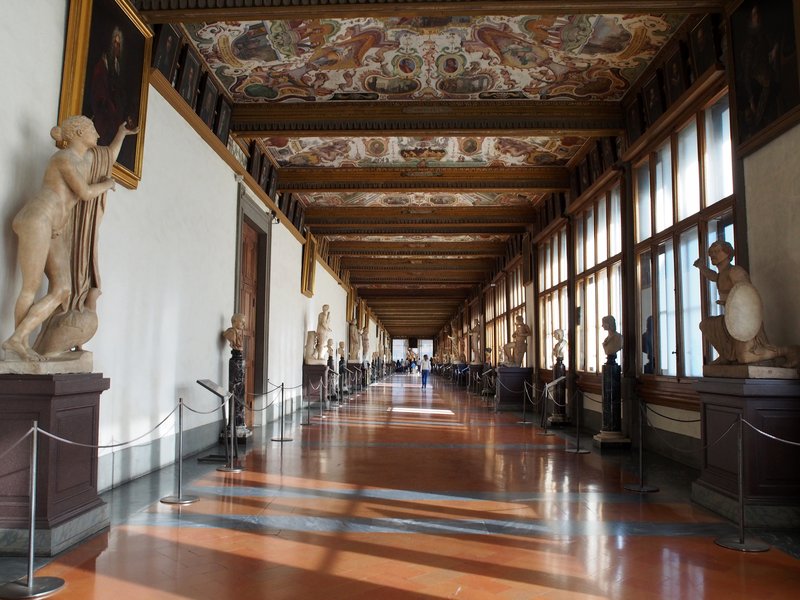
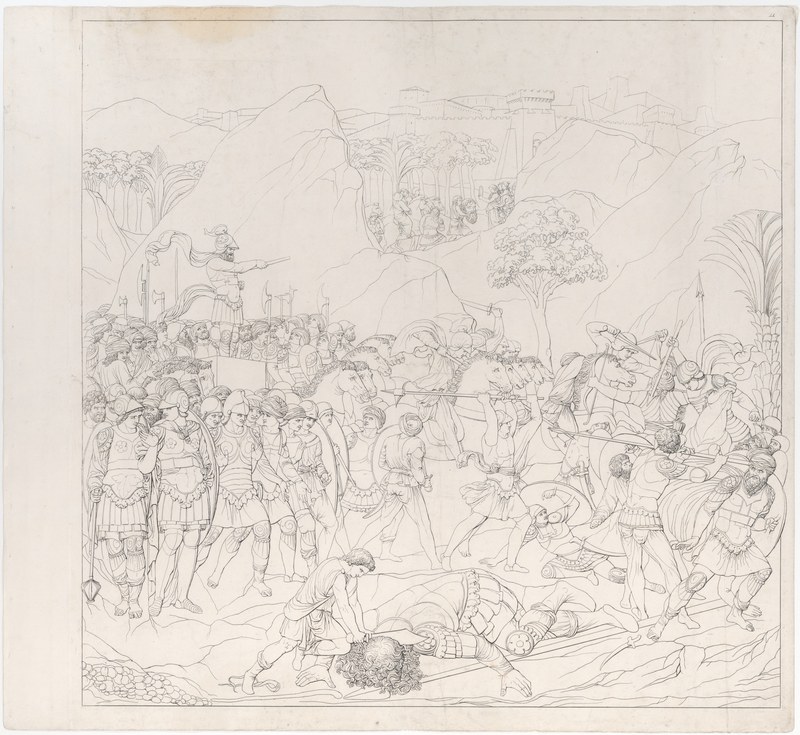
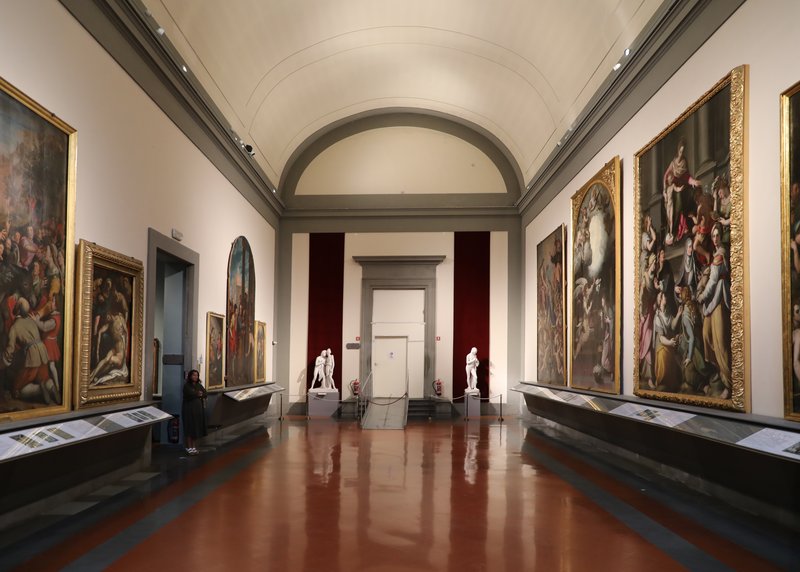
Built by Vasari as Medici administrative offices, the Uffizi holds the world's premier collection of Italian Renaissance painting. Botticelli's Birth of Venus and Primavera, Leonardo's Annunciation, Michelangelo's Doni Tondo and Titian's Venus of Urbino anchor a chronological sweep from Giotto to Caravaggio.
Florence's medieval seat of government — commissioned in 1299 and later the Medici ducal residence. The Hall of the Five Hundred is the largest room in Florence, covered by Vasari's frescoes of Florentine campaigns. The Arnolfo Tower gives a 360° panorama and a hidden door reveals the Studiolo of Francesco I.
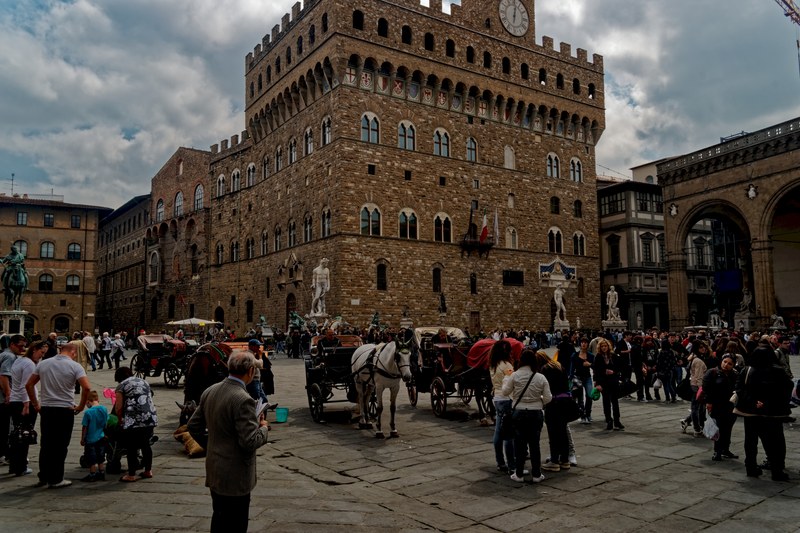
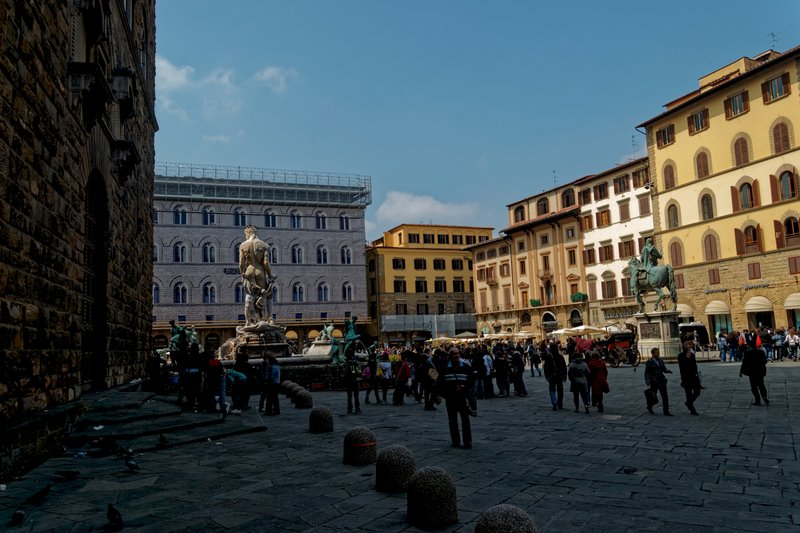
Florence's civic heart fronts the crenellated Palazzo Vecchio and works as an open-air sculpture gallery: Cellini's Perseus under the Loggia dei Lanzi, Ammannati's Neptune Fountain, and a replica of Michelangelo's David where the original long stood. Savonarola's Bonfire of the Vanities happened here.
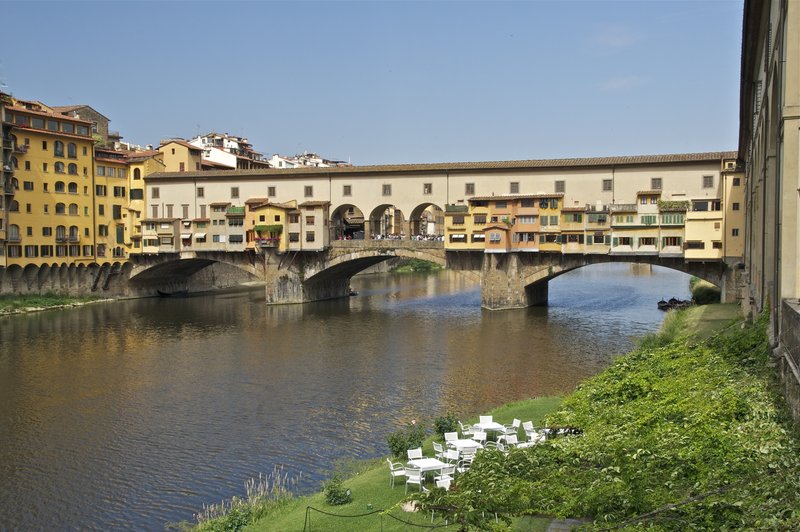
Florence's oldest bridge crosses the Arno at its narrowest point and has been lined with goldsmiths' and jewellers' shops since the Medici evicted the butchers. Their private elevated passage — the Vasari Corridor — runs above the shops, and this was the only Florence bridge spared in the wartime retreat.
From Hotel: 17 min · 15 min → Museo dell'Opera del Duomo
1.Museo dell'Opera del Duomo~1 hr 30 min
The cathedral works museum holds every original sculpture moved indoors from the Duomo complex — Ghiberti's gilded bronze Gates of Paradise, Donatello's original Cantoria, and Michelangelo's unfinished Bandini Pietà. The ground-floor atrium reconstructs the original Florentine Baptistery facade at full scale.
4 min · 2 min → Florence Cathedral & Brunelleschi's Dome
2.Florence Cathedral & Brunelleschi's Dome~1 hr
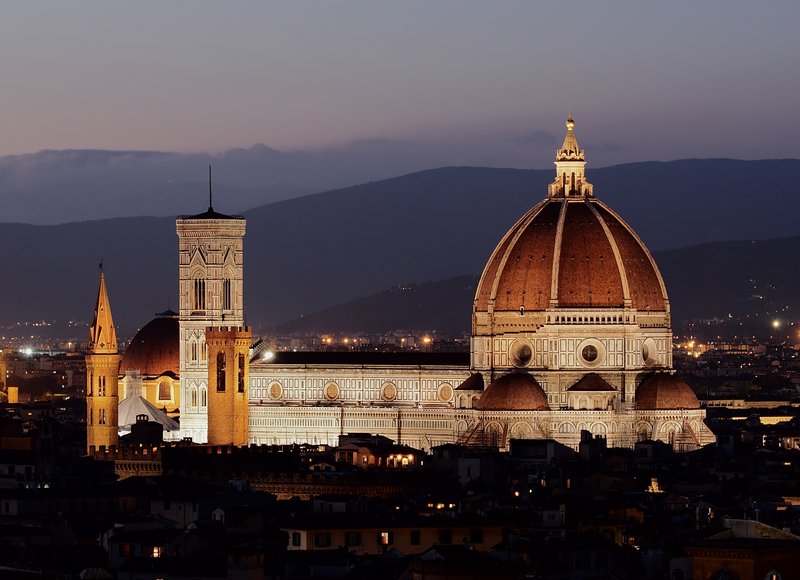
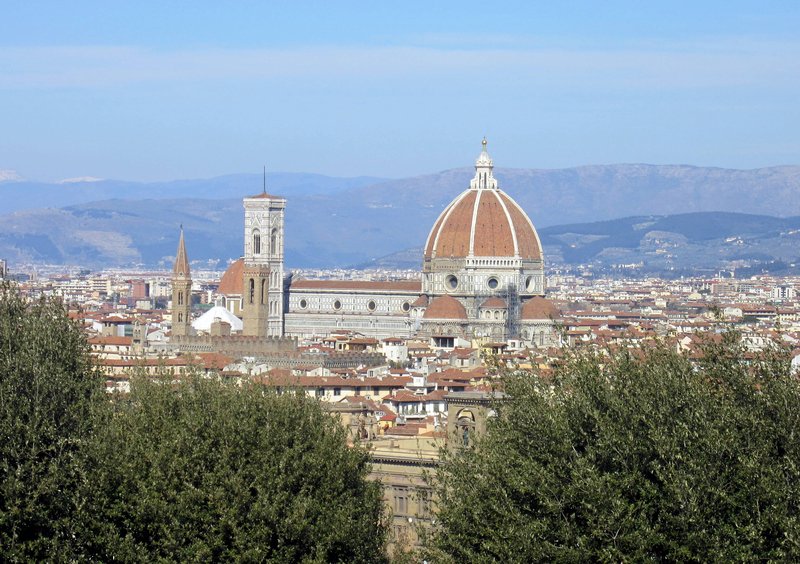
Brunelleschi's brick dome crowns Florence Cathedral and is still the largest masonry dome ever built — the feat that announced the Renaissance. The climb threads between the dome's two shells past Vasari's Last Judgment frescoes to the lantern's 360° view. It is 463 steps with no elevator.
The Accademia is visited overwhelmingly for one thing: Michelangelo's original David, moved here from Piazza della Signoria and displayed under a skylit tribune. The approach corridor holds Michelangelo's unfinished Prisoners, plus Florentine gold-ground paintings and a musical-instruments collection.
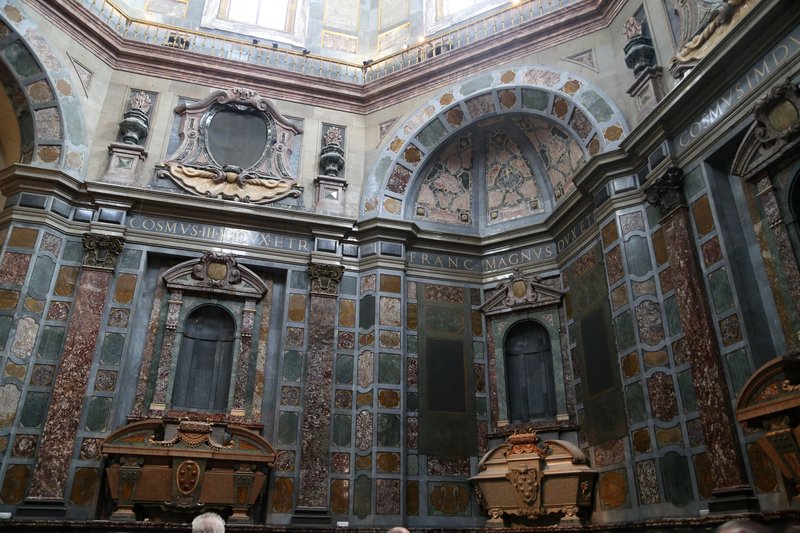
The Medici burial complex at San Lorenzo pairs the marble-encrusted Chapel of the Princes with Michelangelo's New Sacristy, where his Medici tombs carry the allegories of Day, Night, Dawn and Dusk. The Secret Room of charcoal drawings attributed to Michelangelo hides beneath.
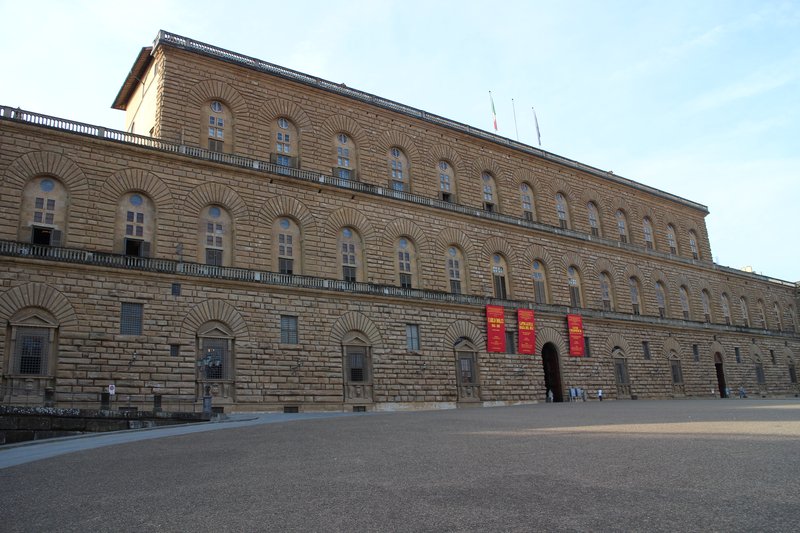
A colossal Renaissance palace built for the banker Luca Pitti, later home to the Medici grand dukes and briefly the kings of Italy. One ticket covers the Palatine Gallery — state rooms holding a famous concentration of Raphael and Titian — plus the Treasury of the Grand Dukes and the Museum of Costume and Fashion.
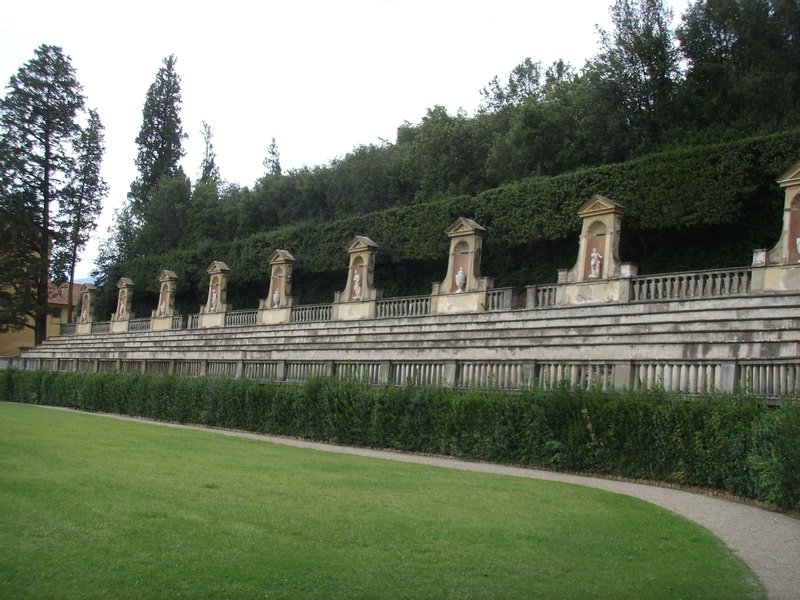
The Medici's vast terraced park behind Palazzo Pitti is the prototype of the formal Italian garden copied by courts across Europe. It works as an open-air museum: Buontalenti's Grotto, the Fountain of Neptune, Renaissance statuary and the Rococo Kaffeehaus pavilion, with terrace views over the city.
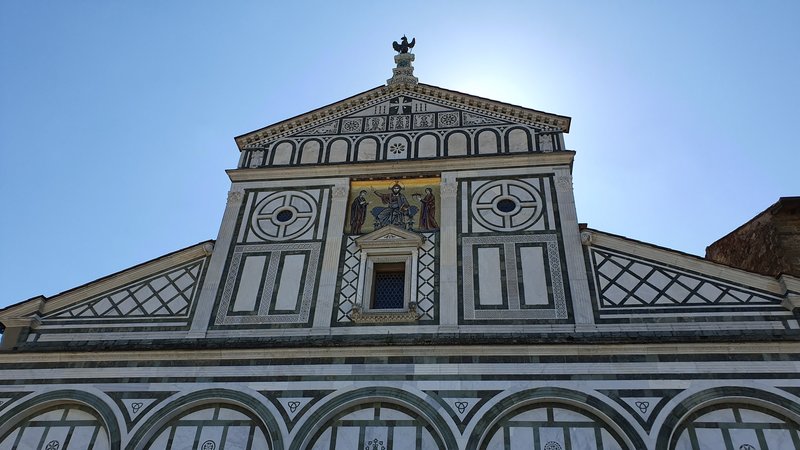
A Romanesque basilica and working Benedictine abbey on the highest point above Florence, ten minutes uphill from Piazzale Michelangelo. Its green-and-white marble facade, glittering apse mosaic and intact crypt make it one of Tuscany's finest Romanesque buildings; the monks still sing Vespers daily.
From Hotel: 22 min · 16 min → Basilica di Santa Croce
1.Basilica di Santa Croce~1 hr
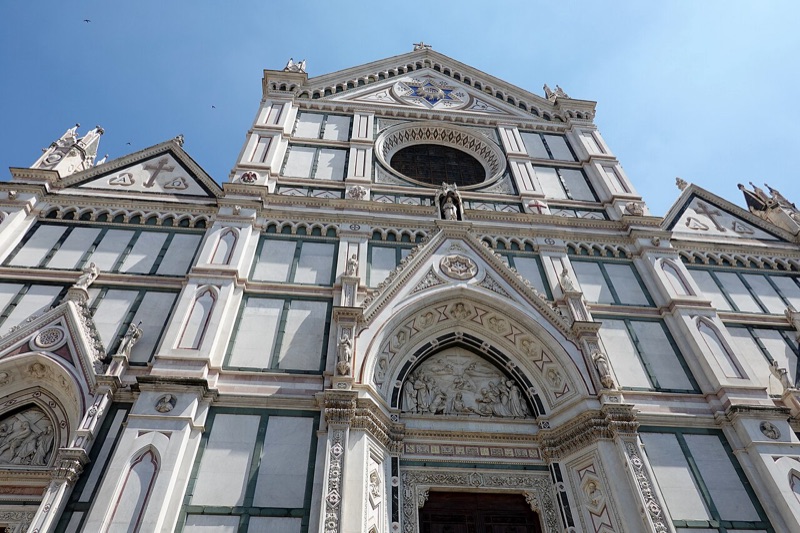
Florence's principal Franciscan church holds the tombs of Michelangelo, Galileo, Machiavelli, and Ghiberti, with a cenotaph to Dante. Giotto's Bardi and Peruzzi Chapel frescoes are among the finest 14th-century paintings in Italy. The first cloister leads to Brunelleschi's Pazzi Chapel.
A panoramic terrace laid out by Giuseppe Poggi when Florence was briefly the capital of Italy. Its bronze replica of David presides over the classic postcard view of the whole city — Duomo, Palazzo Vecchio, the Arno and Ponte Vecchio — with the Fiesole hills beyond. It is the standard sunset spot.
From Hotel: 8 min · 9 min → Basilica di Santa Maria Novella
1.Basilica di Santa Maria Novella~1 hr
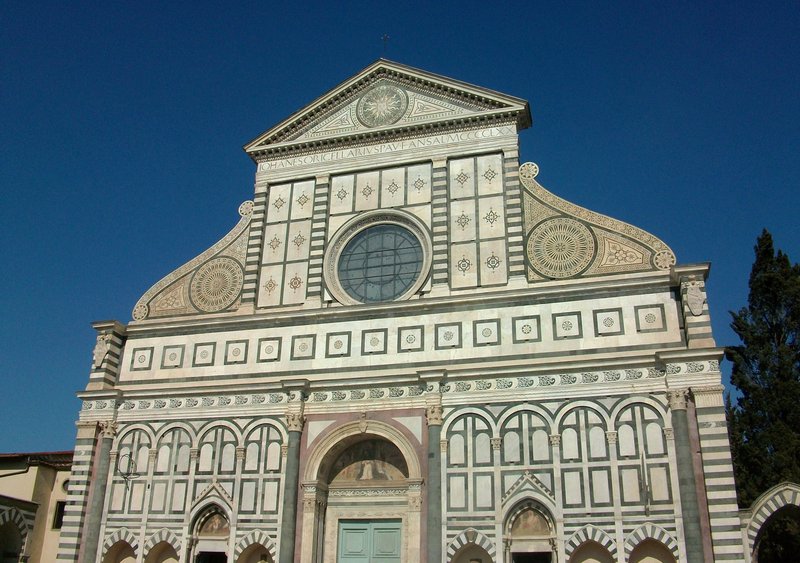
Florence's principal Dominican church pairs Alberti's geometric green-and-white marble facade with frescoed cloisters. One ticket covers Masaccio's Trinity — the first rigorous one-point perspective in painting — Giotto's Crucifix, Ghirlandaio's Tornabuoni Chapel, and the Green Cloister with its Spanish Chapel.
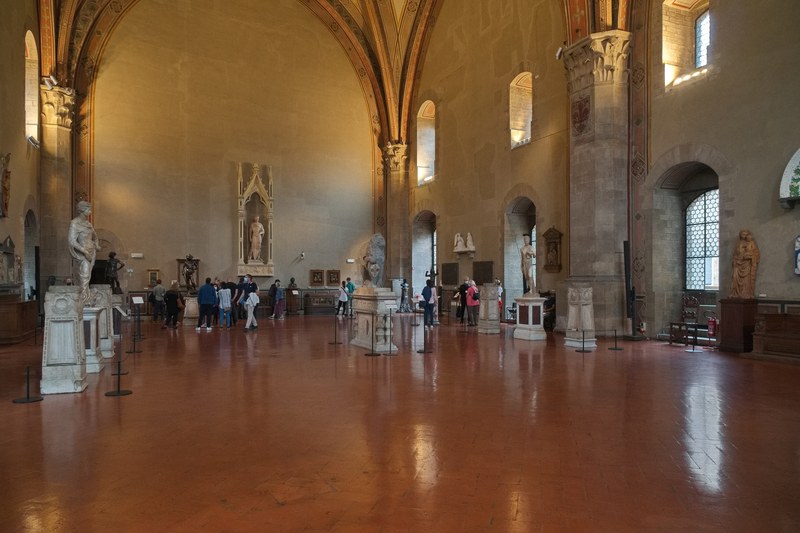
Florence's 13th-century palace-turned-prison became Italy's first national museum in 1865. Donatello's bronze David — the first freestanding nude since antiquity — is here alongside his marble David, Verrocchio's David, and Michelangelo's Bacchus and Brutus. The courtyard served as the city's execution ground.
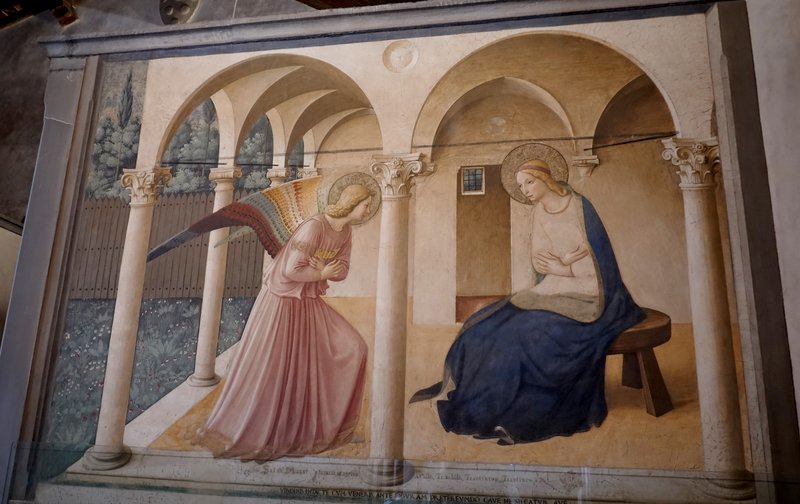
Fra Angelico painted a fresco in each of the 44 monks' cells between 1438 and 1445 — the world's largest collection of his work. The Annunciation at the dormitory stairhead is among the defining paintings of the 15th century. Savonarola lived and was arrested here; his cell and crucifix remain on the first floor.
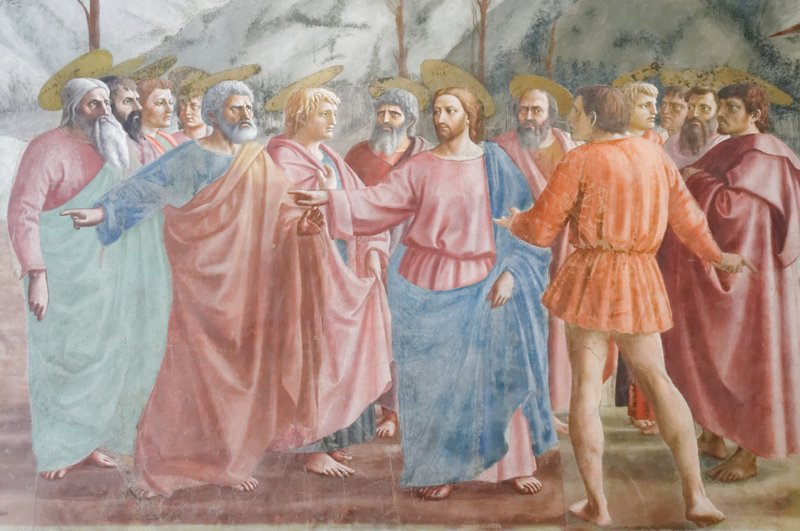
Masaccio began the fresco cycle in 1425 and died at 27, leaving it unfinished; Filippino Lippi completed it 60 years later. The Tribute Money and Expulsion from Eden pioneered atmospheric perspective in Western painting. Michelangelo drew here as an apprentice — Torrigiani broke his nose during those sessions.
From Hotel: 15 min · 17 min → Palazzo Medici Riccardi
1.Palazzo Medici Riccardi~1 hr
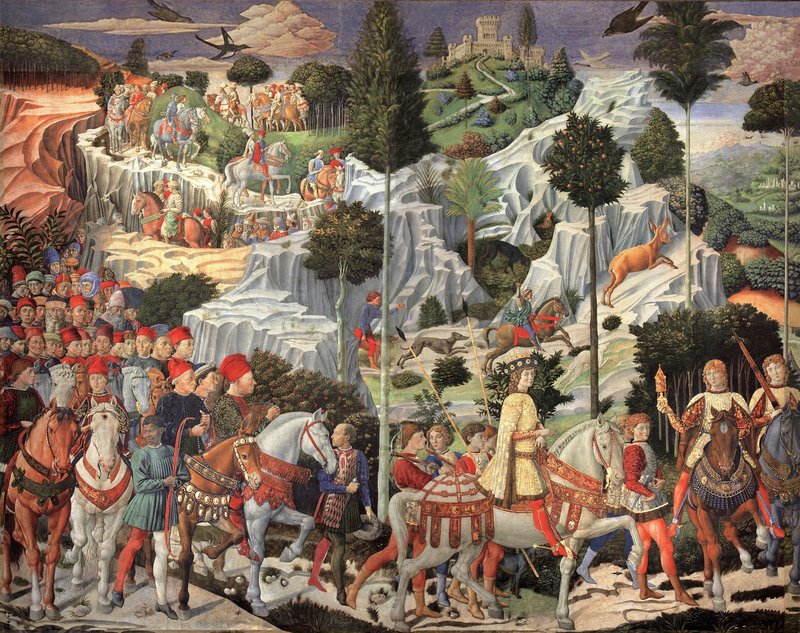
The Medici family palace begun 1444 contains the Chapel of the Magi — frescoed by Benozzo Gozzoli in 1459 with the court's Procession of the Three Kings across all four walls. Lorenzo de' Medici appears as a young rider. The upstairs Luca Giordano gallery is Florence's most theatrical Baroque space.
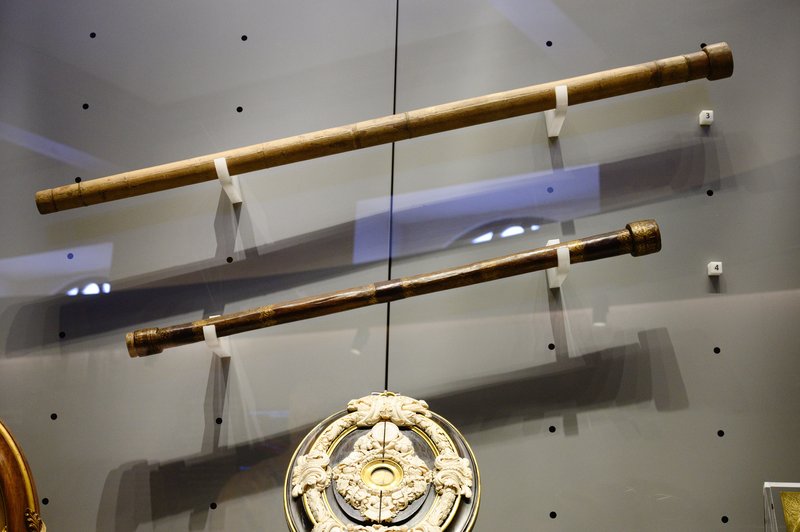
The Museo Galileo holds the world's most important collection of historic scientific instruments — Galileo's two original telescopes from 1610, his compass, and a glass reliquary preserving his middle finger. The 26 rooms trace instrument-making from Antiquity through the 18th century.
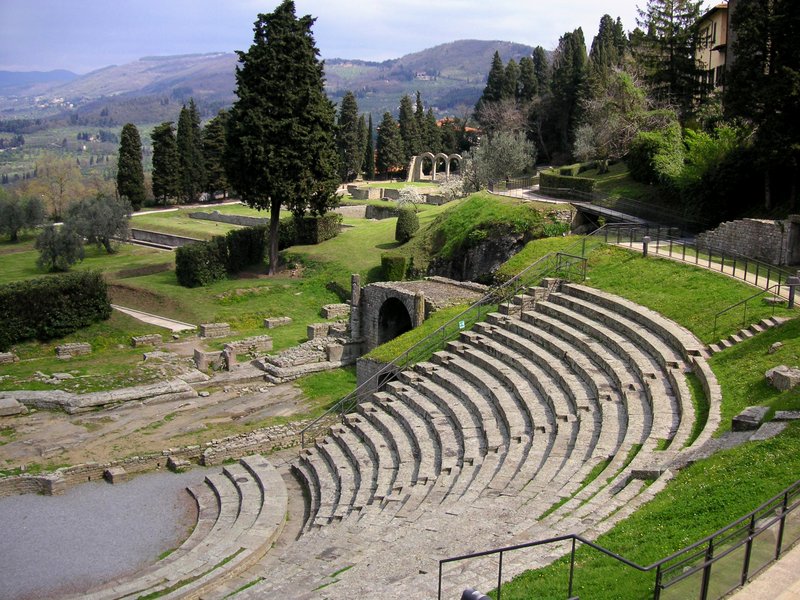
Fiesole, 8km above Florence, was Etruscan before Rome colonized it in 283 BC. The Archaeological Area preserves a first-century Roman theater of 19 tiers still used for summer concerts, Roman bath ruins, an Etruscan temple, and a museum of finds. The terraces give a full panorama over Florence's roofline.
Evening Oltrarno crawl — Prosecco in Piazza Santo Spirito, a pour through a Renaissance wine window, charcuterie, fresh gnudi pasta, a Negroni lesson and gelato across the artisan quarter.
Best-of-Tuscany full day — a guided Siena walk with its cathedral, an organic Chianti winery lunch, free time in San Gimignano's towers, then Pisa's Field of Miracles before the evening return.
Guided cathedral visit, a sky-walk on the normally closed Duomo terraces, then the climb to the top of Brunelleschi's Dome for the best view in Florence — pass included.
Highlights walk through the cradle of the Renaissance — San Lorenzo, the Duomo and Piazza della Signoria, told through the Medici dynasty's stories of power and intrigue.
Two-hour guided stroll of the historic center — Ponte Vecchio, the Uffizi courtyard, Piazza della Signoria and Brunelleschi's Dome — with personalized small-group attention.
The same celebrated Walkabout loop bookable on GetYourGuide — guided Siena, an organic winery lunch with paired wines, San Gimignano free time and the Leaning Tower of Pisa.
Pick pizza or pasta, then make gelato — all at the same Walkabout Tuscan farmhouse — finishing with a three-course feast of what you made, plus wine or beer. Short half-day format works well before an afternoon back in the city.
Locals' Sant'Ambrogio market romp — seven-plus street bites, lampredotto, seasonal produce, cantucci with vin santo and gelato, a full meal walked off between stops.
Hands-on pizza or pasta making plus gelato on a Tuscan estate outside Florence — welcome focaccia and Chianti, then a feast on your own creations with wine or beer.
Full-day coastal escape to all five UNESCO villages with coach, train and seasonal boat hops — optional cliffside hike or Pisa add-on, with swimming stops in summer.
Thick-cut T-bone of Chianina beef, flame-grilled rare over coals, seasoned only with salt and olive oil and served on the bone — Florence's defining dish.
Florence's iconic street food — the cow's fourth stomach simmered in broth, stuffed into a crusty roll with salsa verde or spicy red sauce, eaten standing at the trippai stands.
Florence's olive-oil flatbread — crispier and thinner than focaccia — split and stuffed with Tuscan cured meats, cheeses and creams; now world-famous as a sandwich.
Florence claims gelato's Renaissance roots, and its historic gelaterie still make it daily in-house — Vivoli is the city's oldest, and Perché No! invented the semifreddo cabinet.
Foreign number: not required. — sign-up runs on Google, Apple, Facebook or email with no phone field at all, so no verification code has to arrive.
The most consistent platform for the historic centre, Oltrarno and San Niccolò; strong coverage of quality trattorias and wine bars that do not otherwise deliver; order windows align with Florentine dinner hours from 7:00pm.
Foreign number: not required. — it signs in with Google, Facebook or email, and a phone sign-up takes any prefix with the code by SMS or WhatsApp.
Covers a wider radius than Deliveroo into Campo di Marte and Novoli; useful for groceries and pharmacy runs alongside restaurant orders; roster thins in the historic centre compared to the southern app.
Foreign number: not required. — the account is made with Google, Facebook or an email address — there is no phone field, so no code has to arrive.
Broadest selection in terms of raw restaurant count, including pizzerias and kebab spots not on the other two platforms; useful for late-night options when Deliveroo coverage drops; delivery times run longer in the centro storico.
Foreign number: accepted. — the code comes by SMS or WhatsApp, and WhatsApp reaches a foreign number over data; an email code then finishes the sign-up.
Dispatches Florence's licensed radio-taxi fleet; fares run on the municipal tariff meter, which is lower than private hire; reliable for Piazzale Michelangelo, Fiesole and cross-city runs to Santa Maria Novella station; surcharges apply on Sundays and after 10:00pm.
Foreign number: accepted. — the verification code arrives by SMS on a foreign SIM, and the app can also verify through WhatsApp.
Operates as Uber Black in Florence — licensed private hire cars rather than metered taxis, so fares are set upfront and run higher than radio taxis; useful when an appTaxi wait stretches past 15 minutes during peak season or late evenings in the Oltrarno.
Italy's food capital — tortellini, tagliatelle al ragù and mortadella under forty kilometers of medieval porticoes, plus Europe's oldest university and the Two Towers. Closer to Florence by train than most Florentine suburbs.
A hillside Tuscan city of Piero della Francesca frescoes in the Basilica of San Francesco, a sloping Piazza Grande lined with medieval palazzi, and an antique market that fills every first Sunday. Frequent regional and fast trains via Santa Maria Novella.
The Leaning Tower is just the opener — Piazza dei Miracoli's cathedral and baptistery form one of Italy's great architectural ensembles, with a lively university town and Arno riverfront beyond the lawns.
A perfectly preserved walled city you can circle by bike atop its Renaissance ramparts — a Roman amphitheater square, a hundred churches and Puccini's birthplace, all blissfully car-light.
The Gothic rival of Florence — the shell-shaped Piazza del Campo of Palio fame, a zebra-striped Duomo and intact medieval lanes. The station sits below town; escalators climb to the center.
Brunelleschi won the dome commission without ever revealing how he would build it — no plans survive because he kept them in his head, wary of rivals. The answer turned out to be herringbone brickwork that locks each course in place as it rises, letting the dome hold itself up during construction with no scaffolding from the ground. The climb on Day 1 walks you straight through the gap between his two shells — you are inside the solution.
Keep an eye out for the buchette del vino — small arched hatches cut into palazzo walls at shoulder height. Renaissance wine producers used them to sell directly to the street, and they became contactless service windows during plague outbreaks. Dozens survive around the center and the Oltrarno, and a handful have reopened to pour wine through the wall again; the sunset tour in this guide stops at one.
Three stops in this guide are really one statue's biography. David was carved for the cathedral's roofline, stood guard outside Palazzo Vecchio in Piazza della Signoria for nearly four centuries, and now lives a five-minute walk from the hotel in the Accademia — with his replicas holding both of his old posts, one in the square and one in bronze above the city at Piazzale Michelangelo.