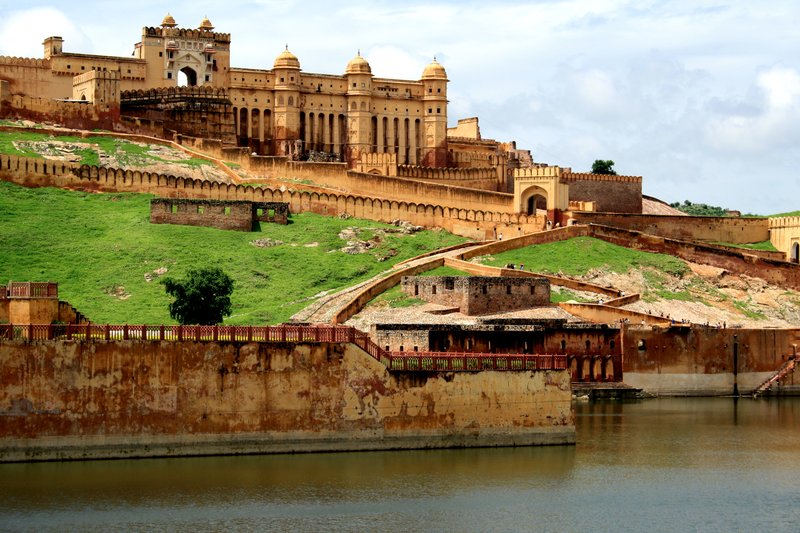
A honey-gold hilltop palace-fortress overlooking Maota Lake, its courtyards moving from red sandstone battlements to the mirror-inlaid Sheesh Mahal, whose thousands of tiny glass fragments once turned a single candle into a starlit ceiling.
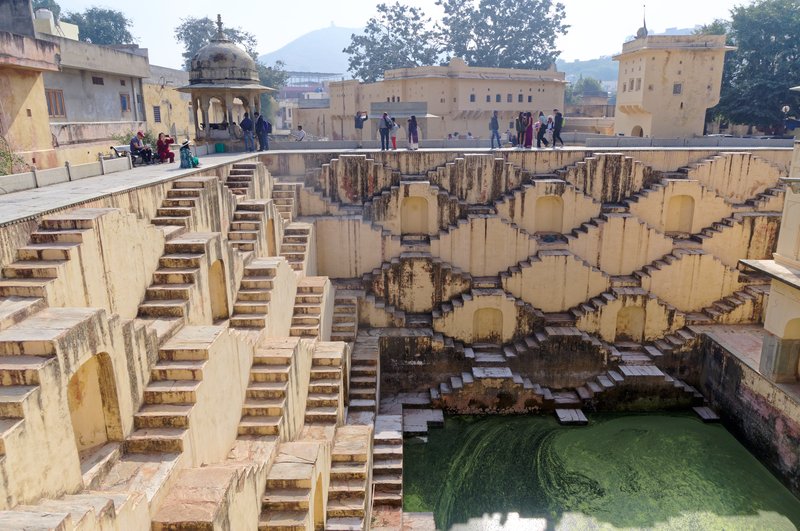
A symmetrical stepwell whose double staircases descend in a criss-crossing pattern to a still pool of water, one of the few kunds in the Amer area still open to walk into.
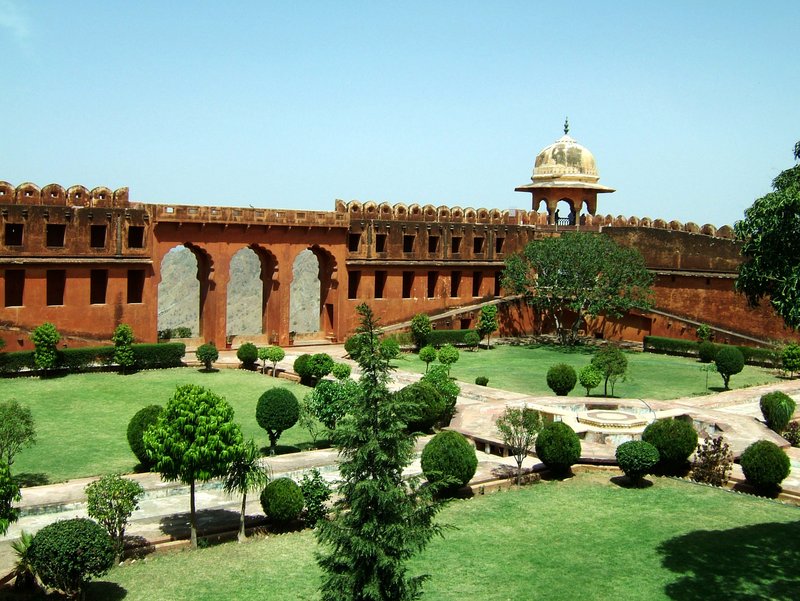
A rugged garrison fort on the Cheel ka Teela ridge above Amber, its ramparts holding the Jaivana — the largest cannon on wheels ever built — and sweeping views over Maota Lake.
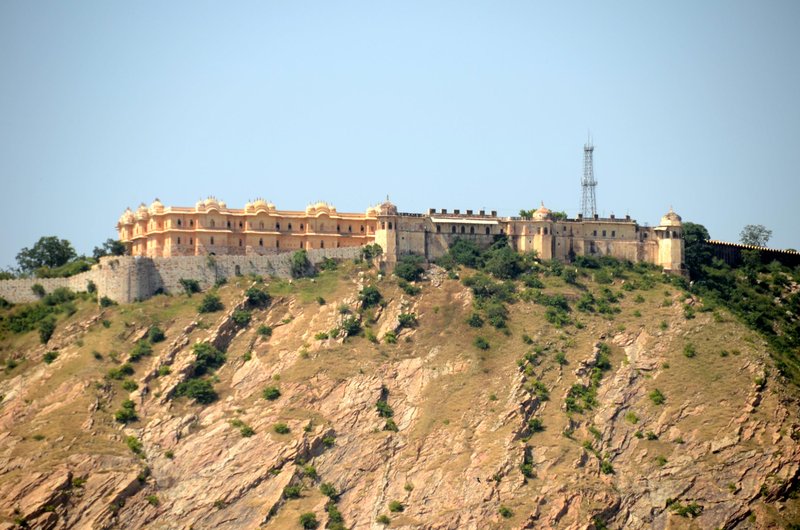
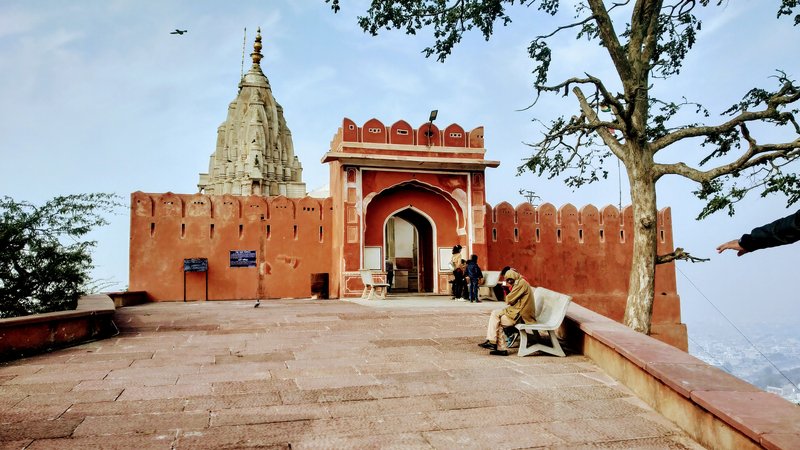
A crenellated ridge-top fort forming Jaipur's third defensive point alongside Amber and Jaigarh, its ramparts giving the widest sunset panorama over the Pink City below.
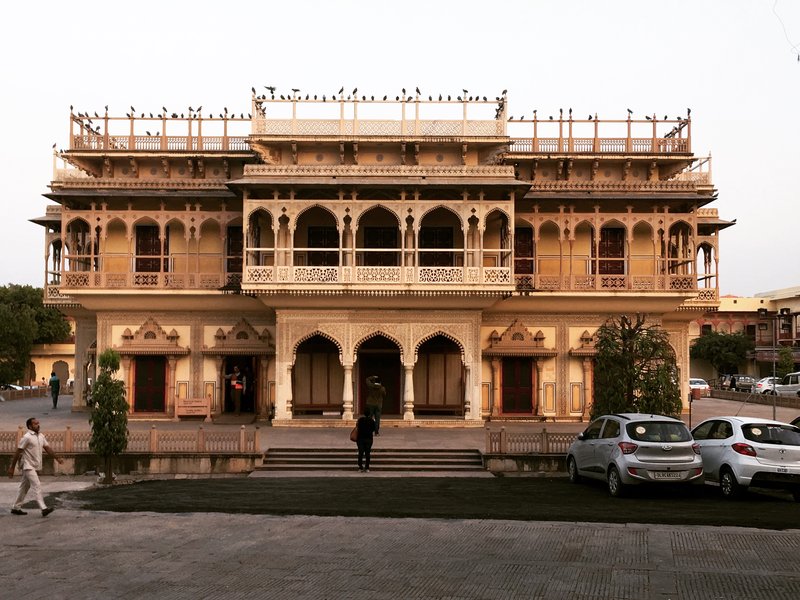
The still-occupied royal residence of Jaipur's Maharajas, its courtyards moving from pastel Pritam Niwas Chowk gates to the peacock-blue Chandra Mahal facade, where the royal family still keeps private apartments on the upper floors.
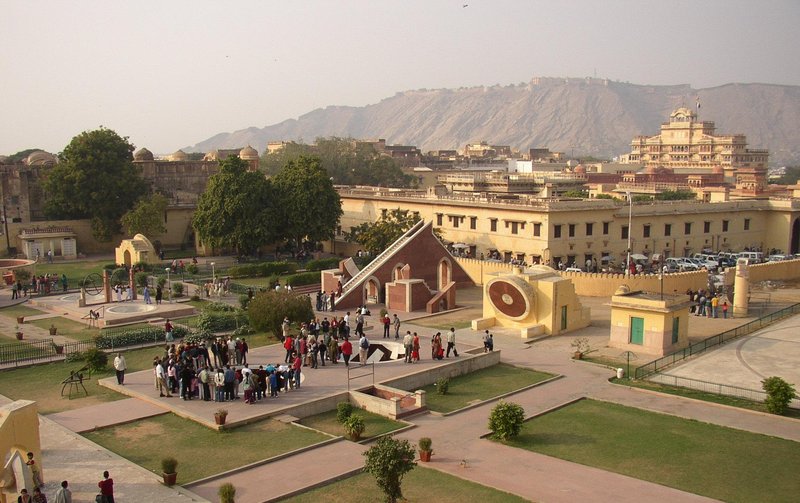
A UNESCO-listed 18th-century observatory of stone and marble astronomical instruments, its 27-metre sundial still accurate to within seconds and remaining the largest of its kind ever built anywhere in the world.
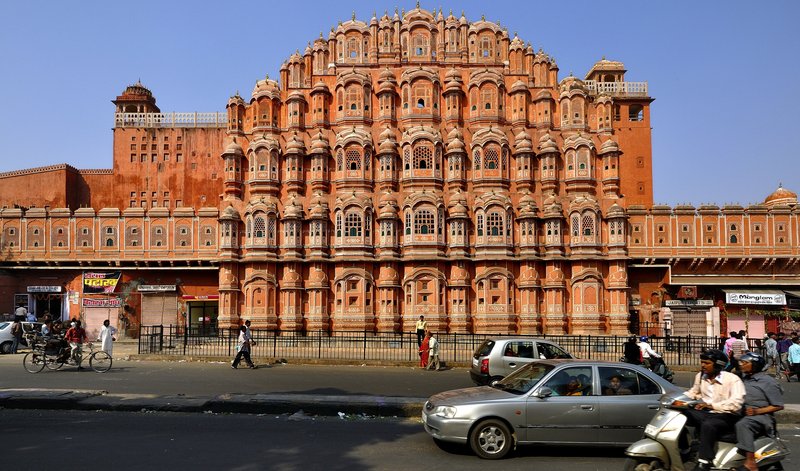
A five-storey honeycomb facade of pink sandstone pierced by 953 latticed windows, built so royal women of the Zenana could watch street life below unseen from behind the carved stone screens without ever being seen themselves.
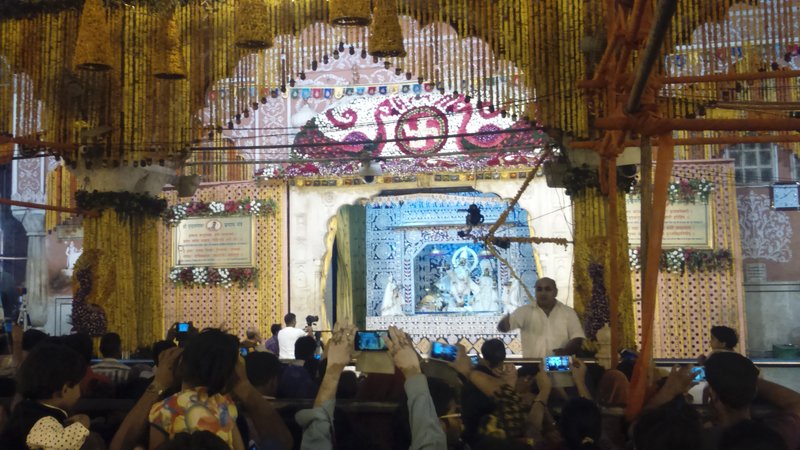
Jaipur's most revered Krishna temple, built by the city's founder inside the Jai Niwas Garden and aligned so the Maharaja could see the deity straight from his palace window.
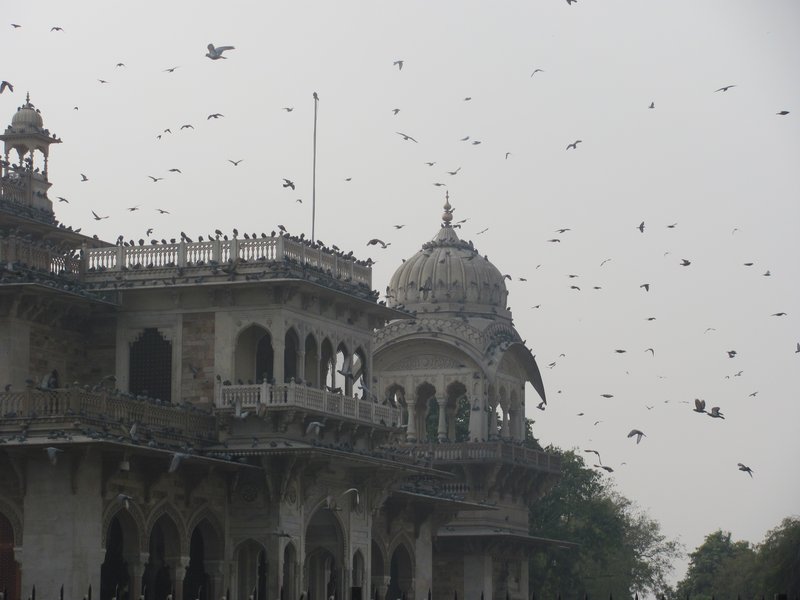
Rajasthan's oldest museum, a domed Indo-Saracenic showpiece set inside Ram Niwas Garden, holding miniature paintings, an Egyptian mummy and international decorative arts.
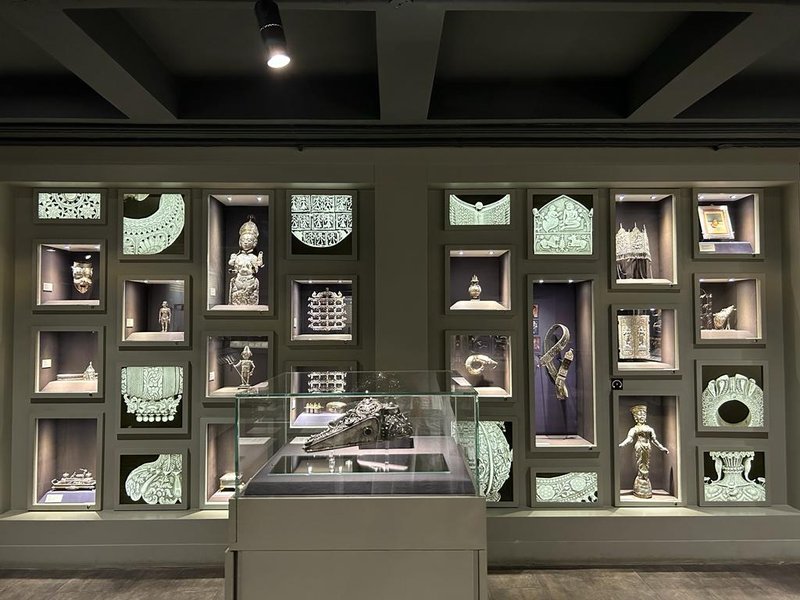
A private jewelry museum holding over 4,000 pieces of Indian gold, silver and gem work spanning 4,500 years, from tribal silver anklets to Mughal court ornaments, all drawn from one family's decades of personal collecting.
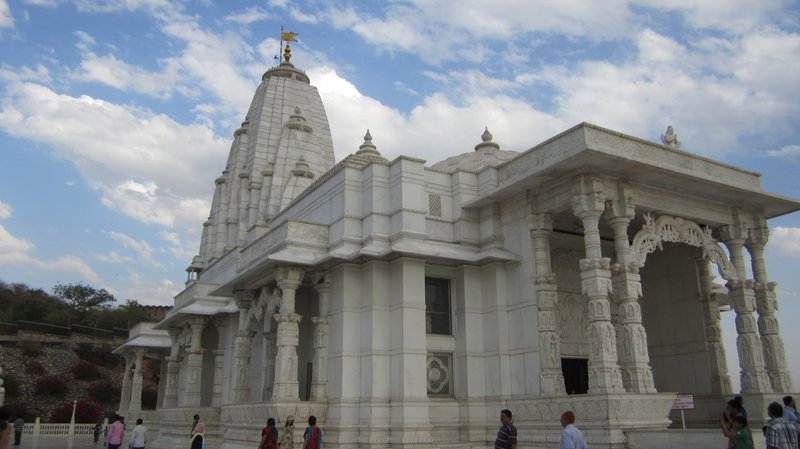
A gleaming white-marble Hindu temple dedicated to Lakshmi and Narayan, its sculptural modern form rising on Moti Dungri Hill in sharp contrast to the Pink City's sandstone.
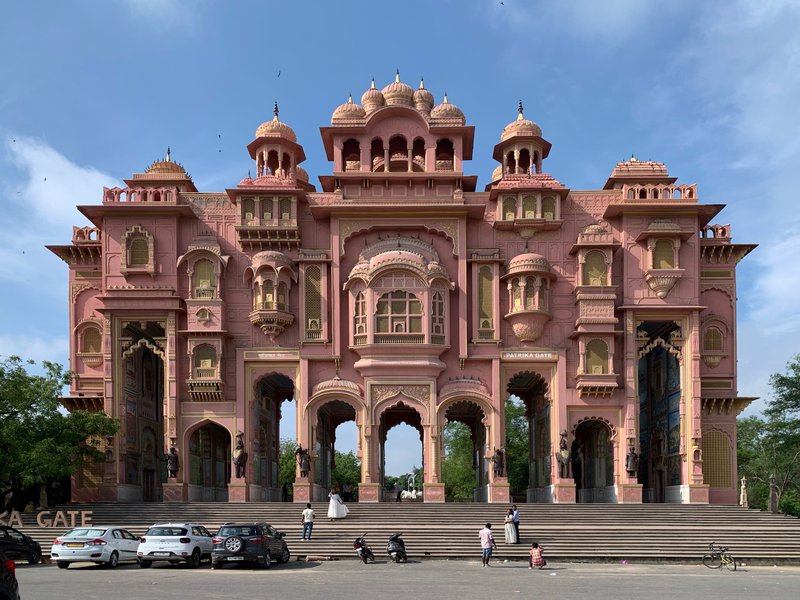
An eight-pillared pink sandstone gateway, each pillar hand-painted with the art and motifs of one of Rajasthan's regions, framing Asia's largest circular traffic-circle park.
A pink-sandstone pilgrimage complex built into a narrow crevice in the hills, its natural spring filling a chain of sacred tanks that thousands of monkeys call home.
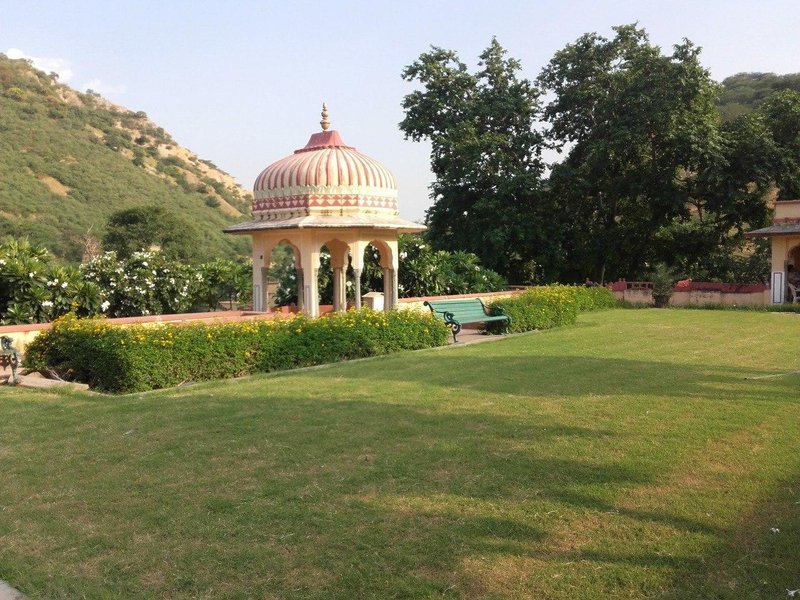
A tiered 18th-century pleasure garden built by Maharaja Sawai Jai Singh II as a gift for his queen, its stepped terraces, fountains and painted pavilions telling the Krishna legend in murals.
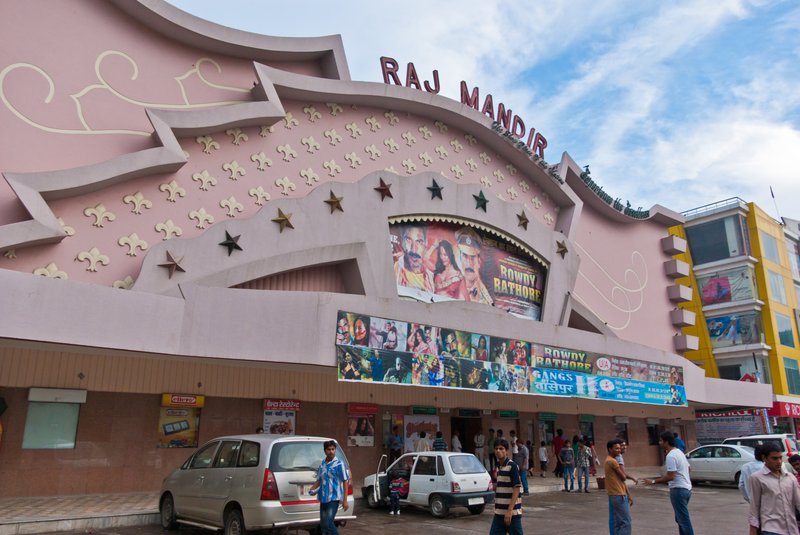
A meringue-white Art Moderne movie palace opened in 1976 and billed as the "Pride of Asia" — Asia's largest single-screen theatre, and the classic way to watch a Bollywood film in Jaipur.
ARRIVE Ajmer Junction: 12 min → Ajmer Sharif Dargah
1.Ajmer Sharif Dargah~1 hr
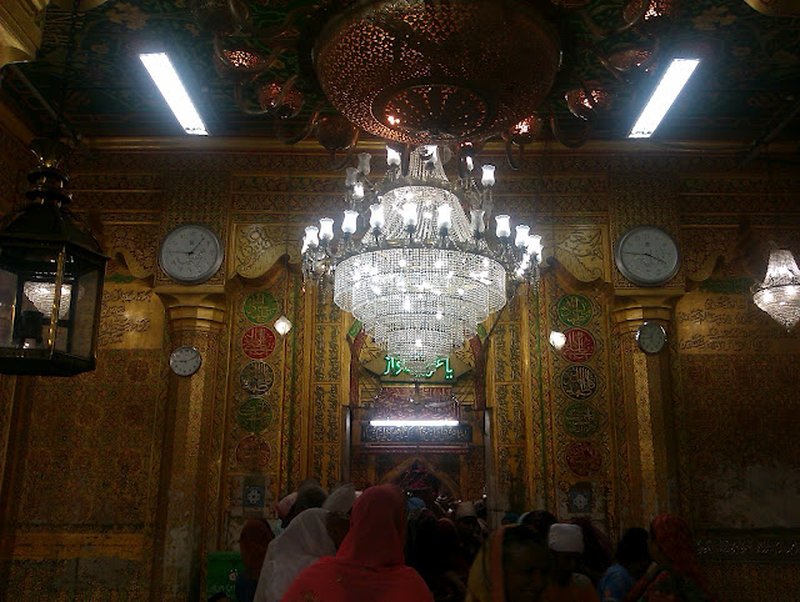
The Sufi shrine of 13th-century saint Khwaja Moinuddin Chishti, its marble courtyard, silver doors and giant offering cauldrons drawing up to 20,000 pilgrims of every faith a day.
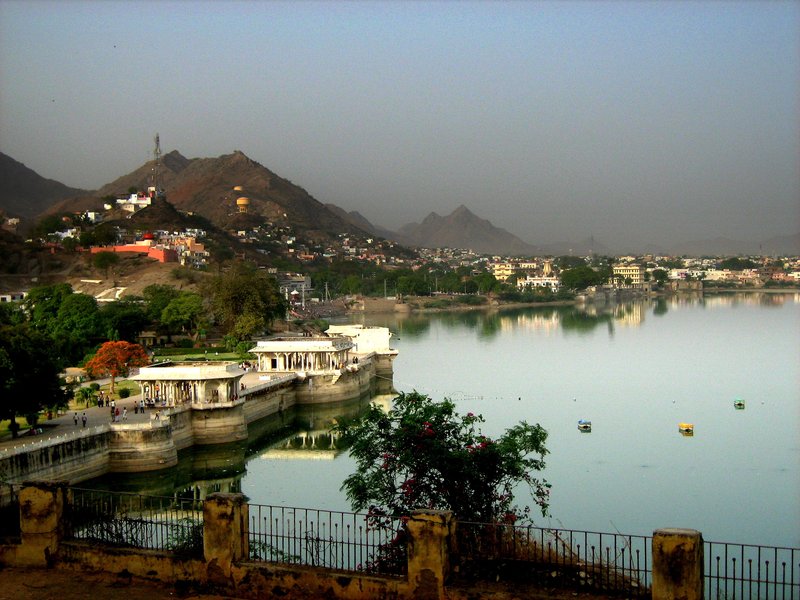
A 12th-century artificial lake built by Prithviraj Chauhan's grandfather, Anaji Chauhan, by damming the Luni River, later ringed by Mughal emperor Jahangir's Daulat Bagh gardens and a row of marble Baradari pavilions added along the bank by Shah Jahan.
A half-day private car tour pairing Amber Fort with Jaigarh Fort, Panna Meena ka Kund and a Jal Mahal photo stop, run by local guides rather than a fixed script.
A guided skip-the-line entry to Amber Fort with an English or Hindi-speaking guide, air-conditioned transfer and bottled water, timed to beat the entry queue.
A disc-shaped, honeycomb-textured sweet soaked in sugar syrup and topped with rabri, traditionally made in Jaipur for the Teej and Raksha Bandhan festivals.
Foreign number: not required. — signs in with an email address instead of a phone number, so a visitor without an Indian SIM can still create an account.
Covers nearly every restaurant and sweet shop in Jaipur with live tracking, and its ratings closely track Google Reviews; ordering to a hotel room number instead of a street address occasionally confuses new drivers.
Foreign number: not accepted. — international login targets NRIs ordering to a recipient already in India, not a visitor's own foreign SIM inside the country.
Wider restaurant reach than Zomato in some Jaipur neighbourhoods and generally faster delivery windows, but a foreign-SIM visitor typically needs a local number to complete sign-up at all.
Foreign number: accepted. — the verification code arrives by SMS on a foreign carrier as long as the carrier allows international short-code delivery, which most do.
Wide coverage across Jaipur with upfront pricing and no haggling, though wait times can stretch during Old City traffic and drivers sometimes cancel on narrow bazaar lanes.
Foreign number: accepted. — OTP now delivers to international numbers, and station-side Ola Point staff can book a ride in person if it fails.
Usually the cheaper option against Uber on short hops and has more autos and bike taxis in its network, though the app's interface is less polished for first-time foreign users.
Jaipur's terracotta-pink walls are a coat of paint, not the stone underneath — the entire Old City was whitewashed and then painted pink in 1876 to welcome the Prince of Wales, and a municipal bylaw still requires shopkeepers inside the walled city to keep the colour up.
Amber, Jaigarh and Nahargarh forts are physically connected by a single defensive wall running along the ridge — the same fortification system behind the Amber–Jaigarh walking trail, since that trail follows a section of the original rampart road.
Jaigarh Fort's cannon foundry cast the Jaivana, the largest cannon on wheels ever made, and it was fired only once — as a test shot in 1720, said to have landed the cannonball 35 km away and left a crater that filled to form a lake.