From Hotel: 22 min · 5 min → Basilica di Santa Croce
1.Basilica di Santa Croce~45 min
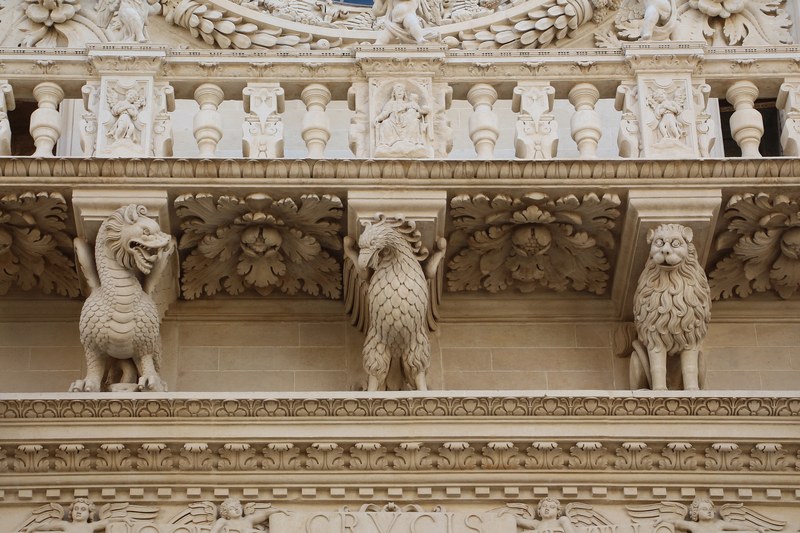
Masterpiece of Lecce Baroque architecture with an extravagantly carved rose window and ornate facade covered in mythological figures, flowers, and animals built between 1549 and 1695 using the soft local limestone that allowed such intricate detail.
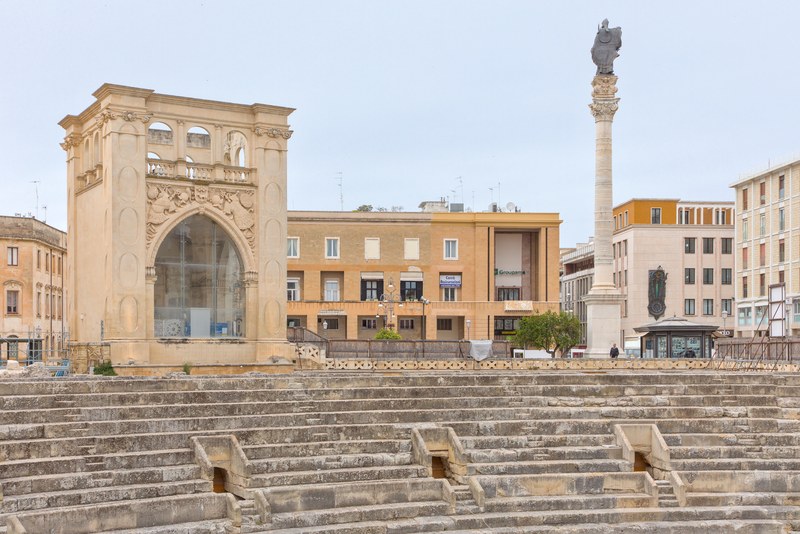
Second-century amphitheatre built for 25,000 spectators, discovered in 1901 beneath Piazza Sant'Oronzo — only a third is excavated, with the rest concealed under surrounding buildings.
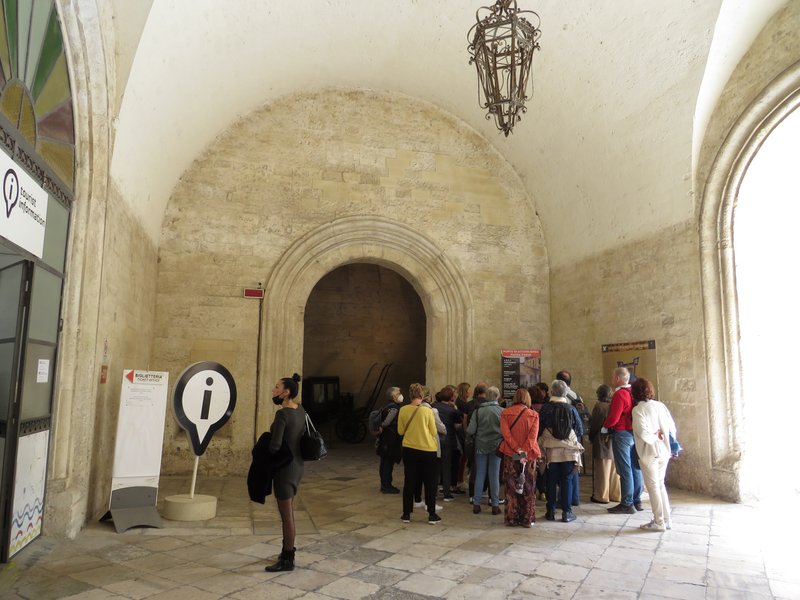
Imposing 16th-century fortress built by Charles V to defend against Ottoman raids, with a trapezoidal layout, cylindrical corner towers, and a dry moat — now an exhibition space hosting cultural events and art shows.
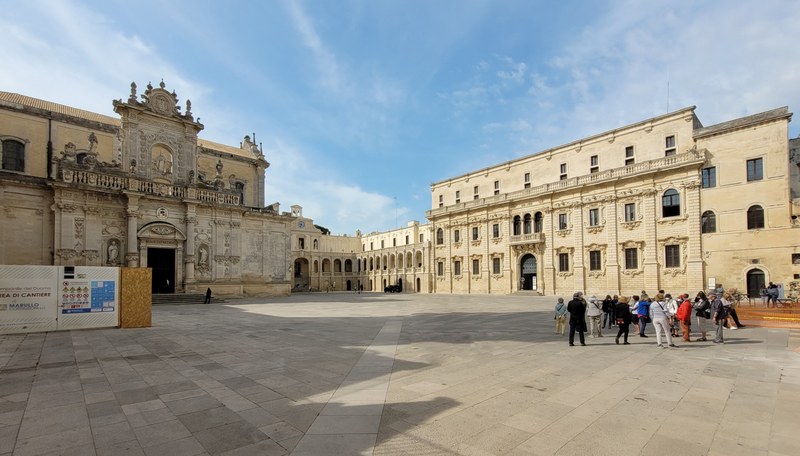
Enclosed Baroque square housing Lecce Cathedral, its 68-meter bell tower, the Bishop's Palace, and the Seminary — a single architectural ensemble designed to overwhelm visitors entering through its narrow passage.
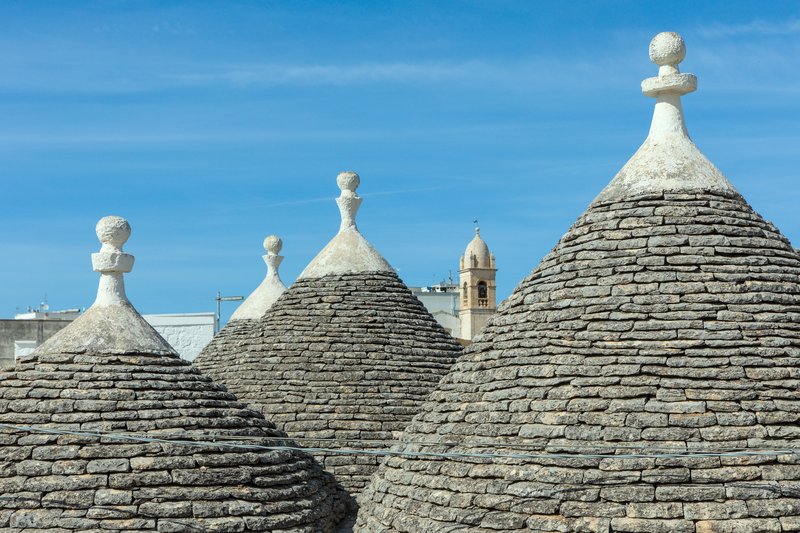
UNESCO World Heritage district of over 1,000 limestone trulli with conical dry-stone roofs — the densest concentration of these unique dwellings, many painted with mystical symbols, dating from the 14th century and still inhabited today.
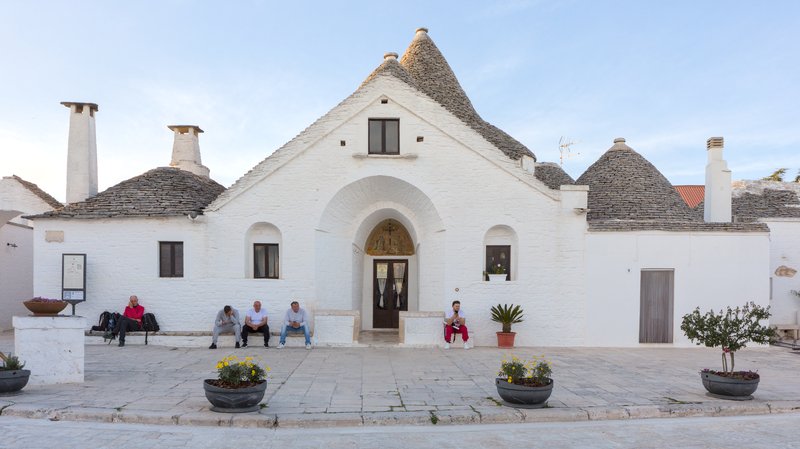
The only two-story trullo in Alberobello, now a museum showing how families lived inside these beehive-shaped stone houses — built in the 18th century as a semi-religious meeting place, it preserves original furnishings and domestic tools across both floors.
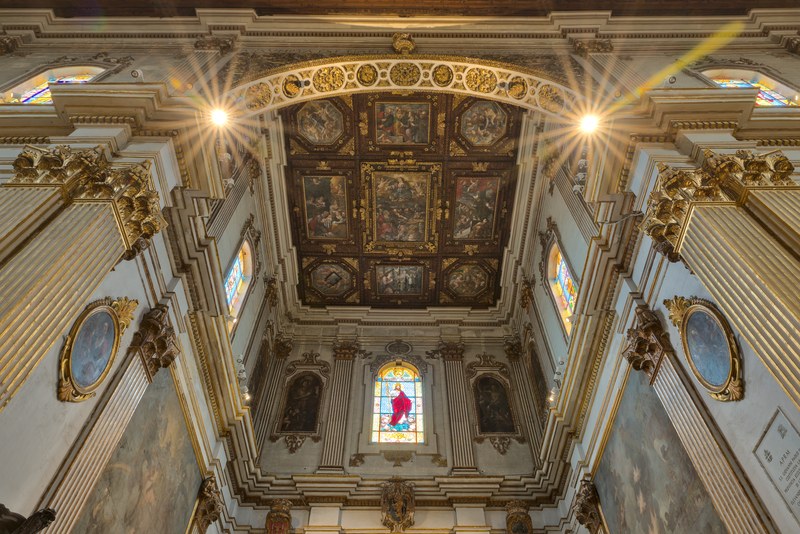
15th-century Gothic-Romanesque cathedral at the highest point of the old town, with an unusual concave facade and a large rose window featuring 24 finely carved rays — the interior holds a ceiling painting of the Madonna and Child attributed to local artists.
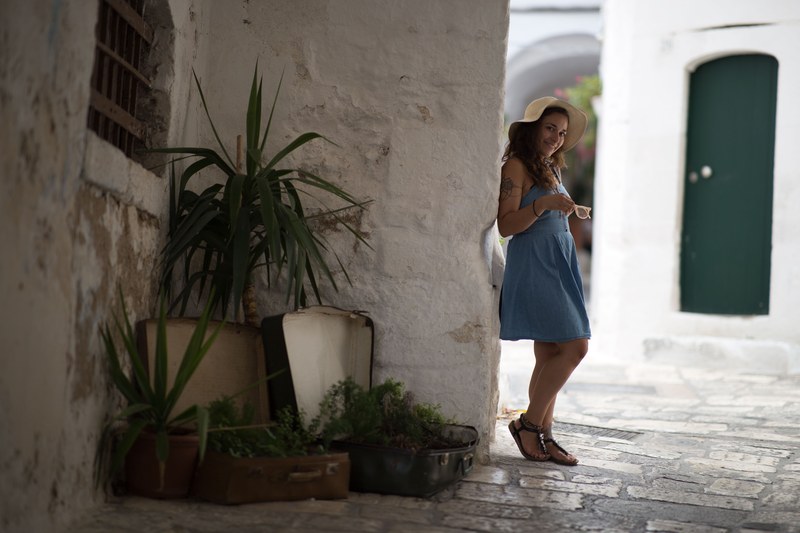
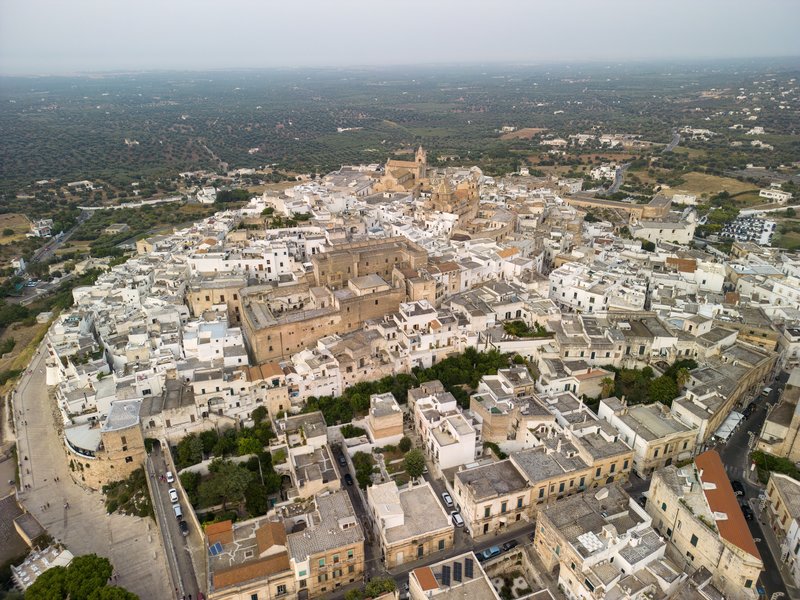
The Citta Bianca perched on three hills — a labyrinth of whitewashed alleys, arches, and steep staircases offering panoramic views over olive groves stretching to the Adriatic, inhabited since the Stone Age with the medieval core retaining its defensive layout.
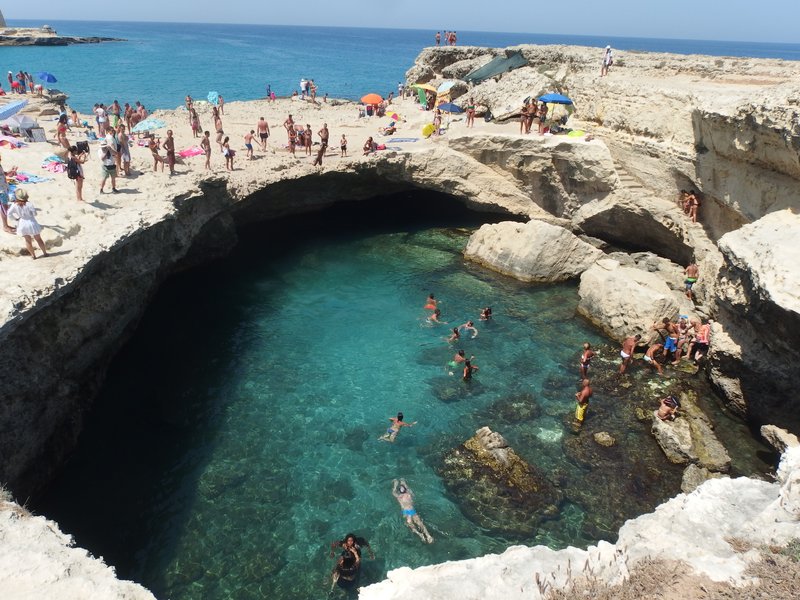
Natural rock pool formed where a limestone cave roof collapsed, revealing turquoise waters and Messapian inscriptions from the 2nd millennium BC carved into the surrounding walls — one of the most important prehistoric graffiti sites in the Mediterranean.
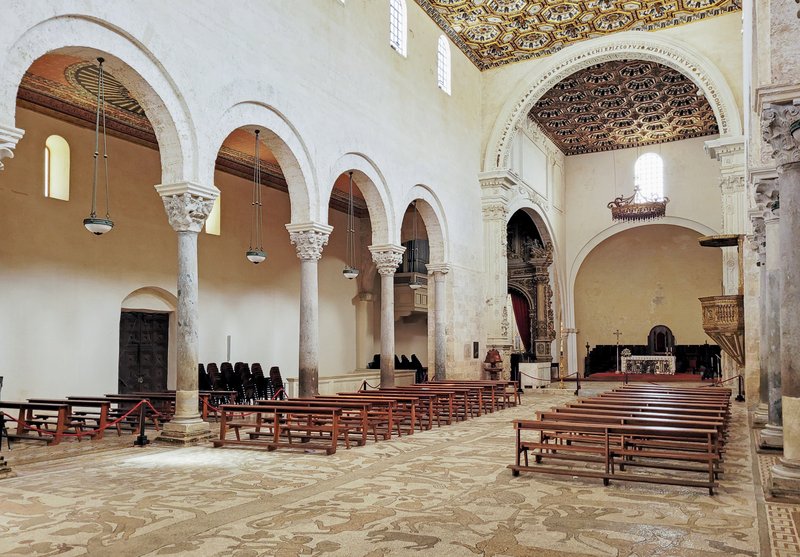
11th-century cathedral sheltering Europe's largest medieval mosaic floor — a 16-meter Tree of Life created by monk Pantaleone between 1163 and 1165, depicting biblical scenes, zodiac signs, and Alexander the Great across the entire nave, transept, and apse.
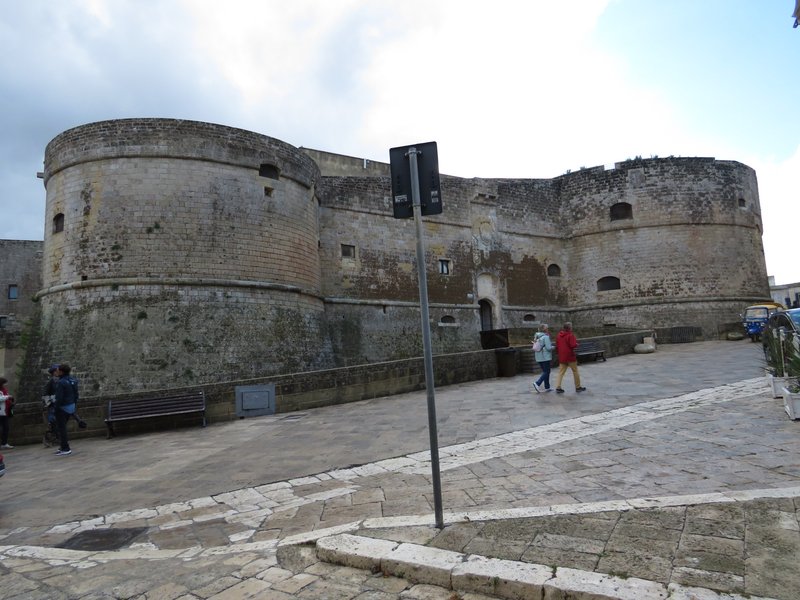
15th-century coastal fortress with massive cylindrical towers and a dry moat, built by the Aragonese after the 1480 Ottoman siege that killed 800 inhabitants — the ramparts offer sweeping views over the harbour and Adriatic, and the interior hosts rotating exhibitions.
One of southern Italy's oldest Byzantine churches, built between the 9th and 10th centuries with three naves separated by columns and rare frescoes depicting scenes from the lives of Christ, Saints Peter and Paul, and the Last Supper in distinct Byzantine style.
Walking tour of Lecce's Baroque centro storico with street food tastings at local pasticcerie and friggitorie — covers the amphitheatre, Santa Croce, and cathedral square.
Guided walking tour through the old town covering Santa Croce, the Roman amphitheatre, Piazza del Duomo, and the Jewish Quarter with a local historian.
Full-day small-group tour from Lecce to three Pugliese highlights — the trulli of Alberobello, the white city of Ostuni, and the cliffside old town of Polignano a Mare.
Three-hour deep dive into Lecce's architecture, history, and artisan traditions with a licensed local guide covering the old town and hidden workshops.
Guided walk exploring why Lecce earned its "Florence of the South" nickname — Baroque churches, Roman ruins, and the local pietra leccese limestone craft.
Narrative walking tour focused on local stories and everyday life in the old town rather than monuments alone — covers hidden courtyards and artisan workshops.
Shortcrust pastry shell filled with warm custard cream, baked fresh every morning — invented in Lecce in 1745. The defining breakfast pastry of Salento.
Puff pastry pocket filled with bechamel, mozzarella, and tomato — Lecce's signature savoury snack eaten standing at bar counters, crispy outside and molten inside.
Ear-shaped handmade pasta served with turnip greens, garlic, chilli, and anchovies — the iconic first course of Puglia, shaped one piece at a time on a wooden board.
Foreign number: not required. — sign-up runs on Google, Apple, Facebook or email with no phone field at all, so no verification code has to arrive.
Good coverage of central Lecce with reliable delivery from the main restaurant strips; selection skews toward established venues rather than street food.
Foreign number: accepted. — Free Now accepts international SIM cards; no Italian number required to register or book.
The main ride-hailing option in Lecce with reasonable response times across the centro storico; availability can drop in early morning hours outside tourist season.
Ancient port city at the end of the Via Appia, with Roman columns marking the road's terminus, a Swabian castle, and a cathedral housing a 12th-century mosaic floor.
The White City on a hilltop — a maze of whitewashed alleys and panoramic viewpoints above an endless sea of olive trees, reachable on foot via a steep 20-minute climb.
Baroque hilltop town in the Itria Valley known for the Festival della Valle d'Itria opera season, elegant palazzi, whitewashed streets, and capocollo — a local cured meat aged in the town's caves.
Fortified island old town connected to the mainland by a 17th-century bridge, with an Angevin castle jutting into the sea, Baroque churches, and sandy beaches along the Ionian coast.
Puglia's capital with a walled old town on a peninsula, the Basilica di San Nicola housing the saint's relics, and a lively seafront promenade where grandmothers shape orecchiette in doorways.
Every carved angel, every spiralling column, every grotesque face staring down from a Baroque facade in Lecce exists because of one geological accident: the local limestone is so soft when freshly quarried that masons could carve it with hand tools like butter, yet it hardens to golden durability once exposed to air. This is pietra leccese — a calcarenite formed from compressed shell fragments 20 million years ago. Without it, the city's architects would never have attempted the level of ornamental excess visible on Santa Croce's facade, where a single column might carry a dozen sculpted figures. The stone's warm honey colour deepens with centuries of sun, which is why the old town glows amber at golden hour while newer restorations read pale yellow. Every building in the centro storico is essentially carved from a single material — the entire city is a sculpture made from the same block.