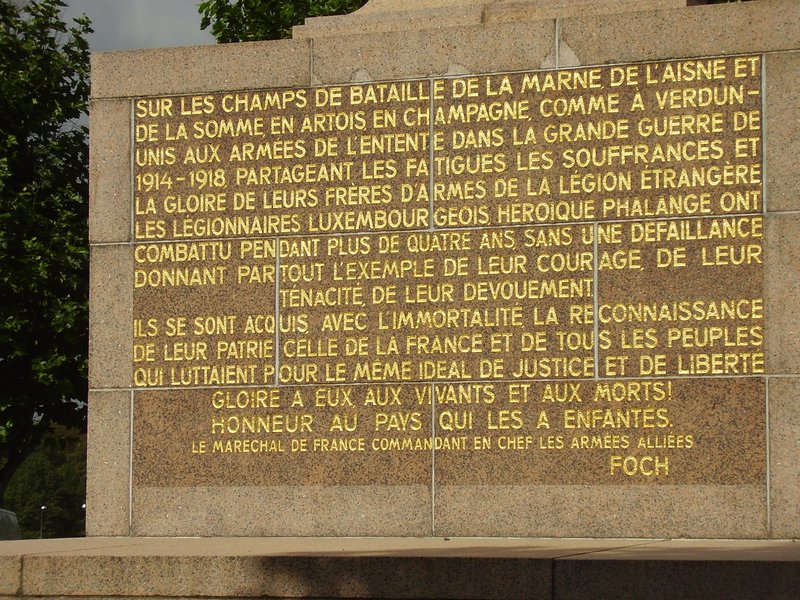
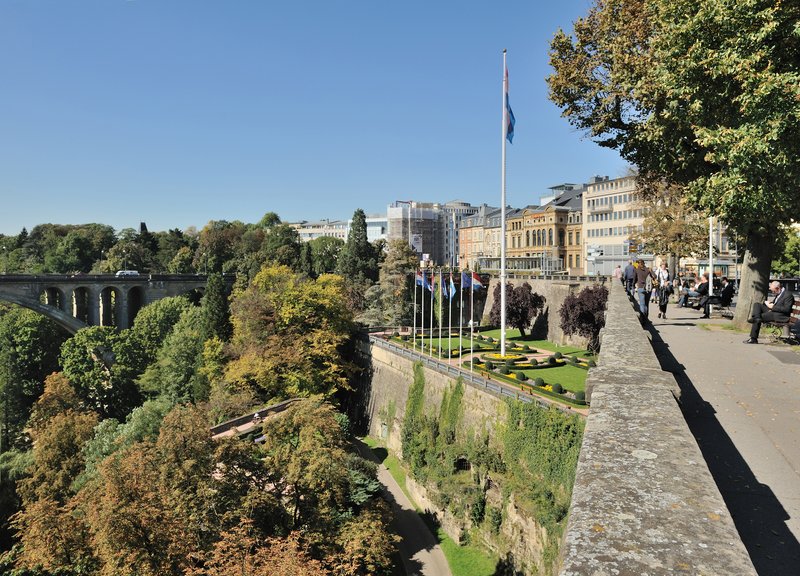
The Golden Lady — a gilded figure of victory atop a 21-metre granite obelisk on Place de la Constitution, raised in 1923 for Luxembourg's war volunteers and now the nation's symbol of freedom. Behind it opens the classic panorama over the Pétrusse valley and the Adolphe Bridge.
Luxembourg's national cathedral, built by the Jesuits between 1613 and 1621 and crowned by three slender black spires. Inside are luminous stained glass, the venerated statue of the Comforter of the Afflicted, and a crypt holding the tombs of the Grand Ducal family.
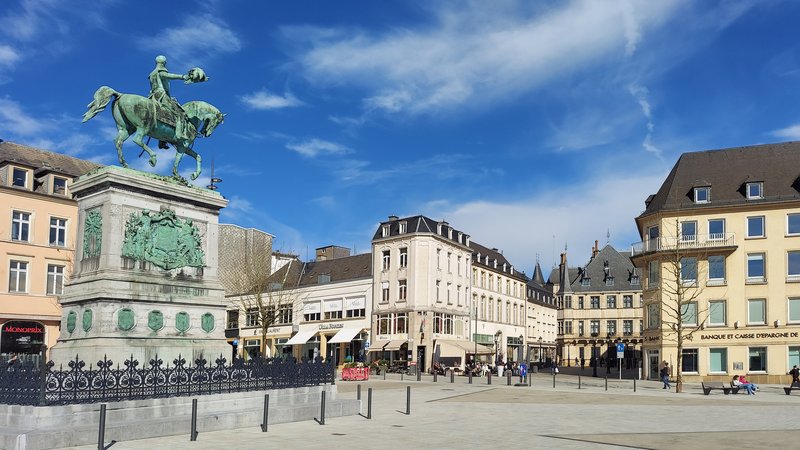
The city's grand civic square, known to locals as the Knuedler, framed by the neoclassical Town Hall and centred on a bronze equestrian statue of Grand Duke William II. A produce market fills it on Wednesday and Saturday mornings — a relaxed first taste of the upper town.
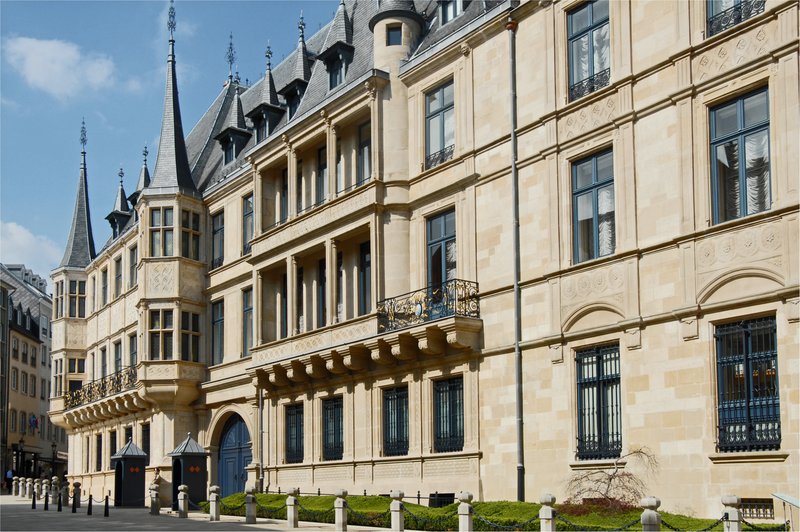
The official town residence of the Grand Duke, a richly ornamented Flemish-Renaissance facade from the 1570s and one of the city's most photographed buildings. A ceremonial sentry stands guard out front; the interior opens to guided tours only in high summer.
A free glass lift that drops 71 metres through the cliff face, linking the upper town near Pescatore park to the Pfaffenthal valley below. The ride and the open viewing platform deliver a thrilling head-on view of the viaduct, the ramparts and the Alzette gorge.
From Hotel: 15 min · 5 min → Chemin de la Corniche
1.Chemin de la Corniche~30 min
A pedestrian promenade laid along the 17th-century ramparts, famously called "the most beautiful balcony in Europe." It hangs above the Alzette with sweeping views down into the Grund, across to Neumünster Abbey and the old Wenzel fortifications — the single best walk in the city.
The honeycomb of underground galleries carved into the Bock promontory where Count Sigfried founded the city in 963. Austrian engineers turned it into kilometres of gun chambers and tunnels — the "Gibraltar of the North" — with loophole views over the valley. The fortress and old town are UNESCO World Heritage.
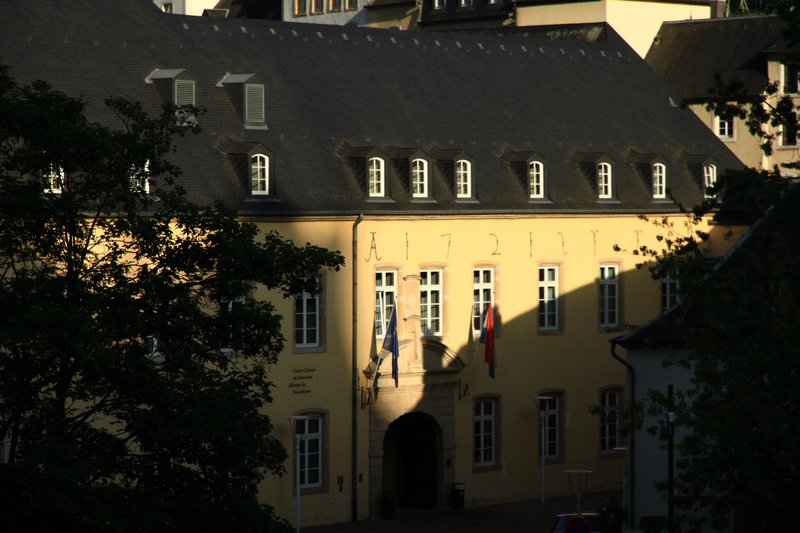
A former Benedictine abbey of 1606 set on the Alzette in the lower town of Grund, now the Neimënster cultural centre. Wander the cloisters and riverside courtyards, look in on the free exhibitions, and take in the abbey against the cliffs and ramparts above — the prettiest corner of the city.
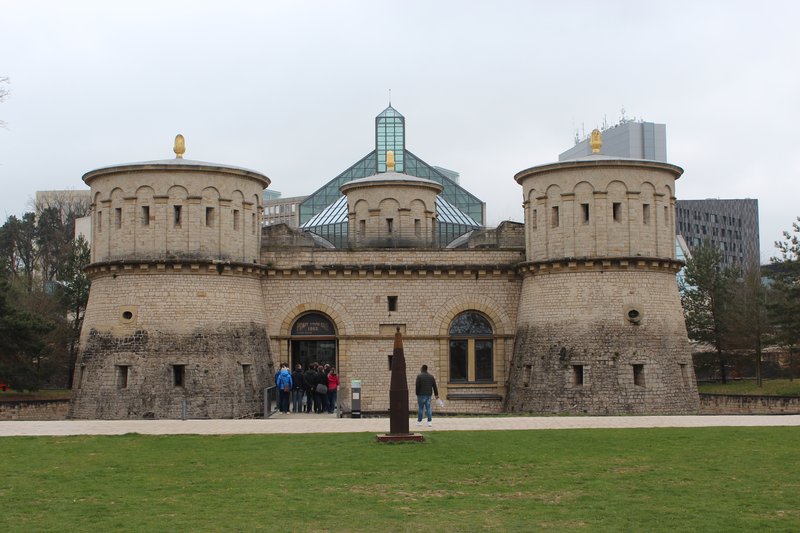
The "Three Acorns" fort of 1733, its trio of round towers restored and standing guard at the edge of the Kirchberg plateau. The ramparts and tunnels are free to roam, and the Musée Dräi Eechelen inside traces the story of the great fortress from 1443 to its dismantling.
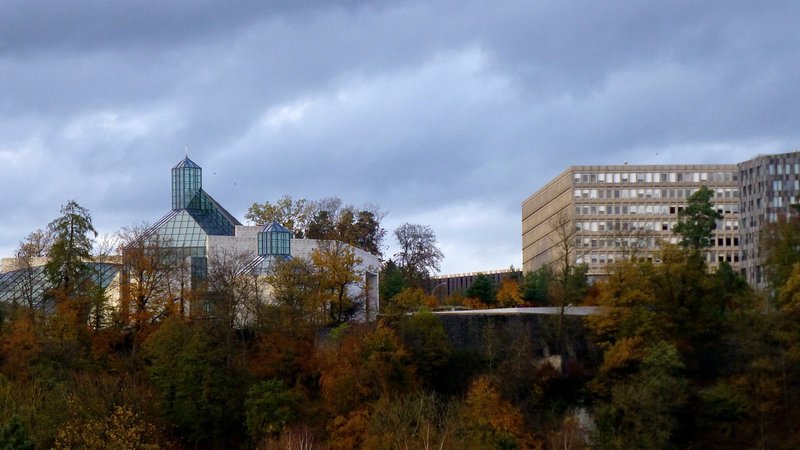
Luxembourg's contemporary art museum, a luminous glass-and-stone pavilion that I. M. Pei built atop the old fort bastions. The rotating exhibitions are strong, but the building itself — all light wells and clean geometry rising from the ramparts — is the real draw.
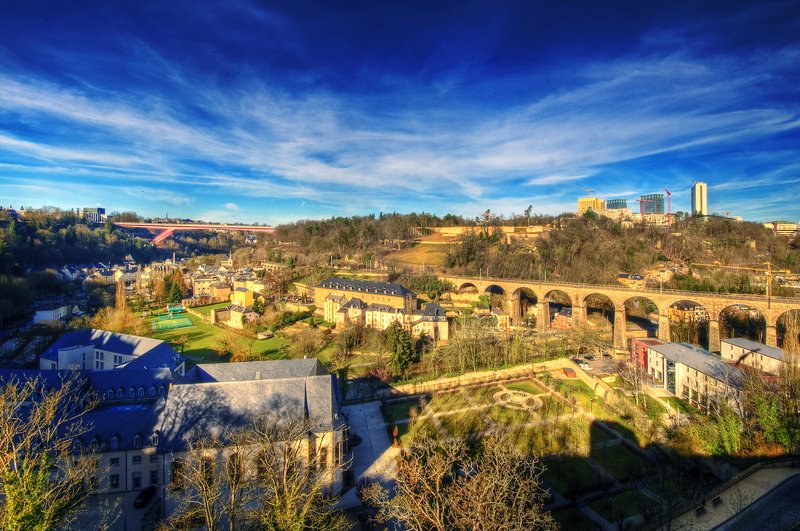
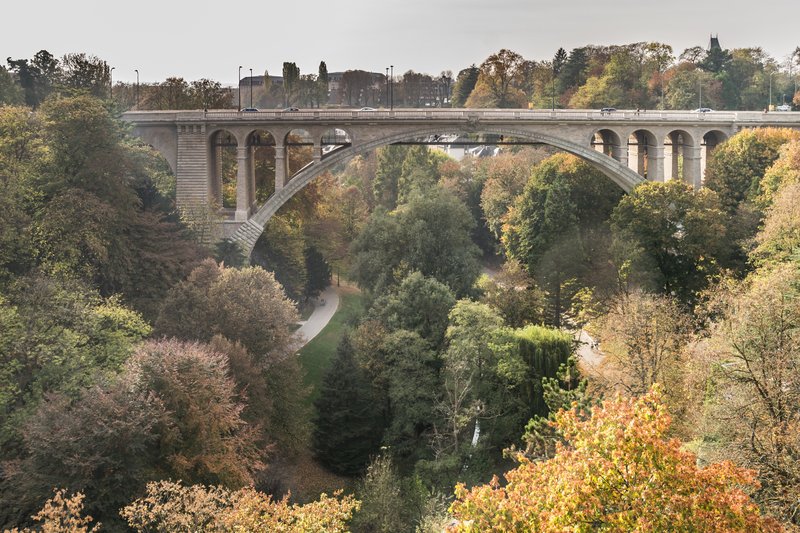
When it opened in 1903 its 84-metre stone arch was the longest in the world. The double-deck bridge carries the tram across the Pétrusse gorge and delivers the single most photographed view in the city — the span of honey-coloured stone framed by the valley below and the Ville Haute rising behind.
The Pétrusse river carved a wooded gorge through the lower city, now a long public park threaded with footpaths under the ramparts. At its heart are the Pétrusse Casemates — 18th-century fortification galleries carved into the cliff, reachable from steps at Place de la Constitution.
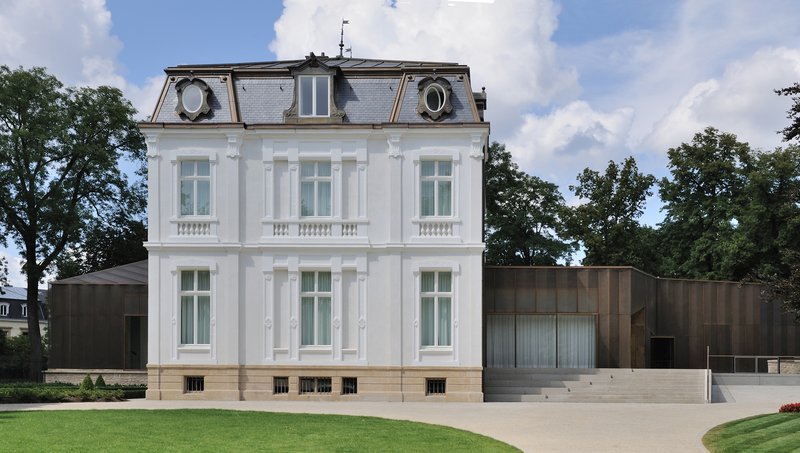
An 1873 Neoclassical villa in the city park that serves as Luxembourg's municipal art museum. Its permanent collection spans 17th-century Dutch and Flemish masters — van de Velde, Teniers, Nason — through 19th-century European painting in elegant period rooms.
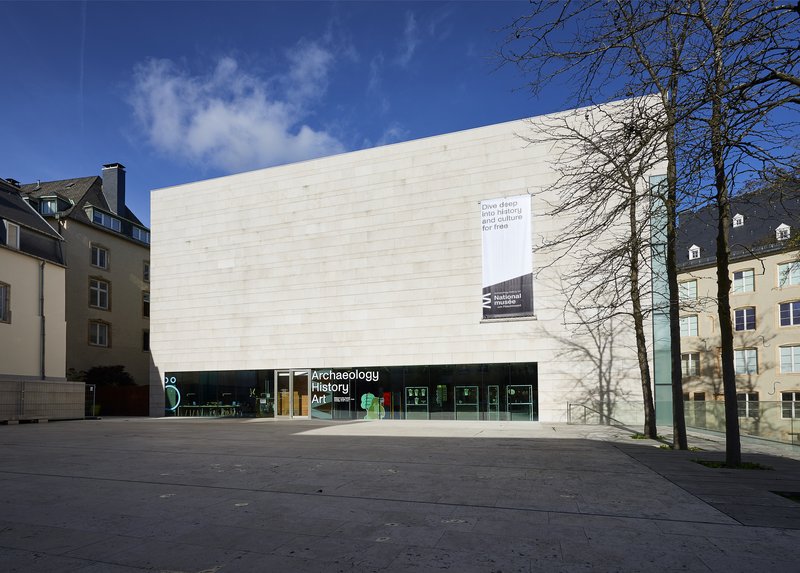
The national museum on the old Fish Market traces Luxembourg from pre-Roman times to the modern era. Standout pieces include a Gallo-Roman mosaic floor, Iron Age goldwork, medieval sculpture, and a collection of 19th-century Luxembourg landscape painting.
A certified local guide leads a two-hour loop through the old town — Place d'Armes, Place Guillaume II, the Grand Ducal Palace and the views from the Chemin de la Corniche, with fortress history along the way.
A two-hour cultural walk from the city centre down into the Grund and the former Neumünster Abbey, with stories of the duchy's founding, the language and the casemates — and a taste of Luxembourgish treats and a drink.
A 90-minute photo walk with a local who knows the best angles — from the Palais Grand-Ducal facade to the Bock Casemates tunnel views — plus tips on the city's bars, cafés and hidden corners.
A 2.5-hour small-group walk through the old town with crémant sparkling wine, white and red tastings at curated stops — the Chemin de la Corniche, the Grund, Place d'Armes and the city's fortification history, paired with local wine culture.
A tip-based English-language walking tour covering Luxembourg's fortress views, the Bock promontory, Grund district and cobblestone old town — accessible to all budgets, with a knowledgeable local guide.
An eco-friendly full-day trip to Vianden by public bus and train — Vianden Castle, the Victor Hugo House, the valley chairlift, and an optional winery visit, with a local guide leading the way.
A 2-hour English-language walking tour through Luxembourg's UNESCO fortress city — the Bock casemates, the Corniche, Place Guillaume II and the Grund — with a passionate local guide and a pay-what-you-wish model.
A 2.5-hour certified walking tour through the grand duchy's capital — Place d'Armes, the palace facade, the Bock and the Grund — with a local guide who brings Luxembourg's multilingual, fortress history to life.
A 2.5-hour cultural walk meeting at the equestrian statue of Guillaume II — covering the city's Moselle heritage, multilingual identity, fortress history and the Grund district with a maximum of 15 participants.
The national dish: smoked pork collar simmered and served with broad beans in a creamy sauce and potatoes. Hearty, rustic and on every traditional menu.
Crisp, spiced potato fritters shredded with onion and parsley, fried to order. A street-food staple of the city's markets and festivals — best eaten hot from the pan.
Foreign number: accepted — it uses the same Uber account and number as the ride app.
Covers the city centre and main residential districts; the most widely used platform in Luxembourg City with a solid selection of local and international restaurants.
Foreign number: accepted — any mobile number that can receive an SMS code works.
Luxembourg-based platform with good coverage of the Kirchberg and Gare districts; tends to feature local restaurants not always listed on the larger international apps.
Germany's oldest city, founded by the Romans. The colossal Porta Nigra gate, the imperial baths, the basilica and the cathedral make a UNESCO-listed core that is an easy direct ride over the border.
An elegant French city of golden Jaumont stone, crowned by the soaring Cathédrale Saint-Étienne and its acres of stained glass, plus the bold Centre Pompidou-Metz. Fast trains run city-centre to city-centre.
A storybook village in the Our valley beneath one of Europe's finest hilltop castles, the restored Château de Vianden. Reached by train to Ettelbruck and a connecting bus through the Ardennes.
A castle town deep in the northern Ardennes, home to the white château that houses Edward Steichen's "The Family of Man" photography exhibition, a UNESCO Memory of the World collection.
Art Nouveau capital of Europe — Grand-Place, Manneken Pis, Musées Royaux des Beaux-Arts, and the Atomium. Direct intercity train via Liège with no changes required.
Luxembourg's secret is its verticality. Almost everything worth seeing sits on the same compact upper plateau, but the magic is in the gorges that fall away on every side — the Pétrusse and the Alzette carving green ravines straight through the middle of a national capital. Spend Day 1 looking down from the ramparts, then Day 2 walking the valleys you were looking at, and the city reassembles itself into three dimensions.
Lean on the fact that every bus, tram and train in the country is free to ride. There is no ticket to fumble and no fare to calculate — take the tram up to Kirchberg, ride the funicular and the glass lift between the upper town and the valley floor, and let the elevators do the climbing your legs would otherwise dread. It quietly turns a hilly city into an easy one.