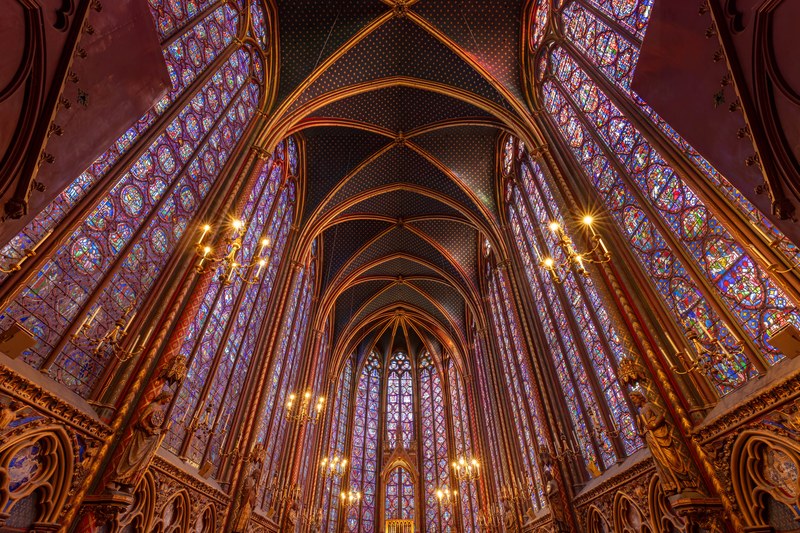
A 13th-century royal chapel whose upper level is 15 stained-glass walls — the most intact Gothic glass in Europe, built by Louis IX to house the Crown of Thorns. Go on a bright morning when the light fires the windows.
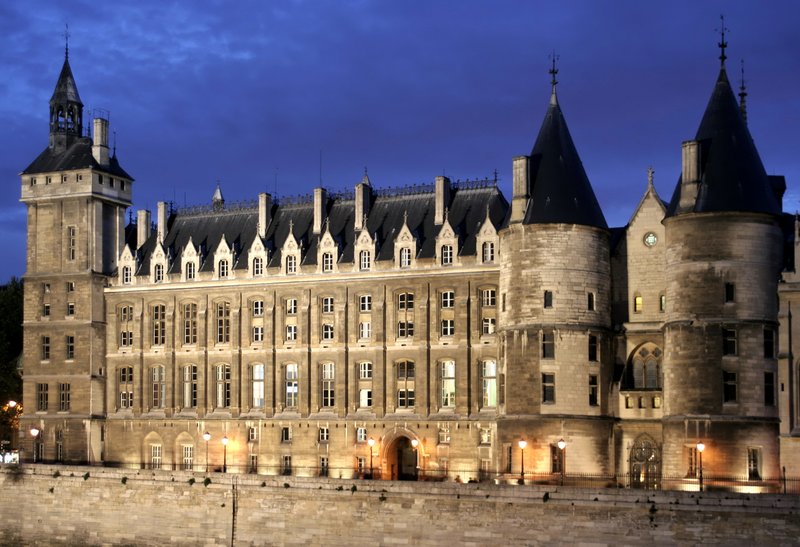
The medieval royal palace turned Revolutionary prison — the Hall of the Men-at-Arms is the largest surviving Gothic secular hall in Europe, and Marie-Antoinette's reconstructed cell marks where she waited for the guillotine.
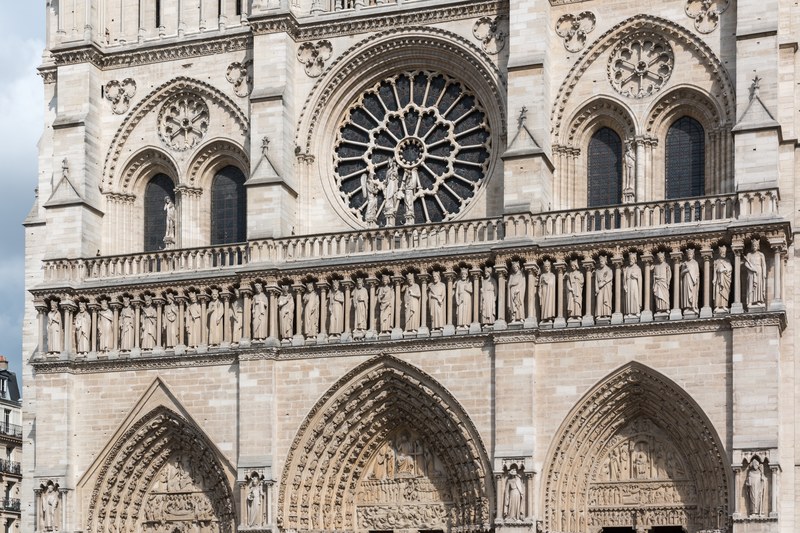
The cathedral France measures itself from — the bronze marker outside the west front is kilometre zero for every road in the country. Begun 1163, gutted by fire and reopened after a five-year restoration that returned the vaults and the interior stone to a pale gold nobody alive had seen. Entry is free.
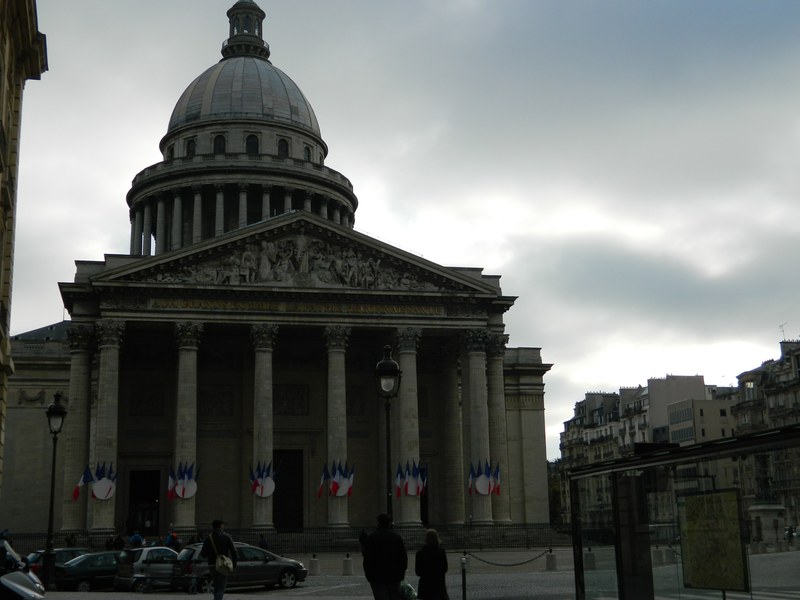
Begun as a church for Sainte Geneviève and taken over by the Revolution as the resting place of the people France decides to honour — Voltaire, Rousseau, Hugo, Zola, Marie Curie, Josephine Baker. Foucault hung his pendulum under the dome in 1851 to prove the earth turns; the replacement still swings. The colonnade above gives one of the best rooftop views in the city.
7 min · 3 min → Rue Mouffetard · food street stroll
5.Rue Mouffetard · food street stroll~1 hr 15 min
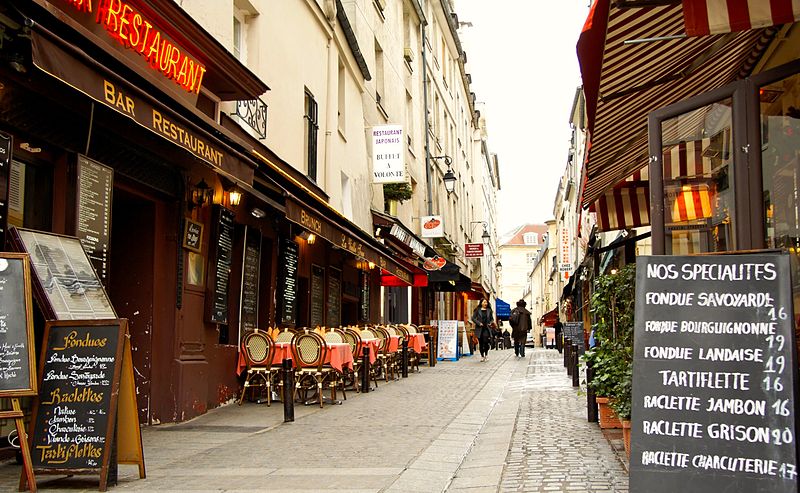
A pedestrianised Roman road turned market hill — open-front fromageries, boulangeries, rôtisseries, a daily produce market at the bottom, and terrace cafés where locals eat dinner. Walk top to bottom, pastry in hand.
From Hotel: 25 min · 9 min → Les Invalides & Napoleon's Tomb
1.Les Invalides & Napoleon's Tomb~1 hr 30 min
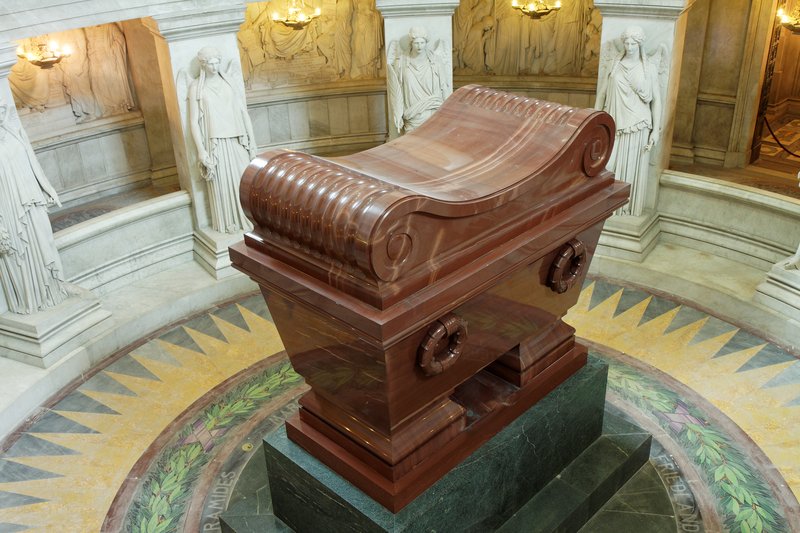
Louis XIV built this as a hospital for wounded soldiers in 1670 and crowned it with a gilded dome that is still the tallest in Paris. Under it, Napoleon lies in six nested coffins inside a single block of red quartzite, sunk into an open crypt so that anyone looking at him has to bow. The Musée de l'Armée around it runs from medieval armour to 1945.
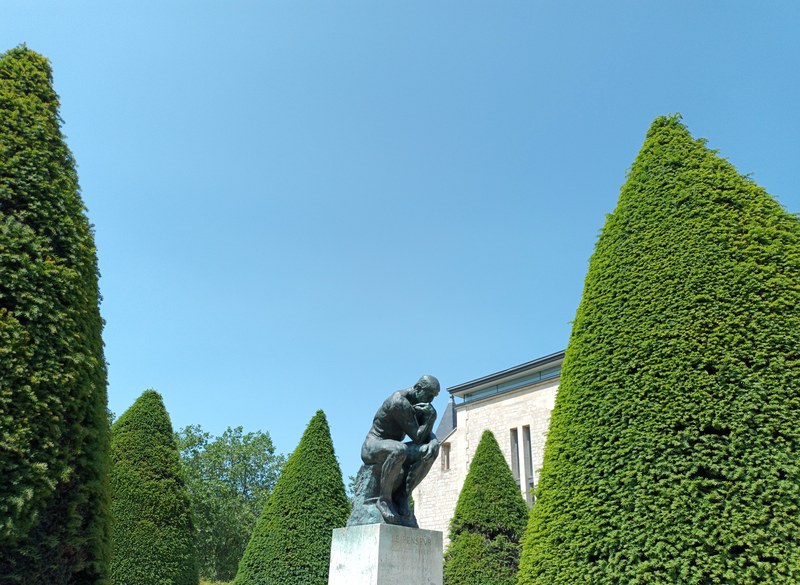
Rodin rented rooms in the Hôtel Biron in 1908 and left the state everything he owned on condition it became his museum. The bronzes stand outdoors in a three-acre garden — The Thinker, The Gates of Hell, The Burghers of Calais — with Camille Claudel's work and Rodin's own Van Gogh and Monet inside.
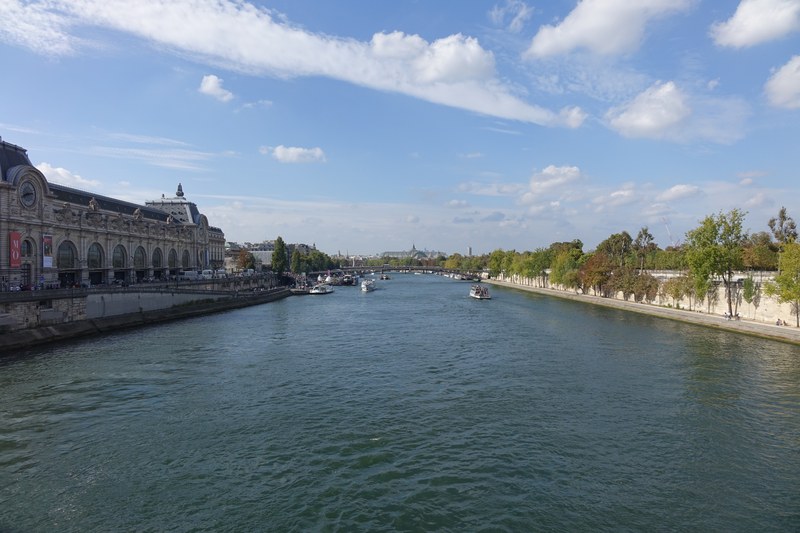
A 1900 railway station saved from demolition and turned into the greatest Impressionist collection anywhere — Monet, Renoir, Degas, Manet's Déjeuner sur l'herbe, Van Gogh's self-portrait, Whistler's mother. Go straight to the fifth floor first; that is where the Impressionists hang, and where the giant station clock looks out over the Seine.
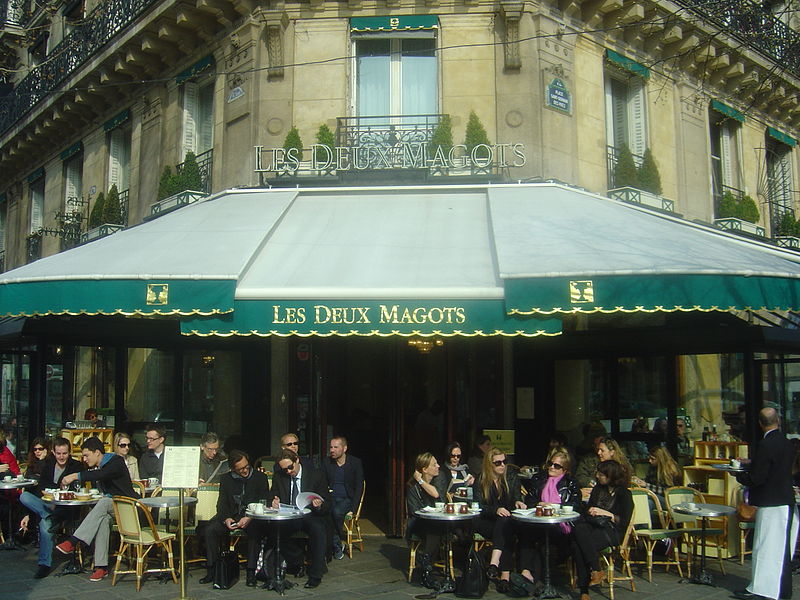
The literary café of Saint-Germain — Sartre and de Beauvoir's daily office, Hemingway's watering hole, Picasso's meeting spot. Order a café crème and the house hot chocolate, poured thick from a silver jug, from the terrace facing the oldest church in Paris.
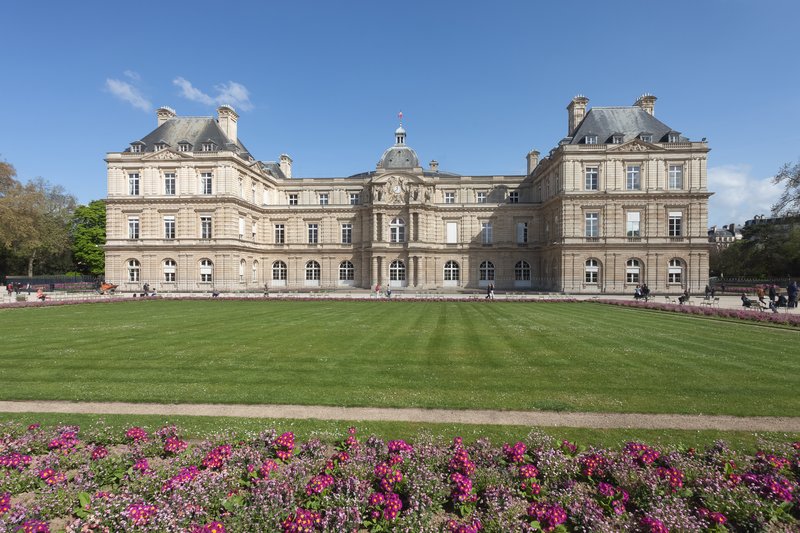
Marie de' Medici built the palace in 1612 because she was homesick for Florence, and the garden still splits the difference between French geometry and Italian terrace. The French Senate sits in the palace; everyone else gets 60 acres of gravel walks, the Medici Fountain in its plane-tree tunnel, and the octagonal basin where children have sailed rented wooden boats since the 1920s.
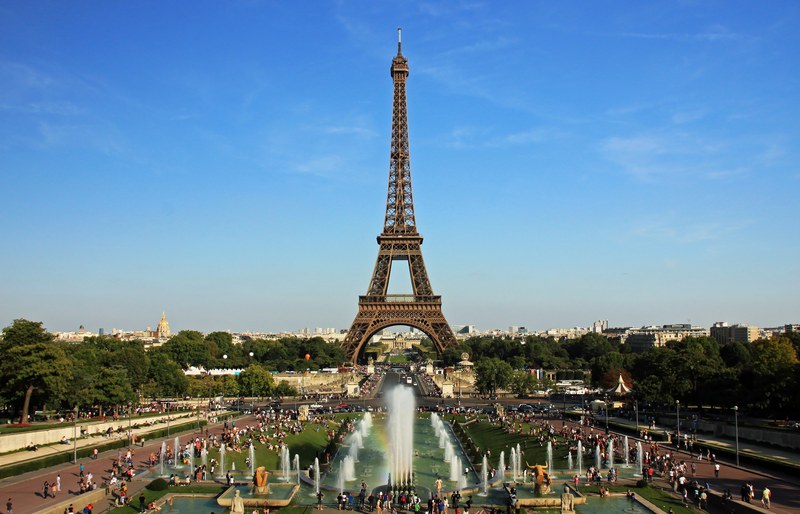
Gustave Eiffel's 1889 iron tower — the World's Fair showpiece Paris refused to take down. Still the highest observation deck in the city and the clearest way to read its geography: Seine, La Défense, Montmartre, Montparnasse. Book the summit lift; the second floor is the better view but the top is the reason people queue.
The 7th-arrondissement market street Rick Steves built his Paris chapter around — pedestrianised, two blocks, lined with family-run fromageries, boulangeries, and rôtisseries that have supplied the quartier for generations. Lunch here rather than at the tower.
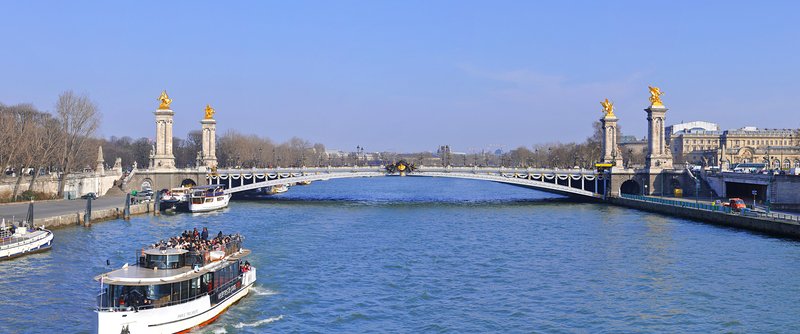
Built for the 1900 World's Fair and named for a Russian tsar, this is the most extravagant bridge in Paris — gilded Fames on four granite pylons, art-nouveau lamps, cherubs and nymphs the whole way across. A single low steel arch was engineered deliberately so it would not block the view of the Invalides dome behind it. Walk it at dusk on the way back to the hotel.
8 min · 3 min → Seine River Cruise · Bateaux-Mouches
4.Seine River Cruise · Bateaux-Mouches~1 hr 10 min
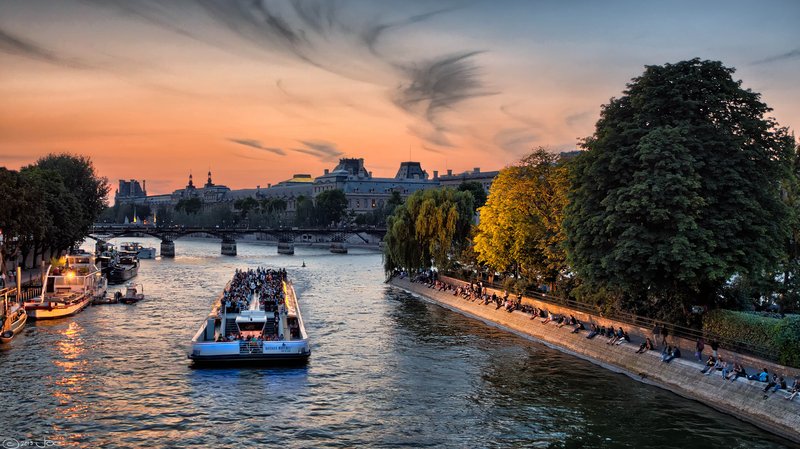
The stretch of river between the Pont d'Iéna and the Île Saint-Louis is a UNESCO World Heritage Site, and an hour on the water is the only way to see all of it in sequence — Orsay, the Louvre, the Conciergerie, Notre-Dame, and back under the Pont Alexandre III. Book a late-afternoon departure: the monuments light up and the Eiffel Tower sparkles on the hour.
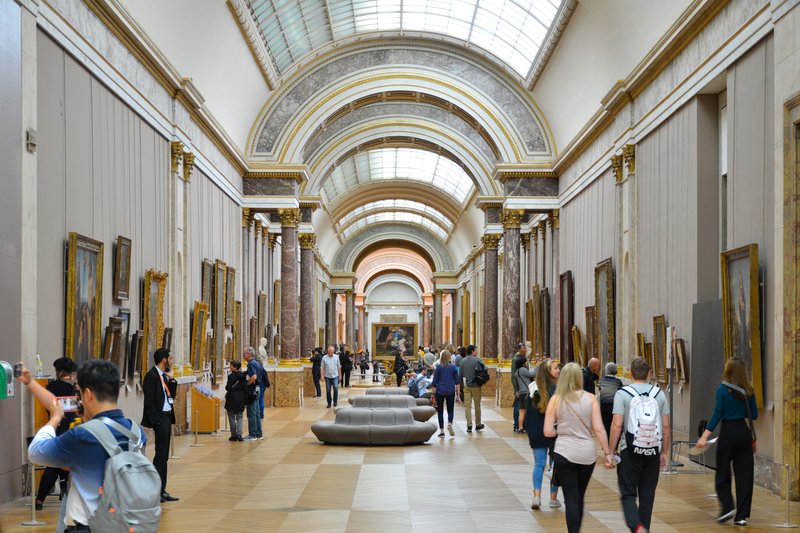
The most-visited museum on earth, in a palace that was a fortress before it was a royal residence. 35,000 works on display: the Mona Lisa, the Venus de Milo, the Winged Victory of Samothrace at the top of the Daru staircase, and the Grande Galerie of Italian painting. Pick two wings and accept you will not see the rest.
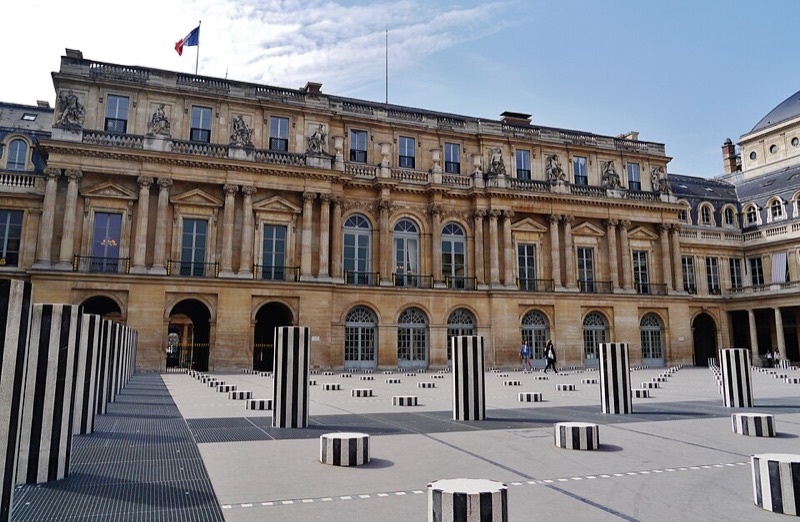
Richelieu's 1633 palace, now enclosing the city's finest enclosed garden. Arcaded galleries on three sides house antique dealers, jewellers, and cafés. In the Cour d'Honneur: Daniel Buren's 1986 Les Deux Plateaux — 260 striped columns of varying heights set in granite and water channels.
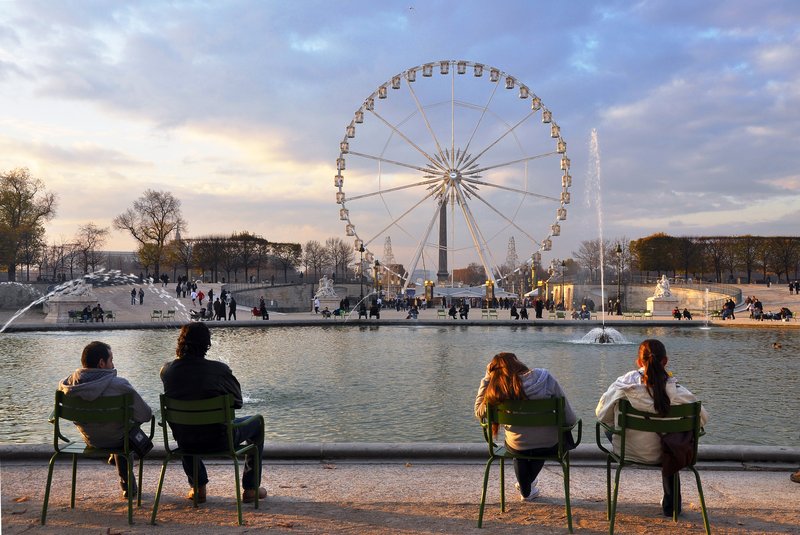
André Le Nôtre laid this out in 1664 before he was sent to Versailles, and the logic is the same: gravel allées, clipped hedges, and two round basins on a dead-straight axis running from the Louvre to the Concorde obelisk. The green metal chairs are free and movable — Parisians drag them to the water and stay for an hour.
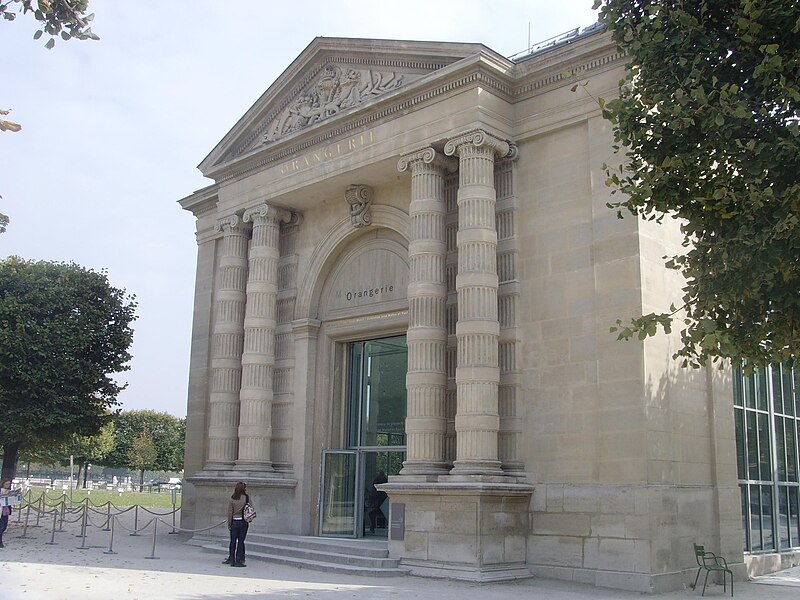
Eight wall-sized Monet Water Lilies canvases in two oval rooms the painter designed — lit from above, no right angles. One of the few museum experiences in Paris that earns the word immersive. Downstairs, the Walter-Guillaume collection holds Cézanne, Renoir, Modigliani, and Soutine.
From Hotel: 16 min · 5 min → Arc de Triomphe · rooftop
1.Arc de Triomphe · rooftop~1 hr
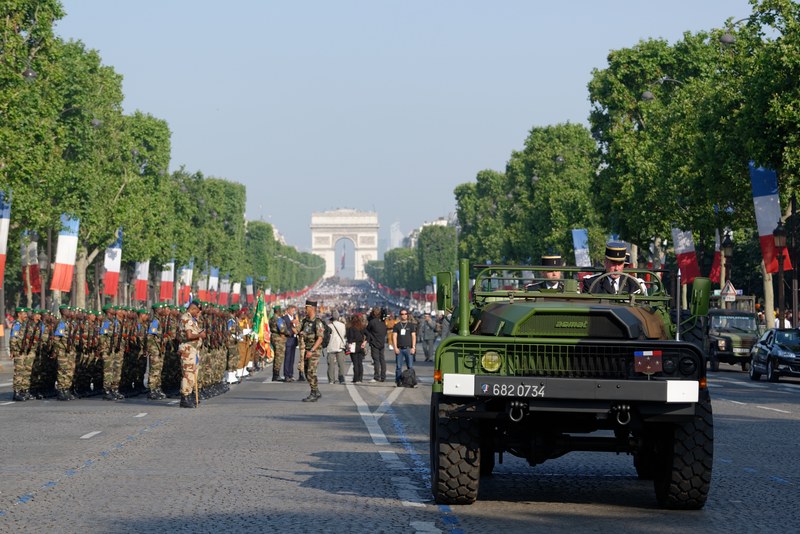
Napoleon ordered it in 1806; it took 30 years to build. The 284-step climb ends on the best axial view in Paris — 12 avenues radiating out, Champs-Élysées to the Louvre one way, La Défense the other. The Tomb of the Unknown Soldier below has had a flame relit every evening at 6:30pm since 1923.
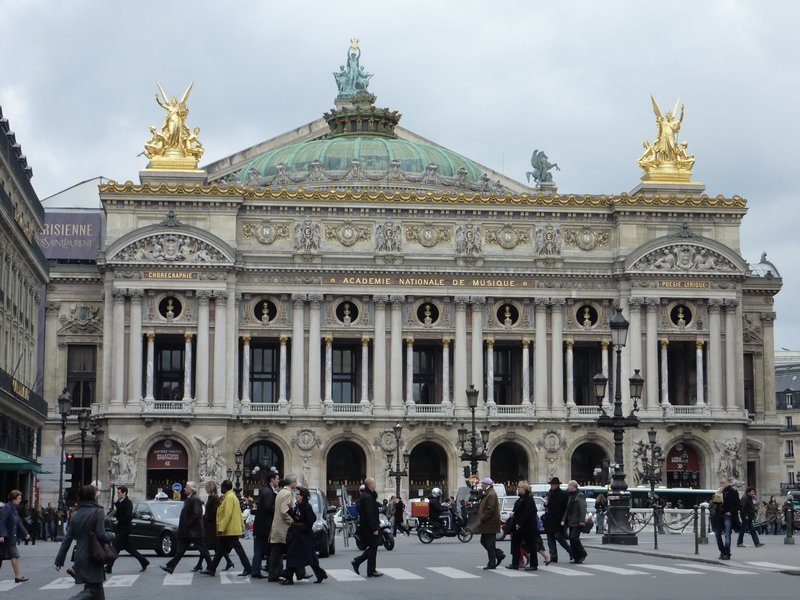
Garnier's 1875 opera house — the building that defined Second Empire excess. Grand Staircase in white-pink-green marble, a cathedral-scale Grand Foyer, and Chagall's 1964 ceiling floating over the red-and-gold auditorium.
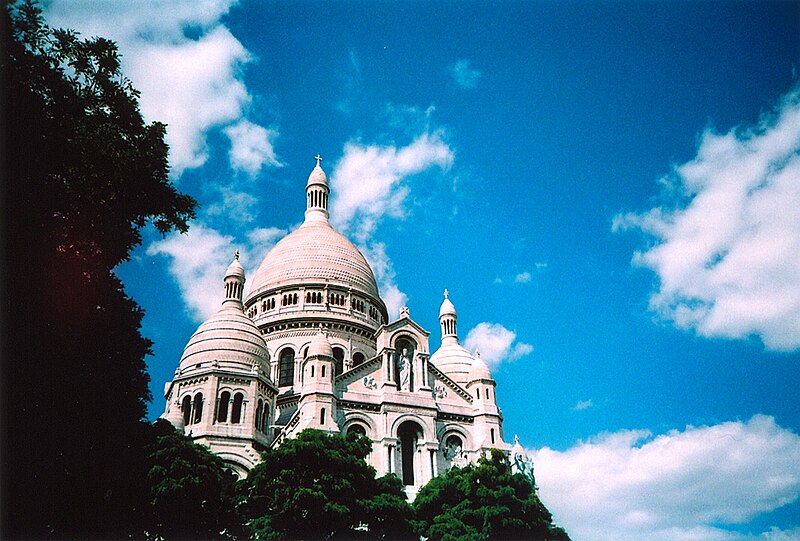
The village Paris absorbed — winding lanes, the Place du Tertre painters' square, and the white travertine Basilique du Sacré-Cœur crowning the hill. Climb for the broadest free view over the whole city; the funicular takes the sting out of the steps and accepts a standard metro ticket.
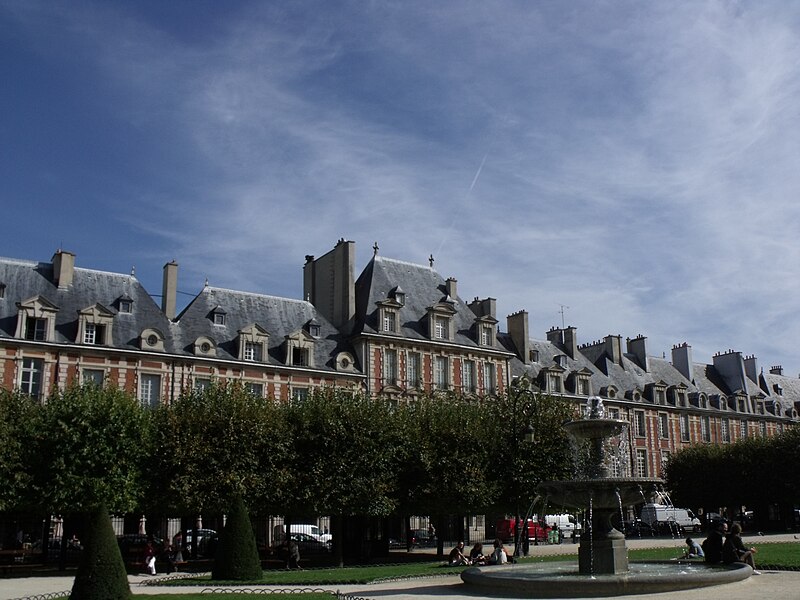
The quarter Haussmann forgot — 17th-century hôtels particuliers, medieval lanes, and hidden courtyards still intact. Place des Vosges, Henri IV's 1612 pink-brick arcaded square, anchors a self-guided wander through Rue des Rosiers and the Village Saint-Paul. Victor Hugo's apartment at no. 6 is free to enter.
8:22am Saint-Lazare → 8:57am Versailles Rive Droite
8:52am Saint-Lazare → 9:27am Versailles Rive Droite
9:22am Saint-Lazare → 9:57am Versailles Rive Droite
ARRIVE Versailles Rive Droite: 18 min · 6 min → Château de Versailles
1.Château de Versailles~2 hr 30 min
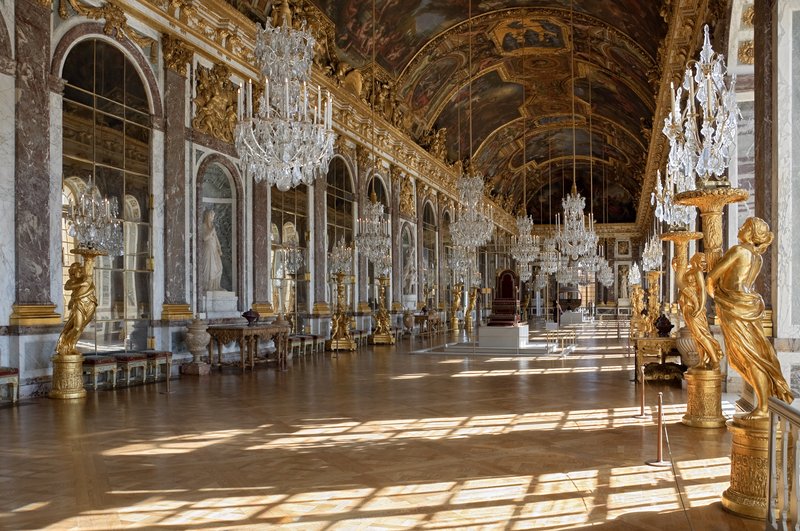
Louis XIV moved the French court out of Paris in 1682 and built the machine that ran it — 2,300 rooms designed so that watching the king get dressed was a political privilege. The State Apartments lead to the Hall of Mirrors: 73 metres, 357 mirrors, 17 windows onto the garden, and the room where the treaty ending the First World War was signed in 1919. UNESCO World Heritage Site.
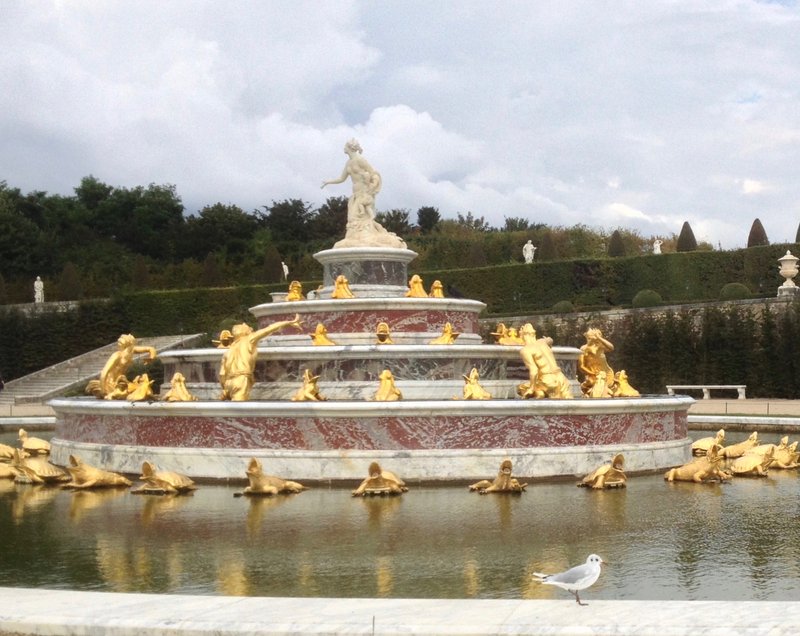
André Le Nôtre spent 40 years bending 800 hectares into straight lines. The Latona and Apollo fountains step down the central axis to the Grand Canal, where Louis XIV kept a fleet of gondolas; the bosquets on either side are outdoor rooms of hedge and statuary. On Musical Fountains days the whole waterworks runs to Baroque music, as it was designed to.
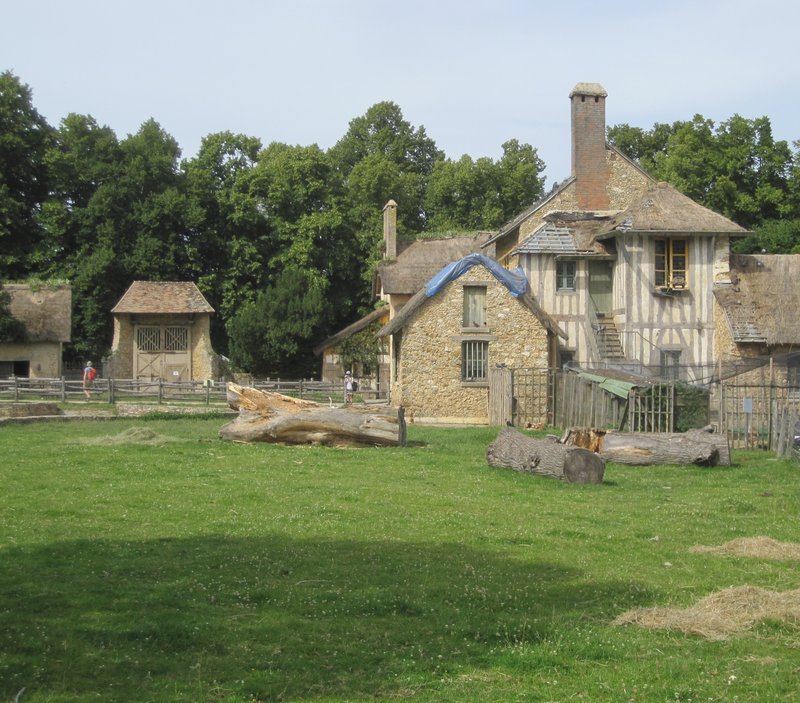
The far end of the park, where the court rules did not apply. Louis XIV's pink-marble Grand Trianon was where he escaped his own palace; Marie-Antoinette was given the neighbouring Petit Trianon and built the Hameau de la Reine behind it — a working farm hamlet of thatched cottages, a dairy, and a mill, where she staged the simple life. The walk out across the park takes 25 minutes.
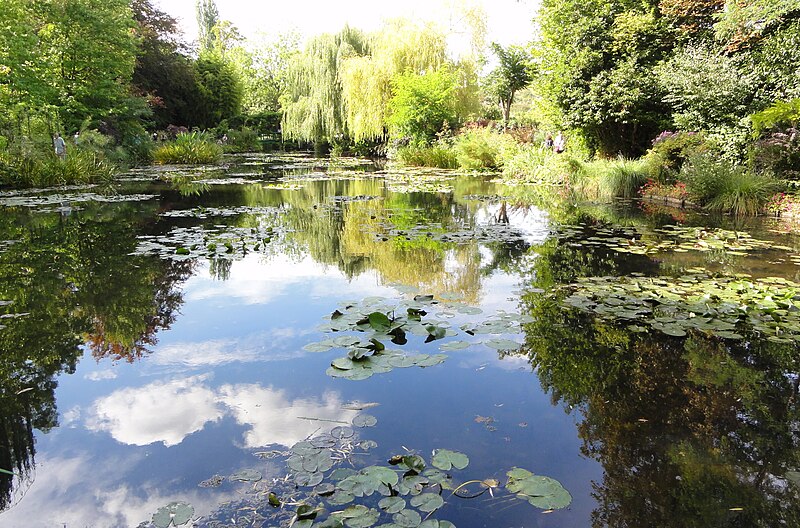
Monet bought this house in 1883 and spent 43 years planting the garden that became his greatest painting — the lily pond, the Japanese bridge, and the Clos Normand of irises and roses in his exact colour logic. Having seen the Water Lilies at the Orangerie and the Orsay canvases earlier in the week, this is where they were made. Closed in winter.
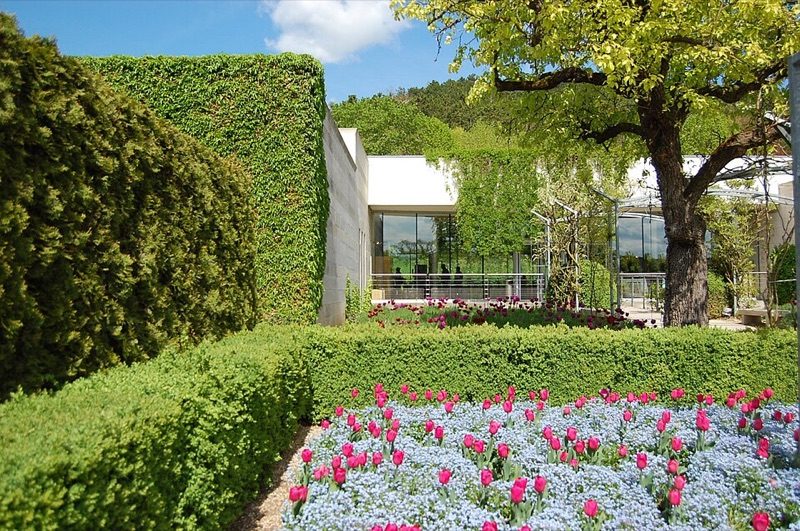
The village's own Impressionism museum, a few doors from Monet's gate — rotating exhibitions on the movement and the Giverny art colony, with a garden of its own designed in drifts of single-colour planting.
3.Giverny Village & Église Sainte-Radegonde~45 min
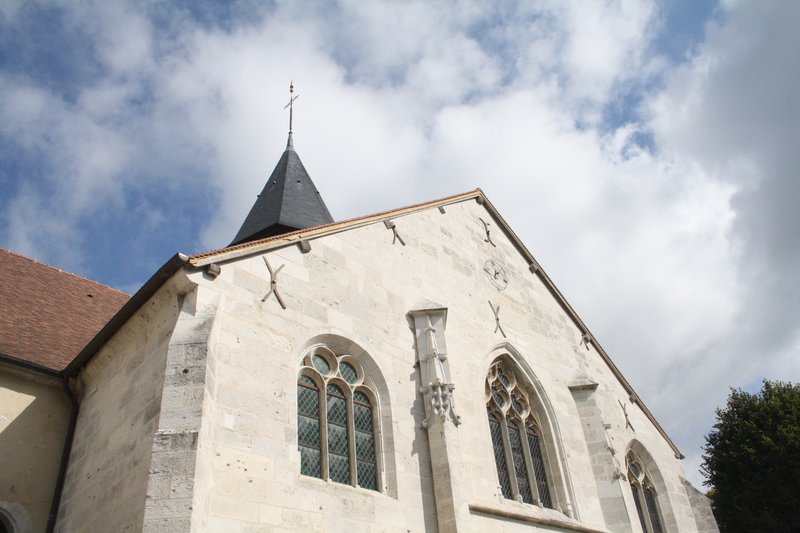
The single lane of stone-and-flower houses that the Giverny art colony settled in the 1880s. At the top sits the 11th-century church of Sainte-Radegonde and the village cemetery, where Monet and his family are buried.
Île de la Cité walk covering the stained-glass upper chapel of Sainte-Chapelle and the Conciergerie, Marie-Antoinette's prison, with pre-reserved skip-the-line entry.
Round-trip small-group half-day to Giverny — Monet's house and the Flower and Water gardens with the Japanese bridge that inspired the Water Lilies — with transport from central Paris.
Full-day small-group trip to the Champagne region — the coronation cathedral of Reims plus cellar visits and six tastings at a major Champagne house and a family grower, round-trip from Paris.
Coach half-day from Paris to Giverny with reserved entry to Monet's house and gardens, an alternative departure for the day-trip if the small-group slot is full.
Round-trip guided half-day to Giverny — Monet's house and the Flower and Japanese water-lily gardens — with an English-speaking guide and transport from central Paris.
Reserved-access guided sightseeing tour of the Eiffel Tower — the story of the iron tower told by a host, then up to the 2nd floor with the option to continue to the summit by lift.
Guided walk through the 19th-century covered passages of the Grands Boulevards — the glass-roofed arcades of shops, cafés, and galleries that pre-date the department store.
Full-day coach trip from Paris to the island abbey of Mont Saint-Michel — the medieval Benedictine monastery rising from the Normandy tidal flats — with a guided visit and free time in the village.
Full-day guided trip to the Normandy landing beaches — Omaha Beach, the American Cemetery at Colleville, and Pointe du Hoc — with a historian guide and lunch, round-trip from Paris.
Round-trip small-group half-day to Giverny — Monet's home and the Flower and Water gardens with the Japanese bridge — with a guide and transport from central Paris.
Guided walking tour through the historic heart of Paris — the Île de la Cité, the riverside quays, and the Right Bank landmarks — led by a local guide.
Guided climb of the Eiffel Tower by stairs to the 2nd floor with a host, with the option to continue to the summit by lift for the panoramic view over the city and the Seine.
Two almond-meringue shells sandwiching flavoured ganache or buttercream. Smooth domed shell with a "foot" — the Parisian version every pastry chef copies worldwide.
Grilled ham-and-gruyère sandwich topped with mornay sauce and a sunny-side-up egg. The "madame" is the egg — the "monsieur" drops it. A Parisian café classic since around 1910.
Wheel-shaped choux ring filled with hazelnut praline cream, dusted with icing sugar, topped with almonds. Created in 1910 to mark the Paris–Brest–Paris bicycle race — the wheel shape is deliberate.
Slow-caramelised onion soup in beef stock, topped with country bread and molten Gruyère browned into a lid. A Les Halles standard that became a brasserie institution.
Foreign number: accepted. — it is the same Uber account as the ride app, so a foreign number already verified there signs straight in.
The widest roster in Paris, from the 8th's bistros to late-night kebabs, with live courier tracking; fees stack on small orders and hotel deliveries are handed over at the front desk, so add the room number to the note.
Foreign number: not required. — sign-up runs on Google, Apple, Facebook or email with no phone field at all, so no verification code has to arrive.
Deliveroo's strongest city after London — dense coverage of the centre with the better restaurants of the 8th and 17th on it, grocery runs from Carrefour and Monoprix, and a Plus subscription that waives delivery fees; couriers rarely cross the Périphérique.
Foreign number: accepted. — the verification code arrives by SMS on a foreign carrier, and an existing Uber account from home signs straight in.
The biggest fleet in Paris and the one with a car on the Champs-Élysées side in two or three minutes at most hours; prices jump at the evening peak and on strike days, and a licensed G7 taxi from a rank is often no dearer then. Uber Comfort is worth the small premium on a long cross-town ride.
Foreign number: accepted. — the SMS code reaches a foreign carrier with roaming on; WhatsApp verification is offered if it stalls.
Usually a few euros cheaper than Uber for the same ride across central Paris and worth a side-by-side check before booking; the fleet is smaller, so waits stretch past ten minutes in the outer arrondissements and late at night.
Foreign number: accepted. — the SMS code arrives on a foreign number with roaming on, and sign-in by Apple or Google skips it.
Books licensed Paris taxis rather than private-hire cars, so it can use the bus lanes and the city's fixed long-distance fares; the app is clunkier than Uber, but at rush hour a taxi in the bus lane beats a VTC stuck on the Périphérique.
A royal château with 1,500 rooms spanning every French style — François I Renaissance to Napoleon III Empire — set at the edge of a great forest. Transilien R trains depart Gare de Lyon direct to Fontainebleau-Avon.
The cathedral where 25 French kings were crowned, the Palais du Tau beside it, and miles of Gallo-Roman chalk cellars where Champagne is aged — Taittinger and Veuve Clicquot both run cellar visits with a tasting. Direct TGV inOui.
Notre-Dame d'Amiens — the largest Gothic cathedral in France, twice the volume of Notre-Dame de Paris, with the original polychrome interior intact. Direct TGV, Gare du Nord.
The benchmark High Gothic cathedral, completed 1220 and largely untouched since — 176 medieval stained-glass panels in the famous "Chartres blue," a labyrinth set into the nave floor, and two mismatched spires. UNESCO World Heritage Site. Direct TER trains.
Normandy's medieval capital — Rouen Cathedral is the Gothic façade Monet painted 30 times. The half-timbered lanes around the Gros-Horloge are the best-preserved in northern France, and Place du Vieux-Marché marks where Joan of Arc was burned in 1431.
The Franco-German capital of Alsace — Petite France's canals and timbered winemakers' houses are a UNESCO quarter. The pink-sandstone cathedral spire was Europe's tallest until 1874. Compact, walkable, lunch in a winstub.
France's second city and gastronomic capital — Vieux Lyon's Renaissance traboules, the hilltop basilica of Fourvière with Roman-amphitheatre remains, and the silk-weavers' Croix-Rousse. A bouchon lunch is as non-negotiable as any monument.
A Relic Pricier Than Its Chapel, and a Lake That's Really There
Sainte-Chapelle was built to be a jewel box, but the treasure inside it was worth vastly more than the box itself. King Louis IX bought what he believed was Christ's Crown of Thorns from Baldwin II, the cash-strapped Latin emperor of Constantinople, who was pawning off Byzantine relics to pay his own creditors. The relic alone cost several times more than the entire chapel built to display it — the delicate stained-glass masterpiece you're standing in was, financially speaking, just the frame.
The underground lake beneath Palais Garnier isn't a novelist's invention — it's a real cistern, built because the site's groundwater kept flooding the foundation during construction and engineers needed somewhere to redirect it. Crime reporter Gaston Leroux saw it and turned it into the phantom's lair for his novel decades later, but the water tank never stopped serving its actual purpose: Paris firefighters still use it today to train for swimming in total darkness.