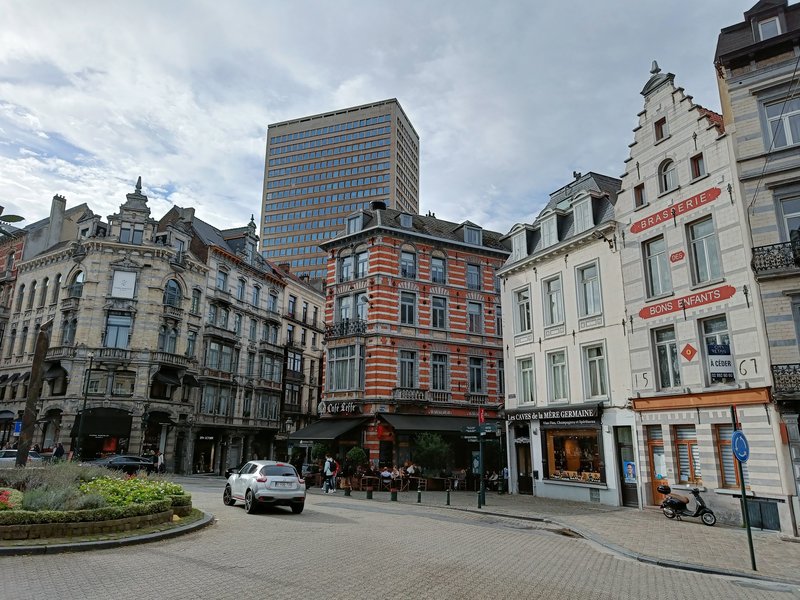
The elegant hill quarter of the upper town, centered on the Grand Sablon square and the flamboyant Gothic Church of Our Lady of Victories. This is the chocolate heart of Brussels — Pierre Marcolini, Neuhaus and Wittamer all keep flagship shops here, and a weekend antiques market fills the square.
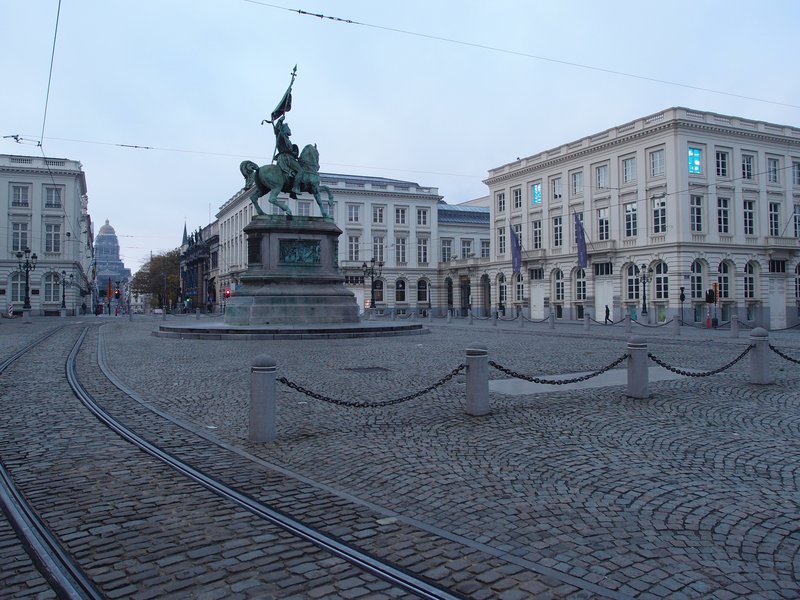
Neoclassical square laid out between 1775 and 1782 directly atop the Coudenberg Palace you just explored underground. At the centre stands an equestrian statue of Godfrey of Bouillon; the Musical Instruments Museum and Magritte Museum face each other across the square's flanks.
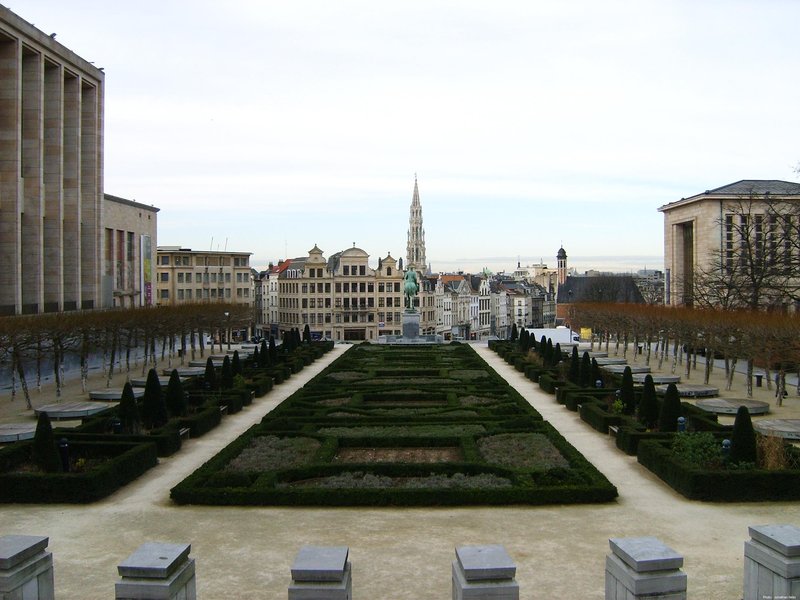
A geometric formal garden stepping down between the royal quarter and the old town, framed by the Royal Library and the National Archives. From the upper terrace the Town Hall spire lines up perfectly over the flowerbeds — the classic Brussels postcard view, especially at sunset.
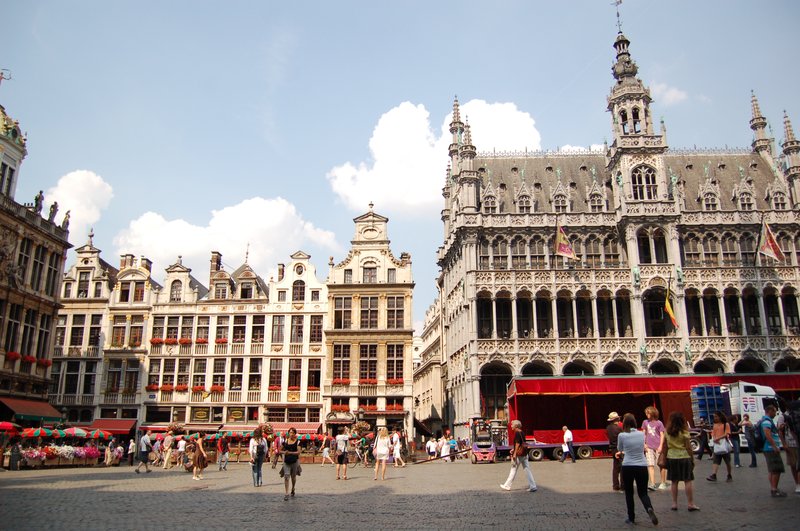
The central square of Brussels and a UNESCO World Heritage Site, ringed by the Gothic Town Hall, the King's House and gilded baroque guildhalls. Victor Hugo called it the most beautiful square in Europe — come early for soft light on the facades, and again after dark when they are lit.
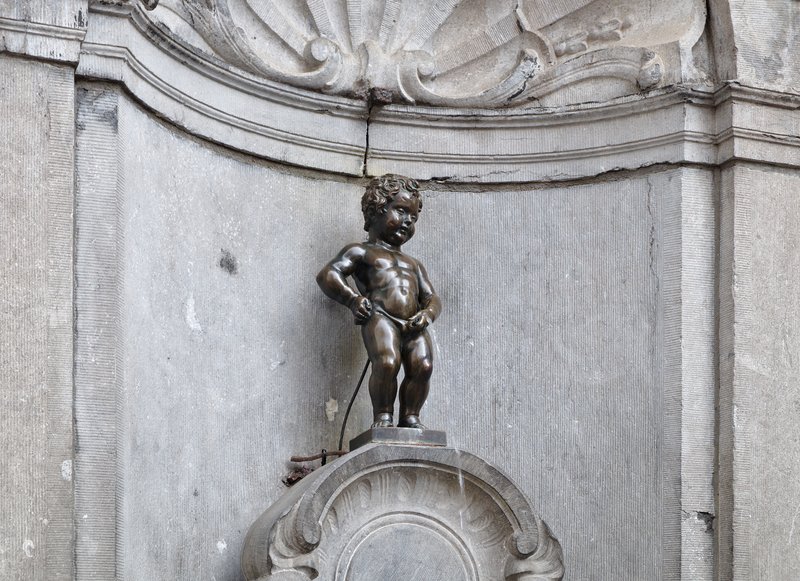
A 55 cm bronze fountain statue of a boy urinating, cast in 1619 and the irreverent mascot of Brussels. He owns a wardrobe of more than a thousand costumes and is dressed several times a week — checking what he is wearing is half the fun of the visit.
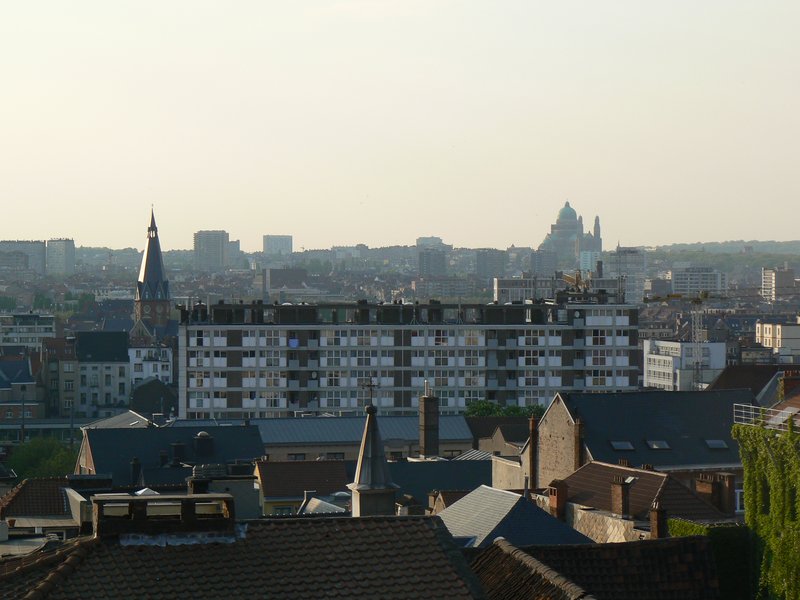
The esplanade beside the colossal Palace of Justice offers the best free panorama in Brussels — the whole lower town spreads out below, with the Atomium and Koekelberg basilica on the horizon. A glass elevator drops from the square into the Marolles, the city's old working-class quarter.
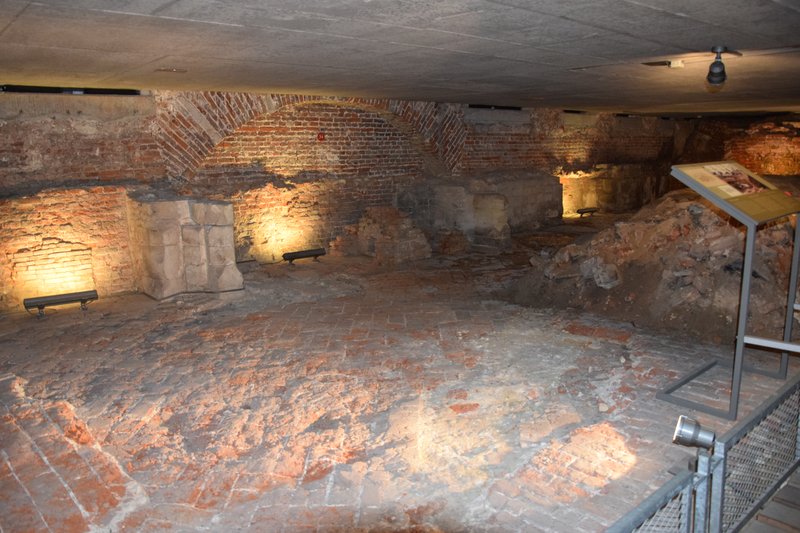
Beneath the Place Royale lies the buried palace of Charles V — streets, cellars and the great Aula Magna hall of one of Europe's grandest courts, destroyed by fire in 1731 and rediscovered by archaeologists. You wander an entire underground city block, then surface through the BELvue museum.
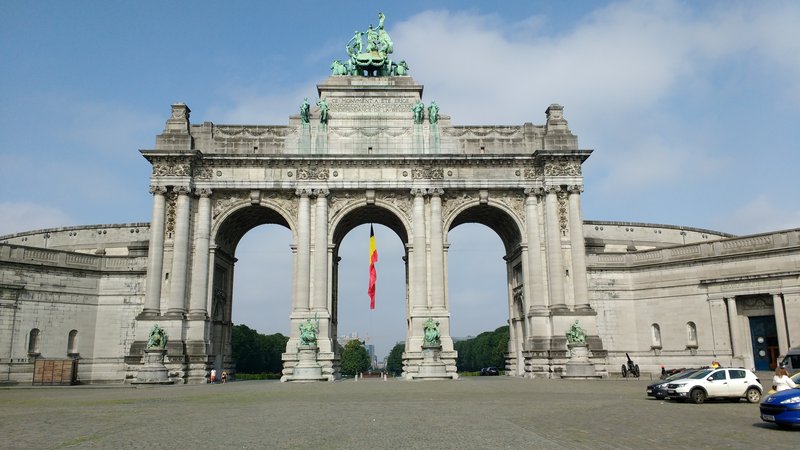
A grand French-style park laid out for the fiftieth anniversary of Belgian independence, crowned by a monumental triple triumphal arch topped with a bronze quadriga. The lawns and fountains make a natural picnic break at the edge of the European Quarter.
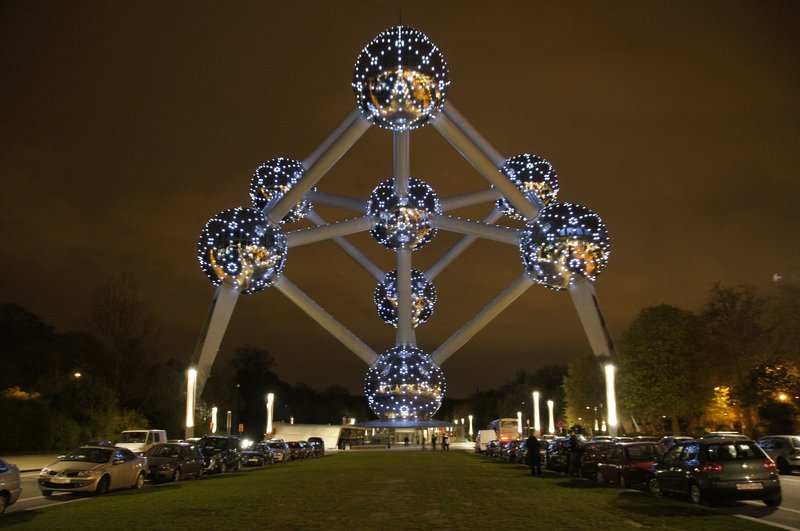
A 102-meter iron crystal magnified 165 billion times, built for the 1958 World's Fair and never taken down. Escalators and a lightning-fast elevator link the nine spheres — exhibitions inside, and from the top sphere a 360° panorama across Brussels and the green royal estate of Laeken.
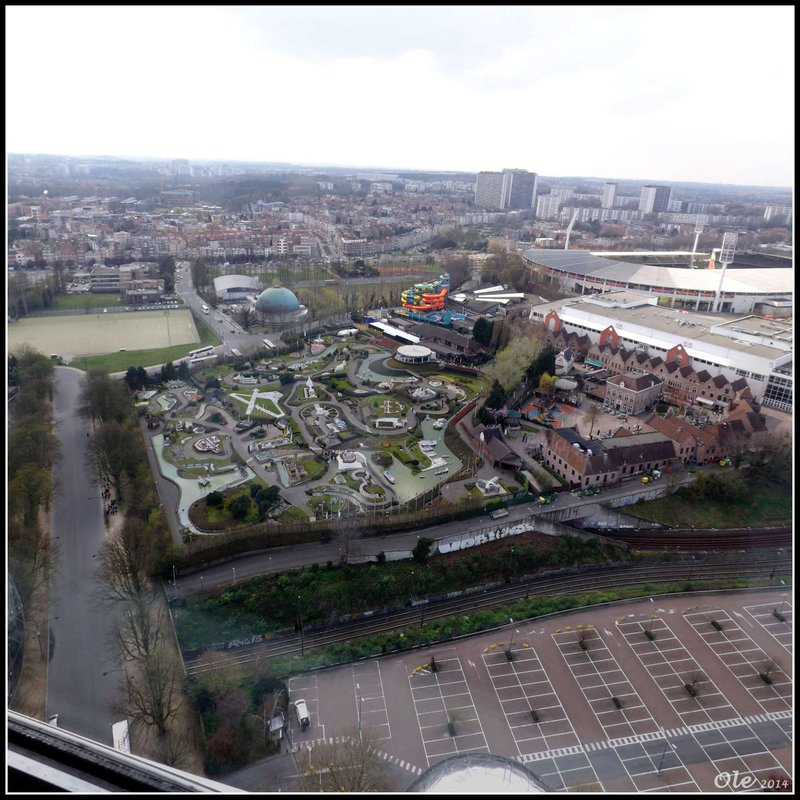
All of Europe at your feet: 350 hand-built 1:25 scale models of the continent's landmarks, from Big Ben to the Acropolis, set in a garden at the foot of the Atomium. Vesuvius erupts, the Berlin Wall falls, and the gondolas of Venice actually float — kitsch done with astonishing craft.
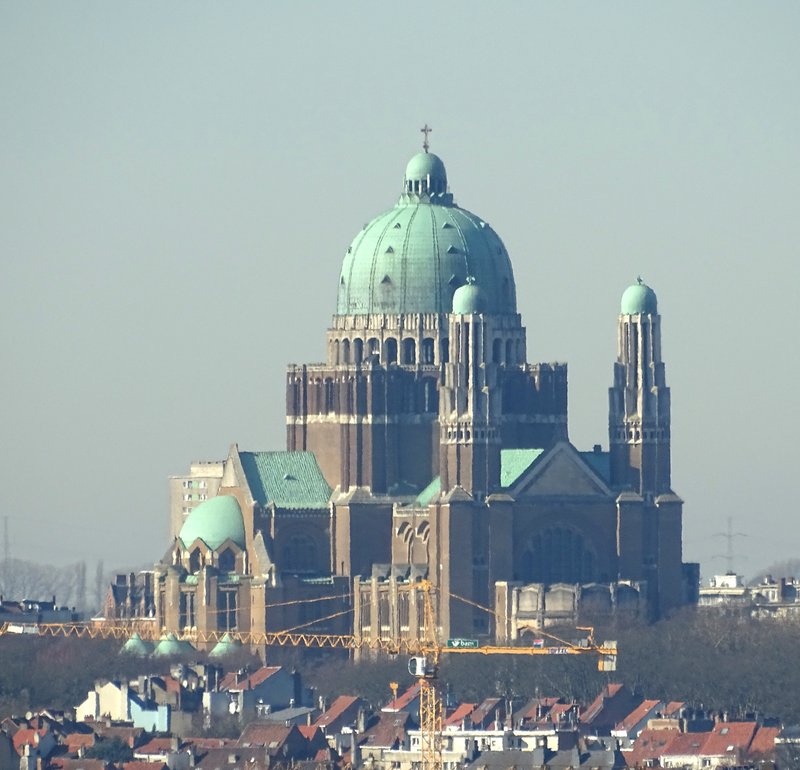
Belgium's largest church and one of the world's largest Art Deco buildings — commissioned in 1905 by Leopold II, not completed until 1970. The copper dome rises 89 m above Koekelberg hill; a paid panorama gallery at 57 m offers a 360° view back to the Atomium.
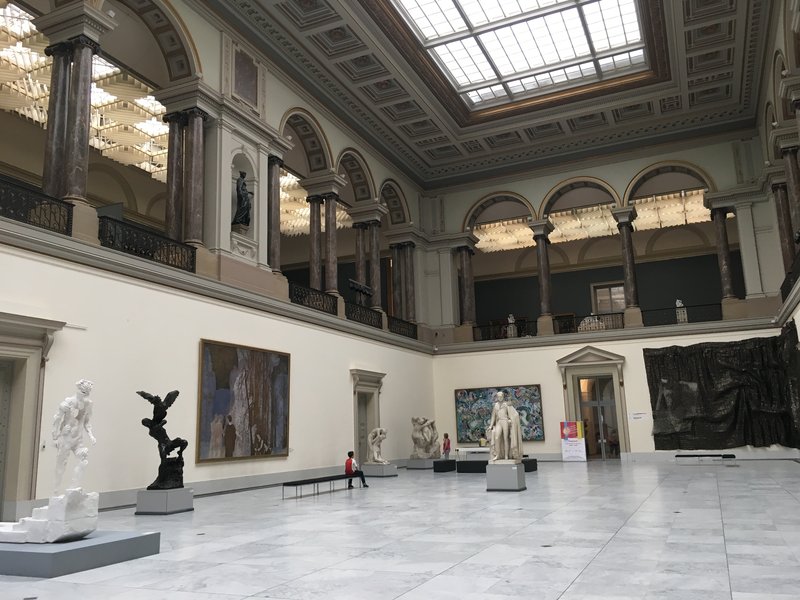
Five floors of surrealism in a neoclassical townhouse on Place Royale — the world's largest Magritte collection, 250+ works spanning his full career. The bowler hat, the green apple, the cloud-filled suits: every iconic image is here, in the city where he spent most of his life.
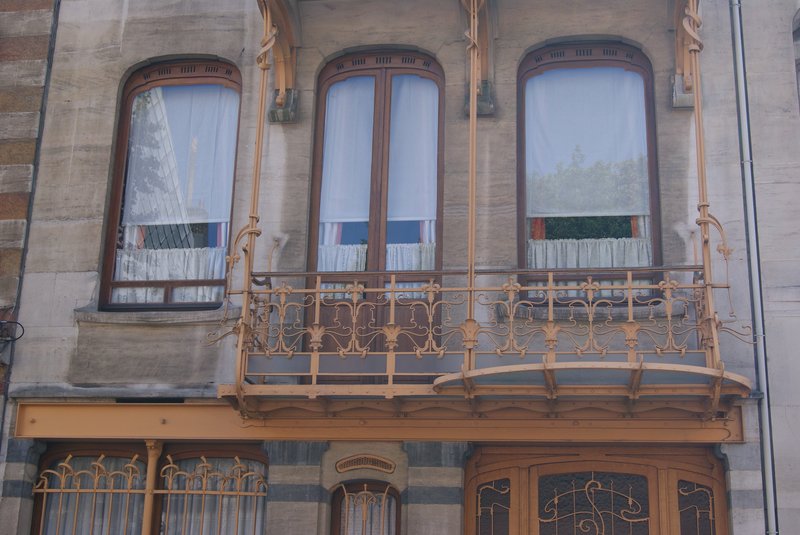
Horta built this townhouse in 1898–1901 as his home and studio — the purest Art Nouveau interior in existence. Every detail, from sinuous ironwork and stained glass to the curved light-well staircase, was designed by Horta himself. A UNESCO World Heritage Site housing his original furniture and drawings.
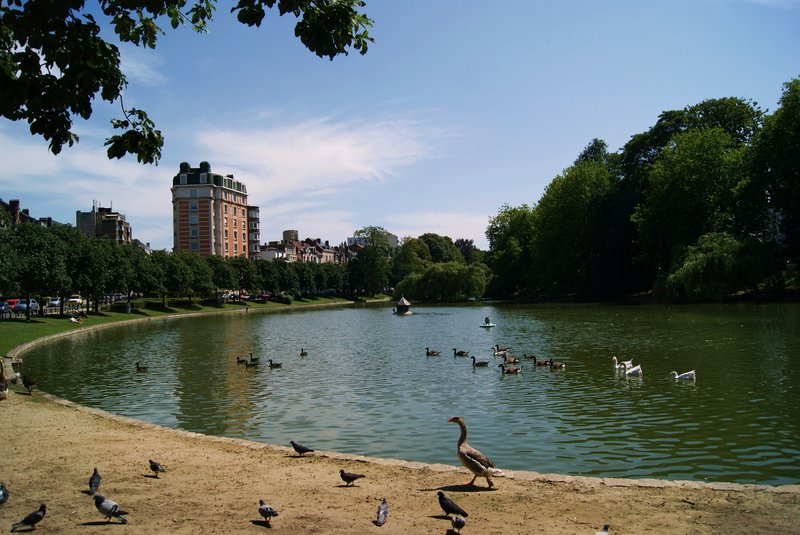
Two linked freshwater ponds in the Ixelles Art Nouveau district, ringed by poplars and fin-de-siècle facades. Place Flagey at the north end — anchored by the 1938 Flemish Radio Broadcasting building — is the natural finish. A circuit of both ponds, then an aperitif at a terrace café, ends the day well.
From Hotel: 14 min · 7 min → Cathedral of St. Michael and St. Gudula
1.Cathedral of St. Michael and St. Gudula~45 min
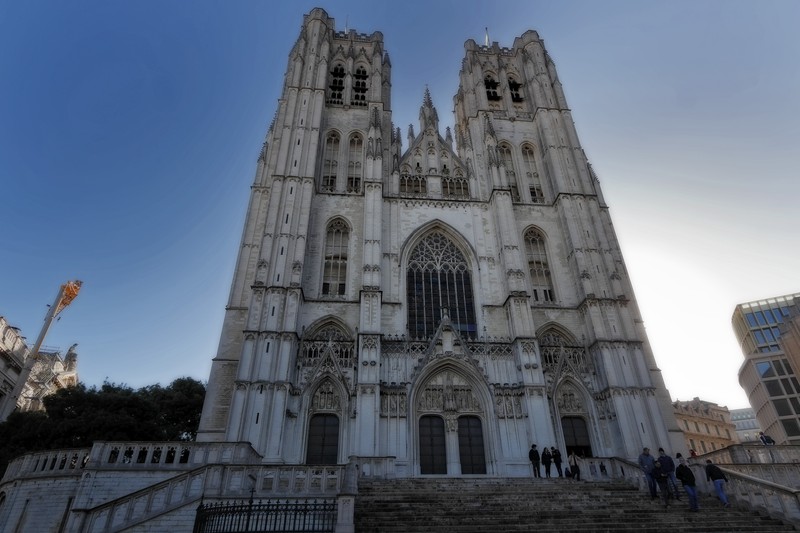
Brussels' national co-cathedral crowns a rise above the Lower Town, its twin Gothic towers begun in 1226 and finished nearly three centuries later. Belgian royal weddings and state funerals are held inside, beneath stained glass windows given by Habsburg emperors and a Baroque oak pulpit carved with the expulsion from Eden.
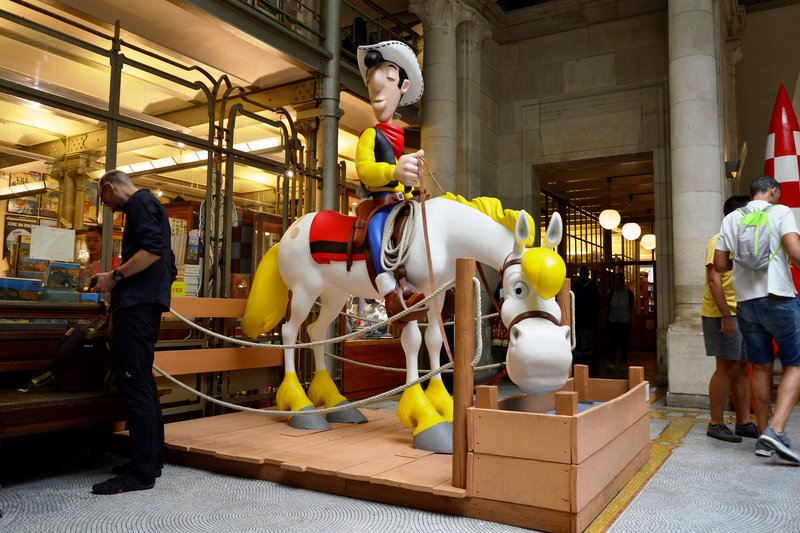
A cast-iron and glass Art Nouveau department store built by Victor Horta in 1906, now devoted to Belgium's other great export — the comic strip. Tintin, the Smurfs and Lucky Luke all get galleries here, tracing the medium from newsprint to the graphic novel inside one of Horta's most sweeping interiors.
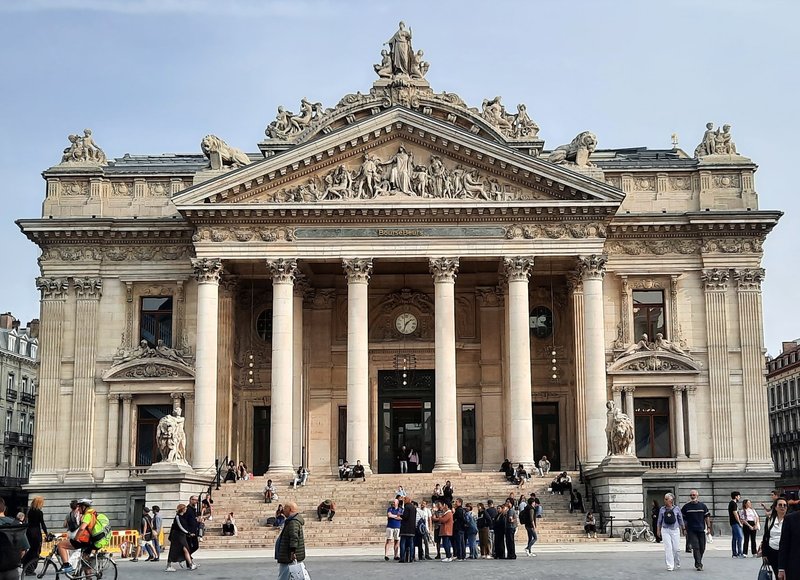
A neoclassical stock exchange palace, its columned facade and allegorical sculpture reopened after a multi-year restoration — now devoted to Belgian beer culture, with a rooftop bar looking out over the city's spires. The tasting room pours a rotating lineup of the country's breweries under the old trading hall's restored ceiling.
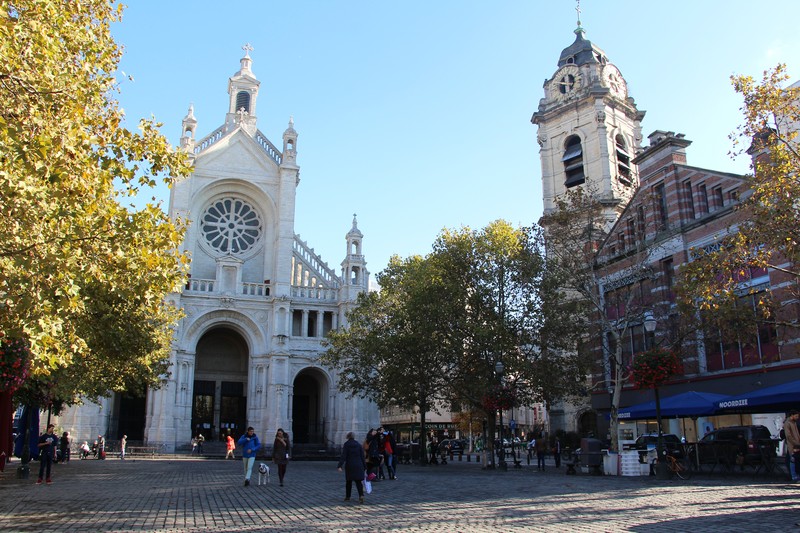
A free-standing 15th-century bell tower — all that survives of the original fish-market church — now stands apart from the domed Baroque nave Joseph Poelaert built over the filled-in city docks in 1854. The square in front kept the old fish stalls' trade alive as Brussels' best address for seafood.
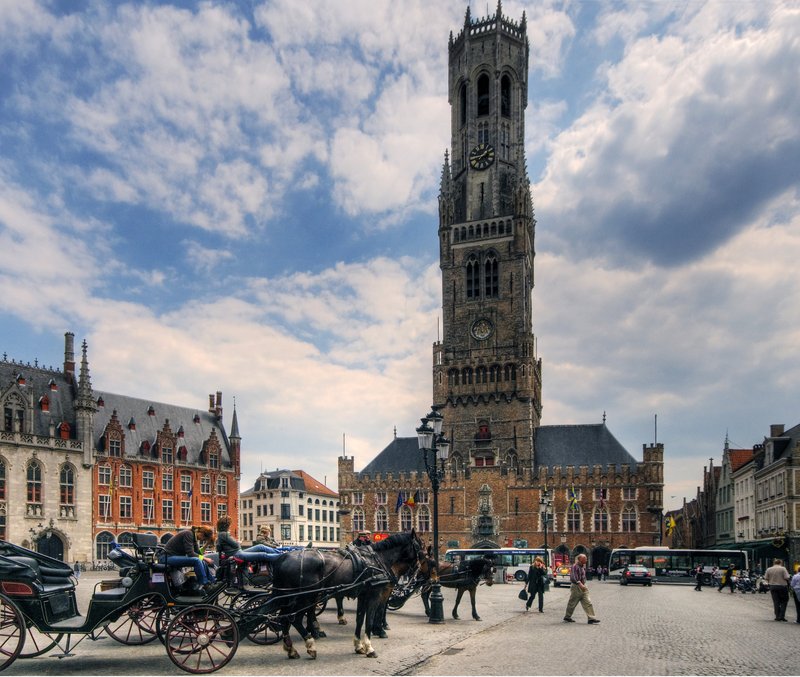
Bruges' medieval market square, worked as a marketplace since 958 and ringed by stepped guild houses now trading as cafés and restaurants. The Belfry rises from its south side, and the square's cobbles have carried a weekly market for over a thousand years.
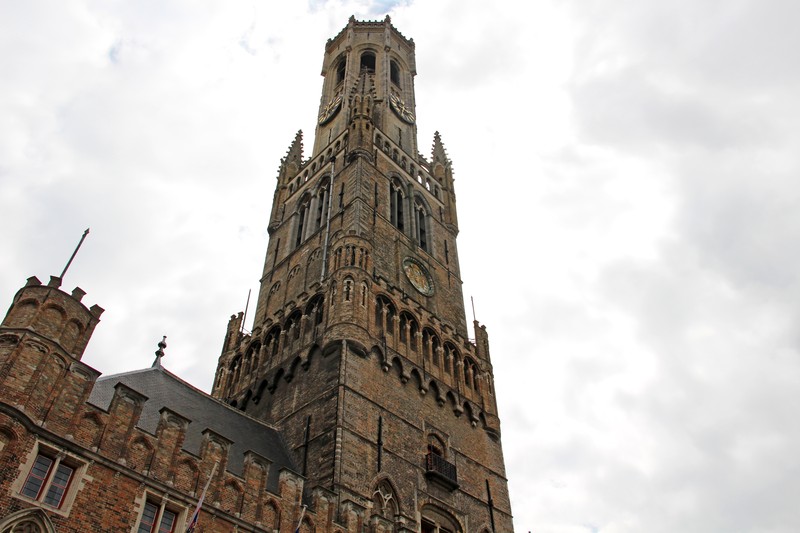
A 13th-century bell tower climbing 83 meters over the Markt, its 366 narrow steps passing the medieval treasury room and the 47-bell carillon before opening onto a UNESCO-listed view over Bruges' red-tiled roofs and canals.
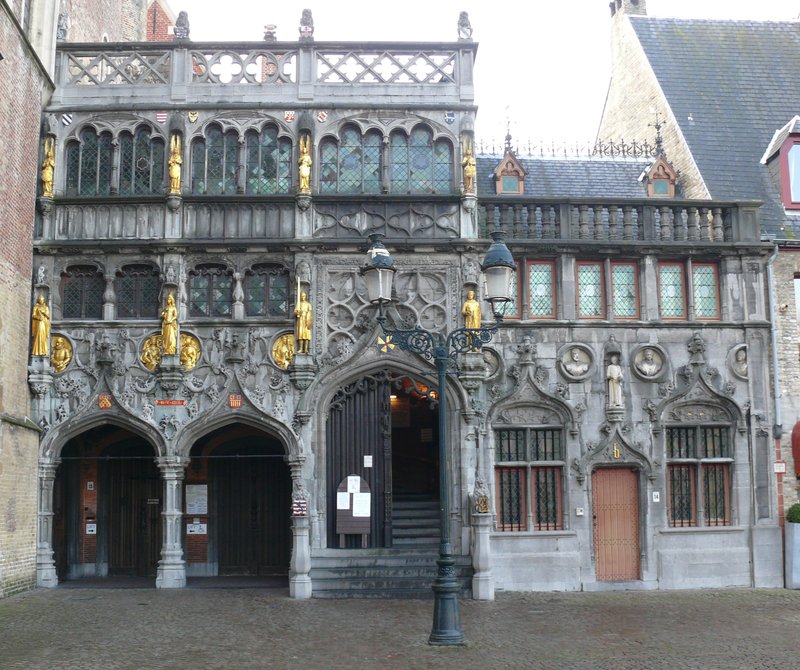
A two-story chapel on the Burg, its plain Romanesque lower level built in the 1130s for the counts of Flanders and its ornate upper church added later to house a relic venerated as Christ's blood, brought back from the Second Crusade in 1150 and still displayed inside.
A 2.5-hour loop through the lower town with a local guide — Grand-Place, Manneken Pis and the cobbled lanes of the old core, ending at Mont des Arts. Runs rain or shine.
Italian-language walking tour of the historic centre — tip-based with a small booking fee. The guide carries a blue umbrella with the Italian flag and the route circles back to the Grand-Place.
Full-day coach to the WWI battlefields of Flanders — Tyne Cot cemetery, Hill 60 and the In Flanders Fields region, ending with the Last Post ceremony at the Menin Gate in Ypres.
BelgoTours' comprehensive city walk — Grand-Place, Tintin murals, Manneken Pis, Notre-Dame du Sablon, Royal Square and the Royal Palace. Tip-based. Look for the yellow umbrella in front of City Hall.
Local architect Jamal leads a 2-hour walk through 500 years of Brussels' architectural evolution — Spanish Netherlands to Capital of Europe, from the Grand-Place to the Mont des Arts.
One day, two medieval cities — a guided morning in Ghent around the Castle of the Counts and St Bavo's, then an afternoon in Bruges with free time along the canals. By Buendia Tours.
Coach day trip to Belgium's fairytale pair — guided walks past the Castle of the Counts in Ghent and the Markt and Basilica of the Holy Blood in Bruges, with free time and optional canal cruise.
Bravo Discovery's daily walk through the lower town — Grand-Place, Manneken Pis, Saint-Géry island and the story of the river that Brussels buried. Look for the white umbrella.
Full-day coach combining Brussels landmarks — the Atomium and the Grand-Place — with a guided afternoon in Antwerp: the Cathedral of Our Lady, the Grote Markt and the diamond quarter.
Day trip by coach to Bruges with a guided walk of the medieval centre — the Markt, Belfry, Basilica of Holy Blood and the Minnewater — plus an optional canal boat ride through the city's waterways.
Two evening hours of revolutions, executions and almost-forgotten heroes with Legends Tours — Grand-Place to the Sablon and Palace of Justice. Look for the red umbrella in front of the City Hall.
Legends Tours' daytime walk through Brussels' revolutions, artistic heritage and the stories behind the Grand-Place façades — look for the red umbrella in front of City Hall.
Full-day car tour covering the battlefields of the 1815 campaign — Ligny, Quatre-Bras and the Lion's Mound at Waterloo — with a knowledgeable guide explaining Napoleon's fateful final offensive.
Guided day excursion to Bruges — the medieval Markt, the Belfry, chocolate shops and free time along the canals. Train ride of about an hour each way from Brussels Central.
One-day coach trip covering both Flemish classics — guided stops at Ghent's St Bavo's Cathedral and Castle of the Counts, then Bruges with free canal time and visits to the Markt and Burg squares.
The filled chocolate bonbon was invented in Brussels in 1912 by Jean Neuhaus Jr., whose pharmacy-turned-confiserie still trades in the Galeries Royales Saint-Hubert. Buy by the piece, not the box.
Rectangular, deep-pocketed and feather-light — yeasted batter, crisp outside, hollow inside. Eaten with powdered sugar, not buried in toppings. Not the dense caramelized Liège kind.
Beer fermented by wild airborne yeasts found only in the Senne valley — sour, still and ancient. Gueuze blends young and old lambic into a sparkling bottle Brussels calls its champagne.
The spiced shortcrust biscuit of the Low Countries — cinnamon, clove and candied brown sugar. Maison Dandoy has pressed it into carved wooden molds on this spot since 1829.
Belgium's national dish — a black pot of mussels steamed in white wine and celery, with twice-fried frites on the side. In season from July to April, best in the old centre.
Foreign number: not required. — sign-up runs on Google, Apple, Facebook or email with no phone field at all, so no verification code has to arrive.
Deep restaurant coverage across Brussels including Belgian places that list nowhere else; strongest in the centre and Ixelles, and noticeably thinner out towards the residential communes.
Foreign number: accepted. — the account is email-based and the order confirmation goes by email; a phone number is asked for the courier but no SMS code has to arrive.
The Just Eat group's Belgian platform and the widest list in Brussels — Belgian frituren, Turkish and Italian places and most of the restaurants that deliver to the Sablon hotels; card and PayPal accepted, tracker reliable.
Flanders' liveliest university town — the flamboyant Gothic town hall, the Old Market's "longest bar in Europe," and the original Stella Artois brewery.
Gritty-gorgeous university city — the Castle of the Counts, the Van Eyck altarpiece in St Bavo's Cathedral, and the Graslei quay at golden hour. Closer and less crowded than Bruges.
Belgium's forgotten Burgundian capital — St. Rumbold's Cathedral tower climbs 538 steps to a view stretching to the Atomium and Antwerp on a clear day, and the Toy Museum fills three floors near the station.
Port city of Rubens and diamonds — arrive through one of the world's most beautiful railway stations, then the Cathedral of Our Lady and the fashion quarter.
The Walloon capital at the confluence of the Meuse and Sambre — the Citadelle on its rocky promontory is the largest fortress in Belgium, with views over two rivers and the old town below. Direct IC train.
Brussels is built on a river you will never see. The Senne, which gave the city its lambic-brewing wild yeasts and its medieval port, was vaulted over in the 1860s after cholera outbreaks — the grand boulevards between your hotel and the Bourse run directly on top of it. The fish market of Sainte-Catherine, steps from the OPO's door, kept selling fish for decades beside a quay with no water in it.
A quieter pattern from this research: the city's icons keep surviving their own obsolescence. The Atomium was meant to stand for six months in 1958; the Grand-Place was rebuilt in four years after the French army flattened it in 1695; the Coudenberg palace burned, was buried, and became the city's basement. Brussels doesn't preserve things so much as refuse to finish demolishing them — which might be the most Belgian form of love.