From Hotel: 14 min → Fortaleza do Monte & Macau Museum
1.Fortaleza do Monte & Macau Museum~1 hr
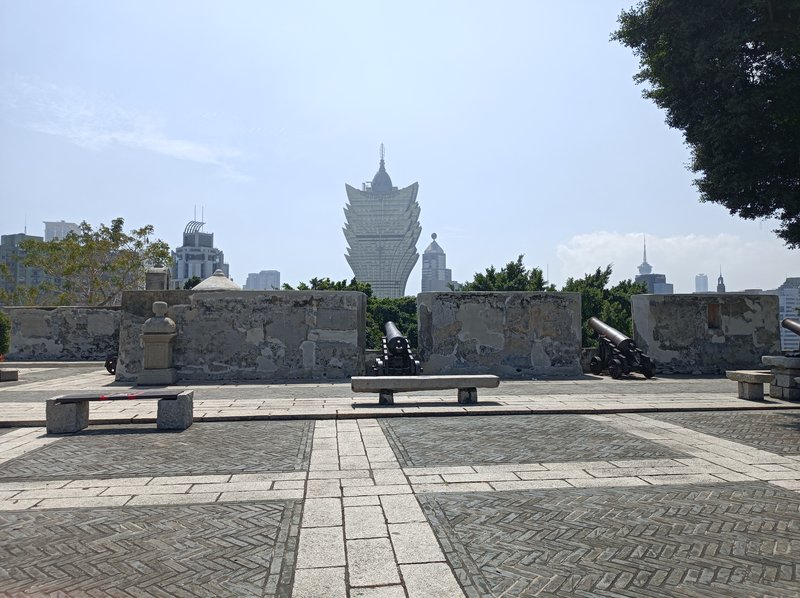
Built by the Jesuits between 1617 and 1626 on a 52-metre hill, this fort still carries 32 muzzle-loading cannon along its walls and gives a 360° view over the peninsula; the Macau Museum inside covers four centuries of the city's history.
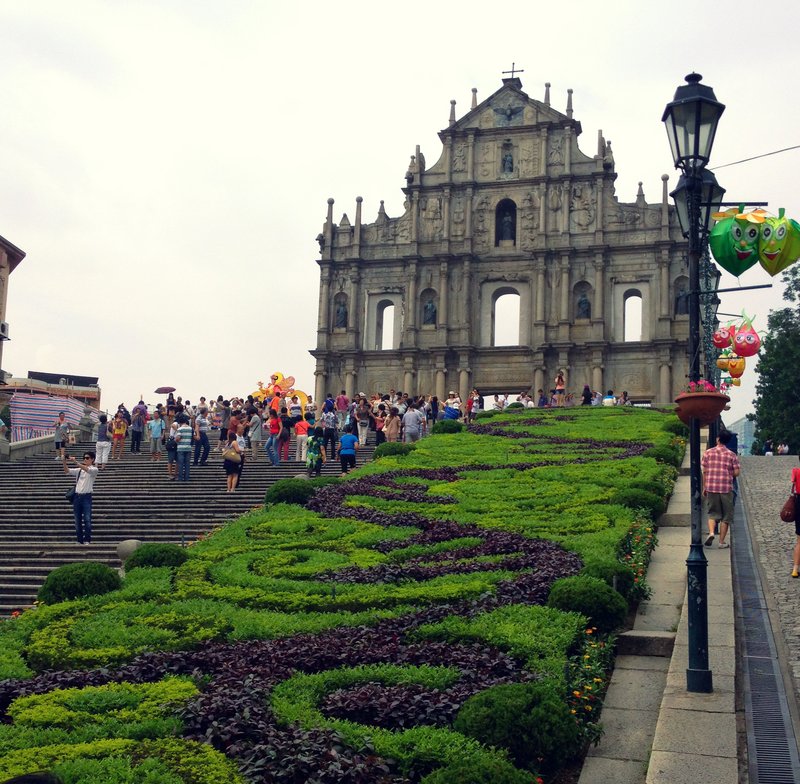
The granite façade and grand staircase are all that survive of a Jesuit church built in 1602–1640 and gutted by fire in 1835 — five tiers of carving blending Christian, Chinese and Japanese imagery, once acclaimed as the "Vatican of the Far East."
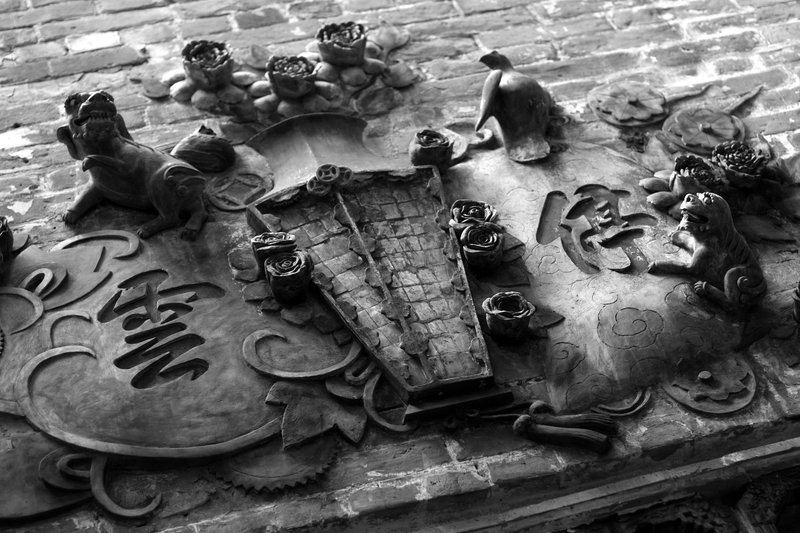
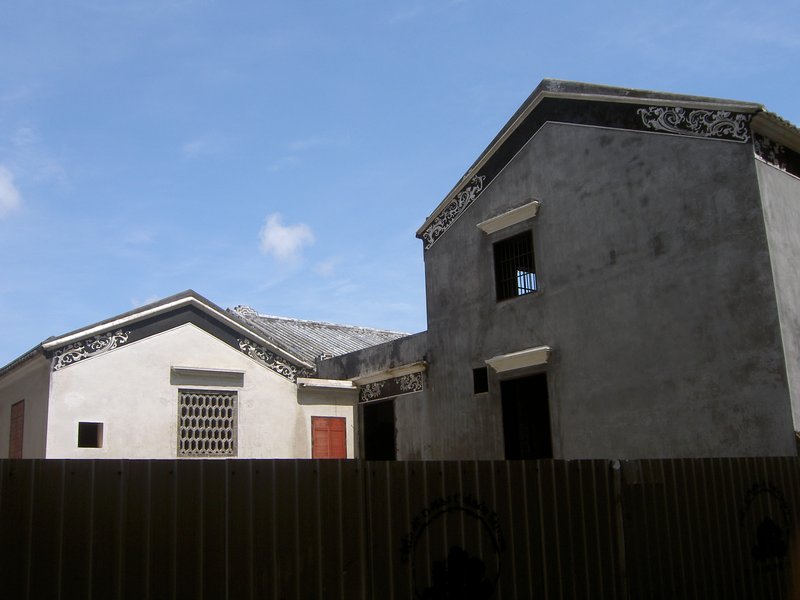
The 1889 courtyard home of merchant Lou Kau, blending Chinese blue-brick construction with Portuguese decorative touches — three courtyards, carved friezes and oyster-shell windows, restored and opened to the public in 2005.
24 min · 9 min → Guia Fortress · Chapel & Lighthouse
4.Guia Fortress · Chapel & Lighthouse~1 hr
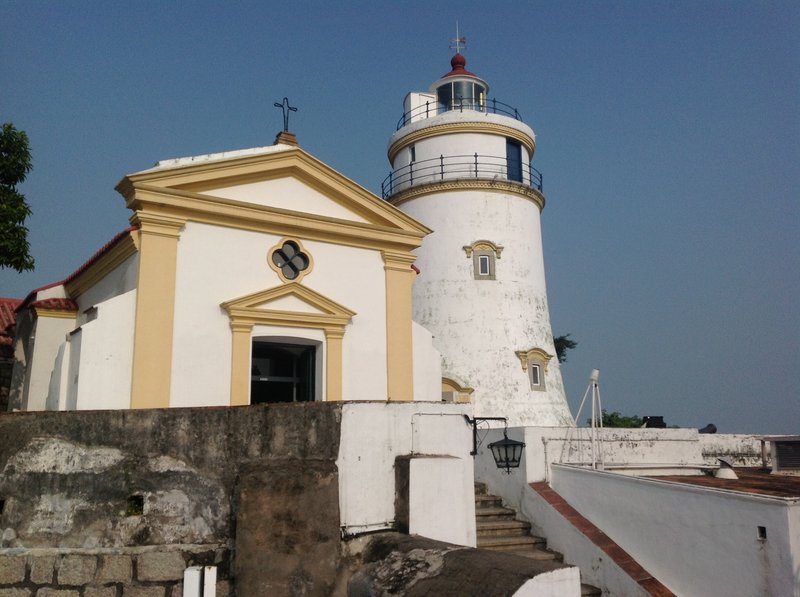
A 17th-century fort crowning Macau's highest hill at 91.6 metres, with a whitewashed 1865 lighthouse — the oldest Western-style lighthouse on the China coast — and a chapel frescoed with fused Chinese-and-Christian imagery. A free cable car climbs the hill from Flora Garden.
The childhood home of Qing-dynasty reformist Zheng Guanying, begun in 1869 by his father — more than 60 rooms across several courtyards, mixing Lingnan brick-and-timber construction with Portuguese shutters and stucco, restored and reopened in 2010.
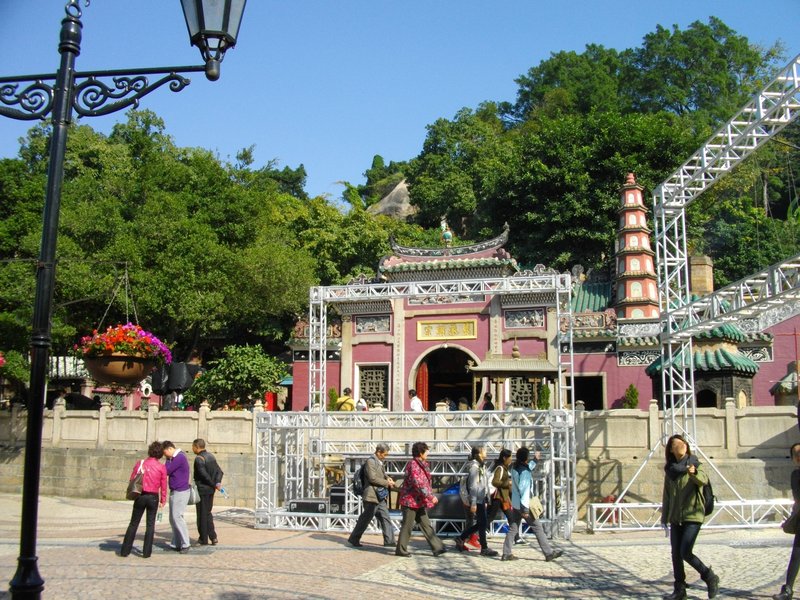
Built in 1488 to honour Mazu, the sea goddess, this is Macau's oldest temple and the source of the city's name — Portuguese sailors misheard "A-Ma-Gau" as "Macau." Six pavilions climb the rock face, mixing Taoist, Buddhist and folk worship.
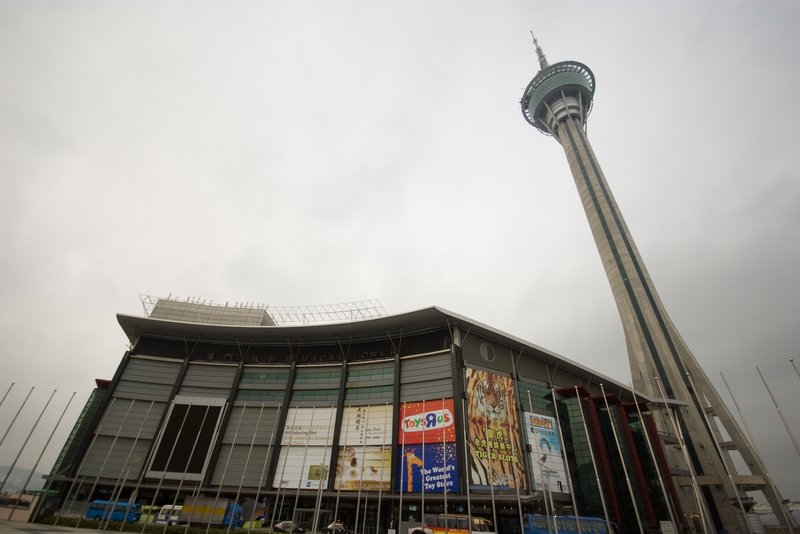
A 338-metre tower designed by Gordon Moller, opened in 2001, with a glass-floor Skywalk around the rim of the 58th-floor observation deck and the world's highest commercial bungy jump at 233 metres — a hard pivot from the historic centre to modern Macau.
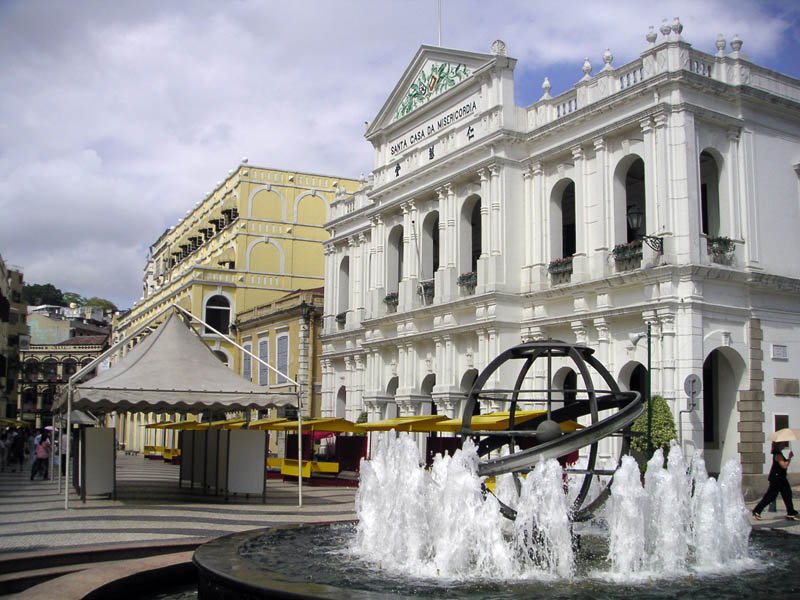
A 3,700-square-metre plaza paved in a black-and-white Portuguese wave pattern, enclosed by the Leal Senado, the General Post Office and the Holy House of Mercy — the civic centre of Macau since the 16th century and the start of the Historic Centre's walking route.
From Hotel: 19 min · 4 min → Eiffel Tower at The Parisian Macao
1.Eiffel Tower at The Parisian Macao~45 min
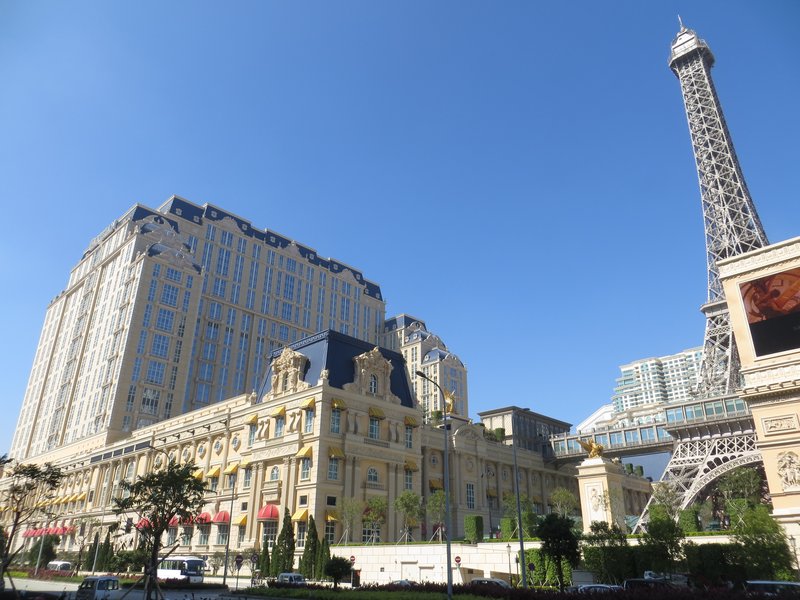
A half-scale, 160-metre working replica of the Paris original, opened in 2016, with observation decks on the 7th and 37th floors looking out over the Cotai Strip; it lights up every 15 minutes after dark.
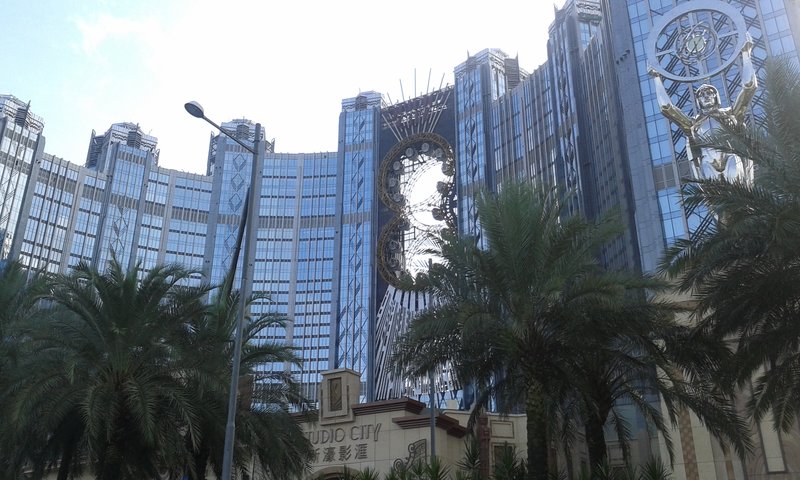
The world's first figure-8 Ferris wheel, suspended 130 metres up between Studio City's two towers — 17 steampunk-themed cabins, with the highest point looking down the length of the Cotai Strip.
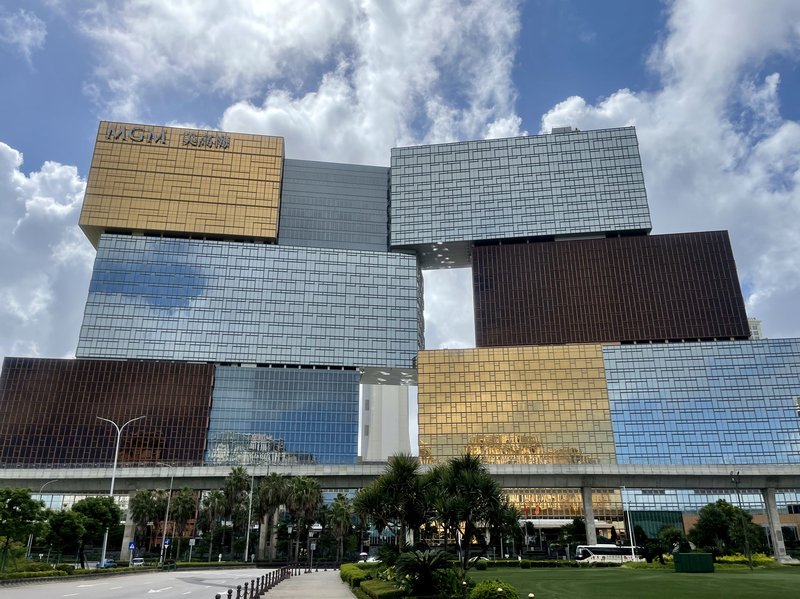
An atrium beneath the world's largest free-span glass roof, holding rotating art installations and "Lion of Future" — a kinetic sculpture of 3,988 gold panels that flip in programmed sequences — inside a building shaped like nine stacked jewel boxes.
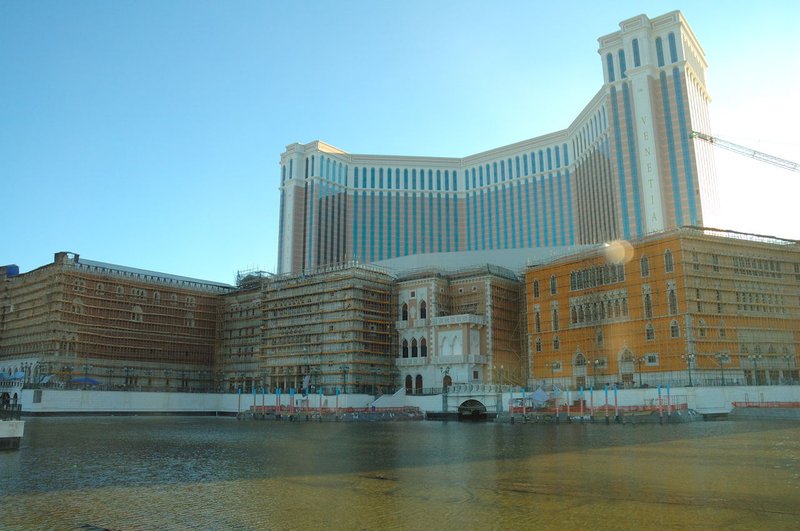
A full-scale replica of Venice built indoors — painted sky ceilings, cobbled piazzas and three canals worked by singing gondoliers, inside the second-largest casino building on Earth. Free to walk; a gondola ride is the paid extra worth doing once.
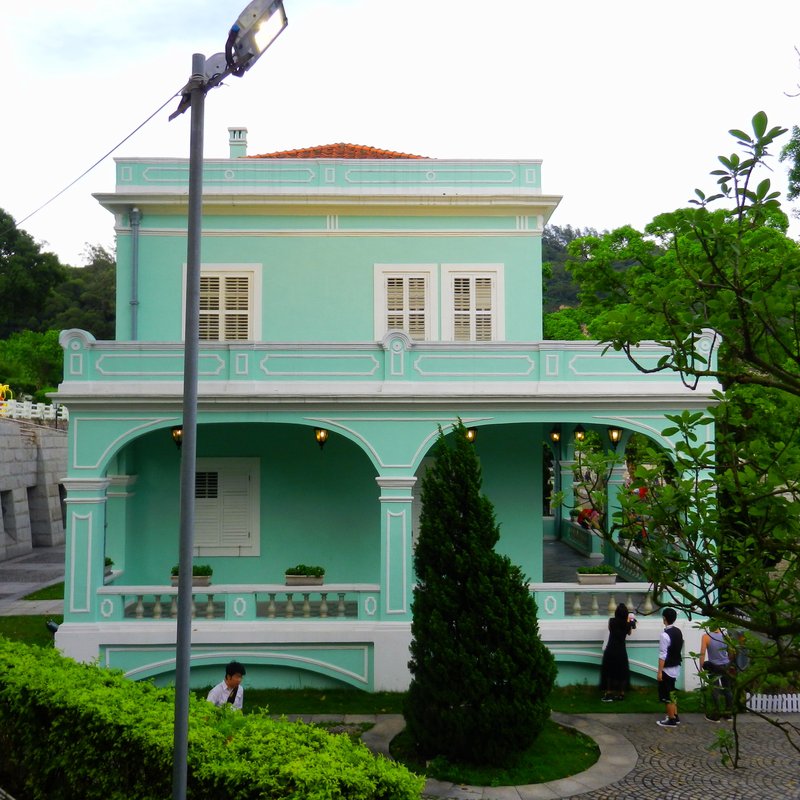
Five mint-green colonial villas built in 1921 for well-off Portuguese families, restored as period rooms, a Macanese living-heritage exhibit and a creative-arts space — one of the "Eight Views of Macau" on the old Taipa waterfront.
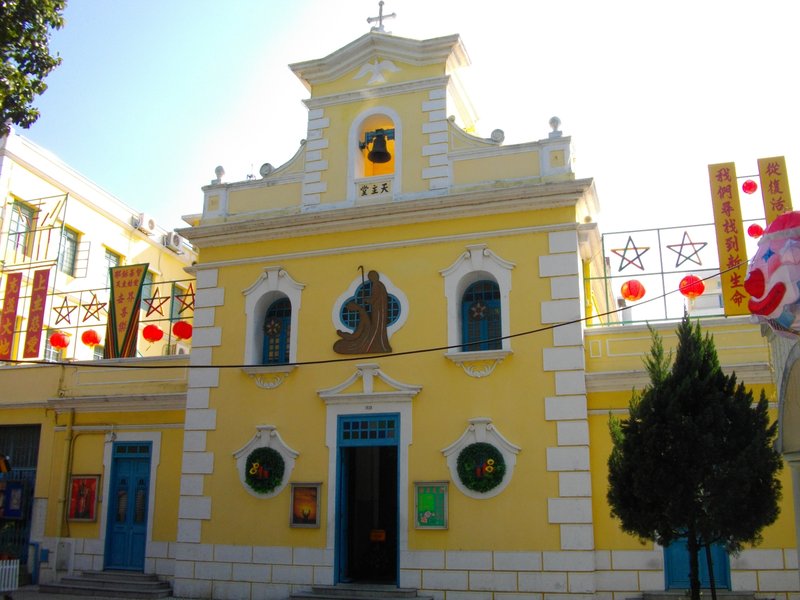
A yellow 1928 Baroque chapel facing a small square in Coloane Village, built to hold relics of St. Francis Xavier and of Catholic martyrs crucified in Nagasaki in 1597 — the relics have since moved to the crypt behind the Ruins of St. Paul's.
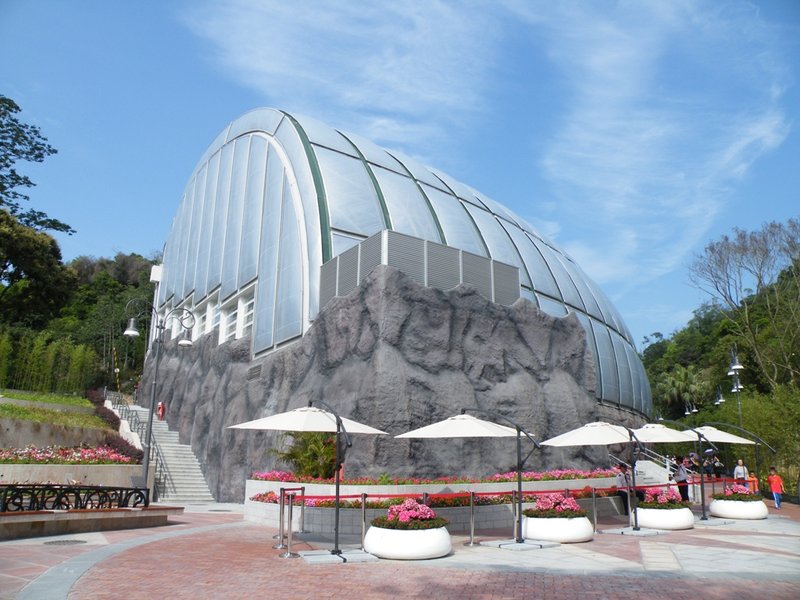
A fan-shaped, 3,000-square-metre pavilion in Seac Pai Van Park holding Macau's resident giant pandas — Kai Kai, Xin Xin and their twin cubs — alongside gibbons, flamingos and other rescued animals in a wooded corner of Coloane.
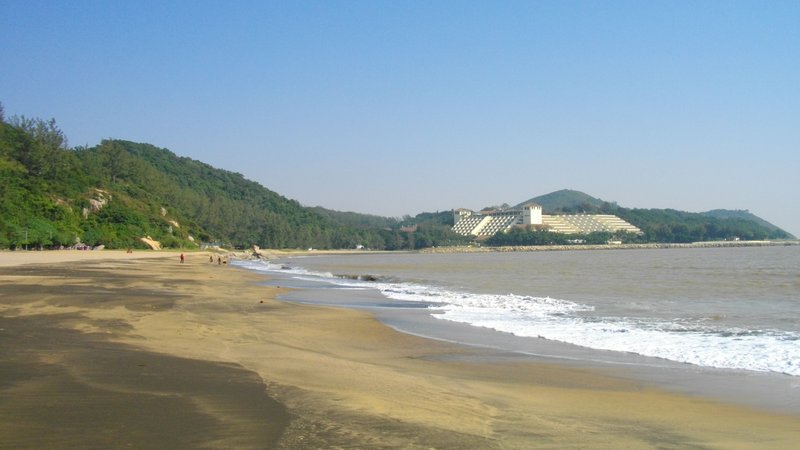
Macau's largest natural beach, a 1,350-metre curve on Coloane's southern shore named for the dark, glauconite-flecked sand along its waterline — a quiet, unhurried close to the itinerary, with beach shacks serving Portuguese-style grilled food along the promenade.
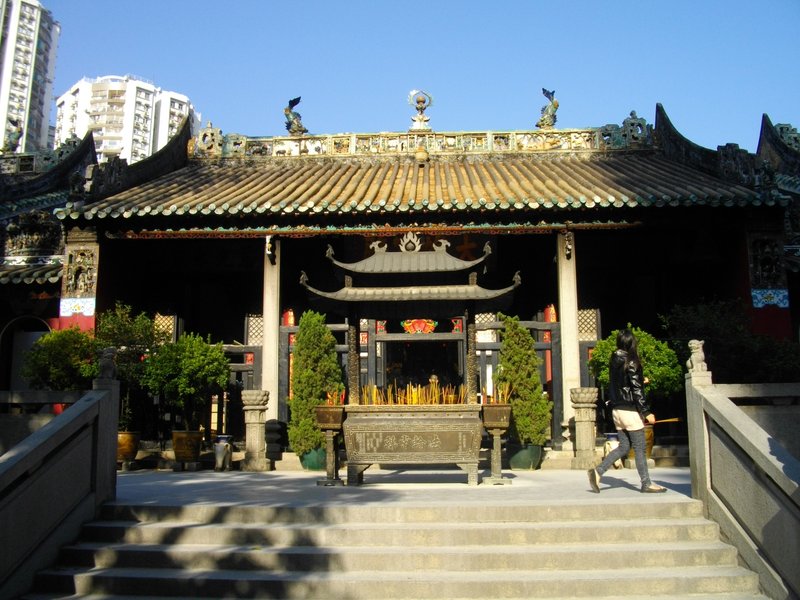
Founded in the 13th century and rebuilt in 1627, one of Macau's three largest and richest Buddhist temples, dedicated to Kun Iam, the Bodhisattva of Mercy known in Mandarin as Guanyin — its stone garden table is where the Treaty of Wanghia, the first Sino-American treaty, was signed in 1844.
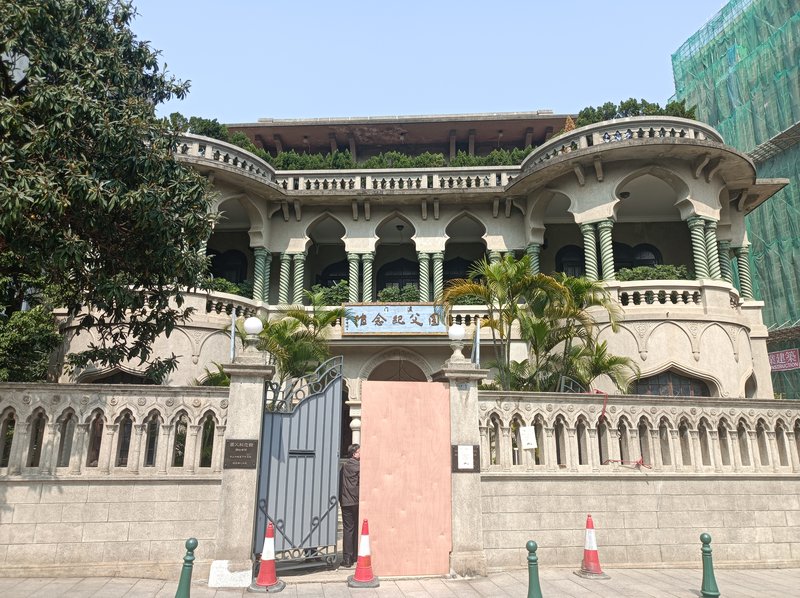
A mock-Moorish villa built in 1918 for Lu Muzhen, the first wife of Sun Yat-sen — founder of the Republic of China — and rebuilt in 1933 after a nearby gunpowder-magazine explosion destroyed the original; a memorial house since 1958, holding photographs, letters and personal effects of the Sun family.
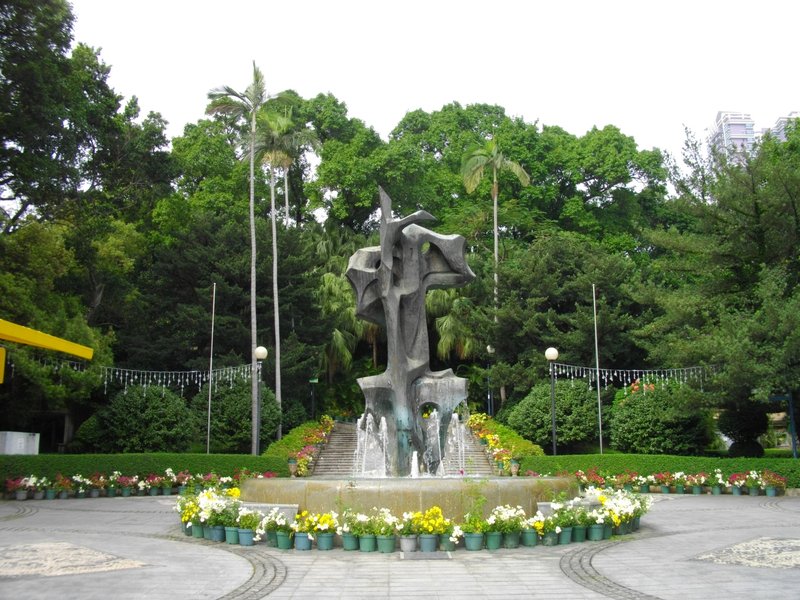
Macau's oldest and largest public garden, nearly 20,000 square metres of banyan trees and rockwork centred on the Camões Grotto — a boulder cave holding a bronze bust of the Portuguese poet, said to have written part of his epic Os Lusíadas during a stay in Macau.
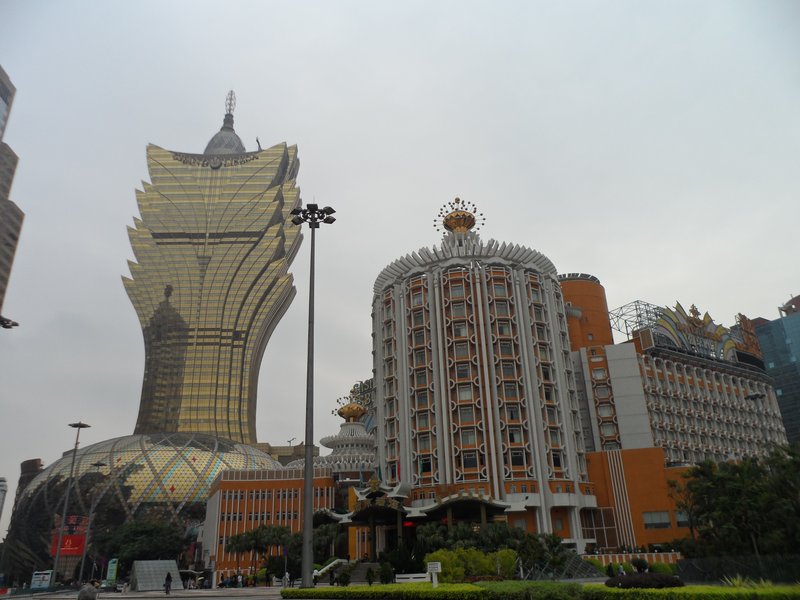
A 261-metre, 47-storey tower shaped like an opening golden lotus atop an eight-storey dome, opened in 2008 as Macau's tallest building — the dome holds a grand public foyer with the casino and hotel lobbies, free to walk through.
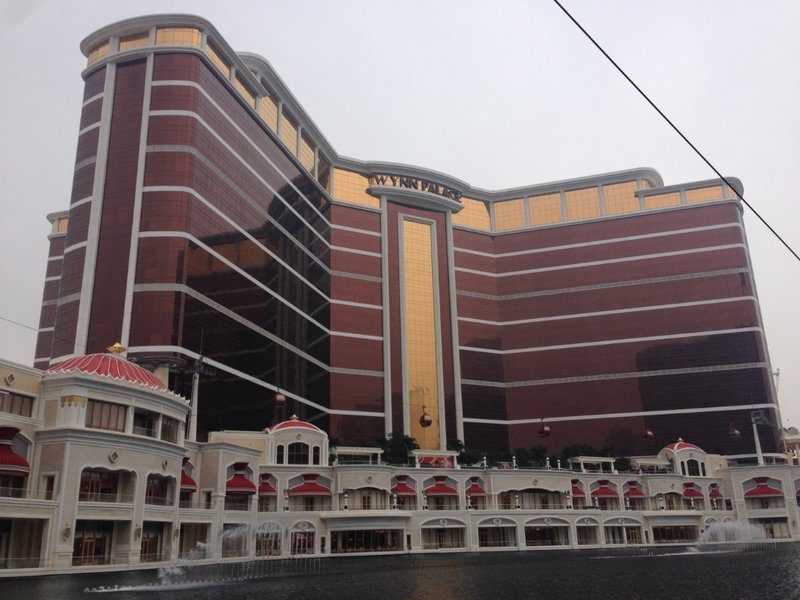
An 8-acre Performance Lake stages a choreographed water, light and music show every 20-30 minutes, and a free SkyCab cable car glides above it between the resort's two wings — a spectacle-scale centrepiece opened in 2016 on the Cotai Strip.
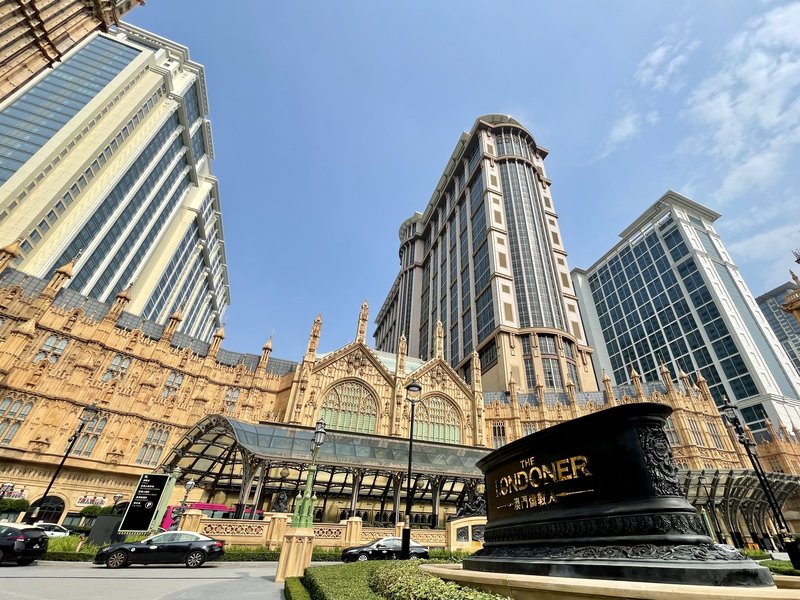
A 96-metre, life-size replica of London's Elizabeth Tower, popularly known as Big Ben, built into a full-facade recreation of the Houses of Parliament, unveiled in a redesign of the former Sands Cotai Central — free to photograph from the street or walk past on the way into the resort.
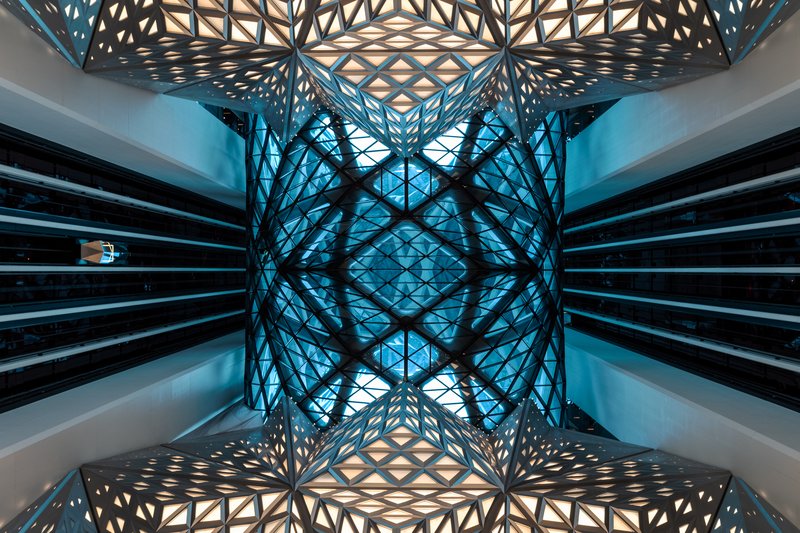
A twisting steel exoskeleton wraps two towers and a hollowed-out core — the last hotel Dame Zaha Hadid designed before her death, and the world's first high-rise built without a rigid internal frame, opened in 2018 at the City of Dreams resort.
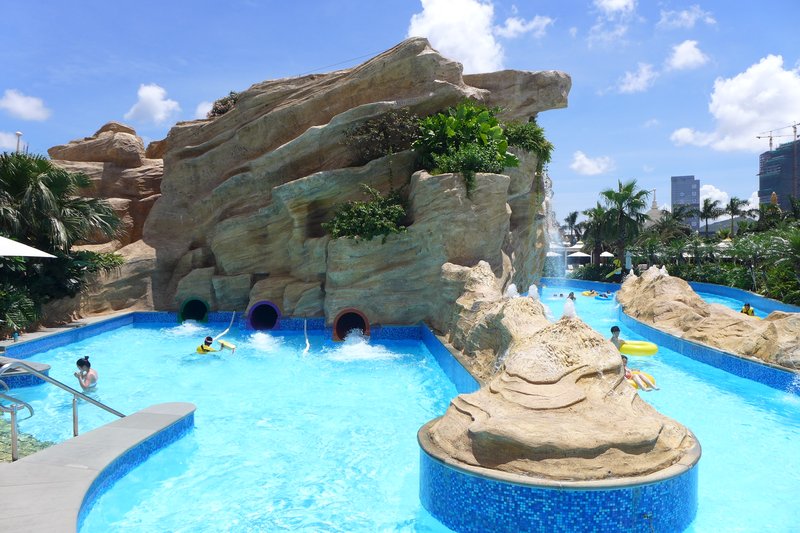
The resort that launched the Cotai Strip's building boom in 2011 — its Diamond Lobby stages the "Fortune Diamond," a giant faceted diamond that rises from a fountain, rotates and sinks again in a free three-minute show, alongside gardens, artificial beaches and a wave pool outside.
A local guide leads a full day beyond the headline sights — Guia Lighthouse, Mandarin's House and the Giant Panda Pavilion — with a buffet lunch included.
A fully customizable private day with a local guide — heritage sites or Cotai's modern resorts, on foot or by private vehicle, starting and ending at the hotel.
A join-in group day covering the Kun Iam statue, Macau Tower, A-Ma Temple, the Ruins of St. Paul's and Senado Square, with a buffet lunch and a finish inside The Venetian Macao.
Macau's UNESCO landmarks and its Cotai resorts in one day — the Ruins of St. Paul's, A-Ma Temple, Macau Tower and the Venetian Macao, with buffet lunch included.
Custard tart with a crisp, flaky shell and a slightly caramelized, wobbly filling. Invented in 1989 by Englishman Andrew Stow at his Coloane bakery — now Macau's signature pastry, sold hot from the oven.
A bone-in pork chop, marinated and deep-fried, tucked whole into a crusty Portuguese-style bun. Born from Portuguese colonial café culture in old Taipa, with no sauce needed beyond the meat's own char.
Charcoal-fired almond shortbread cookies, pressed and baked fresh on the spot at street-facing ovens. Macau's most popular edible souvenir, sold warm in paper-wrapped stacks along the food streets.
Chicken baked in a rich sauce of peanuts, coconut, tomato and chili — a Macanese chef's 1940s invention using spices brought back from Portugal's African colonies. The dish that defines Macanese fusion cooking.
Layers of whipped cream and finely crushed Marie biscuit crumbs, chilled into a light, no-bake dessert. The crumbs resemble sawdust — serradura in Portuguese — a simple Macanese café staple found across the city.
Foreign number: not accepted. — SMS verification requires a Macao, Hong Kong, or Mainland Chinese mobile number; a foreign number cannot complete signup.
The largest delivery network in Macau by restaurant count, with some orders arriving in under 15 minutes. The interface is only partly translated to English, and foreign bank cards are widely reported to fail at checkout.
Foreign number: not accepted. — SMS verification requires a Macao, Hong Kong, or Mainland Chinese mobile number; a foreign number cannot complete signup.
A broader lifestyle app that bundles food delivery with taxi-hailing, hotel booking, and group-buy deals — useful if you need more than a meal, but the ordering flow sits under everything else the app offers.
Foreign number: not accepted. — SMS verification requires a Macao, Hong Kong, or Mainland Chinese mobile number; a foreign number cannot complete signup.
Bundles restaurant delivery with supermarket and department-store orders under one app. Best known on Taipa Island and around the ZAPE district — check restaurant coverage near your address before relying on it.
Dancing Water Theatre — The House of Dancing Water
A water-stage spectacle built around a 3.7-million-gallon pool — acrobatics, high-diving and motorcycle stunts in a purpose-built theatre at City of Dreams.
Foreign number: accepted. — the code comes by SMS to any international number, on the same global Uber account used everywhere else.
Relaunched in Macau as a taxi-booking and payment platform, not a private ride service — it books and pays for a licensed Macau taxi at the official meter fare. Multi-language interface, no cash needed, and the same app works for the Hong Kong cross-border limousine service.
Zhuhai–Zhuhai Airport intercity rail, connecting into China's national high-speed network → Guangzhou · Shenzhen · Zhuhai Airport. Macau has no railway of its own — this is the closest station of any kind, reached by crossing into Zhuhai.
Board the Macau LRT Hengqin line at Lotus Station — a 2-minute cross-border shuttle straight into the Hengqin Port terminal, which adjoins the railway station on the Zhuhai side.
A relaxing coastal city just across the border, with a scenic waterfront promenade, offshore islands, and the giant Fisher Girl statue on Xianglu Bay. A slower-paced contrast to Macau's casino resorts, built around seafood and sea views.
Home to the UNESCO-listed Kaiping Diaolou — fortified watchtowers built in the 1920s by Chinese emigrants returning to their home villages after making fortunes abroad, blending Roman domes, Gothic arches and Chinese tiled roofs. Zili Village holds the best-preserved cluster, set among rice fields and countryside.
Guangdong's provincial capital and one of China's oldest trading ports. The Chen Clan Ancestral Hall is the finest surviving Lingnan-style temple complex in the country, and Shamian Island's tree-lined streets preserve its 19th-century foreign-concession architecture.
China's tech capital, a fishing village turned megacity in a single generation. The Shenzhen Museum and the OCT-LOFT creative district anchor a day built around modern China rather than Macau's colonial-era streets.
Macau was a Portuguese trading post from 1557 until the 1999 handover — nearly 450 years, the longest European colonial presence in Asia. That history is why the calçada wave-pattern paving under Senado Square's fountain is the same Portuguese cobblestone found in Lisbon, why street signs still carry Portuguese names above their Chinese translations, and why a food scene built on Cantonese technique also produced African Chicken and the Portuguese egg tart — dishes that exist nowhere else in China.
The casino skyline tells a newer, faster version of the same story. Macau overtook Las Vegas in gaming revenue in 2006 and now earns several times more — a single territory smaller than Manhattan, built almost entirely on land reclaimed from the sea between the old Portuguese town and the islands of Taipa and Coloane, generating more gambling revenue than any other place on Earth.