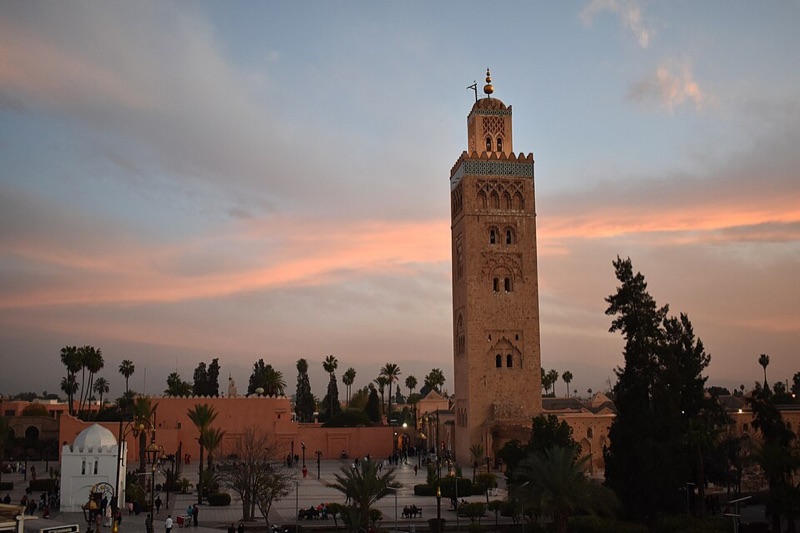
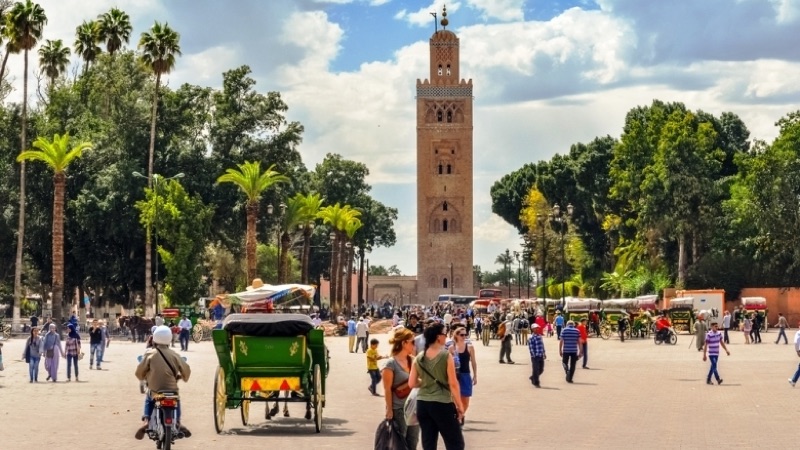
The largest mosque in Marrakech — its 70-metre minaret, completed 1199, was the template for the Giralda in Seville and Hassan Tower in Rabat. Non-Muslims may not enter; the surrounding gardens and lawns facing the minaret are magnificent in the late afternoon.
The beating heart of the medina — an immense open square where snake charmers, storytellers, acrobats, and musicians perform alongside food carts and orange juice vendors. By day a marketplace in motion; by dusk the entire square transforms into a grand open-air theater.
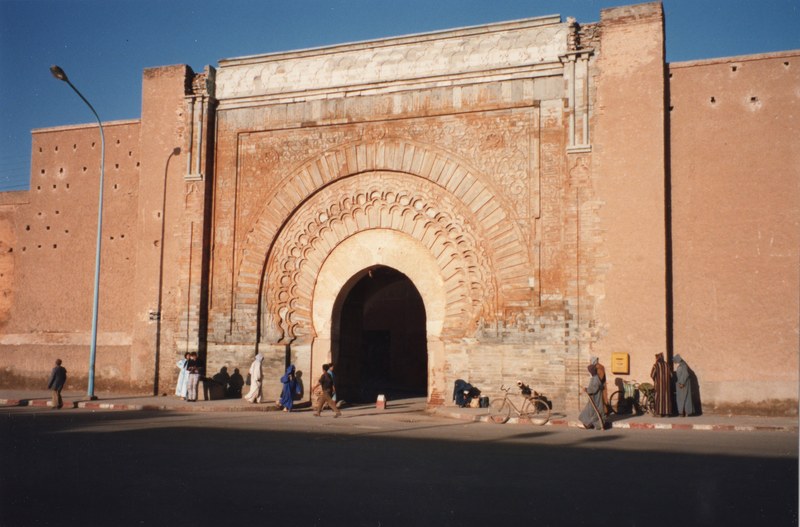
The most ornate gate in Marrakech — a 12th-century Almohad ceremonial entrance carved from blue-grey Guéliz stone, its arch layered with five bands of geometric kufic script and interlaced floral rosettes. No other city gate in Morocco matches it for decorative ambition. Free to visit and perpetually uncrowded.
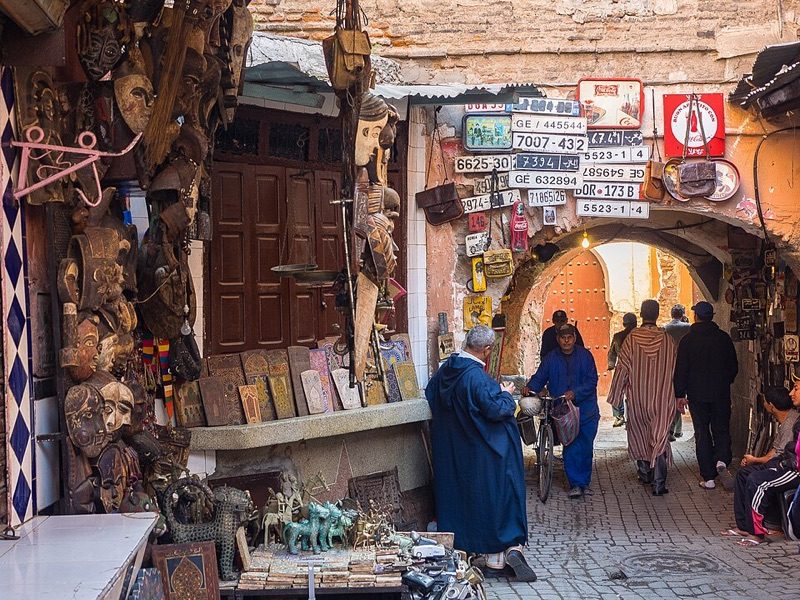
The medieval guild market stretching north from Jemaa el-Fnaa — separate districts for spice sellers, dyers, silversmiths, leather tanners, carpet weavers, and lantern makers each in their own labyrinthine alleys. The dye pits run every color; the spice stalls are spectacularly arranged and deeply fragrant.
A 19th-century palace converted to a museum of Islamic arts and civilizations — cedar-carved ceilings, zellij courtyard floors, and exhibits tracing the cultural connections between Marrakech and Andalusia, sub-Saharan Africa, and the Arab world. Fewer tourists than the palaces and better context than most.
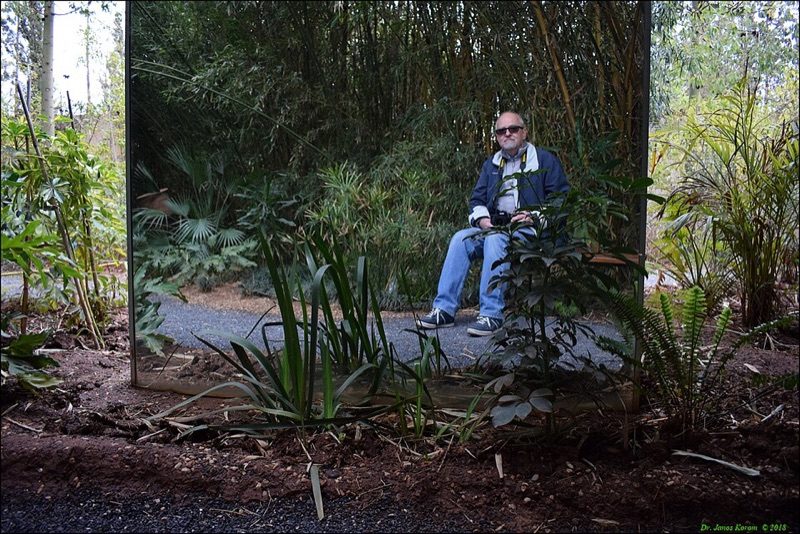
A private garden created by Austrian artist André Heller — 8 acres of lakes, tropical planting, stone sculptures, and a small museum of Moroccan and world art objects. Quieter and less famous than Majorelle but equally crafted, and the art embedded in the landscape gives it a genuinely unusual atmosphere.
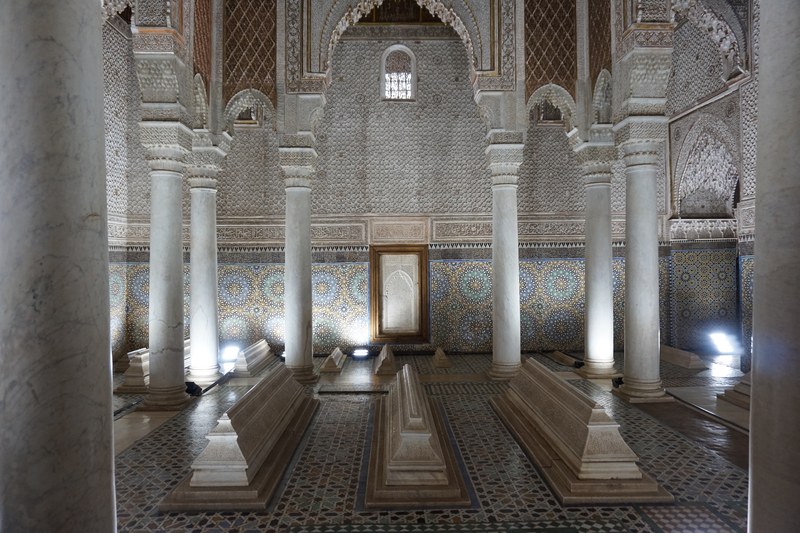
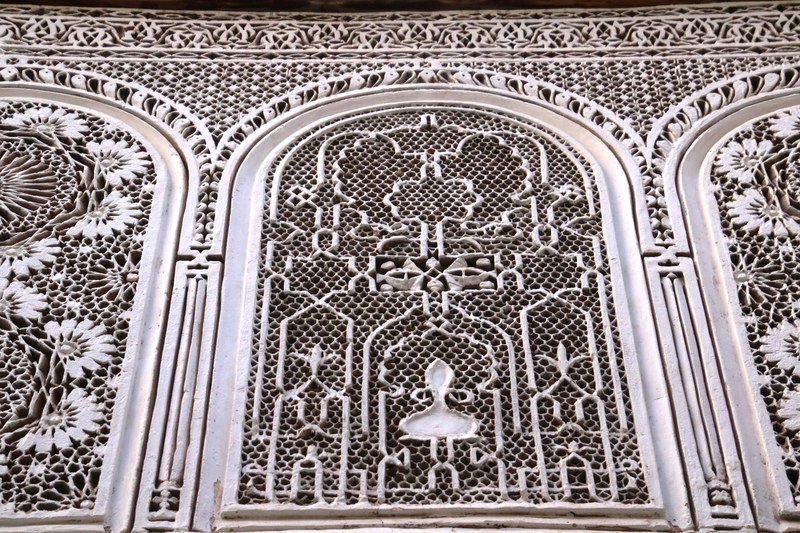
The mausoleum of the Saadian dynasty, sealed by the Alaouite sultan Moulay Ismail in 1672 and rediscovered in 1917. Three halls of ornate carved plaster, Italian Carrara marble columns, and golden cedar ceilings — an architectural crown on the city's most intimate historic site.
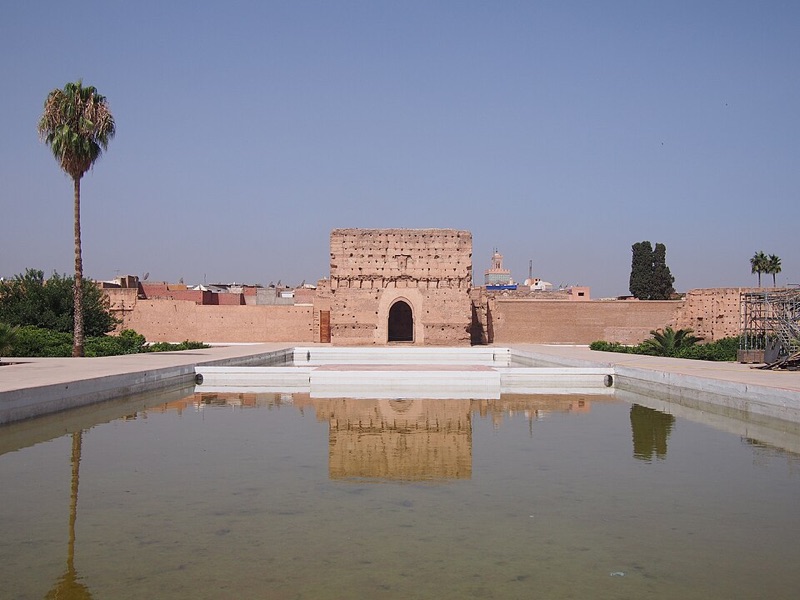
A 16th-century palace built by Sultan Ahmed al-Mansour after the Battle of the Three Kings — stripped of its gold, onyx, and Italian marble by Moulay Ismail, leaving a vast ruin of sunken gardens, crumbling ramparts, and stork-nested towers. Walk the battlements at golden hour. The emptiness is the point.
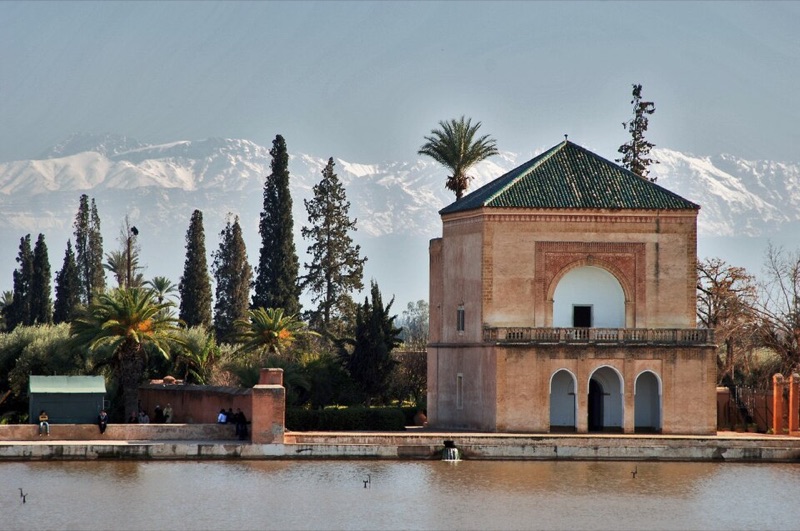
A 12th-century Almohad royal garden of olive groves and a vast reflecting pool, with a 19th-century green-tiled pavilion on its bank and the Atlas Mountains as a backdrop. The views are best in late afternoon when the mountains glow behind the pool. One of the largest and oldest royal gardens in Morocco.
From Hotel: 12 min · 4 min → Jardin Majorelle & Musée Yves Saint Laurent
1.Jardin Majorelle & Musée Yves Saint Laurent~2 hr
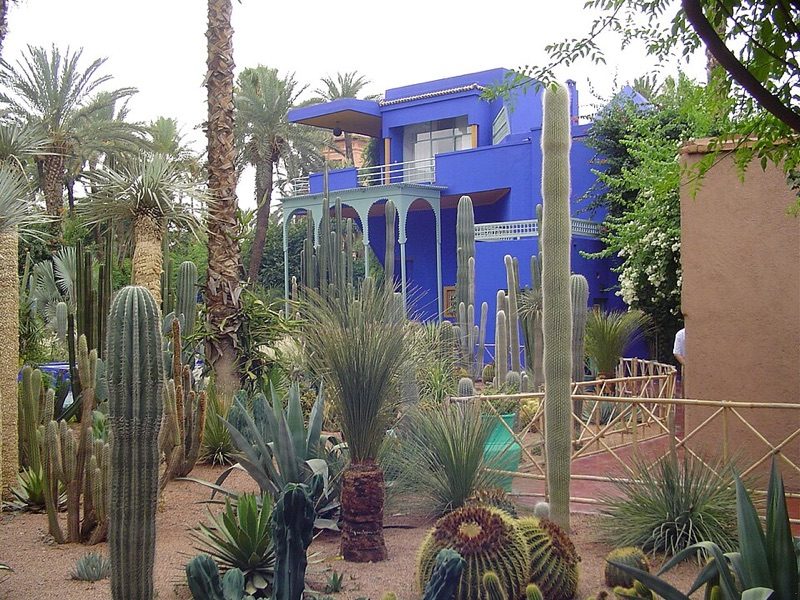
A surrealist garden created by French painter Jacques Majorelle in 1923 — electric cobalt-blue buildings, bamboo groves, cacti, and koi ponds. Yves Saint Laurent bought it in 1980 to save it from demolition; the adjacent YSL museum houses his fashion archive and Moroccan textile collection.
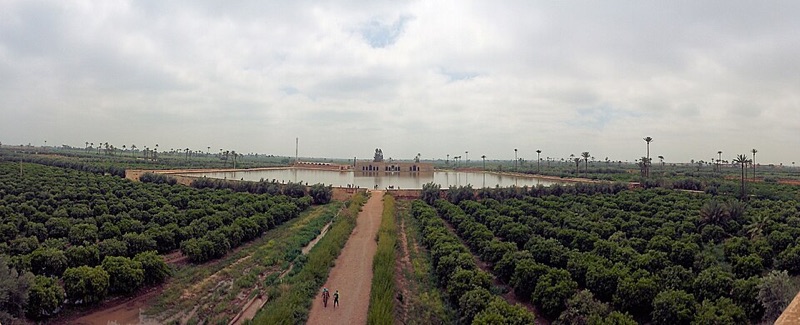
A 12th-century royal garden covering 400 hectares south of the medina — orchards of olive, orange, fig, pomegranate and apricot trees surrounding two irrigation basins. Open to the public Fri & Sun when the king is not in residence. The scale is immense and the silence total.
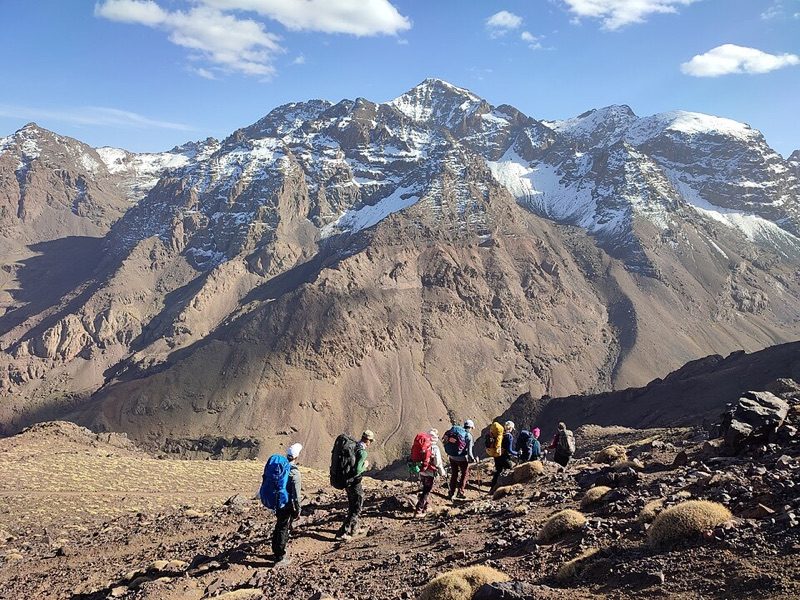
Morocco's first national park — glacial valleys, Atlas cedar forest, and the massive scree slopes of Jebel Toubkal. The 2-hour ridge trail from Imlil gives full views of the summit and the High Atlas spine without requiring a guide.
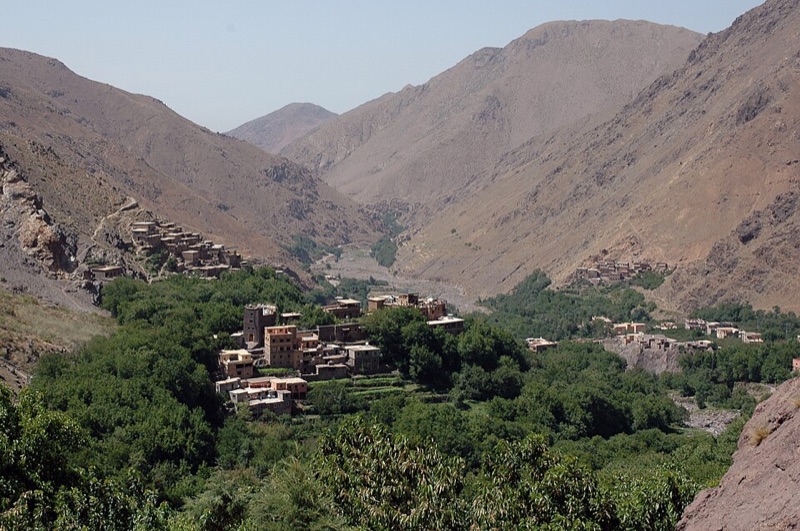
A Berber mountain village at 1,740m in the High Atlas, below North Africa's highest peak — Mount Toubkal at 4,167m. The starting point for Toubkal summit attempts; day visitors walk the ridge trail for views of the valley and the peak. Total contrast to Marrakech below.
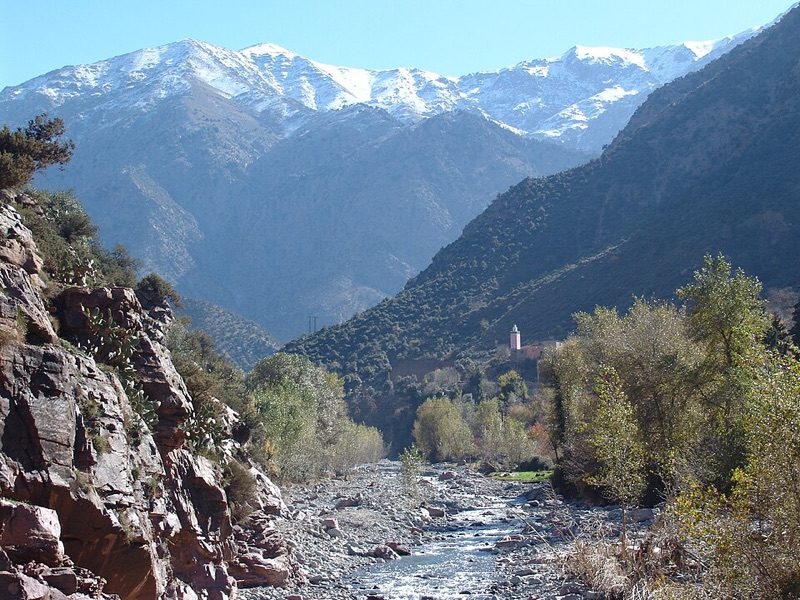
A long valley carved by the Ourika River into the High Atlas foothills — Berber villages perched on cliffs above terraced gardens, and the Atlas peaks visible above. Walk into one of the villages, accept mint tea if offered. This is rural Morocco as it has been for centuries.
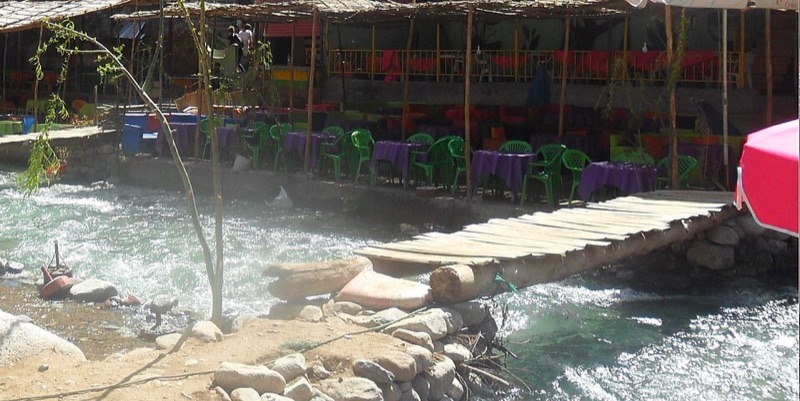
A cascade at the head of the valley reached by a scramble up the riverbed between boulders — a short hike but the views open up as you climb. The falls pool in a clear basin below. Best in spring when snowmelt swells the river; still impressive in summer. Wear shoes you can get wet.
From Hotel: 33 min · 10 min → Maison de la Photographie
1.Maison de la Photographie~1 hr
A restored 19th-century riad housing 4,500 historical photographs of Morocco from 1870–1950 — Berber villages, mountain caravans, desert encampments, and the old medina before the age of electricity. The rooftop terrace looks over the medina to the Atlas Mountains on a clear day.
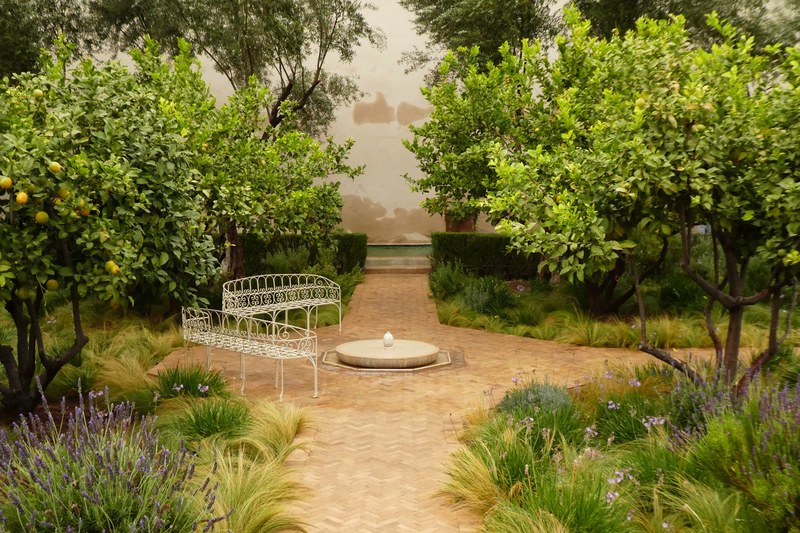
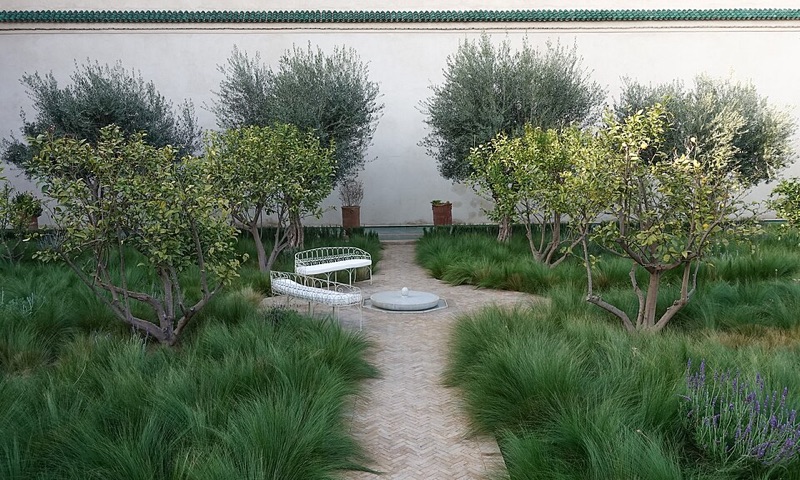
A restored 16th-century Saadian riad garden hidden behind an unmarked doorway in the Mouassine quarter — two walled gardens, an Islamic water garden with fountains and orange trees, and an exotic garden of palms and rare planting. Quiet, thoughtfully restored, and one of the medina's best discoveries.
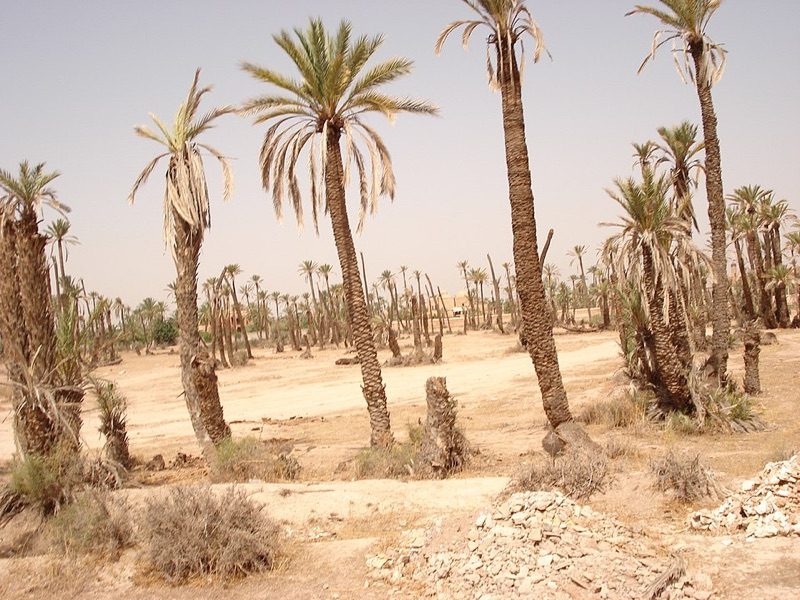
A 13,000-hectare grove of date palms on Marrakech's northern edge — thousands of trees in golden light, the Atlas visible on clear days, camels weaving between the palms. Ride through at sunrise or late afternoon when the light is low. A desert oasis inside a city.
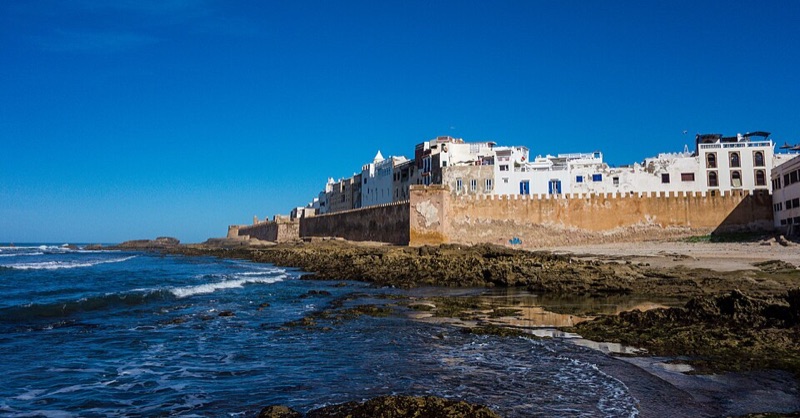
A fortified coastal medina — UNESCO World Heritage City built by architect Théodore Cornut in the 18th century for Portuguese then French trade. Whitewashed walls, blue shutters, wind-carved alleyways. Quieter and more intact than Marrakech's medina.
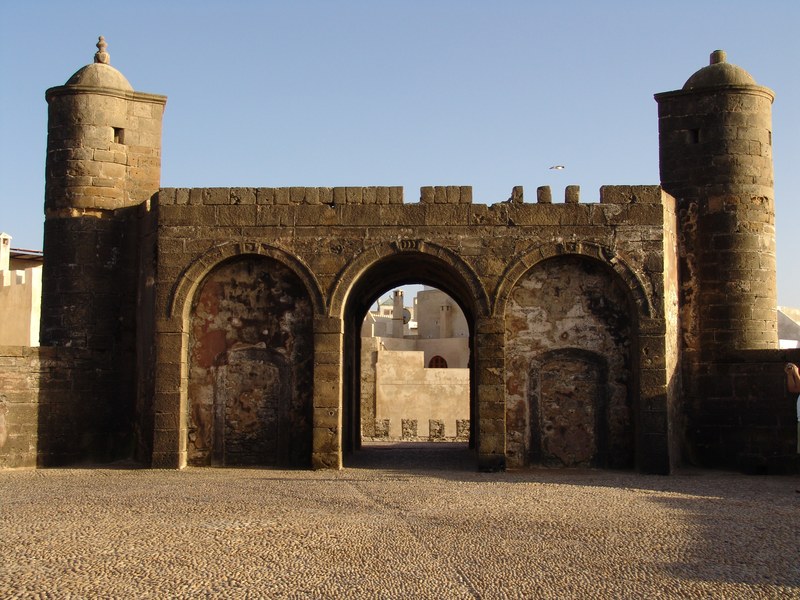
The 18th-century sea bastion on the north end of the medina — a long rampart wall bristling with cast-iron Portuguese cannons, with the full Atlantic breaking below. Walk the entire length from tower to tower. The wind is relentless and the views are extraordinary.
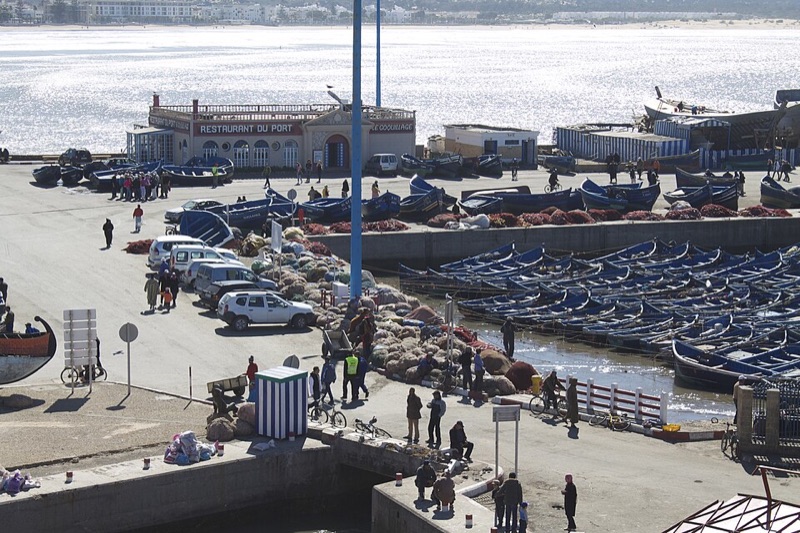
The working fishing harbor — blue wooden boats packed in rows, fishermen mending nets, seagulls circling, and the catch laid out on the dock. The color of the boats against the blue-white walls is as good as photography gets in Morocco. Walk to the far end where the boats are repaired and the industry is rawest.
From Hotel: 23 min · 5 min → Mellah — Jewish Quarter
1.Mellah — Jewish Quarter~1 hr
The historic Jewish quarter of Marrakech, established in 1558 — narrow whitewashed lanes, wooden balconies that project over the street, and the Lazama Synagogue still in use. Moroccan Jewish culture shaped the city's trade, craftsmanship, and intellectual life for centuries. A quiet pocket of the medina.
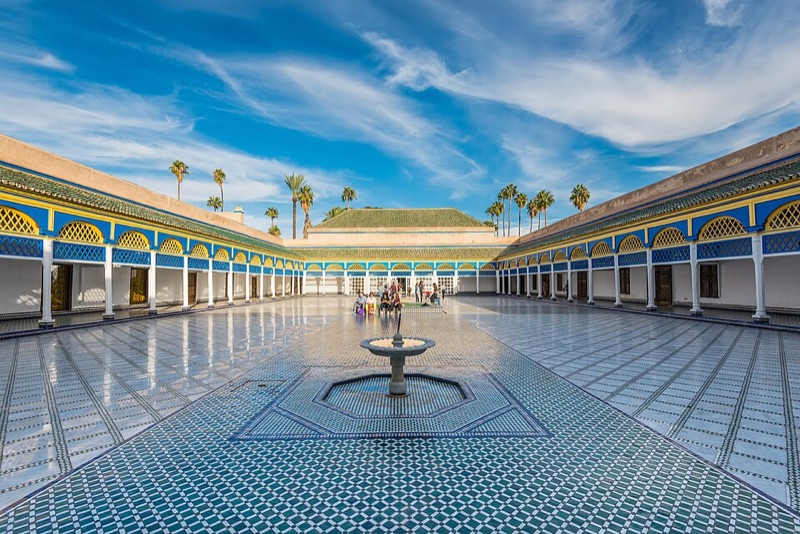
A sprawling 19th-century palace built for the Grand Vizier Ba Ahmed ben Mossa — 8 hectares of interconnected courtyards, zellij-tiled floors, carved plaster ceilings, and painted cedar canopies. The scale is palace-grade but the atmosphere remains intimate. Easy to get lost in, as intended.
A late 19th-century riad palace converted into Morocco's premier museum of traditional arts and crafts — carved cedar ceilings of extraordinary complexity, antique Berber jewelry, High Atlas carpets and weavings, painted Moroccan furniture, and ornate wedding palanquins. The courtyard alone is worth the visit.
15 min · 5 min → Maison Tiskiwin — Bert Flint Collection
4.Maison Tiskiwin — Bert Flint Collection~1 hr
A private collection by Dutch anthropologist Bert Flint — the most complete museum of Saharan Moroccan material culture in existence. Room by room it traces the trans-Saharan trade route: textiles, jewelry, musical instruments, saddles, and carved doors. An undervisited gem. Closed since the earthquake — no confirmed reopening date.
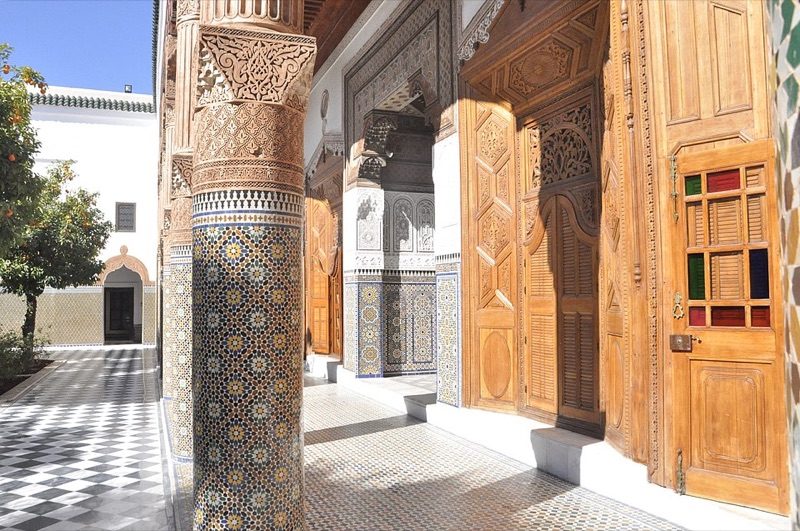
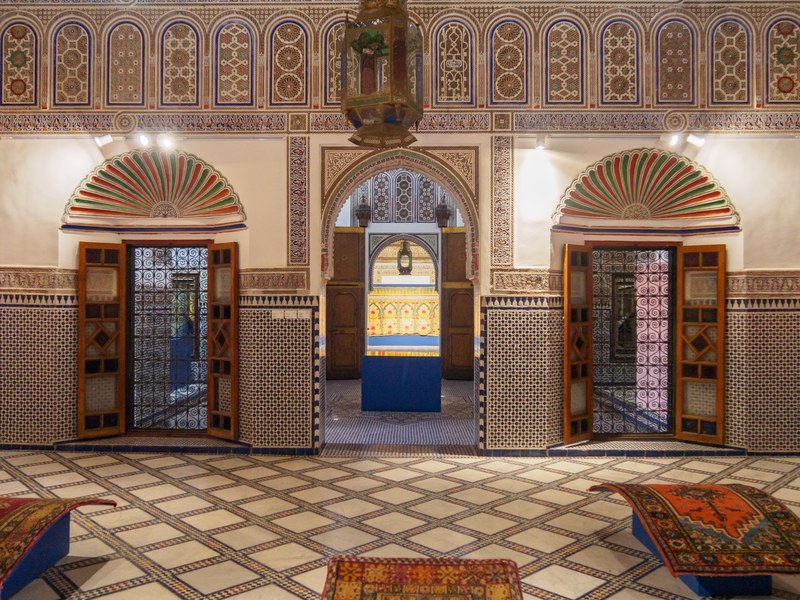
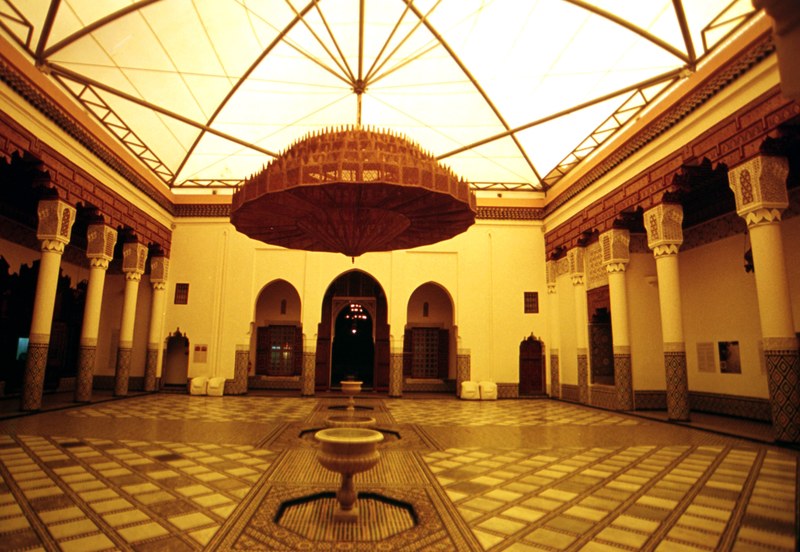
A major late-19th-century riad — Dar Mnebhi — converted into a museum of Moroccan art, ceramics, and calligraphy. The central courtyard is one of the most beautiful rooms in the medina: a central fountain, zellige floors, carved plaster walls, and a hand-painted cedar ceiling three stories high.
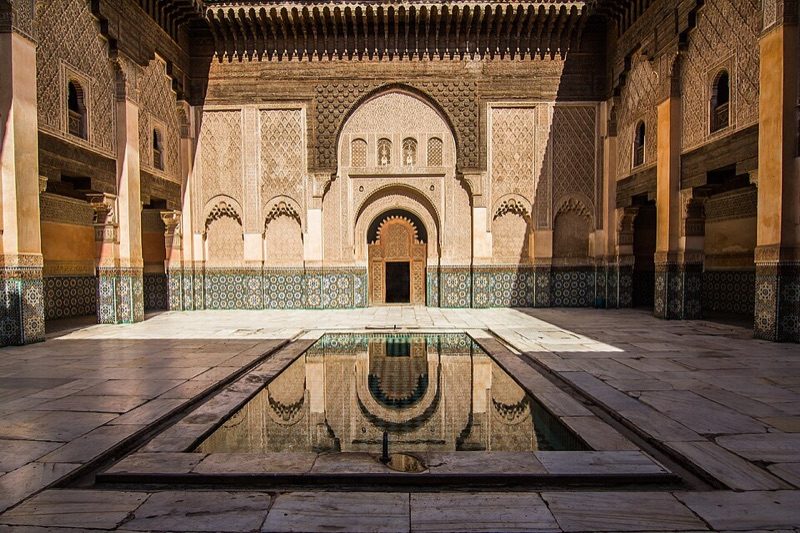
A 14th-century Quranic college with one of the finest Islamic courtyard interiors in North Africa — carved cedar ceilings, intricate stucco arabesque, and a marble-paved central court. The student cells ring the upper galleries. A place of extraordinary stillness in the middle of the medina's noise.
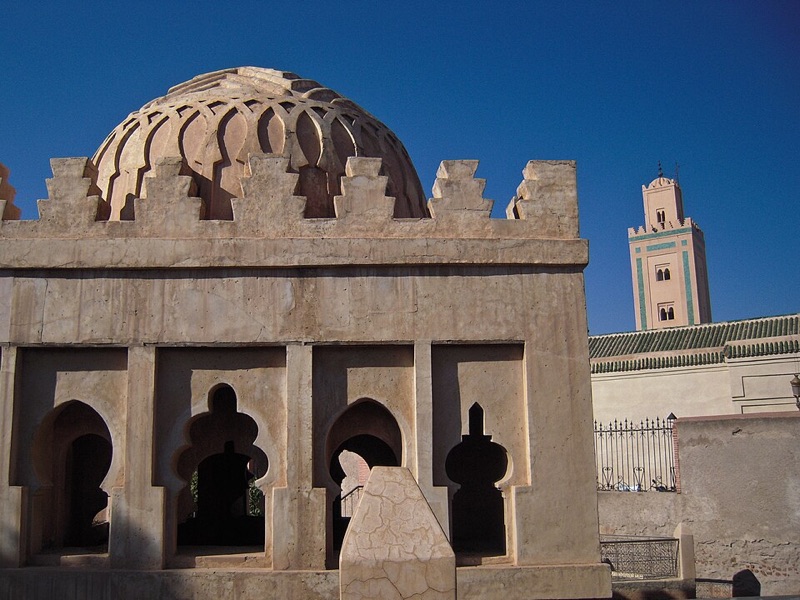
The only surviving Almoravid structure in Marrakech — a 12th-century ablution pavilion whose carved stucco and stone decorative vocabulary became the template for all Moroccan architecture that followed. Tiny, sunken below street level, and usually uncrowded. An architectural origin point.
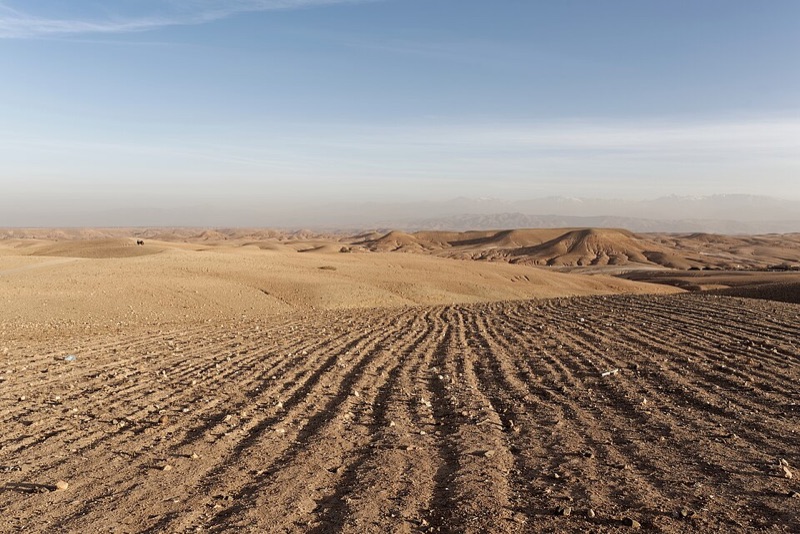
A rocky desert plateau 30 km southwest of Marrakech — not sand dunes but a moonscape of grey rock, scrub, and ancient stone, with the High Atlas peaks as a constant backdrop. The silence is absolute. Late afternoon the rocks turn amber and the Atlas turns purple.
A 3-hour guided walk through the northern medina — Ben Youssef Madrasa, Almoravid Koubba, the tanneries district, and the dyers' souk. Small group · max 10 · knowledgeable local guide · no rush.
A half-day out of the city into the High Atlas — Berber village visit, Ourika waterfall, valley walk with a local guide. Small group, returns by early afternoon.
Bahia Palace, Saadian Tombs, and El Badi in one sweep — a focused half-day on the Kasbah quarter with expert cultural commentary. Efficient and well-paced.
A small-group walking tour of the medina's less-visited spots — artisan workshops, hidden riads, neighborhood fountains, and the old Jewish quarter. Avoids the tourist circuit.
Combines the two best architectural monuments in Marrakech — Bahia Palace and Ben Youssef Madrasa — with a guided medina walk connecting them. Excellent for first-day orientation.
A 3-hour morning walk through the medina with a local guide — souks — context · not shopping stops — historic monuments and neighborhood life. Departs daily.
A full day in the High Atlas — Ourika Valley, Berber village lunch, mountain walks. Returns by 6pm. Best single-day natural landscape excursion from Marrakech.
A focused 3-hour walk through the hidden medina and the Mellah — the Jewish quarter, its synagogue and ancient cemetery, and the quiet back lanes off the main routes. Specialist cultural history guide.
Guided day trip into the Imlil Valley — waterfalls, Berber villages, and full High Atlas views, with a Berber guide and mountain lunch. No summit attempt; accessible to fit walkers.
A 3-hour small-group walk led by a local resident — neighborhood bakeries, Quranic school visits, rooftop views, and stories about medina life that guidebooks skip.
A half-day covering the Kasbah quarter's three major monuments — Bahia Palace, Saadian Tombs, El Badi ruins — with an expert guide explaining the Saadian and Alaouite dynasties.
Full-day immersive Atlas Mountains experience — Berber family visit, argan oil cooperative, valley walk, and lunch at altitude. The cultural context lifts this above a simple scenic drive.
A guided half-day covering Majorelle, Menara, and Agdal — the three major royal gardens of Marrakech with their architectural and botanical history explained. Efficient sequencing avoids midday heat.
Morocco's national dish — slow-cooked stew in a clay vessel, named after the conical pot it cooks in. Lamb with prunes and almonds, chicken with preserved lemon and olives, or vegetable with chickpeas. The slow steam makes meat fall apart.
Phyllo pastry filled with shredded pigeon or chicken, slow-cooked eggs, toasted almonds, and warming spices — dusted with powdered sugar and cinnamon. Sweet, savory, and fragile. A Fassi dish that traveled to Marrakech.
Tomato-based soup with chickpeas, lentils, celery, and fresh coriander — eaten at breakfast, used to break the Ramadan fast. Thick, fragrant, warming. Order it with chebakia · honey sesame pastry · on the side the way Moroccans do.
Fresh spearmint steeped in green tea with a generous pour of sugar — poured from a height to create a froth, refilled multiple times. Refusing the third glass is considered impolite. The ritual matters as much as the taste.
Pressed from the nuts of the argan tree, endemic to southern Morocco — nutty, rich, and different from olive oil. The culinary grade — toasted — goes on couscous, salads, and amlou · almond and argan paste. Tied to the Souss region.
Foreign number: not required. — it signs in with Google, Facebook or email, and a phone sign-up takes any prefix with the code by SMS or WhatsApp.
The widest restaurant selection available in Marrakech for delivery, covering riad kitchens and Gueliz restaurants alike. Coverage is strongest in the Hivernage and Gueliz districts; parts of the Medina may show limited options. Delivery windows of 30–50 minutes are typical at peak meal times.
Foreign number: accepted. — the SMS code reaches foreign carriers, and Google or Apple sign-in works without one.
Operates across Marrakech including the Medina, Gueliz and Hivernage. A reliable option for longer crossings to the station and to Atlas day-trip staging points; Petit Taxis — the city's metered cabs — can be cheaper for short hops, but Uber's fixed fare is useful when negotiating a price feels tiring.
Foreign number: accepted. — the code arrives by SMS on a foreign number, with a WhatsApp code offered when the SMS does not land.
Careem is the regional alternative to Uber and operates on the same basic model in Marrakech. Driver supply tends to be similar at peak times; useful as a fallback when Uber shows surge pricing or limited availability on busy Djemaa el-Fna evenings.
A Tomb Found From the Sky, a Garden That Became a Grave
The Saadian Tombs sat completely hidden for almost 250 years, and what finally exposed them wasn't excavation — it was an airplane. After Sultan Moulay Ismail sealed the mausoleum off from public view around 1672, deliberately trying to erase his predecessors from memory, the site simply vanished from common knowledge. It took a French aerial survey of Marrakech in 1917 to spot the walled-off complex from above; ground crews then broke through from the neighboring mosque to reach a burial hall almost nobody living had ever seen.
Yves Saint Laurent didn't just save Jardin Majorelle from demolition in 1980 — he ended up staying there permanently. He'd been coming to the garden for decades by the time he died in 2008, and his close friends chose to scatter his ashes in its rose garden rather than anywhere in Paris. A memorial pillar now stands among the same cobalt-blue buildings and bamboo groves he fought to preserve, simply inscribed with his name and dates.