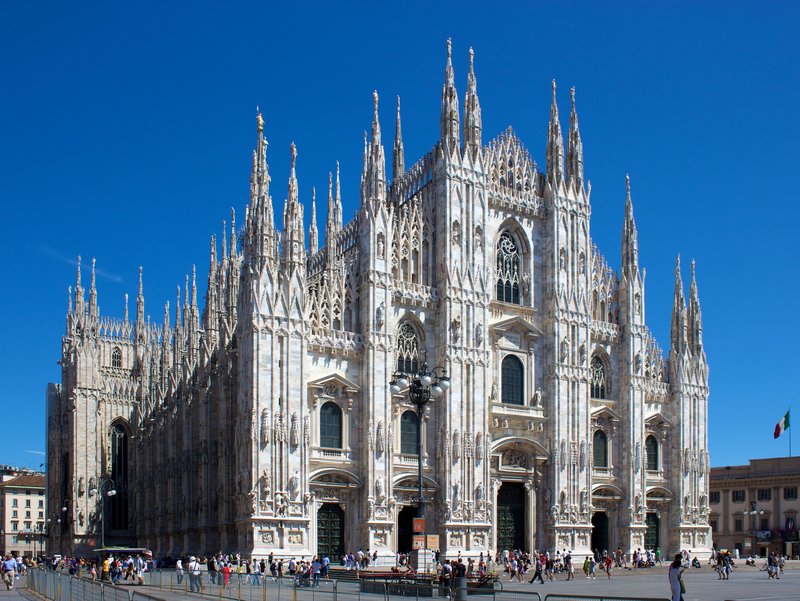
Milan's cathedral is one of the largest Gothic churches on earth, five centuries in the making and crowned with a forest of 135 marble spires and thousands of statues. The real reward is the rooftop walk, where you stroll among the pinnacles with the gilded Madonnina overhead and the Alps on a clear day.
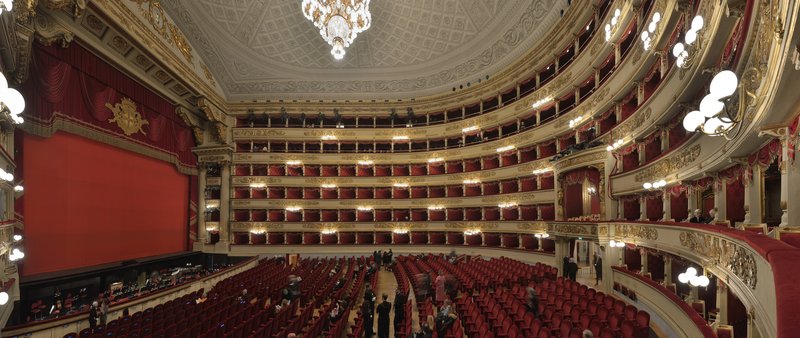
La Scala is the most storied opera house in the world — the stage that launched Verdi, Puccini, and Maria Callas. Without a performance ticket you can still tour the theatre museum, peer into a velvet-and-gilt box over the auditorium, and see costumes, busts, and instruments tracing two centuries of opera.
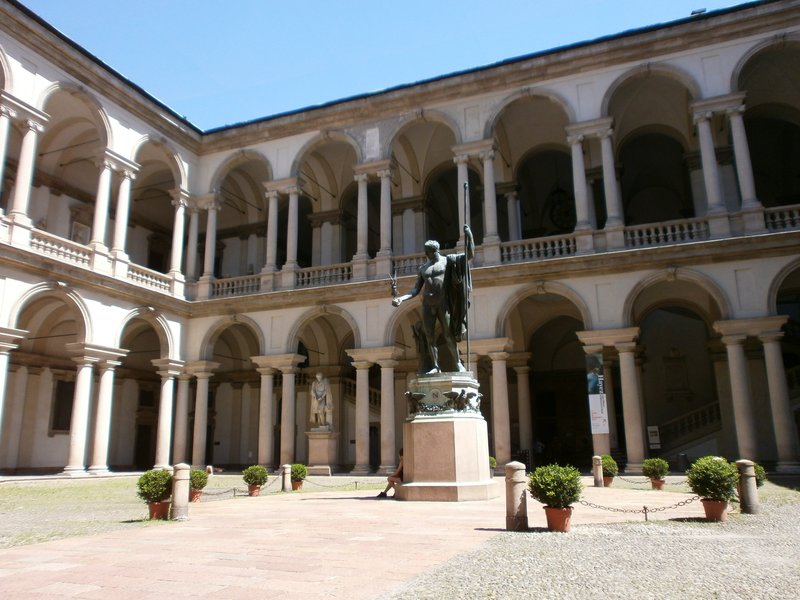
One of Italy's foremost collections of painting, set in a grand palazzo around a colonnaded courtyard. The galleries hold masterworks that anchor any survey of Italian art — Raphael's Marriage of the Virgin, Mantegna's foreshortened Dead Christ, Caravaggio's Supper at Emmaus, and Hayez's The Kiss.
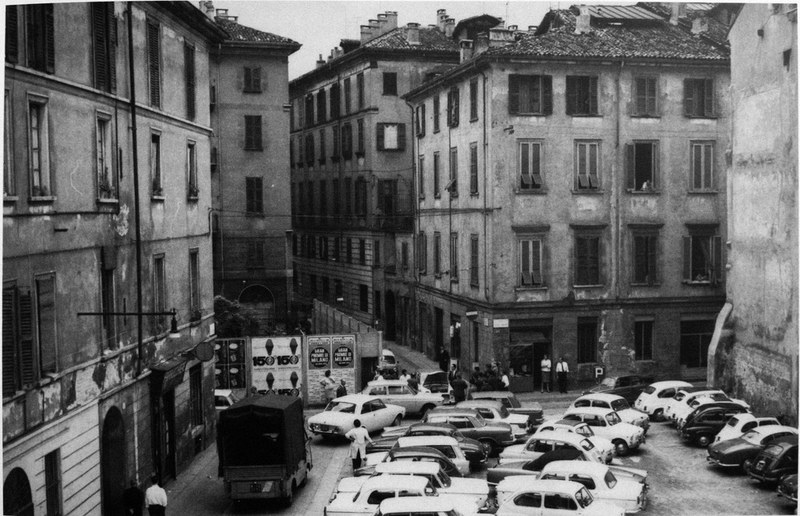
Milan's bohemian quarter, a grid of cobbled lanes around the art academy lined with galleries, antique dealers, candlelit trattorie, and tiny cafés. Via Fiori Chiari and Via Madonnina are the heart of it — a slow late-afternoon wander before aperitivo is the way to see it.
From Hotel: 13 min · 12 min → San Maurizio al Monastero Maggiore
1.San Maurizio al Monastero Maggiore~45 min
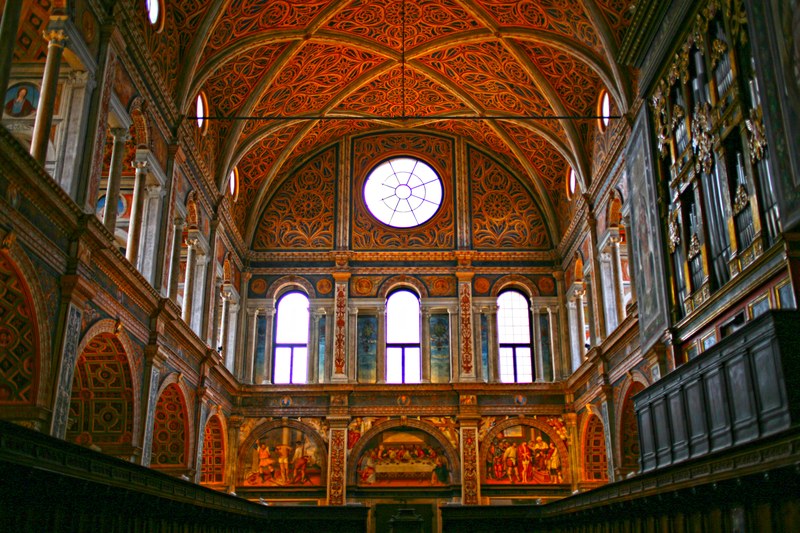
A plain street facade hides the most dazzling interior in Milan — every wall and vault frescoed top to bottom by Bernardino Luini and his circle, which earns it the nickname "the Sistine Chapel of Milan." It was the church of an enclosed Benedictine convent, and entry is free.
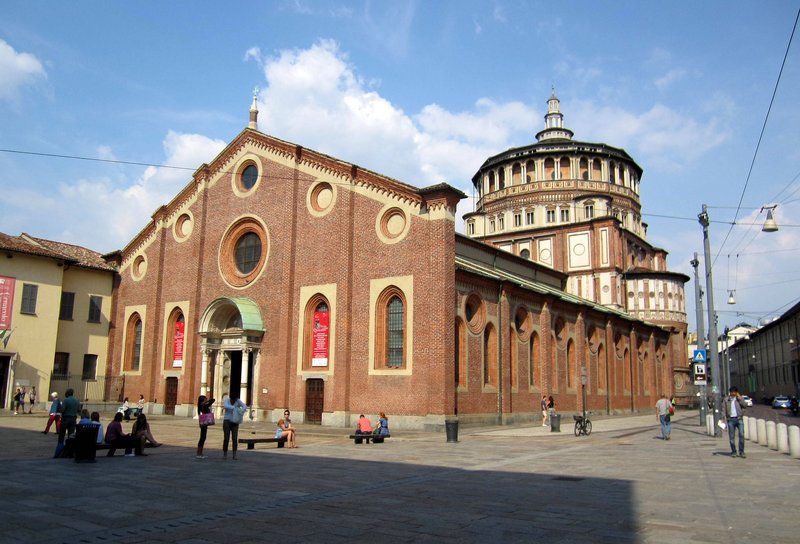
A serene Renaissance church whose adjoining refectory holds Leonardo da Vinci's Last Supper — one of the most famous paintings in the world. Only small groups enter for a strict 15-minute slot, so booking well ahead is essential. The Bramante apse and cloister of the church itself are worth lingering over too.
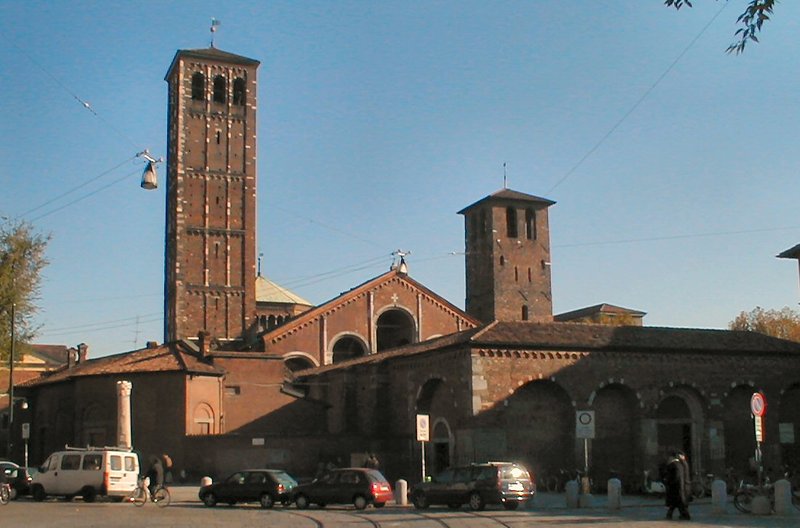
Founded by Milan's patron Saint Ambrose in the 4th century and rebuilt in the 11th, this is the model of Lombard Romanesque — a brick atrium, two mismatched bell towers, and a golden altar inside. It is one of the oldest and most atmospheric churches in the city, and far quieter than the Duomo.
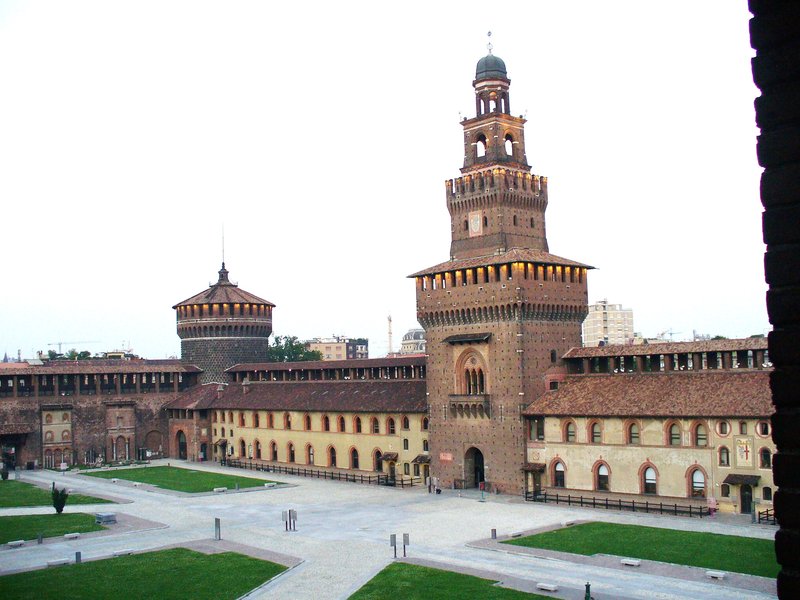
The vast brick fortress of the Sforza dukes, ringed by towers and battlements and entered beneath the soaring Filarete Tower. The courtyards are free to wander; inside, the civic museums hold Michelangelo's unfinished final work, the Rondanini Pietà. Step through the back gate and Parco Sempione opens up beyond.
From Hotel: 17 min · 12 min → Basilica di San Lorenzo Maggiore
1.Basilica di San Lorenzo Maggiore~45 min
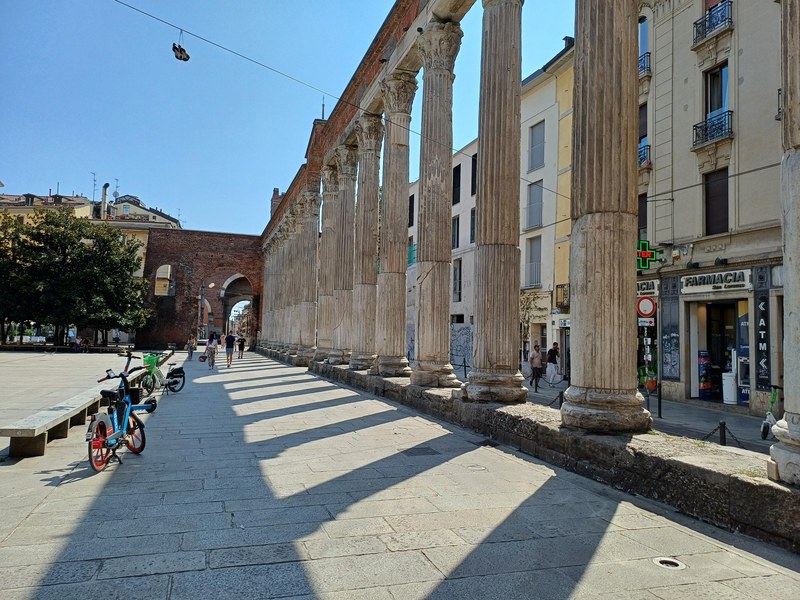
One of the oldest churches in Milan, an early-Christian basilica with a great domed plan and Roman spolia built into its walls. Out front stand the Colonne di San Lorenzo — sixteen Corinthian columns from the 3rd century, the city's finest Roman relic and a favourite evening gathering spot.
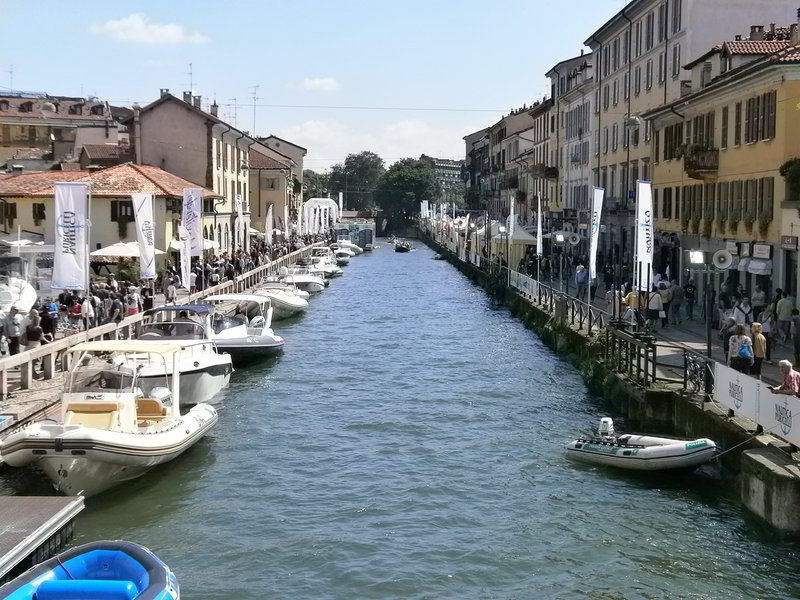
Milan's canal district, the last visible stretch of a medieval waterway network partly engineered by Leonardo. The Naviglio Grande and Naviglio Pavese are lined with vintage shops, artisan studios, and bars; come at dusk, when the towpaths fill for the city's famous aperitivo and the water catches the light.
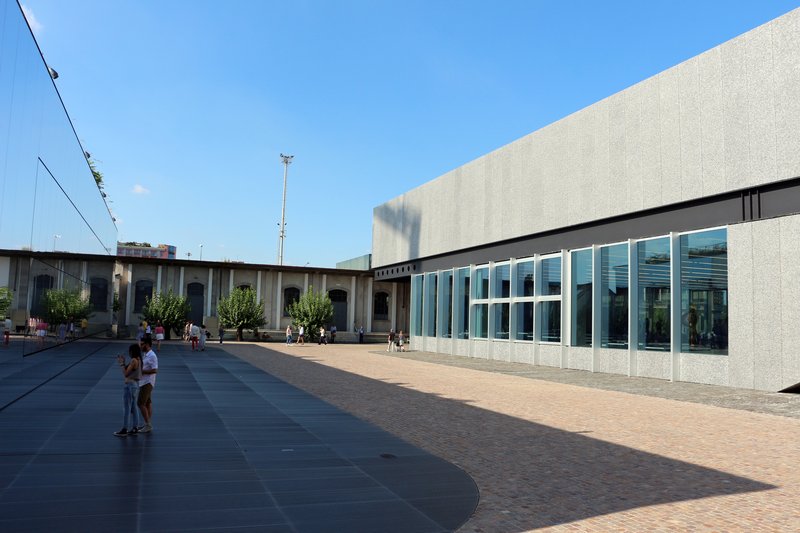
A major contemporary art institution in a repurposed 1910 distillery redesigned by Rem Koolhaas. Industrial buildings mix with new structures — including a tower clad in 24-karat gold foil — housing a permanent collection and ambitious solo exhibitions by leading contemporary artists.
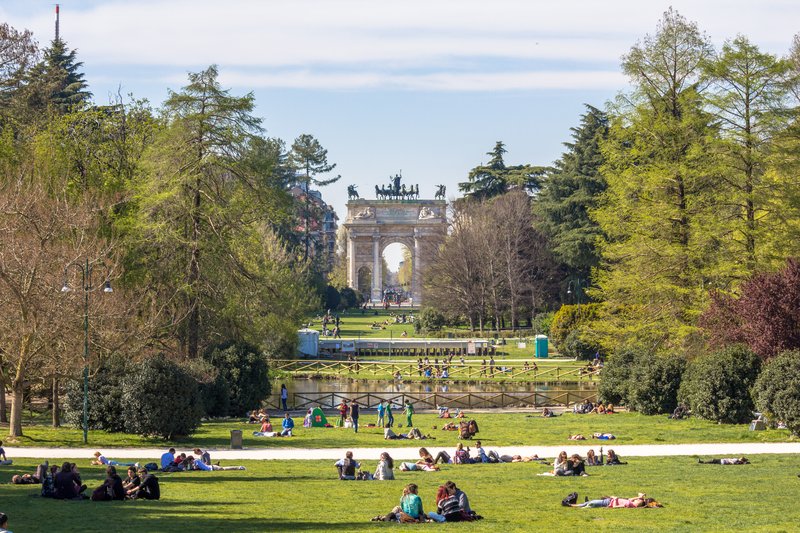
Milan's great central park, laid out behind the castle in English-garden style with winding paths, a lake, and long lawns. At the far end stands the Arco della Pace, a neoclassical triumphal arch, and a climbable iron lookout tower gives a quick view over the greenery — a restful breather between heavy sights.
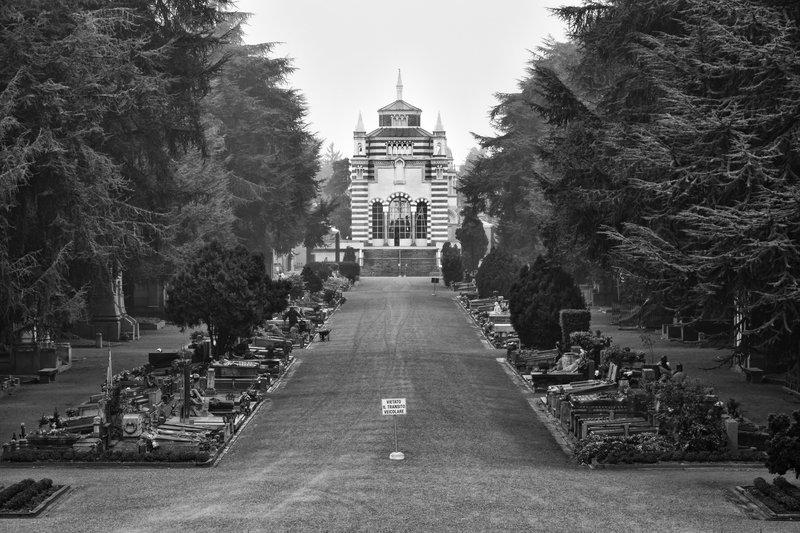
An open-air sculpture museum — 25 hectares of funerary art by Wildt, Fontana, and Manzù. The Famedio entrance is a neo-medieval marble hall of fame; beyond it, monumental tombs line the avenues. Manzoni, Toscanini, and Dario Fo are buried here.
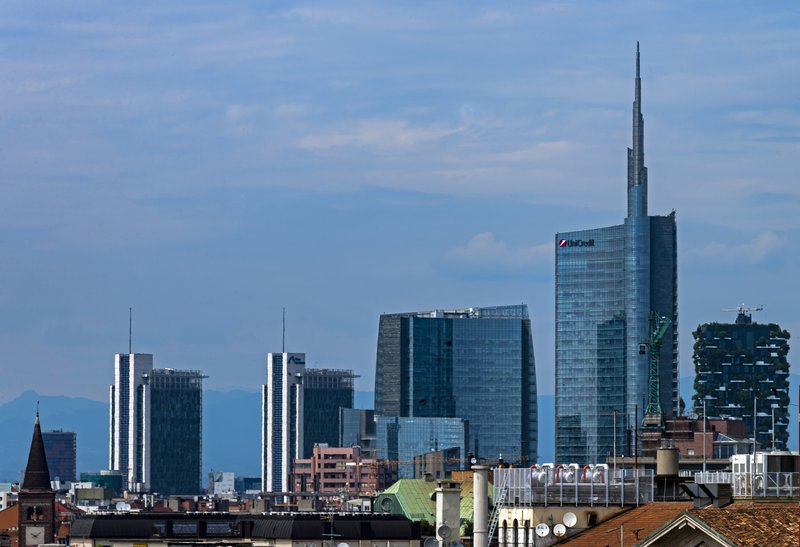
Two residential towers clad in 730 trees, 5,000 shrubs, and 11,000 perennials — the most celebrated example of biophilic architecture in the world. Winner of the 2015 Best Tall Building Worldwide award, best viewed from Biblioteca degli Alberi park and Piazza Gae Aulenti.
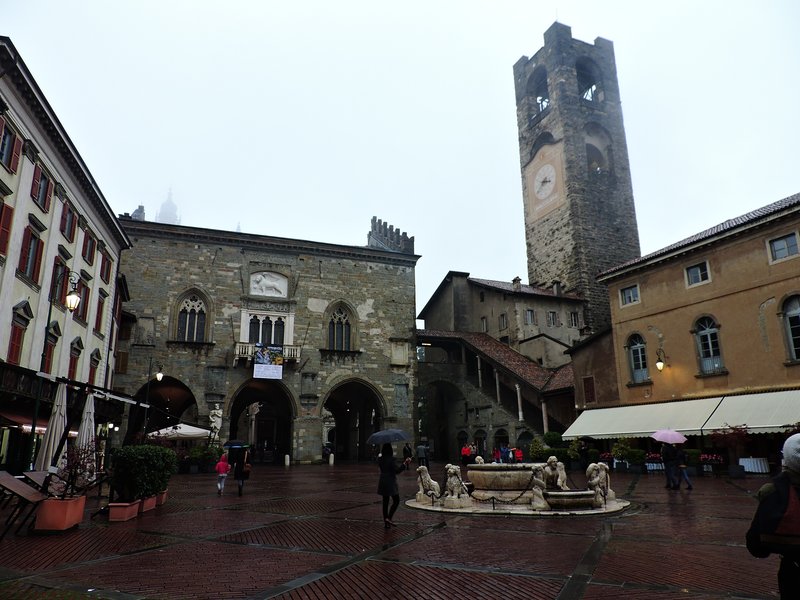
The core of Bergamo's walled Città Alta — cobblestones framed by the Palazzo della Ragione, the Campanone tower whose 100 nightly chimes mark the city's ancient curfew, and the Contarini Fountain. Ride the Funicolare Città Alta up from the lower town. Le Corbusier called it a perfect work of art.
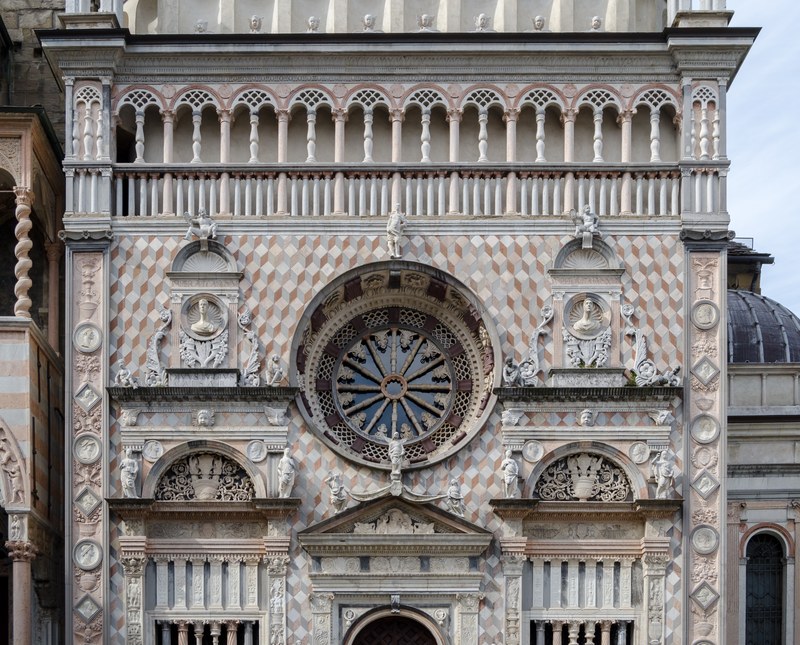
A white-and-red marble facade commissioned in 1476 as the mausoleum of condottiere Bartolomeo Colleoni — the finest early Renaissance sculpture in Lombardy. Giovanni Antonio Amadeo carved every surface with medallions and bas-reliefs; the interior holds a gilded equestrian monument and Tiepolo's frescoes.
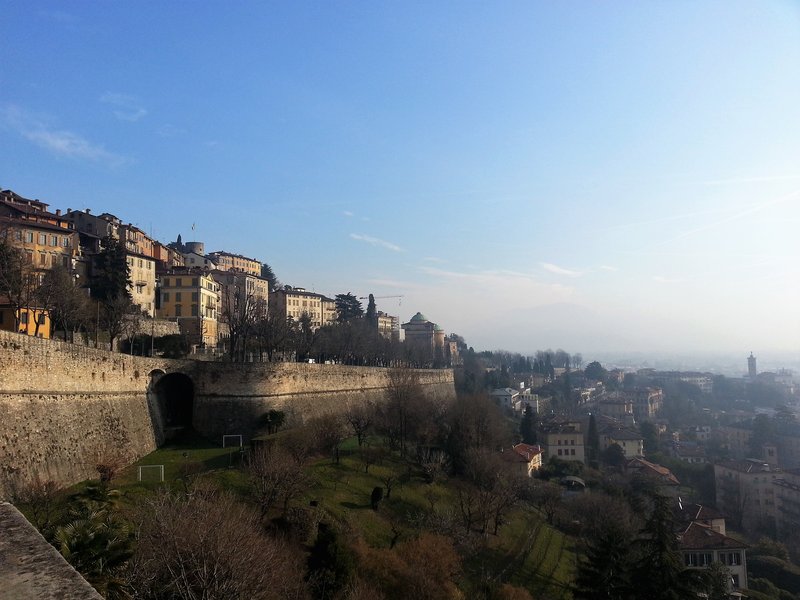
Six kilometers of 16th-century Venetian ramparts — bastion walls and casemates built by Venice from 1561 — still completely encircle Città Alta. Designated UNESCO in 2017 as the Venetian Works of Defence. Walk Viale delle Mura for panoramic views across the Po Valley to the Alps.
Reserved entry to Leonardo's Last Supper with a guide who decodes the fresco, plus the Renaissance church of Santa Maria delle Grazie — the hardest ticket in Milan, secured for you.
An evening wander through the Navigli canal district with tastings of focaccia di Recco, farinata, risotto alla Milanese, and artisanal gelato — aperitivo culture at its most authentic.
Full-day guided trip from Milan — coach to Como, panoramic lake cruise to Bellagio, free time for lunch on the water, and a final stop in Lugano, Switzerland. Two countries, one day.
Creamy short-grain rice stained gold and perfumed with saffron, finished with butter and Parmesan — Milan's defining first course, often served alongside ossobuco.
Veal shank braised slowly until the marrow melts, traditionally paired with saffron risotto and finished with gremolata — Lombard comfort food at its richest.
The tall, domed sweet bread studded with candied fruit and raisins, invented in Milan and now eaten across Italy at Christmas — bakeries sell mignon versions year-round.
The "mistaken" Negroni — Campari and sweet vermouth topped with sparkling wine instead of gin — invented at Bar Basso in Milan in the 1970s and now an aperitivo icon.
Foreign number: accepted. — it uses the same Uber account, so the SMS code reaches foreign carriers and Google or Apple sign-in works without one.
Milan's most reliable delivery app for visitors, with strong coverage across the Centro Storico, Brera, Navigli and Porta Venezia. Good selection of high-end restaurants and traditional trattorias; delivery times from the Centro Storico average 25–40 minutes. Better late-night coverage than Glovo.
Foreign number: not required. — it signs in with Google, Facebook or email, and a phone sign-up takes any prefix with the code by SMS or WhatsApp.
Popular across Milan and a strong alternative to Uber Eats, particularly for grocery delivery alongside restaurant orders. Coverage is dense in the inner city; useful for pizza and Milan's aperitivo-friendly snack menus. Delivery windows average 30–45 minutes from the Centro Storico.
The world's most famous opera house — opera, ballet, and symphonic concerts in a gilded 18th-century auditorium. Book early; the season runs autumn to summer.
Foreign number: accepted. — the SMS code reaches foreign carriers, and Google or Apple sign-in works without one.
Available in Milan as a premium tier only — UberBlack and UberVan, no UberX. Fares are higher than local taxis, so Free Now is cheaper for standard rides; Uber earns its place on a late night when the taxi ranks are empty and a fixed price matters more than the fare.
Foreign number: accepted. — the SMS code reaches foreign carriers across Europe, and an account from another Free Now city works here unchanged.
Milan's most practical rideshare app, hailing licensed yellow cabs with upfront pricing. Wide coverage across the city centre and Navigli. Shorter wait times than Uber in the Centro Storico; strongly recommended over street hailing during fashion weeks.
The Certosa di Pavia — one of the most elaborate Renaissance monasteries in Italy, with an intricate marble facade and frescoed cloisters — sits just outside a university city of Roman bridges and Lombard churches. Direct regional train.
Italy's most glamorous lake, ringed by villa gardens and steep wooded shores. A half-hour train ride drops you on the Como waterfront, where ferries reach Bellagio, Varenna, and Menaggio.
The elegant former royal capital, all arcaded boulevards and baroque squares, home to the world-class Museo Egizio — the greatest hoard of Egyptian antiquities after Cairo — and the soaring Mole Antonelliana.
The culinary capital of Italy — birthplace of ragù, tortellini, and mortadella — with Europe's oldest university, a stunning leaning towers skyline, and 40 km of medieval porticoes sheltering the historic center. Frecciarossa direct.
Shakespeare's city of Romeo and Juliet, built around a remarkably preserved Roman arena that still hosts summer opera. Pastel palazzi, the Adige river, and Piazza delle Erbe make it a romantic day out.
Leonardo da Vinci's The Last Supper is not a fresco. A true fresco is painted directly onto wet plaster, which bonds the pigment to the wall as both dry — permanent, but requiring the painter to work extremely fast. Leonardo instead painted in tempera and oil on a dry plaster surface, using an experimental technique that gave him the slow, deliberate pace he preferred. The problem is that this method doesn't bond to the wall the same way. The paint started flaking almost immediately after the work was finished in 1498, and the painting has been deteriorating ever since. Every subsequent attempt to save it — including a botched 18th-century restoration and a bombing that destroyed the refectory roof in 1943 — made things worse. The restoration completed in 1999 stabilized what remains, but roughly 80 percent of the original surface is now lost. What you're seeing is largely the work of centuries of restorers rather than Leonardo himself.
The Navigli canal district has a less visible connection to Leonardo. The vast network of navigli — canals — that once crisscrossed Milan was the logistical spine of the Duomo's construction — marble quarried near Lake Maggiore was floated down to the city via canals. Leonardo, living in Milan under the patronage of Ludovico Sforza, worked on improvements to the canal lock system in the 1490s. Most of the city's canals were filled in during the 1930s under Mussolini, leaving only the Naviglio Grande and Naviglio Pavese. The rest are now streets, with the old canal beds still visible as unusually wide, slightly sunken roads in the urban grid.