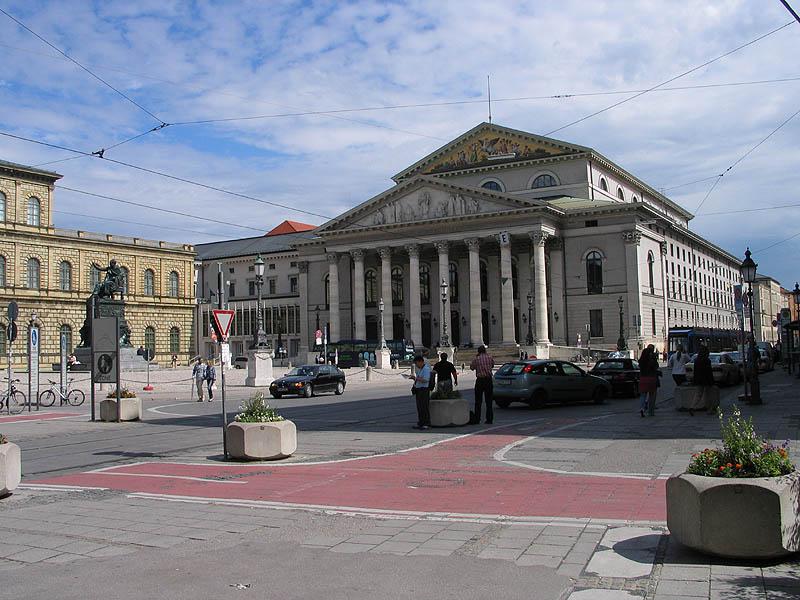
The Bavarian State Opera's home — a neoclassical temple on Max-Joseph-Platz with six Ionic columns, rebuilt after WWII destruction to match the original 1818 Leo von Klenze design. The square is one of Munich's grandest: the Residenz palace to the north, the opera house to the east, and Maximilian I Joseph's equestrian statue at the center. Opera performances sell out months ahead.
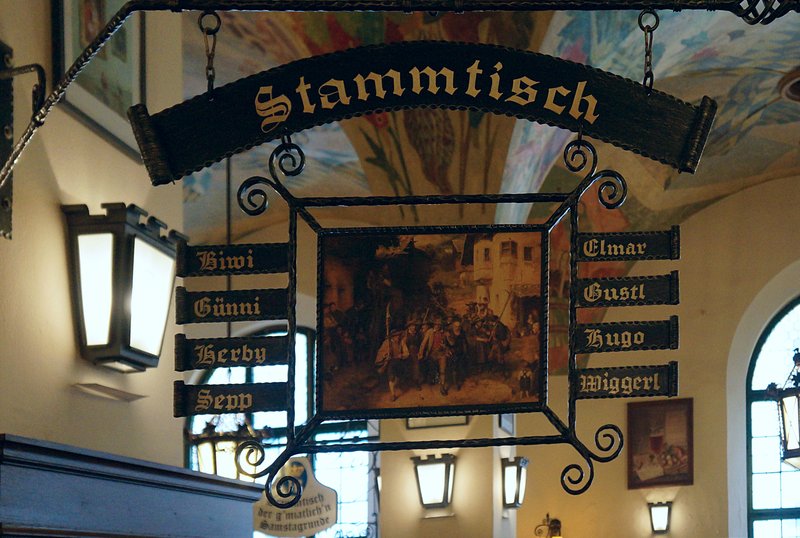
The Bavarian state brewery's beer hall — founded in 1589 as the royal brewhouse and open to the public since 1828. The ground-floor Schwemme seats 1,300 under vaulted painted ceilings, a brass band on the central platform, and the regulars' own steins padlocked in iron cages along the wall.
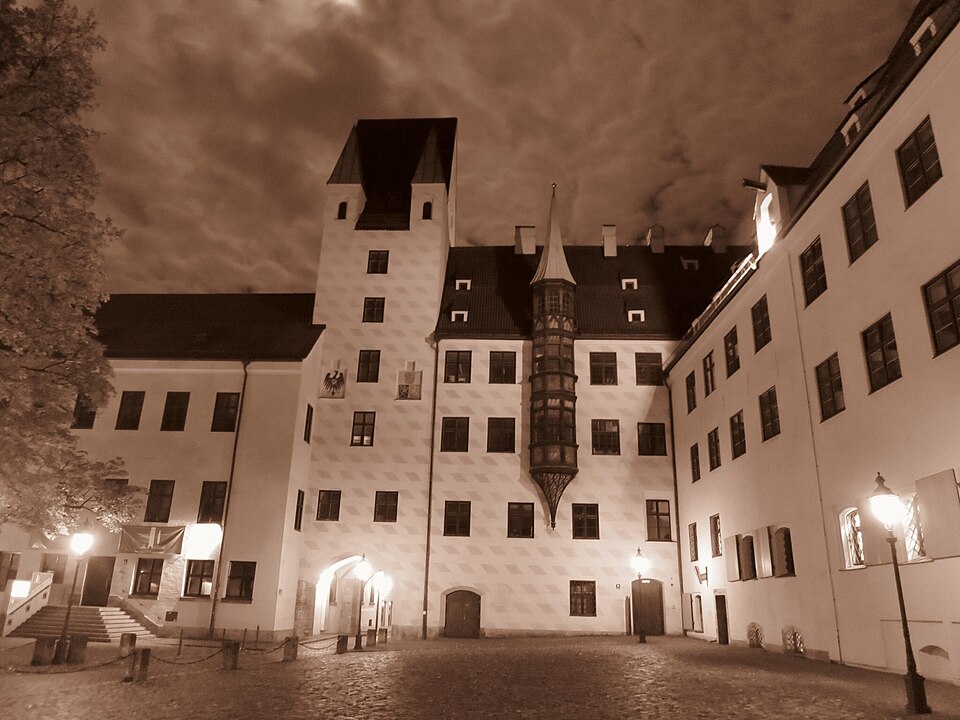
Munich's oldest imperial residence — the original Wittelsbach seat from 1253, predating the Residenz by two centuries. The inner courtyard centers on the Affenturm — Monkey Tower — named after a legend of a pet monkey kidnapping the infant Ludwig IV. A small museum inside traces Munich's founding.
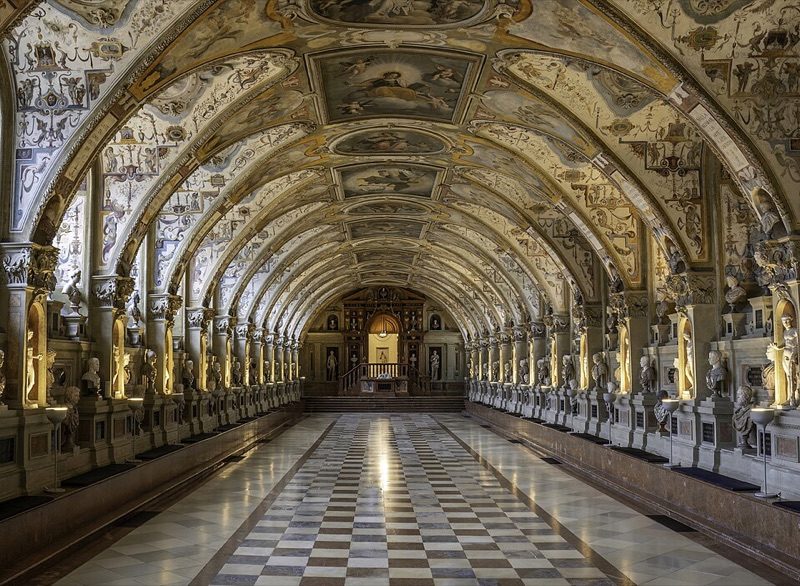
The Wittelsbach dynasty's seat of power for 500 years and one of Europe's grandest urban palaces — Antiquarium hall is the single-room highlight, a 70-meter Renaissance gallery of antique busts beneath ceiling frescoes. Treasury and Court Church round out the visit.
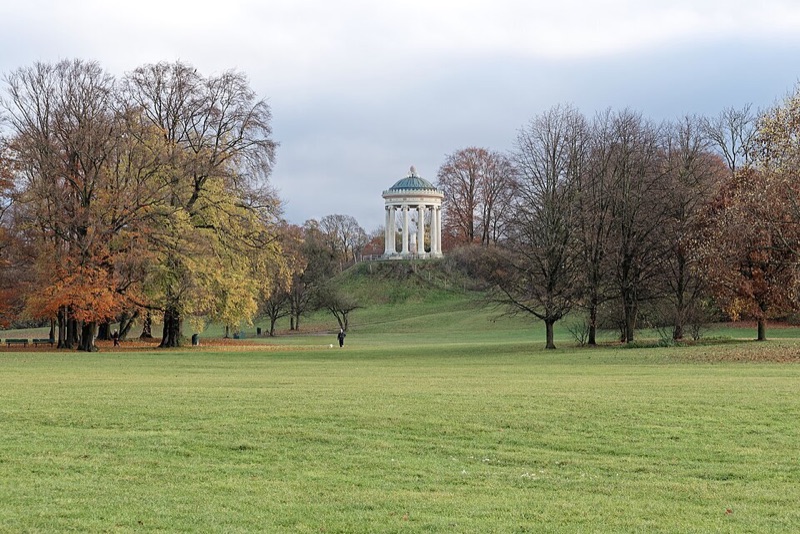
Leo von Klenze's circular Greek-temple folly sits on an artificial hill that hands you Munich's best skyline view: Frauenkirche's two onions, the Theatinerkirche's yellow flank, the Alps in the distance.
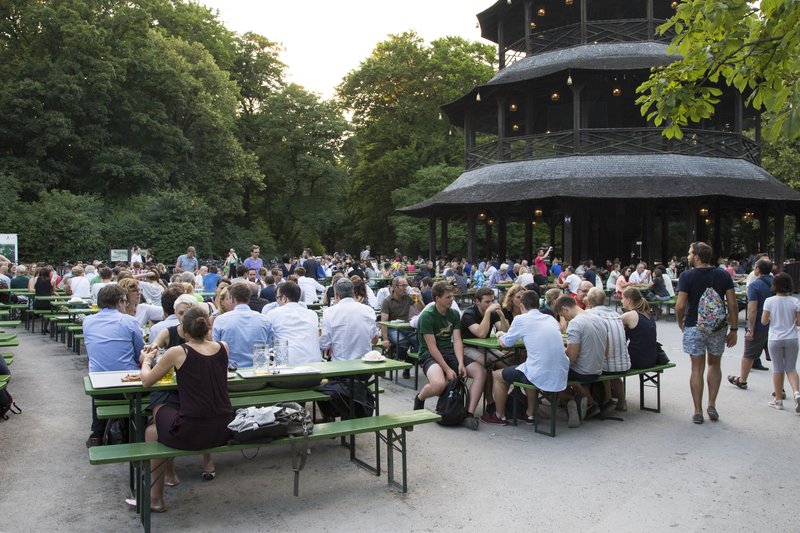
A 25-meter wooden pagoda raised in 1790 on the model of the tower at Kew Gardens and rebuilt after the 1944 bombing. The beer garden at its foot seats 7,000 under chestnut trees — Munich's second largest — with a brass band playing from the tower's first gallery.
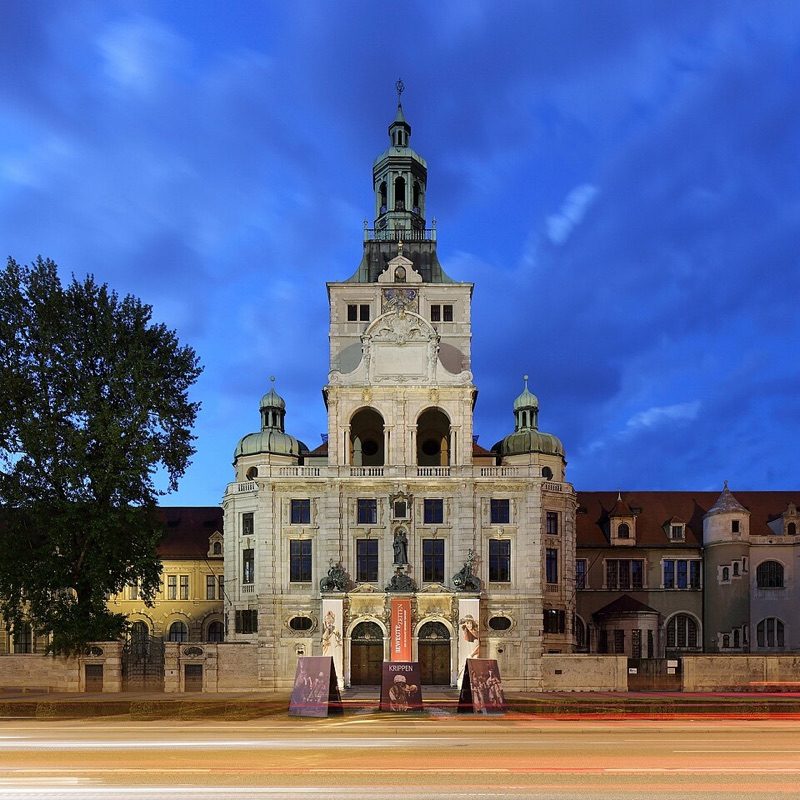
One of the largest decorative-arts museums in Europe — a vast Prinzregentenstraße palace of Bavarian craftsmanship: medieval ivories, Riemenschneider woodcarvings, baroque period rooms, armour, and a celebrated basement of historical Nativity crèches.
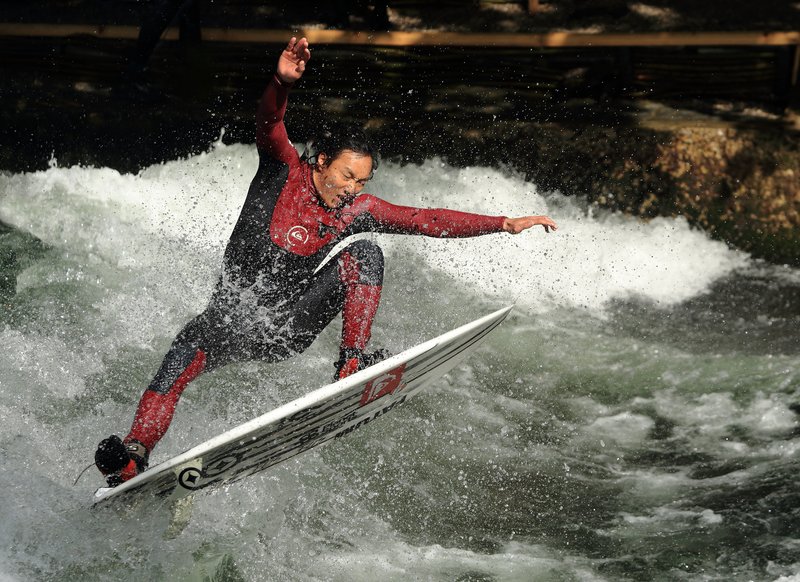
A standing wave where the man-made Eisbach shoots out from under the Prinzregentenstraße bridge — concrete blocks sunk into the riverbed in the 1970s hold the current in one permanent break. Surfers queue on both banks and drop in by rotation, year-round, in Alpine snowmelt — permitted again under new safety rules after a year's suspension.
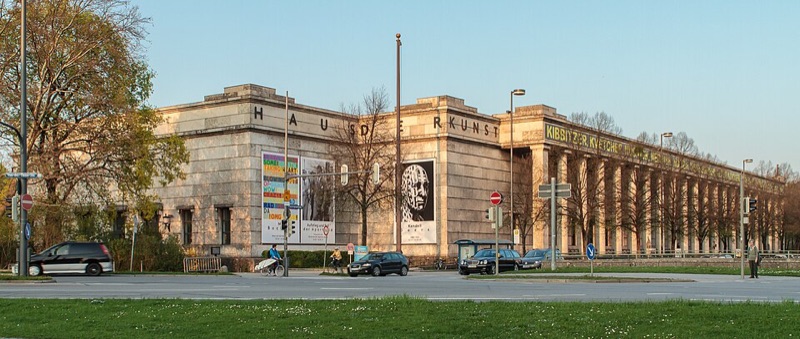
A monumental colonnaded gallery on the southern edge of the Englischer Garten, built in 1937 and now one of Europe's most ambitious contemporary-art kunsthalles — large-scale international shows, no permanent collection, the building's own fraught history part of the visit.
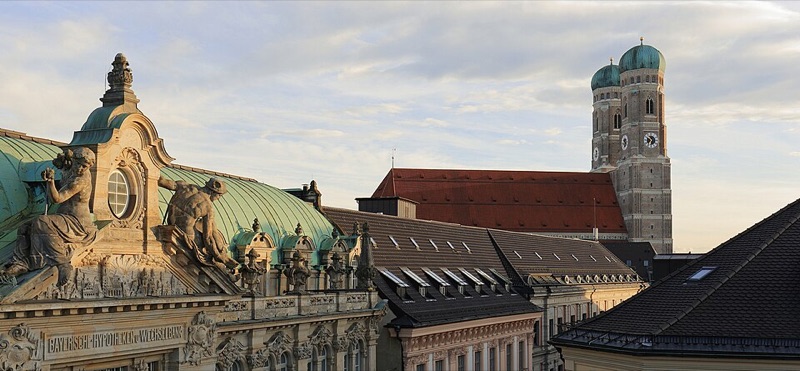
Munich's late-Gothic cathedral, built 1468–1488 in red brick with two onion-domed towers that are the unmistakable skyline silhouette. Inside, the so-called Devil's Footprint in the entry stone is part of every Munich legend told by every local.
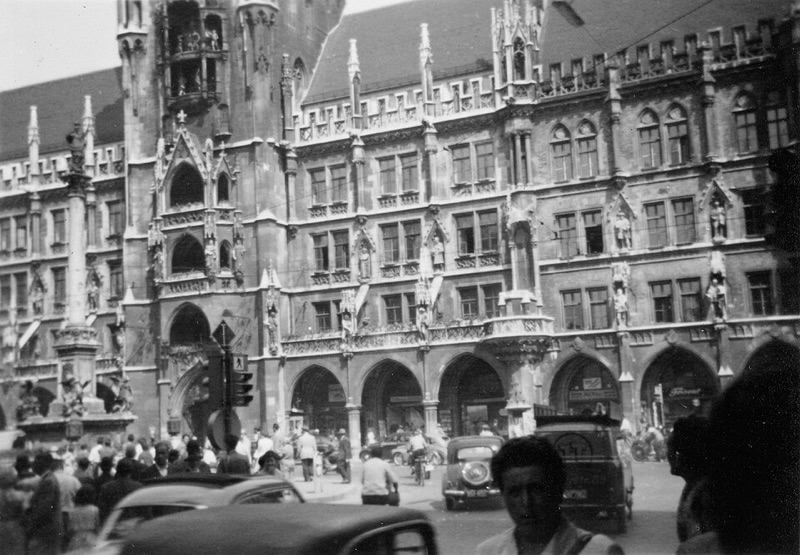
Munich's central square since 1158, framed by the Neo-Gothic Neues Rathaus and the historic Altes Rathaus. The Glockenspiel performs daily at 11:00am · noon · summer 5:00pm — 43 bells and 32 life-size figures re-enacting a 1568 royal wedding and the Schäfflertanz.
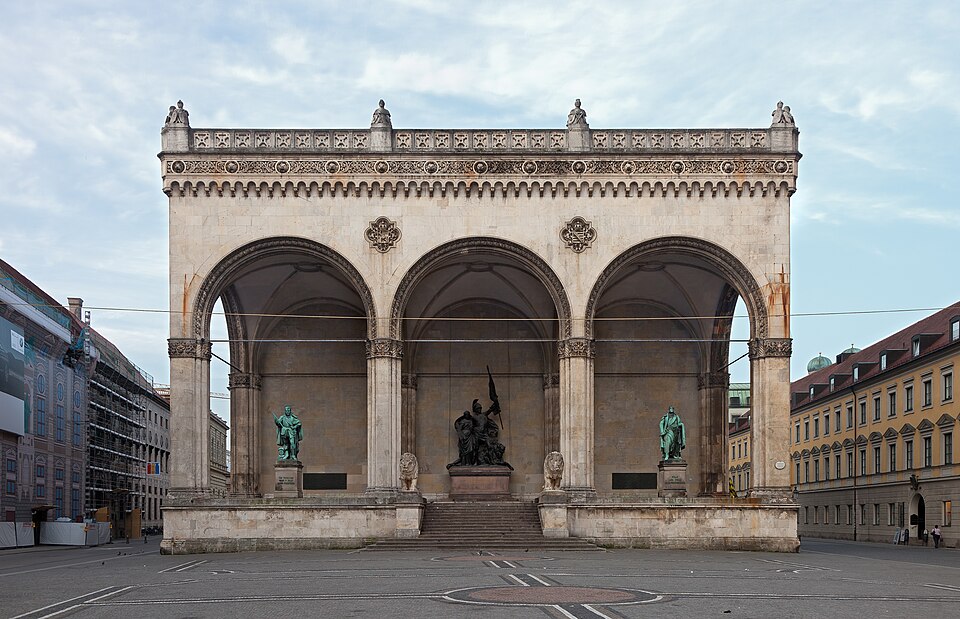
A Florentine-style loggia at the foot of Ludwigstrasse — built 1844 in the image of the Loggia dei Lanzi, it became infamous on 9 November 1923 when Nazi stormtroopers and police clashed here during the Beer Hall Putsch. Hitler later made the site a compulsory salute point; Münchners detoured down a side lane to avoid it. The two lion statues and the Feldherren monuments are worth a close look.
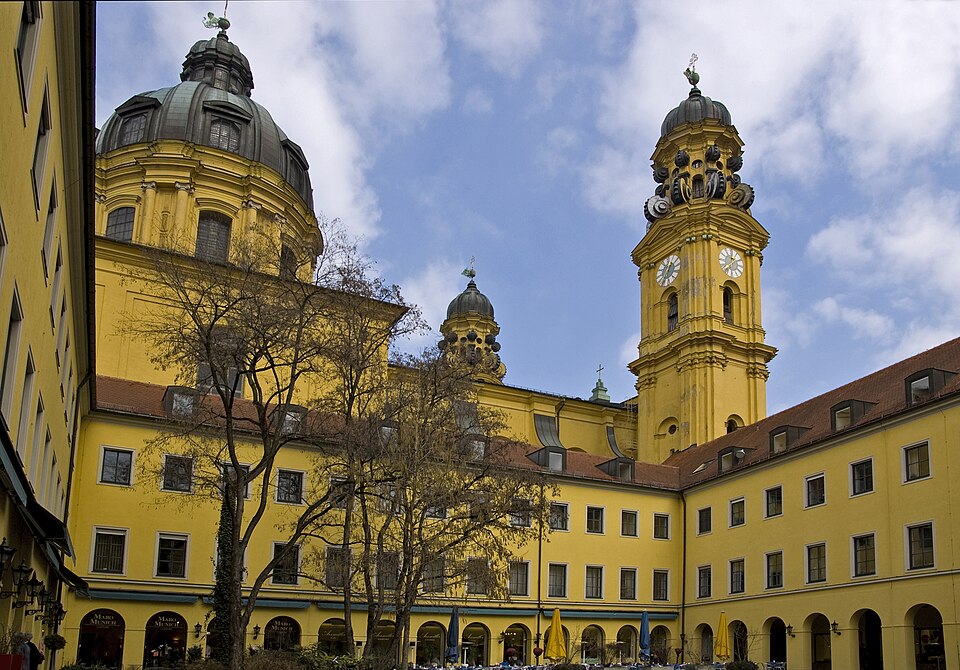
Munich's finest Italian High Baroque church — its yellow stucco facade and twin towers frame the north side of Odeonsplatz. Founded 1663 to mark the birth of the crown prince, designed by Agostino Barelli and finished by Enrico Zuccalli; the crypt holds Wittelsbach rulers including Electoral princes and Max I Joseph.
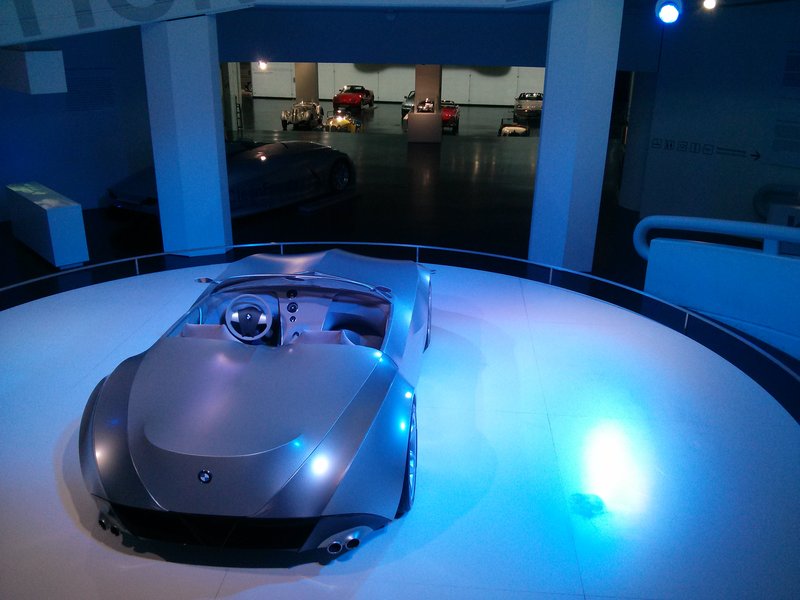
BMW's corporate museum since 1973 — Karl Schwanzer's silver "salad bowl" building holds 120 exhibits along a rising spiral ramp: engines, motorcycles, racing liveries and concept cars tracing the company's full history, directly across from BMW Welt.
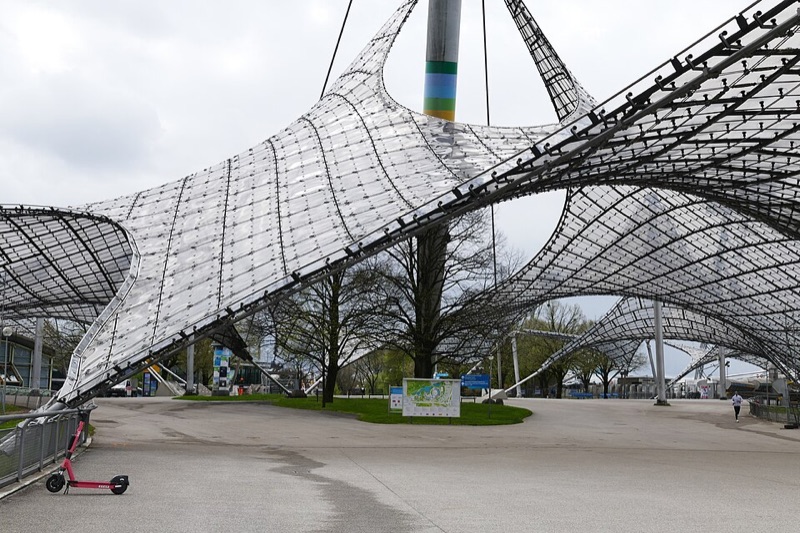
The 1972 Summer Olympics grounds — Günter Behnisch and Frei Otto's acrylic tent-roof structures still read as the future of architecture half a century on. The park is a public Munich playground now: lake, hills, the stadium where Mark Spitz won seven golds.
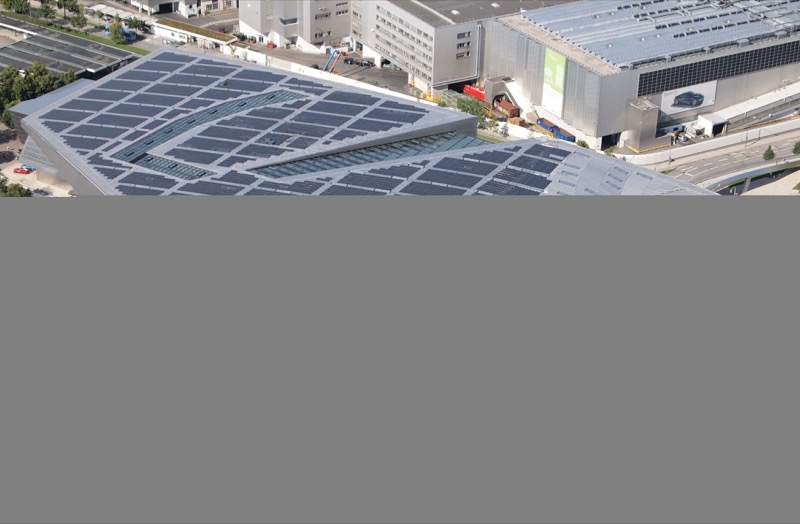
BMW's flagship delivery hall and brand experience — Coop Himmelblau's twin-cone steel-and-glass building is itself the attraction. Free walk-in showroom with current models, motorcycles, and the M division floor; the BMW Museum next door is the paid deep-dive.
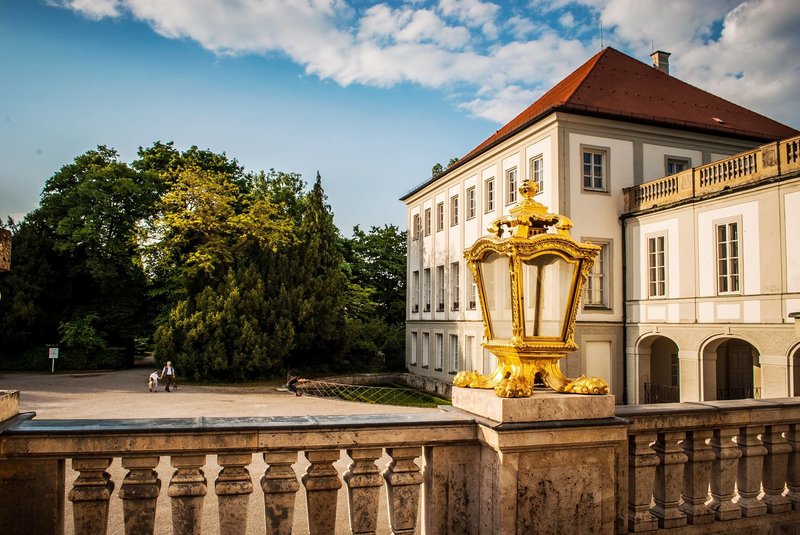
The Wittelsbachs' summer residence — a baroque palace stretching 700 meters across formal gardens. The Gallery of Beauties commissioned by Ludwig I — 36 portraits of women he admired, including Lola Montez — is the room everyone remembers; the park itself is enormous and free.
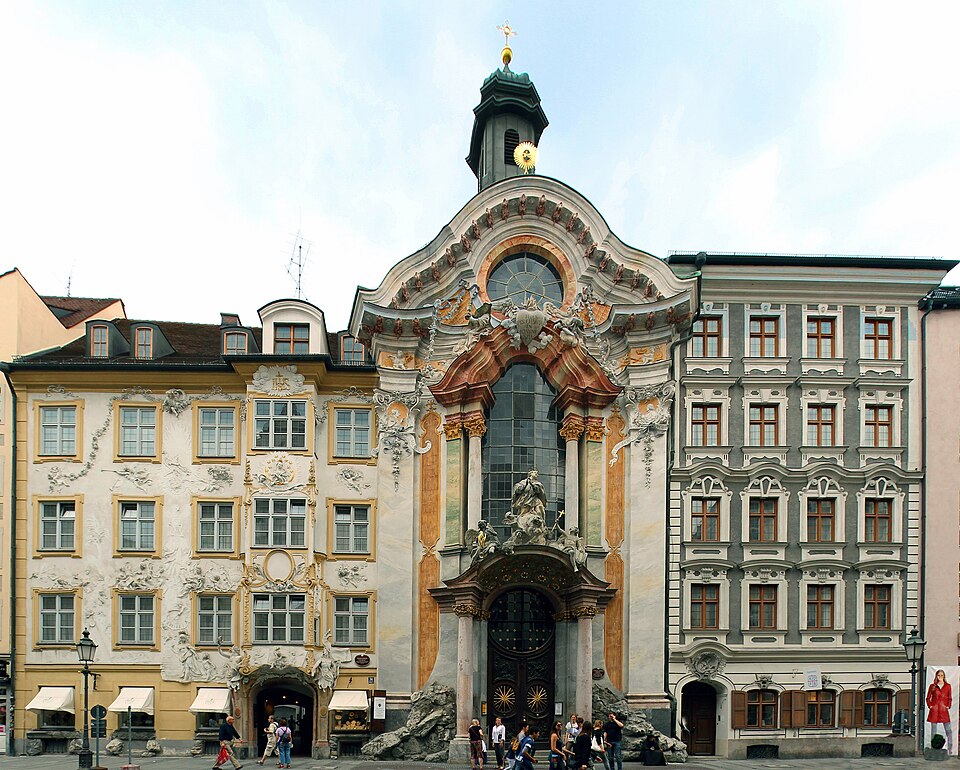
One of the most intensely decorated church interiors in Bavaria — built 1733–1746 by the Asam brothers as their private chapel and packed with stucco, fresco, gilding, and painted marble from floor to ceiling. The nave is only nine meters wide; the ceiling fresco makes it feel twice that. Entry is free.
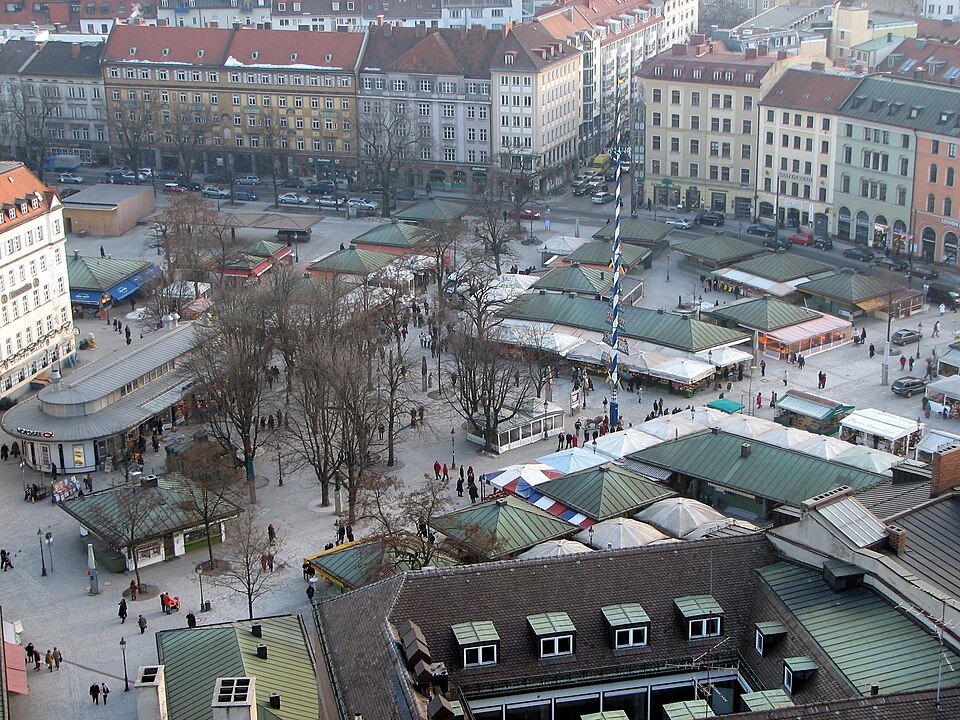
Munich's open-air food market, running daily since 1807 — 140 stalls of cheese, smoked meats, produce, honey, and flowers on a tree-shaded square just south of Marienplatz. The central Biergarten serves beer from the six Munich breweries on a weekly rotation, under massive chestnut trees. The maypole carries sculpted panels of Munich's traditional trades.
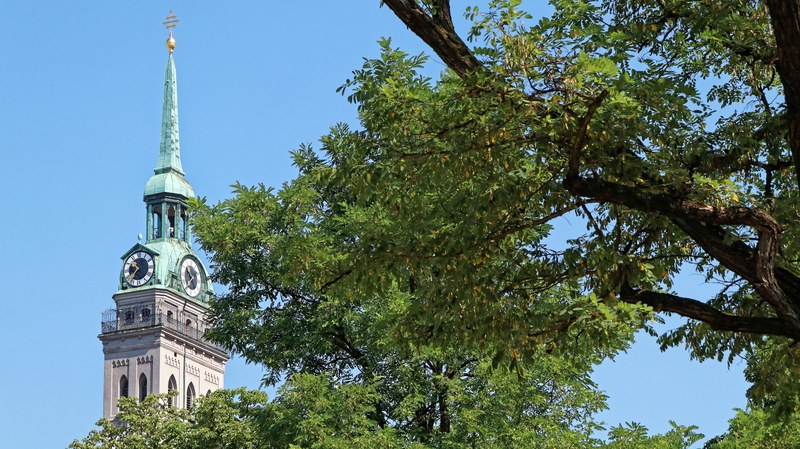
Munich's oldest parish church and the city's nickname namesake — Alter Peter. The 91-meter tower climb of 306 steps, no elevator, delivers the single best Altstadt panorama: Marienplatz directly below, Frauenkirche, the Alps on a clear day.
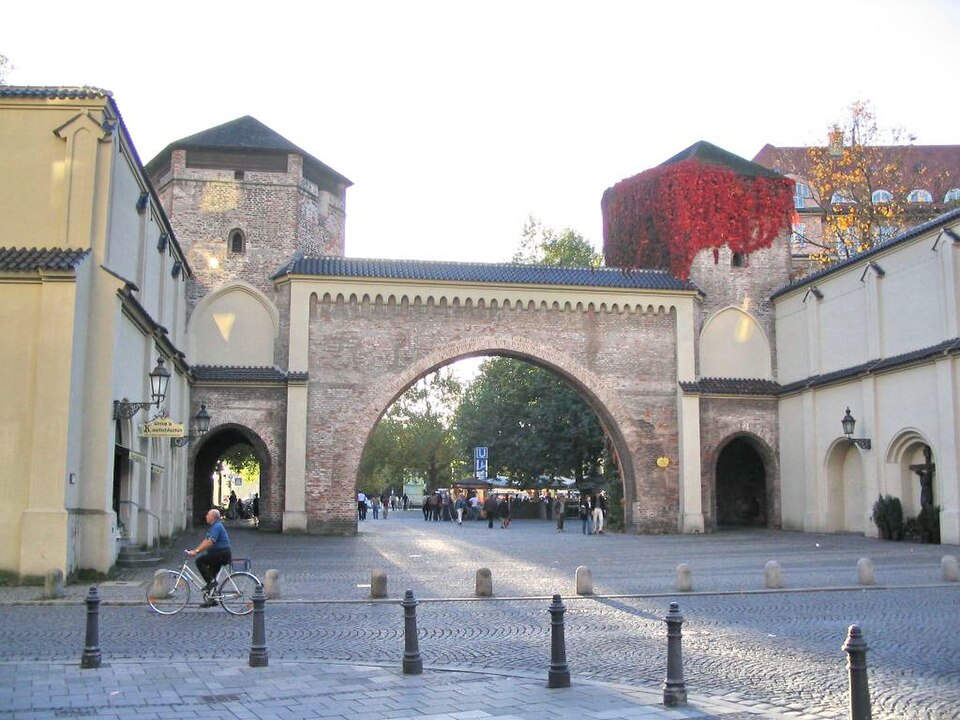
Munich's best-preserved medieval city gate — built in the 14th century as the southern entrance to the walled city, its two flanking round towers and central passage still span the street just as they did when the Wittelsbachs rode out to their hunting grounds south of the city.
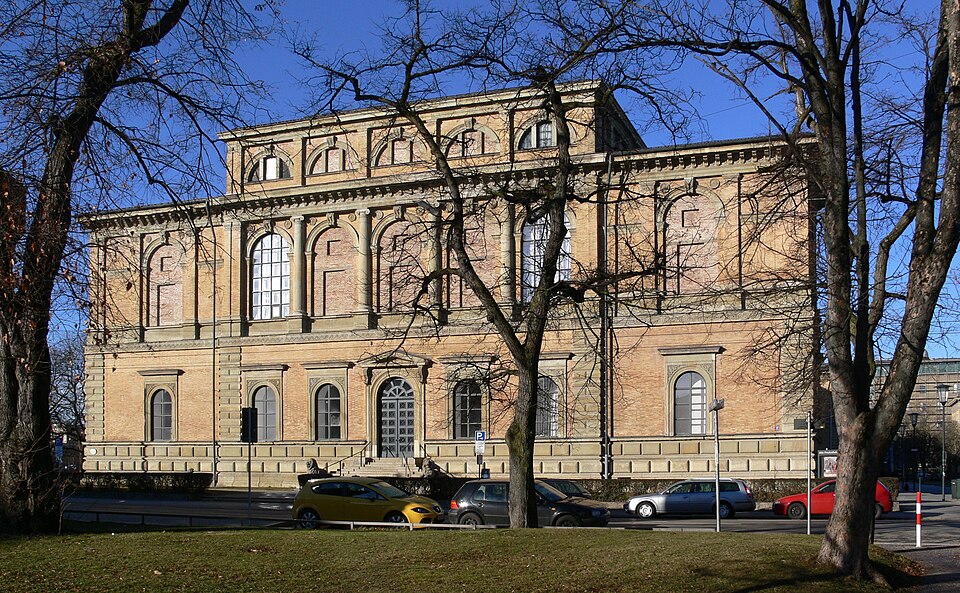
One of the world's oldest public galleries — opened 1836, housing the Wittelsbach collection of European Old Masters from the 14th to 18th centuries. Rubens has an entire wing; Dürer's Four Apostles, Raphael's Canigiani Holy Family, and Titian's Crown of Thorns are the other anchors.
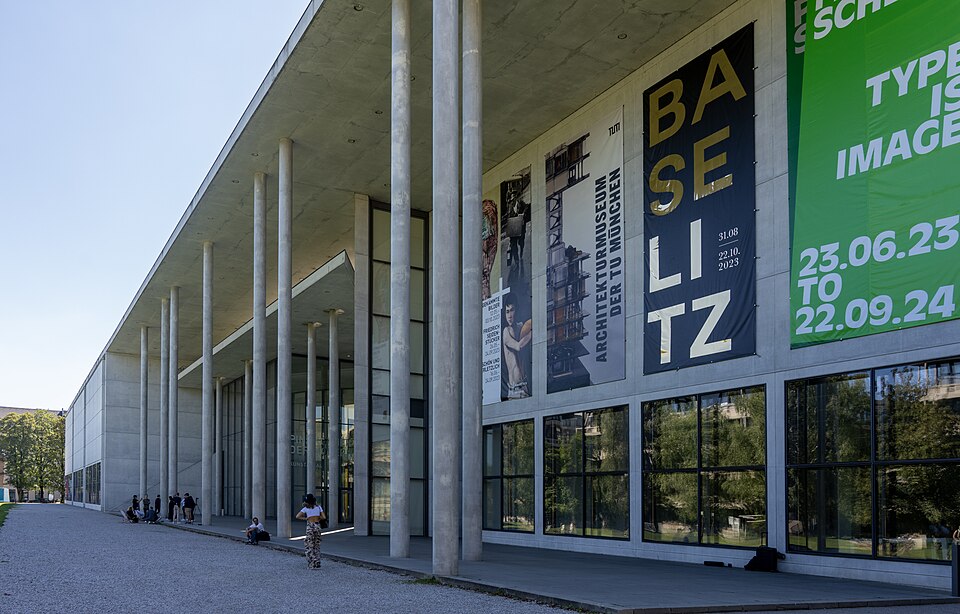
Germany's largest modern and contemporary art museum — Stephan Braunfels's 2002 building with a dramatic central rotunda under a 45-meter glass dome. Four collections under one roof: 20th-century art, design, architecture drawings, and graphics. Picasso, Klee, Ernst, and Kirchner all have rooms.
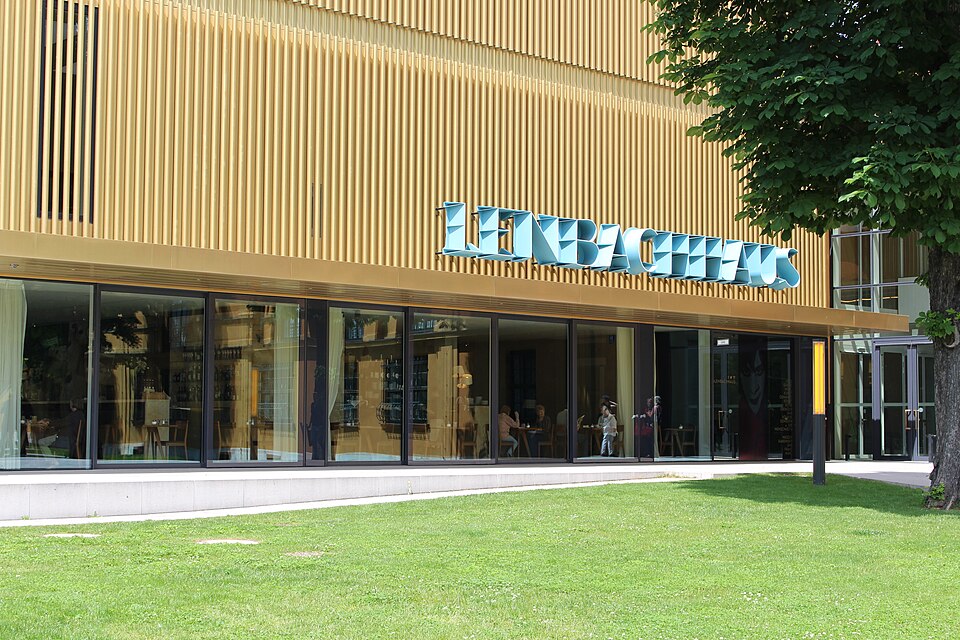
The world's finest collection of the Blaue Reiter expressionist group — Kandinsky, Franz Marc, Gabriele Münter, and Paul Klee — in Franz von Lenbach's Florentine villa. The 2013 expansion by Foster + Partners added a contemporary wing; the original garden villa with its yellow facade remains one of Munich's most charming museum buildings.
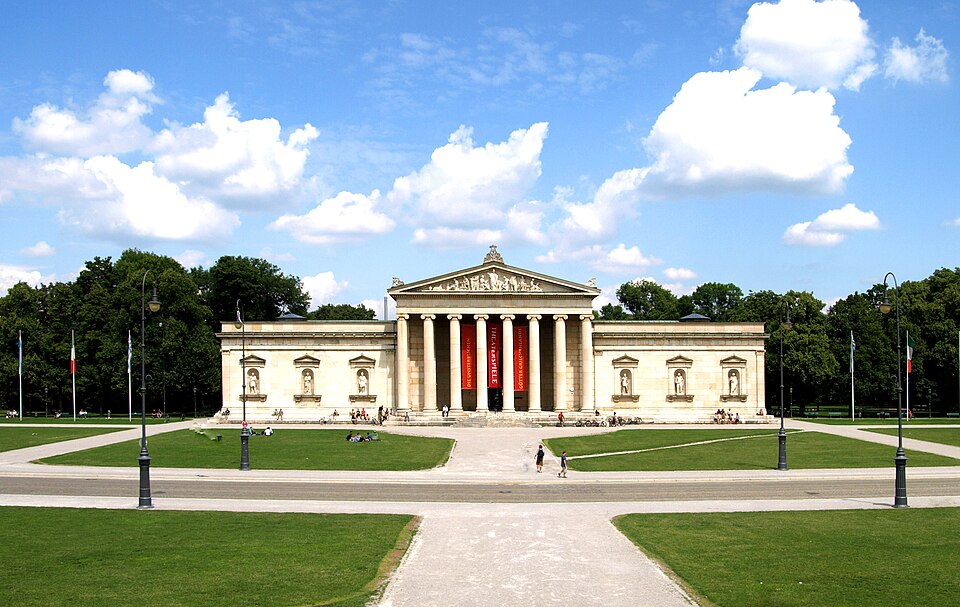
Ludwig I's ancient sculpture museum on Königsplatz — a neoclassical temple built 1816–1830 to house his collection of Greek and Roman marbles. The Barberini Faun from 230 BC, the Aegina pediment sculptures, and the archaic Kouros figures are among the finest Classical pieces north of Rome.
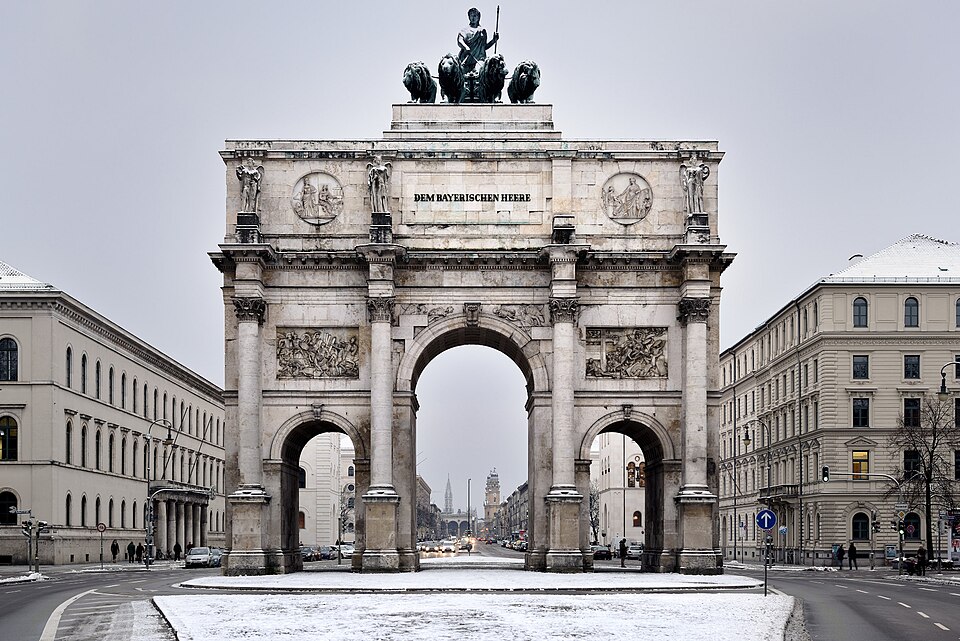
A triumphal arch modelled on Rome's Arch of Constantine, built 1843–1852 for the Bavarian army — then half-destroyed by Allied bombing in 1945 and deliberately left in its damaged state as a peace memorial. The inscription reads: "Dedicated to victory, destroyed by war, urging peace." It marks the boundary between Maxvorstadt and Schwabing.
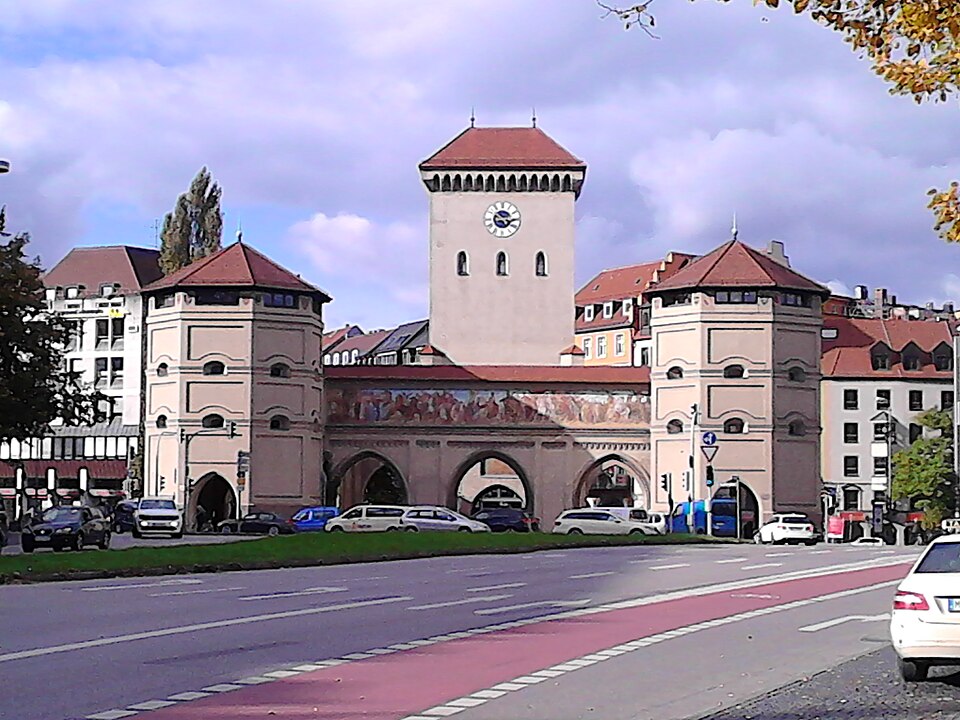
The eastern city gate — Munich's best-preserved medieval tower, built in the 14th century as the main entry from the Isar river crossing. The three-arched passageway carries a faded 19th-century fresco of Ludwig IV returning from the Battle of Ampfing in 1322. Inside, a small museum commemorates Karl Valentin, Munich's beloved satirist-comedian born nearby.
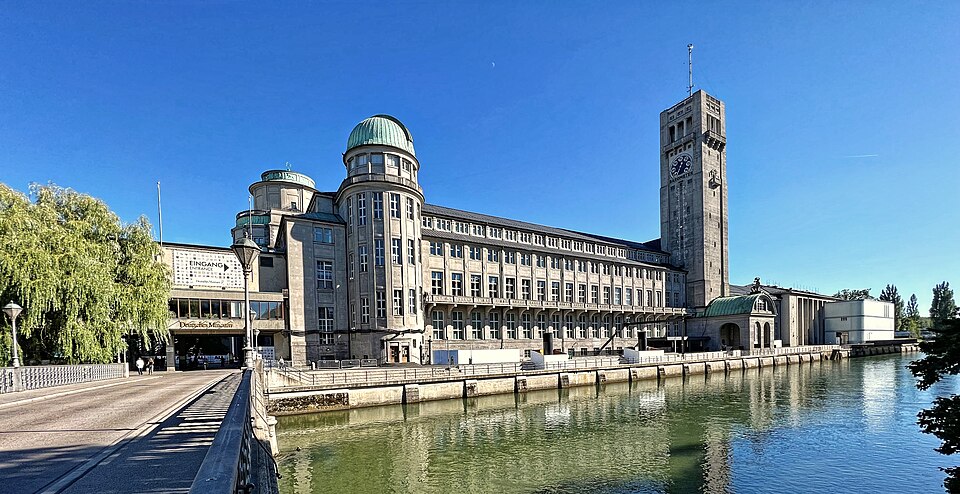
The world's largest science and technology museum — 73,000 square meters on its own island in the Isar, with 28,000 exhibits spanning mining, aviation, nautical engineering, chemistry, and musical instruments. The full-size coal mine replica underground and the original Heinkel He 178 jet prototype are anchor attractions; one day barely covers a single floor.
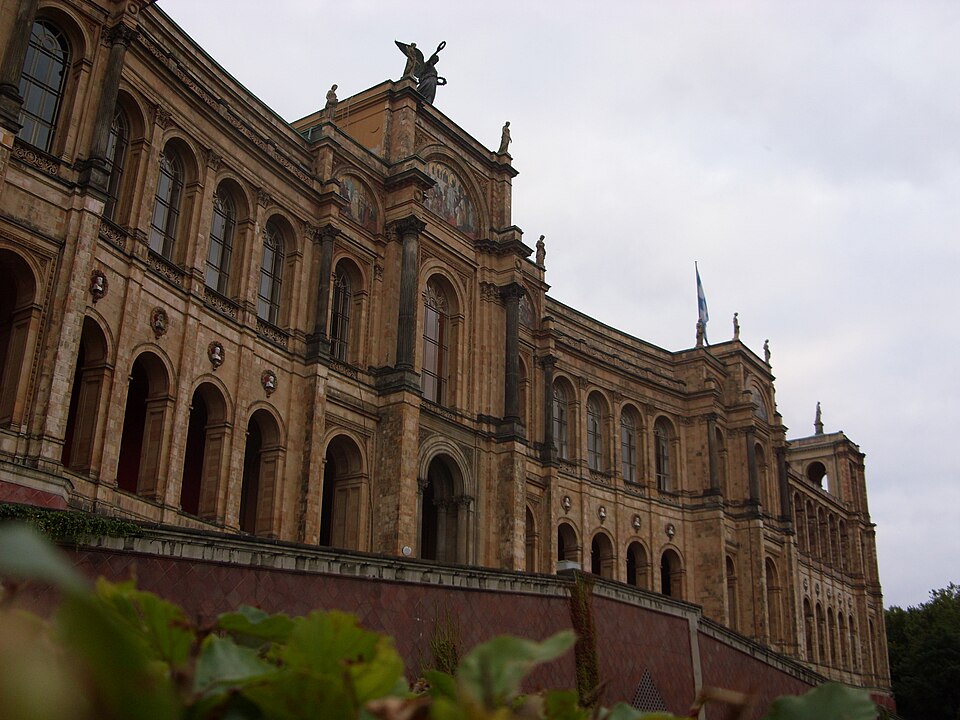
Maximilian II's grand palazzo above the Isar — designed by Friedrich Bürklein, completed 1874, purpose-built for gifted students and now the Bavarian State Parliament. The neo-Gothic silhouette closes the eastern end of Maximilianstrasse in one of Munich's most theatrical urban perspectives; the riverside terrace surveys the Isar valley.
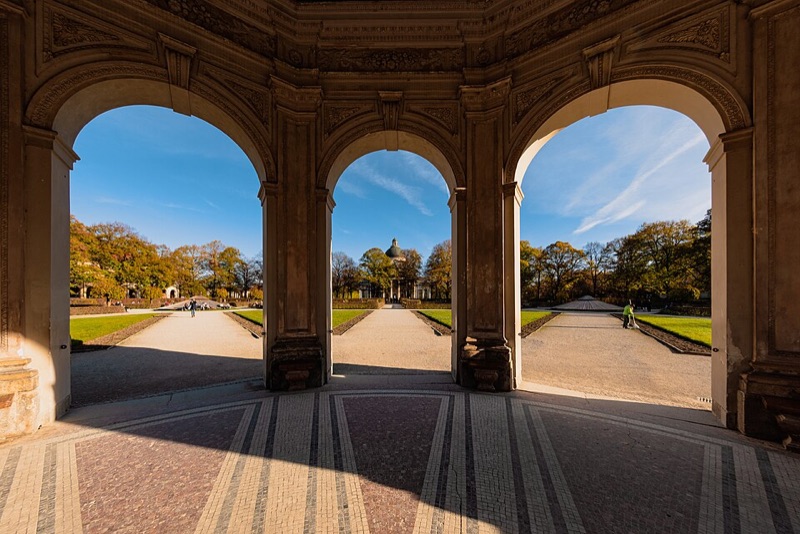
The Renaissance Court Garden laid out for Elector Maximilian I in 1613 — formal box hedges, a central temple to Diana, gravel paths radiating from a circular fountain. The quiet counterpoint to the Englischer Garten's wild lawns, tucked behind the Residenz.
ARRIVE Salzburg Hbf: 29 min · 8 min → Hohensalzburg Fortress
1.Hohensalzburg Fortress~2.5 hr
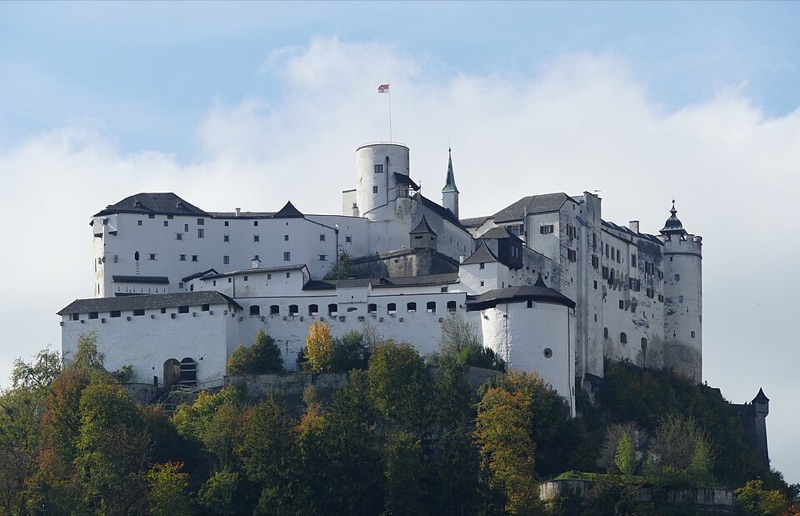
The largest fully-preserved medieval castle in central Europe, perched on the Festungsberg over Salzburg's old town. Built 1077, expanded through the 16th century, never taken by siege — the Princes' Chambers and Salzburg Bull organ are the room-by-room highlights.
Baroque parterre gardens commissioned by Prince-Archbishop Wolf Dietrich in 1606 for his mistress, redesigned by Fischer von Erlach. The Pegasus Fountain steps where Maria sings "Do-Re-Mi" — every Sound of Music tour group on the planet ends up here.
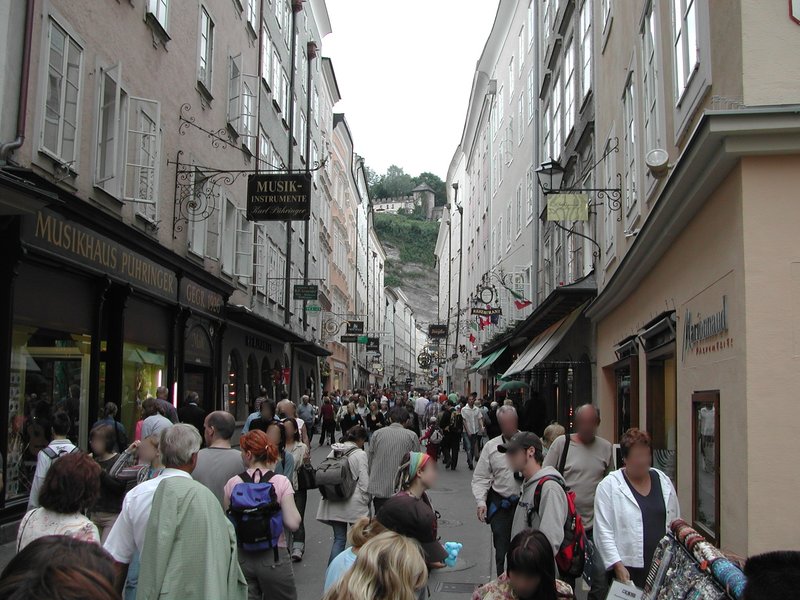
UNESCO-listed historic core — narrow Getreidegasse with its iron guild signs, Mozart's birthplace at no. 9, the cathedral square where The Sound of Music's Maria leaves the abbey. The whole district is pedestrian; one slow loop is the way.
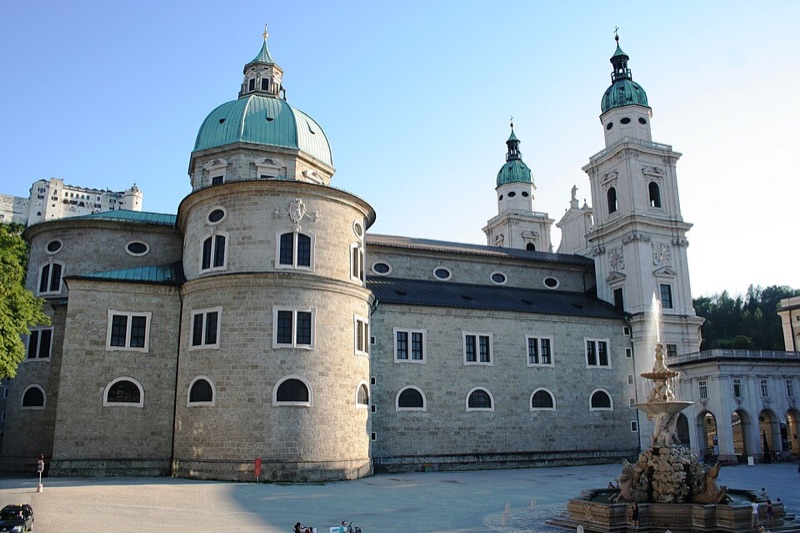
The Baroque cathedral where Mozart was baptized in 1756 — rebuilt 1614–1628 after fire, the twin towers close the Residenzplatz. The frescoed nave by Mascagni is one of the grandest Baroque interiors in the German-speaking world; the baptismal font where Mozart was christened sits in the left aisle.
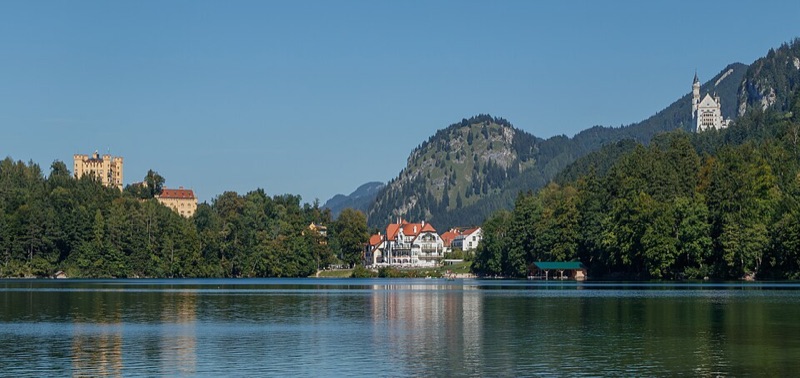
The yellow Neo-Gothic castle where Ludwig II grew up — built by his father Maximilian II on medieval ruins. Visit Hohenschwangau first to understand the boy-king's romantic obsessions before the bigger castle across the valley puts them into Disney scale.
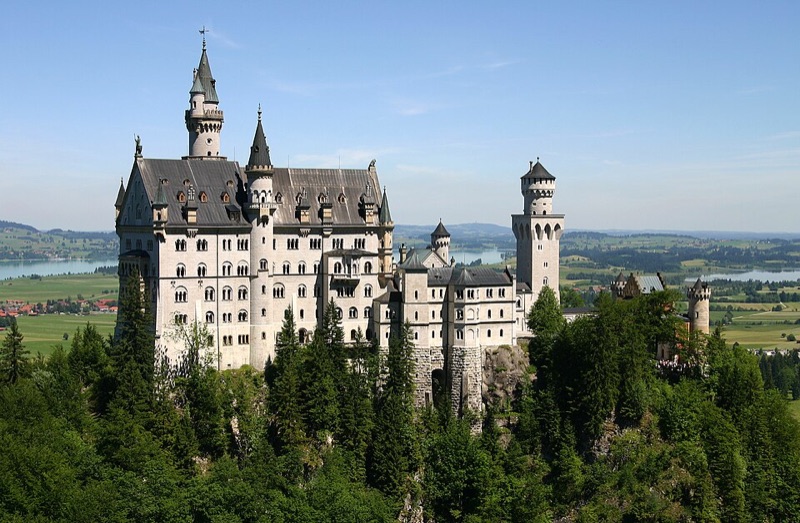
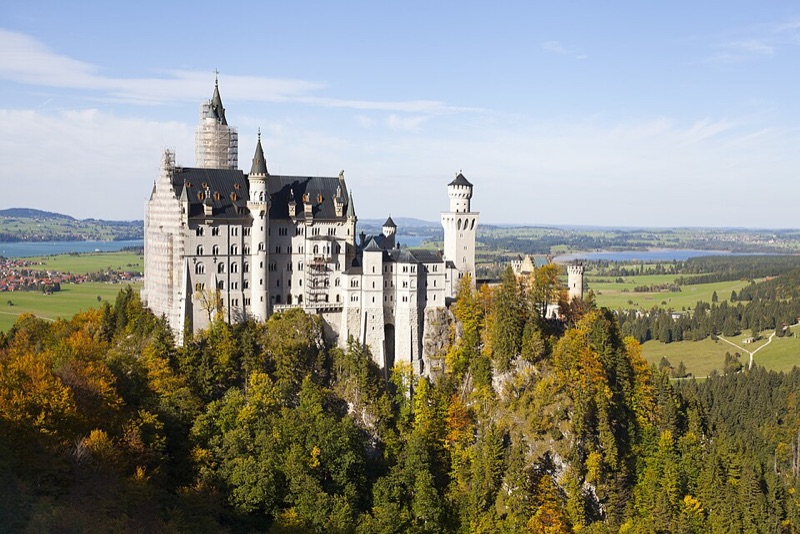
The most photographed castle in the world — Ludwig II's love letter to Wagner, built 1869–1886 in dramatic Romanesque revival. The interiors are unfinished and theatrical: a Throne Room with no throne, a Singers' Hall inspired by Parsifal, the king's bedroom in carved Gothic.
The iron bridge over the Pöllat Gorge that delivers the postcard view of Neuschwanstein — the one in every search result, every poster, every screensaver. Built for Maximilian II's wife Marie in 1866 and refurbished in 2015; the wait can be brutal in season but the angle is unbeatable.
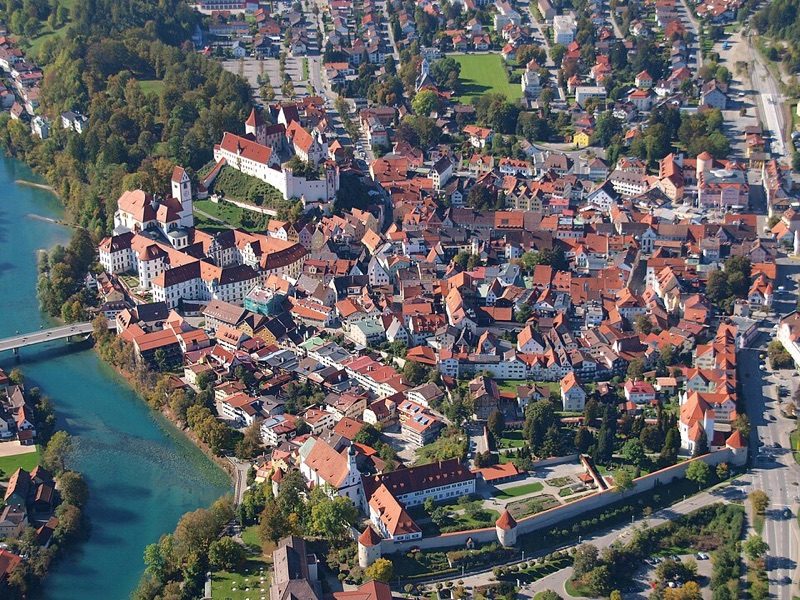
The compact medieval town at the end of the Romantic Road — Hohes Schloss rises above the Reichenstraße, the former Benedictine monastery of St. Mang anchors the far end. The painted Renaissance facades and the Lech waterfall beneath the old town bridge make this the natural last stop before the train home.
ARRIVE Nürnberg Hbf: 22 min · 7 min → Kaiserburg Nuremberg
1.Kaiserburg Nuremberg~2 hr
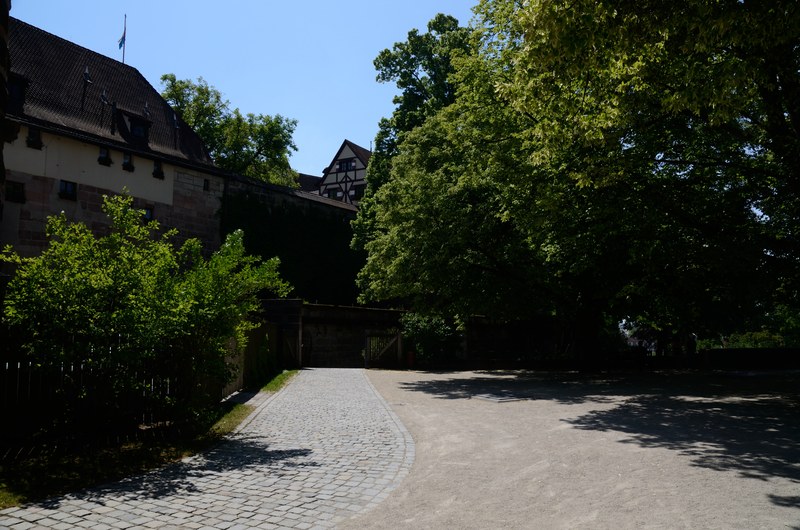
The Imperial Castle that every Holy Roman Emperor between 1050 and 1571 stayed at — the sandstone keep, the deep well, and the Sinwell Tower form Nuremberg's defining skyline. The Imperial Apartments and Romanesque Double Chapel are the interior payoff.
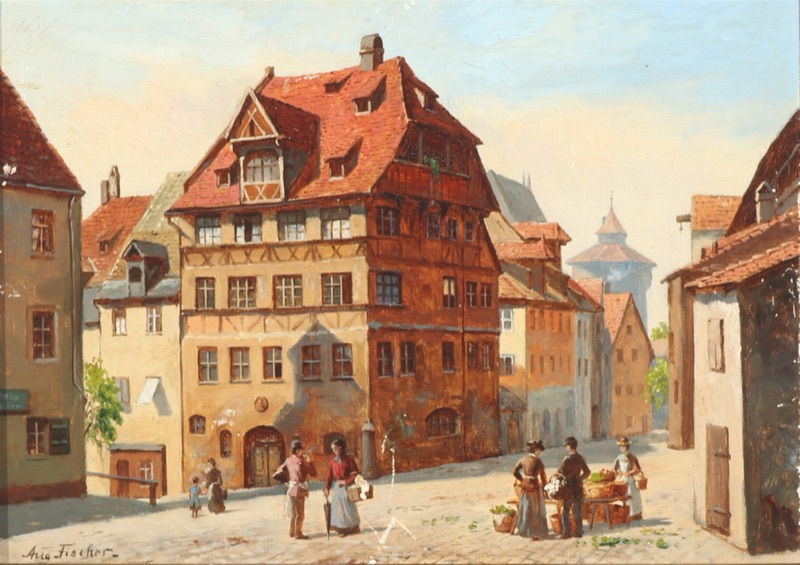
The half-timbered four-story house where the Northern Renaissance's biggest name lived 1509–1528. Period kitchen, the original printing press, and the recreated workshop where Melencolia I was cut into copper — small museum, outsized weight.
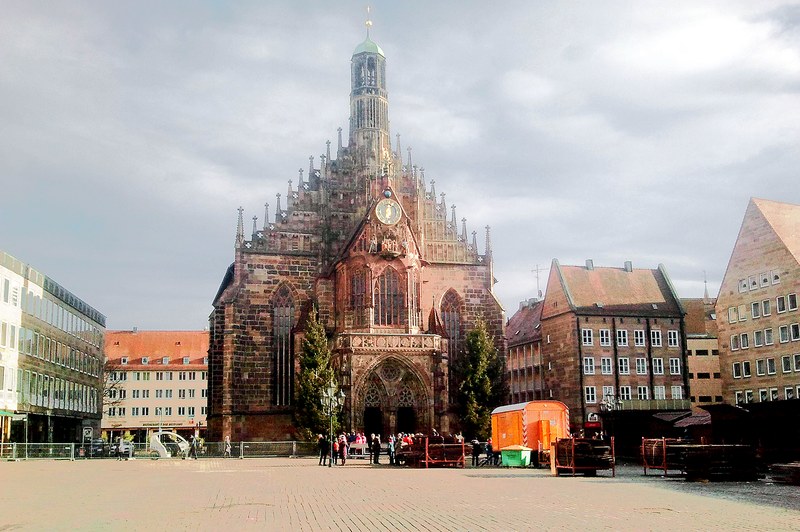
Nuremberg's central square — the Gothic Schöner Brunnen fountain from 1396, gilded, 19 meters of stone tracery; the Frauenkirche church with its mechanical Männleinlaufen clock that performs at noon; and the wide market square that hosts the world's most famous Christkindlmarkt in December.
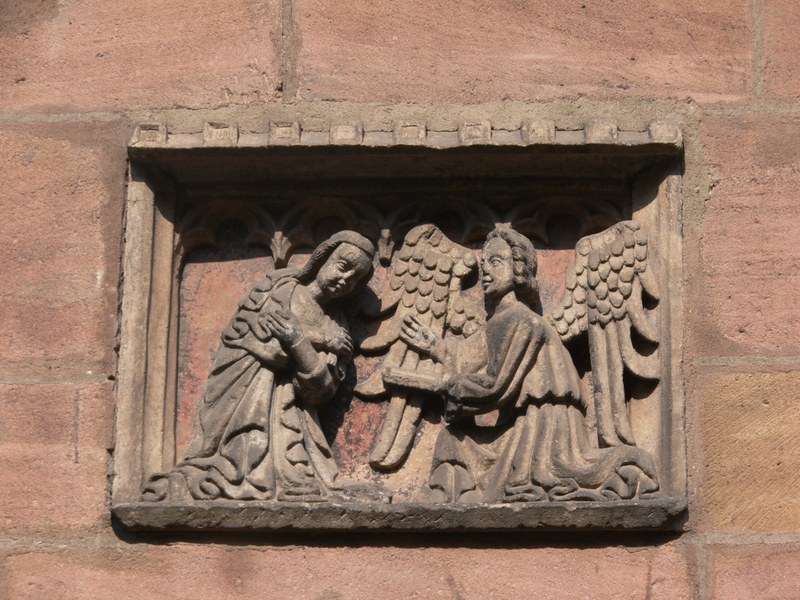
The Gothic twin-tower church begun in 1250 — the Angelic Salutation carved by Veit Stoss in 1518 hangs suspended in the nave in polychrome limewood, one of the finest late-Gothic sculptures in Germany. The Krafft Tabernacle rises 18 meters beside it. Five minutes south of the Hauptmarkt.
6:32am München Hbf → 7:54am Garmisch-Partenkirchen
7:32am München Hbf → 8:54am Garmisch-Partenkirchen
8:32am München Hbf → 9:54am Garmisch-Partenkirchen
ARRIVE Garmisch-Partenkirchen: 5 min · 2 min → Zugspitze
1.Zugspitze~4 hr
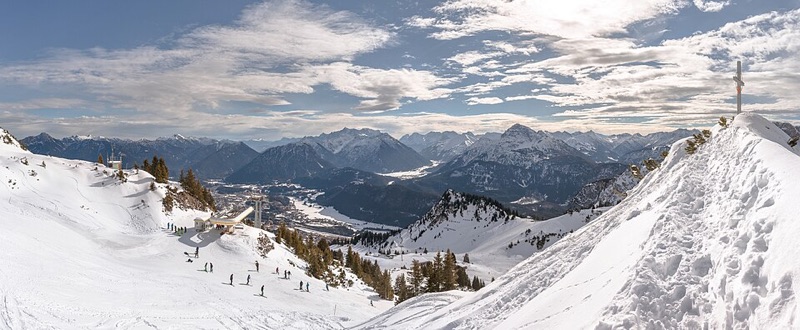
Germany's highest peak — 2,962 meters, the border with Austria runs across the summit. Two ways up: the Bayerische Zugspitzbahn cogwheel railway from Garmisch via Sonnalpin, or the direct Eibsee-Seilbahn cable car from Eibsee. Glacier, panorama platform, four-country view on clear days.
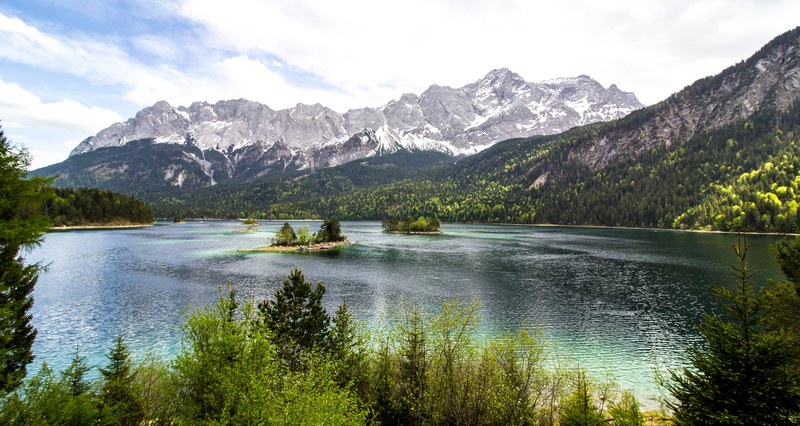
The turquoise alpine lake at the foot of the Zugspitze — 7.2 km shoreline trail, water clear enough to count stones at depth, the cable-car station on the south bank. The lake walk delivers the Zugspitze-from-below view that the summit never quite gives you back.
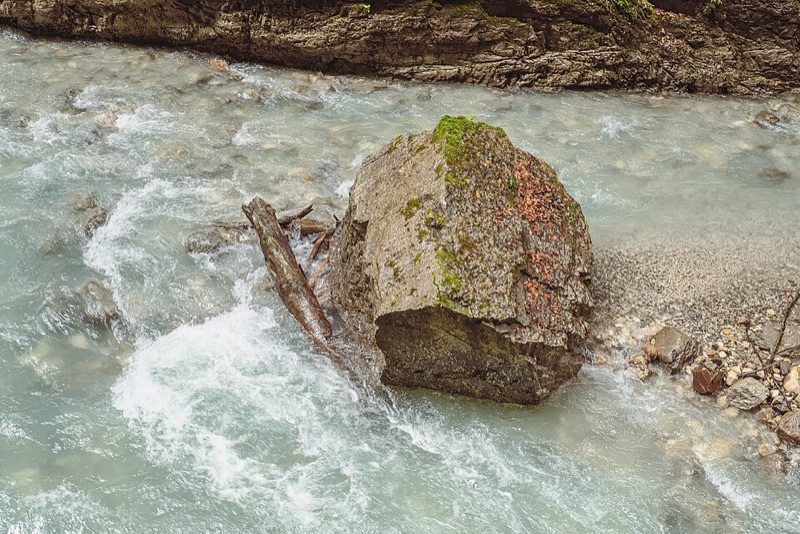
A 700-meter gorge carved by the Partnach river — narrow rock walls, walkways drilled into the cliff, mist from the cascades soaking the path. Originally cut to float timber down to Partenkirchen; the same passage today is one of the most dramatic short hikes in the Bavarian Alps.
The Lüftlmalerei old town — Frühlingsstraße lined with 18th-century facades painted in vivid Bavarian alpine fresco: saints, hunting scenes, trompe-l'œil columns. The medieval St. Martin's Church anchors the far end and the snow-capped Zugspitze closes the sky above the market square.
ARRIVE Dachau Bahnhof: 17 min → Dachau Concentration Camp Memorial
1.Dachau Concentration Camp Memorial~3 hr
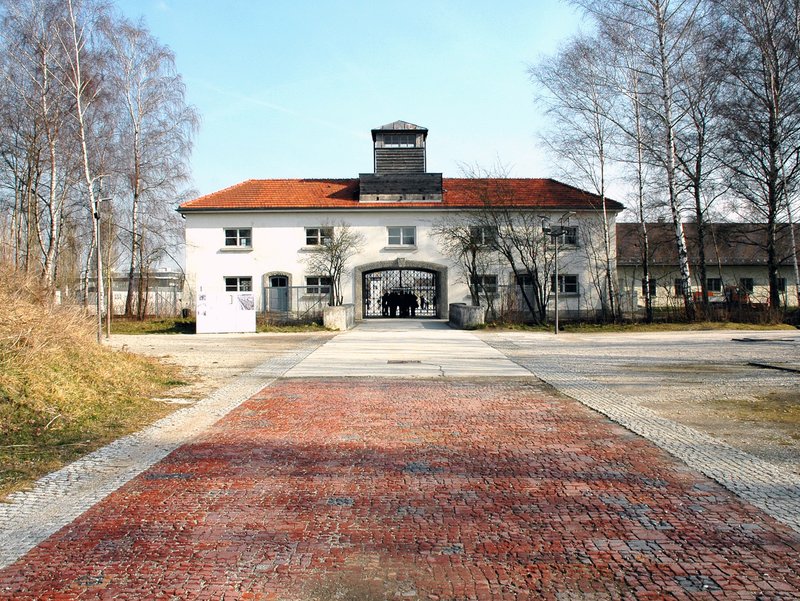
The first Nazi concentration camp, opened in March 1933 and the model every later camp was built on. The preserved site runs from the Jourhaus gate and its iron inscription through the roll-call square, two reconstructed barracks, the bunker prison and the crematorium, with a documentation centre in the old maintenance building.
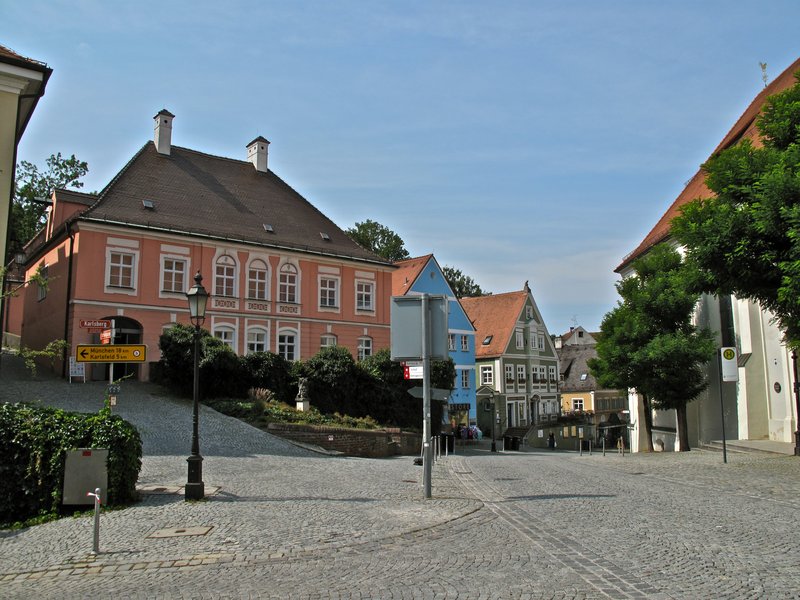
The old town on the ridge above the Amper — one sloping street of gabled burgher houses, the 1584 St. Jakob church under its onion dome, and the Ludwig-Thoma-Haus. From the 1880s this was one of Germany's largest artists' colonies, drawing painters up for the light over the moor.
What survives of the Wittelsbach Renaissance palace — one wing of the original four, kept when the rest came down in 1800. The banqueting hall's carved and painted Renaissance ceiling is the interior; the terraced court garden looks across the moor to Munich and the Alps.
Classic 2-hour Old Town loop — Marienplatz, the Glockenspiel, Frauenkirche, Hofbräuhaus and the Munich Residenz, with a local guide unpacking the city's medieval street plan and imperial history.
Munich as Nazi birthplace — from Hitler's 1919 beer-hall speech to Kristallnacht in 1938. Visit key sites still standing today: the Brown House footprint, beer halls, and NSDAP headquarters locations.
After-dark Old Town walk through cursed lanes, execution sites, plague pits and ghost stories going back to the 16th century — the only regular English ghost tour in Munich. Three shots of spirits included.
Full-day small-group luxury coach trip to both of King Ludwig II's iconic castles — skip-the-line access to Neuschwanstein and a guided tour of Linderhof Palace, with panoramic Alpine views en route.
Full-day small-group trip to Bavaria's fairy-tale castle — guided exterior and interior tour of Neuschwanstein with skip-the-line access, views of Hohenschwangau Castle, and the story of King Ludwig II.
Small-group Old Town orientation — Marienplatz, Glockenspiel, Residenz, Hofbräuhaus and Frauenkirche with historical context; ideal first-morning walk to anchor the rest of the trip.
90-minute medieval loop — Asam Church, St. Peter's tower viewpoint, the Viktualienmarkt, Hofbräuhaus, and Munich's most exclusive shopping street, with stories connecting the city's market culture to today.
Evening walk through the mythical city — the Lindwurm at the New Town Hall, monsters on the Marian column, the devil's pact at Michaelskirche, and legends hidden in plain sight since the Middle Ages.
The uncanny side of Munich's Old Town — witch trials, public executions, and the dishonest figures of medieval Munich in lanes that haven't changed since the 17th century.
Full-day group trip by coach — Linderhof Palace guided tour first, then Neuschwanstein Castle with guided interior visit and views of Hohenschwangau; the classic King Ludwig II double-castle day from Munich.
Munich's role as Nazi birthplace — Hitler's rise from the 1919 beer-hall putsch to Kristallnacht, with stops at surviving Third Reich buildings and broad historical context going back to the Roman era.
19 years of award-winning city immersion — Third Reich, Marienplatz, Hofbräuhaus, Frauenkirche, Viktualienmarkt and the English Garden; one 3–4 hr walk that covers Munich's defining chapters front to back.
The only regular English ghost tour in Munich — cursed lanes, execution spots, and haunted Old Town history after dark, with three shots of spirits included. Ends back at the start.
Round-trip rail from Munich to Salzburg's UNESCO World Heritage city center — guided walk through the Old Town, Mozart's birthplace, the Residenz, and Mirabell Gardens, with free time for shopping and lunch.
Full-day train-and-bus trip to Neuschwanstein — guided castle interior and exterior tour with skip-the-line entry, views of Hohenschwangau and the Bavarian Alps, and the full story of King Ludwig II.
The Munich-invented white veal-and-pork sausage from 1857 — eaten before noon by tradition. Order with sweet mustard, a soft Brezn, and a Weissbier; cut the casing, never bite through it.
Bavarian-style pretzel — thicker arms than the Swabian original, salted, dark mahogany crust. Hand-twisted dough dipped in a lye bath before baking; breakfast, weisswurst pairing, or split with butter.
Bavarian roast pork with crisp-bubbled crackling and dunkles beer gravy, served over a knödel — potato or bread dumpling — the size of a fist. The Sunday-lunch dish at every Brauhaus.
Bavarian beer-garden spread — ripened Camembert mashed with butter, sweet paprika, onion, caraway, a splash of weissbier. Eaten with radish slices and pretzel, never on bread; born in 1920s Tegernsee.
Foreign number: accepted — the verification code reaches most foreign carriers.
The international app leader in Munich — covers the city centre and all major neighbourhoods including Maxvorstadt, Schwabing and Sendling. Wide selection of Bavarian restaurants alongside international chains; delivery typically 25–35 minutes.
Foreign number: accepted — the verification code reaches most foreign carriers.
Germany's leading food-delivery platform, part of Just Eat Takeaway — deep Munich coverage with independent Bavarian restaurants, pizzerias and neighbourhood spots less represented on international apps. The local expert for off-centre dining.
Foreign number: not required. — sign-up runs on Google, Apple, Facebook or email with no phone field at all, so no verification code is sent.
Nordic-origin platform with strong Munich coverage — known for reliable couriers and a well-curated selection of quality restaurants. Good for Schwabing, the Altstadt and the university quarter. Delivery typically 25–40 minutes.
Foreign number: accepted — the verification code reaches most foreign carriers.
The city's most convenient ride-hailing app — works throughout Munich, accepts foreign cards. Request in the app; rides arrive in 3–6 minutes in the centre. Surge pricing applies during Oktoberfest and major events.
Foreign number: accepted — the verification code reaches most foreign carriers.
Munich's taxi-booking app — hails licensed Taxis München at regulated fares with no surge pricing during Oktoberfest. Accepts international cards. Reliable fallback when Uber prices climb during events.
Foreign number: accepted — the verification code reaches most foreign carriers.
Competitive ride-hailing with pricing typically below Uber — growing Munich coverage in the city centre, Schwabing and Haidhausen. Accepts foreign numbers; slightly fewer drivers than Uber in outer neighbourhoods.
A 2,000-year-old Roman city — the UNESCO-listed Fuggerei is the world's oldest social housing settlement, still inhabited and founded in 1516. The Maximilianstraße, Renaissance fountains, and the Goldener Saal are all walkable via the main station.
The Wittelsbach residence city on the Isar — a broad Gothic market street of stepped gables running up to St. Martin's, whose 130-metre spire is the tallest brick tower in the world. Trausnitz Castle sits on the ridge above with the Italian Renaissance rooms the dukes added in the 1570s.
A beautifully preserved medieval walled town on the Lech river — the Bayertor gate, frescoed Baroque Rathaus, and river promenade make it one of Bavaria's most attractive small towns. Direct regional train on the Augsburg line.
UNESCO-listed medieval Altstadt on the Danube — the Stone Bridge built in 1146, Gothic cathedral, and the oldest continuously running sausage kitchen in the world at the bridge's foot. The cleanest preserved old town in Bavaria.
A Baroque city at the confluence of three rivers — the Danube, Inn, and Ilz — with the Veste Oberhaus fortress above the old town and St. Stephen's Cathedral, home to the largest church organ in the world.
A Devil's Footprint, and a Shoemaker's Daughter Among Royalty
Just inside the Frauenkirche's entrance is a black mark in the floor tile that locals call the Teufelstritt — the Devil's footprint. Legend says the church's architect struck a bargain with the Devil to fund the building, on condition it be built with no visible windows. The architect cheated him: standing at the entrance, the tall pillars and the position of the altar do block every window from view — it's only once you walk further in that they come into sight. When the Devil returned to inspect the finished church and realized he'd been tricked, he stamped his foot in fury hard enough to leave the mark still shown to visitors today.
Nymphenburg Palace's Gallery of Beauties has nothing to do with royal bloodlines — King Ludwig I filled it with portraits of the women he considered the most beautiful in Munich, nobility and commoners side by side. One of the most famous faces in the room belongs to Helene Sedlmayr, a shoemaker's daughter who caught the king's eye at seventeen while delivering toys to the royal residence and ended up immortalized in oil on the same wall as countesses. The gallery's most notorious portrait, though, isn't hers — it's the dancer Lola Montez, whose affair with Ludwig I helped trigger the revolution that forced him to abdicate in 1848.