TRIP OVERVIEW
Day 1 – Jardins du Monastère de Cimiez · Arènes de Cimiez · Place Masséna
Day 2 – Vieux Nice · Cours Saleya · Colline du Château · MAMAC
Day 3 – Cathédrale Saint-Nicolas · Musée des Beaux-Arts de Nice · Promenade des Anglais · Musée Masséna
Day 4 – Villefranche-sur-Mer · Èze village · Villa Ephrussi de Rothschild · Roquebrune-Cap-Martin
Day 1
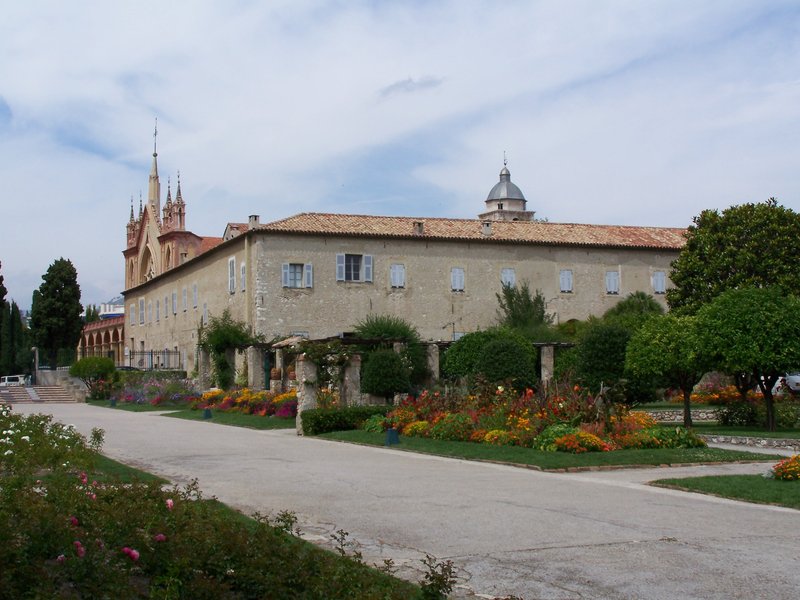
1. Jardins du Monastère de Cimiez~45 min
A serene terraced garden behind the Franciscan monastery atop Cimiez, kept to its 1546 layout with clipped hedges, a central well, pergolas and one of the Riviera's loveliest rose gardens. The balustrade view sweeps over the whole city to the sea.
Daily 8:00am - 8:00pm
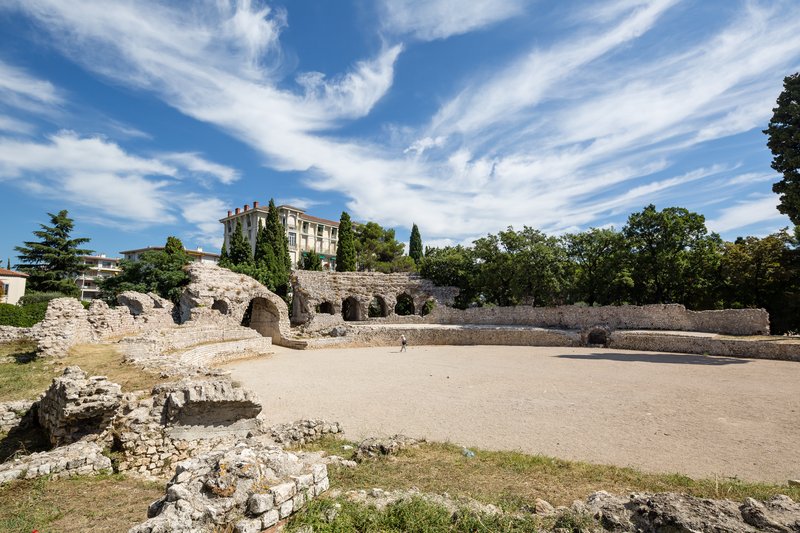
2. Arènes de Cimiez~45 min
The remains of Cemenelum, the Roman town that crowned Cimiez as capital of the province Alpes Maritimae. A compact 2nd-century amphitheatre that held 5,000 spectators sits in an olive-grove park beside the excavated baths — green, free and rarely crowded.
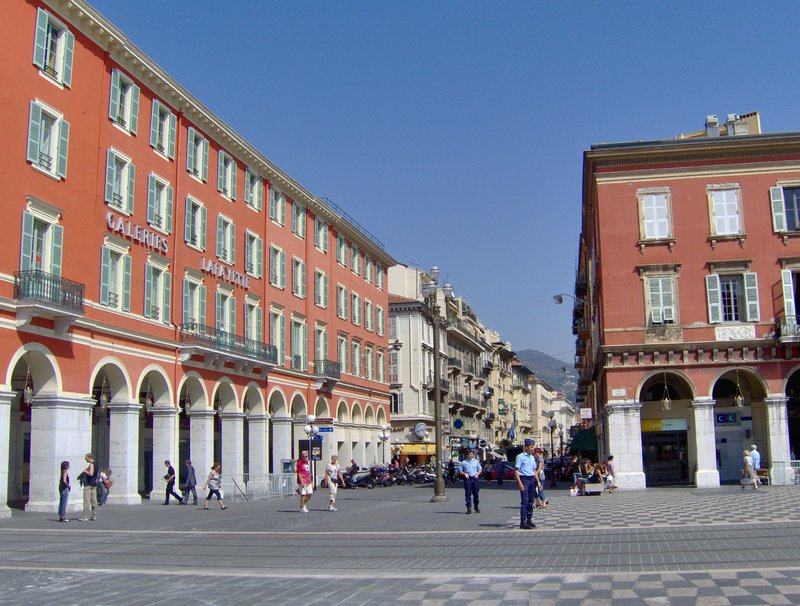
3. Place Masséna~30 min
Nice's monumental main square, its red-ochre arcaded Italianate facades framing a vast checkerboard of paving. Built over the buried Paillon river, it links the Old Town with the new; the Fontaine du Soleil and Jaume Plensa's glowing statues crown it.
Open 24/7
Day 2
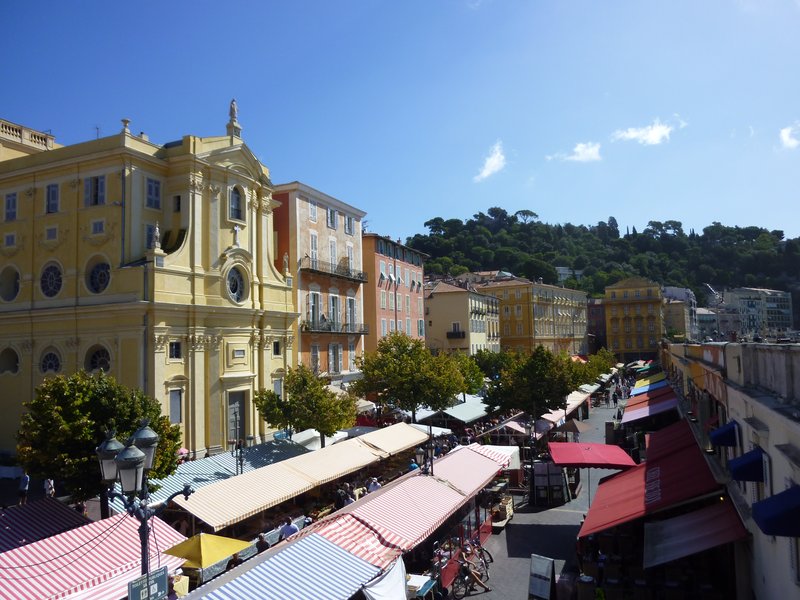
1. Vieux Nice~1 hr 30 min
The old town is a sun-baked maze of ochre alleys, baroque churches and shuttered tenements hung with laundry, opening onto the Cours Saleya — the famous flower-and-produce market square. This is the soul of Nice: socca stalls, gelato counters and Niçois life in every doorway.
Open 24/7
2.
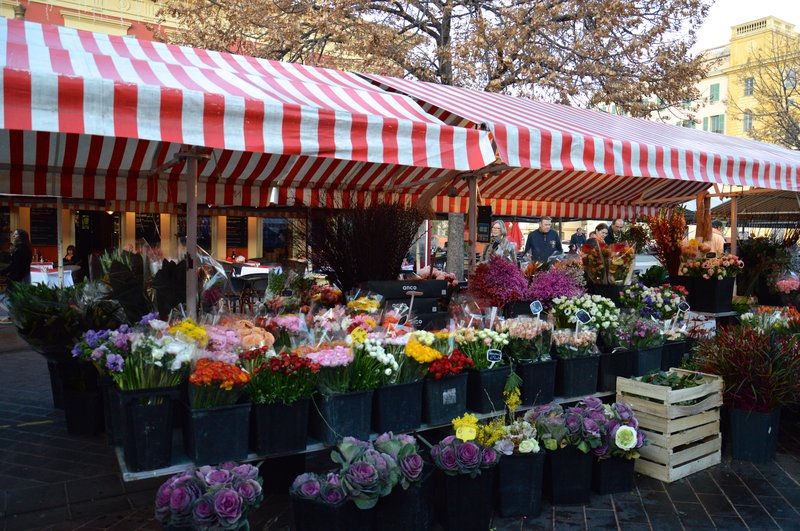
Cours Saleya
~45 min
Cours Saleya is an elongated square in Vieux-Nice running parallel to the seafront. A flower, fruit, and vegetable market has operated here since 1861 — one of the first wholesale cut flower markets in Europe. On Mondays the stalls are replaced by antique dealers.
Tuesday - Sunday 6:00am - 1:30pm · Monday 7:00am - 6:00pm
Free
Flower and food market closed Monday — antiques only that day
3. Colline du Château~1 hr
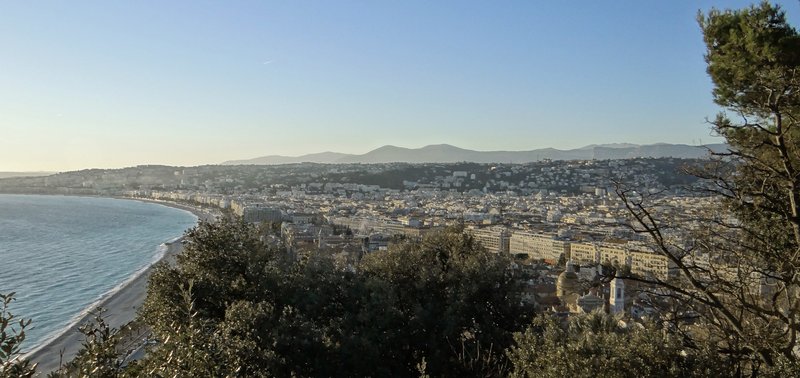
A wooded promontory rising 90 m above the sea between the Old Town and the port. The castle that named it was razed in 1706, but the park that replaced it offers the best panorama in Nice — the whole curve of the Baie des Anges on one side, the harbour on the other.
120 steps · lift
4.
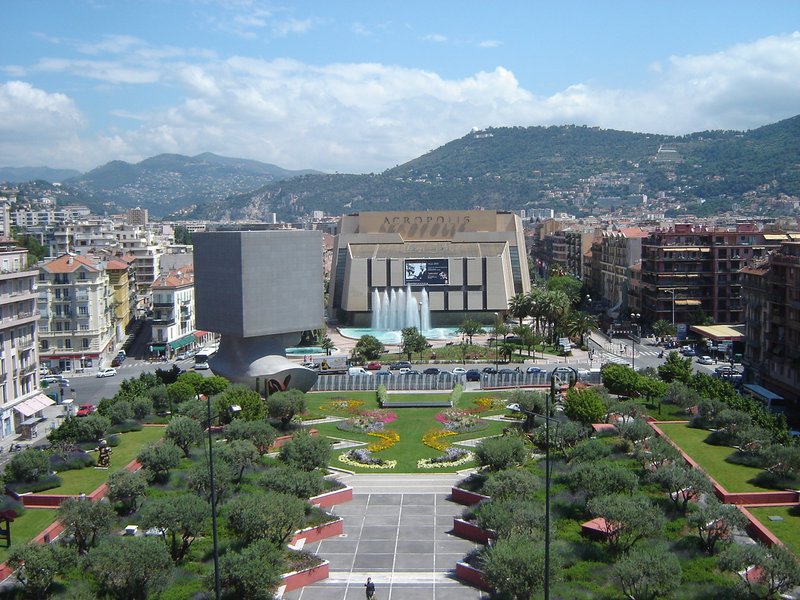
MAMAC – Musée d'Art Moderne et d'Art Contemporain
~1 hr 30 min
MAMAC opened in 1990 in four marble-clad towers connected by glass walkways near Place Garibaldi. The collection covers Nouveau Réalisme, Fluxus, and Pop Art with over 1,400 works from the 1950s to the present. The rooftop terrace overlooks the city rooflines and the sea.
Tuesday - Sunday 11:00am - 6:00pm
Closed Monday
Cash Only
Currently closed for renovation
Day 3
1. Cathédrale Saint-Nicolas~30 min
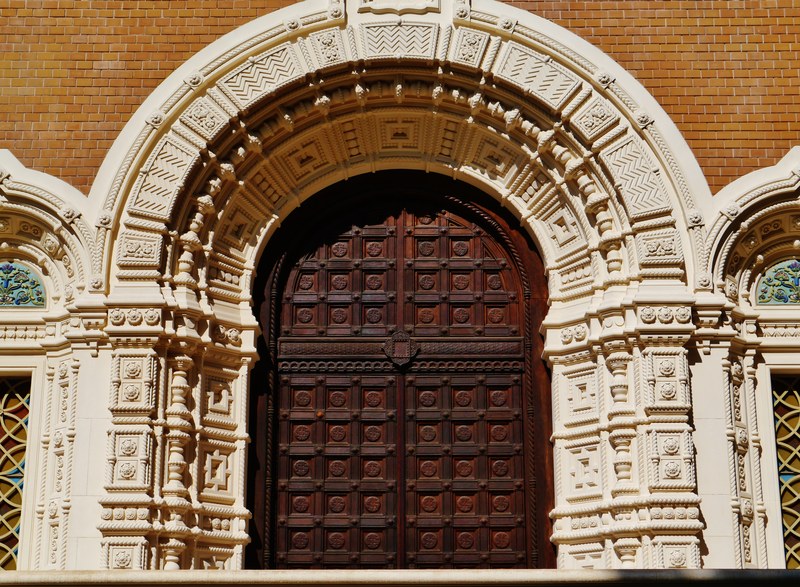
The largest Russian Orthodox cathedral in Western Europe, built 1903–1912 for Nice's imperial-era Russian colony and consecrated under Tsar Nicholas II. Six onion domes rise improbably from a quiet residential street — a startling slice of Moscow on the Riviera.
2.
Musée des Beaux-Arts de Nice
~1 hr
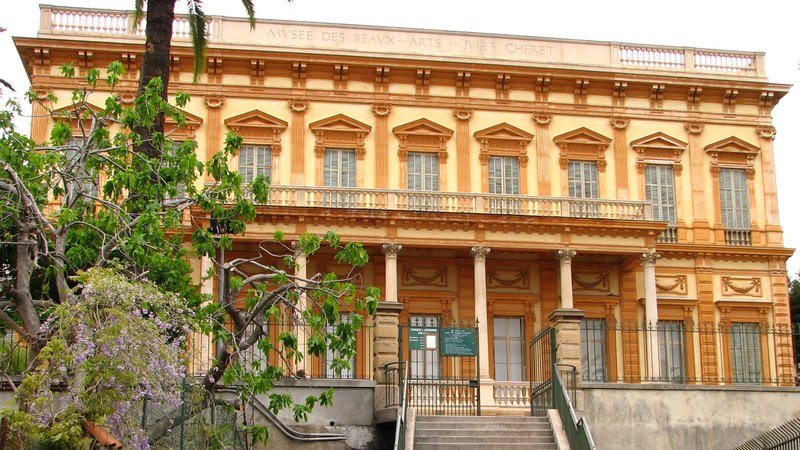
Built in 1878 and redesigned in Italian neo-Renaissance style by 1887, the museum opened in 1928. The collection spans four centuries with works by Jules Chéret, Jean-Baptiste Carpeaux, and Auguste Rodin, plus ceramics by Picasso. The facades are classified as a French historical monument.
3. Promenade des Anglais~45 min
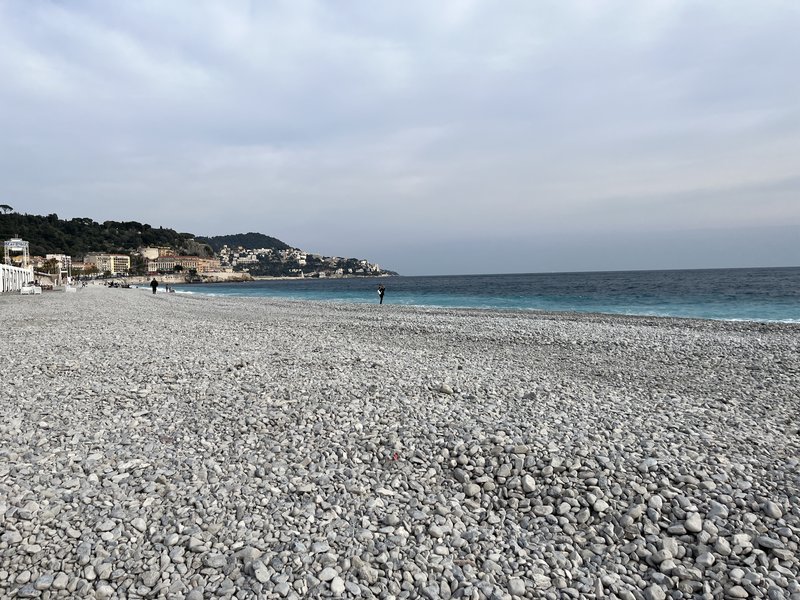
The grand seafront boulevard that defines Nice — a palm-lined walkway above the pebble beaches of the Baie des Anges, laid out by the city's English winter residents in the 1820s. Belle Époque facades, the famous blue chairs, joggers and strollers make it the city's open-air living room.
Open 24/7
4.
Musée Masséna
~1 hr
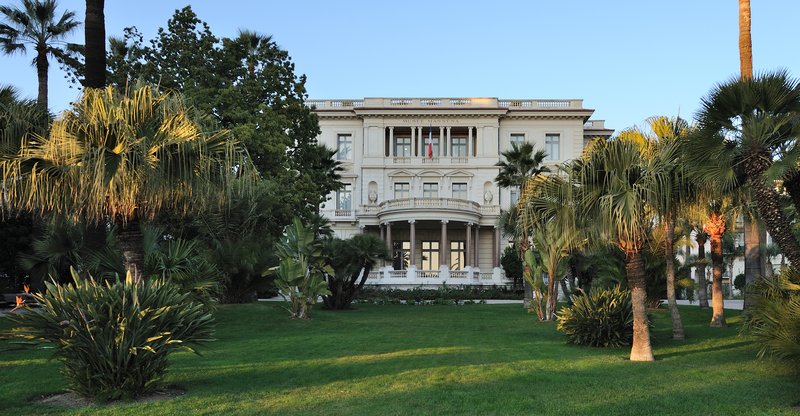
Villa Masséna is a Belle Époque Italianate palazzo built 1898–1901 for Victor Masséna, Prince of Essling. The museum covers Riviera history from the Napoleonic era through the early 20th century with paintings, decorative arts, and local objects. The villa gardens on the Promenade des Anglais are open to the public.
Day 4
1.
Villefranche-sur-Mer
~2 hr
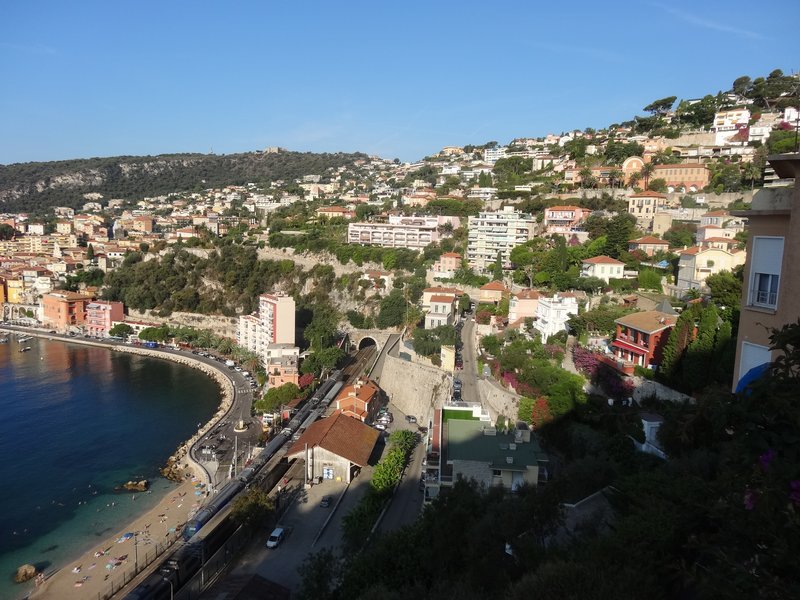
Villefranche-sur-Mer has a deep natural harbour used by naval vessels since the 14th century. The old town sits above the waterfront, with the Rue Obscure — a 13th-century vaulted street beneath the buildings along the shore. The citadel at the harbour entrance dates to 1560 and contains several municipal museums.
2.
Èze village
~2 hr
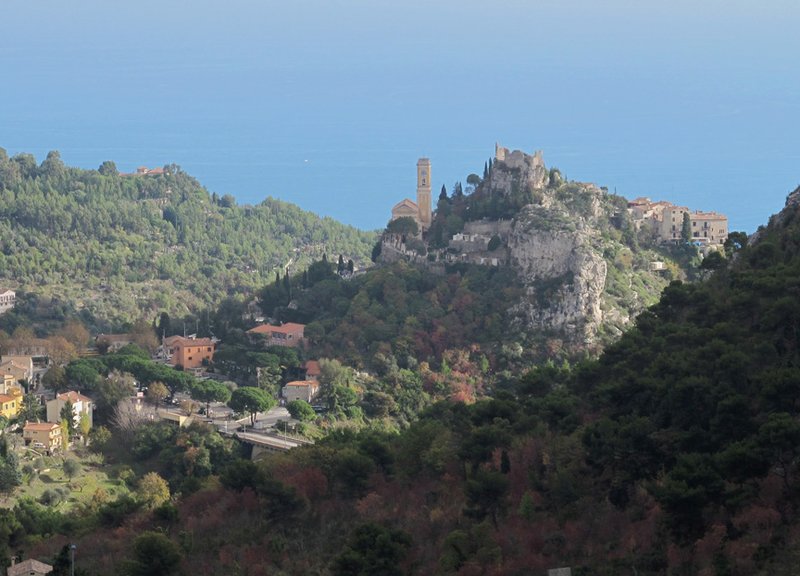
Èze is a medieval village at 427 metres on a rocky promontory above the Mediterranean between the city and Monaco. The village retains its 14th-century fortified gate and narrow stone streets. At its summit, the ruins of a feudal castle have been converted into a botanical garden planted with cacti and succulents.
Open 24/7
3.
Villa Ephrussi de Rothschild
~2 hr 30 min
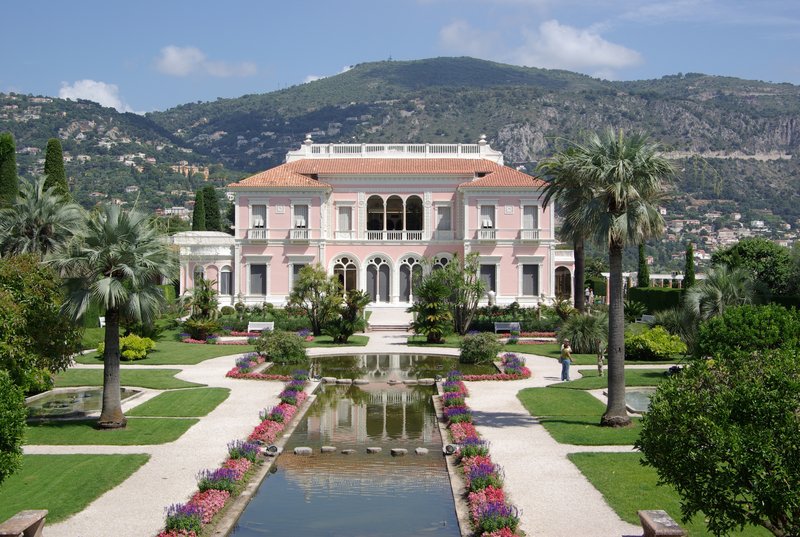
Built 1907–1912 by Baroness Béatrice de Rothschild on Cap Ferrat, the villa houses her collection of 18th-century French decorative arts, furniture, and Sèvres porcelain. Nine themed gardens — French formal, Florentine, Japanese, and rose among them — are listed among the Remarkable Gardens of France.
Daily 10:00am - 6:00pm
Paid entry — timed tickets available online
4.
Roquebrune-Cap-Martin
~1 hr 30 min
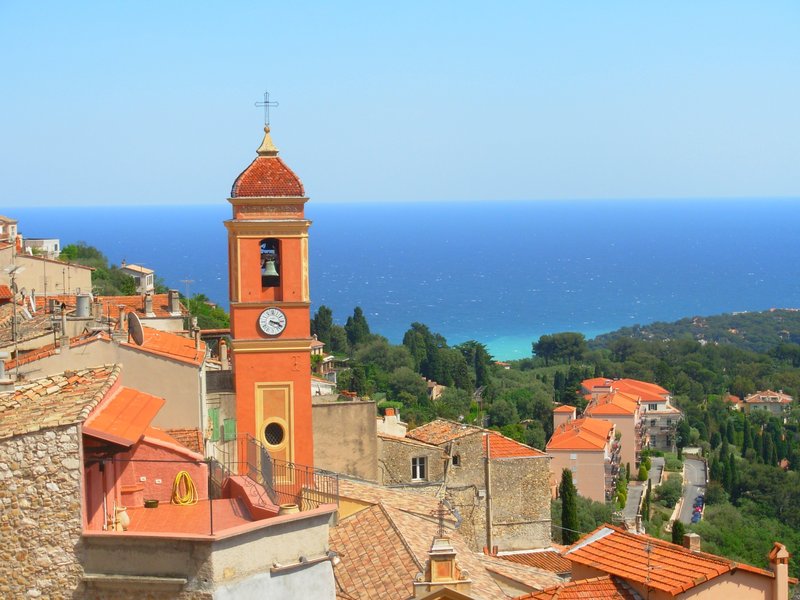
Roquebrune-Cap-Martin is a hilltop village west of Menton. The Château de Roquebrune was built in the 10th century by Conrad I, Count of Ventimiglia — one of the oldest feudal castles in France. The village has arcaded streets and a keep with coastal views toward Monaco.
Weekly Closures
Markets · Closed Monday
Municipal Museums · Closed Tuesday
Old-Town Bistros · Closed Sunday
Tours
Viator
Nice's top-rated walk: the Old Town lanes, Cours Saleya and baroque churches, then up to Castle Hill for the panorama — with a taste of homemade pissaladière along the way.
2 hr 15 min · Small group
A full-day minivan run along the coast — Eze, Monaco and Monte-Carlo, Saint-Paul-de-Vence, Cannes and Antibes — with a local guide and time to wander each village.
10 hr · Max 8
↔
A guided coastal day trip taking in the headline Riviera towns and viewpoints along the coast to the Italian border, with photo stops and free time in each.
9 hr · Small group
↔
A small-group Riviera explorer with an extended itinerary through Antibes, Eze, Saint-Paul-de-Vence and Villefranche-sur-Mer aboard a comfortable minivan.
9 hr · Max 8
↔
GetYourGuide
A storytelling walk through the medieval Old Town with a local guide — hidden corners, the city's Greek-to-Italian history, and tips on where to eat like a Niçois.
2 hr · Small group
A sommelier-led 4-hour food and wine walk through Vieux Nice — olive oils, regional wines, cheeses, charcuterie, pastries and a picnic finale at Castle Hill Park, tasting at 7–10 local stops.
4 hr · Small group
A 5-hour small-group minivan half-day from Nice — the medieval clifftop village of Eze, the Grand Prix circuit and Old Town of Monaco, and the glamour of Monte Carlo's Casino Square.
5 hr · Max 8
↔
A full-day guided trip on the French Riviera — Eze perched village, the perfumery at Fragonard, Monaco's Old Town and the Prince's Palace, and a drive through the Formula 1 Grand Prix circuit.
8 hr · Small group
↔
A 10-hour guided day covering the Riviera's greatest hits — Cannes, Monaco, Monte Carlo, Eze, Saint-Paul-de-Vence, and Antibes — in an air-conditioned minivan with a local guide.
10 hr · Small group
↔
TripAdvisor
A small-group walk through Vieux Nice with a local guide, threading the secret corners of the Old Town up to Castle Hill, ending with a taste of a local specialty.
2 hr · Small group
A full-day small-group run along the coast taking in the headline Riviera towns and villages, with a local guide and time to wander each stop.
9 hr · Small group
↔
A seven-hour shared excursion east along the Corniche — the cliff-top village of Èze, the Roman trophy at La Turbie, and the glamour of Monaco and Monte-Carlo.
7 hr · Small group
↔
A full-day small-group loop west to the film-festival glamour of Cannes, the ramparts of Antibes, and the medieval art village of Saint-Paul-de-Vence.
9 hr · Small group
↔
A 3.5-hour food tour of Nice with a passionate local guide — market tastings, Niçois street food, regional wines and cheeses, covering the Old Town's culinary culture stop by stop.
3 hr 30 min · Max 14
Cappuccino
Les Distilleries Idéales · 4.5 · 428+ reviews
Brume Coffee · 4.9 · 90+ reviews
Wednesday - Sunday 10:00am - 6:00pm
Closed Monday & Tuesday
Restaurants Near Hotel
La Favola · 4.4 · 130+ reviews
Generous Italian classics on a Cours Saleya terrace.
Daily 12:00pm - 11:00pm
Le Bistrot d'Antoine · 4.4 · 90+ reviews
Michelin Bib Gourmand bistro — French classics, great value.
Tuesday - Saturday 12:00pm - 2:00pm · 7:00pm - 10:00pm
Closed Sunday & Monday
Oliviera · 4.6 · 80+ reviews
Olive-oil-led Mediterranean lunch from a passionate owner.
Tuesday - Saturday 12:00pm - 2:30pm
Closed Sunday & Monday
L'Escalinada · 4.3 · 376+ reviews
Classic Niçoise cooking under exposed beams in an Old-Town alley.
Daily 12:00pm - 2:30pm · 7:00pm - 11:00pm
Lou Balico · 4.1 · 552+ reviews
Family institution for traditional Niçois cooking, facing the theatre.
Daily 11:00am - 2:30pm · 7:00pm - 11:00pm
Downtown Restaurants
Chez Palmyre · 4.6 · 89+ reviews
1926 institution serving a fixed three-course Niçois menu.
Monday - Friday 12:00pm - 1:30pm · 7:30pm - 9:30pm
Closed Saturday & Sunday
Chez Acchiardo · 4.5 · 109+ reviews
Four-generation family trattoria with homemade pasta and Niçois daube.
Monday - Friday 12:00pm - 2:00pm · 7:00pm - 10:00pm
Closed Saturday & Sunday
Chez Pipo · 4.5 · 187+ reviews
The city's socca temple near the port, serving since the 1920s.
Wednesday - Sunday 11:30am - 2:30pm · 5:30pm - 10:00pm
Closed Monday & Tuesday
Dining Areas
Èze village
Local Tastes
Socca
A chickpea-flour pancake baked in a wood-fired oven, crisp at the edges and soft inside, eaten piping hot with a grind of black pepper. Genoese in origin, it is Nice's defining street snack.
Pissaladière
A savoury tart on a bread base smothered in slow-caramelised onions, anchovies and small black Niçoise olives — robust, salty and unmistakably southern.
Salade Niçoise
The original: tomatoes, egg, anchovies or tuna, raw vegetables and olives dressed in olive oil — no potatoes or green beans in the purist Niçois version.
Pan Bagnat
A salade niçoise packed into a round roll rubbed with garlic and soaked in olive oil — the Riviera's "bathed bread" and perfect beach lunch.
Petits Farcis
Small vegetables — courgette, onion, tomato, pepper — hollowed out, stuffed with seasoned meat and breadcrumbs, and baked until golden.
Food Delivery
Uber Eats
Foreign number: accepted — standard international numbers work; verification arrives by SMS without issue.
Good coverage across Nice; restaurant selection is broad and includes many Old Town and Promenade des Anglais addresses. The Uber account covers both rides and food delivery.
Deliveroo
Foreign number: not required — sign-up runs on Google, Apple, Facebook or email with no phone field at all, so no verification code has to arrive.
Strong in the centre and Old Town; faster average delivery times than Uber Eats in the central neighbourhoods. Particularly good for restaurants and local bakeries.
Just Eat
Foreign number: not required — the account is made with Google, Facebook or an email address; there is no phone field, so no code has to arrive.
Broader suburban coverage than Deliveroo; useful if your hotel is outside the centre. Platform is in French but navigable for non-French speakers.
Shows, Performances & Concerts
Opéra de Nice
The city's 1885 opera house in the Old Town — opera, ballet and symphonic concerts in a gilded Belle Époque hall.
Getting Around
Uber
Foreign number: not required — the app accepts any international number and payment card; no French SIM needed.
The most reliable option in Nice; coverage spans the whole city and the Côte d'Azur. Wait times in the centre are short but can lengthen during the summer peak and Carnival.
Bolt
Foreign number: not required — international numbers are accepted; sign-up works without a French SIM.
Consistently cheaper than Uber for short in-city trips; growing fleet in Nice makes it a practical alternative, particularly for rides within the city centre and to the train station.
Train Stations Near Hotel
Gare de Nice-Ville
Mainline TER, Intercités and TGV trains to Monaco, Cannes, Marseille and Paris.
Gare de Nice Riquier
Day Trips by Train
Villefranche-sur-Mer · 8 min
A pastel fishing harbour wrapped around a deep blue bay, one stop east, with a baroque old town and the Cocteau-painted Chapelle Saint-Pierre on the quay.
book at: SNCF Connect or Omio
Monaco & Monte-Carlo · 20 min
The glittering principality 20 minutes east — the Casino de Monte-Carlo, the Prince's Palace, the old town of Monaco-Ville and the Oceanographic Museum, all walkable once you arrive.
book at: SNCF Connect or Omio
Antibes · 20 min
A walled seaside town 20 minutes west with a ramparts walk, the Picasso Museum in the Château Grimaldi, and Europe's largest yacht harbour at Port Vauban.
book at: SNCF Connect or Omio
Menton · 30 min
The "pearl of France" on the Italian border — a lemon-scented town of ochre houses, terraced gardens and a steep baroque old town, 30 minutes east.
book at: SNCF Connect or Omio
Cannes · 40 min
Riviera glamour 40 minutes west — La Croisette, the film-festival Palais, the sandy beaches and the old quarter of Le Suquet climbing above the port.
book at: SNCF Connect or Omio
Michelin Restaurants
Flaveur
Inventive modern Riviera cuisine with Caribbean and Asian accents.
Le Chantecler
Grand seafront fine dining inside the Belle Époque Hôtel Negresco.
Pure & V
Market-driven, seasonal bistronomic cooking in a relaxed room.
JAN
Heads Up
Cours Saleya — Market vs. Antiques
The Cours Saleya market runs Tuesday to Sunday mornings; on Monday it is antiques only, no flowers or food.
Cimiez — Museums Closed Tuesdays
Nice's municipal museums, including those at Cimiez, close on Tuesday; the Roman ruins and monastery gardens stay open.
Castle Hill — It's a Climb
The climb from the Old Town is steep, but a free lift runs by the Bellanda Tower at the east end of Quai des États-Unis.
Hiking
Mont Boron Circuit · Easy
A forested loop above the port with Mediterranean views.
5 km loop · 190 m ascent
1 hr 50 min
Lou Camin Nissart · Moderate
A signposted GR de Pays loop through Nice's hills and natural balconies.
42 km loop · 800 m ascent
8 hr
Worth Knowing
A Note on Nice
Nice rewards the slow traveller. Two days is just enough to learn its rhythm: mornings belong to the Cours Saleya, when the flower sellers are setting up and the socca ovens are warming; afternoons to the shade of Castle Hill or the long blue line of the Promenade; evenings to a small table in the Old Town with a carafe of rosé and a plate of petits farcis.
Resist the urge to museum-hop. The art of Nice is mostly outdoors — in the ochre walls, the light coming off the bay, the cathedrals you stumble into, the way the hills of Cimiez go quiet and Roman the moment you step off the bus. Walk first, plan second, and let the city set the pace.
Also on this site
Nearby Guides