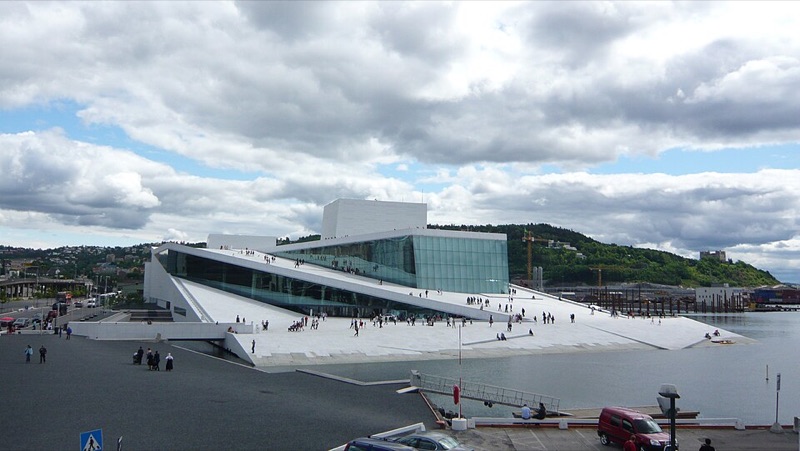
Snøhetta's opera house rises from the Oslofjord with a marble-clad roof that slopes to the waterline — designed so anyone can walk up and across it. The angled white surfaces shift tone with the light. Home of the Norwegian National Opera and Ballet; free rooftop access any time.
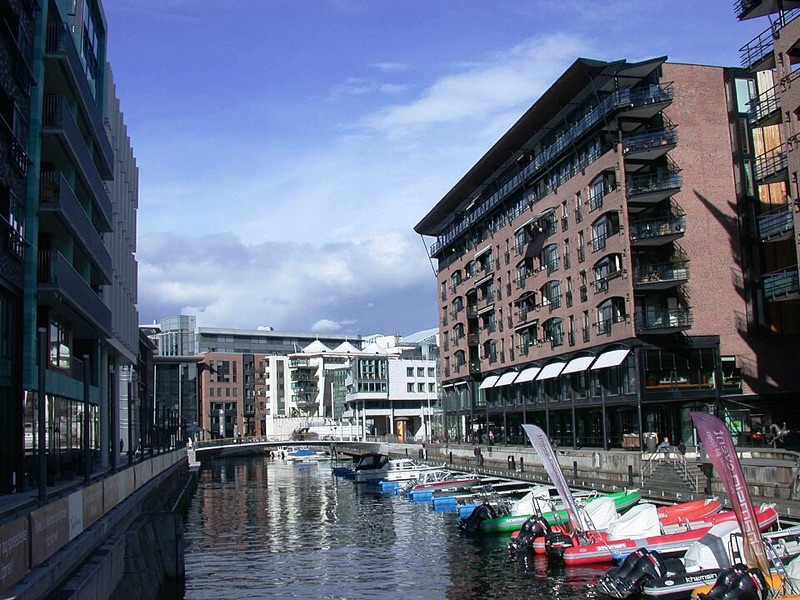
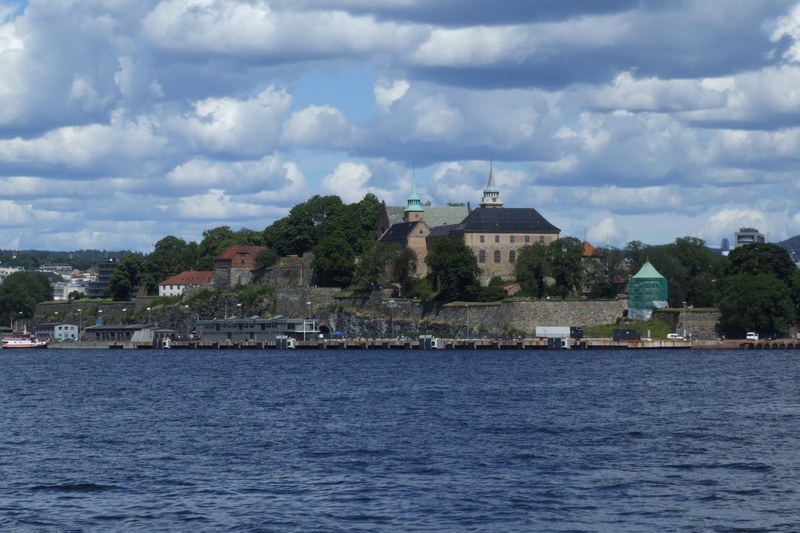
Oslo's converted 19th-century shipyard, now a waterfront promenade of glass-fronted restaurants, boutiques, and galleries along the inner Oslofjord. The view across to Akershus Fortress is one of the city's most iconic. Connects directly to Tjuvholmen and the Astrup Fearnley Museum.
5 min · 3 min → Astrup Fearnley Museum of Modern Art
3.Astrup Fearnley Museum of Modern Art~1.5 hr
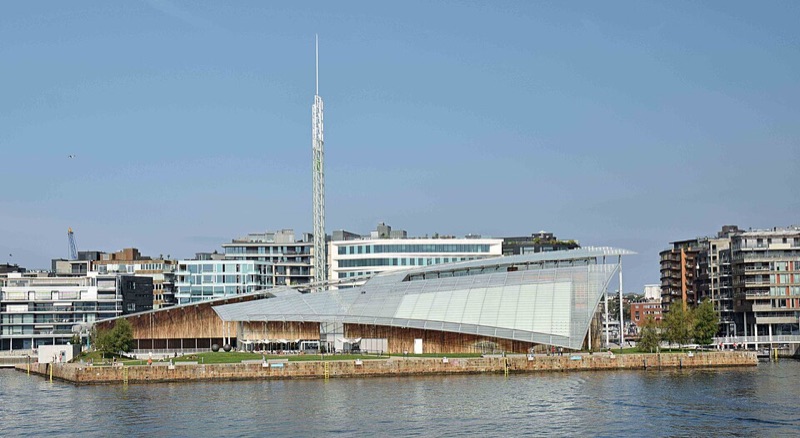
Renzo Piano's waterfront museum on the Tjuvholmen peninsula holds one of Scandinavia's most significant private collections of post-war and contemporary art — Damien Hirst, Jeff Koons, Matthew Barney. The sail-like glass roof and the adjoining sculpture park visible from the fjord are as compelling as what's inside.
From Hotel: 30 min · 10 min → Vigeland Sculpture Park
1.Vigeland Sculpture Park~1.5 hr
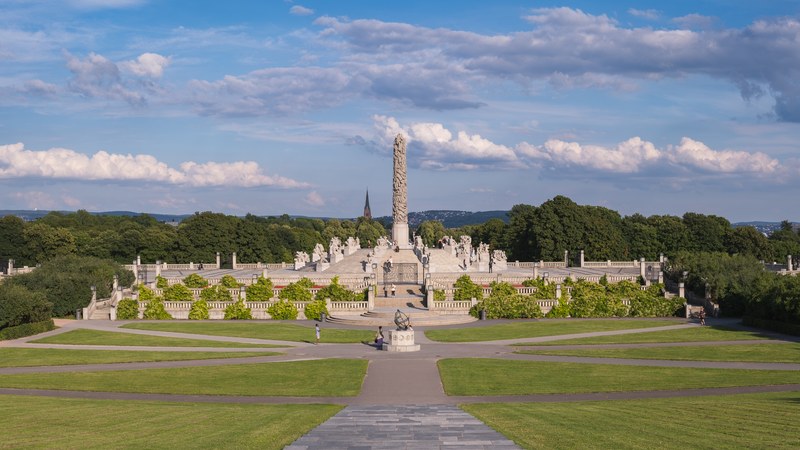
Gustav Vigeland's life work — 212 bronze and granite sculptures spread across 80 acres of Frogner Park, all depicting the cycle of human life from birth to death. The Monolith, a 14-metre column of 121 intertwined figures, anchors the central plateau. The park is always open and always free.
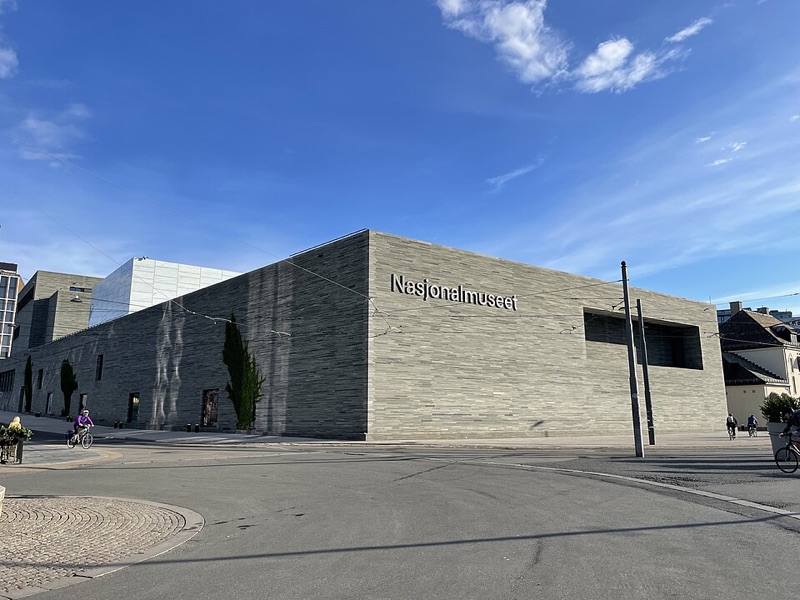
Europe's largest collection of Norwegian and Scandinavian art in a monumental building on the Aker Brygge waterfront. The permanent collection includes Munch's The Scream tempera version, Tidemand and Gude's Brudeferd i Hardanger, and the full span of Norwegian art from the 18th century to today.
The medieval castle and fortress complex that has guarded the Oslofjord since the 13th century. The grounds include Akershus Castle, the Norwegian Armed Forces Museum, and sweeping views across the fjord from the ramparts. The grounds are free to walk; the castle interior requires a separate ticket.
Oslo's most characterful neighborhood — independent coffee shops, vinyl stores, vintage markets, galleries, and small restaurants fill the late-19th-century streets. The Akerselva runs its eastern edge. Birkelunden park is the social anchor in summer.
The Akerselva runs 8 km through Oslo on a continuous greenway path. The stretch through Grünerløkka past the old textile mills at Beyer bridge is the most scenic — waterfalls, brick factory buildings, and urban wildlife corridors all within walking distance of the centre.
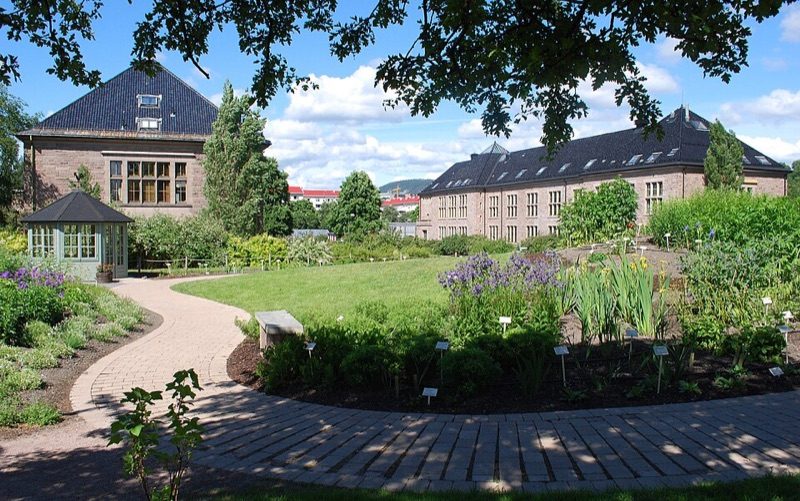
The University of Oslo's botanical garden at Tøyen — Norway's oldest scientific garden. Summer brings the rock garden and alpine collection into full flower; the large glasshouses hold tropical and subtropical plants year-round. The Munch neighbourhood and Natural History Museum are next door.
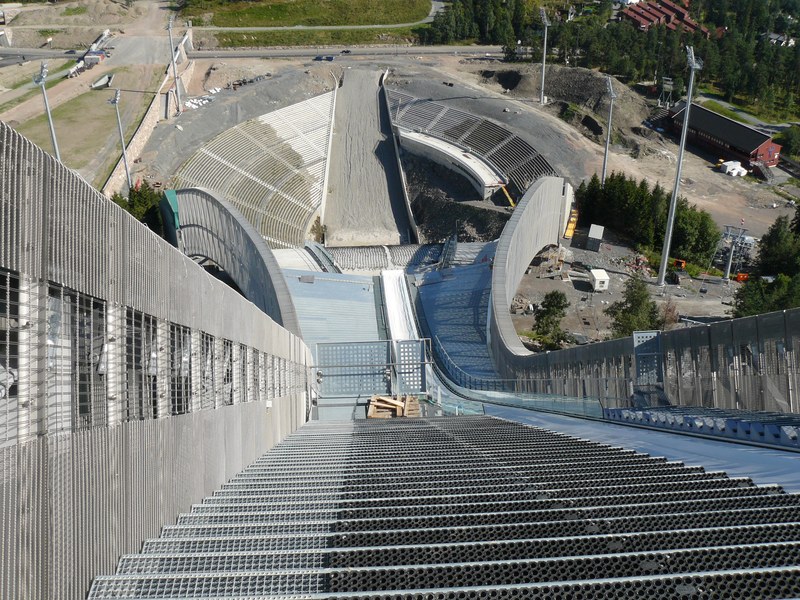
The iconic ski jump tower above Oslo, rebuilt for the Ski World Championships. The observation deck at the top — 60 metres up, 450 metres above sea level — gives a panoramic view across Oslo to the Oslofjord. The ski museum beneath the jump is the world's oldest, tracing 4,000 years of skiing history.
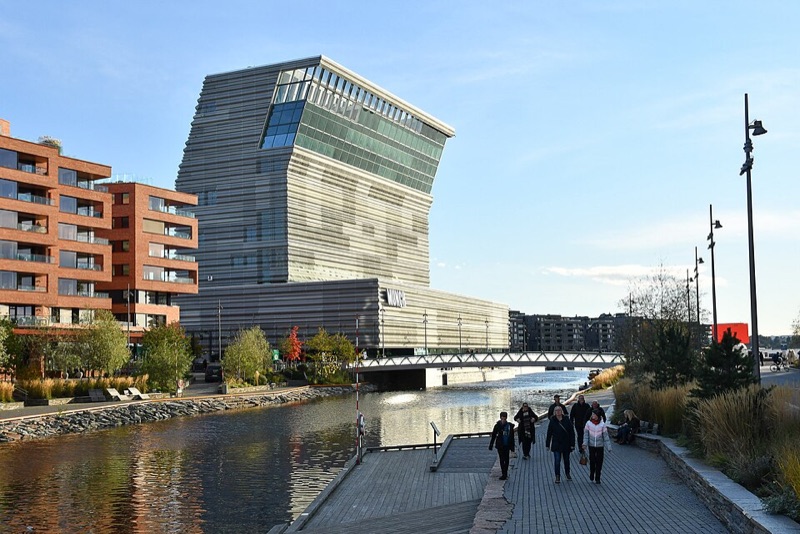
The world's largest collection of Edvard Munch's work — over 26,000 paintings, drawings, prints, and watercolors in a cantilevered tower at Bjørvika. Spans Munch's full career. The oil and pastel versions of The Scream are here; the tempera hangs in the National Museum.
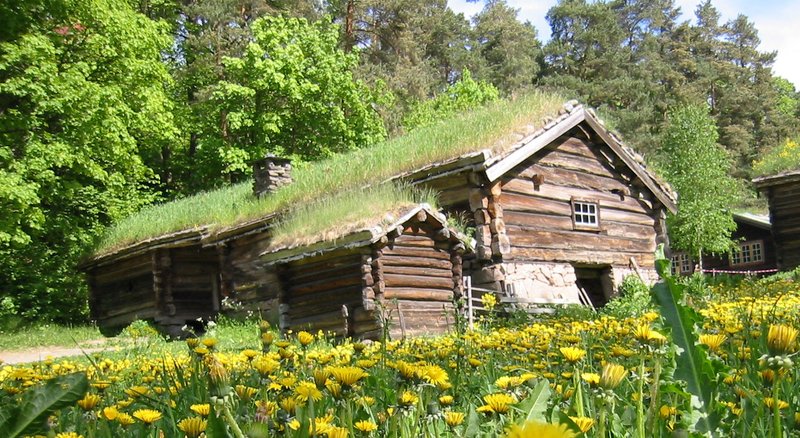
One of Europe's largest open-air museums — 160 historic buildings relocated from across Norway, including a 13th-century stave church from Gol. The indoor collection holds Norwegian folk art and a full reconstruction of Henrik Ibsen's study. Costumed hosts demonstrate traditional crafts in summer.
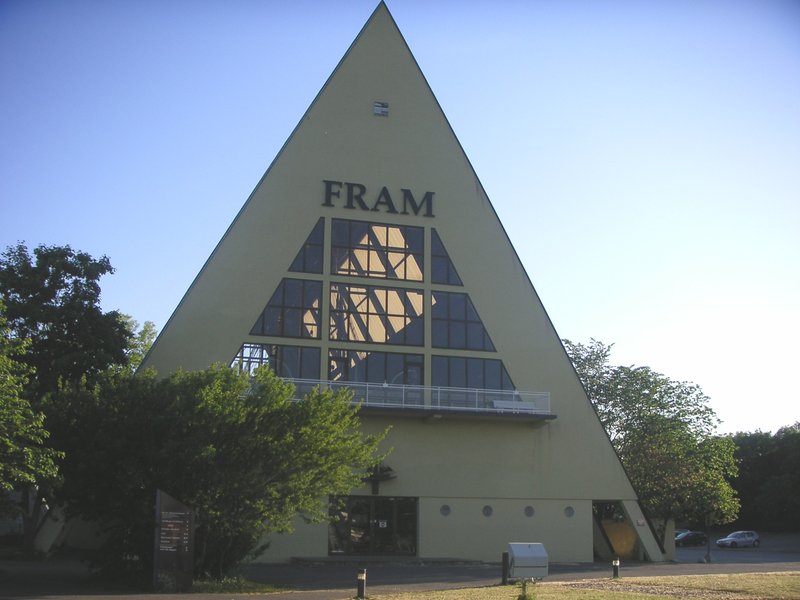
The polar vessel Fram — which carried Nansen and Amundsen on their Arctic and Antarctic expeditions — housed in an A-frame museum at Bygdøy. You can board the ship, descend below decks, and walk through the original cabins. A second building holds the Gjøa, the first ship to complete the Northwest Passage.
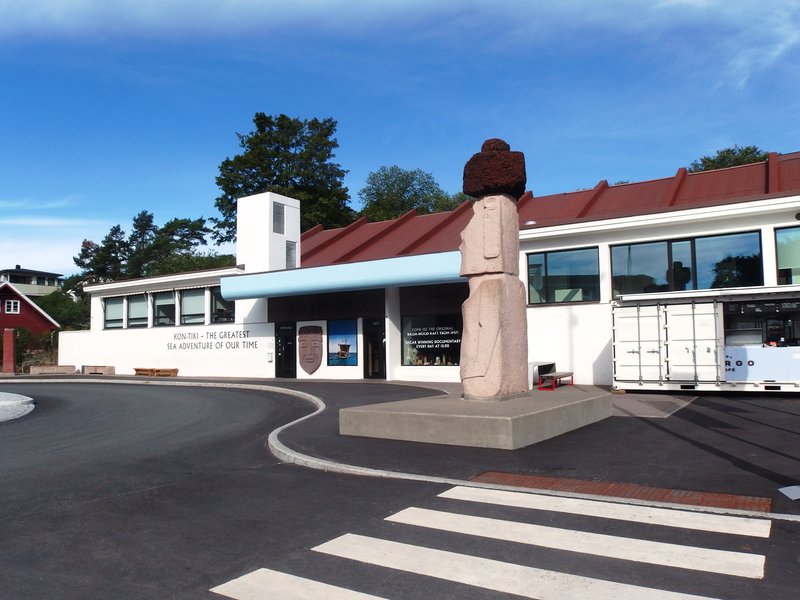
The actual balsa wood raft Thor Heyerdahl sailed from Peru to Polynesia in 1947 — 8,000 km in 101 days — displayed at full scale alongside the Ra II, the papyrus vessel that crossed the Atlantic in 1970. An underwater exhibit sits beneath the Kon-Tiki raft. Daily screenings of the Oscar-winning documentary at noon.
Scandinavia's best-preserved fortified old town. Bastioned walls, moat, and cobblestone streets sit on the west bank of the Glomma — connected to Fredrikstad station by a car ferry every ten minutes. Inside the walls: galleries, craft studios, a medieval church, and a café in the old prison.
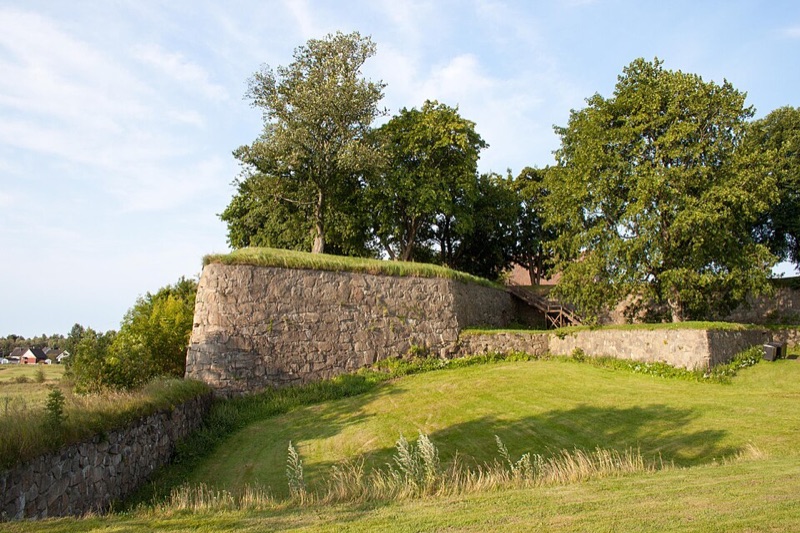
A 17th-century outwork fort on Galgeberget hill above Gamlebyen, built as an advance warning position. The earthwork bastions and stone tower are well-preserved; the panorama at the top takes in the Glomma estuary, the outer Oslofjord, and Gamlebyen's full fortifications.
2-hour small-group guided walk through Oslo's historic centre — the Royal Palace, Karl Johans gate, the National Theatre, City Hall, and Aker Brygge waterfront with a licensed local guide covering architecture and Norwegian history.
2-hour guided fjord cruise aboard a silent hybrid-electric boat from Aker Brygge — past the Opera House, Akershus Fortress, and the outer fjord islands with live narration covering landmarks and history visible from the water.
3.5-hour guided island-hopping tour by public electric ferry — Hovedøya, Gressholmen, and Langøyene, with stops at 12th-century abbey ruins, hidden beaches, and wildlife-rich coastal paths led by a local nature guide.
5-hour combo: coach tour covering Vigeland Park, Holmenkollen, and Bygdøy with a guide, followed by a 50-minute Oslo Fjord sightseeing cruise. The broadest overview of Oslo available in a single half-day without walking.
2-hour narrated sightseeing cruise across the Oslofjord departing Aker Brygge — the Opera House, Akershus Fortress, and the outer fjord islets with English-language commentary. Classic boat format on one of Scandinavia's most scenic urban waterways.
2-hour guided fjord cruise aboard Ms Brisen, a silent hybrid-electric catamaran — Dyna Fyr lighthouse, Heggholmen, the Opera House, Akershus Fortress, and the Oslo Fjord Sauna with live narration on landmarks and fjord history.
2-hour sailing cruise along the Oslofjord on a classic wooden tall ship with a heated main deck — the outer fjord islands, the Opera House, and the Akershus waterfront with onboard narration. One of the most distinctive ways to see Oslo from the water.
3.5-hour guided island-hopping tour on the Oslofjord electric public ferries — Hovedøya with 12th-century abbey ruins, Gressholmen wildlife reserve, and hidden beaches accessible only by water, with a local guide with deep knowledge of coastal ecology.
2-hour guided walk through Oslo's historic Old Town, Akershus Fortress, and waterfront, followed by a 55-minute fjord cruise. Covers both the street-level landmarks and the view from the water in a single combined tour.
Half-day guided bus tour covering Vigeland Park, Holmenkollen, and Bygdøy, followed by a scenic Oslofjord cruise. Breadth-first overview of Oslo's most iconic sights in a single morning without walking fatigue.
2-hour guided walking tour through Oslo's historic centre — the Opera House, Karl Johans gate, the Royal Palace, the National Theatre, and City Hall — with knowledgeable local guides covering Norwegian history, culture, and city mythology.
2-hour guided fjord cruise on the silent electric Ms Brisen departing Aker Brygge — past the Opera House, Akershus Fortress, and outer fjord landmarks with live narration. TripAdvisor booking path for the same premium silent-boat product.
5-hour coach and cruise combo — Vigeland Park, Holmenkollen Ski Jump, the Bygdøy peninsula, and an Oslo Fjord cruise with an 84-year-old Welsh guide whose Oslo knowledge has been praised across hundreds of reviews.
Half-day guided bus tour of Oslo's highlights with a 50-minute Oslofjord cruise — Vigeland Sculpture Park, the Ski Jump, the Bygdøy peninsula, and the waterfront. Guides praised for combining cultural context with an efficient itinerary.
3.5-hour guided island-hopping tour across the inner Oslofjord by public electric ferry — Hovedøya, Gressholmen, and Langøyene. Led by a local nature guide with expertise in Oslo's coastal ecosystems and fjord island history.
Brown cheese — made by boiling whey until the sugars caramelize. Sweet, slightly fudgy, unmistakably Norwegian. Eaten on crispbread or waffles. Gudbrandsdalsost is the standard variety; Ekte Geitost is sharper.
Norwegian heart-shaped waffles — thinner and softer than Belgian waffles, eaten warm with sour cream and strawberry jam or brunost. A staple at Norwegian mountain lodges and fjord cafés.
Open-faced rye bread sandwiches — the Norwegian version of the Scandinavian smørrebrød tradition. Common toppings: roast beef with remoulade, cured meats, eggs with anchovies. Lunch staple in Oslo's traditional cafés.
Cured salmon — salt, sugar, dill, and sometimes aquavit cured for 48 hours. Thinly sliced and served with mustard-dill sauce on dark rye. One of Norway's oldest preparations, served everywhere from grand hotel cafés to street kiosks.
Norway's national spirit — distilled from grain or potato, flavored with caraway or dill, then barrel-aged. Linie Aquavit barrels cross the equator twice by ship. Served cold; accompanies smørebrød and festive meals.
Foreign number: not required — sign-up runs on Google, Apple or email with no phone verification step.
Wolt is Oslo's most popular delivery platform with strong restaurant coverage across Sentrum, Frogner, Grünerløkka and Majorstuen; fast delivery times and a reliable app interface in English.
Foreign number: accepted — the SMS verification code arrives on most international numbers.
Strong alternative to Wolt with wide restaurant selection and reliable delivery across central Oslo; particularly good for restaurants in Grünerløkka and Torshov that are not on Wolt.
Oslo Opera House — Norwegian National Opera and Ballet
Norway's premier opera and ballet house — full opera, ballet, and contemporary dance seasons. Repertoire spans Wagner, Verdi, and Nordic world premieres.
Foreign number: not required — the app accepts any international number and payment card, no Norwegian SIM needed.
Uber operates reliably in Oslo with cars available across the city centre and inner neighbourhoods; wait times are short near Sentrum, Aker Brygge and Grünerløkka.
Foreign number: not required — the app accepts any international number and payment card, no Norwegian SIM needed.
Bolt is the strong alternative to Uber in Oslo, often slightly cheaper; good coverage across the same central areas with competitive wait times and English-language interface.
Norway's main rail hub — Vy regional and intercity trains to Bergen, Trondheim, Stavanger, Fredrikstad, and Lillehammer. SJ and Vy international routes: Stockholm 5h · Gothenburg 3h 30min. Ruter commuter lines also depart from Oslo S.
Compact city at the head of the Drammenselva river — the Bragernes church with the hilltop view over the region, the revitalized Strømsø waterfront district, and the Drammen Museum. An easy half-day for travelers who want a quieter Norwegian town.
Lakeside town on Mjøsa's eastern shore, home to the Norwegian Railway Museum — engine sheds, vintage carriages, steam locomotives, and Norway's shortest working railway line, a narrow-gauge track that shuttles visitors through the museum grounds.
Former silver-mining town where a small mine train clatters visitors deep into the mountain to the King's Mine, hundreds of metres underground. The Norwegian Mining Museum in the town centre covers the silver rush, coin-minting history, and Kongsberg's ski heritage under one roof.
Border town on the Østfold Line, dominated by Fredriksten Fortress on a hilltop above the Iddefjord — an open-air museum of bastions, tunnels, and ramparts with sweeping views toward Sweden. The revitalized waterfront below has restaurants along a sunny promenade.
Olympic city on the northern shore of Lake Mjøsa — the Lysgårdsbakken ski jump open for sightseeing, the Norwegian Olympic Museum, the open-air Maihaugen folk museum, and the historic wooden town of Storgata. Best visited in summer when Maihaugen is fully open.
The Scream Was Stolen Twice — Once by Masked Gunmen in Broad Daylight
The tempera version of The Scream hanging in the National Museum survived two separate thefts. On the opening day of the 1994 Lillehammer Winter Olympics, thieves broke into the National Gallery, cut the painting from the wall in under a minute, and left behind a note thanking the museum for its "bad security." It turned up undamaged at a hotel south of Oslo about three months later. A decade after that, a different version of the painting was stolen again — this time by masked gunmen who walked into the Munch Museum in broad daylight and took it along with Munch's Madonna at gunpoint. That painting stayed missing for two years before police finally recovered it.
The man behind the Kon-Tiki expedition spent most of his life afraid of the water he became famous for crossing. Thor Heyerdahl nearly drowned twice as a child and didn't learn to swim properly until his twenties, yet at thirty-two he set out on a balsa-wood raft to sail thousands of miles across the Pacific and prove his theory that ancient South Americans could have settled Polynesia. He spent months at sea fending off curious sharks, by his own account frightened for his life more than once — proof that his conviction about the theory mattered more to him than his own fear of the ocean.