From Hotel: 9 min · 6 min → University Church of St Mary the Virgin
1.University Church of St Mary the Virgin~45 min
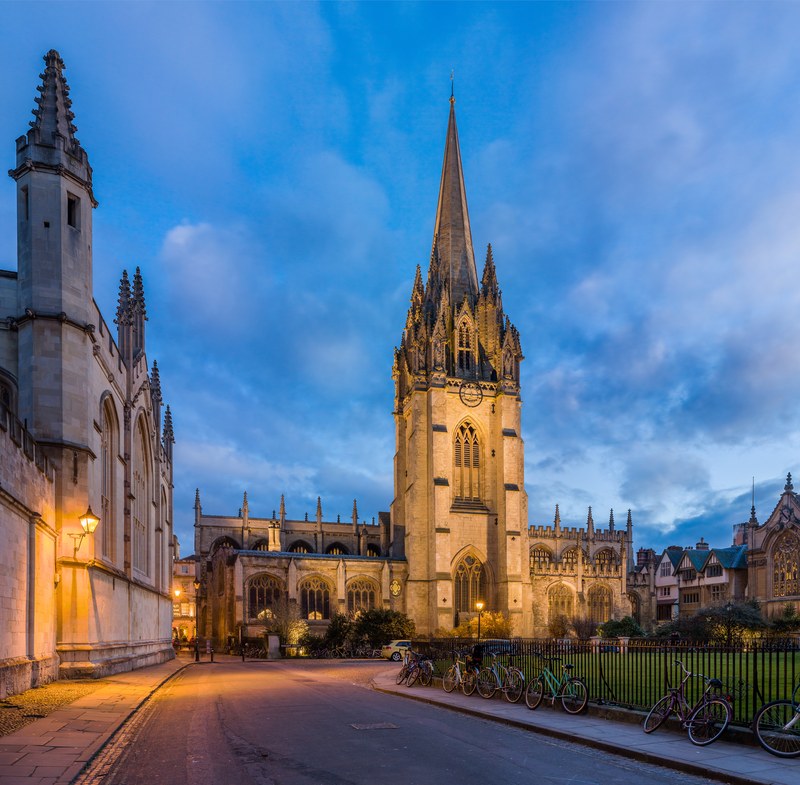
The university's official church, and the place to climb for the definitive view of Oxford. A 127-step medieval staircase up the 14th-century tower opens onto a platform looking straight down on the Radcliffe Camera and the spires beyond.
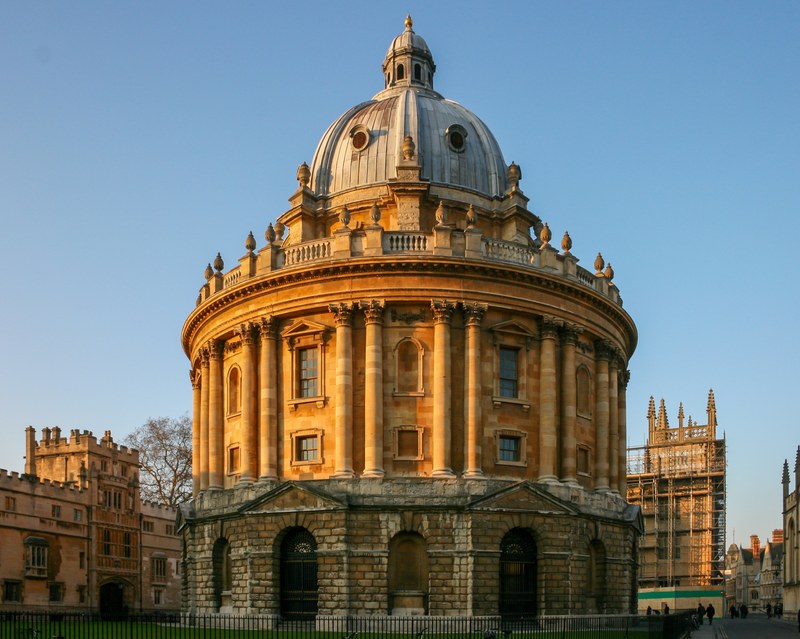
The circular, domed reading room at the heart of Radcliffe Square is the most photographed building in Oxford. Designed by James Gibbs and completed in 1749, it is a working Bodleian library — admired from the square, open to all at any hour.
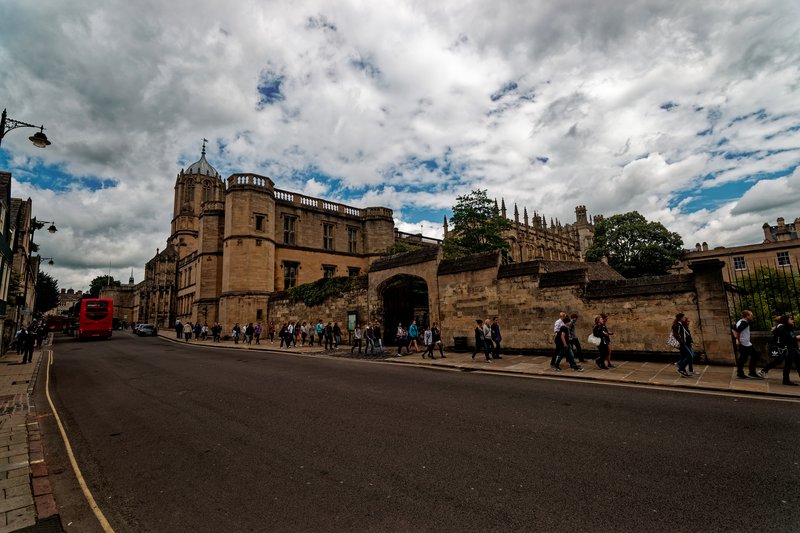
Oxford's grandest college, founded by Cardinal Wolsey in 1525, wrapped around Tom Quad — the largest quadrangle in the city. Its dining hall inspired Hogwarts, and the college chapel doubles as the smallest cathedral in England.
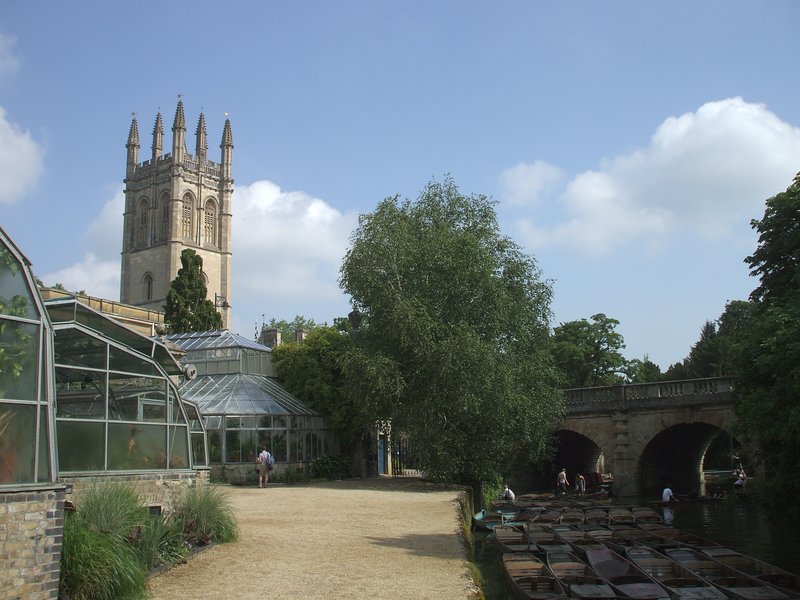
The oldest botanic garden in Britain, founded in 1621, tucked behind a grand stone gateway beside the River Cherwell. Walled beds, glasshouses of tropical and carnivorous plants, and the yew that inspired Philip Pullman fill a compact, atmospheric acre.
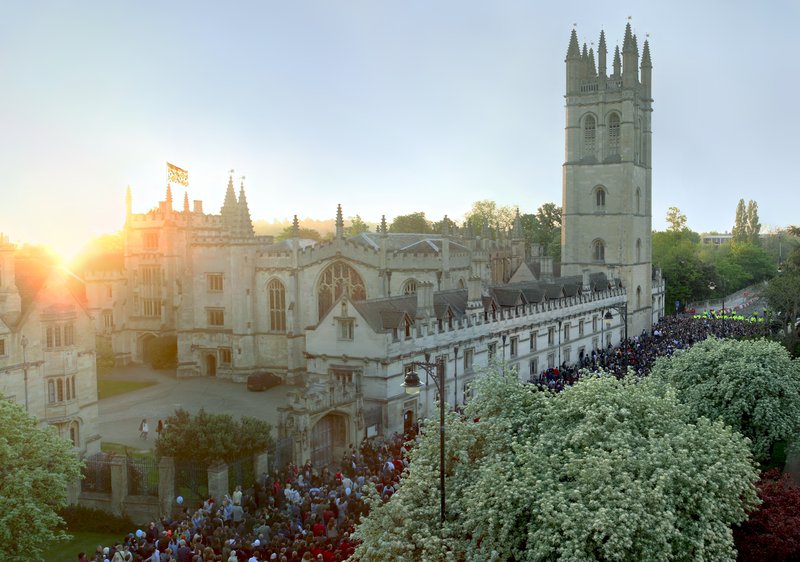
Many say the most beautiful college in Oxford. Its 15th-century bell tower presides over the High Street, and the grounds run to medieval cloisters, riverside water walks and a deer park grazed since the 1700s.
From Hotel: 6 min · 4 min → Bodleian Library — Divinity School
1.Bodleian Library — Divinity School~1 hr
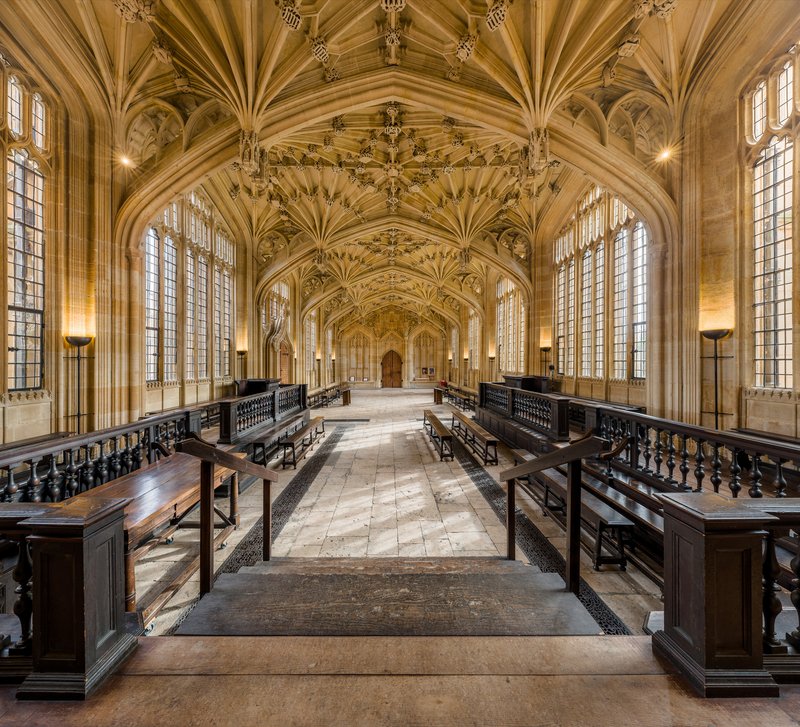
One of the oldest libraries in Europe, in use since 1602. The 15th-century Divinity School beneath it is the masterpiece — England's earliest university teaching room, crowned with an intricate fan-vaulted ceiling that stood in for Hogwarts' infirmary.
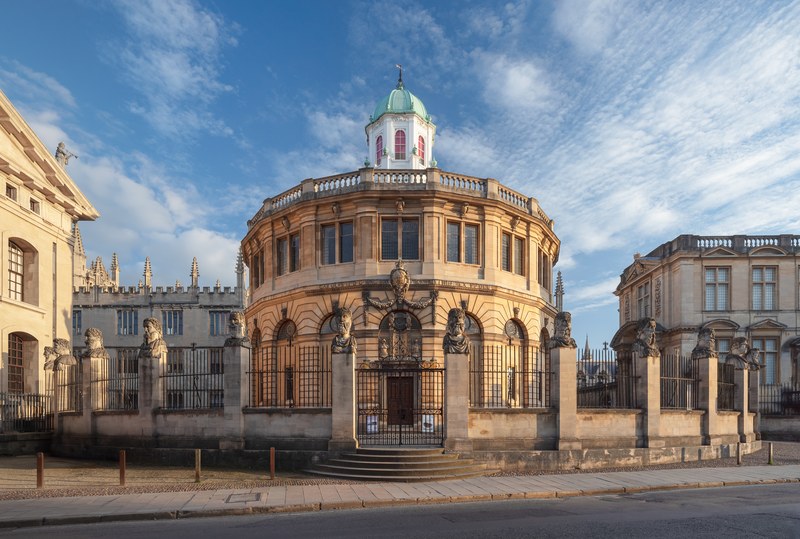
Christopher Wren's first major building, completed in 1669, where the university still holds its graduation ceremonies. Climb the 114 steps to the green-domed cupola for a 360-degree panorama across the rooftops and towers of central Oxford.
8 min · 1 min → Oxford University Museum of Natural History
3.Oxford University Museum of Natural History~1 hr
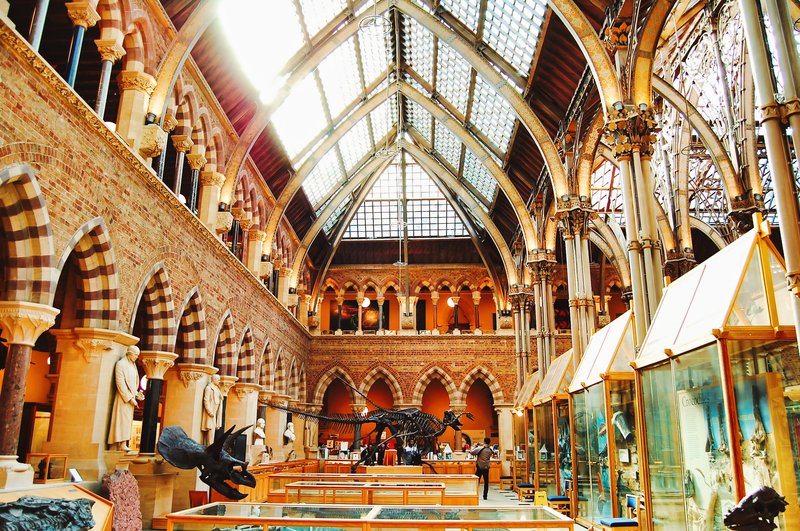
A cathedral of science under a soaring neo-Gothic glass roof, its iron columns carved with leaves and beasts. Inside: towering dinosaur skeletons, the dodo that inspired Lewis Carroll, and the spot where Huxley debated evolution in 1860.
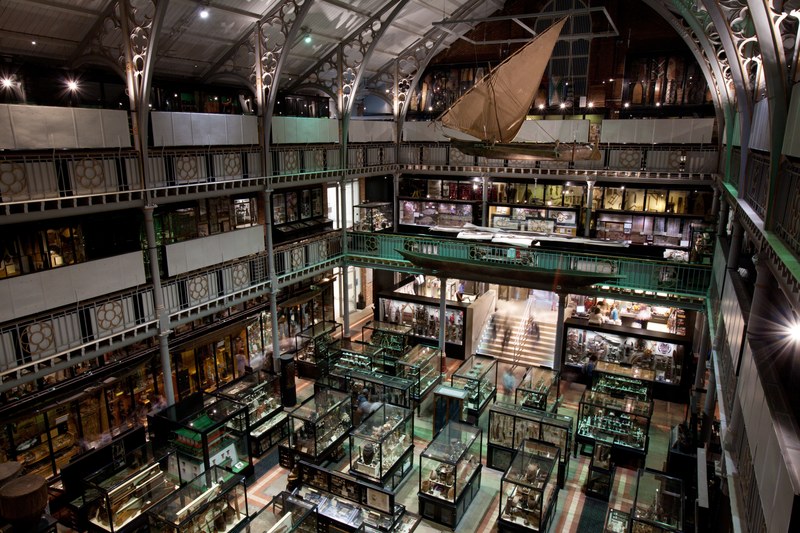
Reached through the back of the Natural History Museum, this is one of the world's great ethnographic collections — half a million objects crammed into dim Victorian cases, arranged by type rather than place. Totem poles, shrunken heads and shadow puppets crowd every shelf.
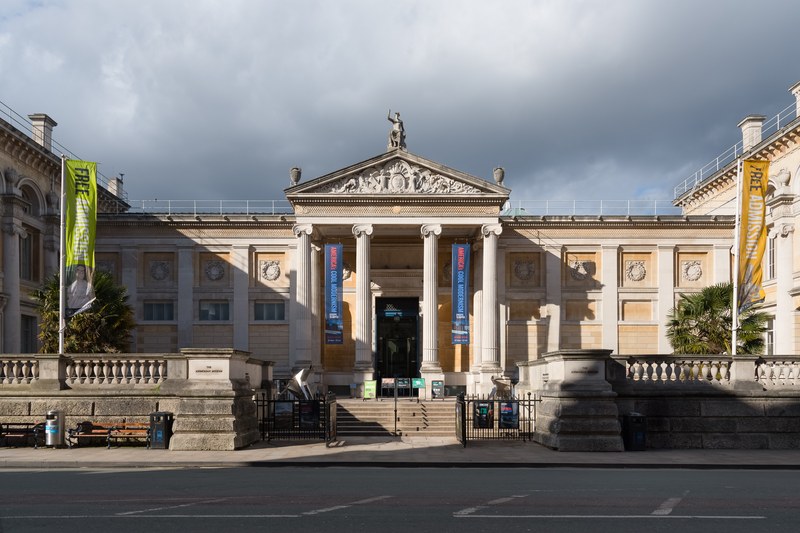
Britain's first public museum, opened in 1683, behind a grand neoclassical portico on Beaumont Street. Six floors range from Egyptian mummies and Minoan treasures to Raphael drawings and the Alfred Jewel, all arranged around a light-filled modern atrium.
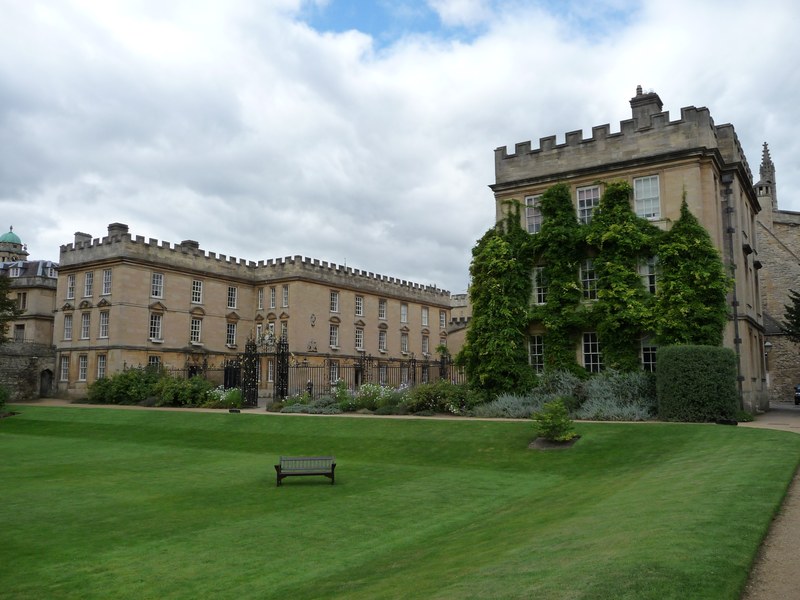
Founded in 1379 by William of Wykeham, New College set the architectural template for Oxford — the first to combine hall, chapel, library and cloisters around a single quadrangle. Its 15th-century cloister is the most atmospheric in Oxford, and the medieval city wall runs along the garden boundary.
One of the three oldest colleges at Oxford, founded around 1263. The Victorian Gothic entrance screen on Broad Street opens onto a medieval front quadrangle; its long roll of prime ministers and Nobel laureates puts it among the most politically influential institutions in English history.
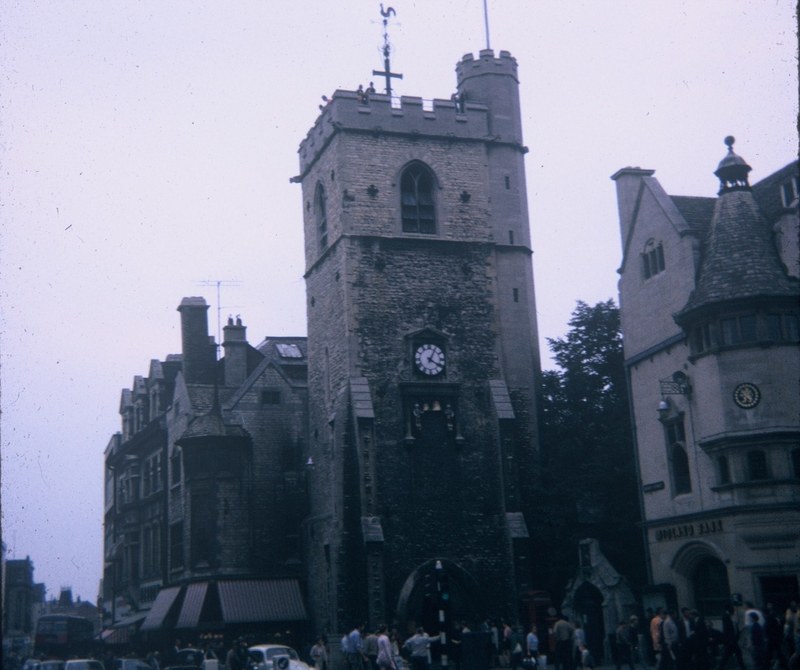
The only remnant of the 12th-century St Martin's Church, standing at the exact crossroads where Oxford's four medieval streets met. Ninety-nine steps climb to the top of the 23-metre tower for a close-in view of the city's spires, rooftops and college towers spreading in every direction.
Founded in 1264, Merton is the college that most feels unchanged from the medieval university. Its library — Mob Quad, finished in 1378 — is the oldest library in continuous use in England, and the Fellows' Garden retains a stretch of the 13th-century city wall. J.R.R. Tolkien taught Anglo-Saxon here.
A student-led walk inside the colleges, taking in the Bodleian, Radcliffe Camera, the University Church and a Harry Potter film location, with first-hand stories of university life.
A film-and-fiction walk into New College and the Bodleian, weaving Harry Potter locations together with Alice in Wonderland, The Hobbit and the wider story of the university.
A longer student-led tour pairing the university and city highlights with an optional visit into Christ Church — the cathedral, Tom Quad and the Great Hall.
A small-group day tour through the honey-stone villages of the North Cotswolds — Bourton-on-the-Water, Burford, Burford and Moreton-in-Marsh — with a local guide and plenty of stops for photos and lunch.
An actor-led tour of the university and Harry Potter filming locations with live dramatic performances at each stop — Divinity School, Bodleian, New College and the Sheldonian, all in one 90-minute loop.
The original Footprints alumni-guide walk through the university's medieval core — Bodleian Library, Radcliffe Camera, Christ Church Meadow and a peek inside a college, with live stories of life at Oxford.
A guided minibus day trip through the most picturesque Cotswold villages — Bourton-on-the-Water, the Slaughters and Burford — with a local expert sharing the stories behind the stone walls and cottage gardens.
A self-hire punting session from the Cherwell Boathouse, gliding past the Botanic Garden, Magdalen Bridge and Merton playing fields — one of the most iconic Oxford experiences, available from spring through autumn.
A max-14 minibus day tour to the North Cotswolds — Bourton-on-the-Water, Burford and Chipping Norton — with a local guide weaving history and architecture into every village stop.
A half-day guided trip to Churchill's birthplace at Woodstock — the baroque State Rooms, the ornamental lake and the formal Water Terraces, with return transport from Oxford included.
An alumni-guided walk through the Bodleian, Christchurch and New College linking the real Oxford history to the Harry Potter and Philip Pullman film locations — with access inside New College included.
A self-hire or chauffeured punting session past Magdalen Bridge, the Botanic Garden and Merton College — the quintessential Oxford afternoon on the water, bookable by the hour.
A tasting walk through the Victorian Covered Market and surrounding lanes — local cheeses, artisan breads, hot Oxford sauce, fudge and preserves, with the history of the market told along the way.
Coarse-cut Seville orange marmalade first sold from a High Street shop in 1874 — a British breakfast classic, once carried to Antarctica by Captain Scott.
Foreign number: accepted. — the verification code arrives by SMS on a foreign carrier, and an existing Uber account from home signs straight in.
Widest restaurant roster in Oxford, chains and Cowley Road independents alike, with live courier tracking; delivery and service fees stack higher than Deliveroo on a small order.
Foreign number: not required. — sign-up runs on Google, Apple, Facebook or email with no phone field at all, so no verification code has to arrive.
Deliveroo's strongest UK city outside London — dense coverage of the centre, Jericho and Cowley Road, plus grocery runs from Co-op and Waitrose; the best pick for a late-evening order, and a Plus subscription waives delivery fees.
Foreign number: not required. — the account is made with Google, Facebook or an email address — there is no phone field, so no code has to arrive.
The largest takeaway list in town, strongest for the family-run curry, pizza and kebab shops that sit on no other app; many restaurants deliver themselves, so tracking is weaker and cash on delivery is often an option.
Foreign number: accepted. — the verification code arrives by SMS on a foreign carrier, and an existing Uber account from home signs straight in.
The only ride-hailing app licensed in Oxford and the one that actually has cars in the centre; pick-ups are quick around the station and Westgate, thinner out on the ring-road estates. Fares sit above the local firms such as 001 Taxis, which still take phone bookings at a fixed price.
The fastest gateway to the Cotswolds — a direct GWR run on the Cotswold Line deposits you in a handsome market town with access to Bourton-on-the-Water, Chipping Campden and the Batsford Arboretum by local bus or taxi.
The capital sits under an hour away on direct Great Western Railway trains to Paddington — world-class museums, galleries, theatre and landmarks make for an easy full-day escape.
Direct GWR train to one of England's most creative cities — Clifton Suspension Bridge, Brunel's SS Great Britain, a thriving street-art scene anchored by Stokes Croft, and the Arnolfini contemporary arts centre on the harbourside.
Shakespeare's birthplace on the Avon — the half-timbered Henley Street house, Anne Hathaway's Cottage and a Royal Shakespeare Company performance if timed right. Chiltern Railways or CrossCountry with a change at Leamington Spa.
Oxford rewards looking up. Within a few hundred yards of each other, several towers open to climbers — the University Church, the Sheldonian cupola, Carfax, and Magdalen on May morning — and each reframes the same dense huddle of spires from a new angle. The city is small enough to cross on foot in fifteen minutes, yet it keeps the best of itself on the upper floors and behind college gates, so the reward always goes to whoever bothers to go up a staircase or step through an archway.
It is also a city written into the margins of other books. The dodo that Lewis Carroll turned into a character in Alice still stands in the Natural History Museum; the fan vaults that became Hogwarts are the real ceiling of a 15th-century lecture room; and the yew where Philip Pullman's Lyra hides is a living plant in the Botanic Garden. Tolkien and C.S. Lewis argued over pints a few streets away. Walking Oxford, you keep stepping into the source material — the places came first, the stories second.