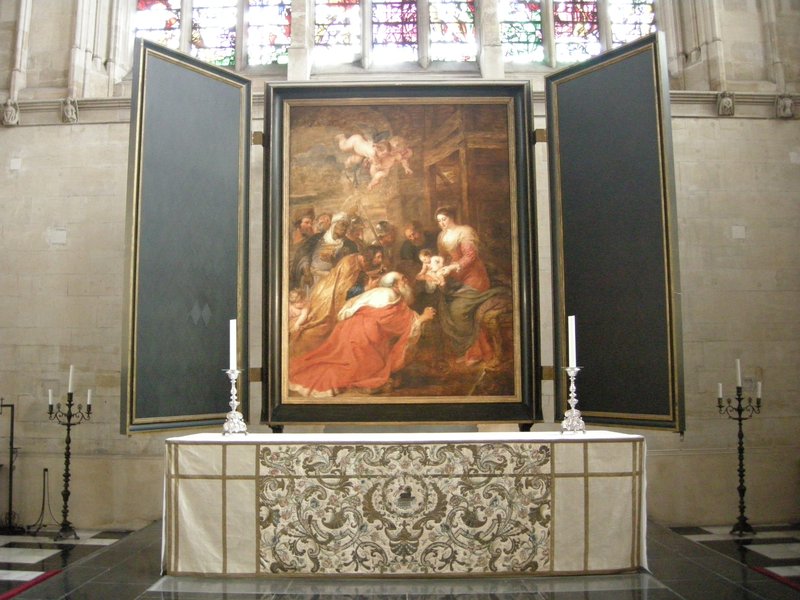
The finest example of Perpendicular Gothic in England, built by Henry VI from 1446 to 1544. The nave is one soaring hall under the largest fan vault in the world, lit by a complete set of original 16th-century stained glass. It also holds a Rubens altarpiece and hosts the BBC's Festival of Nine Lessons and Carols.
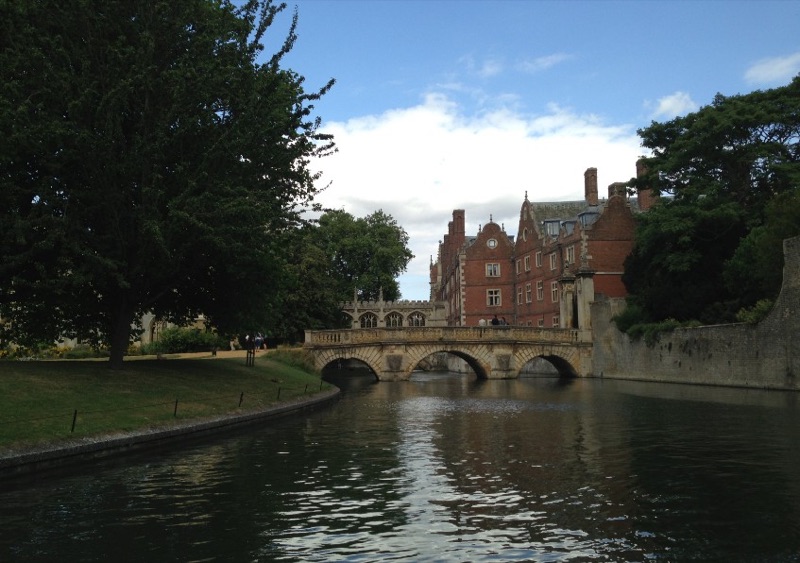
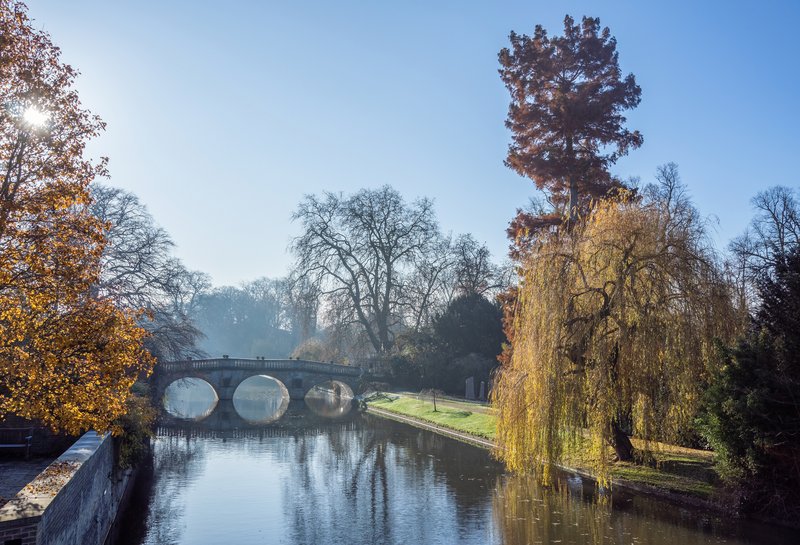
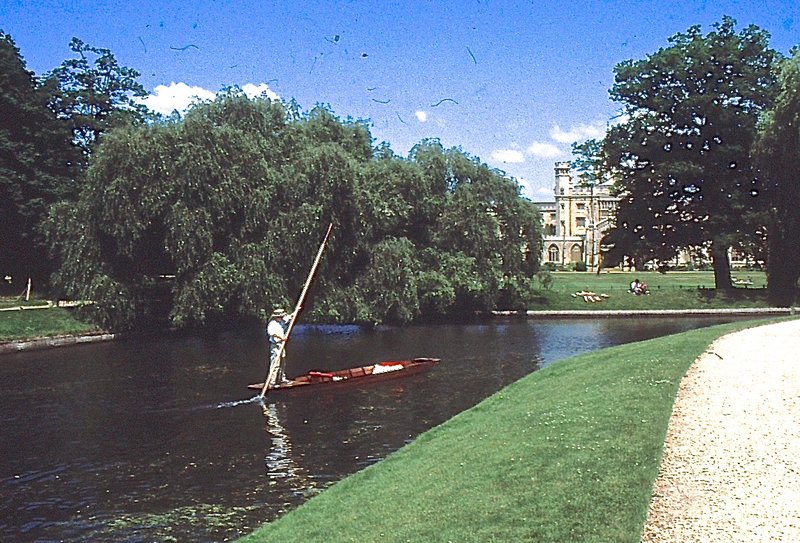
The mile-long stretch of the River Cam behind six colleges — King's, Clare, Trinity Hall, Trinity, St John's and Queens'. Garden lawns run to the water, willows trail the surface, and punts glide under stone bridges. The Clare Bridge view to King's Chapel is the Cambridge postcard.
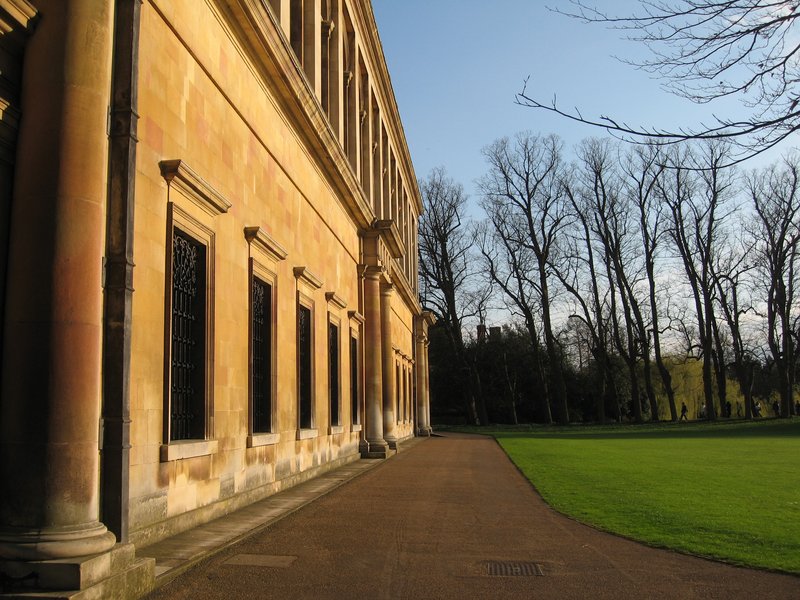
Christopher Wren's serene 1695 library at Trinity College, a single great room of dark oak cases lit by tall windows over Nevile's Court. Each case ends in a Grinling Gibbons carving, and display cases hold manuscripts including Milne's handwritten Winnie-the-Pooh and Newton's annotated Principia.
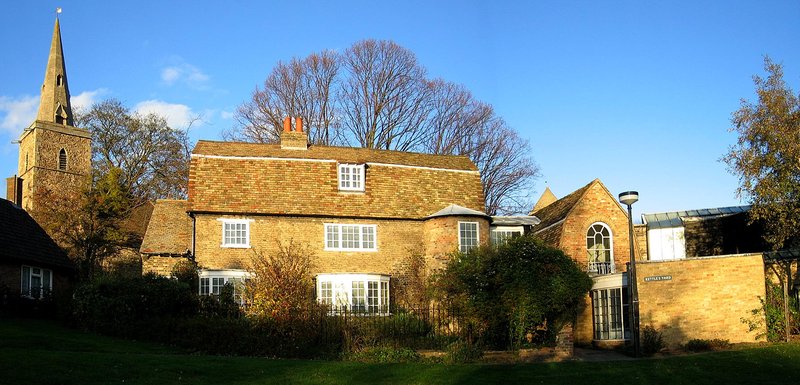
Jim Ede's personal house and art collection, opened to the public in 1966 — Miró, Gaudier-Brzeska, Ben Nicholson and Christopher Wood arranged exactly as Ede left them, alongside found stones and shells. The adjacent gallery shows changing modern exhibitions. One of Britain's most intimate art experiences.
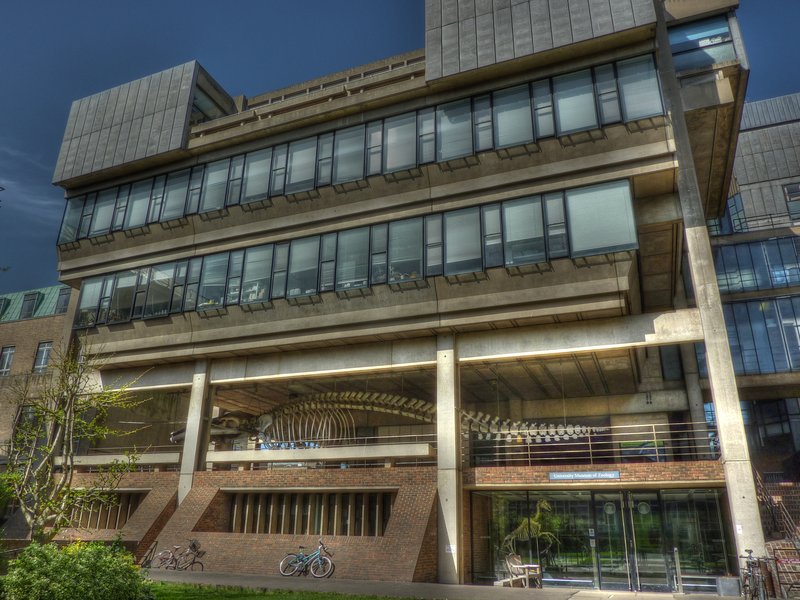
A free world-class natural history museum reopened in 2018, anchored by a fin whale skeleton suspended from the ceiling. The galleries span insects, molluscs, fish, reptiles and mammals — including the Cambridge dodo specimen — displayed in a soaring Victorian-modern hybrid building.
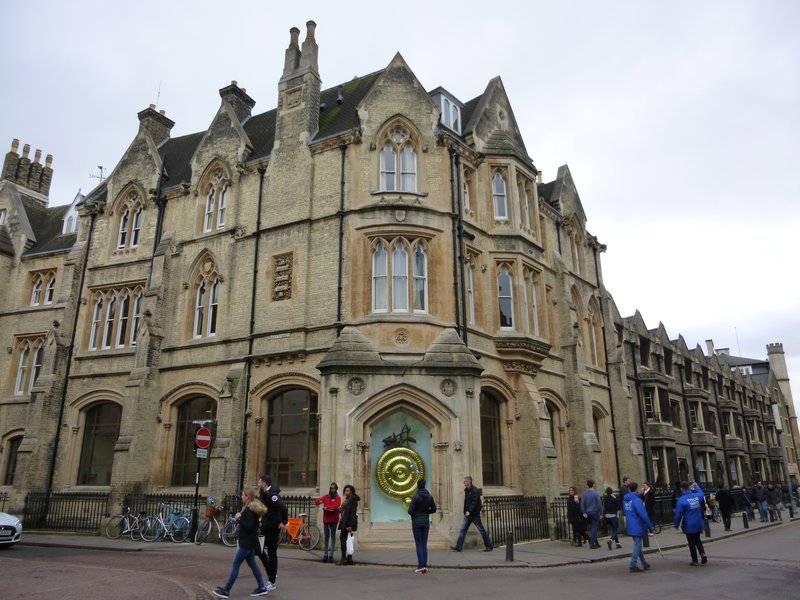
A giant golden grasshopper — the Chronophage, "time-eater" — rocks across a rippling gold clock face at the corner of King's Parade and Bene't Street. Commissioned by Corpus Christi College and unveiled in 2008, it deliberately runs erratically, only showing the correct time three times each hour.
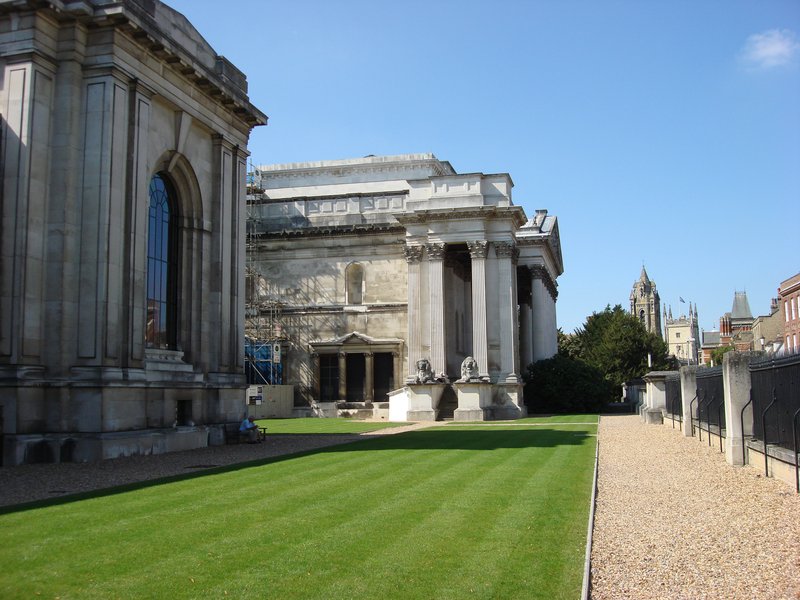
One of Britain's great art museums, free and housed in a monumental 1875 neoclassical building with a Parthenon frieze along the entrance hall. The collection spans Egyptian antiquities, Greek vases, medieval armour, Titian, Renoir and Monet. Arrive with time — over two hours of material.
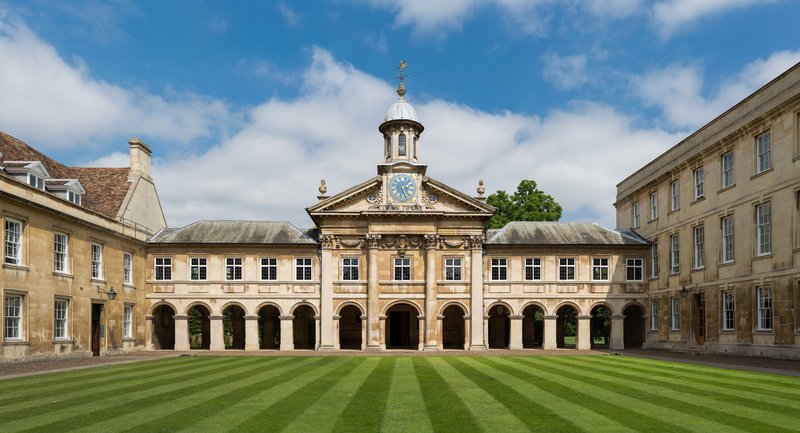
Founded in 1584 on the site of a Dominican friary, Emmanuel is famous for its tranquil duck pond and the Wren Chapel — Christopher Wren's second major building, completed in 1677. John Harvard, who endowed Harvard University, was an Emmanuel alumnus. The Front Court is one of Cambridge's most serene.
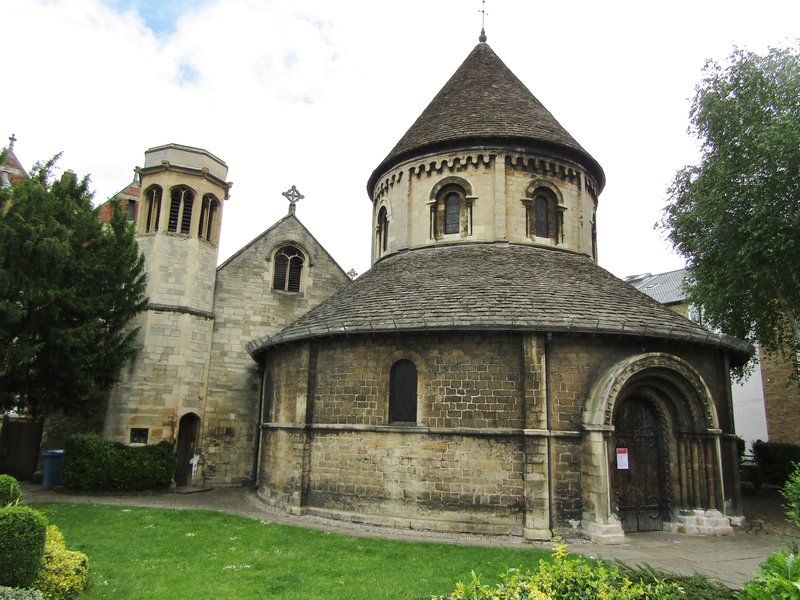
One of only four Norman round churches surviving in England, built around 1130 on a circular plan modeled on the Church of the Holy Sepulchre in Jerusalem. The round nave — squat Norman arches, a ring of columns, a conical roof — is intact after nine centuries. Small admission; excellent heritage exhibition inside.
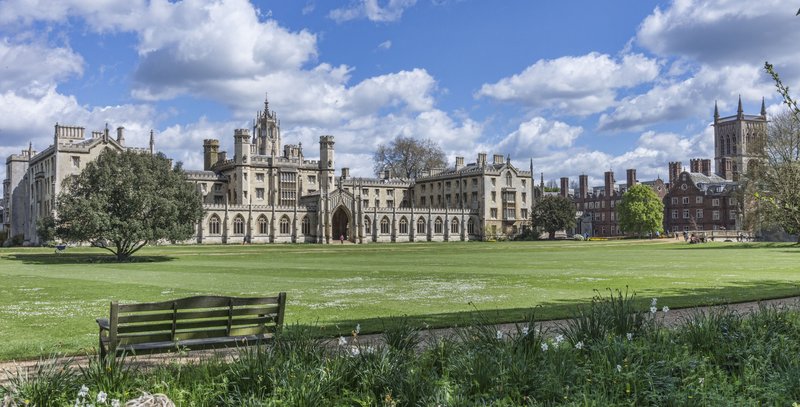
Founded in 1511 by Lady Margaret Beaufort, St John's is Cambridge's second-largest college and the setting for Wordsworth's years as a student. The Bridge of Sighs — a covered stone bridge over the Cam — is the city's most photographed view. The grounds include the beautiful 1825 New Court beyond the bridge.
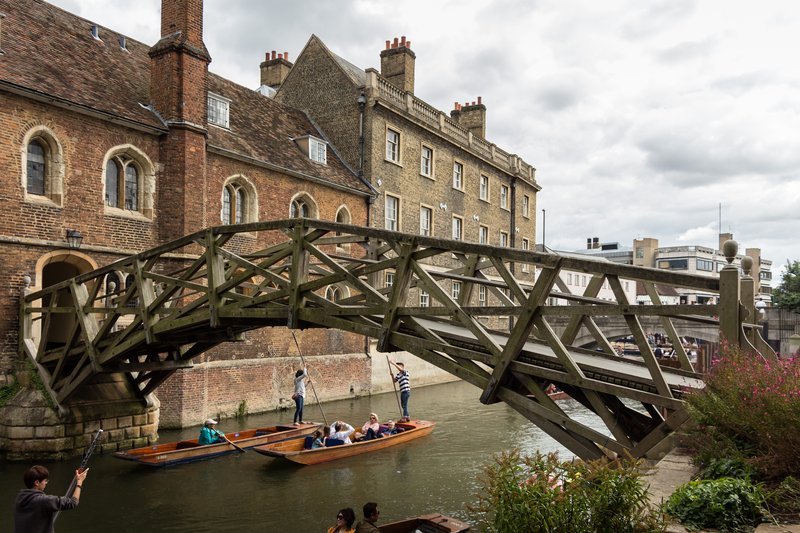
A graceful timber footbridge at Queens' College, built in 1749 and reconstructed to the same design in 1866 and again in 1905. The popular myth — that it was designed by Newton and originally held together without bolts — is fiction; it was always bolted, and Newton died 22 years before it was built.
11 min · 5 min → Museum of Archaeology and Anthropology
4.Museum of Archaeology and Anthropology~1 hr
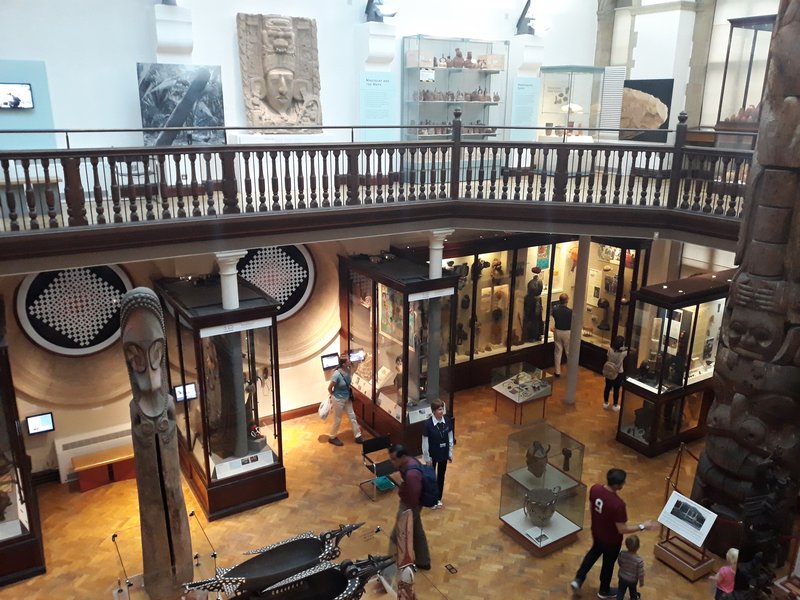
Free and largely overlooked by visitors, the MAA holds one of Britain's finest ethnographic collections — ceremonial objects from the Pacific, Africa, and the Americas brought back by Cambridge expeditions, plus the archaeology of Roman Britain. The Oceanic objects collected by James Cook's voyages are extraordinary.
From Hotel: 3 min · 4 min → Sedgwick Museum of Earth Sciences
1.Sedgwick Museum of Earth Sciences~1 hr
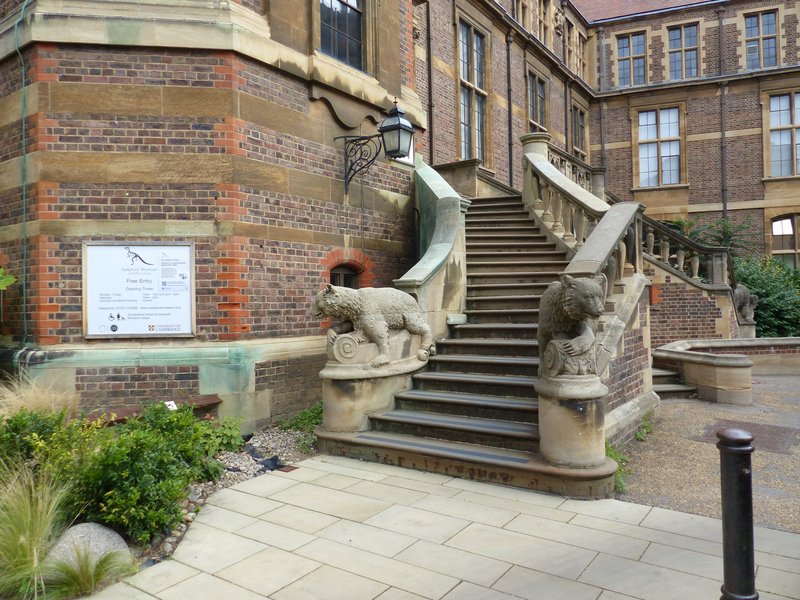
The world's oldest geological collection — assembled since 1728 and still displayed in original Victorian showcases. Immense mammoth tusks flank the entrance hall; specimens inside include fossil fish Darwin collected on the Beagle and a juvenile Iguanodon skeleton. Free, unhurried, and extraordinary.
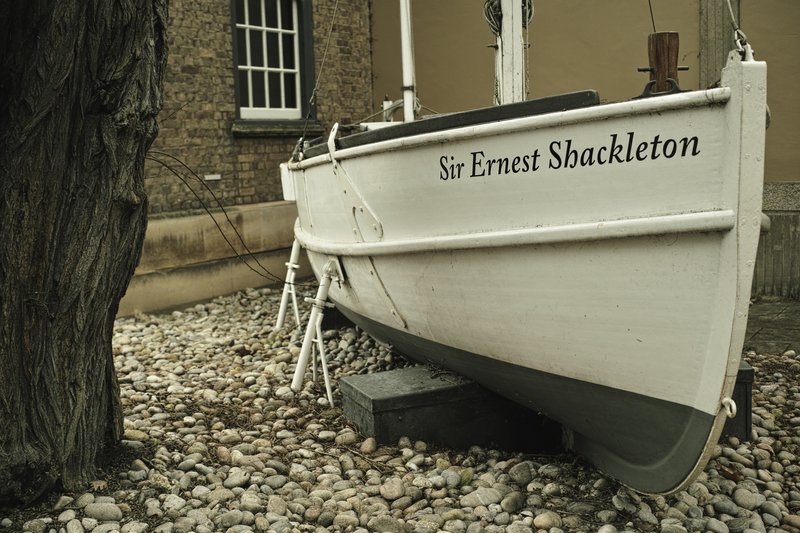
The Scott Polar Research Institute's museum holds a world-class collection of polar exploration artefacts — Scott's original handwritten diary from his 1912 Antarctic expedition, relics from Franklin's lost Northwest Passage voyage, and Shackleton-era equipment. Free, often quiet, and deeply moving.
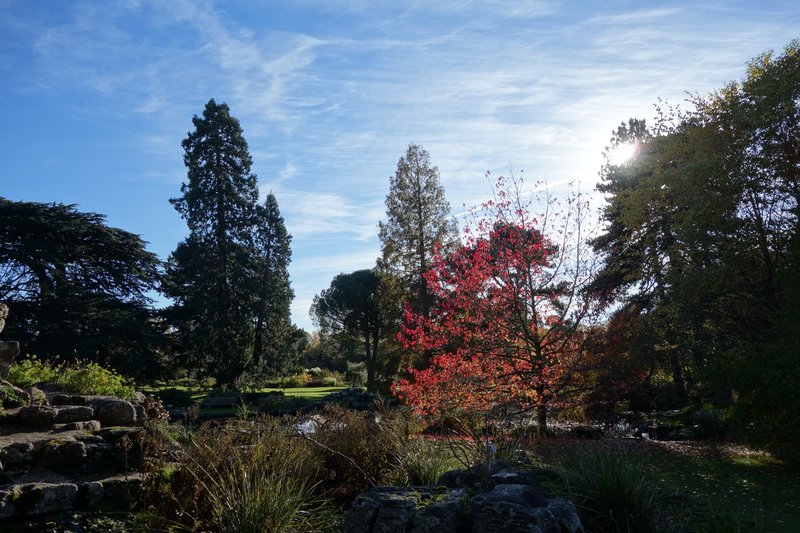
Cambridge University's forty-acre botanical garden, established in 1762, holds one of Britain's finest living plant collections — glasshouses of tropical and arid species, a rock garden, a scented garden, a winter garden, and a lake with waterside planting. The summer borders are spectacular and the scale so close to the city centre is genuinely surprising.
Quieter than King's or Trinity and all the better for it. The chapel — completed in 1665 — was Christopher Wren's first architectural commission, given to him by his uncle the Bishop of Ely. Thomas Gray wrote his Elegy in a Country Churchyard here, and William Pitt the Younger came up at the age of fourteen.
From Hotel: 8 min · 5 min → Great St Mary's Church
1.Great St Mary's Church~45 min
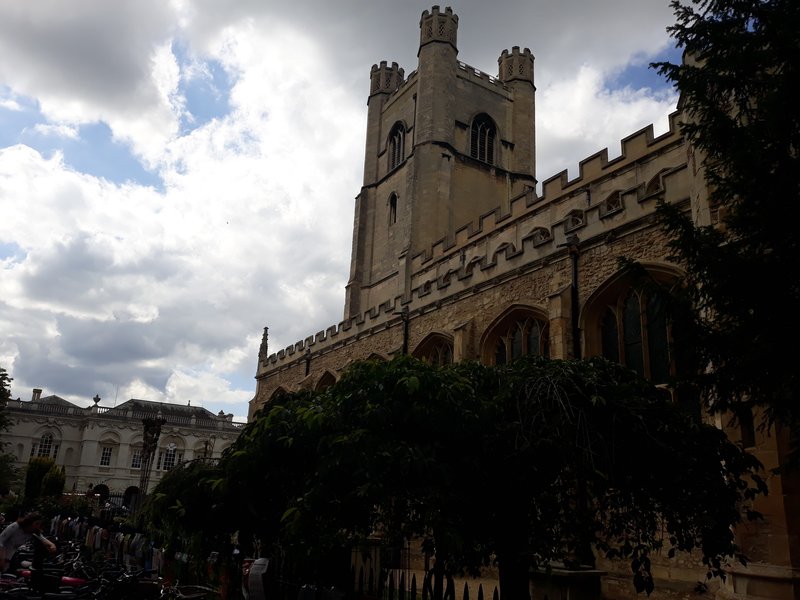
The official university church of Cambridge since 1730, Great St Mary's sits at the heart of the city on King's Parade. The nave is Perpendicular Gothic, but the real reason to come is the tower: 123 steps give the highest panorama in the city — colleges, market, spires and the Backs from a single viewpoint. The Big Ben chime was first composed here in 1793.
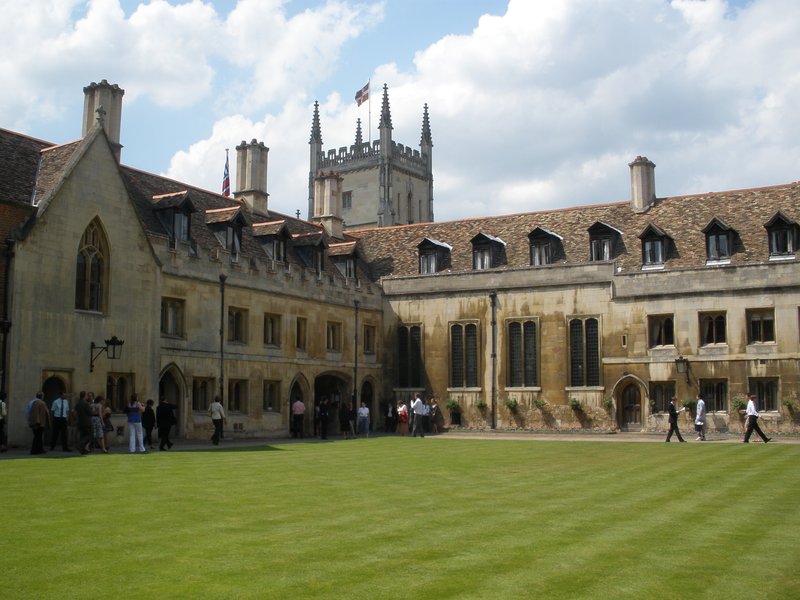
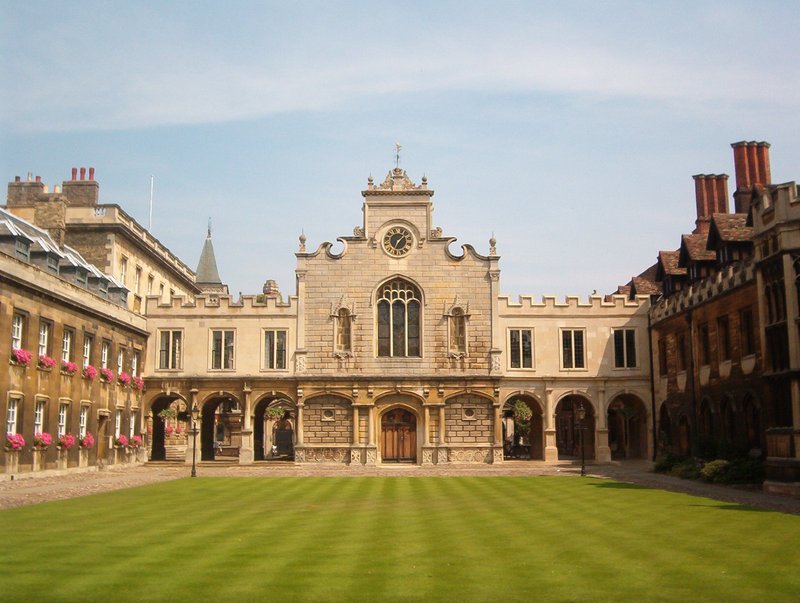
The oldest college in Cambridge, founded in 1284, Peterhouse is one of the most architecturally cohesive in the city. The thirteenth-century hall still hosts formal dinners, the Baroque gatehouse screen is a miniature masterpiece, and it is far less visited than Trinity or King's. Henry Cavendish, who identified hydrogen, studied here; so did Frank Whittle, inventor of the jet engine.
Cambridge's second-oldest college, founded in 1326 — the Baroque gates, Fellows' Building, and formal gardens on both sides of the river make it the most photographed college view after King's. Clare Bridge, built in 1640, is the oldest surviving bridge in Cambridge; look for the stone ball with a slice cut from it — tradition holds it was cut by a mason who was never fully paid.
Hiring a punt from Scudamore's at Silver Street and navigating the Backs is the quintessential Cambridge experience. The self-hire route runs from Mill Pond under the Mathematical Bridge then north along the college backs — Queen's, King's, Clare, Trinity and St John's — to Magdalene Bridge. No experience is required; the views from the water are unlike anything from the towpath.
A licensed guide poles you along the Backs from Mill Lane — King's, Clare, Trinity Hall, Trinity and St John's — with eight centuries of college history narrated from the water. The most popular guided punt in Cambridge, running every hour from 9am.
The same Backs route in a smaller boat — maximum six passengers, guide on board, more room to lean out and photograph the Mathematical Bridge and the Bridge of Sighs. Flexible daily departures.
A 90-minute guided walk through King's, Trinity, St John's and the Round Church with a Christian Heritage guide who connects the colleges to their medieval religious origins. Small groups, deep context.
A Cambridge graduate walks you through the colleges — King's, Trinity, St John's, the Senate House — covering eight centuries of university history. Optional add-on: King's College Chapel interior entry. The most-reviewed alumni walking tour on Viator.
A 45-minute chauffeur-punted tour along the entire length of the Backs — King's, Clare, Trinity Hall, Trinity and St John's — with eight centuries of college history narrated from the water. Daily departures from Mill Lane.
The most-reviewed Cambridge punt tour on GetYourGuide — a chauffeur-guided trip along the historic Backs with commentary on each college, bridge and garden. The highest-volume punt operator at Mill Lane.
The GYG listing of the popular alumni combo — a guided college walk through King's, Trinity and St John's, followed by a chauffeured punt along the Backs. The Eagle Pub, the Mathematical Bridge and the Senate House all covered in one booking.
Traditional Punting Company's shared tour departs from Jesus Green corner — slightly away from the main Mill Lane crowd — for a quieter experience through the northern stretches of the Backs past Magdalene and St John's.
A chauffeured shared punt covering the College Backs — seven of Cambridge's most prestigious colleges visible from the water — with a guide narrating 800 years of history from Mill Lane to the Bridge of Sighs.
A 45-minute guided punt along the Backs from Mill Lane — the same college sequence as Scudamore's but from a smaller independent operator with over 15 years of experience and consistently high TripAdvisor ratings.
The most-reviewed guided walk in Cambridge on TripAdvisor — a Cambridge graduate covers eight centuries of university history across King's, Trinity and St John's. No booking required; meets at King's Parade.
The TripAdvisor listing of the alumni walk-plus-punt combo — guided college tour followed by a chauffeured punt on the Backs. Book here if TripAdvisor works better than Viator for your schedule.
The TripAdvisor listing of Cambridge's best-known punt operator — over 1,800 reviews from visitors who rated the guides, the boats, and the Backs commentary. Book here or on any platform; same experience.
A lightly seasoned pork sausage with breadcrumb filler — plumper and milder than a Cumberland — tied to East Anglian pork traditions and a market fixture. Try it at the Saturday market stalls or in a full English at Parker's Tavern.
The Chelsea bun here means Fitzbillies — a dense, sticky, heavily fruited and iced spiral made to the same recipe on Trumpington Street since 1922. Eaten cold, pulled apart in layers, ideally while walking through the city.
Taking a cream tea while punting — or just after — is a Cambridge peculiarity. Several punt operators include cream teas in their bookings; the tradition is linked to the Backs in summer. Clotted cream on scone, strawberry jam, pot of tea.
Foreign number: accepted. — the code arrives by SMS on a foreign SIM, and an Uber login carries over without a second sign-up.
The smallest of the three lists in Cambridge — the chains along Regent Street and Mill Road and a few of the Mitcham's Corner independents; useful because it is the app a visitor already has, less so for choice.
Foreign number: not required. — sign-up runs on Google, Apple, Facebook or email with no phone field at all, so no verification code has to arrive.
The deepest restaurant list in the city and the one the colleges' neighbours actually use — Mill Road, the Kite and the market-square independents alongside the chains; bike couriers reach Downing Street from the centre in 15 minutes and the Plus subscription is pointless on a short stay.
Foreign number: not required. — the account is made with Google, Facebook or an email address — there is no phone field, so no code has to arrive.
Strongest for the takeaways — curry houses, kebab and pizza counters across Petersfield and Romsey — rather than restaurants, with cash on delivery still offered by many; the app to open after 10:00pm when the other two have thinned out.
Foreign number: accepted. — the verification code arrives by SMS on a foreign SIM, and an existing Uber account signs straight in.
The only ride app with real coverage in Cambridge, though the fleet is small — five to ten minutes to a car in the centre, longer on a college-term weekend; the station and Addenbrooke's runs are where it beats the Panther taxi rank, and the city centre itself is quicker on foot.
A tiny city dominated by a vast medieval cathedral seen across the Fens — the Octagon Tower is an engineering marvel of 1322, and its stained glass museum is the only one of its kind in Britain.
A half-day in London is entirely practical on the fast King's Cross service. The British Museum, the National Gallery and the South Bank are all within reach of the terminus.
One of England's great medieval cathedrals — the Norman nave is intact, Catherine of Aragon is buried in the north choir, and the west front is the finest Romanesque facade in Britain. Direct trains run hourly.
East Anglia's most characterful city — a Norman castle, a medieval cathedral, 32 surviving medieval churches within the old walls, and the cobbled Elm Hill, one of the best-preserved streets in England.
Cambridge's great rival — the Bodleian Library, Christ Church meadow, the Ashmolean Museum and punting on the Cherwell. Trains run via London, making it a full day trip. Fodor's and Rick Steves both recommend pairing the two.
King's College Chapel took 96 years to build — from 1446 to 1544 — and at least three kings changed the plan mid-construction. The fan vault, the most complex stone ceiling in existence, was added a full generation after the walls went up, by a master mason who had to reverse-engineer a structural system no one had ever attempted at that scale. It holds up entirely by compression: no mortar takes any tension load. The building is a geometry proof standing in limestone.
A quieter thing noticed during this research: The Backs are almost entirely accidental. The colleges built their walls, then filled in whatever was left with lawns running to the river. There was no plan for a scenic promenade. Cambridge's most-photographed view — the sequence of bridges, the weeping willows, the chapel reflected in the Cam — happened because nobody was looking at the back.