From Hotel: 22 min · 5 min → Chihuly Garden and Glass
1.Chihuly Garden and Glass~1 hr 30 min
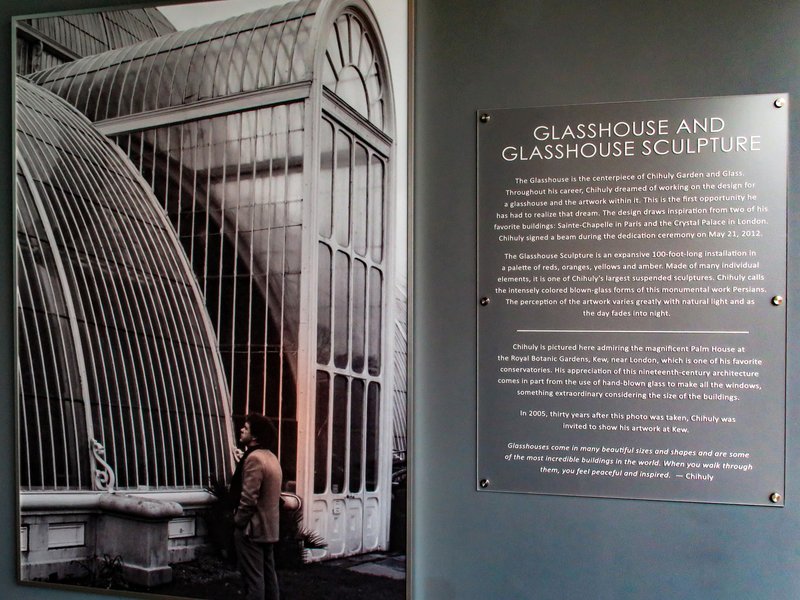
At the foot of the Space Needle, eight galleries, a glasshouse, and an outdoor garden showcase the studio glass of Tacoma-born Dale Chihuly. The 100-foot suspended sculpture inside the Glasshouse is one of his largest works, and the garden plants glass forms among living ones.
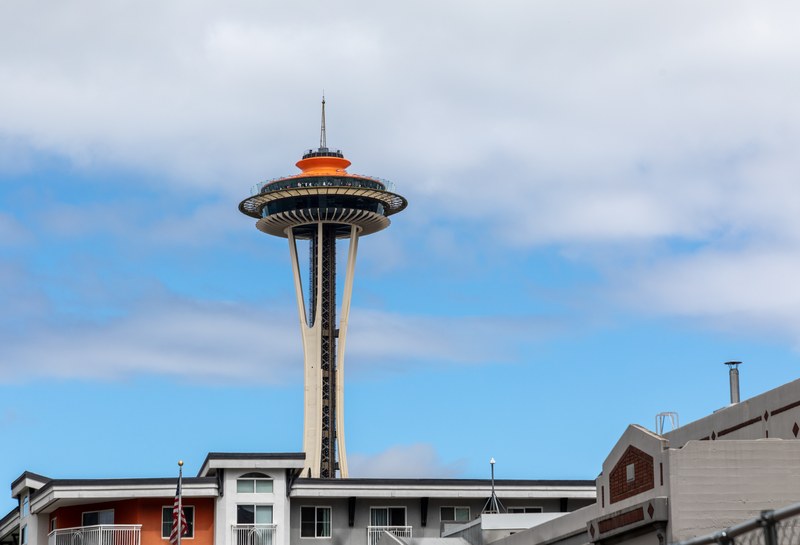
Built for the 1962 World's Fair and engineered to ride out 200 mph winds, the 605-foot Space Needle is the icon of the city. A 41-second elevator ride reaches the observation deck, where floor-to-ceiling glass and the rotating glass floor of The Loupe open 360-degree views over Puget Sound and Mount Rainier.
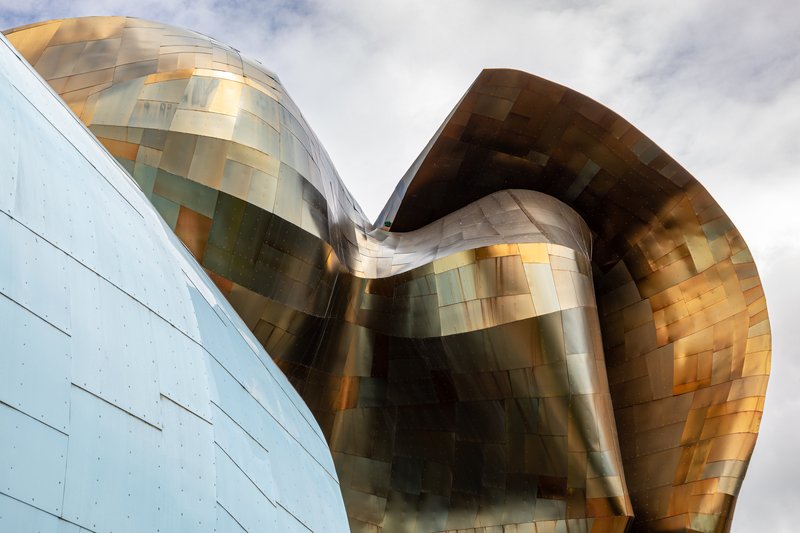
Frank Gehry's 2000 building at the foot of the Space Needle, its fluid panels of stainless steel and painted aluminium inspired by smashed electric guitars. Galleries cover rock and roll, science fiction cinema, hip-hop, horror and video games, anchored by an extensive Jimi Hendrix collection.
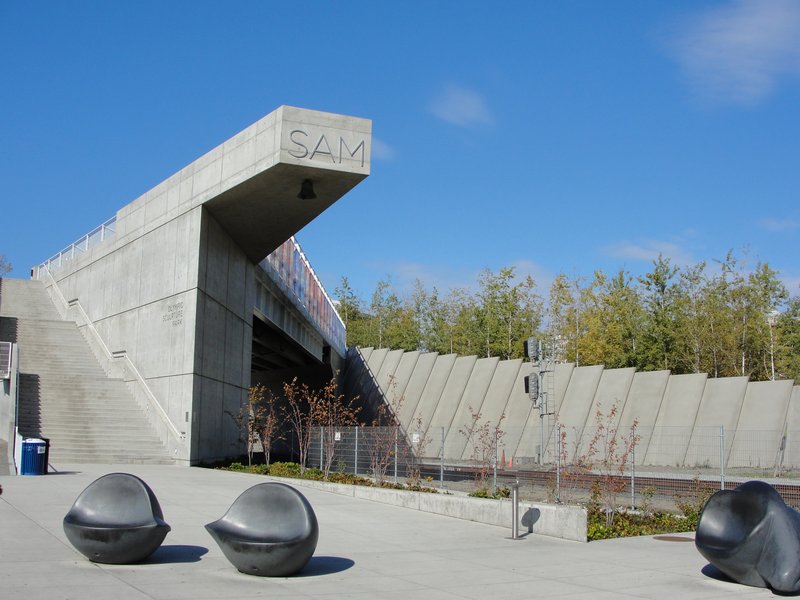
The Seattle Art Museum turned nine acres of former industrial waterfront into a free outdoor sculpture park, opened in 2007. A zigzag path descends past monumental works — including Alexander Calder's red-steel Eagle — to a restored beach on Puget Sound, with the Olympic Mountains across the water.
From Hotel: 11 min · 3 min → Victor Steinbrueck Park
1.Victor Steinbrueck Park~30 min
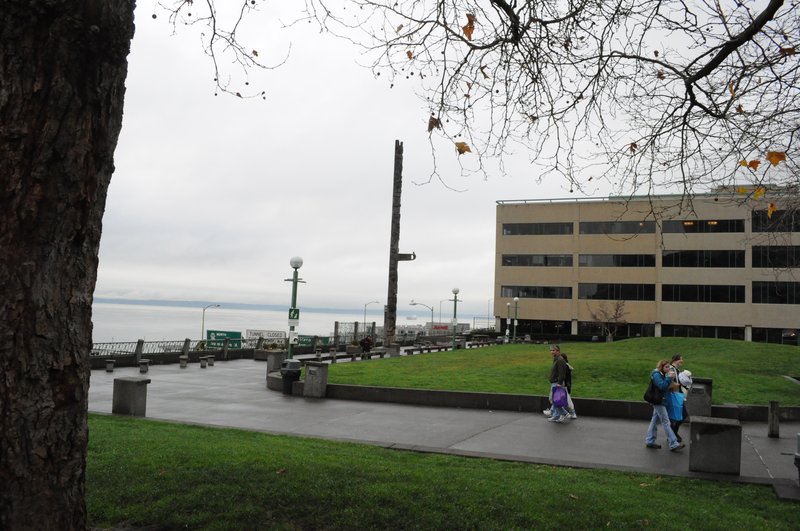
A small grassy terrace at the north edge of Pike Place Market, set with two carved cedar totem poles and open lawns that drop away to a sweeping view over Elliott Bay, the ferry docks, and the Olympic Mountains. Freshly restored and reopened, it is the market district's finest free overlook.
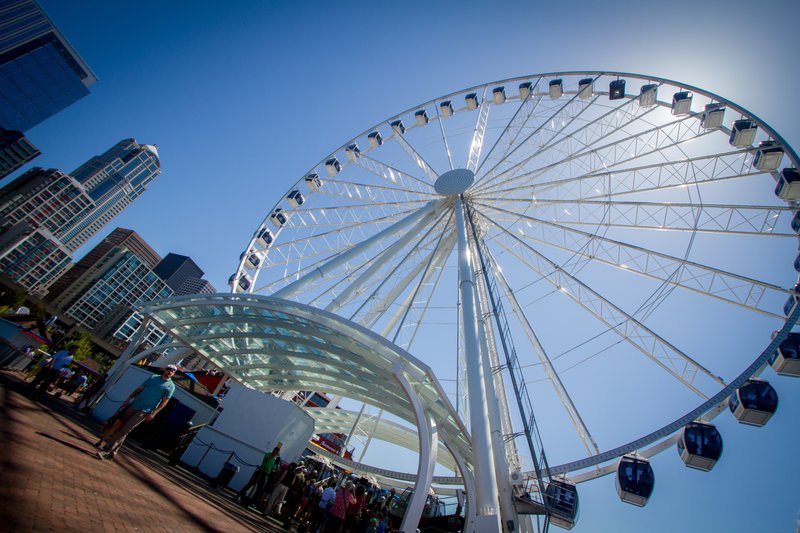
A 175-foot Ferris wheel at the end of Pier 57, the tallest on the West Coast when it opened in 2012. Climate-controlled gondolas swing out over Elliott Bay, framing the skyline, the harbor, and the Olympic Mountains. More than half a million LED lights cover the wheel for nightly light shows.
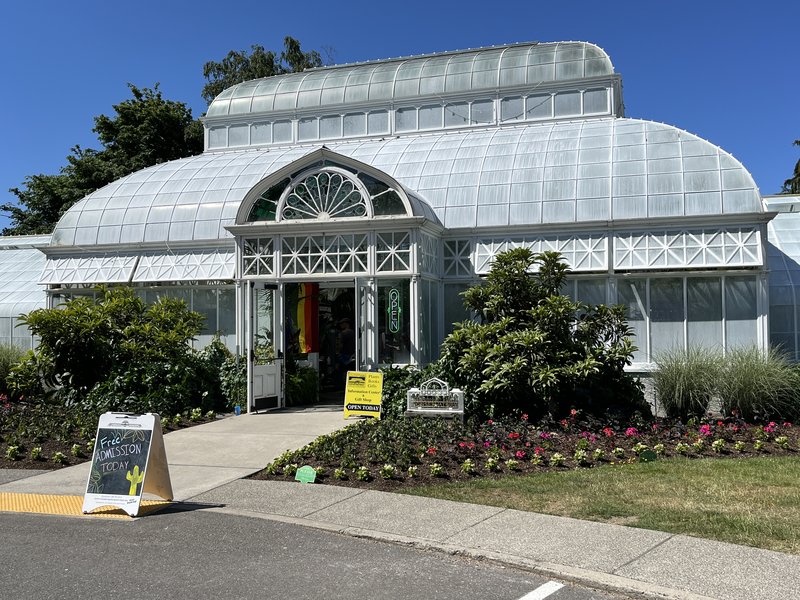
A Victorian-era glasshouse built in 1912, designed to resemble the Crystal Palace, set in Volunteer Park on Capitol Hill. Five glass pavilions house palms, cacti, bromeliads, ferns and seasonal flowers. The Olmsted Brothers landscape includes an ornamental reservoir and views to the Olympic Mountains.
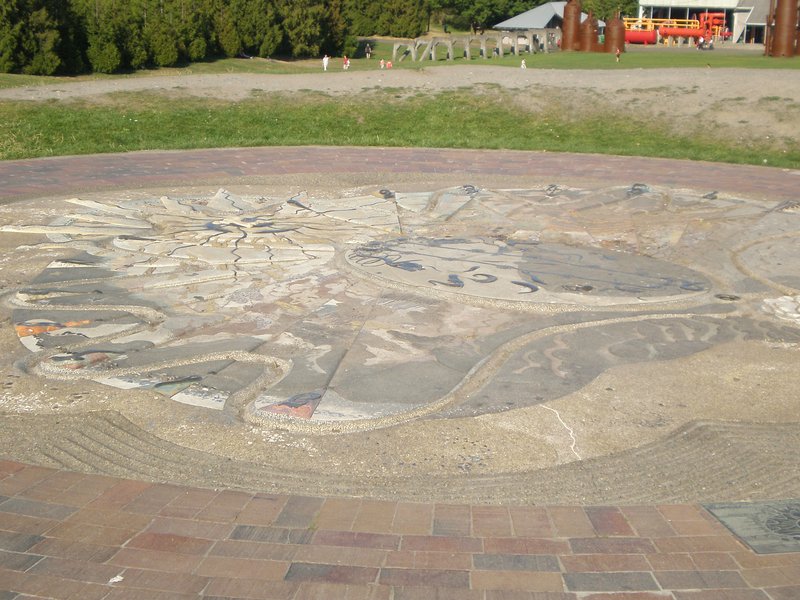
A former coal gasification plant on Lake Union's north shore, converted into a public park in 1975. The rusted industrial towers were preserved, and the grassy mound above gives the definitive looking-south panorama of downtown Seattle across the lake. Kayakers, floatplanes and sailboats cross the water constantly.
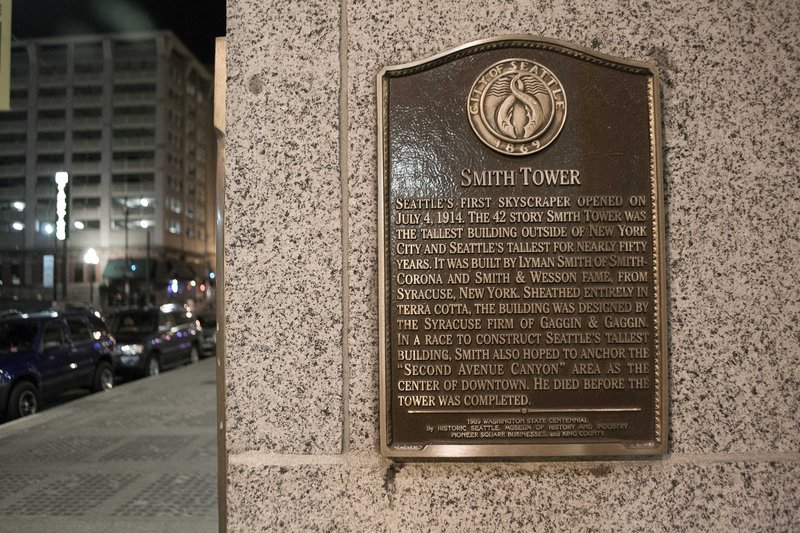
Completed in 1914, this 38-story neoclassical skyscraper remained the tallest on the West Coast until the Space Needle overtook it in 1962. Historic Otis elevators with attendants climb to the 35th-floor open-air observatory and its speakeasy-style Observatory Bar.
4 min · 2 min → Klondike Gold Rush National Historical Park
2.Klondike Gold Rush National Historical Park~1 hr
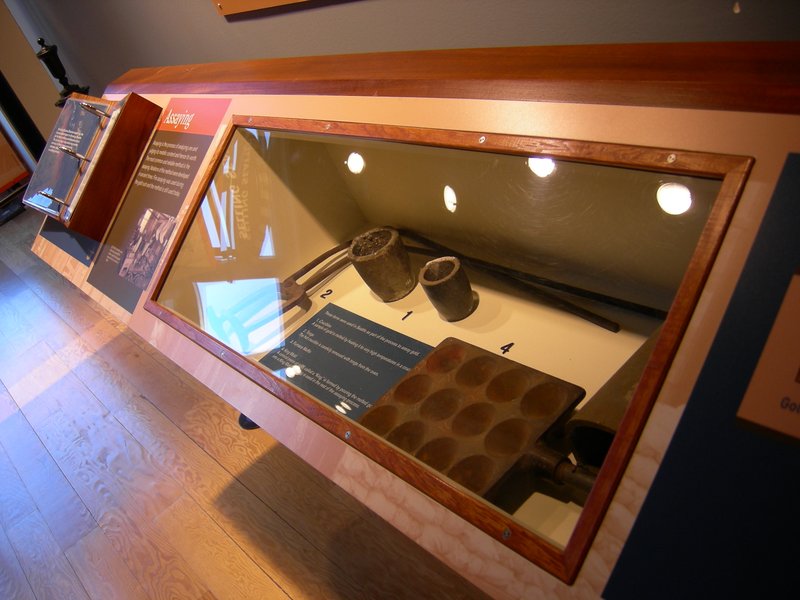
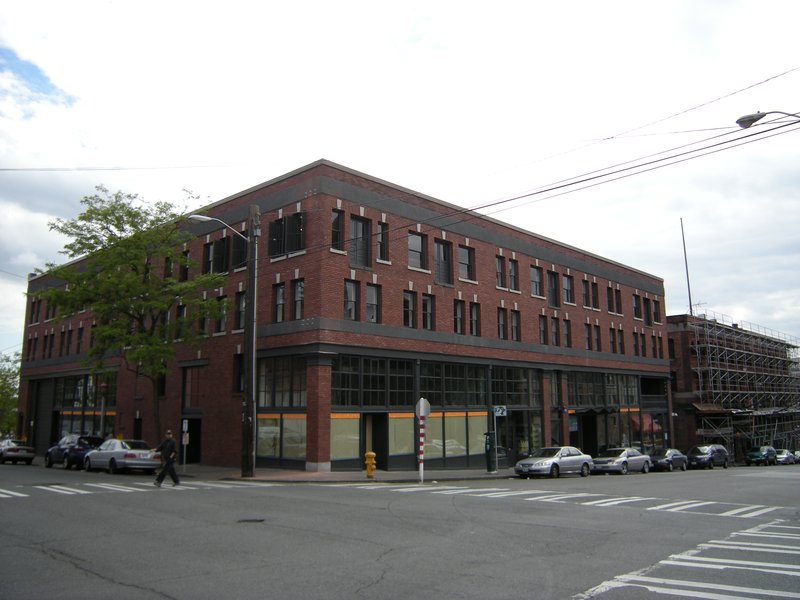
Seattle's only downtown National Park Service site, in the 1889 Cadillac Hotel in Pioneer Square. Exhibits trace Seattle's role in the 1897–1899 Klondike Gold Rush, when waterfront merchants outfitted 100,000 prospectors heading north — the commerce that built a major American city.
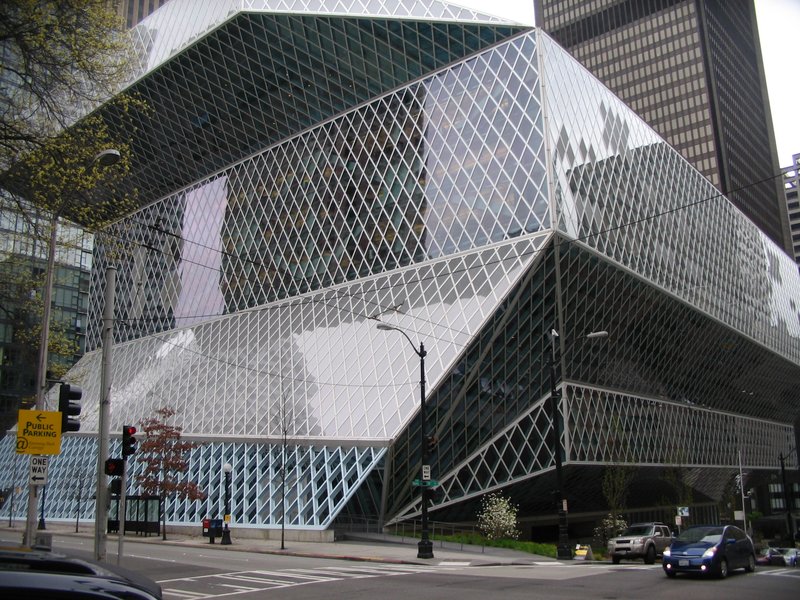
Rem Koolhaas and Joshua Prince-Ramus wrapped eleven stories of floating platforms in a faceted steel-and-glass net, opened in 2004. Inside are the glowing red Mixing Chamber, the Books Spiral climbing four floors without a staircase, and a tenth-floor reading room with views over Elliott Bay.
The only pan-Asian Pacific American museum in the US, in the East Kong Yick Building in the Chinatown-International District. A Smithsonian affiliate, its collection traces 150 years of Pacific Northwest Asian American history. Named for Wing Luke, the first Asian American elected to public office in the region.
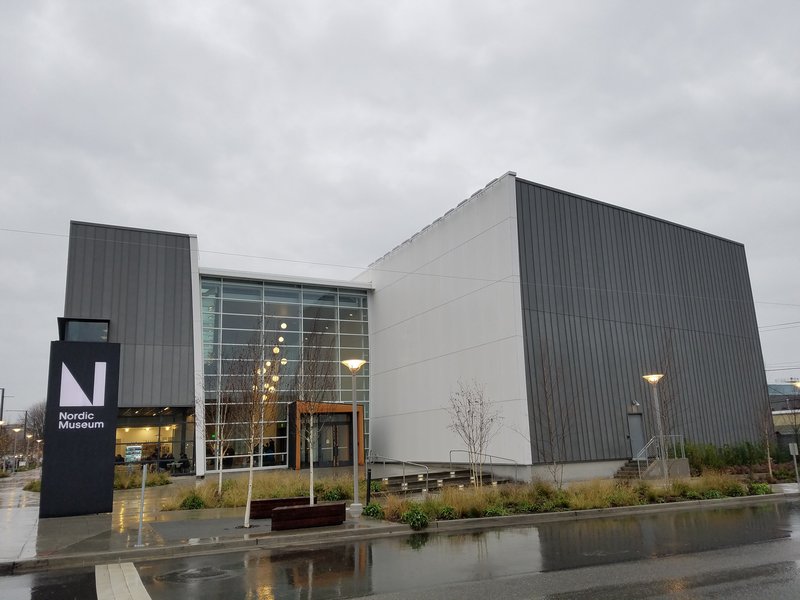
The only museum in the United States dedicated to the history, art, and culture of all five Nordic nations — Denmark, Finland, Iceland, Norway, and Sweden. Built in 2018 in Ballard, a neighborhood shaped by Scandinavian immigration from the 1880s, it spans 12,000 years of Nordic history from the Viking Age.
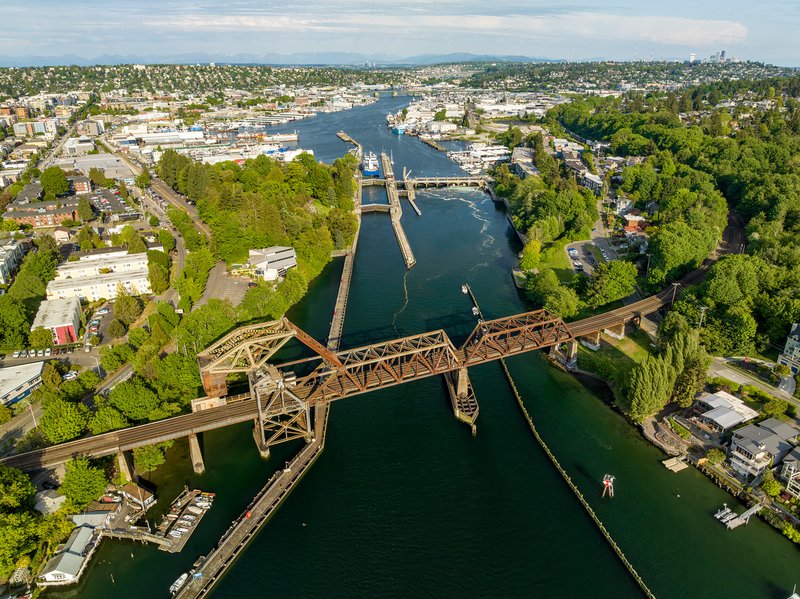
The largest and most heavily used locks on the West Coast, opened in 1917, connecting Puget Sound to the freshwater Lake Washington Ship Canal. An 18-acre park surrounds the facility, with a botanical garden, visitor center, and a fish ladder with underwater viewing windows for migrating salmon and steelhead.
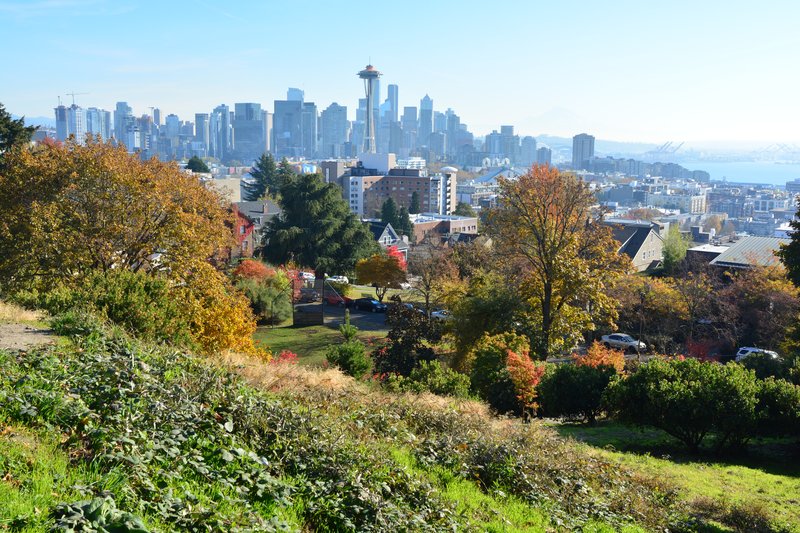
A small terrace on the south slope of Queen Anne Hill with the most iconic view of Seattle: the Space Needle front and center, Elliott Bay to the west, and Mount Rainier floating on the horizon. Best light is late afternoon into dusk, when the skyline glows.
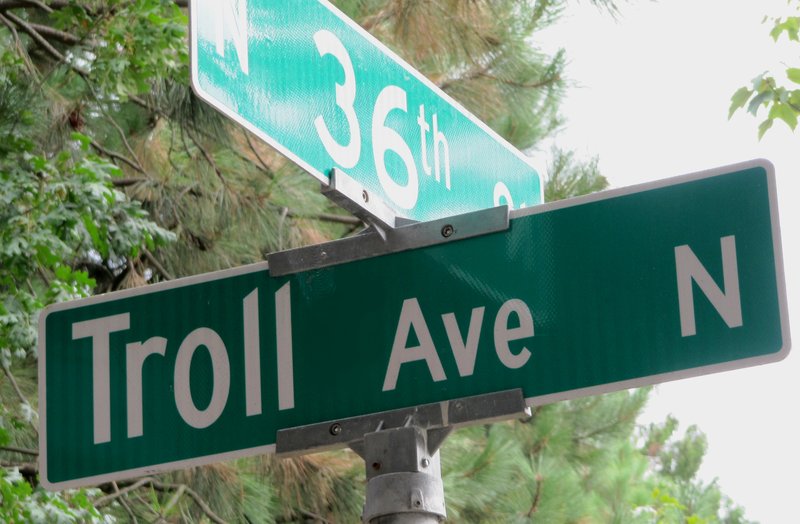
An 18-foot concrete sculpture of a troll clutching a Volkswagen Beetle, installed under the north end of the Aurora Bridge in 1990 by four local artists who won a public design competition. The Fremont neighbourhood commissioned it to reclaim a derelict space; it is now one of Seattle's best-known public artworks.
7:10am King Street Station → 10:35am Portland Union Station
ARRIVE Portland Union Station: 15 min → International Rose Test Garden
1.International Rose Test Garden~1 hr
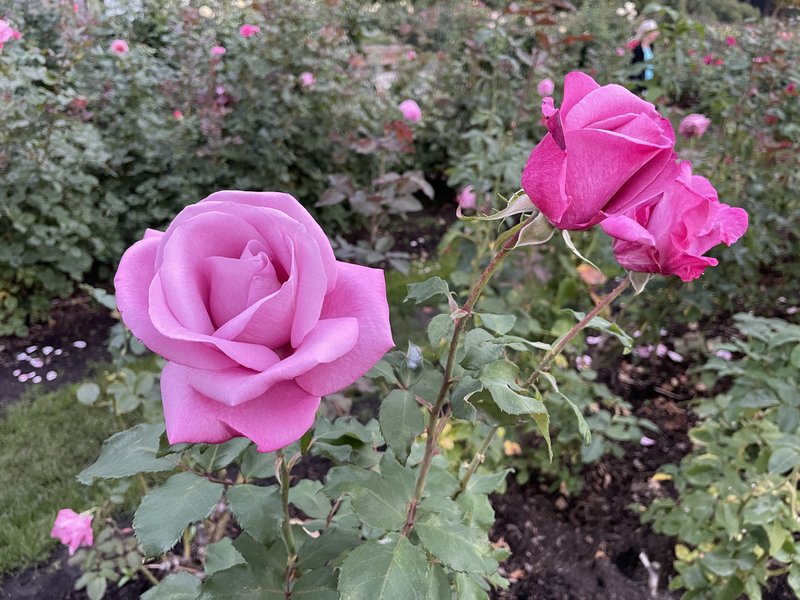
The oldest continuously operated public rose test garden in the United States, opened 1917 on Washington Park's south slope. Over 10,000 rose bushes across 650 varieties cover 4.5 acres, with test varieties sent by growers worldwide for evaluation. Peak bloom runs June through October.
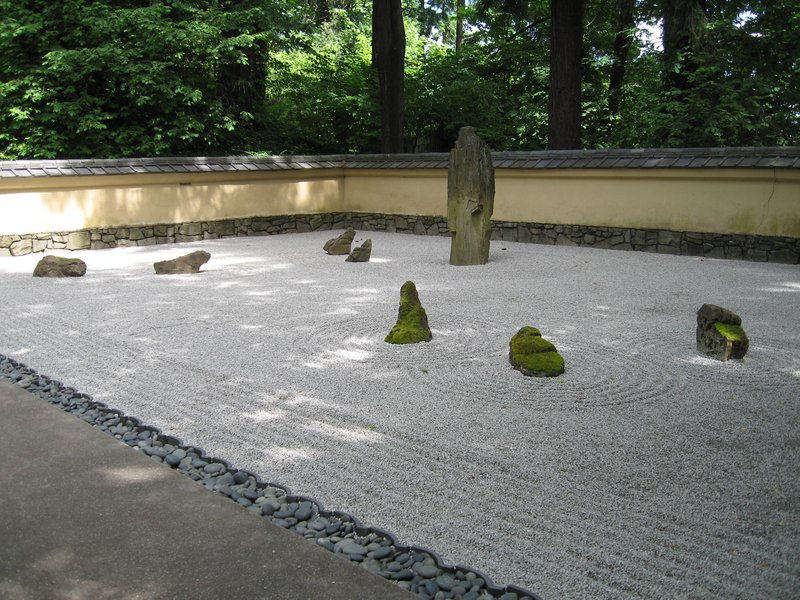
Twelve acres on Washington Park's upper slope, designed by Professor Takuma Tono and opened in 1967. Proclaimed by Japanese ambassadors as the most authentic Japanese garden outside Japan, it holds five historic garden styles — Strolling Pond, Natural, Sand and Stone, Tea, and Flat.
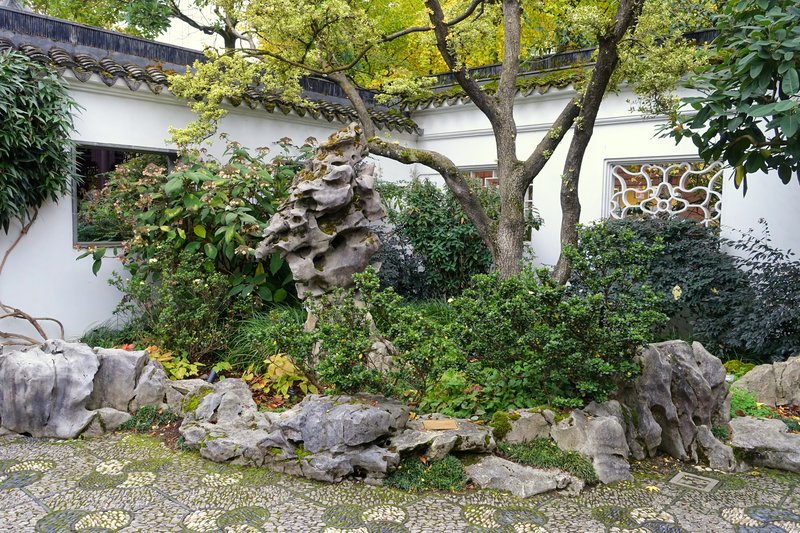
A full city block of walled garden in Old Town Chinatown, built in 2000 by 65 artisans from Suzhou using materials shipped from China. Following classical Ming dynasty tradition, it encloses pavilions, a lake, bridges, and planted courtyards — the only authentic walled classical Chinese garden outside China.
One-hour walking tour above and beneath Pioneer Square, descending to the street level of the 1890s. Guides lead small groups through underground passageways built more than 120 years ago, tracing how a tidal flat became one of America's biggest cities.
A two-and-a-half-hour introduction on foot — Pioneer Square's 1892 brick core, the Chinatown-International District, and the downtown towers — capped with a ride on the 1962 World's Fair monorail to Seattle Center. About two and a half miles of easy walking, rain or shine.
Two trips in one half-day: first the 268-foot Snoqualmie Falls in the Cascade foothills, then a guided minivan loop of the city's top sights with stories of how it got its name — and the truth about the rain. Meets at the Market Information Booth by 9:45am.
Full-day mini-coach trip to the 14,411-foot volcano, with lakes, old-growth forest, and waterfalls on the scenic drive out. Guides spend more time inside the park than other operators, and hiking is offered in summer; in winter and spring, snowshoeing and sledding are included.
A four-hour grand loop of the Emerald City on a comfortable bus with big viewing windows — Chinatown, the waterfront, and the view from Queen Anne Hill — with at least four stops to get out and explore. One departure a day, so the pace never feels rushed.
One-hour narrated cruise on Elliott Bay with a local guide and a group capped at ten — skyline, working harbor, and Olympic Mountain views from the water, departing from Pier 55 a short walk down from the Market.
Coach trip to Everett to walk the largest building in the world by volume, where Boeing's wide-body jets are assembled, paired with the Future of Flight Aviation Center. Departs at the charter-bus zone on 8th Ave at Howell St.
Three-hour small-group loop covering almost fifty miles of the city — Pioneer Square, the Ballard Locks, and a skyline viewpoint — with history and neighborhood stories from a local guide. Meets in the circle driveway at the Museum of Pop Culture.
Three-hour small-group city tour limited to 22 guests, from Pike Place Market to Kerry Park with detours to hidden gems like the Fremont Troll. Live commentary comes loaded with local recommendations from a guide who knows the city block by block.
Grilled soy-sugar-ginger chicken over rice, a fast-casual genre invented here in 1976 when Toshi Kasahara opened Toshi's Teriyaki on Lower Queen Anne — hundreds of shops followed across the city.
A grilled hot dog on a toasted bun spread with cream cheese and piled with grilled onions — born at late-night street carts outside the city's bars and stadiums, now a recognized regional style.
A puffed, skillet-baked pancake with crisp edges, served with lemon, butter, and powdered sugar — invented at Manca's Cafe in the early 1900s, whose owner trademarked the name.
Beecher's makes its 15-month-aged Flagship cheese in a glass-walled creamery inside Pike Place Market — order the squeaky fresh curds or the "World's Best" Mac & Cheese and watch the cheesemakers work.
Hand-formed Russian stuffed buns — smoked salmon pâté, beef and cheese, marzipan — baked at Piroshky Piroshky since 1992. The line out the door on Pike Place is itself a local landmark.
Tart, fresh-pressed small-batch ginger beer in rotating fruit flavors — by the pint, in a Moscow mule, or as a float. The flagship taproom opened in Pike Place Market in 2013 and became the signature local sip.
Seattle's principal intercity rail station, opened in 1906 and restored in 2013. Amtrak Cascades serves Portland and Vancouver BC; the Coast Starlight serves Los Angeles; the Empire Builder serves Chicago. Sound Transit Sounder commuter rail also departs here.
A walkable waterfront town 26 minutes north by rail: beaches at Brackett's Landing beside the Kingston ferry dock, an underwater dive park, independent shops and restaurants in a compact downtown, and Olympic Mountain views across Puget Sound — most of it within a mile of the station.
Tacoma's compact museum district is the draw: the Museum of Glass honors native son Dale Chihuly, whose installations thread through downtown, alongside the Tacoma Art Museum, the Washington State History Museum, and LeMay – America's Car Museum. Point Defiance Zoo & Aquarium rounds out a full, easy day south.
Portland rewards a long day: Powell's City of Books, the Pearl District, food carts, and a celebrated craft-beer scene, all an easy walk off Union Station. Cascades train 503 departs at 7:10am; the last return, train 508, leaves Portland at 7:25pm and arrives back at 10:50pm.
This itinerary holds both ends of a 48-year handoff. Smith Tower on Day 1 was the tallest building west of the Mississippi from 1914 until the Space Needle on Day 2 took the crown in 1962 — and from the railing at Kerry Park you can see both silhouettes in a single frame, the white terra-cotta pyramid to the south and the flying saucer to the north.
The 1962 World's Fair that built the Space Needle also left the city a one-mile monorail, still running between Westlake Center — a short walk from the hotel — and the foot of the Needle. It covers the distance in about two minutes and remains one of the few monorails in America doing daily transit work rather than airport duty.
Dale Chihuly threads through this guide twice: his glasshouse anchors Day 2 at Seattle Center, and his hometown of Tacoma — 48 minutes south by train — built the Museum of Glass in his honor, with his installations strung across a pedestrian bridge over the freeway. Seeing both in one trip is watching a hometown argument about who gets to claim him.