SEVILLE
Hotel Tayko Sevilla
Spain
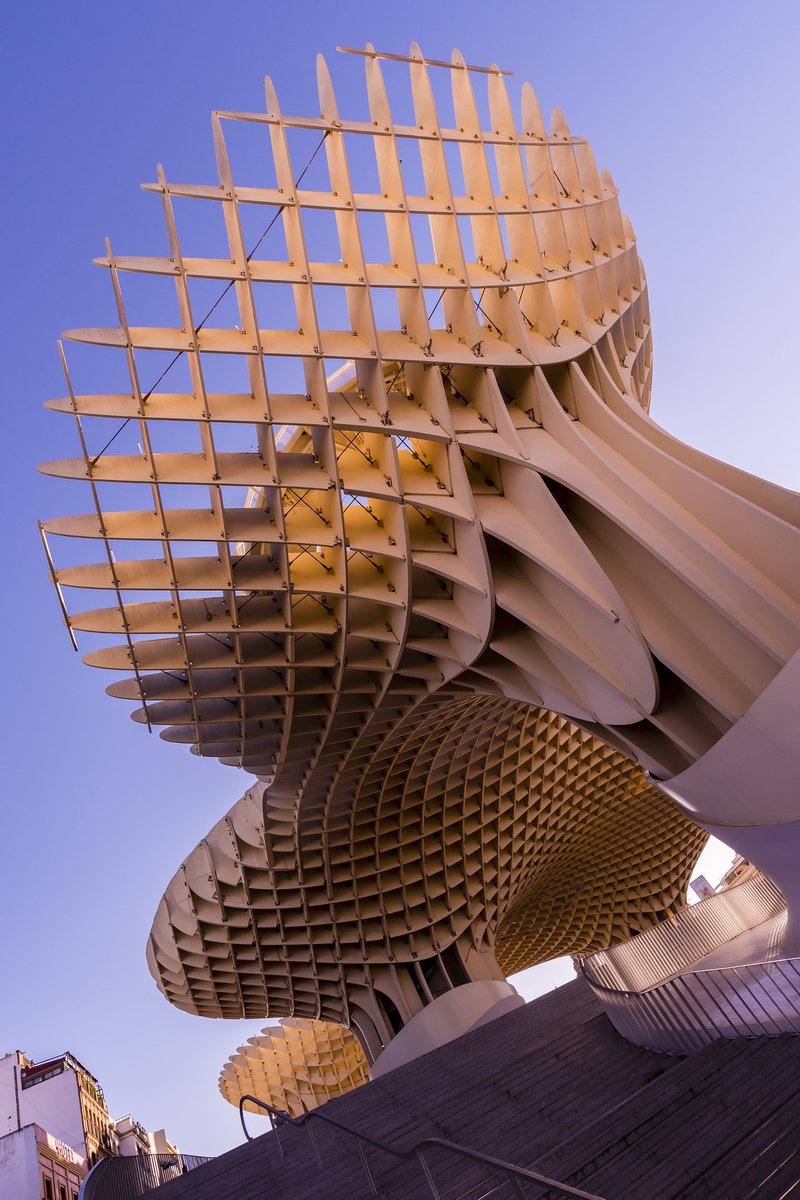
From Hotel: 🚶 15 min · 🚕 6 min → Metropol Parasol
The world's largest wooden structure — six interlocking parasol forms hover over Roman ruins and a market below; the rooftop walkway offers the best panoramic view in Seville.
🏛️ Monday - Thursday 10:00am - 11:00pm · Friday - Saturday 10:00am - 11:30pm · Sunday 10:00am - 10:30pm
⏰ ~45 min
🚶 4 min · 🚕 2 min → Palacio de las Dueñas
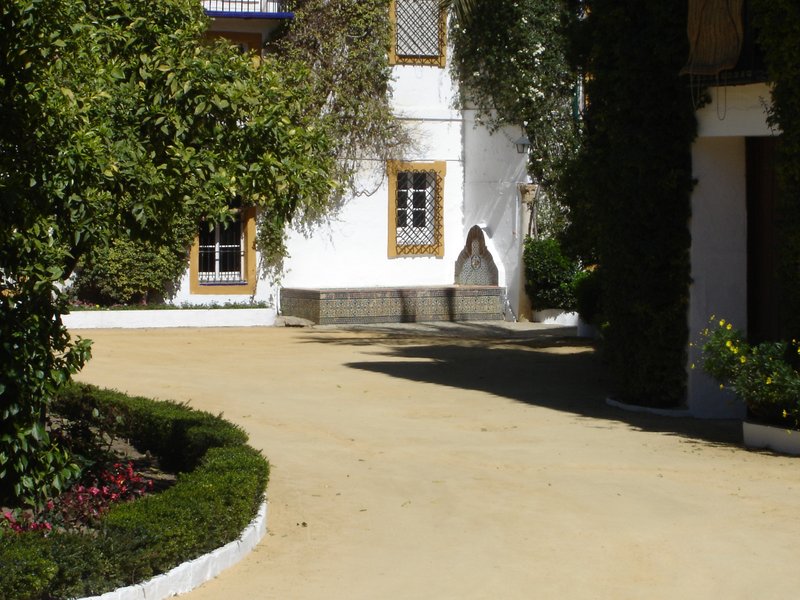
The private palace of the House of Alba, opened to visitors only in 2016. Lemon trees shade the central courtyard; the gallery holds Goya portraits and family heirlooms across five centuries. The poet Antonio Machado was born here in 1875 — his room is preserved on the upper floor.
🏛️ Daily 10:00am - 8:00pm
⏰ ~1 hr
⚠️ October - March: closes 6:00pm
🚶 7 min · 🚕 2 min → Casa de Pilatos
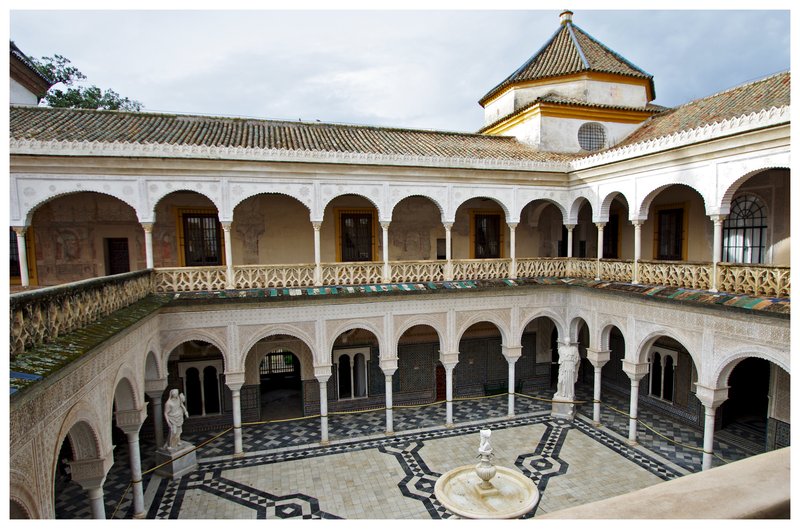
A 16th-century Mudejar palace built after the Marquis of Tarifa's Jerusalem pilgrimage — the portico supposedly echoes Pontius Pilate's praetorium. Roman sculpture fills the ground floor. The garden courtyard — orange trees, azulejo fountains, carved stucco — is the most tranquil space in the city.
🏛️ Daily 9:00am - 6:00pm
⏰ ~1 hr 30 min
🚶 5 min · 🚕 3 min → hotel
From Hotel: 🚶 3 min · 🚕 2 min → Seville Cathedral & Giralda
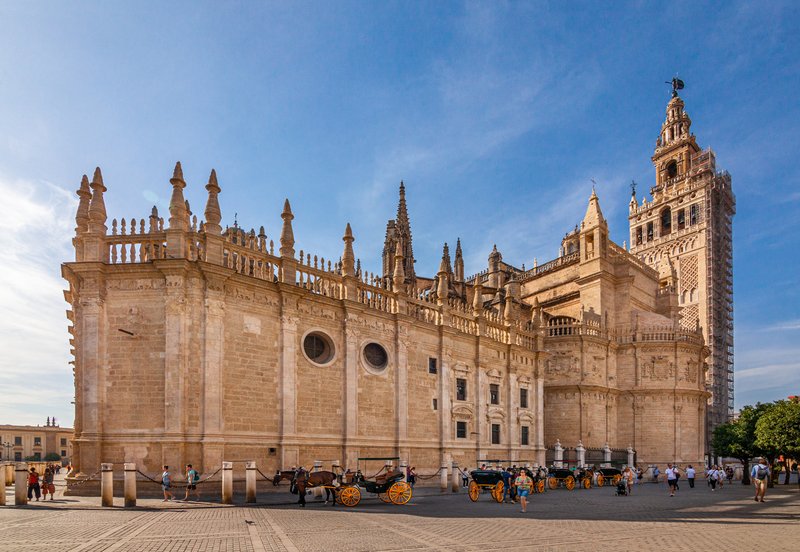
The world's largest Gothic cathedral and the tower that defines Seville's skyline — the Giralda rises 104 m from an Almohad mosque minaret, topped in 1568 with a Renaissance belfry and revolving weathervane.
🏛️ Monday 11:00am - 3:30pm · Tuesday - Saturday 11:00am - 5:00pm · Sunday 2:30pm - 6:00pm
⏰ ~1 hr 30 min
🚶 3 min · 🚕 2 min → Barrio Santa Cruz
The medieval Jewish quarter — a labyrinth of narrow whitewashed alleys, flower-draped balconies, orange trees, and hidden plazas that is Seville at its most atmospheric.
🚶 4 min · 🚕 2 min → Alcázar of Seville
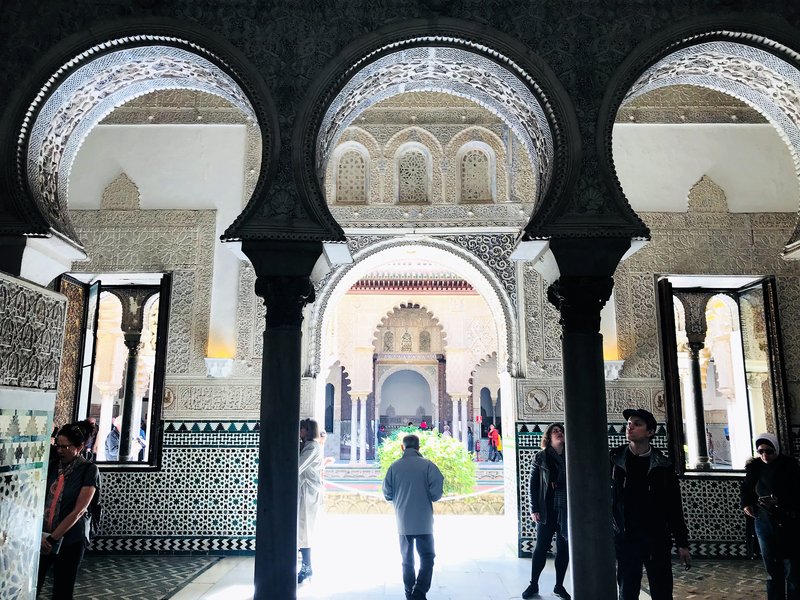
The world's oldest royal palace still in active use — a labyrinth of Moorish arches, azulejo-tiled halls, and fragrant gardens accumulated over eleven centuries of successive royal occupation.
🏛️ Daily 9:30am - 7:00pm
⏰ ~2 hr
🚶 5 min · 🚕 3 min → hotel
From Hotel: 🚶 4 min · 🚕 2 min → Archivo General de Indias
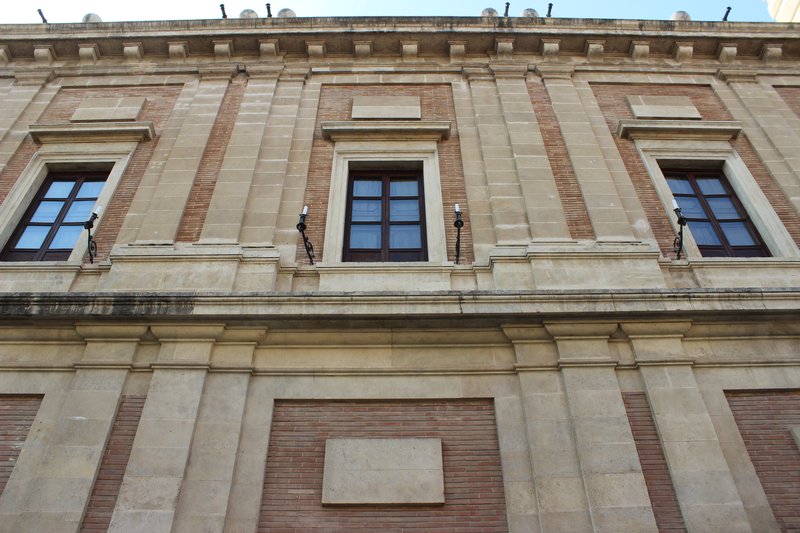
Spain's entire New World empire is catalogued here — 43,000 bundles of documents from Columbus's 1492 contracts to Lima's last dispatches. Juan de Herrera built it as a merchant exchange in 1598; the archive moved in 1785 and never left. Columbus's signatures and Magellan's route charts are in these shelves.
🏛️ Tuesday - Saturday 9:30am - 5:00pm · Sunday 10:00am - 2:00pm
🚫 Closed Monday
⏰ ~1 hr
Free
🚶 5 min · 🚕 2 min → Palacio de la Condesa de Lebrija
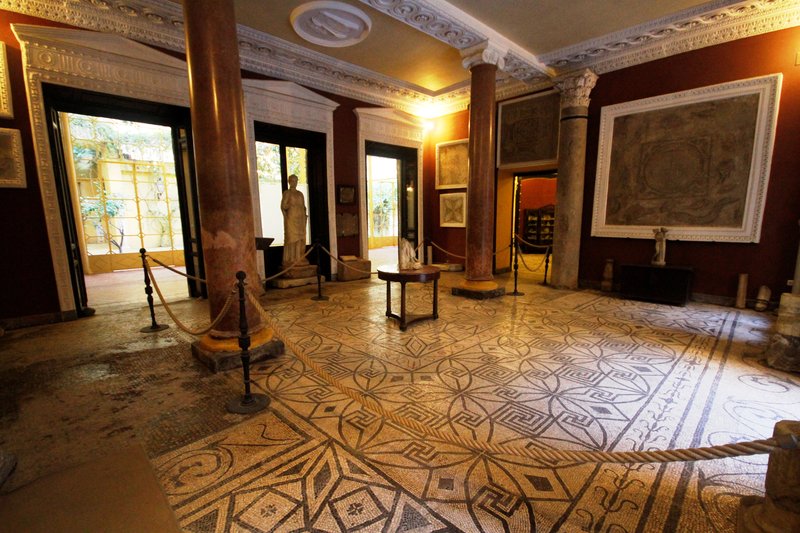
A 16th-century palace filled with antiquities the Countess of Lebrija excavated herself from the Roman city of Italica. The ground floor is paved with genuine Roman mosaics removed in situ and relaid here; the upper floor holds amphorae, statuary, and Carthaginian coins assembled across a lifetime of digging.
🏛️ Daily 10:00am - 6:00pm
⏰ ~1 hr
⚠️ July - August: closes 3:00pm
🚶 20 min · 🚕 5 min → Plaza de España
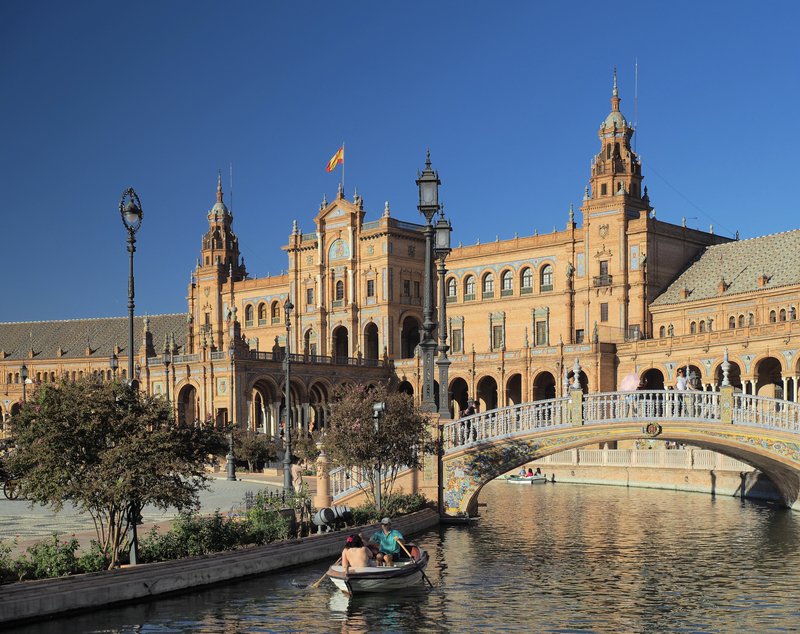
A sweeping semicircular plaza built for the 1929 Ibero-American Exposition — 500 m of tiled alcoves representing every Spanish province, flanked by twin towers and a moat-like canal.
🚶 14 min · 🚕 6 min → hotel
From Hotel: 🚶 3 min · 🚕 2 min → Real Fábrica de Tabacos
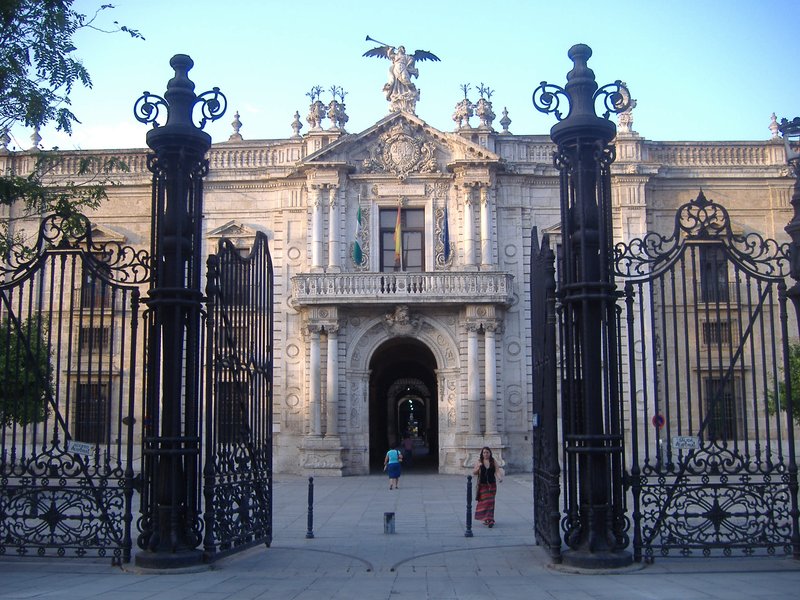
Europe's largest 18th-century secular building, built 1728–1758 to house the royal tobacco monopoly and its 10,000 workers. Bizet set Carmen here knowing the factory defined the city's character. Now the University of Seville — the baroque facades, moat, and courtyards are open during academic hours.
🏛️ Monday - Friday 8:00am - 8:30pm
🚫 Closed Saturday & Sunday
⏰ ~45 min
Free
🚶 11 min · 🚕 3 min → Torre del Oro
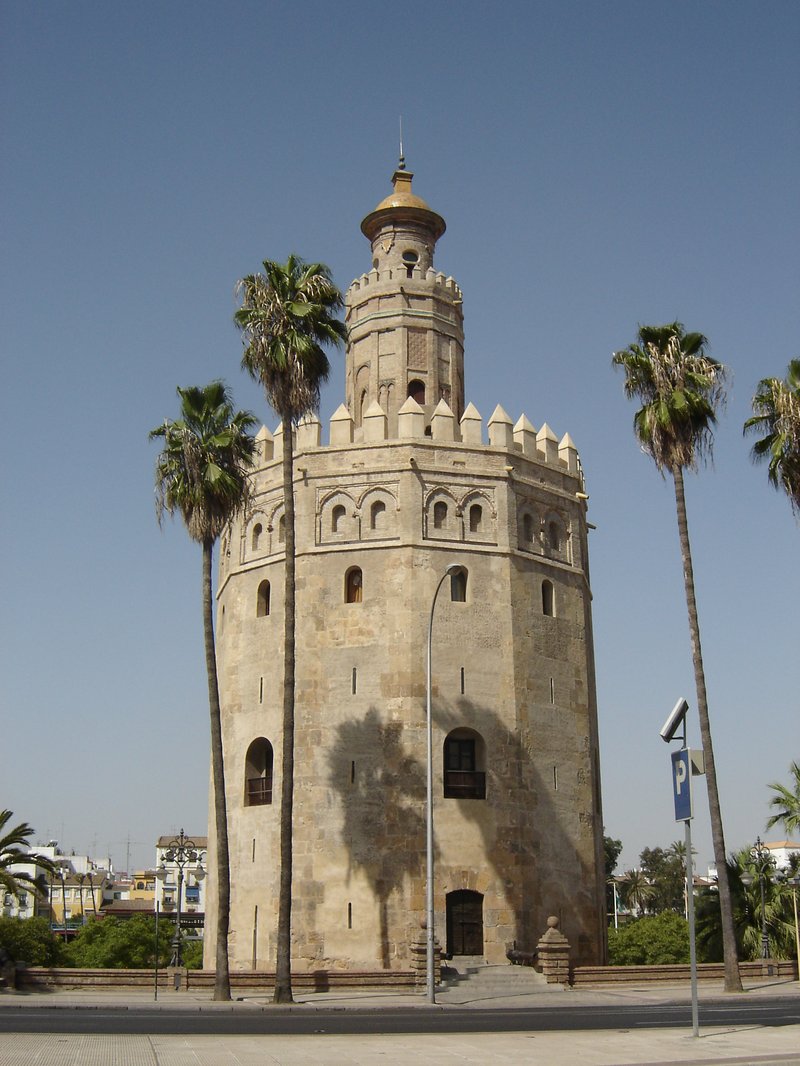
The Almohad watchtower built in 1221 to anchor a chain stretched nightly across the Guadalquivir — no ship entered without permission. Gold-colored from the glazed tiles that once wrapped its walls. The naval museum inside holds nautical charts, navigational instruments, and scale models of the Indies galleons.
🏛️ Monday - Friday 9:30am - 6:45pm · Saturday - Sunday 10:30am - 6:45pm
⏰ ~45 min
⚠️ Free on Mondays
🚶 4 min · 🚕 2 min → Real Maestranza
Spain's oldest active bullring — an oval of pink-and-ochre stone on the Guadalquivir riverfront, built from 1733. Called the Cathedral of Bullfighting, it seats 12,000 under wrought-iron balconies that inspired Goya and Hemingway. The museum covers corrida history through matador suits, prints and oil paintings.
🏛️ Daily 9:30am - 7:30pm
⏰ ~1 hr
⚠️ Bullfight days: closes 3:00pm
🚶 15 min · 🚕 5 min → Museo de Bellas Artes
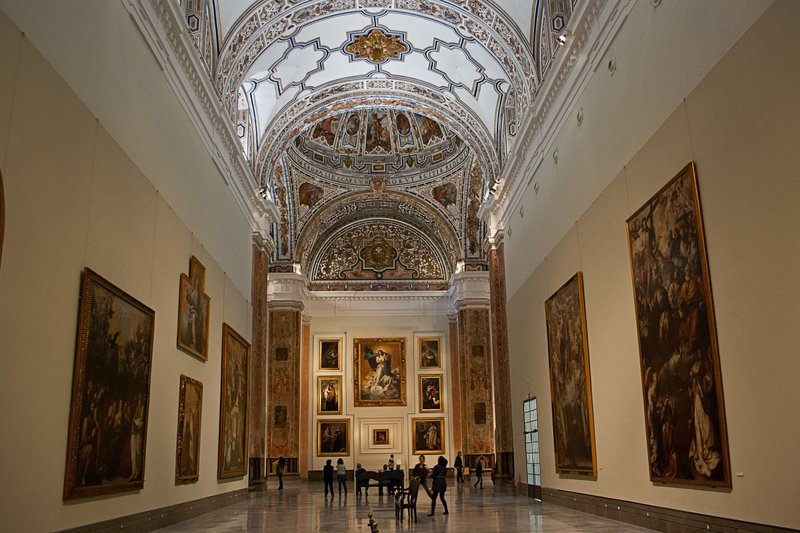
Spain's second most important art museum after the Prado, housed in a baroque convent seized in the 1835 ecclesiastical confiscations. The collection spans medieval through 20th-century Spanish painting; the heart is Room X — Murillo's monumental altarpieces hanging in the refectory light where monks once ate.
🏛️ Tuesday - Saturday 9:00am - 9:00pm · Sunday 9:00am - 3:00pm
🚫 Closed Monday
⏰ ~1 hr 30 min
Free
⚠️ EU citizens only; admission applies for non-EU visitors
🚶 15 min · 🚕 5 min → Basílica de la Macarena
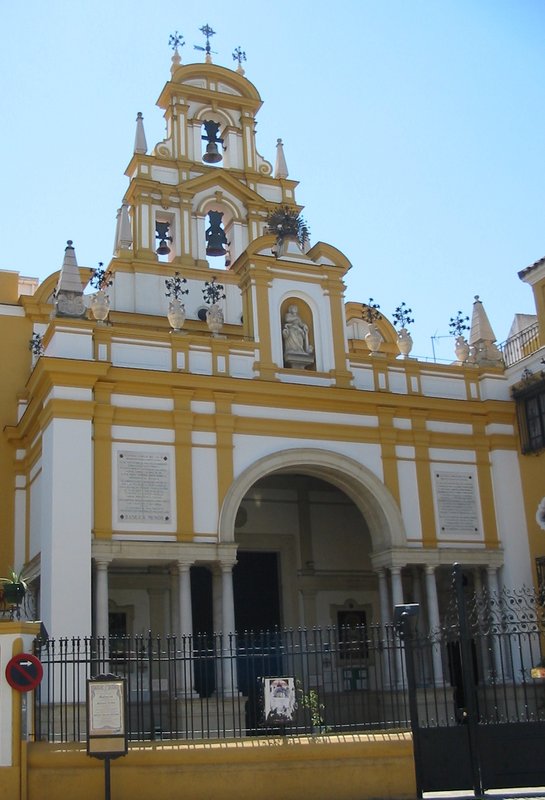
Home of La Macarena — the 17th-century carved Virgin carried through the city for 12 hours each Holy Week on a float weighing five tonnes, cheered by tens of thousands. The neo-baroque basilica was built in 1949 to house her; the adjoining museum holds her jewelled crowns and matador Joselito's jewellery.
🏛️ Monday - Saturday 8:00am - 2:00pm · 5:00pm - 9:00pm
🏛️ Sunday 9:30am - 2:00pm · 5:00pm - 9:00pm
⏰ ~45 min
Free
⚠️ Treasury museum requires a separate ticket
🚶 36 min · 🚕 14 min → hotel
From Hotel: 🚶 33 min · 🚕 16 min → Seville Santa Justa
7:05am Seville Santa Justa → 7:50am Córdoba Central
8:05am Seville Santa Justa → 8:50am Córdoba Central
9:05am Seville Santa Justa → 9:50am Córdoba Central
ARRIVE Córdoba Central: 🚶 11 min · 🚕 5 min → Mezquita-Catedral de Córdoba
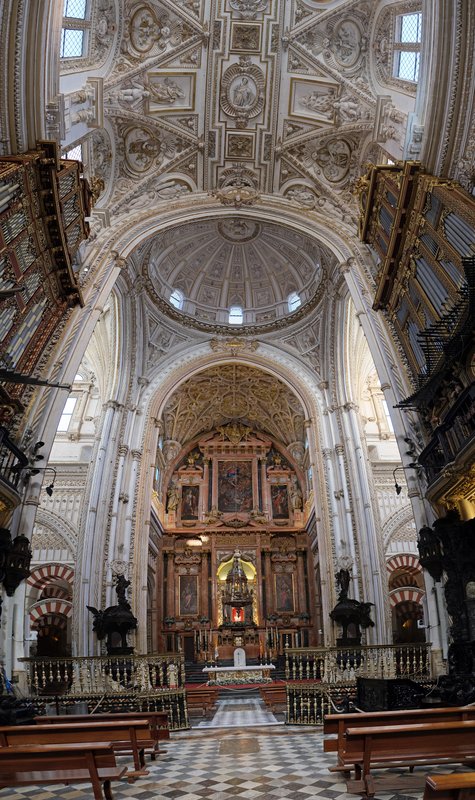
A forest of 856 columns in alternating red-and-white stone arches — the most extraordinary Islamic building in Europe outside Istanbul. Abd al-Rahman I began it in 784 and his successors doubled it over two centuries. A Gothic cathedral was inserted in 1236, both layers visible simultaneously.
🏛️ Monday - Saturday 10:00am - 7:00pm · Sunday 8:30am - 7:00pm
⏰ ~1 hr 30 min
🚶 4 min · 🚕 2 min → Judería & Synagogue of Córdoba
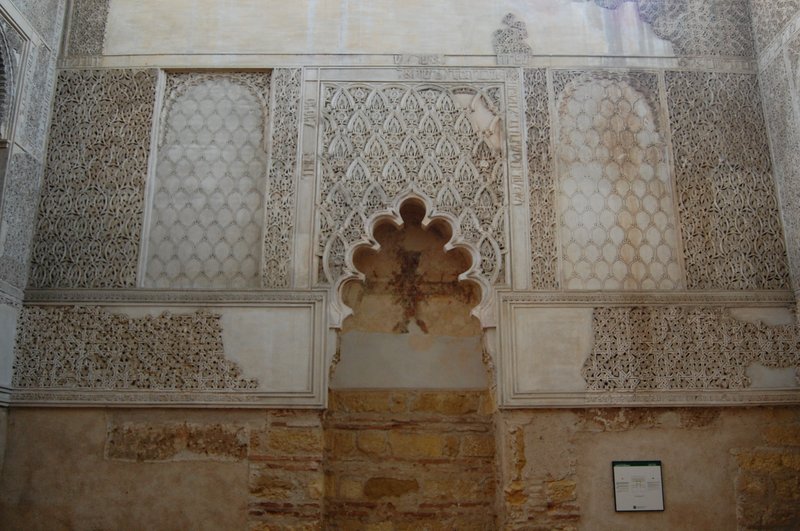
The medieval Jewish Quarter preserves a 14th-century grain unchanged since the 1391 pogrom. The Synagogue — one of only three medieval synagogues in Spain — was built in 1315 for a Sephardic community expelled in 1492. Its interior, no larger than a chapel, is dense with Mudejar plasterwork and Hebrew inscriptions.
🏛️ Tuesday - Saturday 9:00am - 9:00pm · Sunday 9:00am - 3:00pm
🚫 Closed Monday
⏰ ~45 min
Free
⚠️ June 16 - September 15: Tuesday - Sunday 9:00am - 3:00pm
🚶 8 min · 🚕 4 min → Alcázar de los Reyes Cristianos
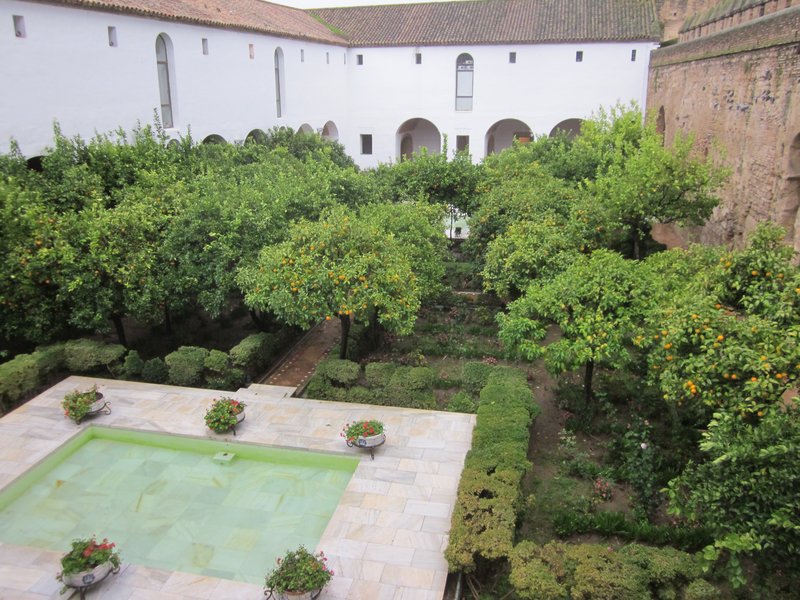
The fortress palace where Ferdinand and Isabella held court — and where Columbus received his commission for the Atlantic voyage in 1486. The terraced gardens with water channels are among the most serene in Andalusia; the interior holds Roman mosaics from Córdoba's streets in the 1950s.
🏛️ Daily 8:30am - 6:00pm
⏰ ~1 hr
⚠️ Free admission on Fridays
5:40pm Córdoba Central → 6:25pm Seville Santa Justa
6:40pm Córdoba Central → 7:25pm Seville Santa Justa
7:40pm Córdoba Central → 8:25pm Seville Santa Justa
ARRIVE Seville Santa Justa: 🚶 33 min · 🚕 16 min → hotel
🌅 The City That Refuses to Hurry
Seville operates on its own clock. The city that took 200 years to complete its cathedral did so deliberately — there is a civic pride here in doing things at the right pace, not the fast pace. The Alcázar has been under continuous use for over a millennium, which is to say: things that are built well in Seville tend to stay.
Walk the barrio early, before the heat rises and before the tour groups fan out from the Cathedral. The alleys between Santa Cruz and the Alcázar walls are genuinely quiet at 8:00am. Order a café con leche at a standing bar and watch the city start its day. Nobody is in a rush. The chalk menu on the wall hasn't changed in forty years and that, it turns out, is the whole point.
The Guadalquivir made this city and the city has never forgotten it — the light here is different, warmer, more golden than anywhere else in Spain, because the river reflects it back up into the streets. Stand on any bridge at sunset and you will understand immediately why painters have been coming here since the 16th century.