From Hotel: 🚕 12 min → Pena Palace
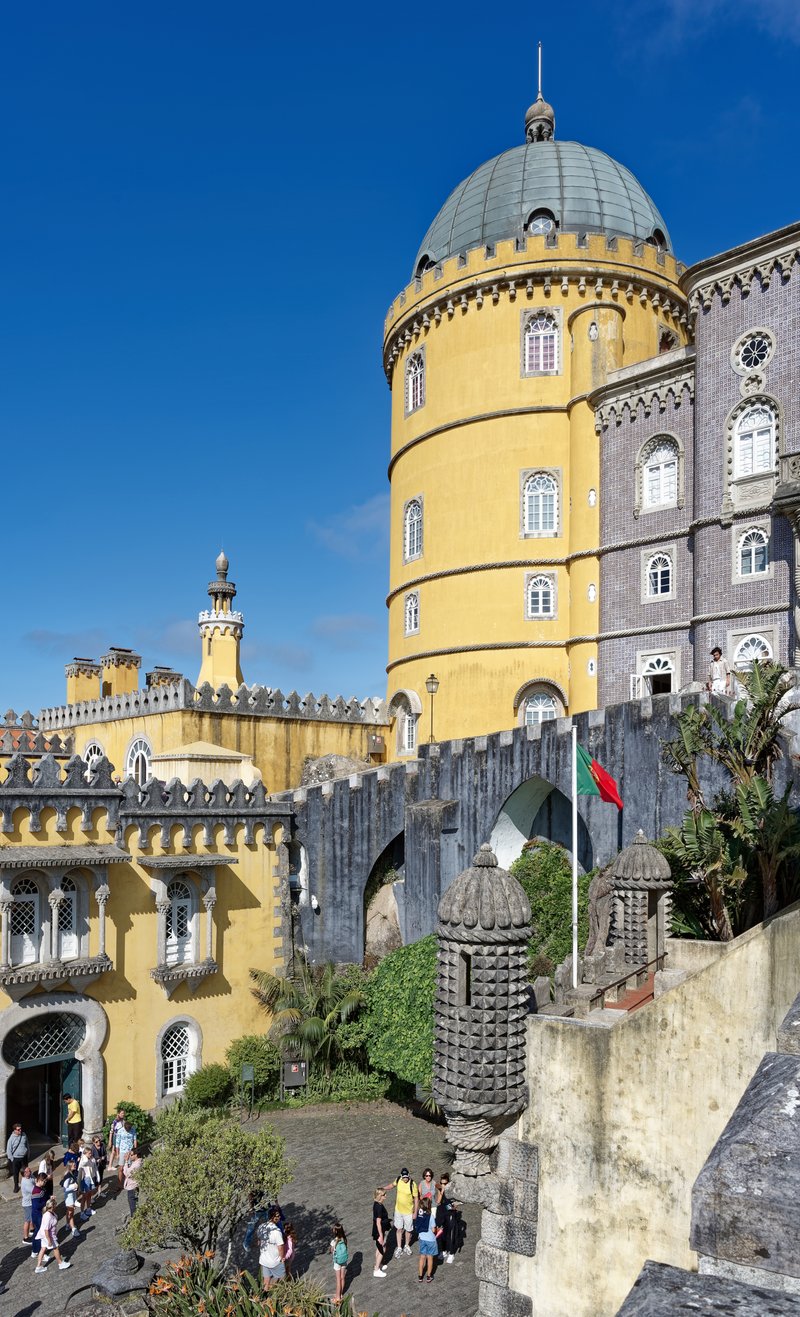
The 1842 Romanticist palace crowning the Sintra hills — a riot of ochre and crimson towers, Moorish arches, and a Triton gateway, raised by Ferdinand II on the ruins of a monastery. The terraces give the widest view in Sintra. Arrive at opening to beat the queue for the palace interior.
🏛️ Daily 9:30am - 6:30pm
⏰ ~2 hr
🚶 10 min · 🚕 3 min → Moorish Castle
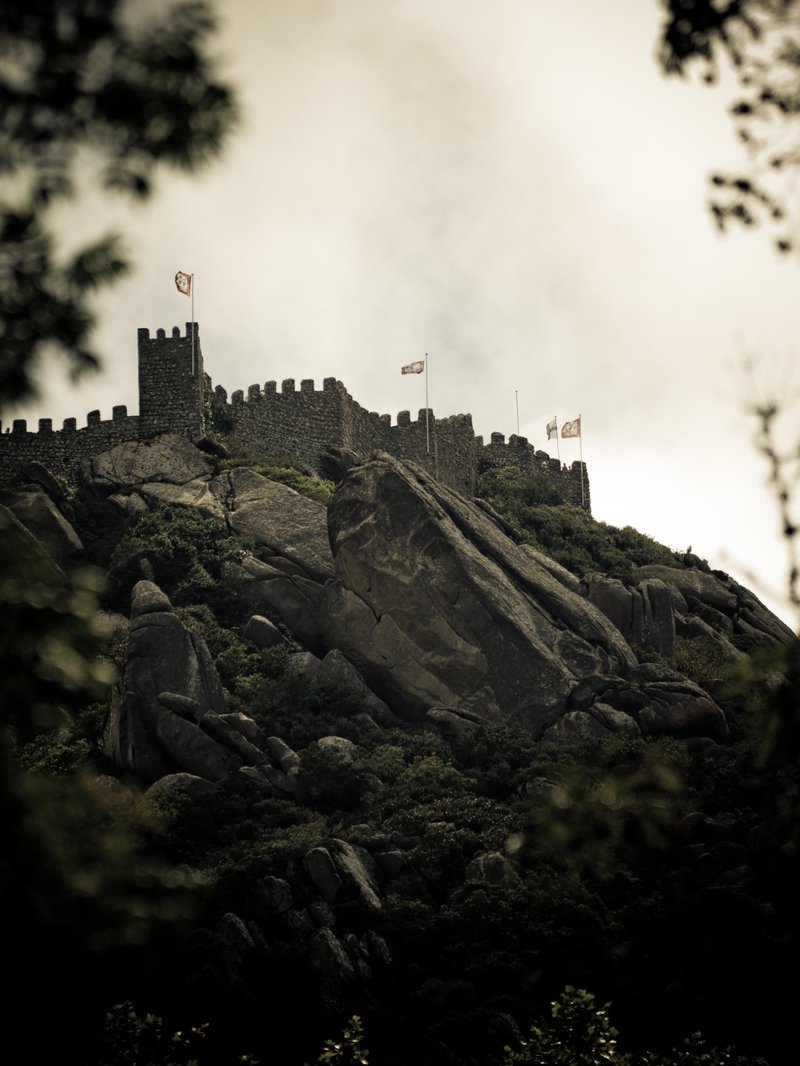
8th-century battlements built by the Moors, snaking along the ridge across the valley from Pena. The walk along the restored ramparts gives a falcon's view over the village, the Atlantic, and the palaces. Steep, uneven stone steps — proper shoes matter.
🏛️ Daily 9:30am - 6:00pm
⏰ ~1 hr 30 min
🚶 30 min · 🚕 8 min → Quinta da Regaleira
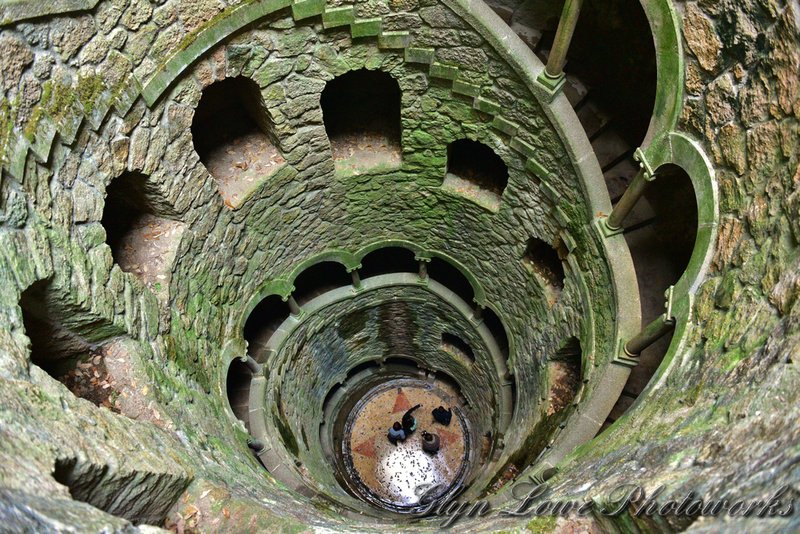
An 1910 estate by Luigi Manini for a Freemasonry-obsessed millionaire. Centrepiece: the Initiation Well — a 27-metre spiral tower descending into grottos and tunnels. The underground network is easy to get turned around in — pace yourself.
🏛️ Daily 10:00am - 7:30pm
⏰ ~1 hr 30 min
🚶 8 min · 🚕 3 min → Sintra National Palace
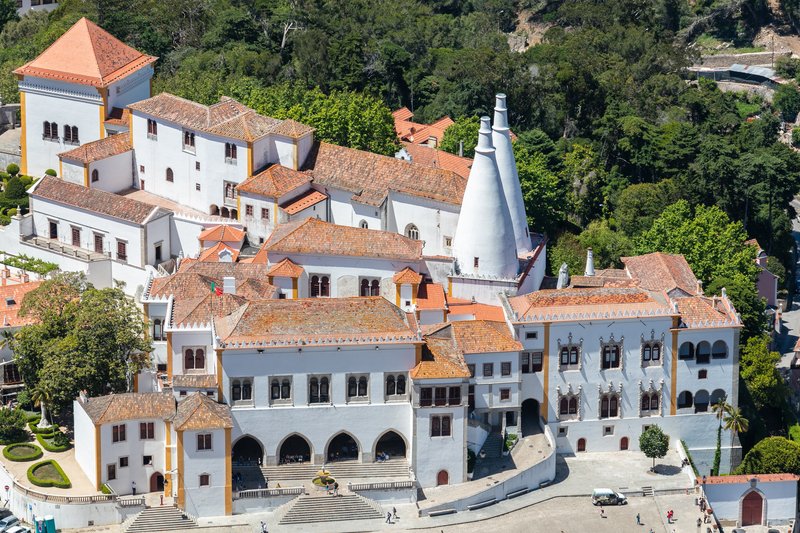
Iberia's oldest palace in continuous royal use — twin conical chimneys above the village. Inside: Manueline ceilings, Moorish azulejo tiles from the 1400s, gilded Swan Chamber. Arrive at opening or late afternoon to avoid the midday crush.
🏛️ Daily 9:30am - 6:30pm
⏰ ~1 hr
🚶 5 min · 🚕 3 min → hotel
From Hotel: 🚕 10 min → Monserrate Palace
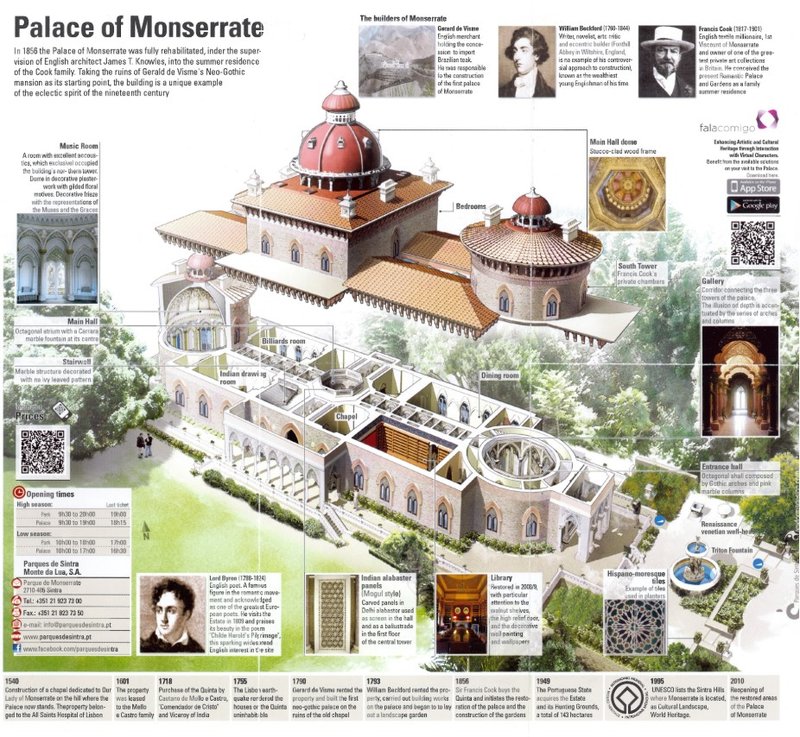
A Moorish-Gothic-Indian fantasy palace built in the 1860s for English millionaire Francis Cook, set in botanical gardens of palms, ferns, and waterfalls gathered from across the Empire. The roofs are under restoration with scaffolding on the monument; the interiors and gardens stay open.
🏛️ Daily 9:30am - 6:00pm
⏰ ~1 hr 30 min
🚕 20 min → Cabo da Roca
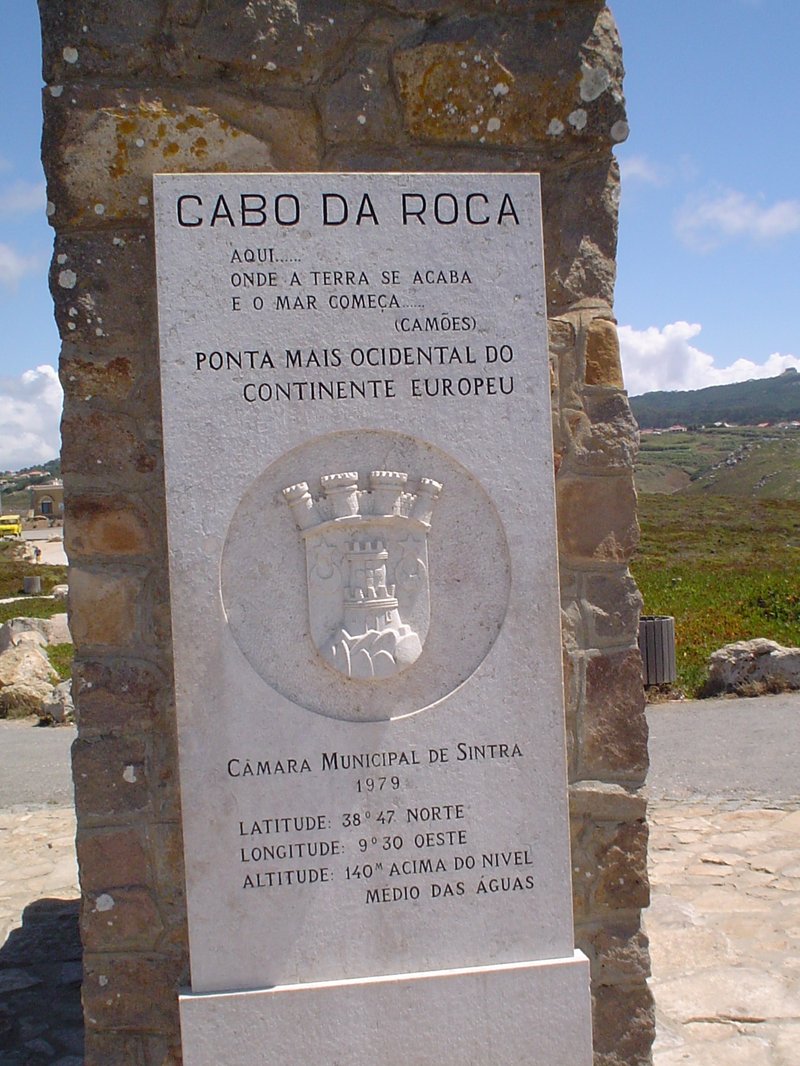
The westernmost point of mainland Europe — a granite headland where the cliffs drop 140 m to the Atlantic, crowned by a working lighthouse and a stone marker quoting Camões: where the land ends and the sea begins. A café and souvenir kiosk are the only other buildings.
🏛️ Daily 9:00am - 7:30pm
⏰ ~45 min
🚕 20 min → Boca do Inferno
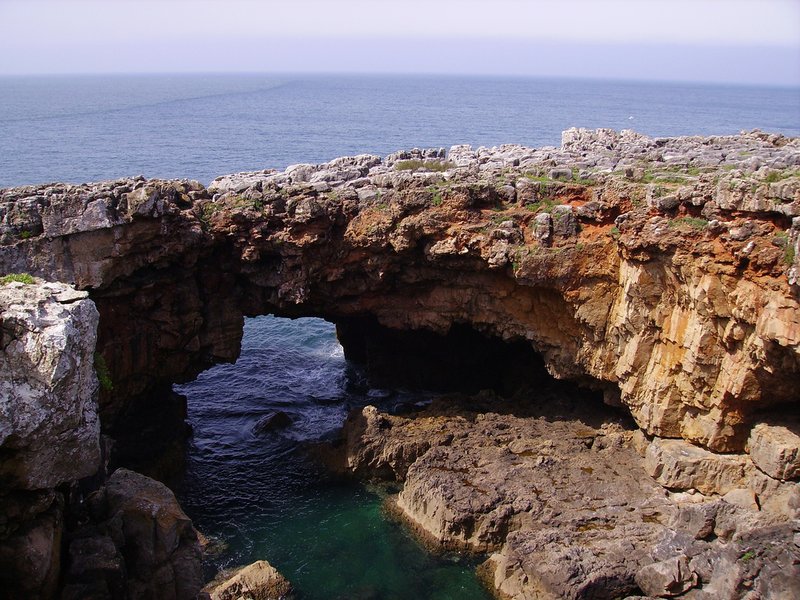
The "Mouth of Hell" — a collapsed sea cave on the Cascais coast where the Atlantic surges through a stone arch and explodes against the cliffs. A short railed loop circles the chasm; loudest and most dramatic at high tide. Free to visit and open around the clock.
🚶 18 min · 🚕 5 min → Cascais
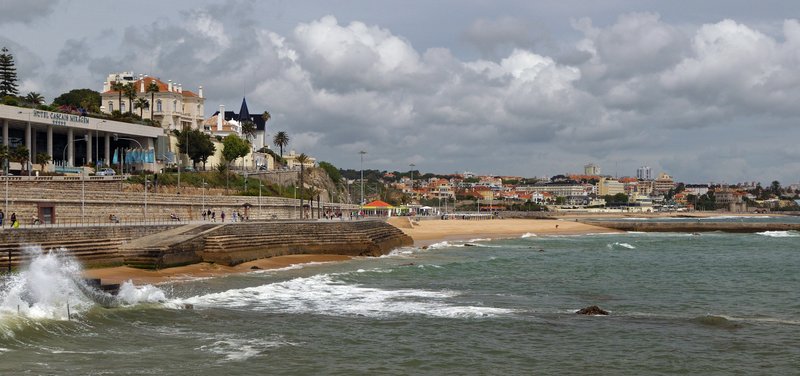
The fishing village turned royal resort where Portugal's kings summered in the 1870s. A walkable old town of cobbled lanes and tiled mansions opens onto a curved bay of bobbing boats, with the Cidadela fortress and a palm-lined promenade along the seafront. End the day with sunset over the water.
🚕 30 min → hotel
🔮 A Faked Death and a Well That Never Held Water
In September 1930, the occultist Aleister Crowley showed up at Boca do Inferno with a plan to disappear. Frustrated with a relationship gone bad and dodging creditors, he staged his own suicide at the chasm with help from Portugal's most famous poet, Fernando Pessoa, who handed his forged note to the newspapers and translated the Thelemic symbols on it for a baffled press. Portugal mourned him for three weeks — until Crowley turned up alive at the opening of his own art exhibition in Berlin. A plaque at the site now tells the whole story, note included.
The Initiation Well at Quinta da Regaleira has never actually held water. Eccentric millionaire and Freemason António Carvalho Monteiro built it purely as a ceremonial spiral shaft descending into the estate's tunnel network, and its real purpose is still debated: the spacing of its landings has been read as a Tarot sequence, a Masonic initiation path, or a nod to the Knights Templar, but no single theory has ever been confirmed. It looks like a well because a well is what a bored 20th-century millionaire with esoteric tastes decided a symbolic descent into the underworld should look like.