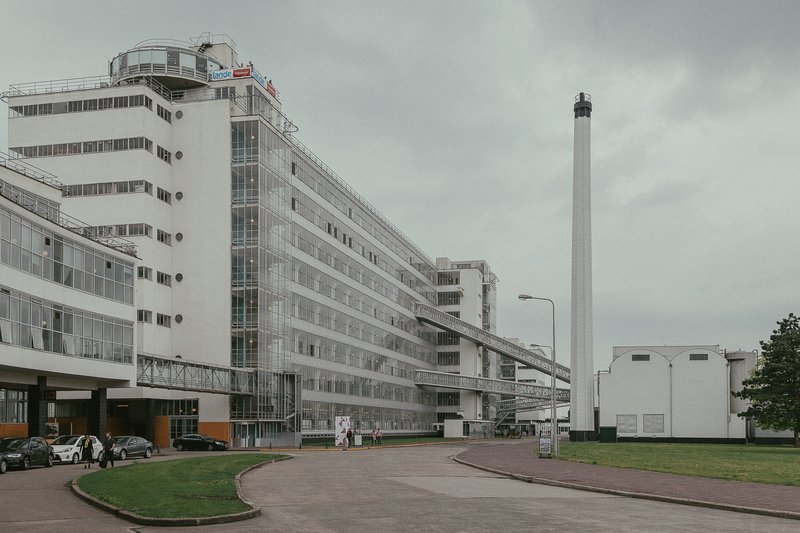
A coffee, tea and tobacco plant of 1931 built as a glass-and-steel curtain wall on a concrete frame, with conveyor bridges crossing the yard on diagonals. UNESCO listed it in 2014 as the fullest expression of the Dutch functionalist movement.
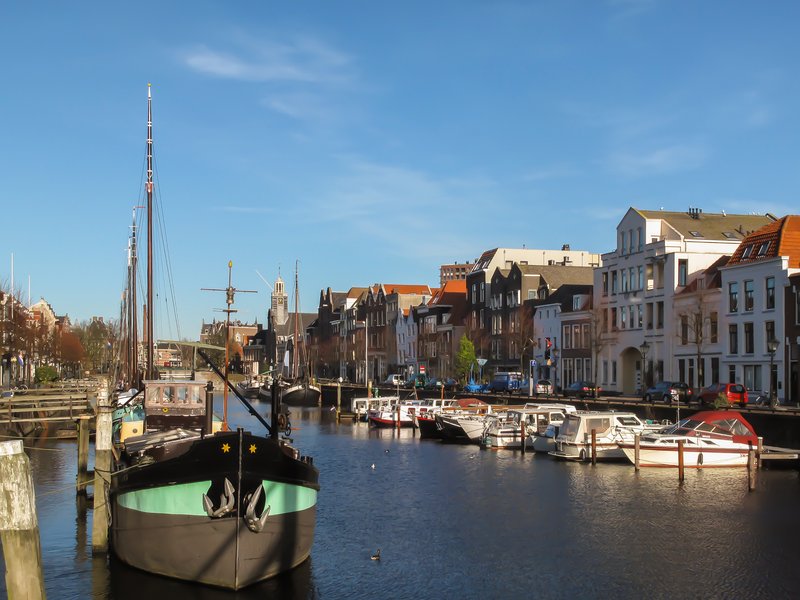
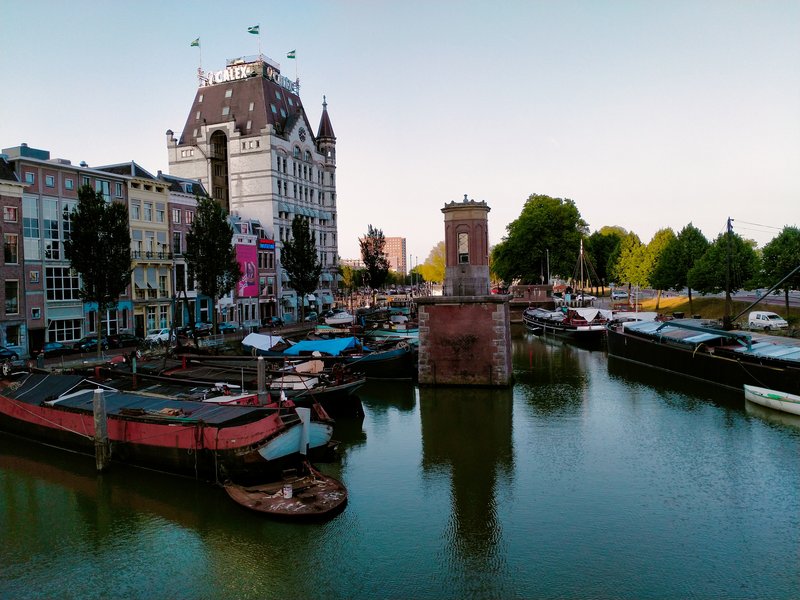
A canal-side harbour of gabled merchant houses, a working grain windmill and moored barges that survived the May 1940 bombing almost intact. The Pilgrim Fathers sailed from this quay in 1620 before transferring to the Mayflower.
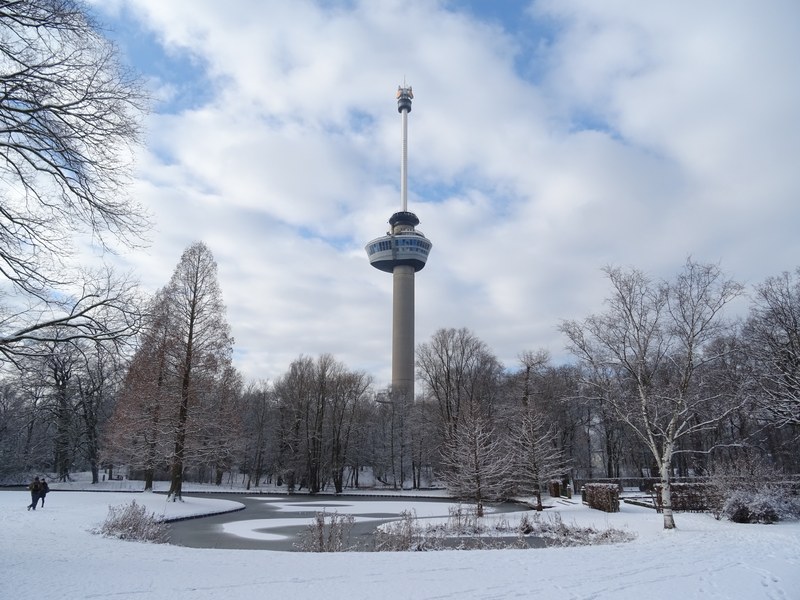
A concrete observation tower of 1960 raised to 185 metres in 1970 by the addition of the Euroscoop, a rotating glass-floored cabin that climbs the mast on the outside. The platforms look straight down the Nieuwe Maas across the port.
From Hotel: 4 min · 8 min → Rotterdam Centraal Station
1.Rotterdam Centraal Station~30 min
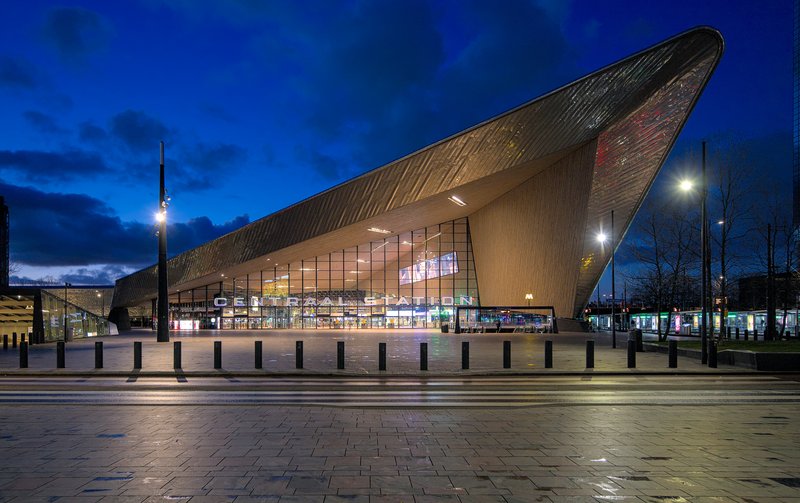
A station hall of 2014 whose stainless-steel entrance canopy lifts to a single point aimed at the city centre, with a 250-metre concourse roofed in Douglas fir and a timber-lined platform hall glazed with solar cells.
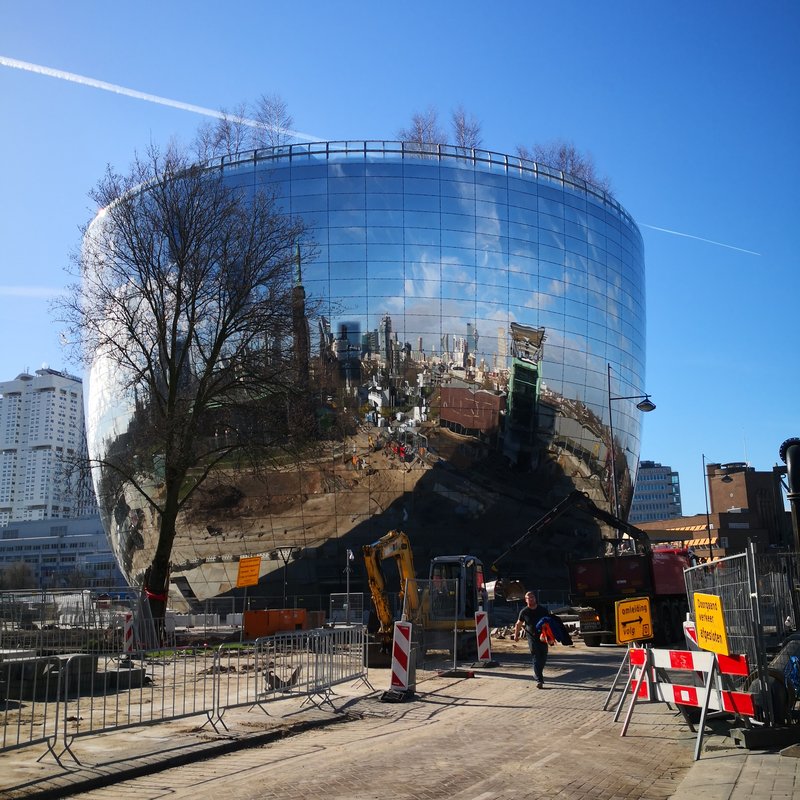
A mirrored bowl by MVRDV holding the museum's entire collection of some 151,000 works, with glass-walled storage rooms, criss-crossing staircases through the atrium and a birch-planted roof garden above the city.
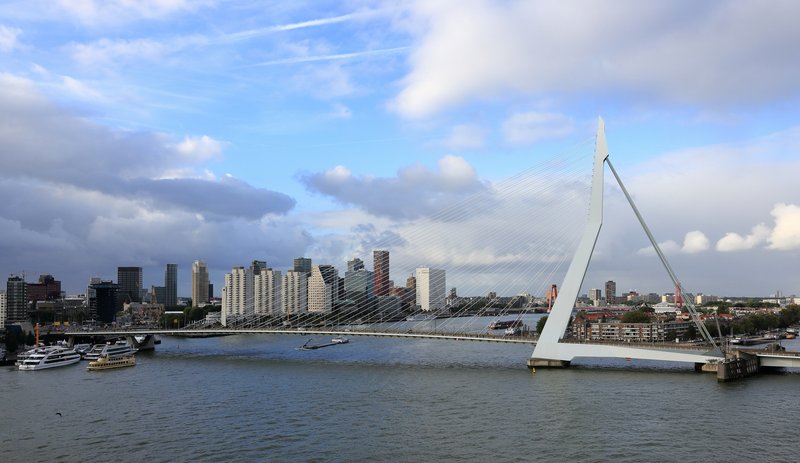
A cable-stayed crossing of 1996 by Ben van Berkel whose 139-metre pylon kinks forward at the top, giving the bridge its local name of the Swan. A bascule span at the south end lifts for shipping on the Nieuwe Maas.
An Art Nouveau office tower of 1898 standing 43 metres over the Oude Haven on a thousand piles, built without timber as a fire precaution and reckoned the first high-rise in Europe. It came through the 1940 bombing intact.
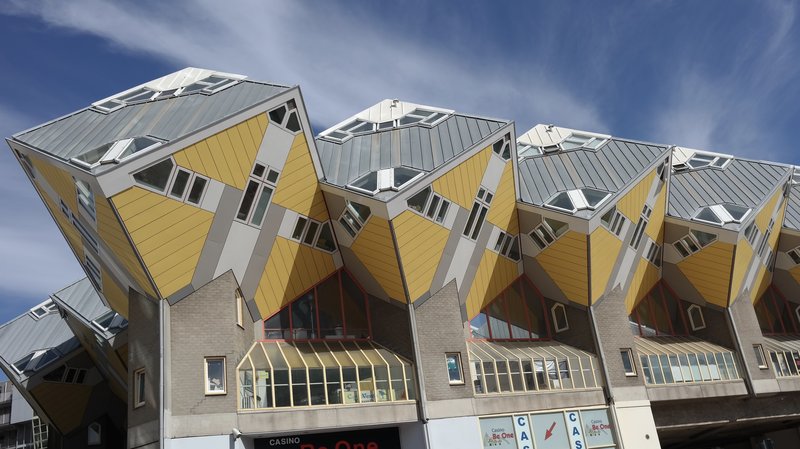
Thirty-eight yellow cubes tilted onto one corner and set on hexagonal pylons over Blaak, built by Piet Blom in 1984 as a forest of houses above a street. The Kijk-Kubus show cube is furnished and open to walk through.
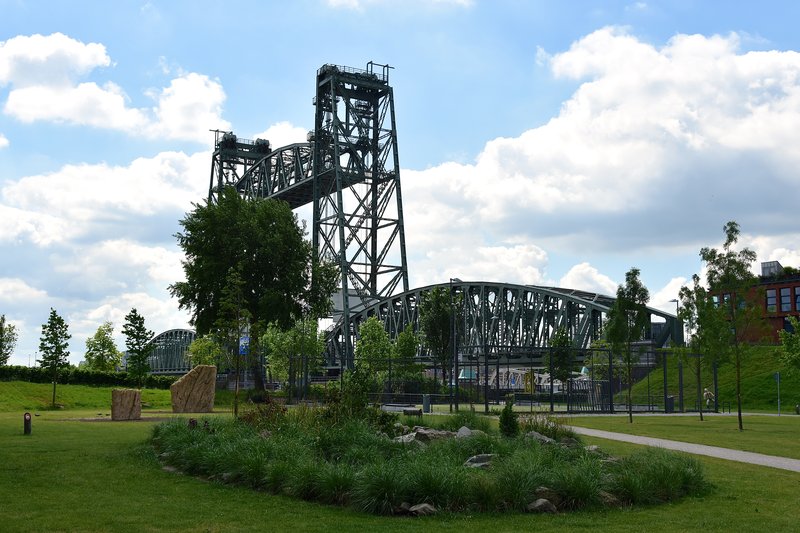
A riveted steel railway bridge of 1927 whose 130-tonne middle span was hoisted between two towers to let ships pass. Trains stopped crossing in 1993 when the line went into a tunnel, and the city kept the bridge as a monument.
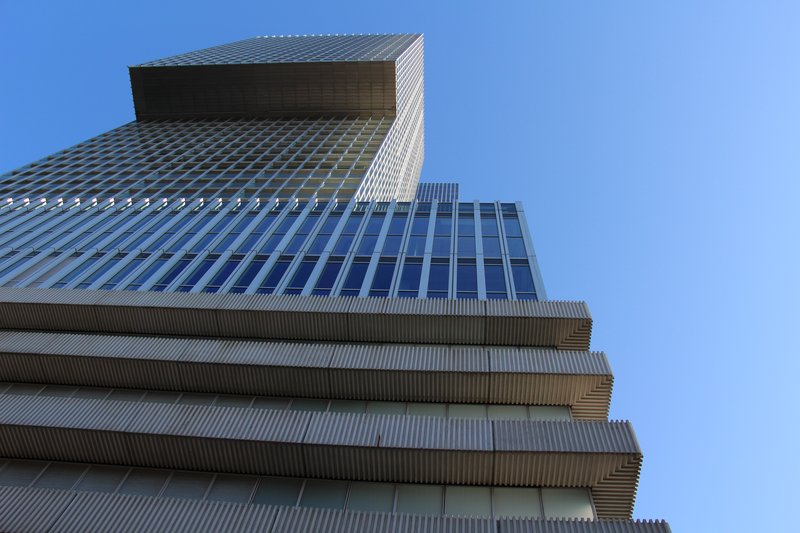
Three interlocking towers of 2013 by Rem Koolhaas and OMA, 149 metres tall, whose upper halves shift sideways off the lower blocks so the stack reads as a vertical city. By volume it is the largest building in the Netherlands.
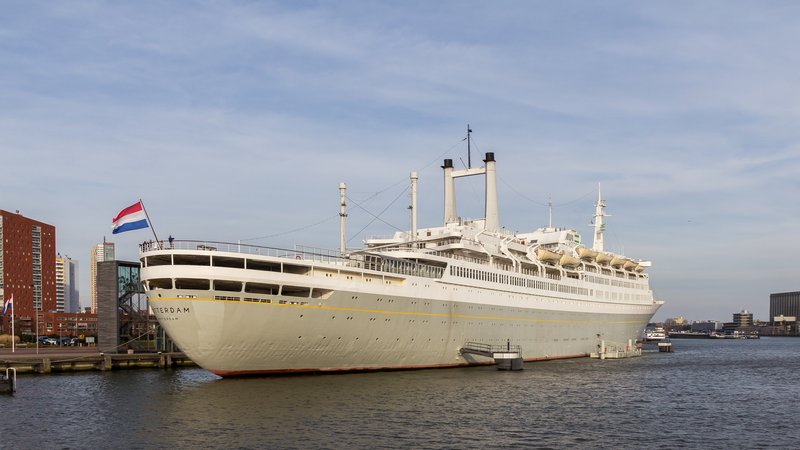
The largest ocean liner ever built in the Netherlands, launched in 1959 as flagship of the Holland America Line and moored at Katendrecht since 2008. The audio route covers the bridge, chart room, radio room and captain's cabin.
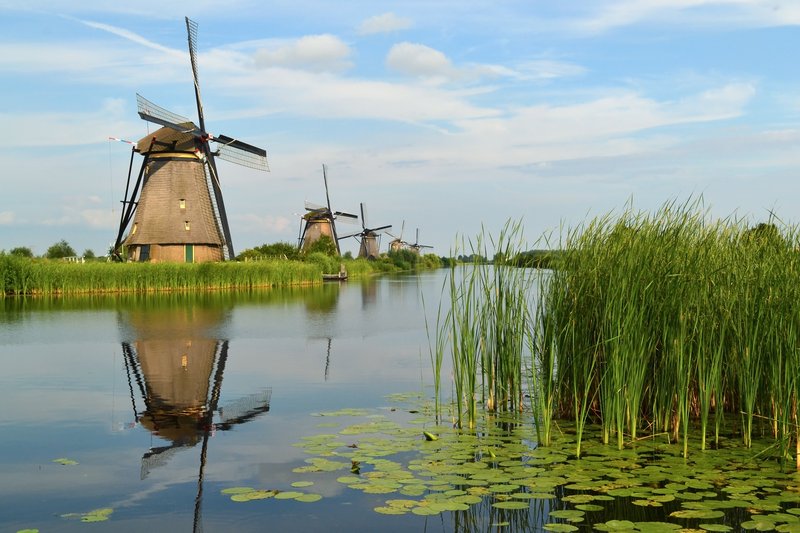
Nineteen brick and thatched drainage mills built from 1738 to lift water out of the Alblasserwaard polder, lined along two parallel canals below sea level. Two museum mills and the pumping station engine room are open inside.
A 2-hour guided walk through Rotterdam's most celebrated buildings — Cube Houses, Markthal, De Rotterdam, Erasmusbrug — with commentary on the post-1940 rebuild that made the city the boldest architectural statement in northern Europe.
Rotterdam's 2003 invention — döner on fries, topped with salad, sambal, and garlic sauce. Named after a Cape Verdean barbershop — kapsalon in Dutch — whose owner asked the next-door shawarma shop to put everything he liked in one box.
A Dutch colonial tradition of 20–30 small Indonesian dishes served alongside rice. Rotterdam's large Indonesian community keeps the rijsttafel alive; look for warungs in Delfshaven and Rotterdam-South.
Surinamese-style skewered meat with peanut sauce, sharper and sweeter than the Indonesian version. Brought to Rotterdam by the Surinamese community in the 1970s; widely available in the Markthal and Rotterdam-South.
Foreign number: accepted. — the SMS verification code arrives on international numbers.
The Netherlands' dominant delivery platform with the widest local restaurant coverage, from traditional Dutch brown cafes to international chains and specialty shops across Rotterdam.
Foreign number: accepted. — the SMS verification code arrives on international numbers.
Shares the Uber account so no separate sign-up is needed; covers most central Rotterdam restaurants and is particularly strong on international cuisines and chain delivery.
Rotterdam's principal concert hall presents the Rotterdam Philharmonic and visiting classical, jazz and world-music artists; check the official programme.
Foreign number: accepted. — the SMS verification code arrives on international numbers.
Active across central Rotterdam with short wait times; UberX is the main tier and rates are comparable to local taxis for most routes across the city and to Kinderdijk.
Vermeer's city — canals, gabled houses, and the blue-and-white Delftware tradition. The Markt is one of the finest medieval squares in the Netherlands, flanked by the Nieuwe Kerk and the Prinsenhof where Willem van Oranje was assassinated in 1584.
Famous cheese market town with a well-preserved medieval centre, a 15th-century Stadhuis on the largest market square in the Netherlands, and the Gouda Museum inside a 16th-century hospice.
The Dutch seat of government and home of the Mauritshuis — one room holds Vermeer's Girl with a Pearl Earring and Rembrandt's The Anatomy Lesson. The Peace Palace and the International Court of Justice sit 10 minutes on foot.
The oldest city in Holland, with a medieval harbour, a 14th-century church tower, and a Dordrechts Museum housing Dutch Golden Age painting. The rivers Maas, Noord, and Merwede converge here; the Wijnhaven waterfront offers the best views.
Rembrandt's birthplace and one of Europe's great university cities, with eleven specialist museums, a 17th-century canal ring, and the Rijksmuseum van Oudheden holding a complete Egyptian temple dismantled at Dendara and rebuilt here.
A medieval university city with the tallest church tower in the Netherlands — the Dom, 112 metres — and the Oudegracht canal running two levels deep, its lower level now lined with cafés open to the water.
On 14 May 1940 a German bombing raid reduced the medieval centre of Rotterdam to rubble in under fifteen minutes. Around 900 people died; 24,000 buildings burned. The pre-war city — its canal houses, its merchants' streets, its entire historic layer — was gone.
Rotterdam decided not to rebuild what had been lost. The cleared land became a blank canvas, and the city chose to fill it with the most ambitious architecture in Europe. Van Nelle was already there, a statement made in 1931. Everything that followed — the Lijnbaan in 1953, the Euromast in 1960, the Kop van Zuid redevelopment from the 1990s, Rem Koolhaas and MVRDV and UNStudio in the 2000s and 2010s — came from that single decision.
The kapsalon story is the same impulse in miniature. Nathaniël Gomes ran a barbershop on the Hoogstraat and used to order from a shawarma shop next door. One day in 2003 he asked them to put everything he liked on top of the fries — döner, Gouda, salad, sambal, garlic sauce. They named the dish after his salon. The city that had already decided to combine things no one had combined before produced, inside a Rotterdam takeaway, the most improbable food invention in Dutch history.