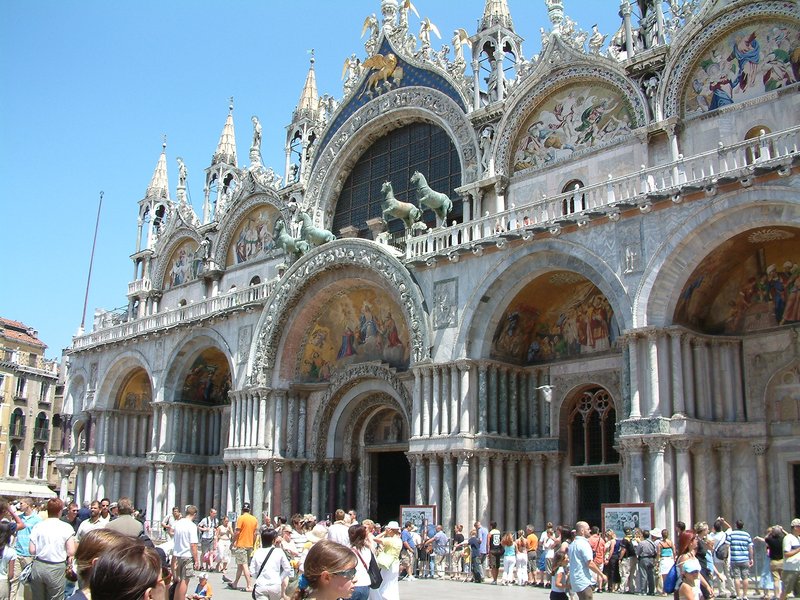
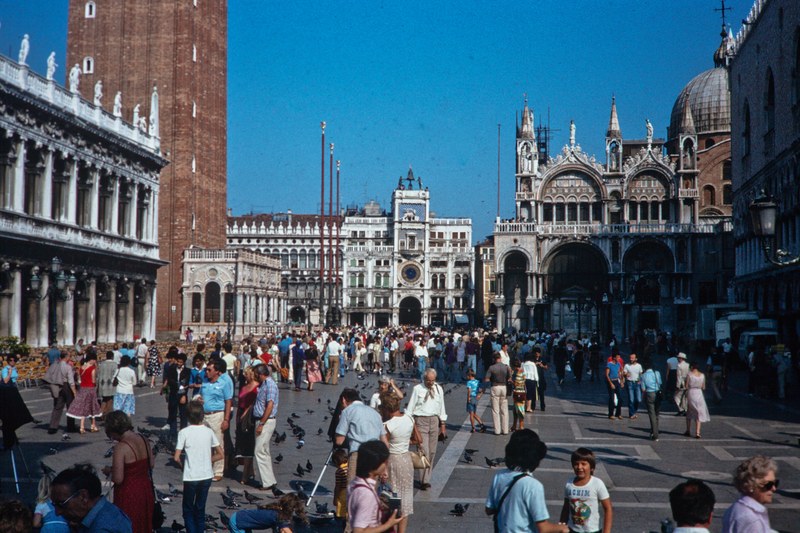
Venice's golden cathedral, begun in 1063 to house the relics of St Mark. Its five-domed Italo-Byzantine facade and interior of more than 8,000 square metres of gold-ground mosaics make it the most opulent church in Italy — the jewelled Pala d'Oro and the bronze Horses of Saint Mark are inside.
The 98.6 m brick bell tower of the basilica, first raised in the 9th century and rebuilt exactly after its 1902 collapse. An elevator climbs to the top for the finest panorama in Venice — the rooftops, the lagoon, and on clear days the Dolomites.
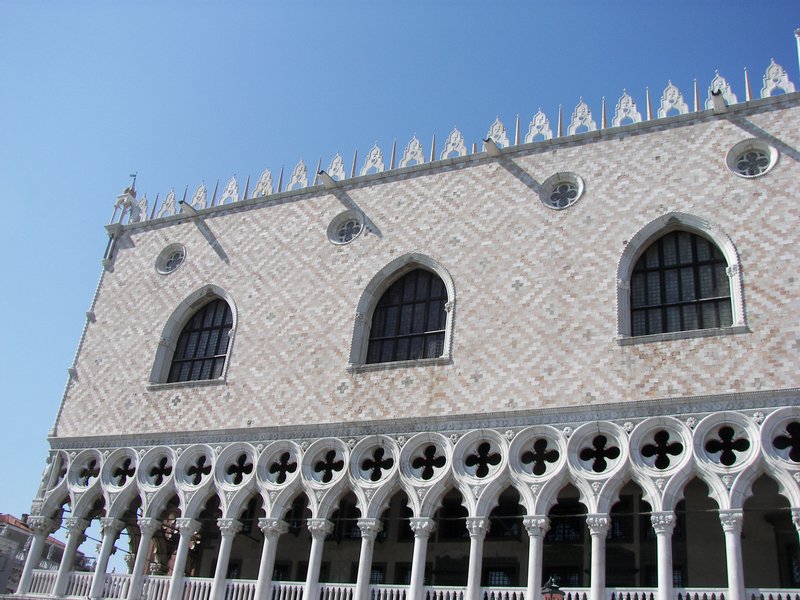
The seat of Venetian power for a thousand years — a Venetian Gothic masterpiece of pink-and-white marble loggias over the Piazzetta. Inside are the vast Chamber of the Great Council, Tintoretto's "Paradise," gilded state apartments, the armoury, and the prisons reached across the Bridge of Sighs.
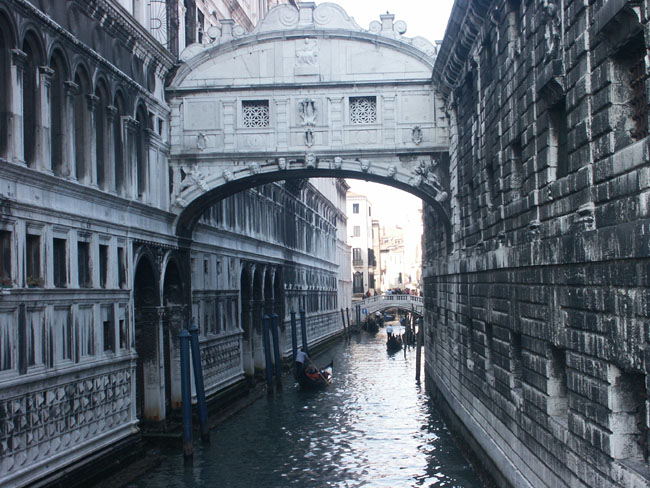
The enclosed white-limestone bridge of 1600 that carried prisoners from the Doge's Palace interrogation rooms to the New Prison. Its name is Romantic-era legend — the sighs of convicts glimpsing the lagoon a last time. The classic view is from the Ponte della Paglia on the waterfront.
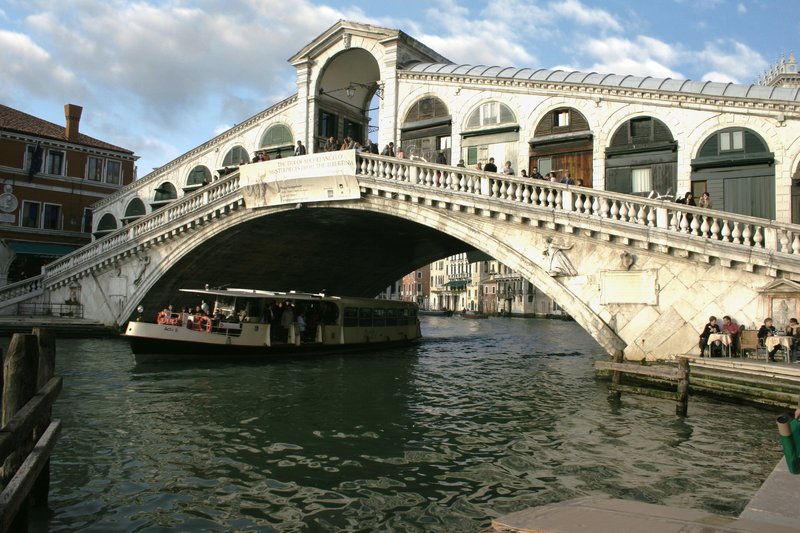
The oldest and most famous bridge across the Grand Canal, completed in stone in 1591 by Antonio da Ponte. A single 28 m marble arch lined with shops, it links San Marco to the Rialto market district and frames the canal's grandest view.
From Hotel: 18 min · 6 min → Santa Maria della Salute
1.Santa Maria della Salute~40 min
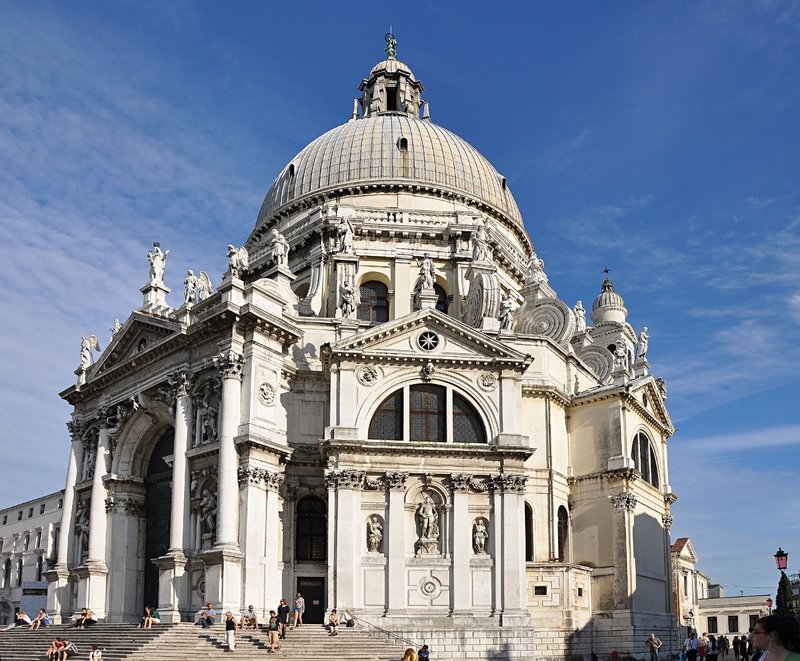
The great white octagonal Baroque church that crowns the entrance to the Grand Canal, built by Baldassare Longhena from 1631 as the city's thanksgiving for deliverance from the plague. Its vast dome is a defining silhouette of Venice; inside hang Titian and Tintoretto canvases.
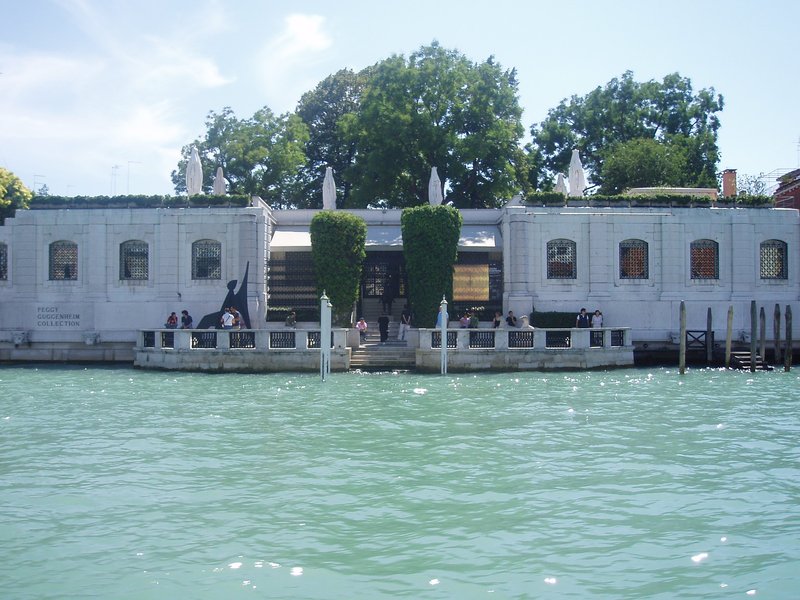
The unfinished one-storey Palazzo Venier dei Leoni on the Grand Canal, home of heiress Peggy Guggenheim from 1949 and now one of Europe's great modern-art museums — Picasso, Pollock, Ernst, Magritte, Brancusi, and Marino Marini's bronze rider in the canal-side garden.
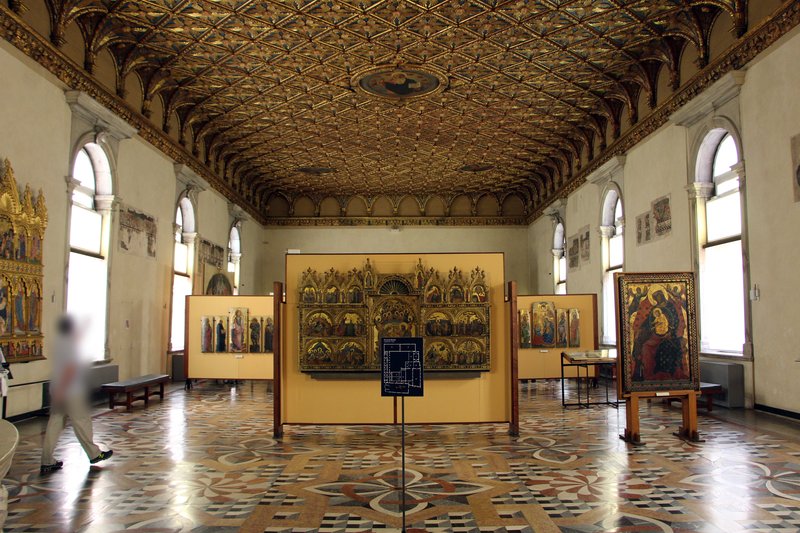
The supreme collection of Venetian painting, housed in the former Scuola della Carità at the foot of the Accademia Bridge. Five centuries of Bellini, Giorgione, Carpaccio, Titian, Veronese and Tintoretto — including Giorgione's "Tempest" and Leonardo's "Vitruvian Man."
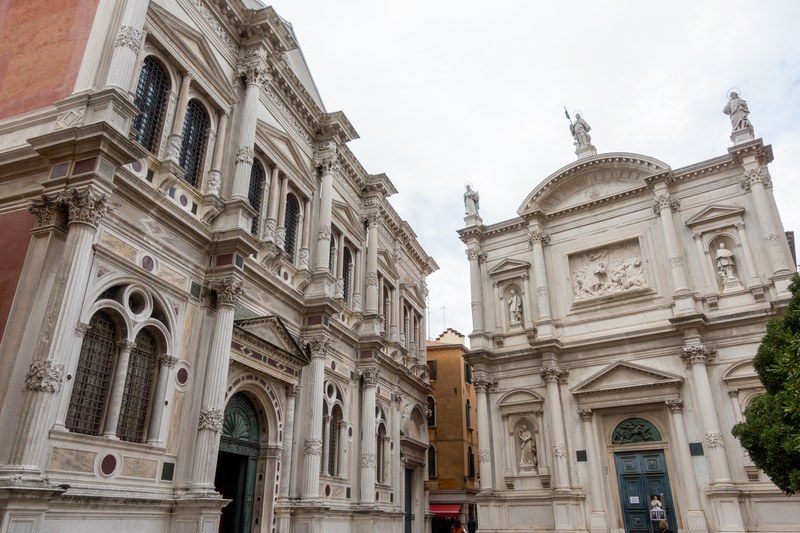
A confraternity hall near the Frari that Tintoretto spent 24 years filling — more than 60 vast canvases of biblical scenes covering walls and ceilings, his answer to the Sistine Chapel. The Sala dell'Albergo's "Crucifixion" is among the most overwhelming paintings in Italy.
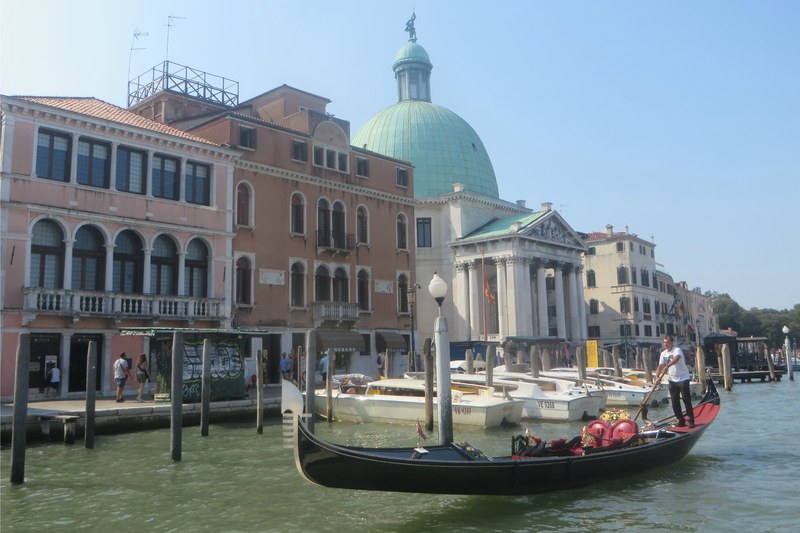
Venice's signature experience — a flat-bottomed black gondola poled through narrow back canals and under low stone bridges. The standard route threads the smaller sestiere waterways invisible from foot traffic, giving the closest read of the city's layered Gothic and Renaissance facades from water level.
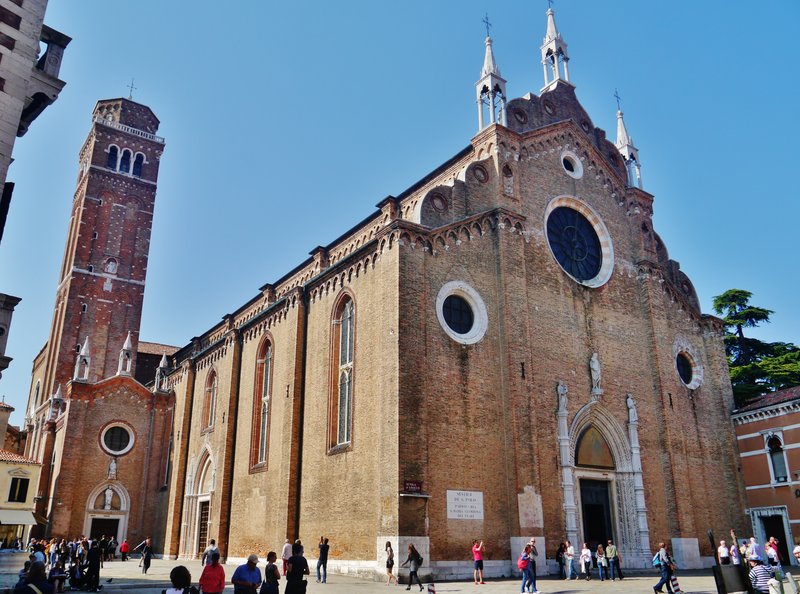
Venice's great Franciscan Gothic basilica, built from 1250, holding some of the city's most important paintings. Titian's Assumption of the Virgin blazes above the high altar, alongside his Pesaro Madonna, Giovanni Bellini's sacristy triptych, and the tomb monuments of Titian and Canova.
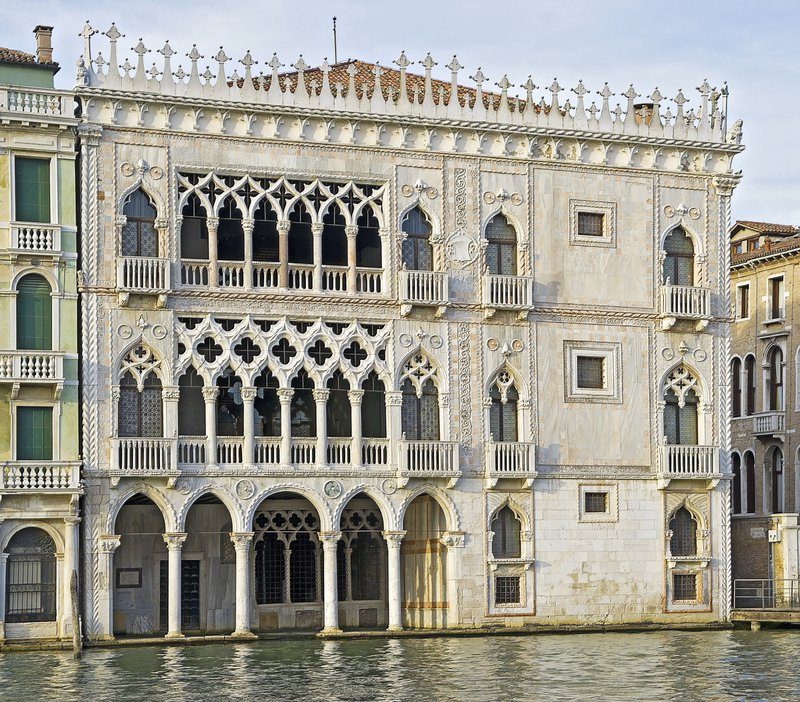
The most ornate Gothic palace on the Grand Canal, built 1422–1440 and originally gilded — the House of Gold. Its loggia of carved tracery is the signature of Venetian Gothic architecture. Inside, the Galleria Franchetti holds Mantegna's St. Sebastian, Titian bronzes, and Flemish tapestries.
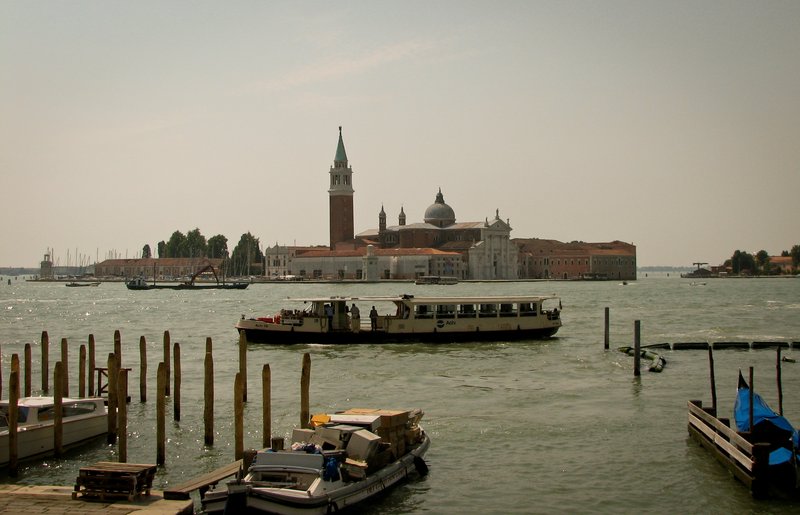
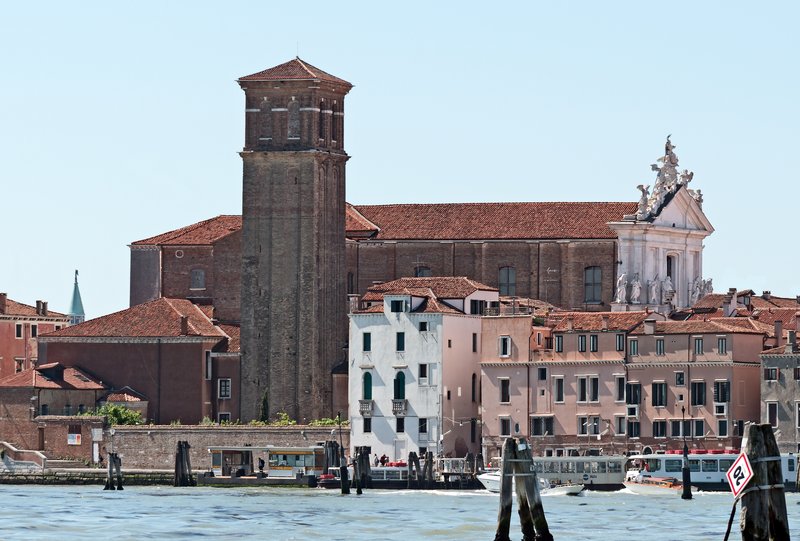
Andrea Palladio's greatest church, completed in 1610 on its own island across from San Marco. The gleaming white facade of classical columns faces St Mark's across the water; inside are Tintoretto's Last Supper and Fall of Manna. The campanile offers a panorama equal to St Mark's with far shorter queues.
From Hotel: 26 min · 15 min → Fondamenta dei Vetrai
1.Fondamenta dei Vetrai~1 hr 30 min
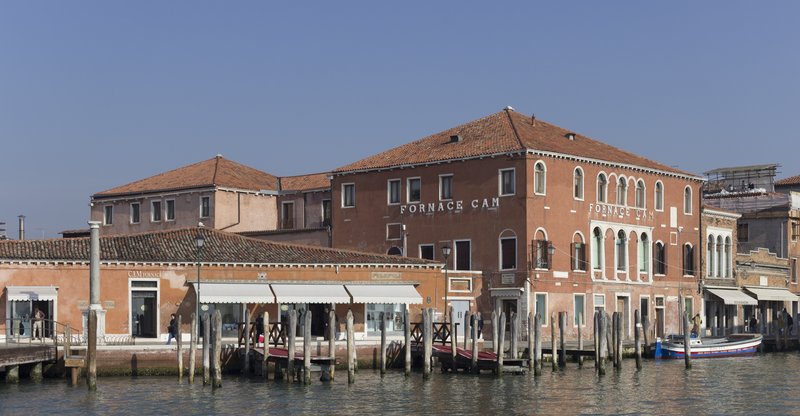
Murano's main canal promenade and the historic heart of Venetian glass since 1291, when Venice ordered all its furnaces moved here. Walking the fondamenta, open workshop doors reveal maestros shaping molten glass into vases, horses, and chandeliers in real time.
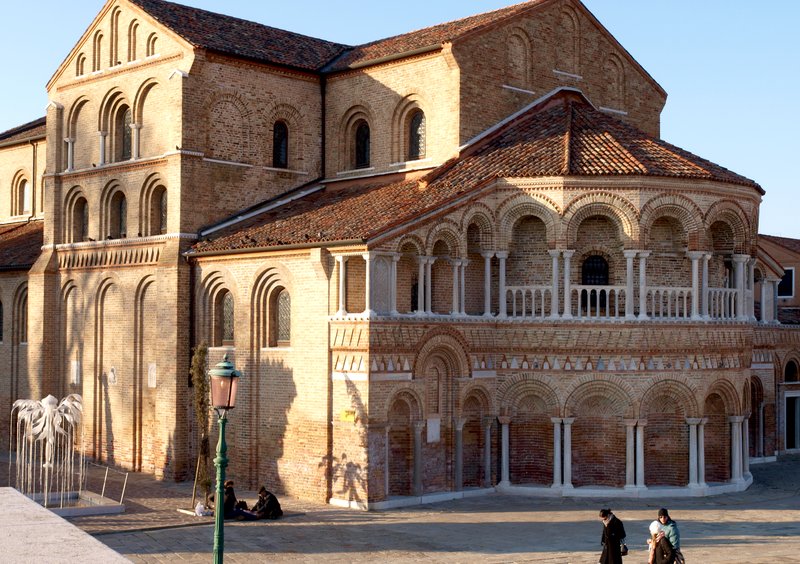
Venice's oldest church, documented since 999 and rebuilt in 1125. The 12th-century floor is a Byzantine mosaic of porphyry and glass — peacocks, eagles, and griffins across 500 square metres. In the apse hang four large bones: relics of the dragon slain by Saint Donato, brought here from Byzantium.
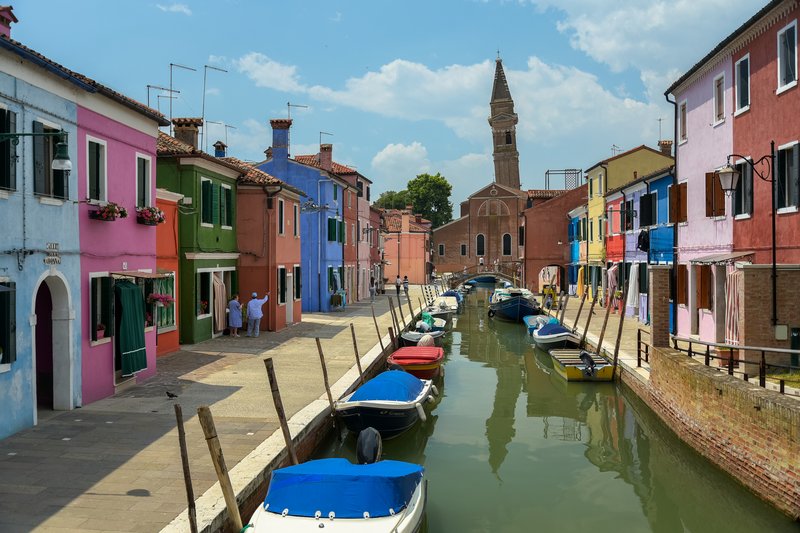
A fishing island 7 km from Venice where every house is a different vivid color — cobalt, tangerine, pistachio, crimson — each shade registered in a municipal color ledger. The tradition dates to fishermen who painted their homes in bold family colors to pick out their own doorway through the lagoon fog.
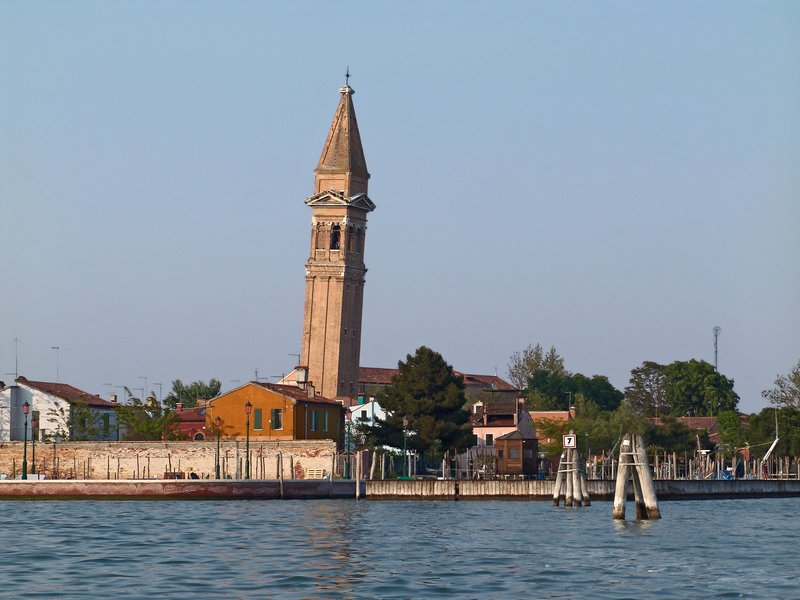
Burano's only church, consecrated in 1645, with a campanile that tilts so dramatically it appears about to fall. Built between 1703 and 1714 on the soft lagoon ground, the tower began leaning as it rose. Inside hangs Tiepolo's large Crucifixion, painted in 1727, one of his earliest masterworks.
7 min · 4 min → Burano · 45 min → Fondamenta Nuove · 26 min · 15 min → hotel
Day 5
From Hotel: 32 min · 18 min → Venetian Ghetto
1.Venetian Ghetto~45 min
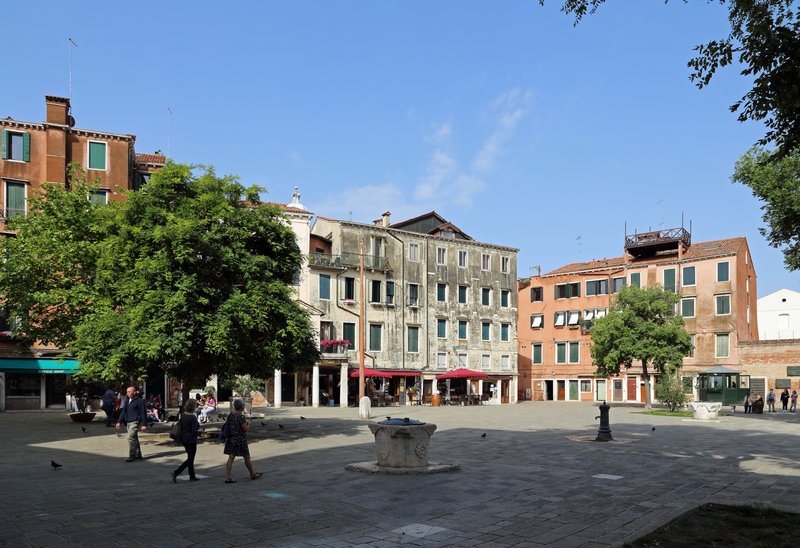
The world's first ghetto — the Venetian Republic confined the city's Jewish population to this island quarter by decree in 1516, locking its gates at night. The name spread from the copper foundry once on the site into every European language as a word for a segregated quarter. The campo is ringed by tenements six and seven storeys tall, the tallest in Venice, and holds five historic synagogues.
Officially Santa Maria Assunta, an early 18th-century Jesuit church whose entire interior is carved from green-and-white damask marble so convincing it can be mistaken for fabric, down to a pulpit draped in stone cloth. A rare early Titian, the Martyrdom of St Lawrence, hangs over the first altar on the left.
Tintoretto's own parish church, where the painter is buried before the high altar he spent decades painting for. Two of his most ambitious canvases fill the choir — a towering Last Judgment and Worship of the Golden Calf, each over ten metres tall — alongside a youthful Presentation of the Virgin at the Temple near the entrance.
A Baroque church built between 1670 and 1705 for the barefoot "scalzi" Discalced Carmelite friars, its marble facade the only complete Baroque front on the Grand Canal. Tiepolo's original ceiling fresco was destroyed by an Austrian bombing raid in 1915; a modern reconstruction now fills the vault, alongside several of his surviving side-chapel canvases.
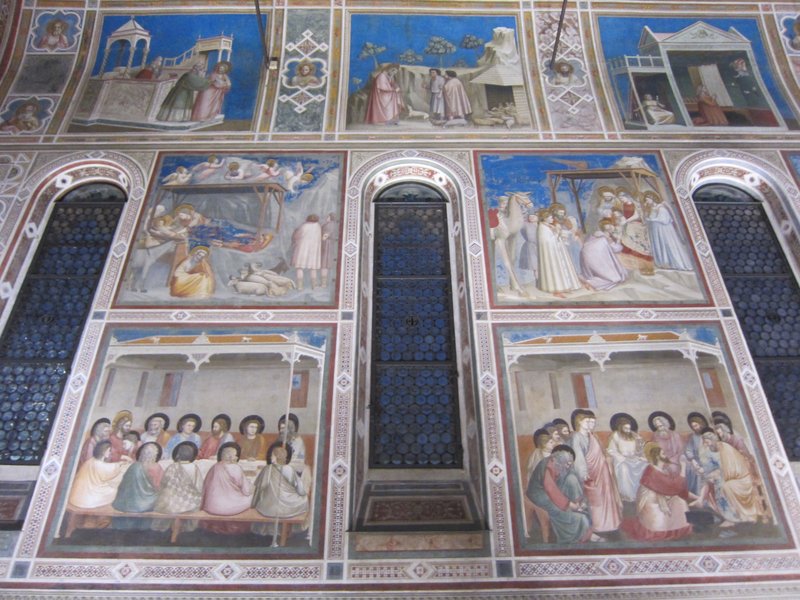
Giotto's fresco cycle of 1305, covering every wall floor to ceiling with scenes from the lives of Mary and Christ beneath a vault of gold stars, commissioned by the banker Enrico Scrovegni to atone for his father's usury. Its realism is widely credited as the founding work of Renaissance painting. Entry is timed and pre-booked, with a wait in a climate-controlled anteroom before each slot.
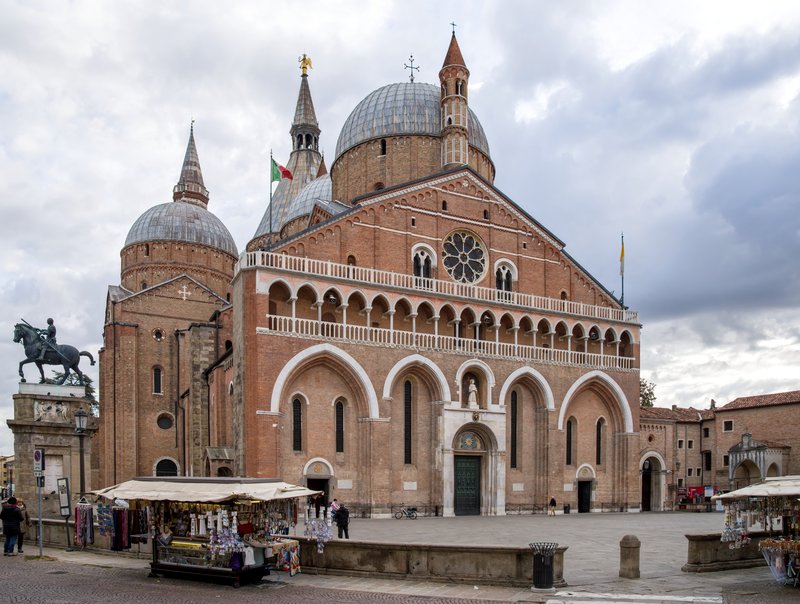
One of eight international shrines named by the Holy See, drawing four to six million pilgrims a year to the tomb of St. Anthony beneath a wall of votive offerings and handwritten thanks. Donatello's bronze crucifix and high-altar reliefs sit inside a basilica blending Romanesque, Gothic and Byzantine domes, and the saint's own reliquary chapel holds his jaw and vocal cords.
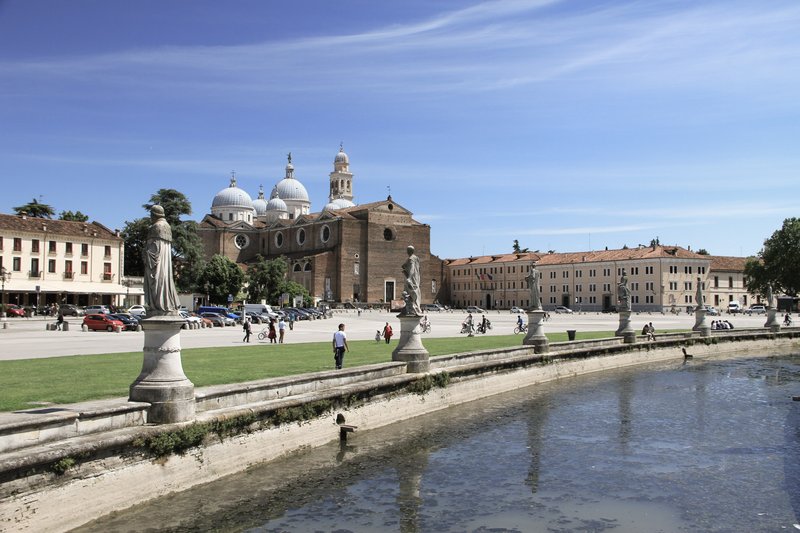
The largest square in Italy and one of the largest in Europe, an elliptical green ringed by a moat-like canal and 78 statues of illustrious Paduans — professors, cardinals, explorers. It was laid out in 1775 over a marshy former Roman theatre site and fairground, and remains the city's favourite spot for a stroll or a rest between sights.
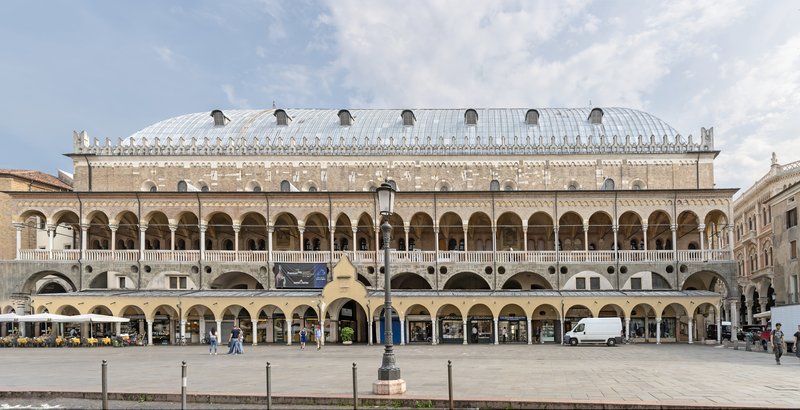
Padua's medieval law court and council hall, its single vast timbered hall among the largest suspended medieval roofs in Europe, covered wall to wall in 15th-century astrological frescoes rebuilt after a 1420 fire. Below, the arcaded ground floor still holds the centuries-old covered market it was built above, unchanged in function since the 13th century.
Full-day small-group highlights — Rialto and the fish market, a gondola cruise on the Grand Canal, the gold mosaics of St Mark's Basilica, and skip-the-line entry to the Doge's Palace with a local guide.
Exclusive boat to the island of Murano for a live glass-blowing demonstration, then across the lagoon to Burano's multicoloured fishing houses and lacemakers — the quintessential Venice islands day.
Full day on the UNESCO Prosecco Hills with local guides Giulia and Carlo — visits to two family wineries with tastings, lunch at a family restaurant, and sweeping vineyard views above the Veneto plain.
Guided boat day to Murano for a live glass-blowing show, then to Burano's candy-coloured streets — a full lagoon loop with a knowledgeable guide and free time on each island.
Maximum 7 guests on a full-day tour of the Prosecco hills — two family-run wineries, six wine tastings, a gourmet lunch, and panoramic views across the UNESCO vineyard landscape.
A day in the UNESCO-listed Prosecco Hills from Venice — vineyards, cellars, wine pairings, and a food experience in the rolling hills north of Treviso, with a small group and local experts.
The original Venice food walk — market visit, bacaro hopping, six tastings paired with wine, and the stories behind Venice's great flavours told by a passionate local. A consistent city favourite.
Foreign number: not required. — the account is made with Google, Facebook or an email address — there is no phone field, so no code has to arrive.
Just Eat is a reliable delivery option in Venice, with coverage of restaurants on the Venetian mainland and in the historic centre where delivery is possible; the account uses email and password, and a foreign mobile number is accepted as the courier contact.
Foreign number: not required. — it signs in with Google, Facebook or email, and a phone sign-up takes any prefix with the code by SMS or WhatsApp.
Glovo covers the Mestre and Marghera areas on the mainland, where delivery logistics are far more practical than on the islands; coverage within the historic centre is limited by the absence of roads and relies on on-foot couriers for waterside addresses.
Foreign number: not required. — sign-up runs on Google, Apple, Facebook or email with no phone field at all, so no verification code has to arrive.
Deliveroo runs in Mestre on the mainland rather than in the historic centre — nothing crosses the bridge to the islands, so it is only useful if you are staying that side. In Venice proper, Just Eat and Glovo are the apps that deliver.
Foreign number: accepted — bookings are made by phone or online; no SMS sign-up step is required.
Motoscafi Venezia operates licensed water taxis across the Venetian lagoon, providing the fastest and most flexible point-to-point transport between the historic islands, the Lido, and the mainland; fares are metered and bookings can be made by phone or through the website.
Foreign number: not required. — tickets are purchased at vaporetto stops or through the AVM Venezia app with no phone sign-up needed.
ACTV vaporetto water-buses serve the entire lagoon; Line 1 runs the full length of the Grand Canal from Piazzale Roma to San Marco, stopping at every landing stage, while Line 2 covers the same route with fewer stops; a 75-minute single or 24-hour pass covers all lines.
A perfectly preserved Renaissance city — the Este dynasty's Castello Estense rising above the old town, UNESCO-listed Renaissance streets on a grid plan, and the Palazzo dei Diamanti with its 8,500 marble pyramids. Direct regional trains run regularly.
Italy's food capital — 40 km of arcaded porticoes through a medieval old town, the leaning Asinelli and Garisenda towers, and the Emilian table that gave the world ragù, mortadella and tagliatelle. Direct Frecciarossa trains run every 30 minutes.
A Central European port city shaped by centuries as the Habsburg empire's main harbour — Miramare Castle perched over the Adriatic, the vast waterfront Piazza Unità d'Italia, and a coffee-house culture that gave Italy Illy. Direct trains run roughly hourly.
Venice is built on 118 small islands, but what it actually rests on is an estimated ten million wooden piles driven into the lagoon mud — mostly Istrian oak logged from forests in Slovenia and Croatia. The piles have held for centuries not because wood is indestructible, but because the mud they're driven into is anaerobic: no oxygen, no organisms that eat wood, no decay. The wood essentially petrifies over time. Engineers examining the piles in the 20th century found them as hard as stone. The city's structural problem is not the wood rotting beneath it — it's the centuries of subsidence from groundwater extraction — largely halted since the 1970s — and the gradual rise in Adriatic sea levels that together have lowered the city relative to the water around it.
The Arsenale di Venezia, Venice's shipyard complex, was arguably the world's first large-scale industrial facility. At its height in the 15th and 16th centuries, the Arsenale employed up to 16,000 workers and could reportedly produce a fully equipped war galley in a single day — assembly-line production centuries before the Industrial Revolution, with standardized parts and a moving production sequence. The word "arsenal" entered European languages from the Venetian via Arabic: the Arabic "dar al-sana'a" — meaning "house of industry" — was the term Venice borrowed, which then spread as "arsena" or "arsenal" across Spanish, French, English, and Italian. Dante visited the Arsenale and used it as the setting for one of the circles of hell in the Inferno — a furnace of boiling pitch where corrupt politicians were submerged.